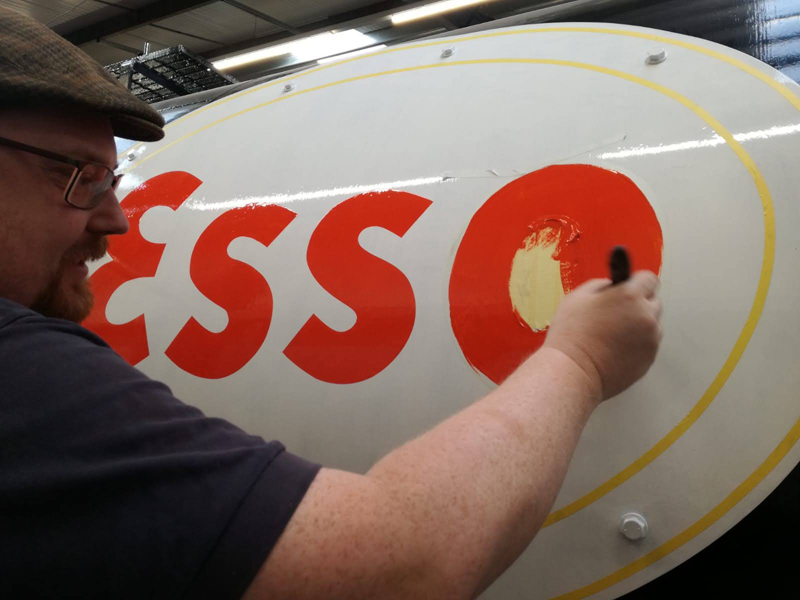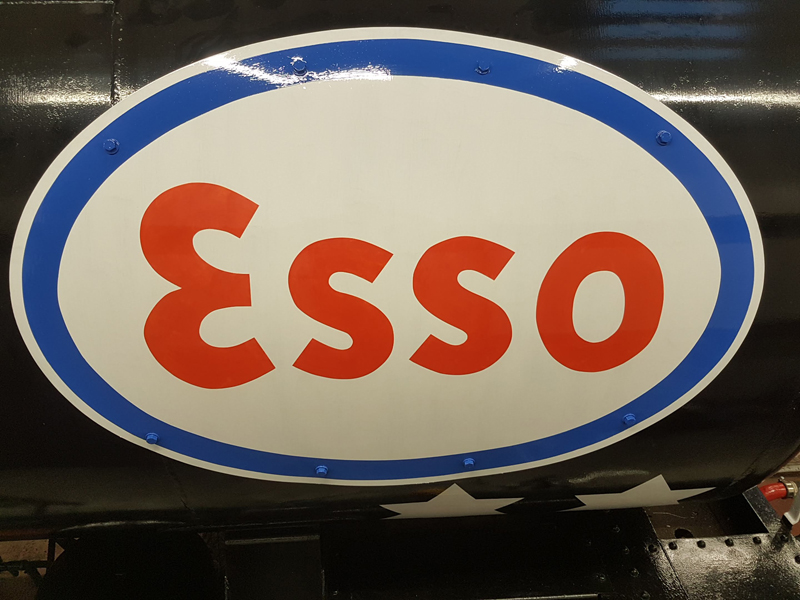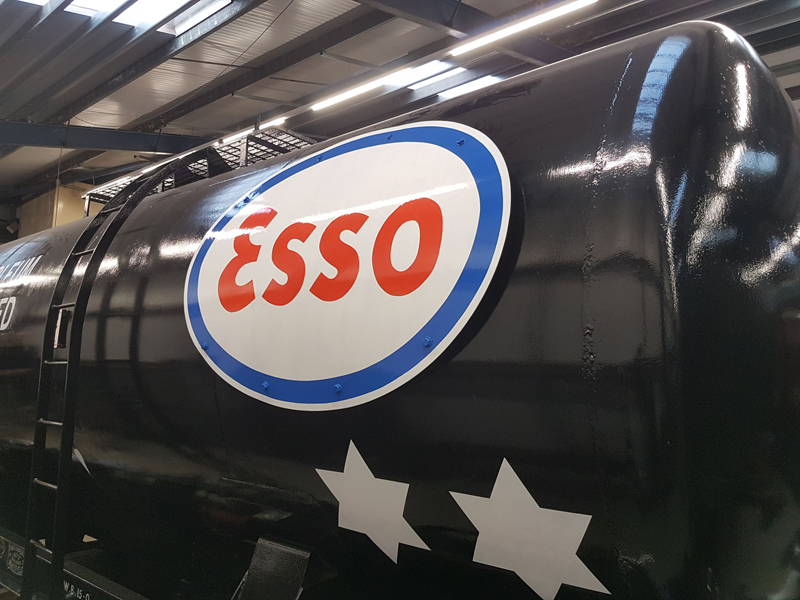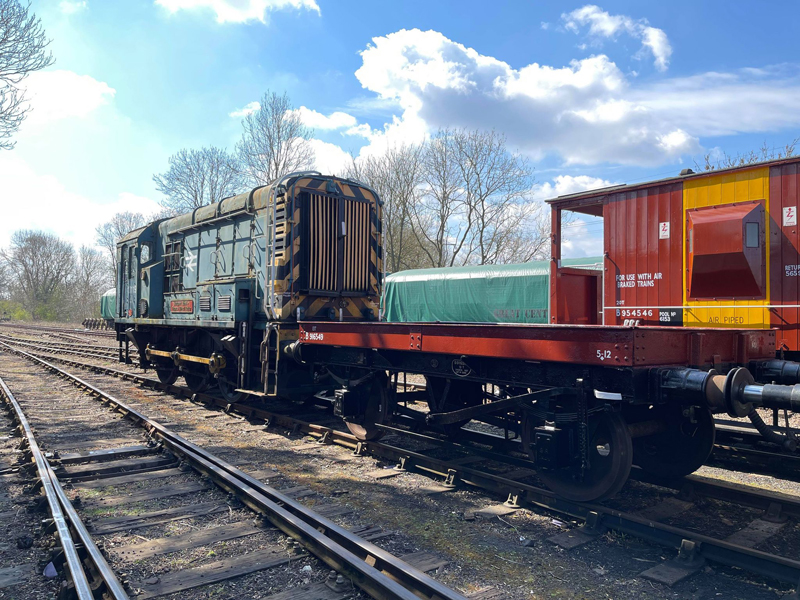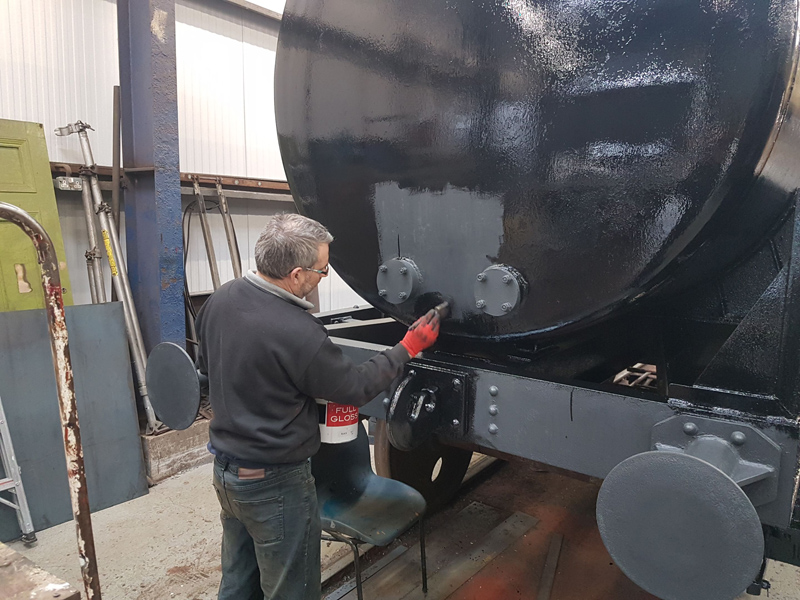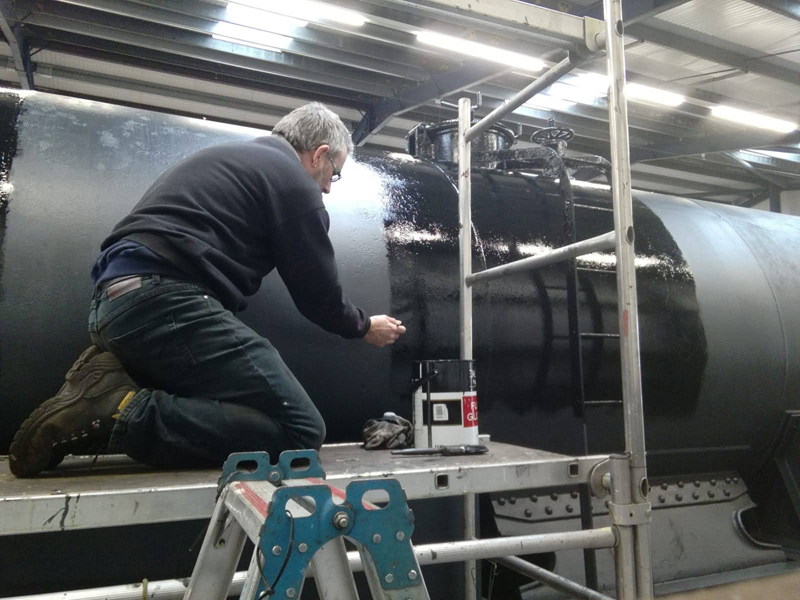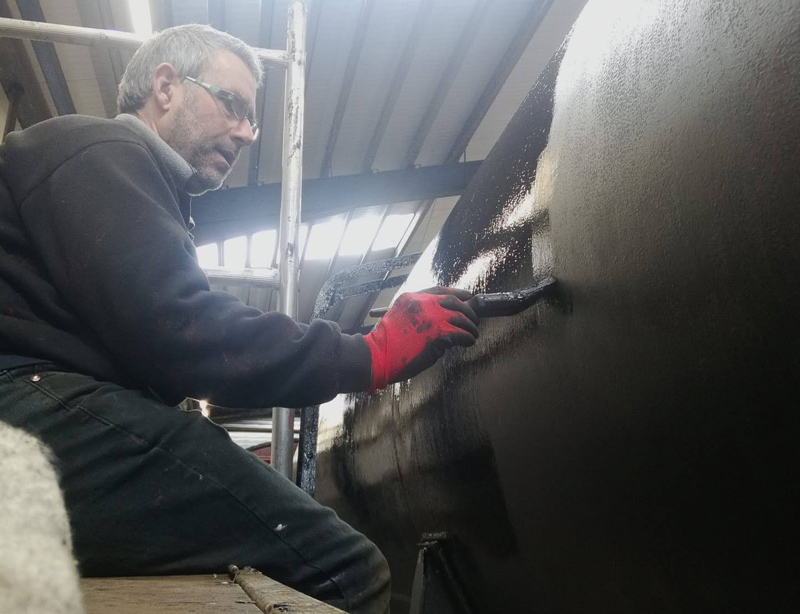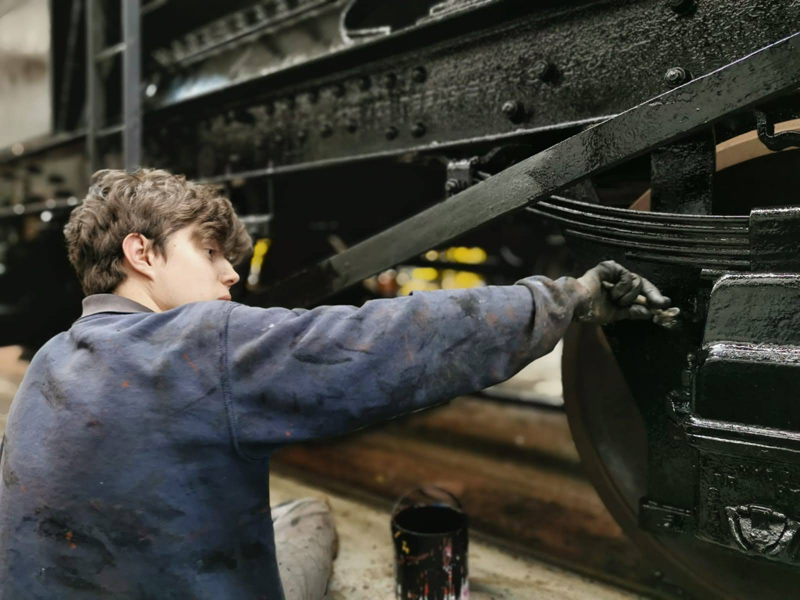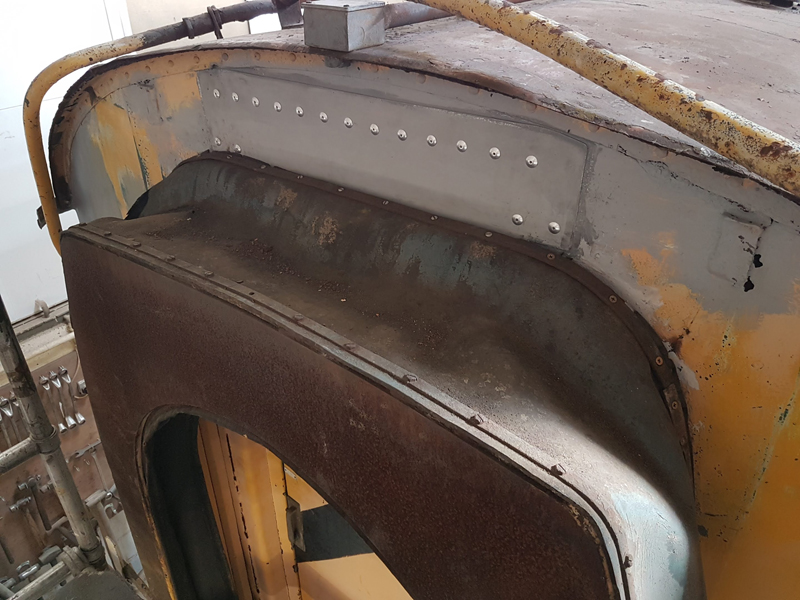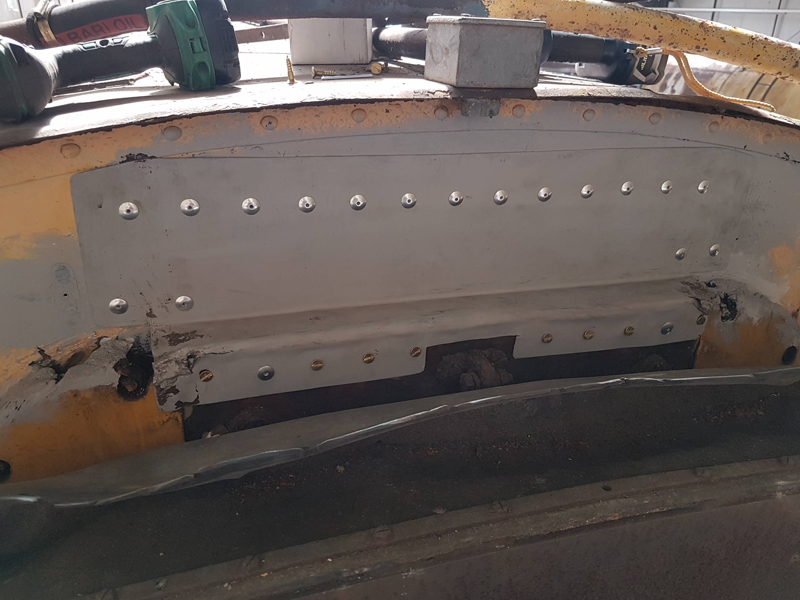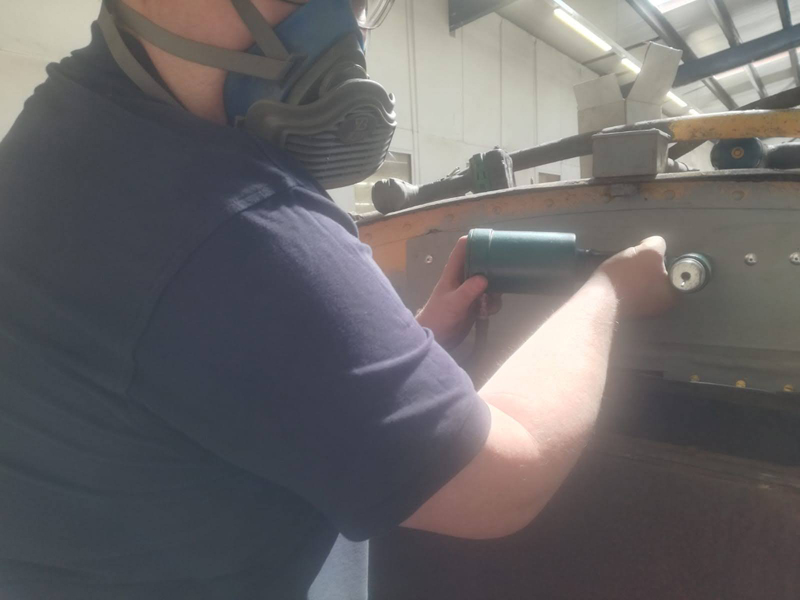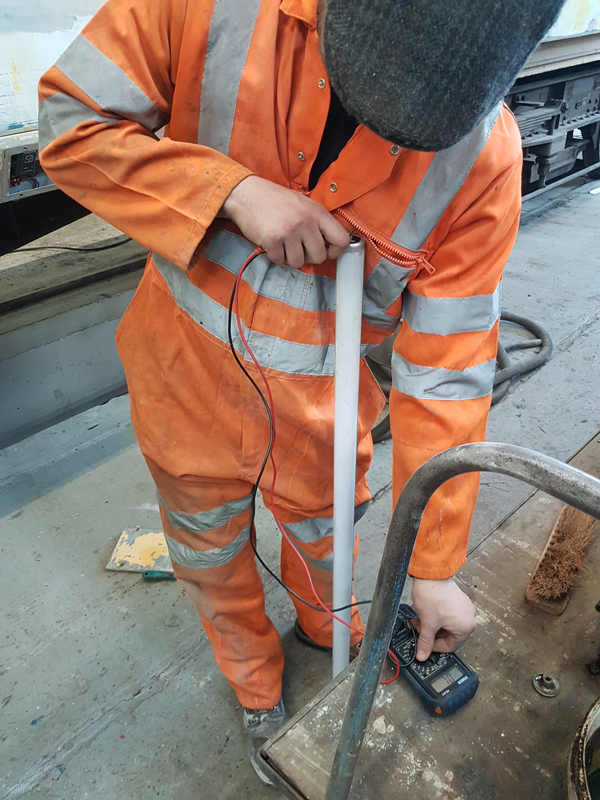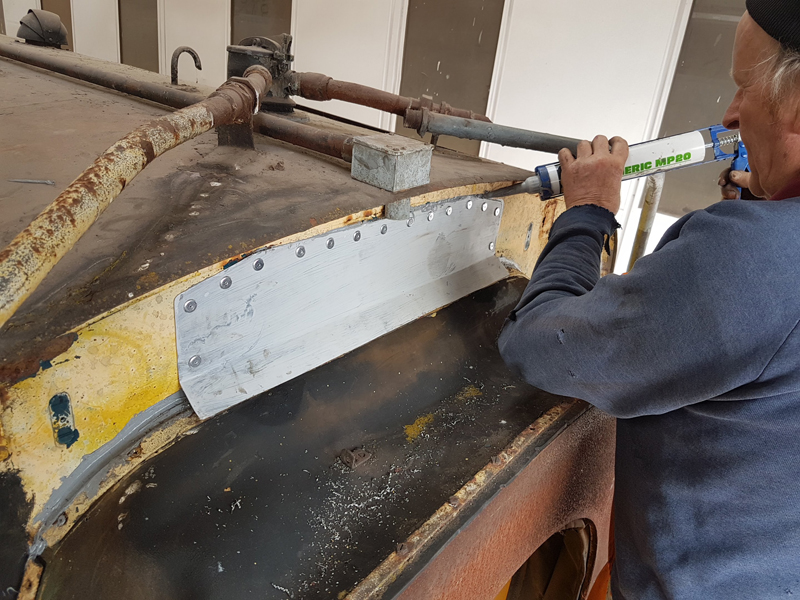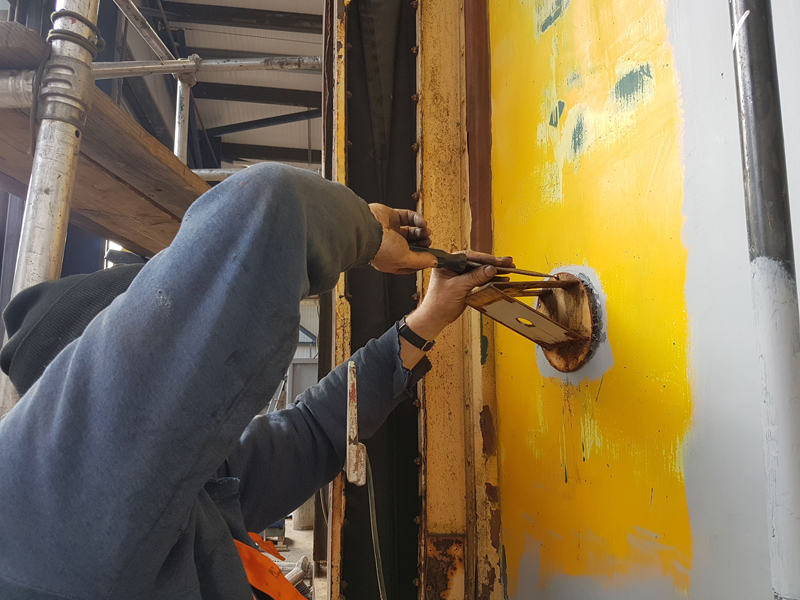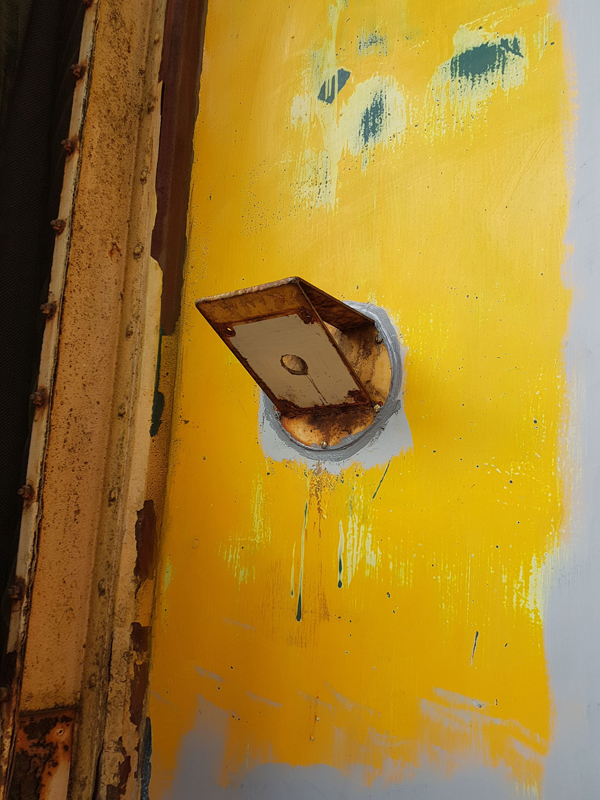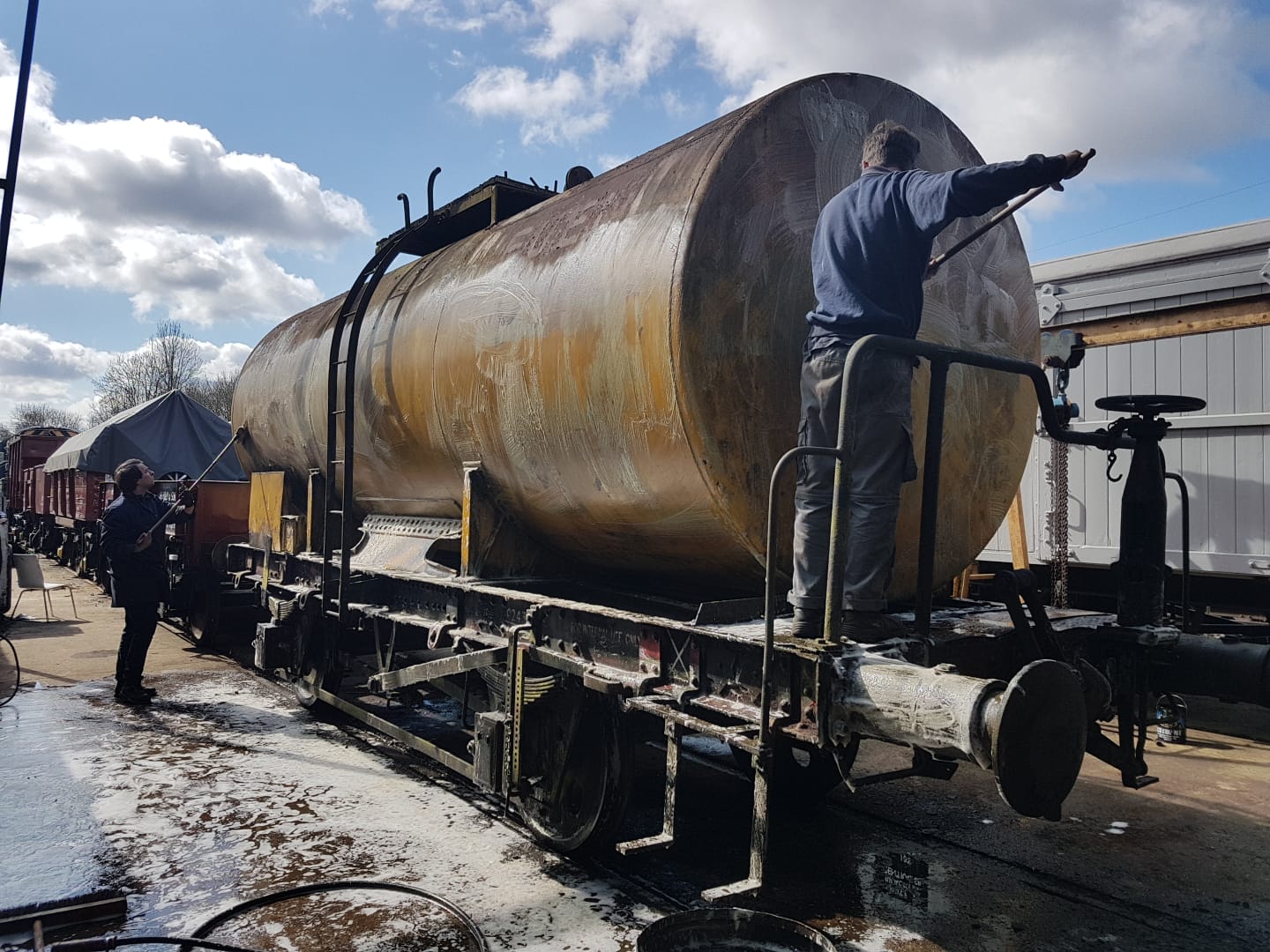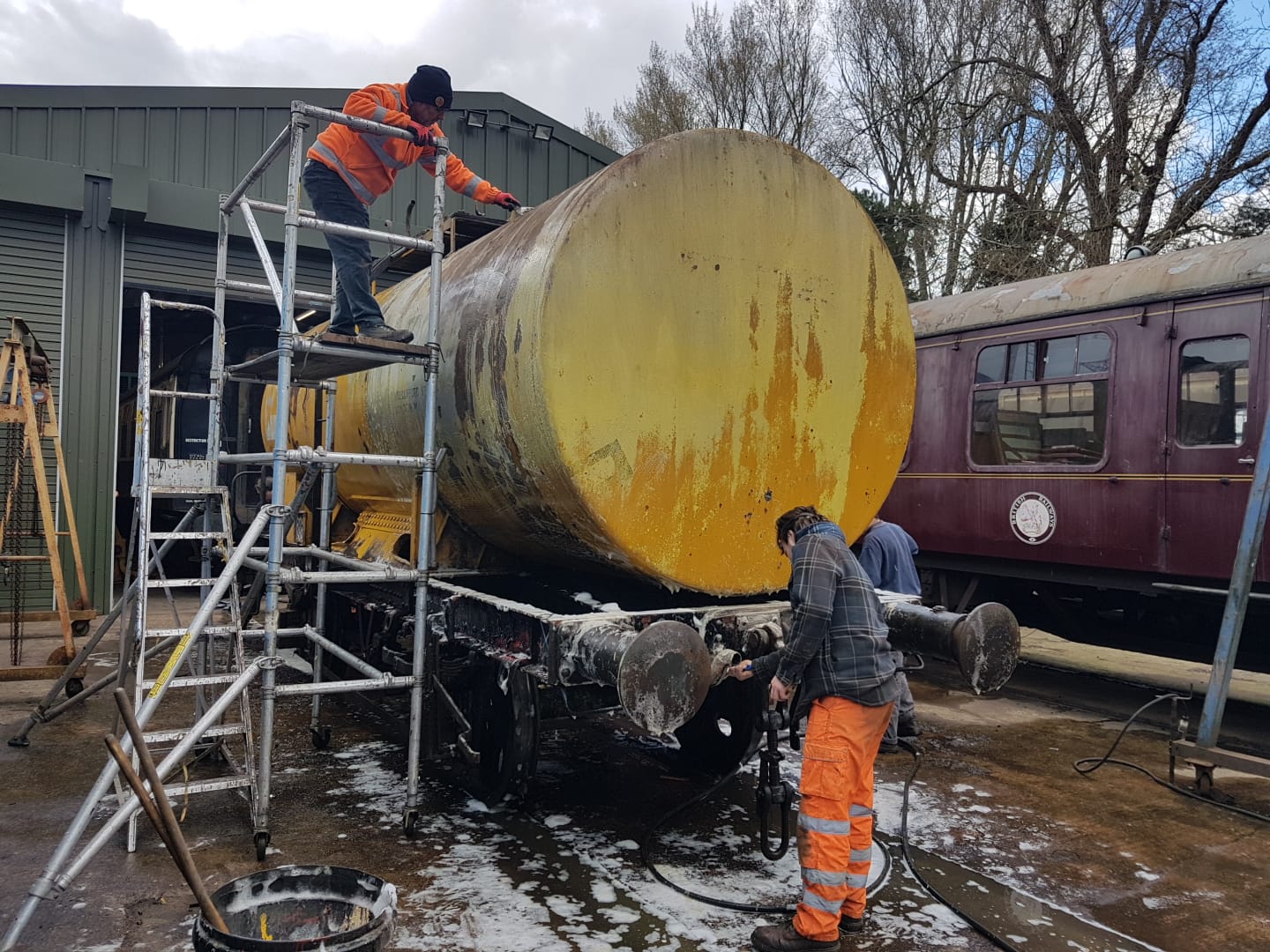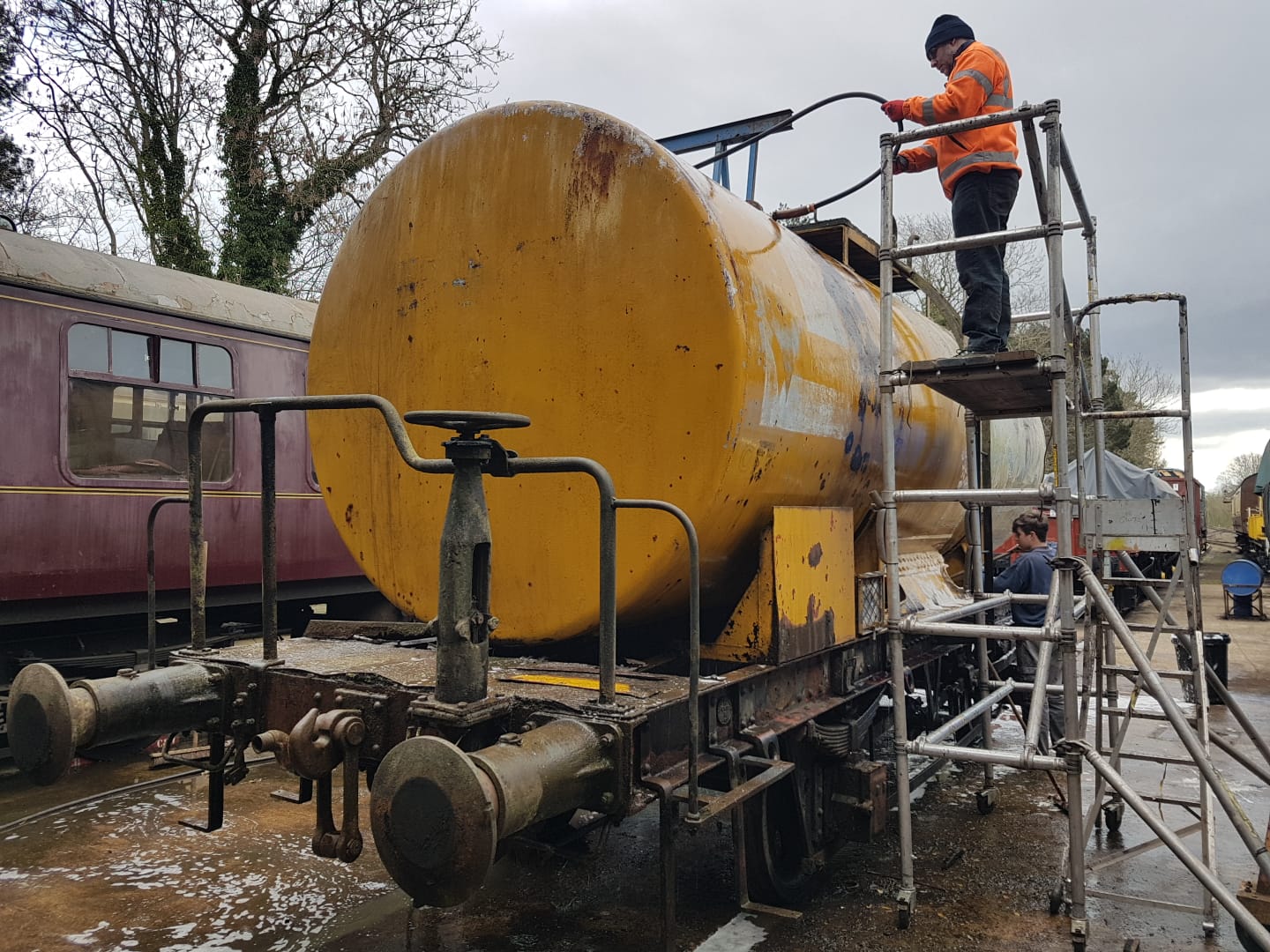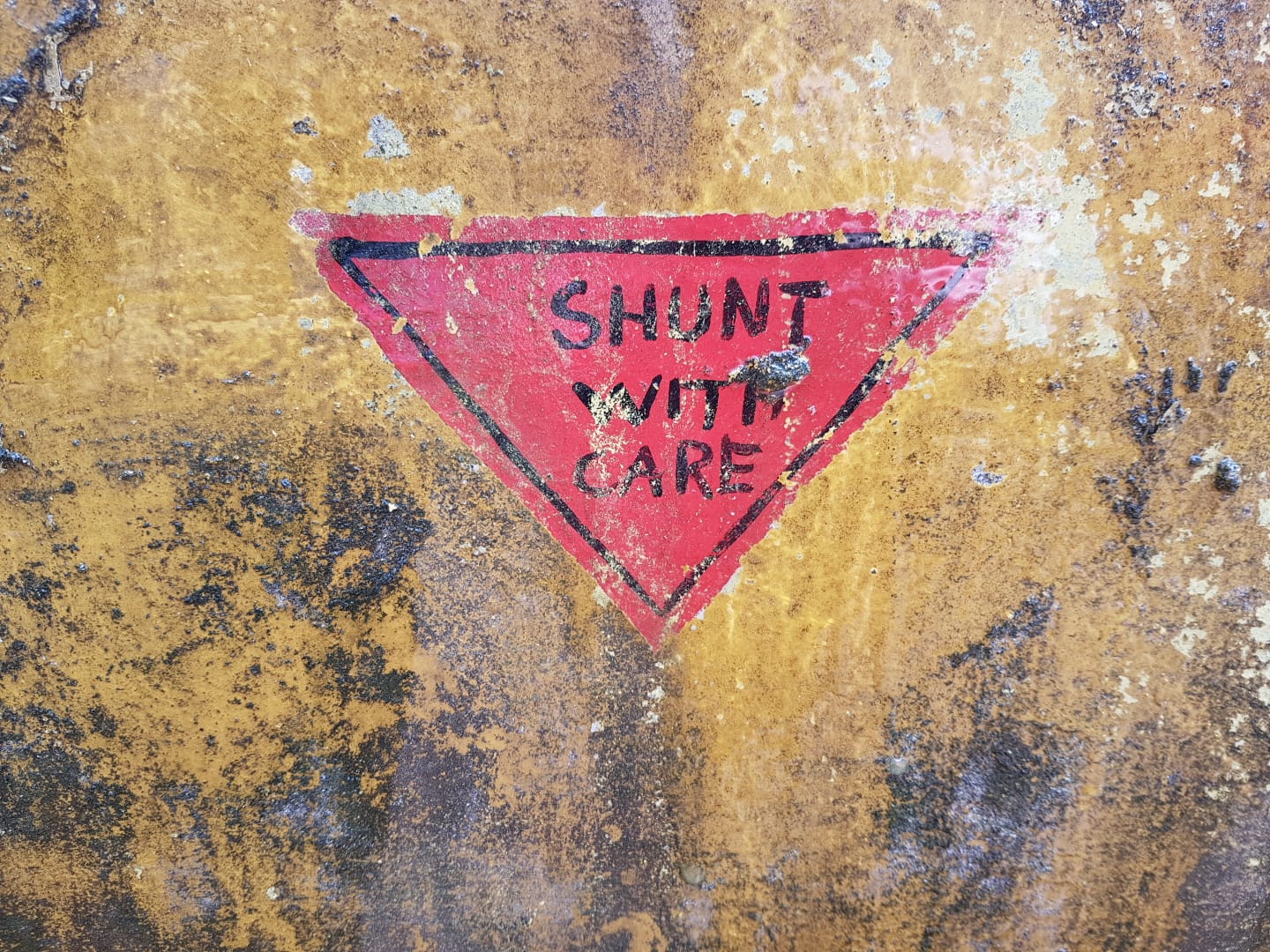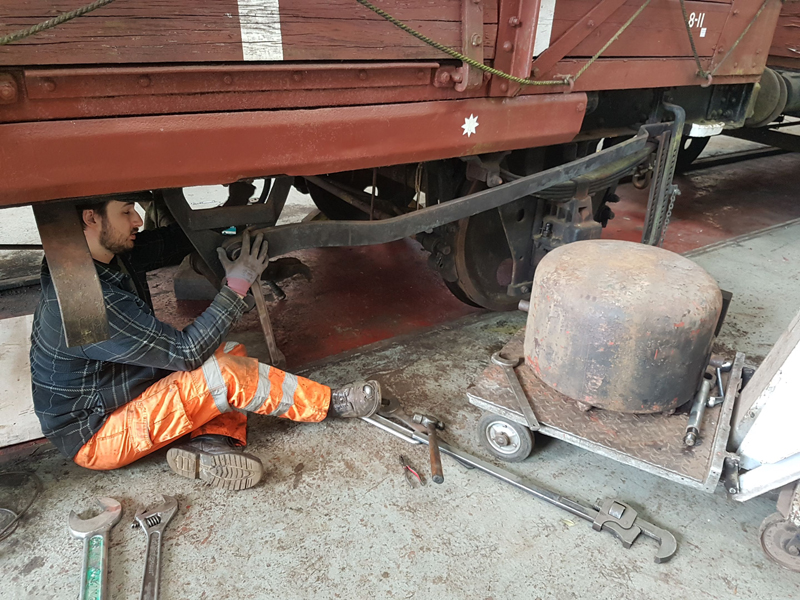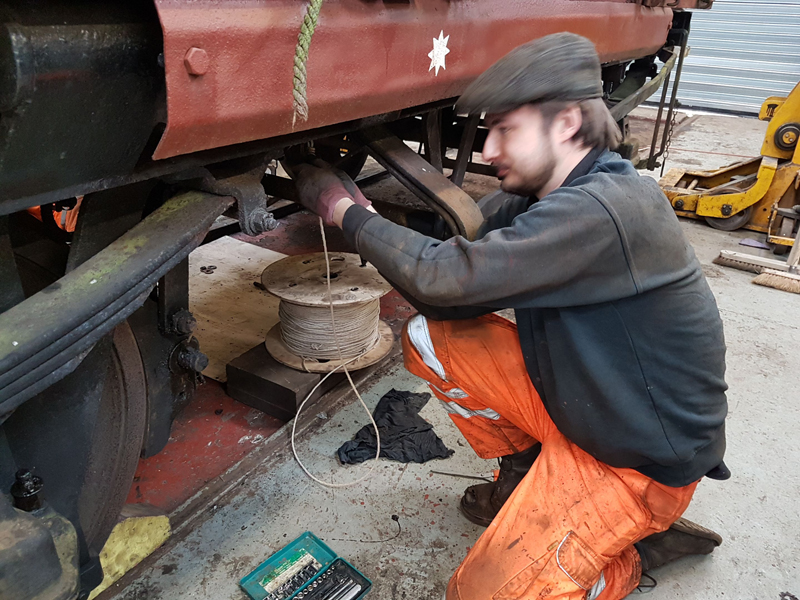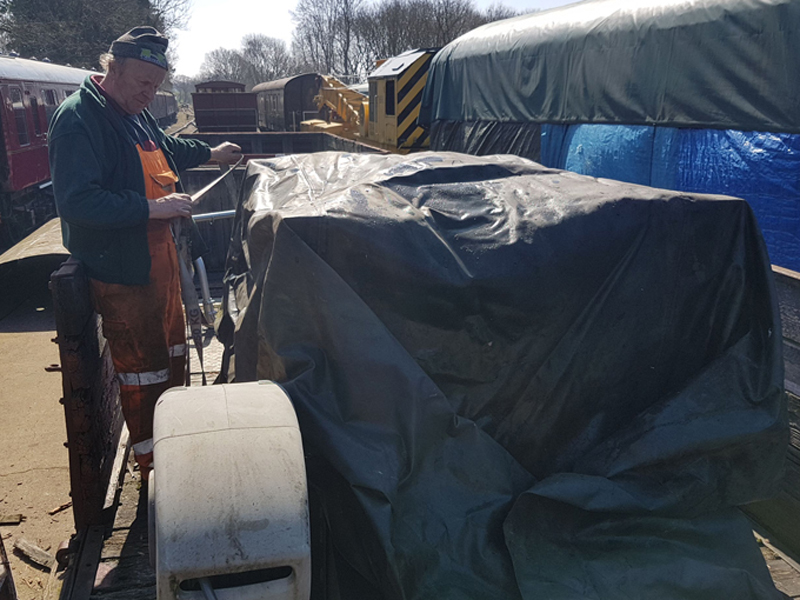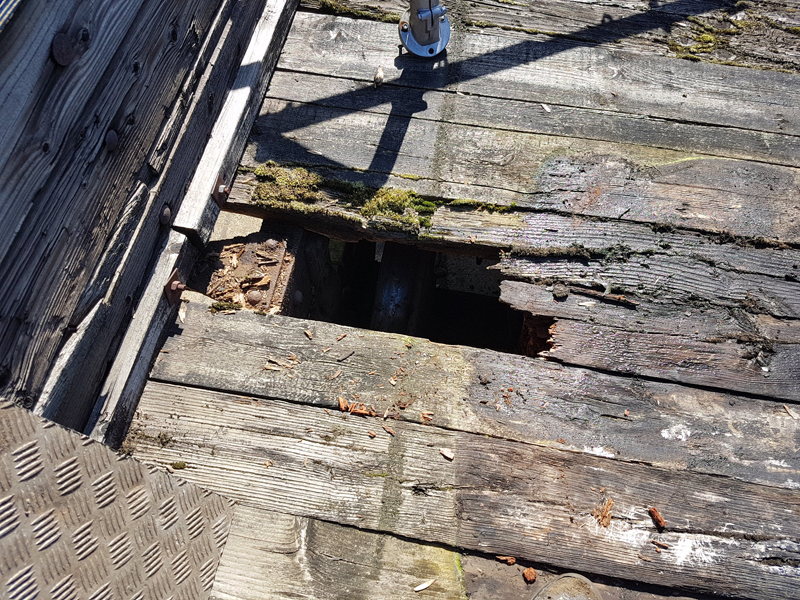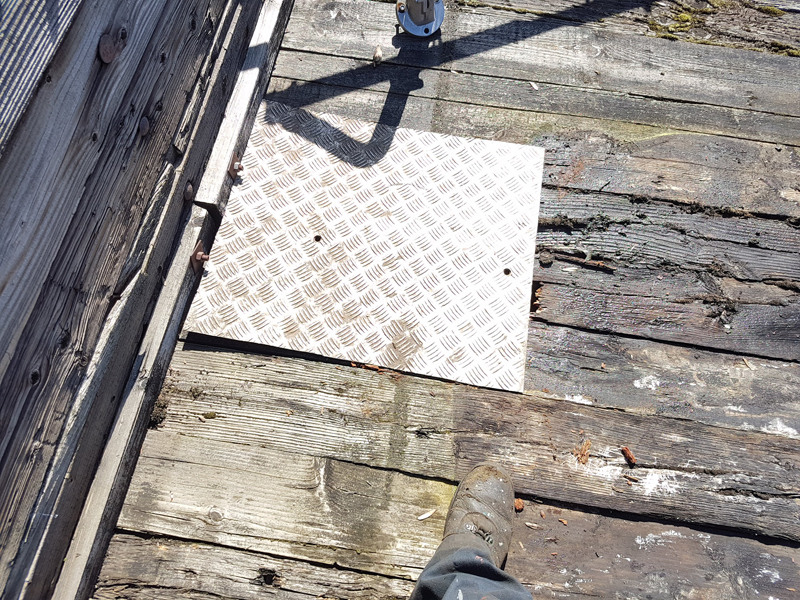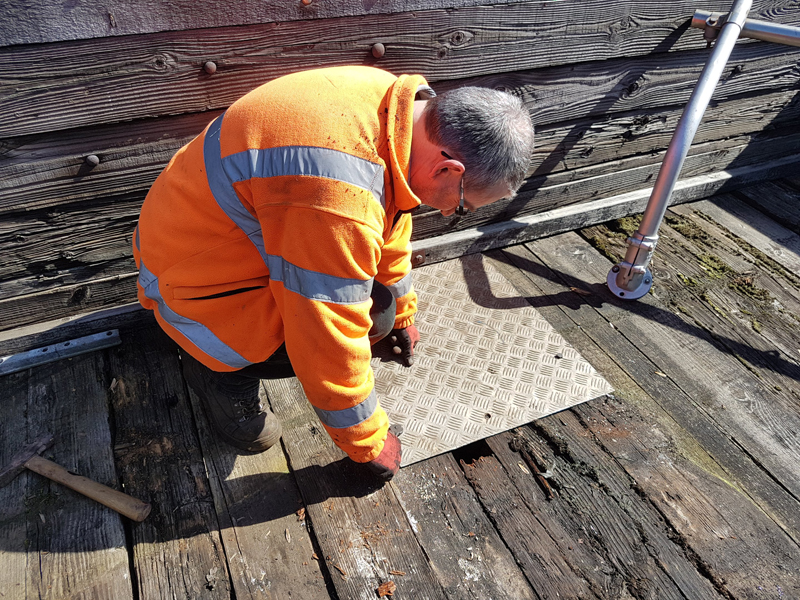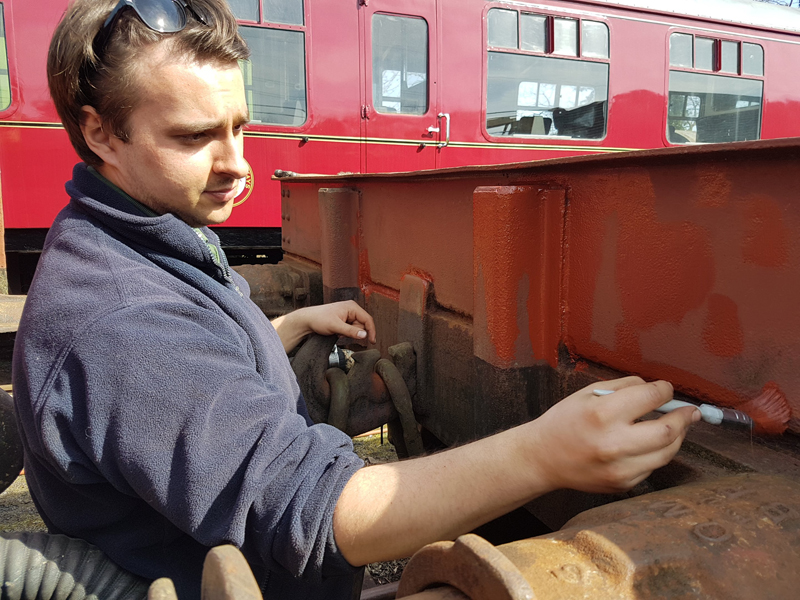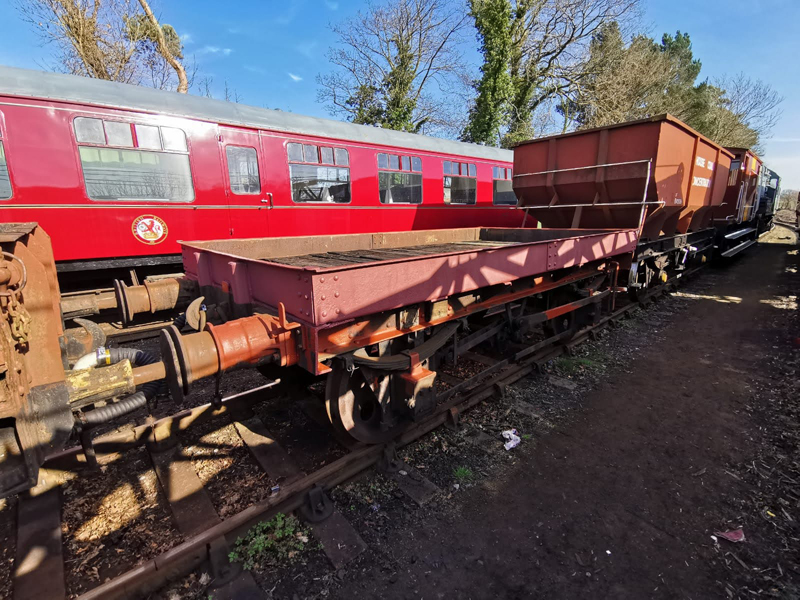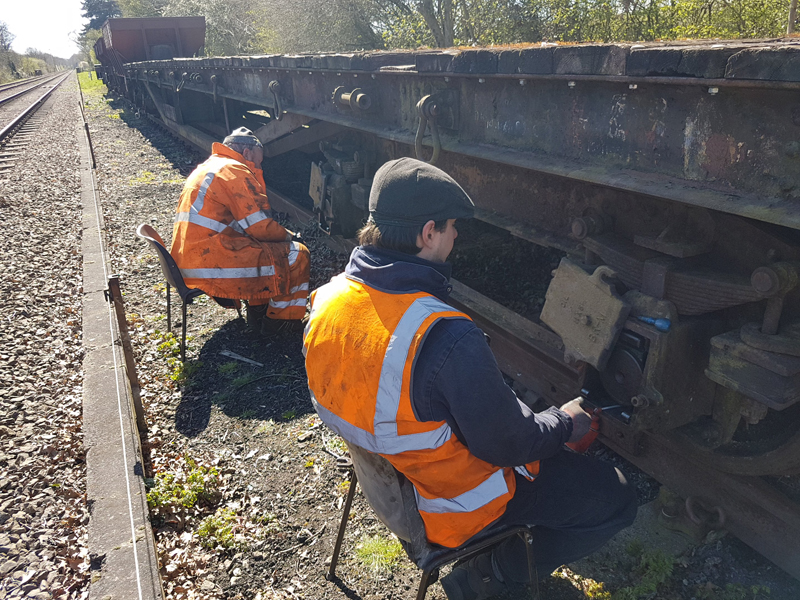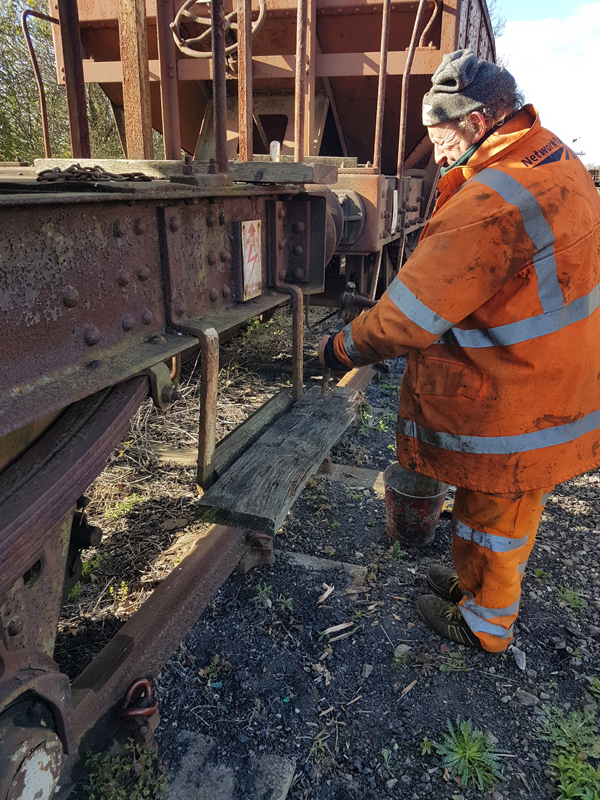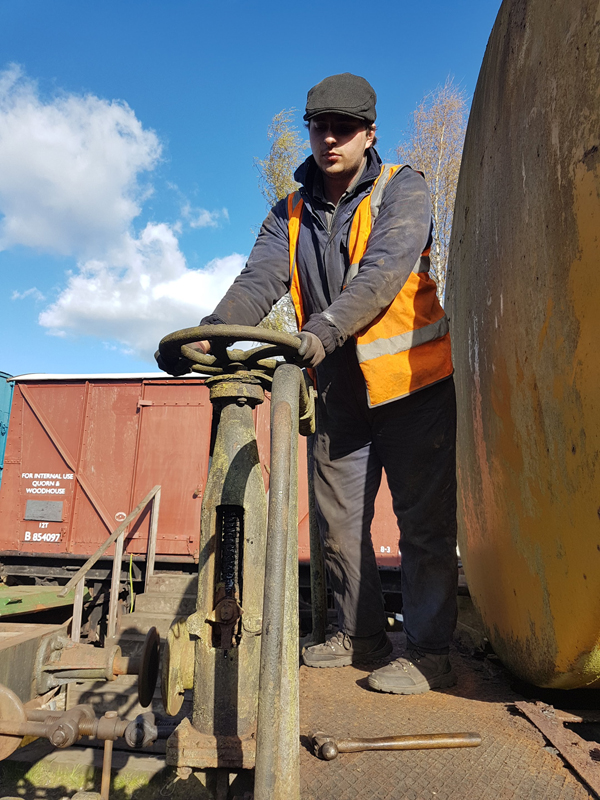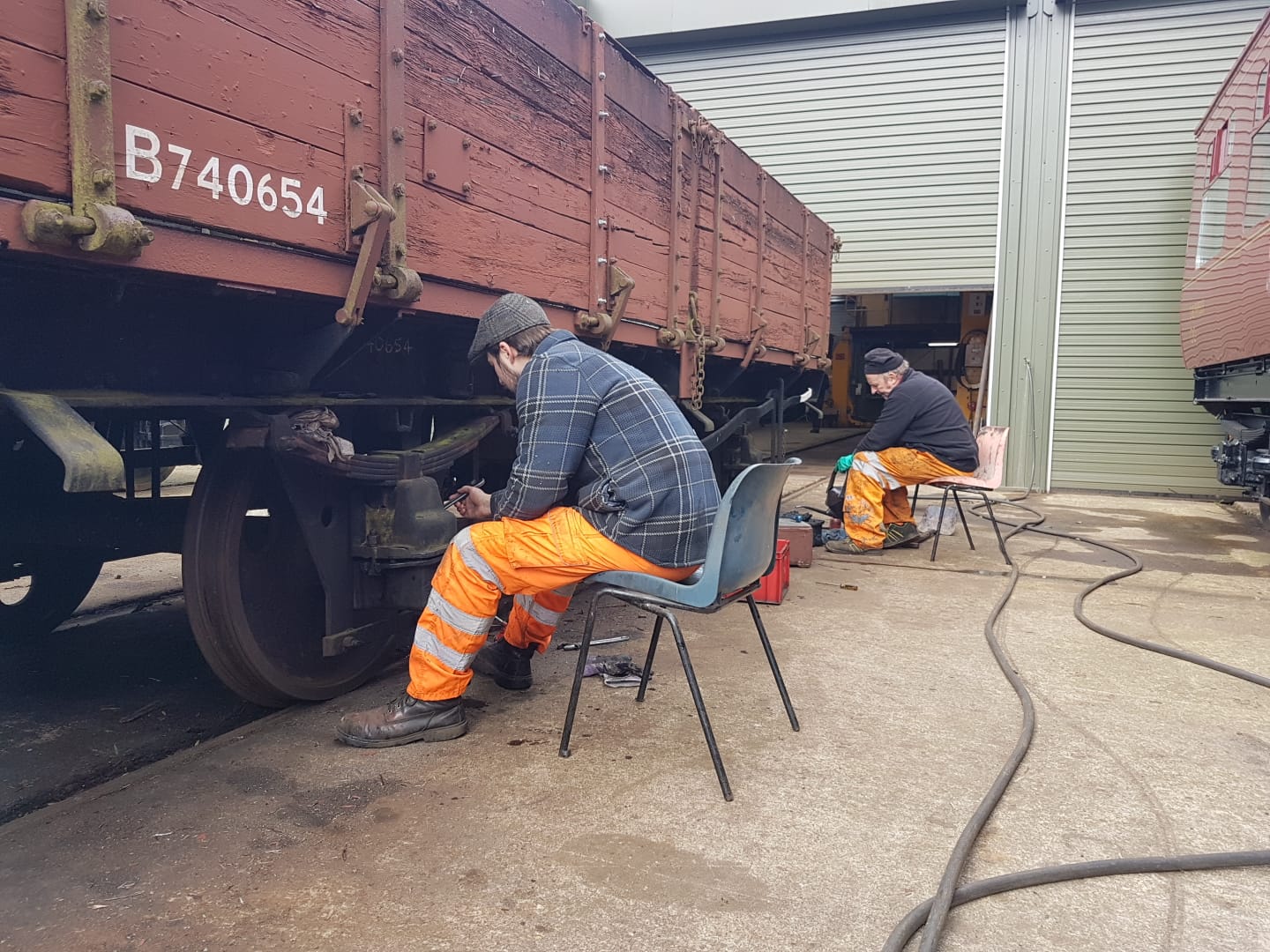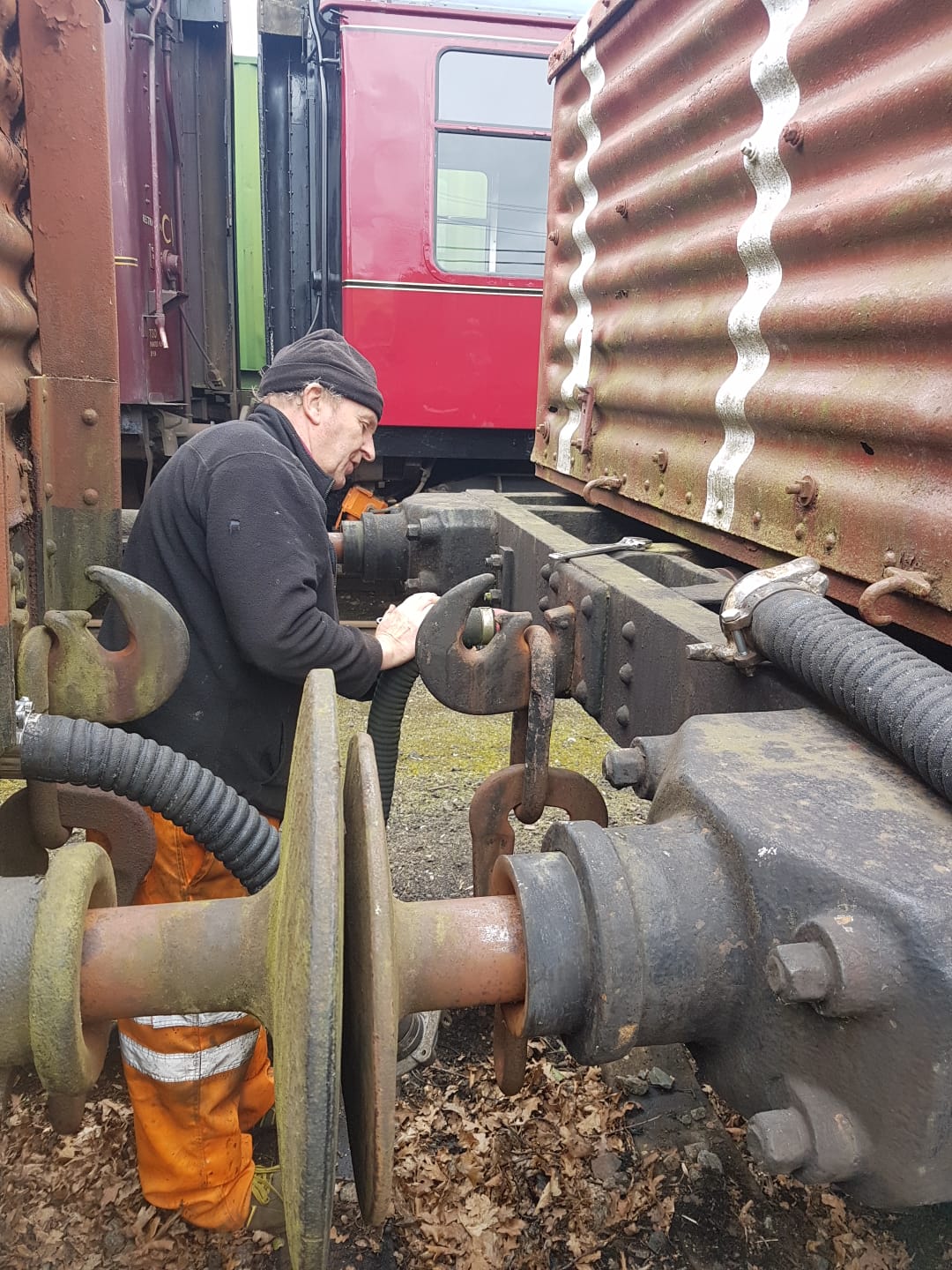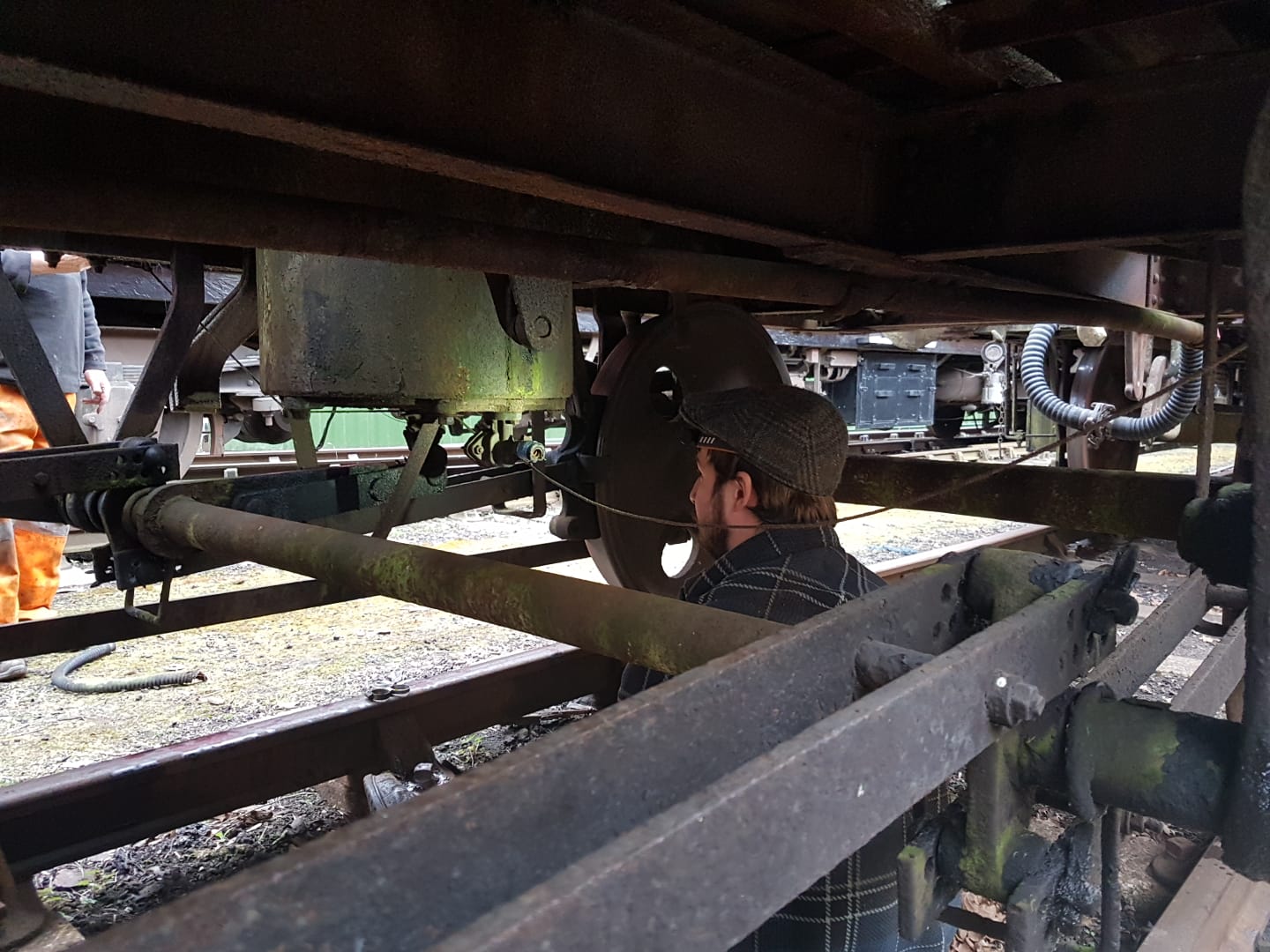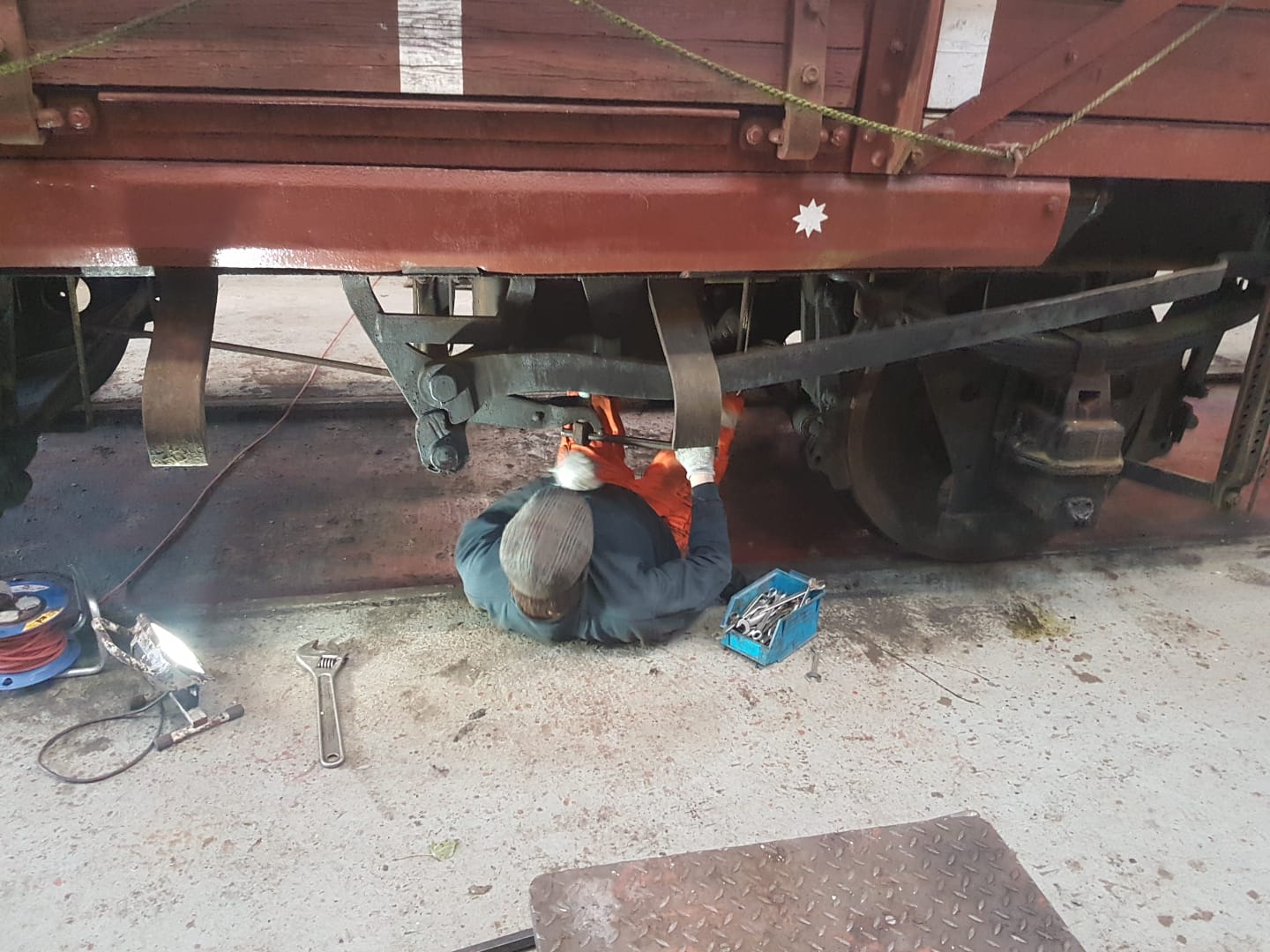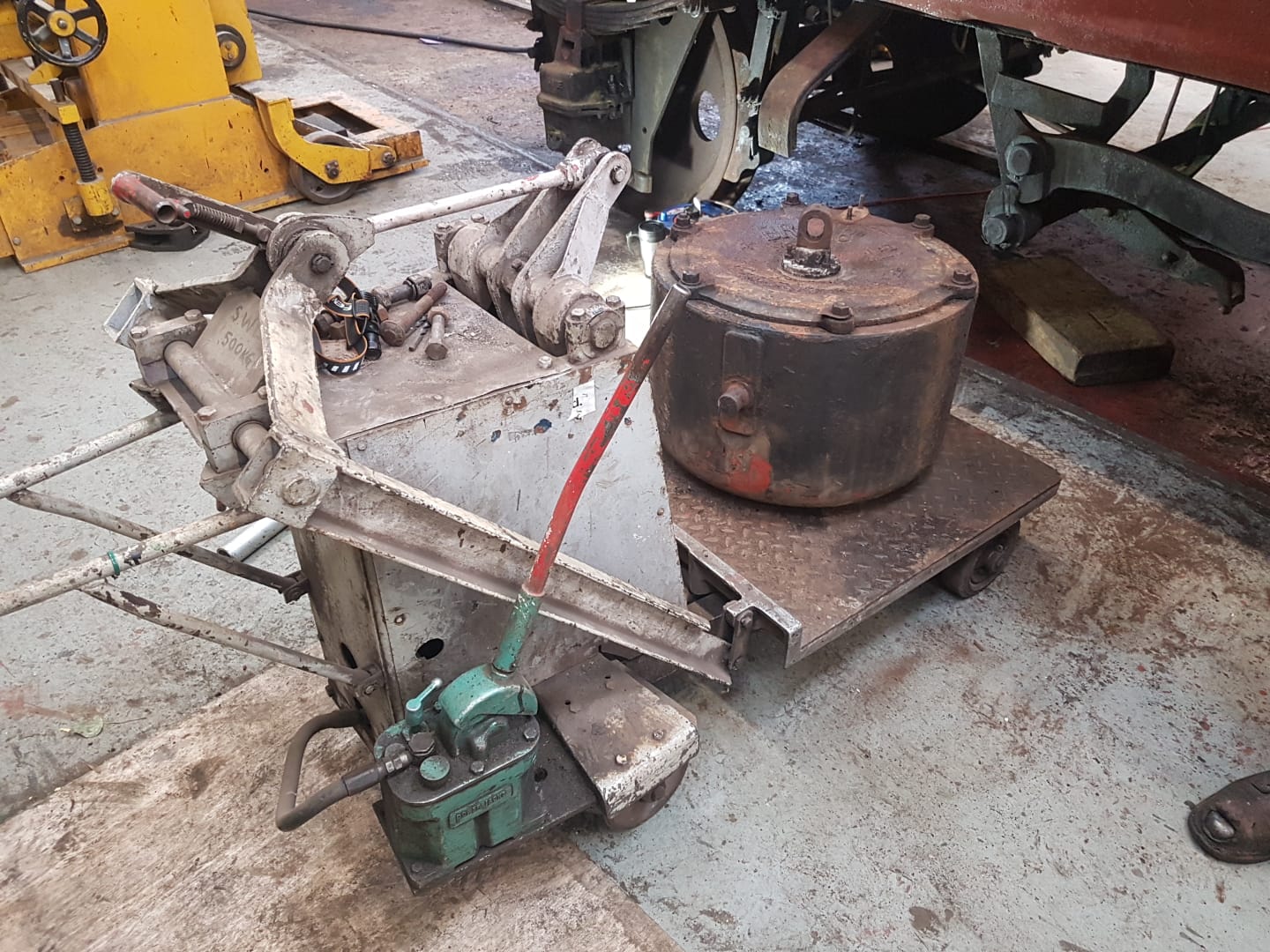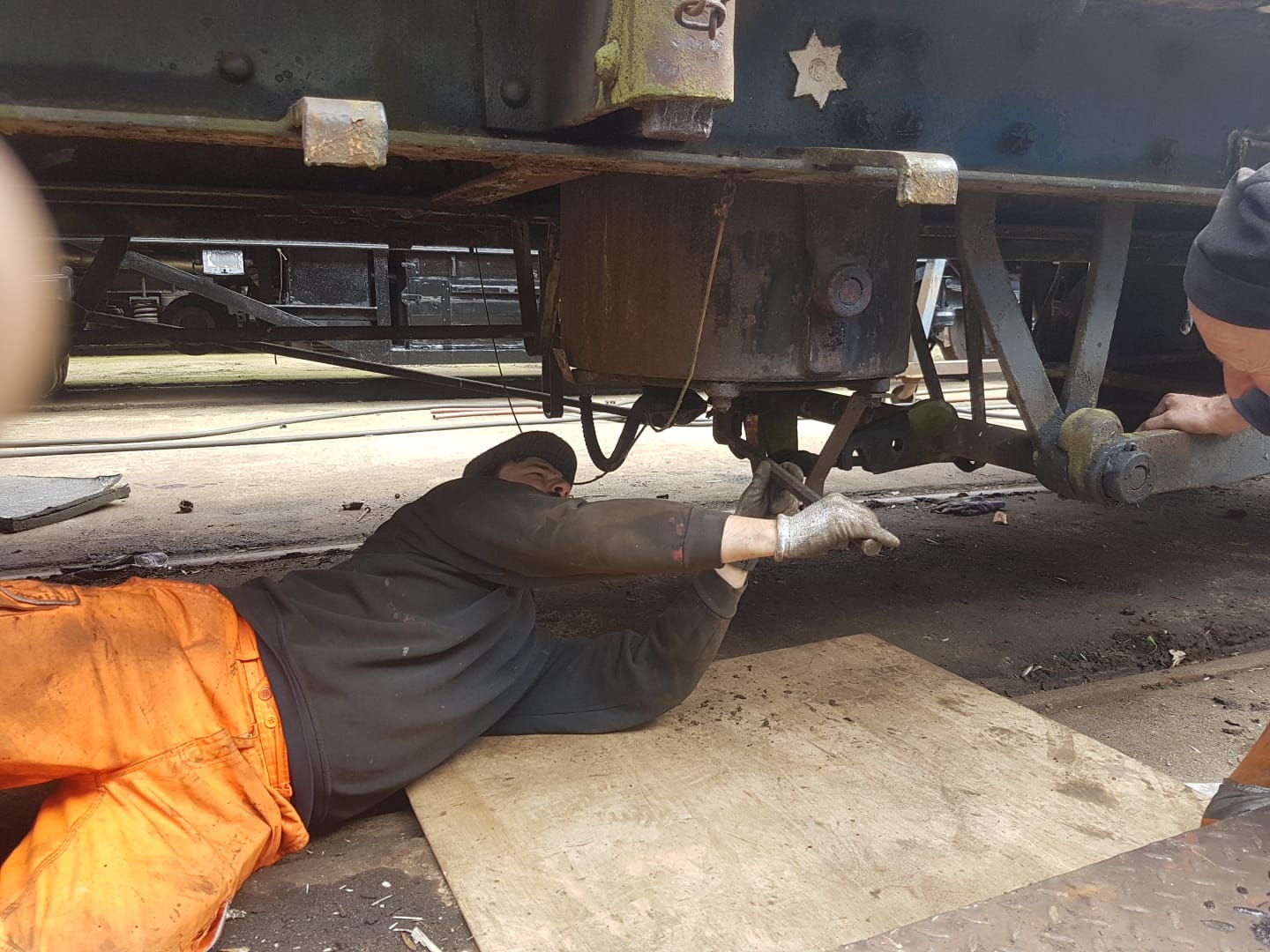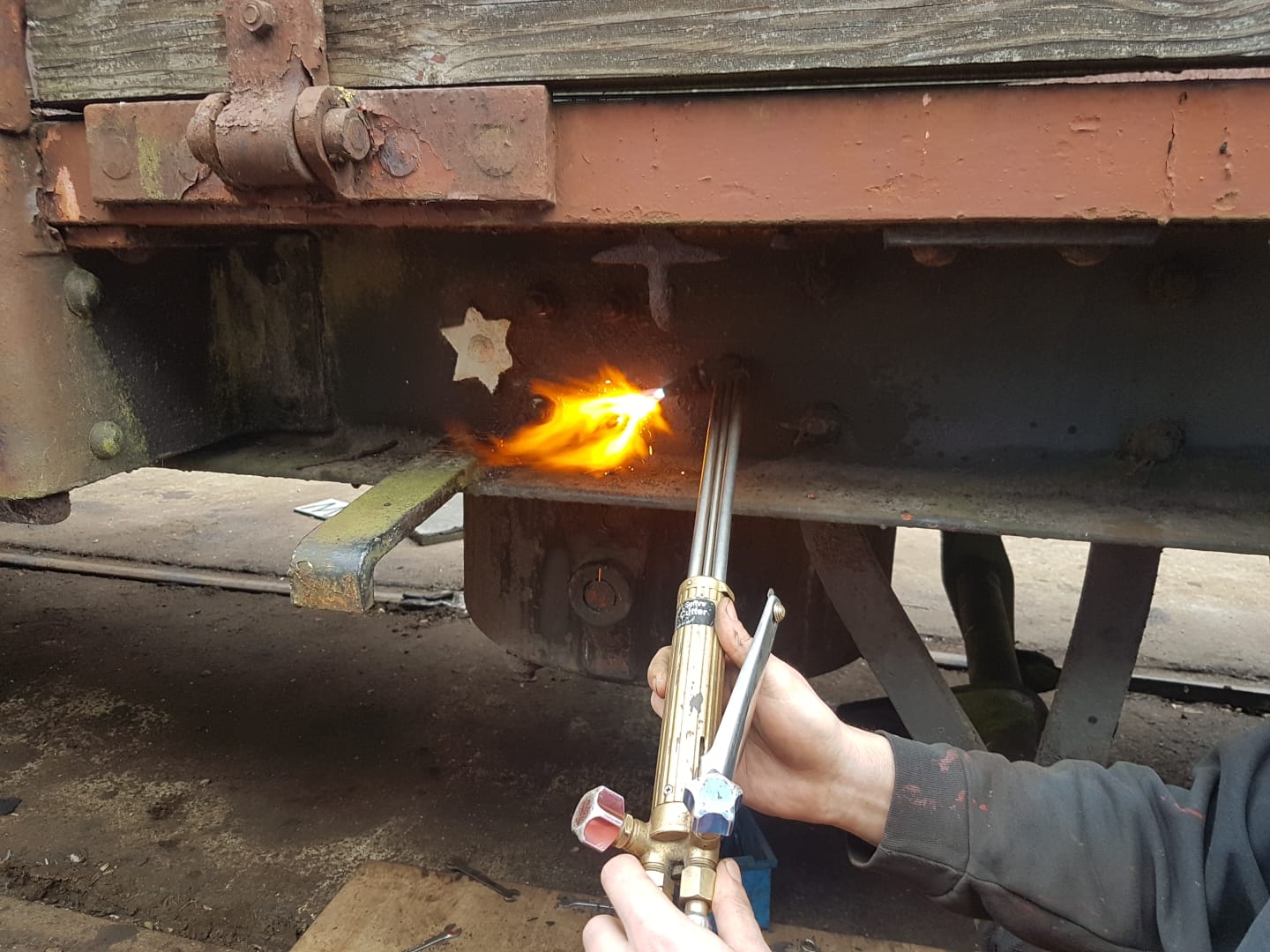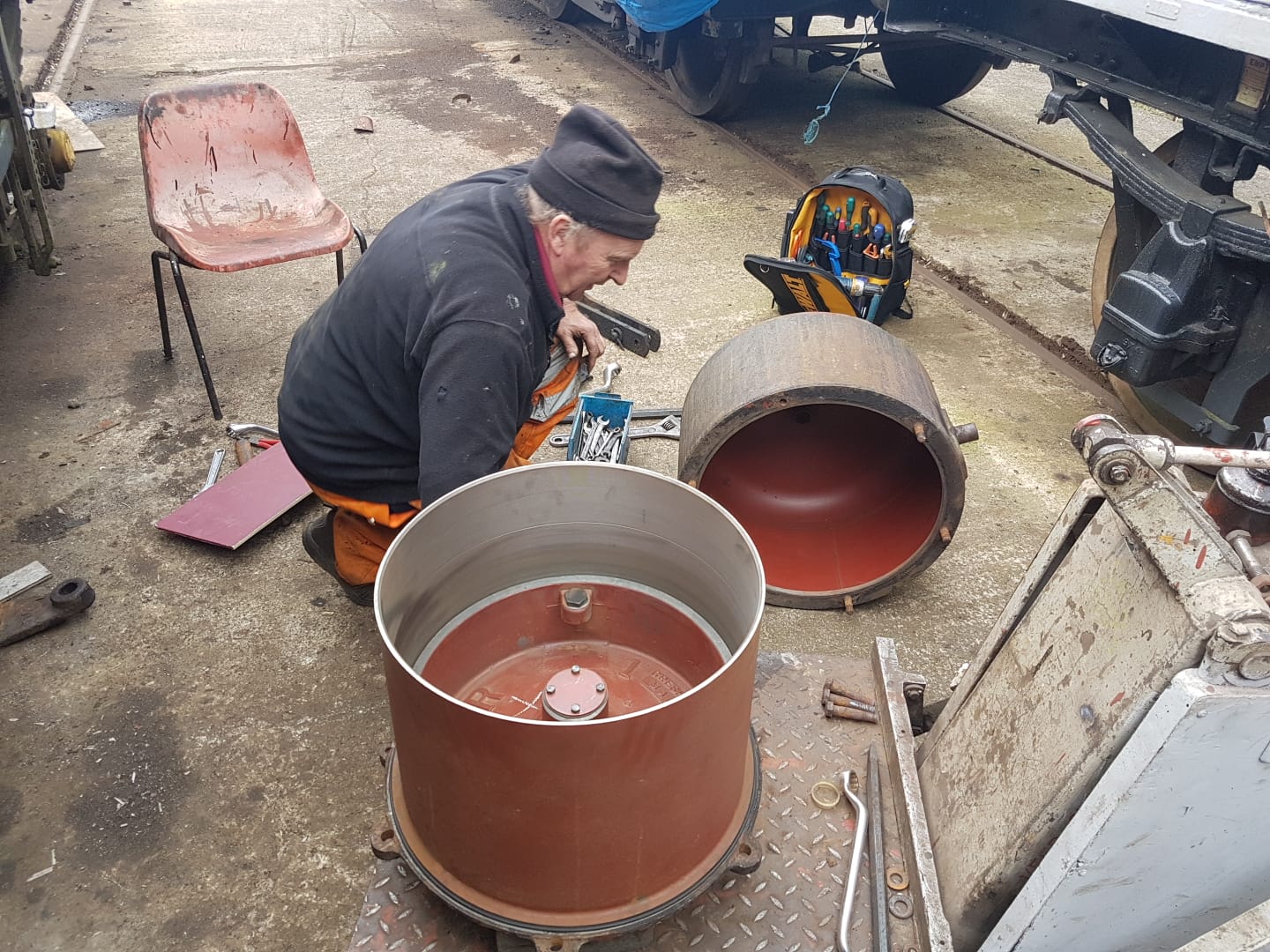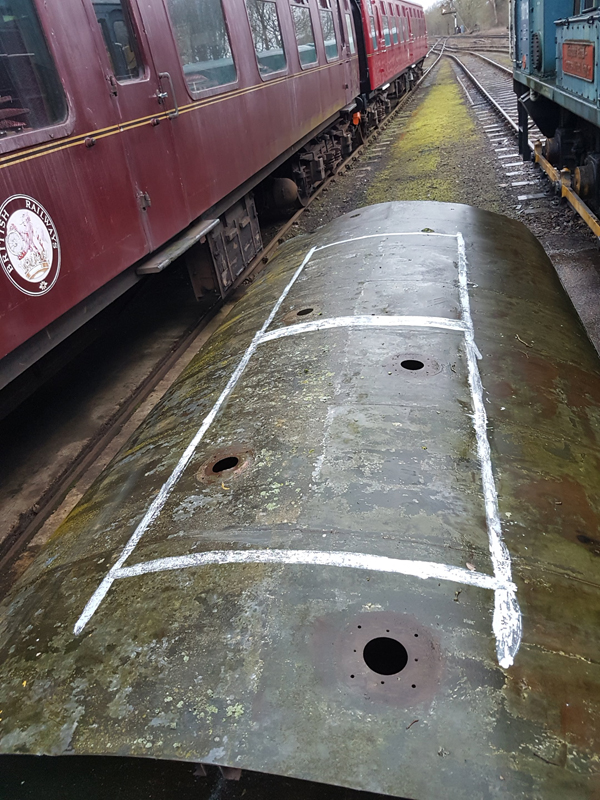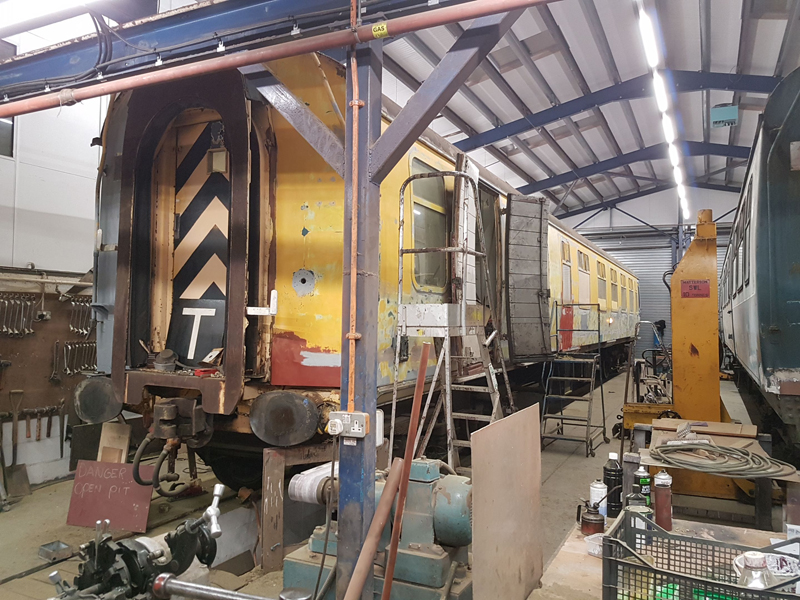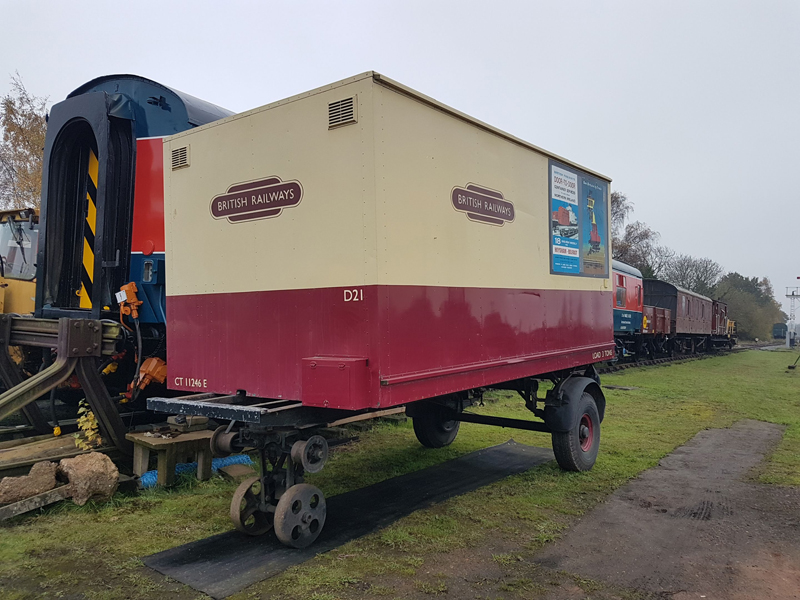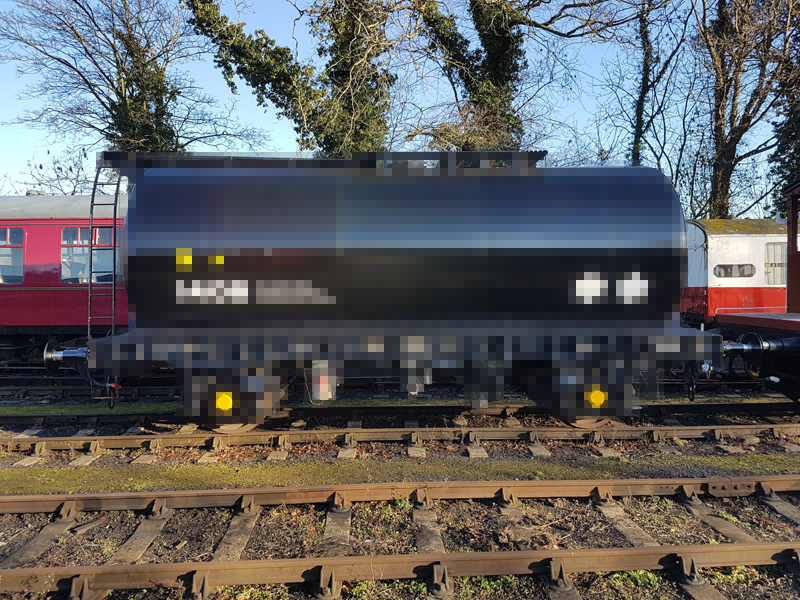
Having spent a week looking at images of SR Pillbox brakes my thought was S56010‘s stovepipe is too tall. Although within the loading gauge we made the decision to lower it.
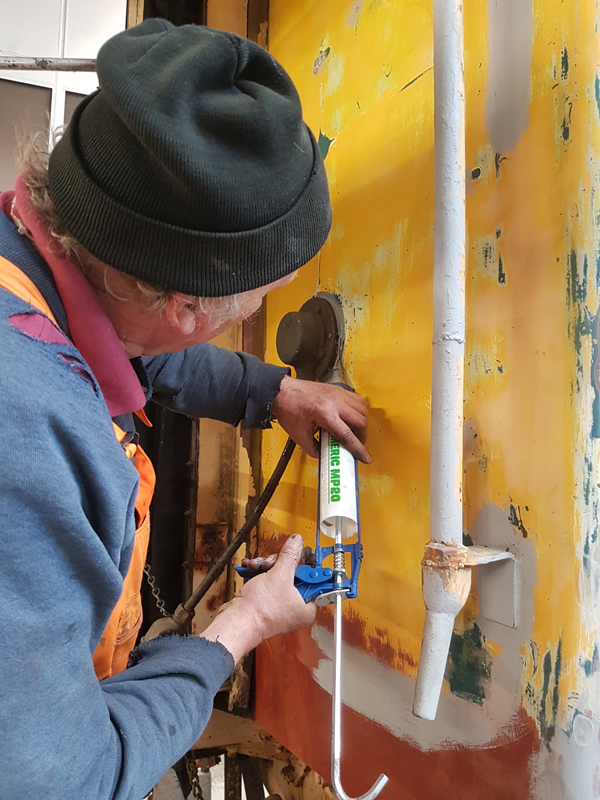
Once lowered I applied heatproof sealant between the Outer Stovepipe and cast roof fitting and the inner and outer stovepipes, both externally and internally.
Once this had cured we moved to a preservation first. Since its arrival in 2005, the brake van has never had a stove. Having now fitted one we lit the first fire in at least 13 years.
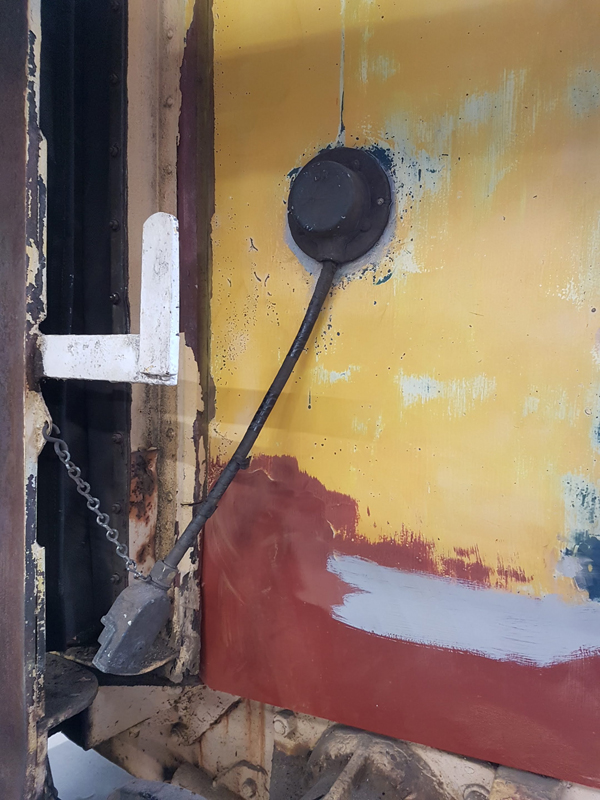
In the week I had purchased galvanized buckets, dustpan and “fire irons” for the van when I dropped these off I also added the earthing cable for the stovepipe.
In the now warmed van, Ross and I fitted the ducket head cushions for the Guard.
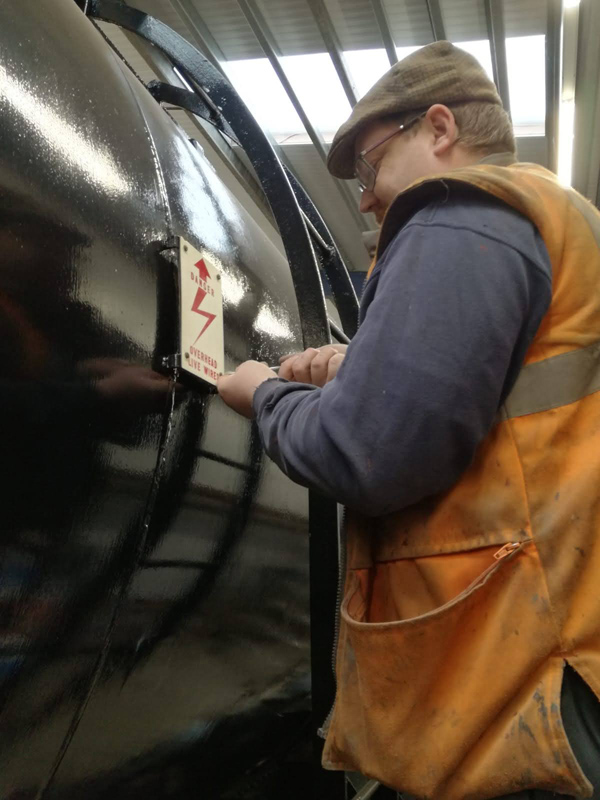
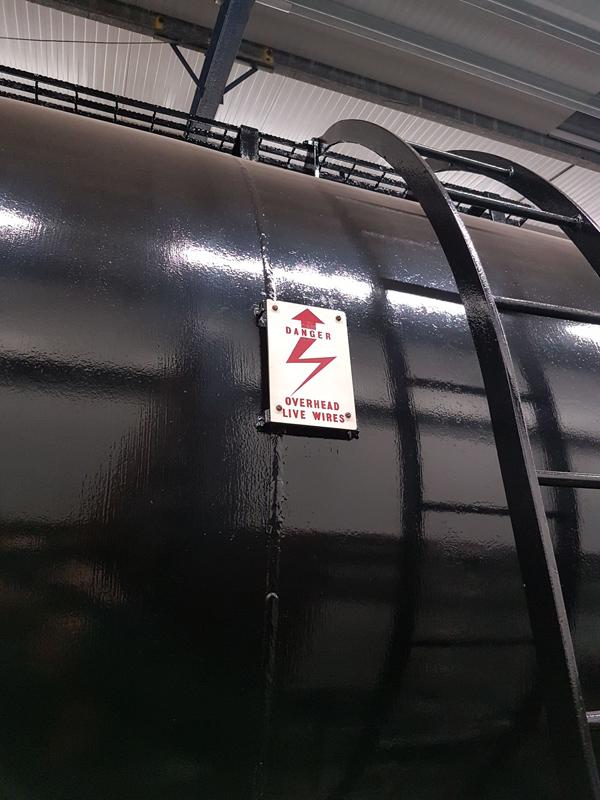
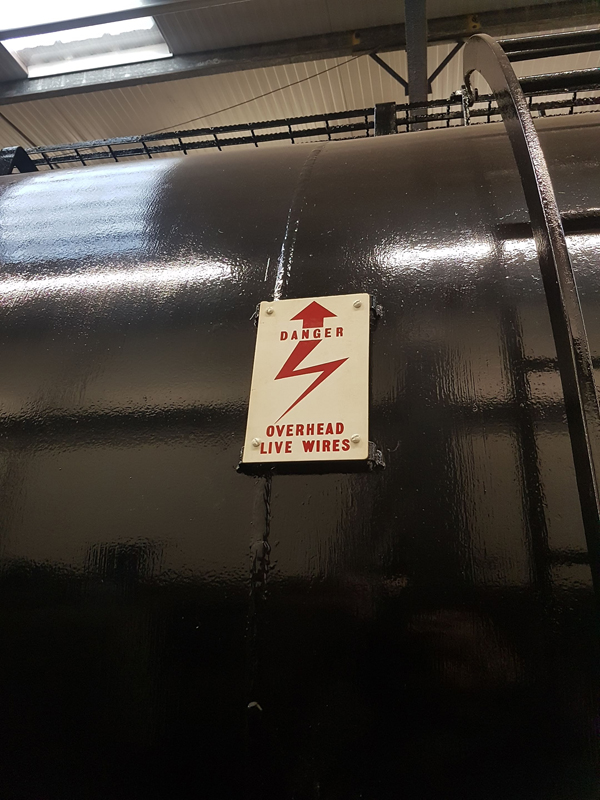
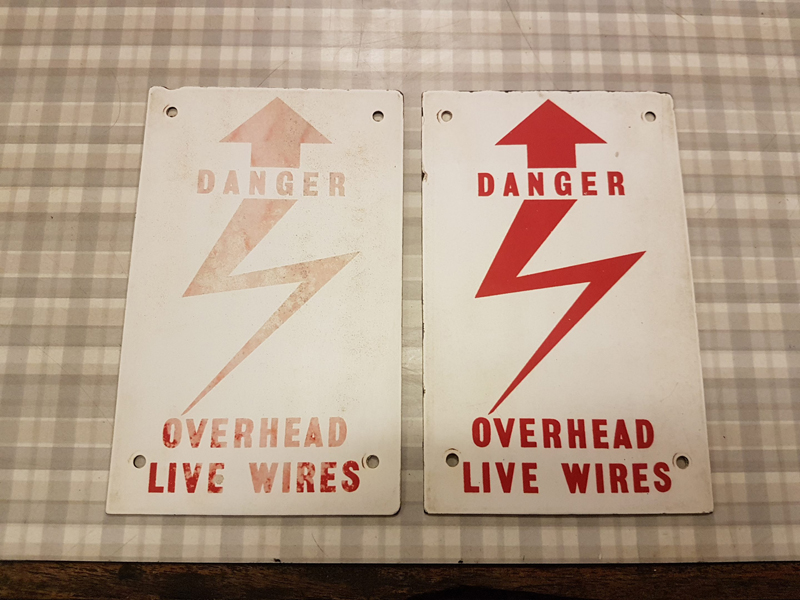
To finish off Saturdays tasks the original stove pipe sign which was saved when the interior was dismantled was refitted in its original position.
On to Sunday and the main task was the final fitment of all the upholstery. Ross and I completed the east side cushions and I fitted the Guards cushions that fits above the main backrests and finally, all of the staples were painted black.
The main cushions were also screwed into position from outside the duckets and the screw heads then painted by Jake.
Whilst I had the black paint out I also added a BR(S) to the short circuit bar.
The whole teams’ attention then turned to the fitting of insulation to the North end door. During our test fire of the stove, we found if the door was left opened it started smoking. So we added insulating material, steel covers and Jake primed them.
One more morning of work left and then we need a new wagon to work on. Next week you’ll find out which.
A small update this week, due to Great War Great Central Event, and the slow winding up of the Southern Brake van.
The event that we have been building up to for months has now taken place. For the centenary of the Armitice, Jack Shaw has been preparing this event based around the First World War, to commemorate those who lost their lives. For the event, as you’ve read here, our Warflat and Weltrol have been stripped and re-painted into a livery appropriate for the period. Most of this work was done by Matt, with a little bit of help along the way from others. Thank you Matt for all the work you put into these vehicles. They look great, and you should be very proud of your efforts. Both Matt and I dressed up as WW1 Royal Engineers for the event to staff the footplate of ‘ROD 1912’ (O4 63601) and talk to people as they come aboard the locomotive.
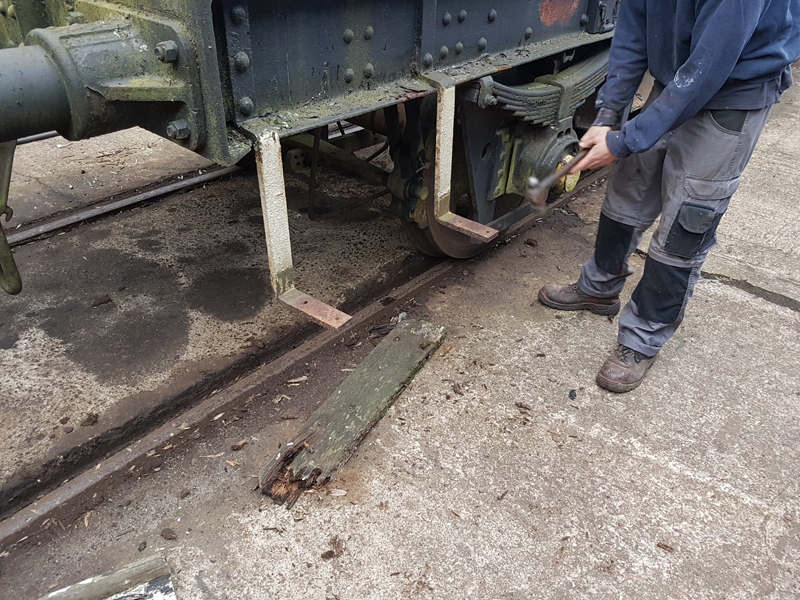
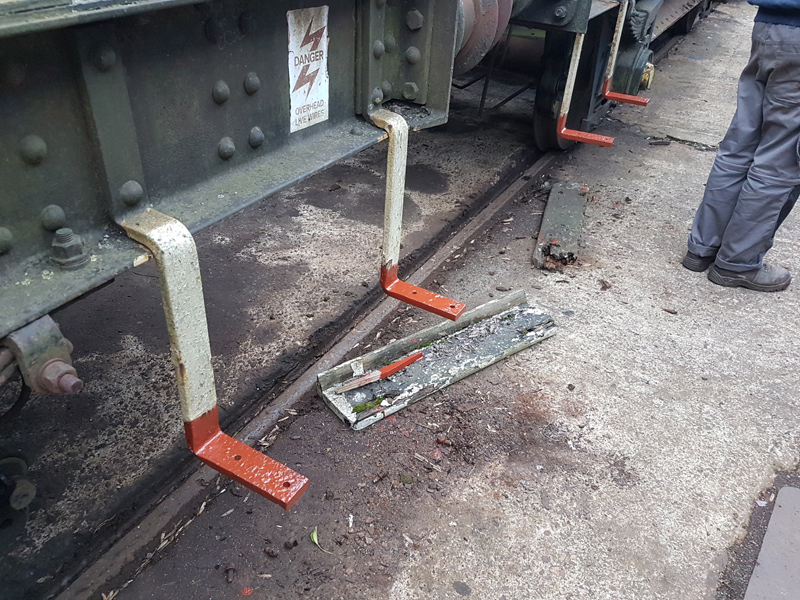
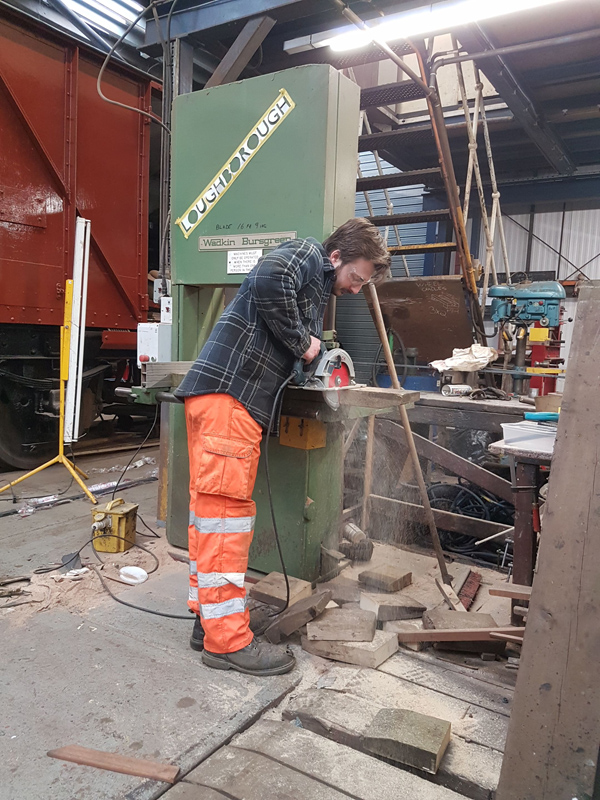
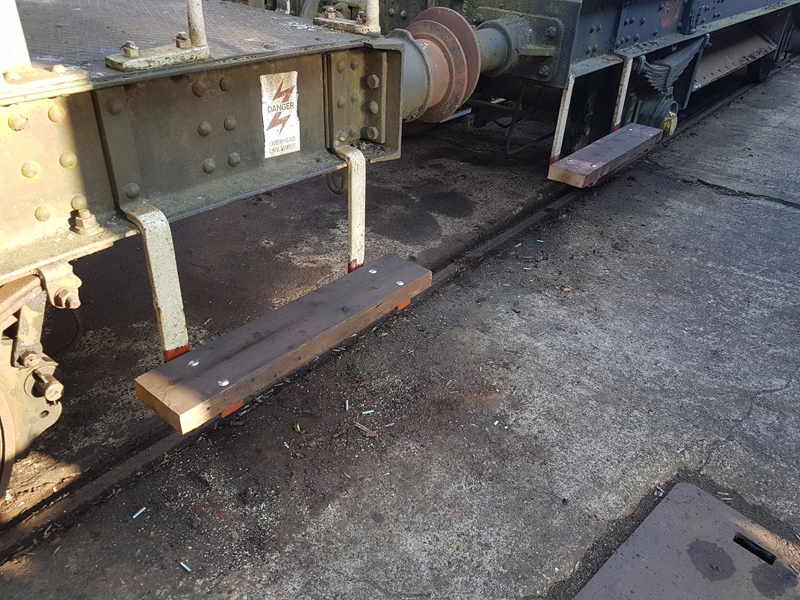
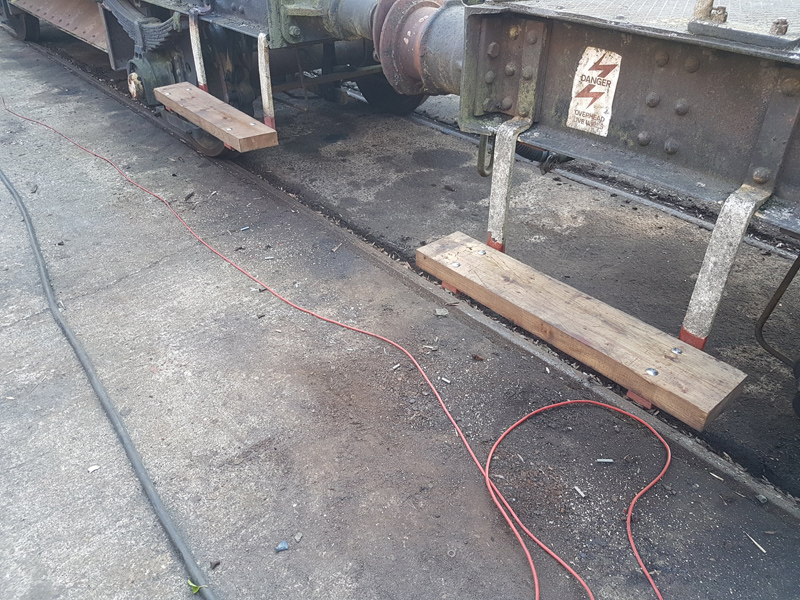
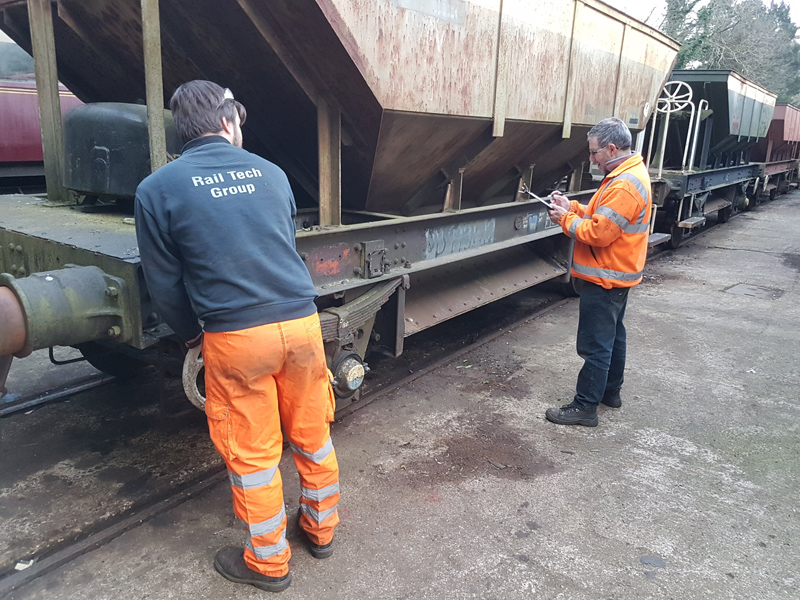
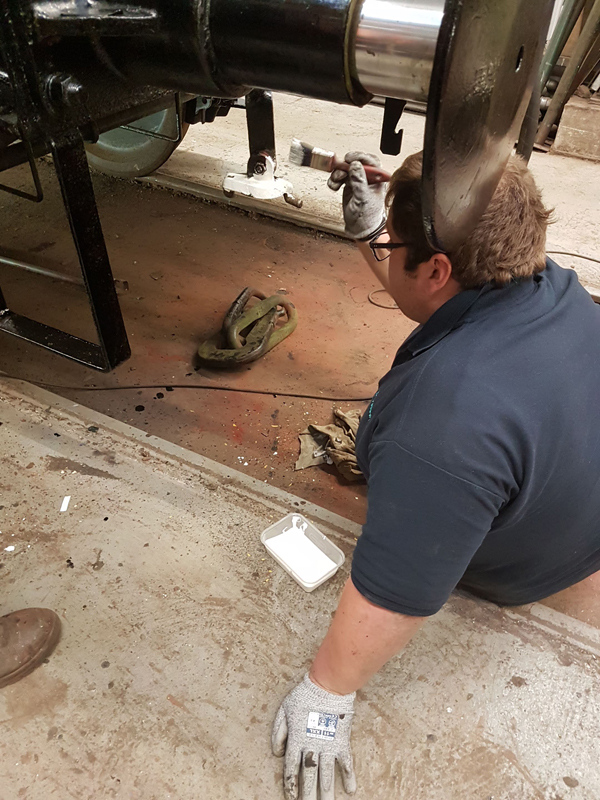
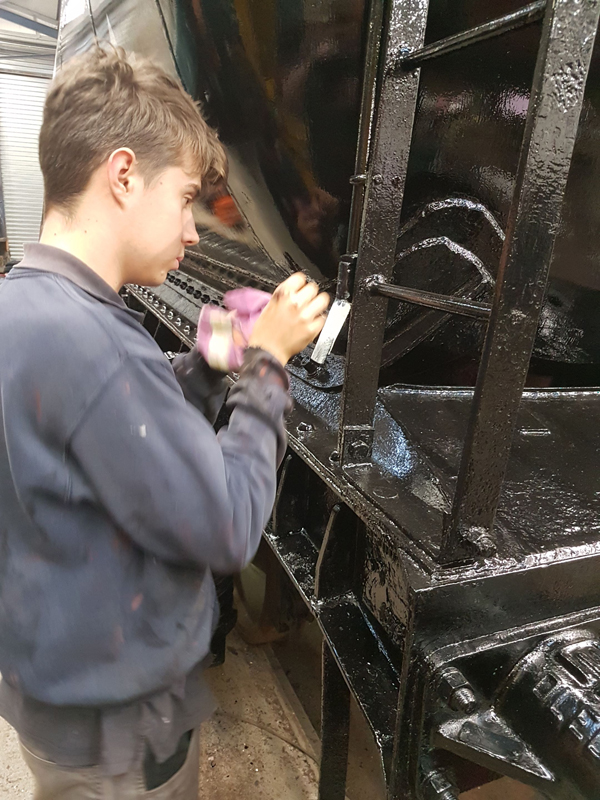
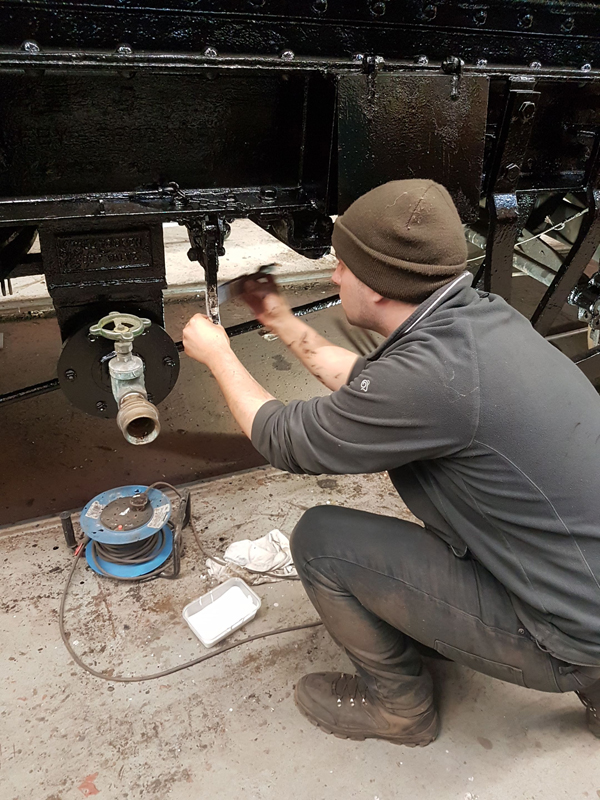
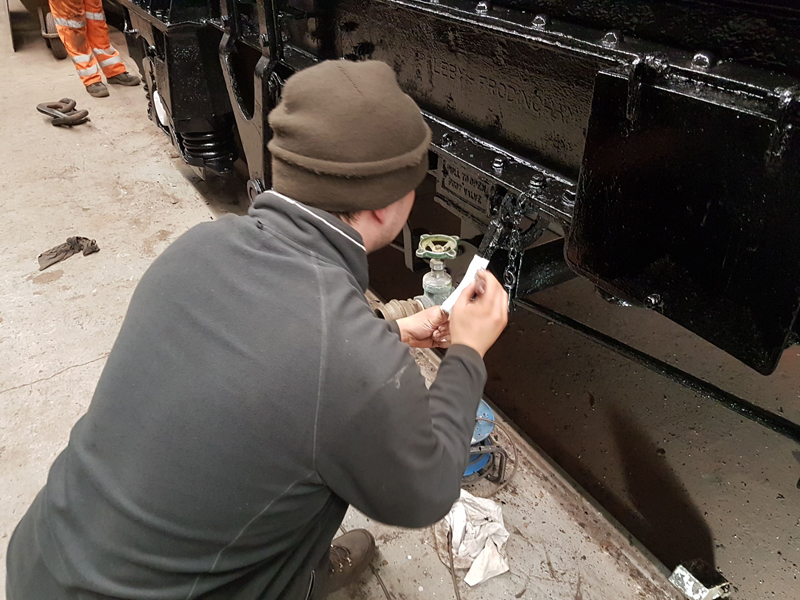
Nick and Jake have completed a small amount of work this weekend on the Southern Brake (S56010) Both, armed with a paint brush, put the finishing touches to some of the interior details, which leaves the upholstery to finish and an outer lower step-board to change. Last week I said that the stove would be lit for the first time in the van, but this will now take place next week. We still also have to make a chimney cowl and seal around the chimney to prevent water leaking in. I have cut out the leatherette for the seats, and this now needs sewing up and stapling to the cushions.
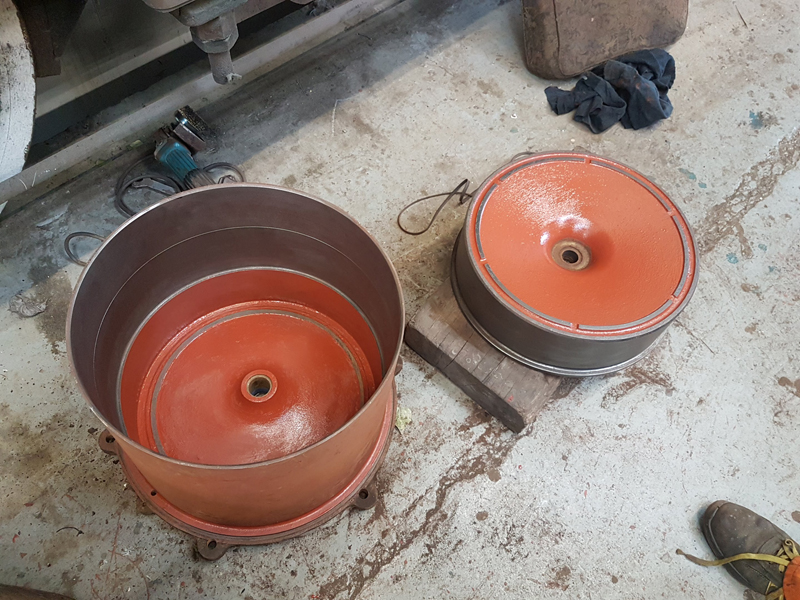
Work at Quorn Wagon & Wagon continues on the SR brake (S56010), and preparation work carries on for Great War, Great Central with Matt working on the ‘re-branding’ of the O4.
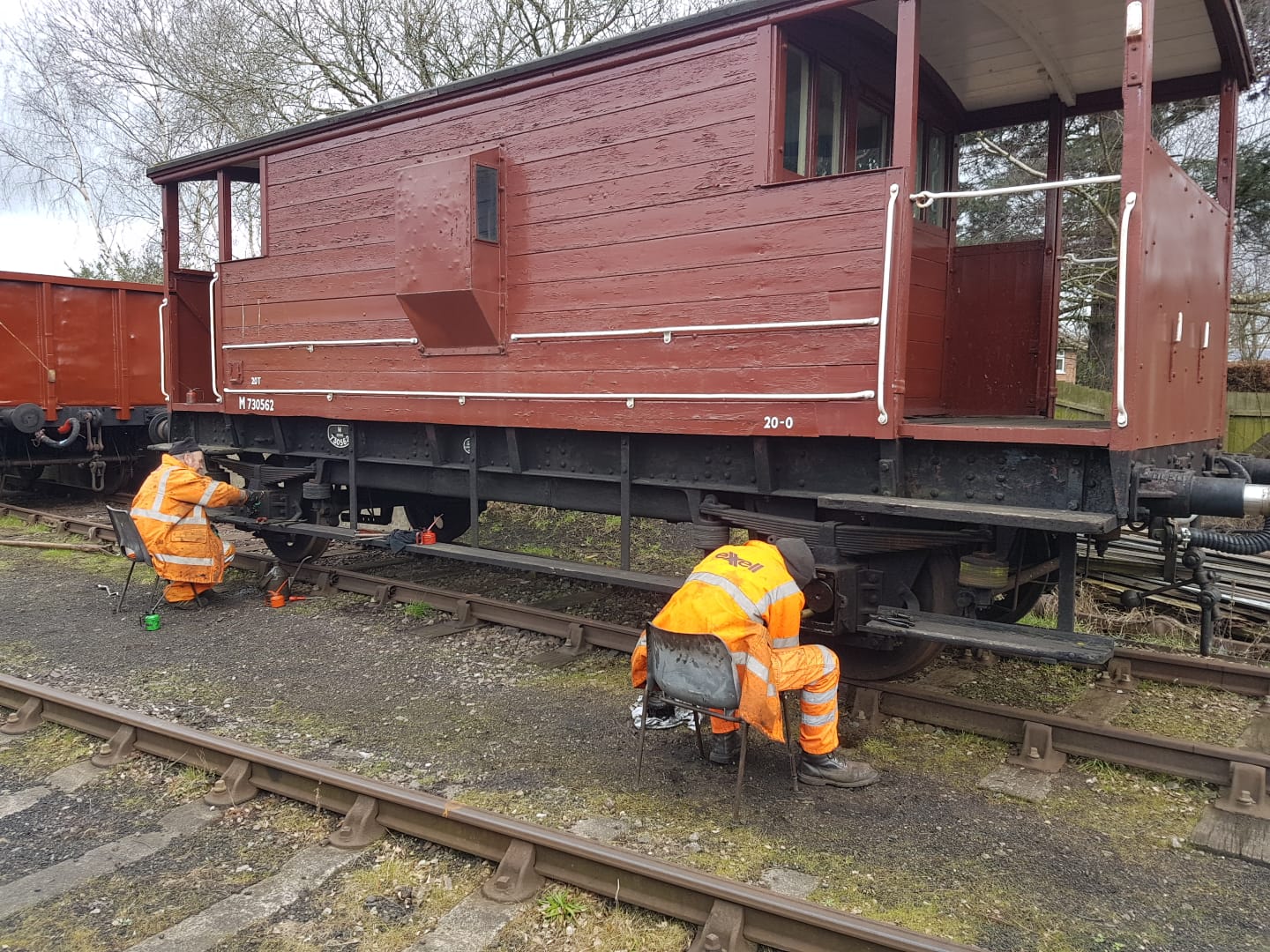
Saturday saw Jake painting the veranda ceilings in white gloss to match the BR and the LMS brake (B954268 and M730562), whilst Nick and I dealt with a misbehaving heater and extension cable in the mess coach. After Tea, Nick and I cut out the seating boards ready for upholstering. Matt spent the day cutting letters out of magnetic sheet for the Great War, Great Central event, once they had been cut out, he painted them in gloss white.
Back to the brake van on Sunday with Nick, Jake and I put a 2nd coat of white on both veranda ceilings, the ‘so called’ one coat paint had failed us! Turns out the verandas aren’t really meant for 3, which resulted in much hilarity. Surprisingly, neither of the three of us got covered in any white paint. Once the mandatory tea had been consumed, Nick and Matt went to a local farm to retrieve an eBay purchase: a brake van stove, base and stove pipe! We have been planning to refit a stove in the SR brake since its rebuild started. the stove is something that has been missing for some time, and got so far as having the base plate in. The eBay purchase finishes of the puzzle.
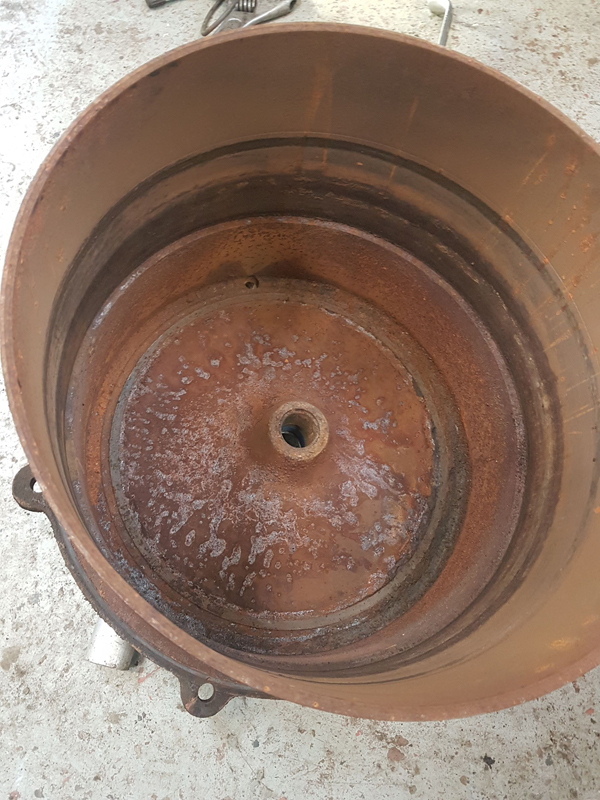
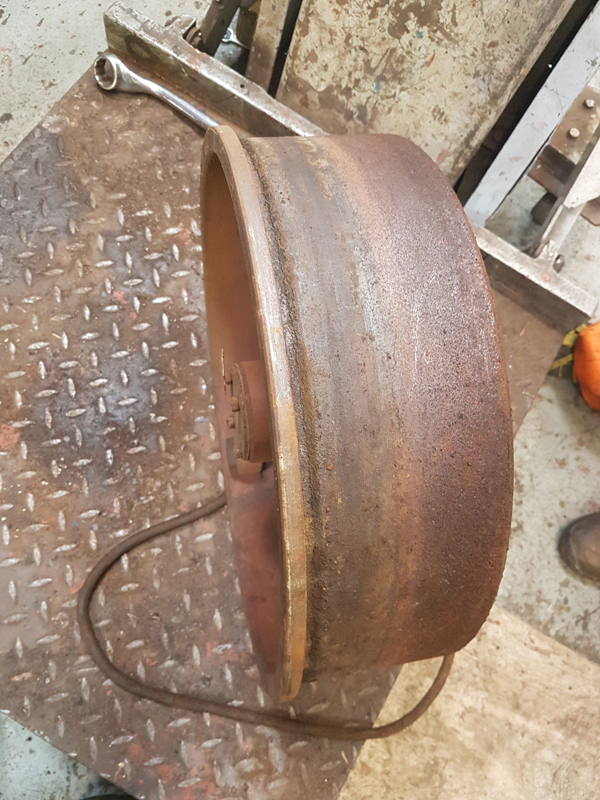
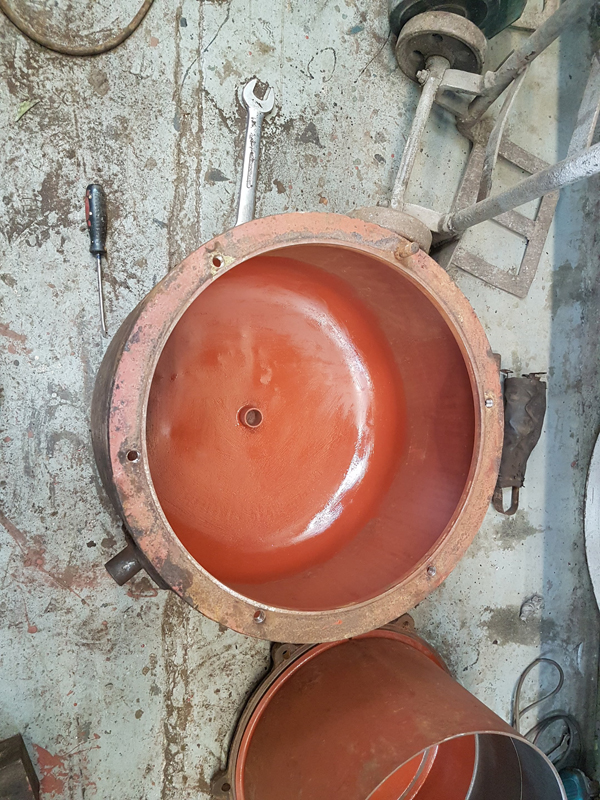
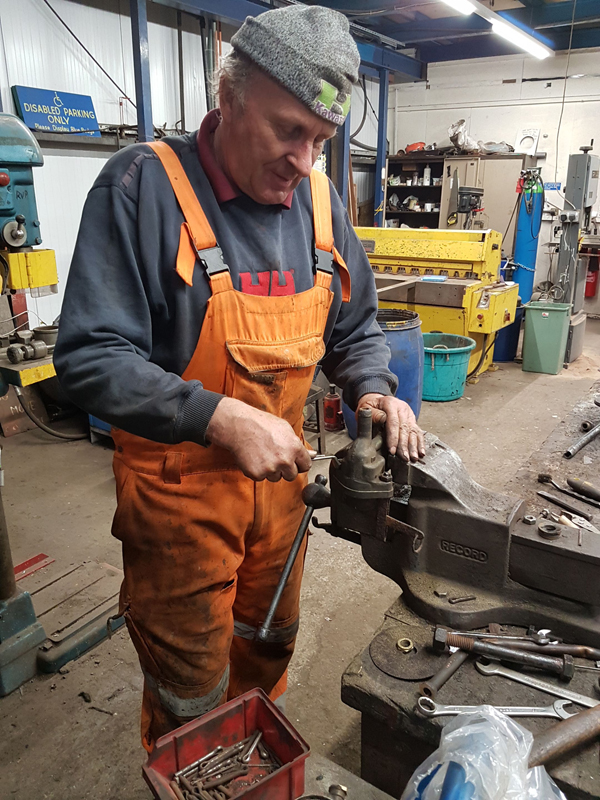
The stove was first de-scaled internally and externally, with some grinding taking place on the flue outlet so that the pipe would fit over. The stove was then fitted in the van, and using a highly accurate piece of wood, we began marking out the hole for the stove pipe for exit the roof of the van.
Drawing round the piece of wood, and then joining the diagonal corners and the resulting square gave us a x to aim for. Matt then drilled through the roof in the middle of the x to transfer the mark from inside to outside of the van.
Using the casting that holds the pipe, a circle was drawn around the drilled hole which was then cut out using a jigsaw.
Having now descending from the van, Nick and Matt then cut a similar hole in some insulation material and a steel sheet to protect the roof boards from the heat of the stove pipe.
The assembly was then taken to the roof and clamped into position to allow through bolt holes to be drilled to fix the casting, insulation and steel sheet to the roof. This was then sealed with mastic. The stove pipe we received with the stove was too small for the casting on the roof, and the cast iron stove pipe we had in store was too short to be able to be used. We decided to use a section of the cast iron pipe as a sleeve for the smaller steel stove pipe. We positioned the cast stove pipe so we could mark it for cutting. Having cut that down and putting it in position, Matt then carefully threaded the steel flue tube through the cast pipe and up onto the roof. to finish the job, Matt came up on the roof with the angle grinder (and some lights) to trim the pipe down to match the length of the cast pipe.
The finished result below. Alas we couldn’t light the stove this weekend, as it had got too late, but at some point next weekend the stove will have a ceremonial first lighting.
Whilst Nick and Matt worked on the stove fitting, I spent some time with my sewing machine building up a seat for the west side ducket. This was a pain to fit back into the ducket, so I am looking to review the assembly method so see if I can make it fit easier. It is at least comfortable and looks good.
Thanks for reading, and join us again for next week’s update.
As I stated in the last update I was on a week of earlies. Monday I made a start on replacing the windows of S56010. Unfortunately, there was only time to replace 5 out of the 6 vestibule windows.
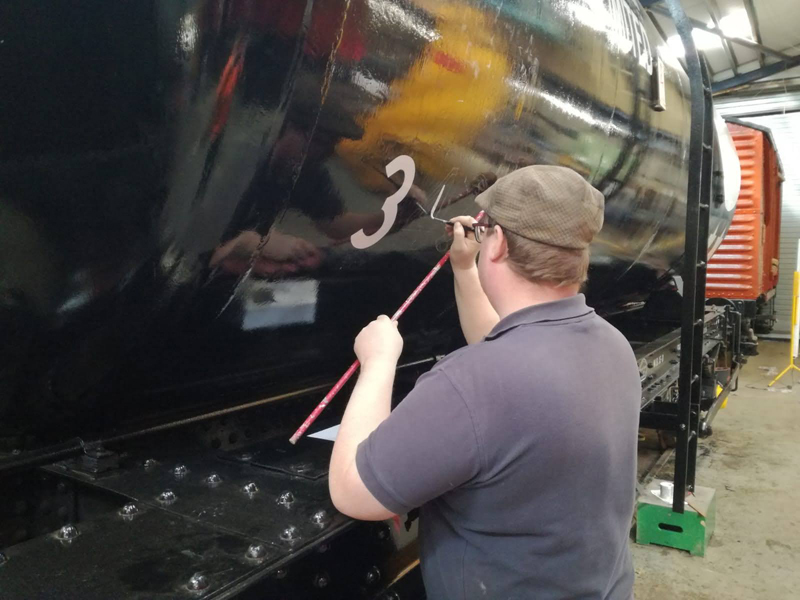
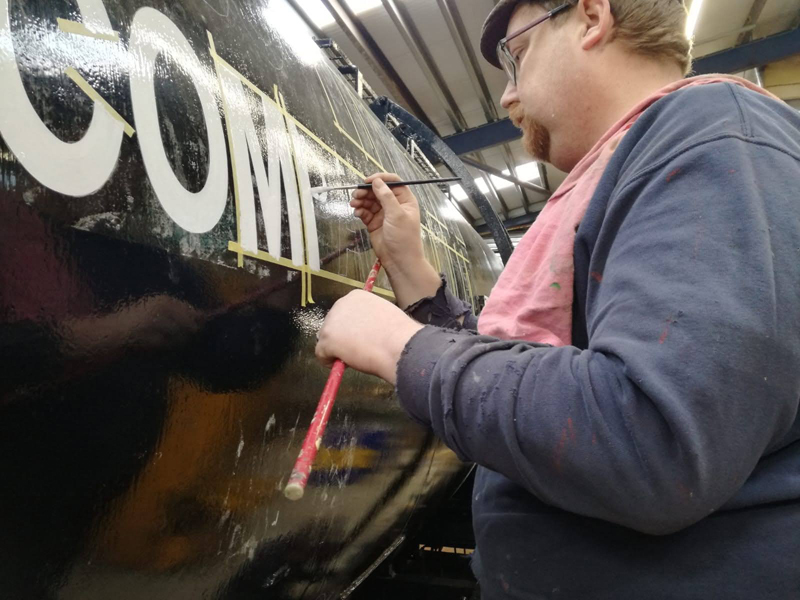
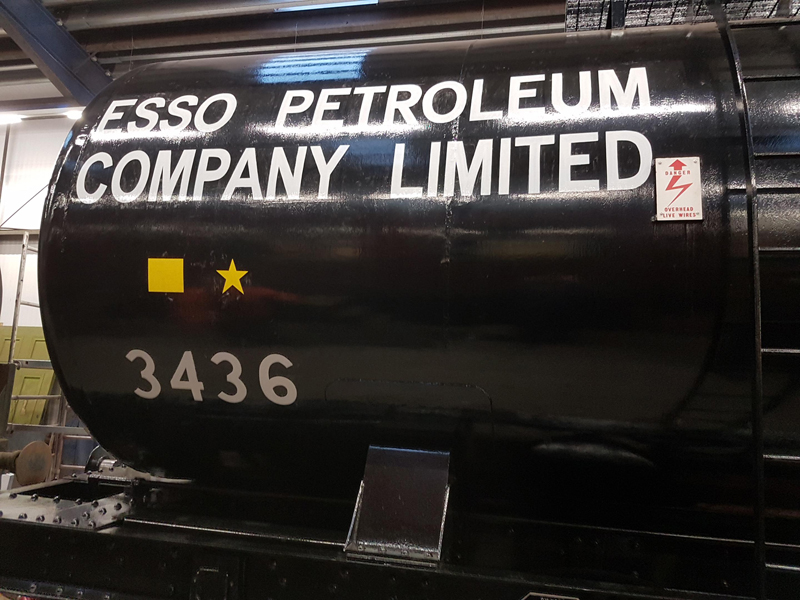
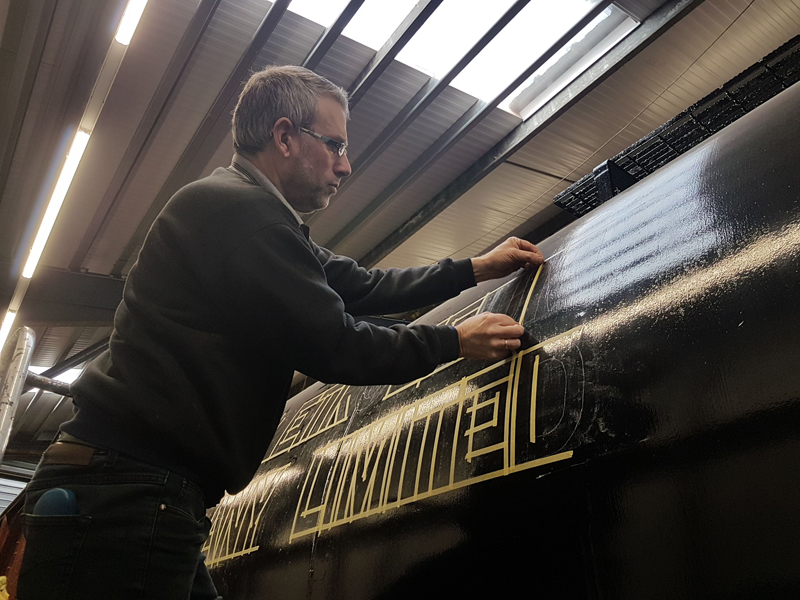
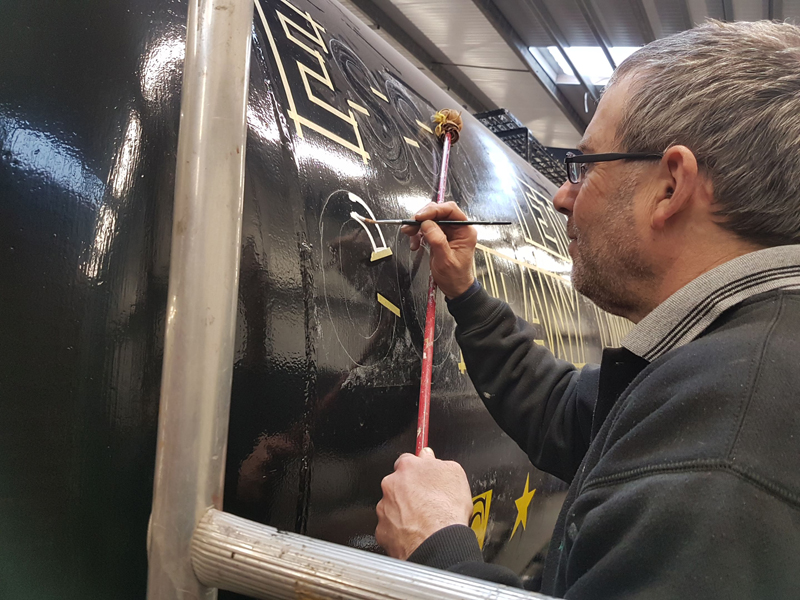
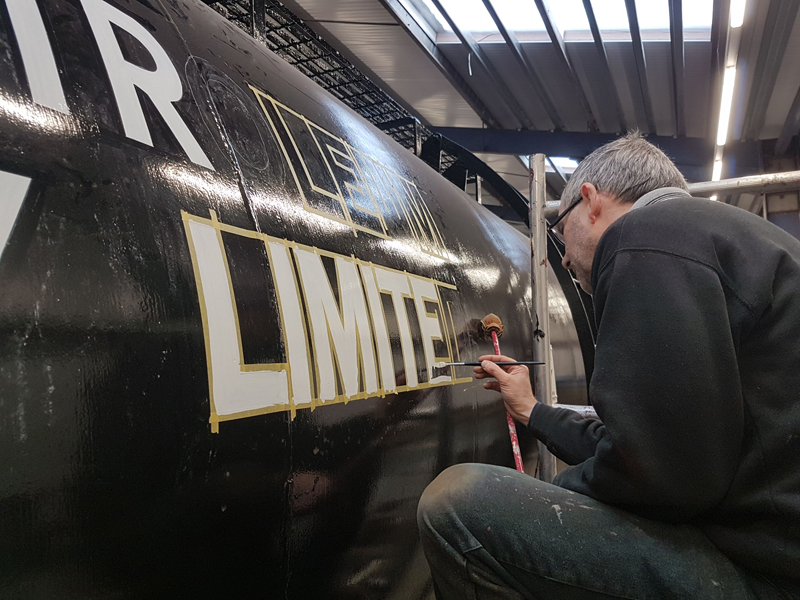
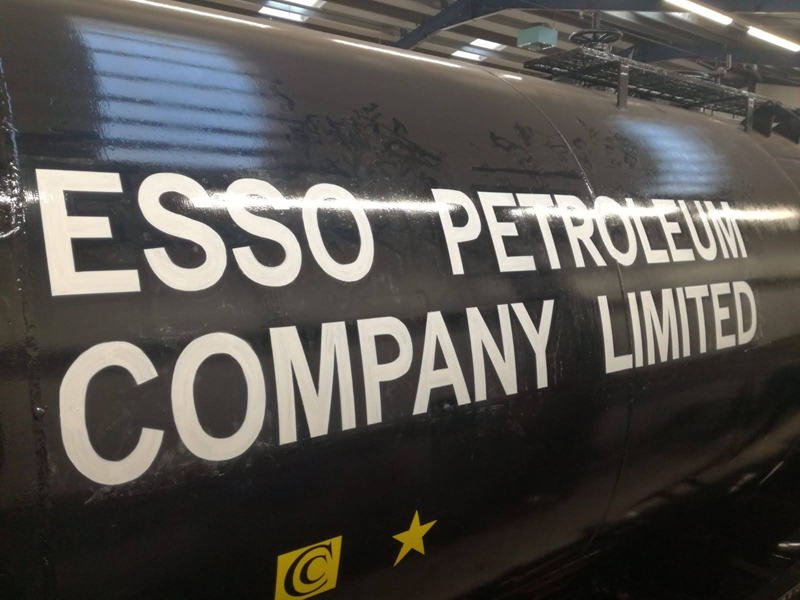
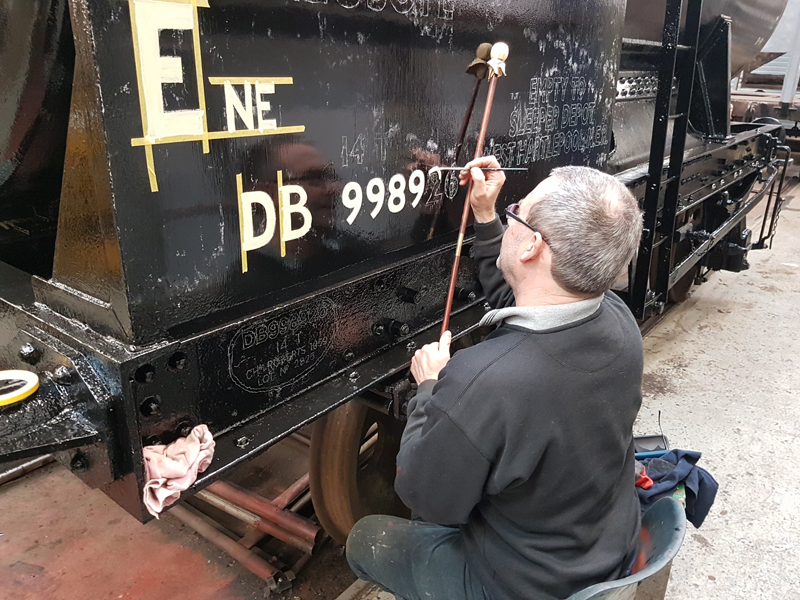
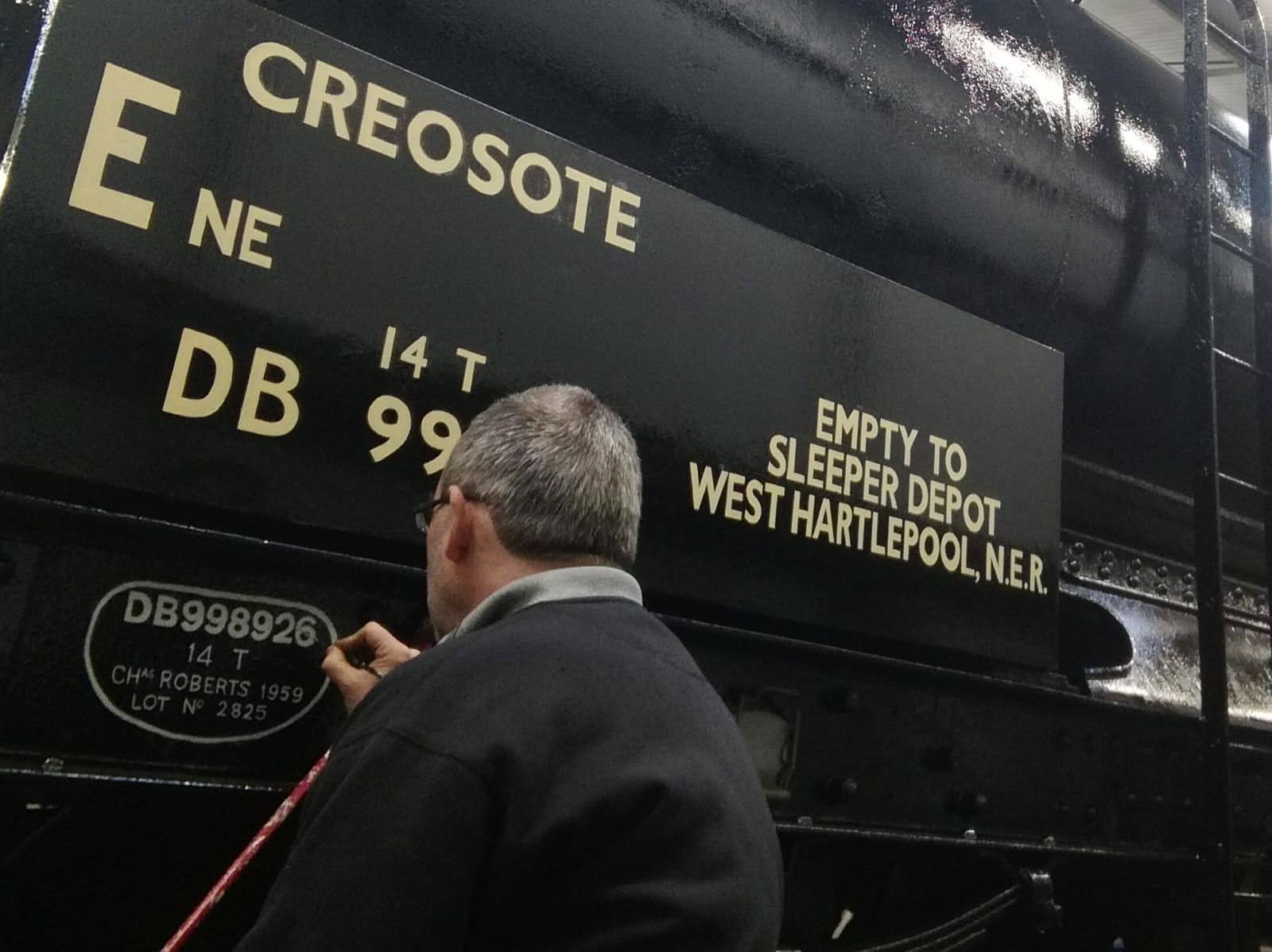
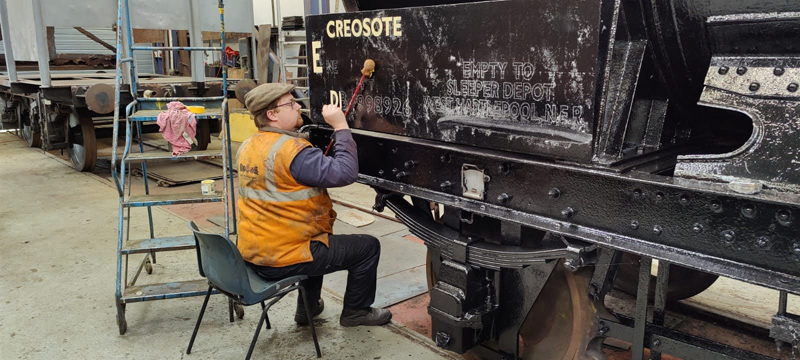
For the rest of the week, I have been carrying out work for Railway Vehicle Preservations as part of the ongoing preparations for Great War, Great Central on the 10th & 11th November. I have been Signwriting their Ambulance Coach in readiness for the event.
On to Saturday and Nick and Jake in attendance, before the weather turned for the worse they were able to paint the headstocks of S56010. The rest of the day turned to prepare for a number of future projects and generally tidying the sidings.
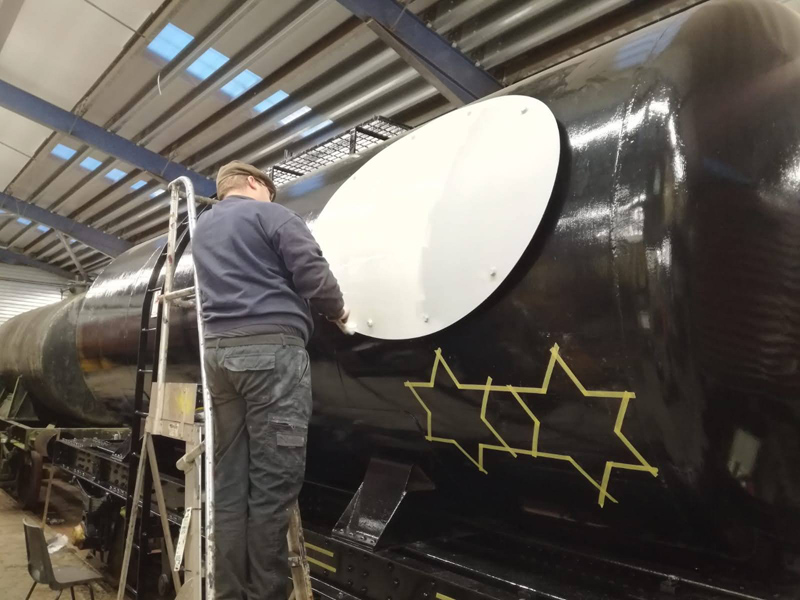
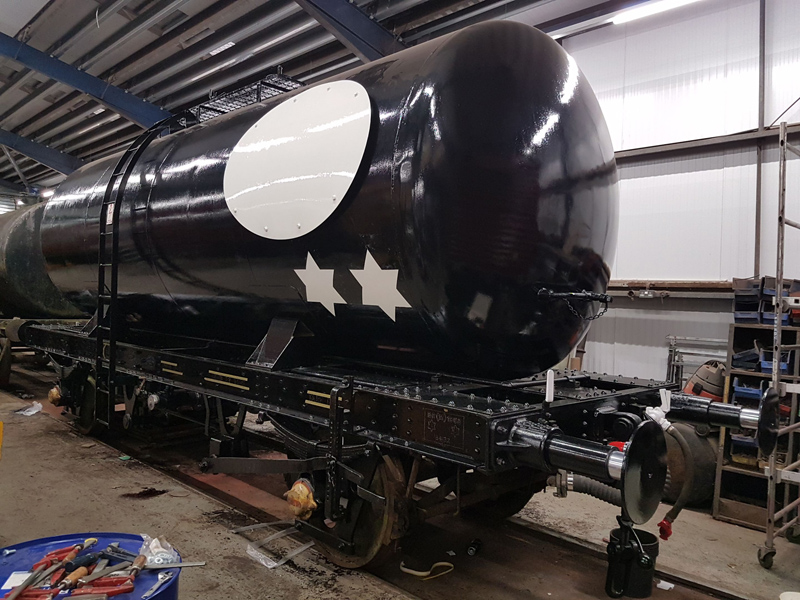
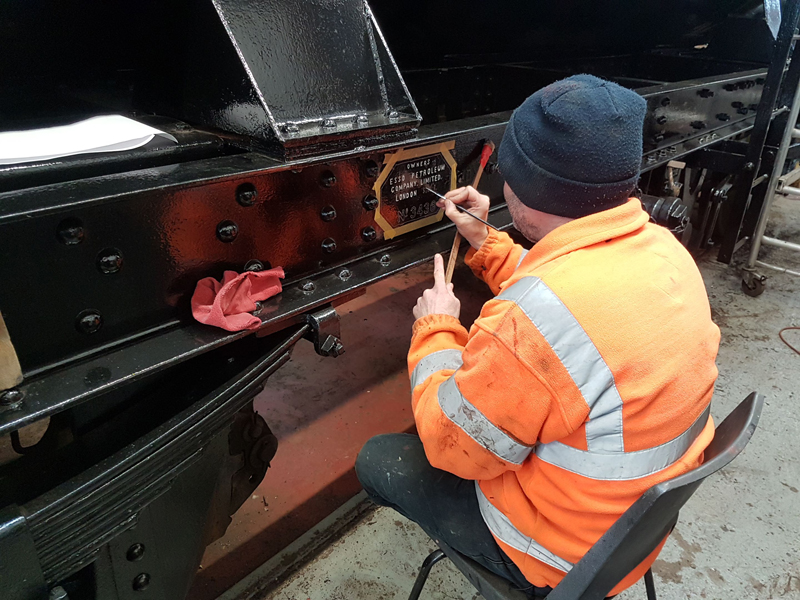
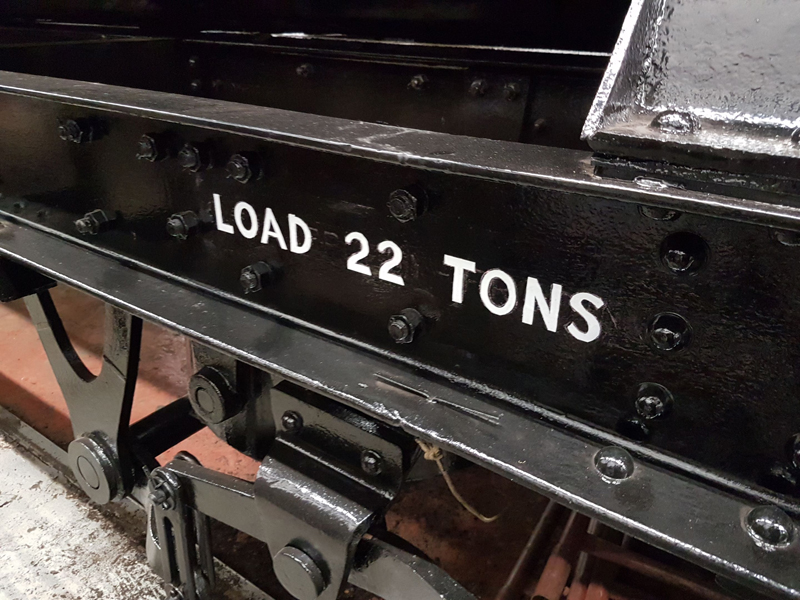
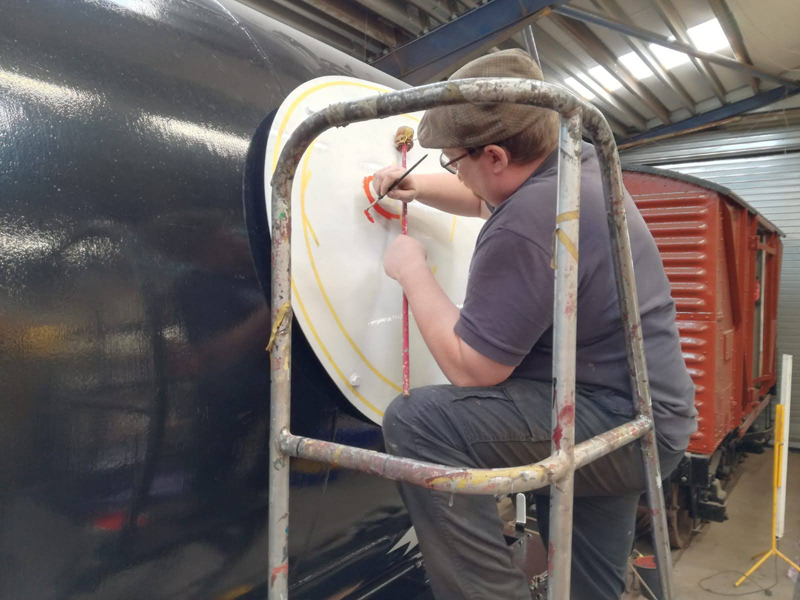
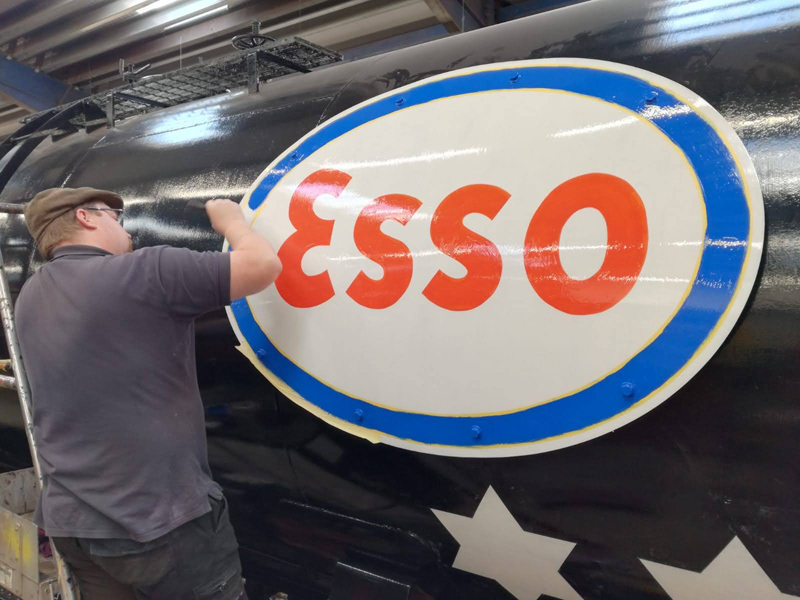
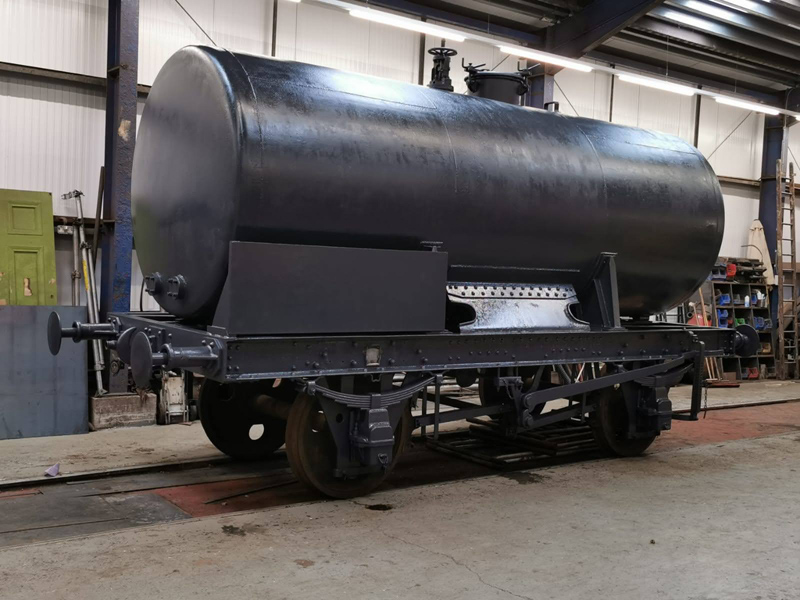
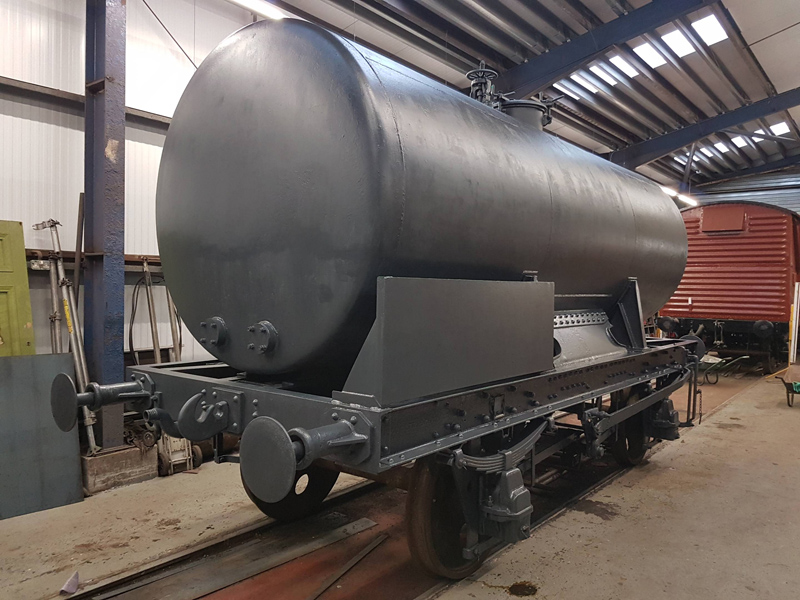
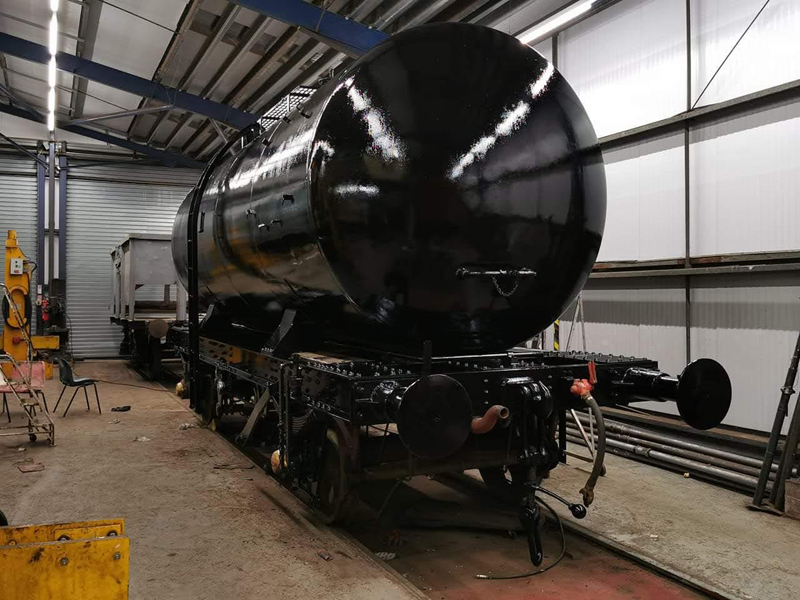
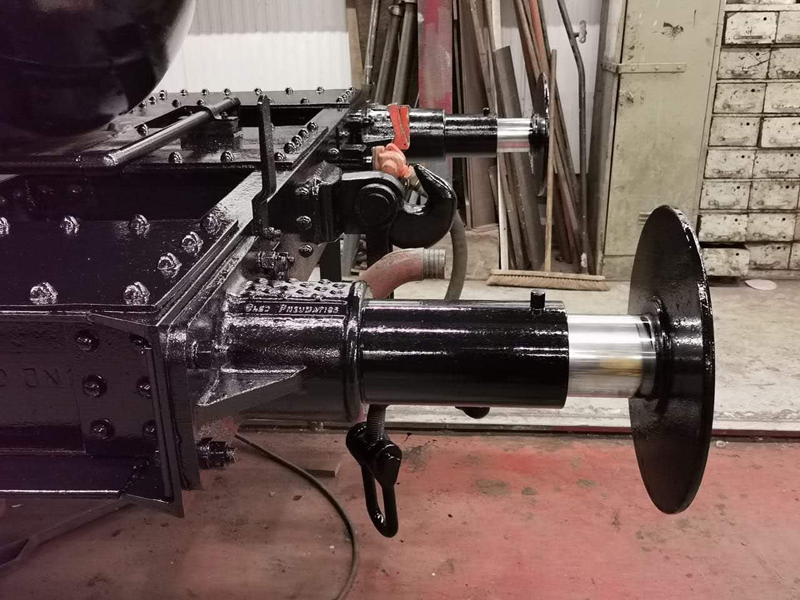
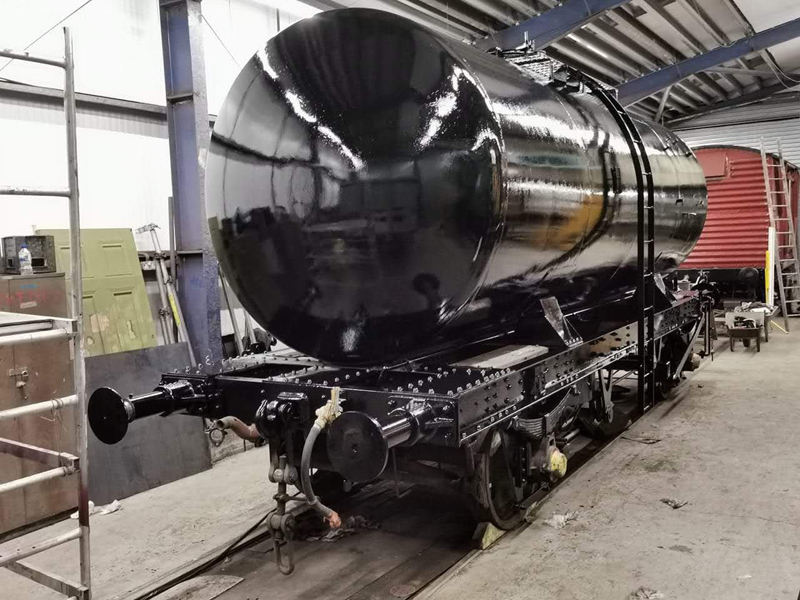
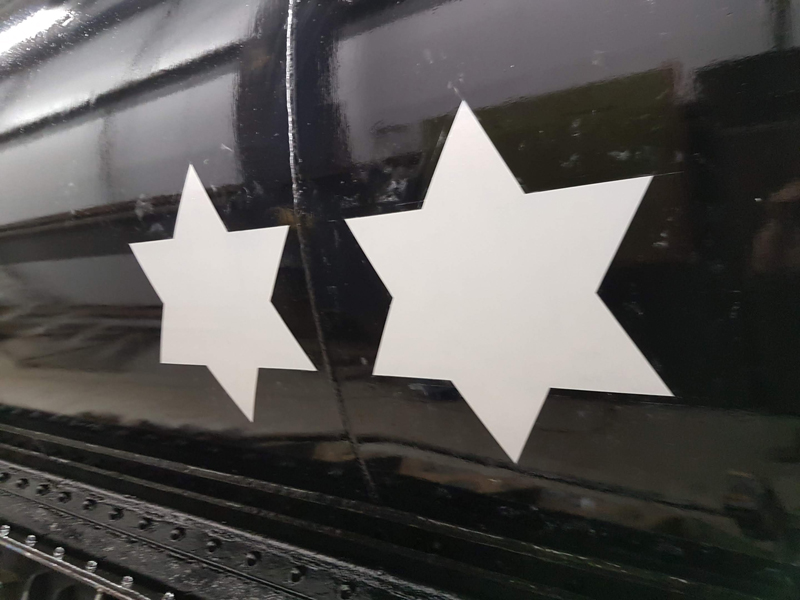
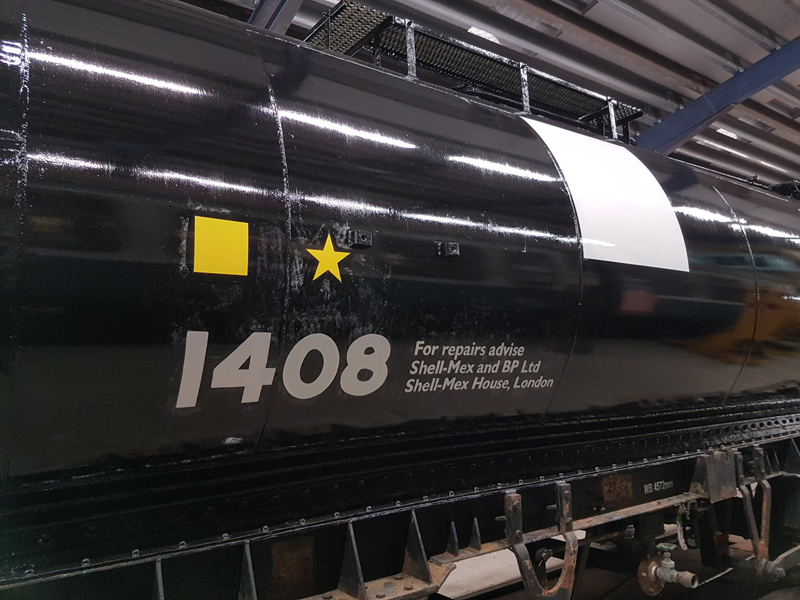
Sunday and everyone on site. Ross and Jake started with spraying the Bogies of the Tankflat as I added the final detail, the fictional registration plate. After the Remembrance event, this will be altered to more accurately reflect the vehicles 1942 origins. With these final details complete this brings a close to the repaint of this vehicle.
Back on to the Southern brake and myself and Nick completed the replacement of the van windows I began on Monday. Only one of the original panels remain as this was an original glass one still in situ and was easily cleaned up.
Ross and Jake then joined us to add the external white details, Handrails and Lamp brackets.
As can be seen below the vehicle is very much approaching completion and has come along way from the poor state the vehicle had reached.
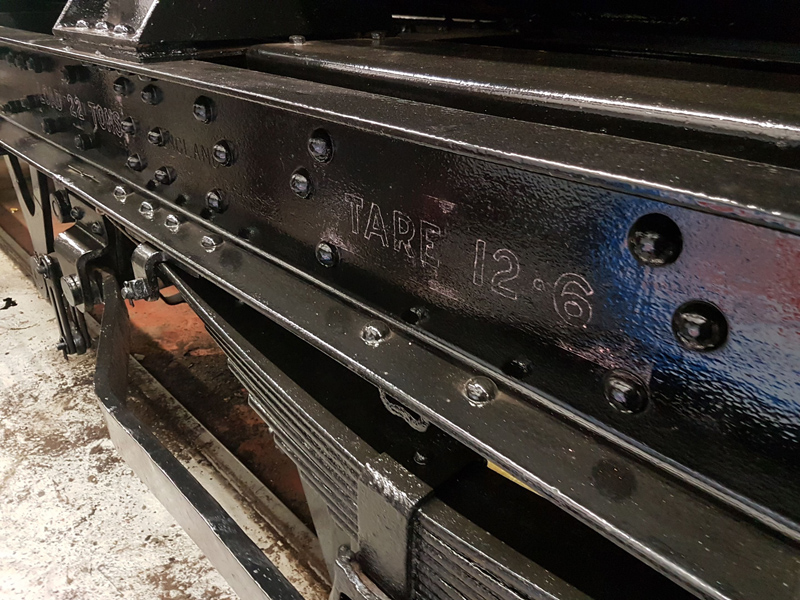
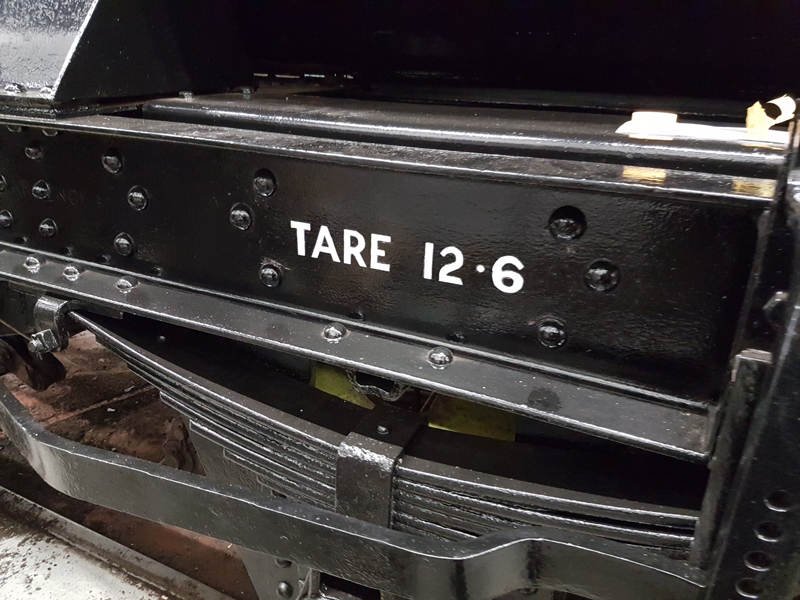
Just myself and Nick on Saturday for me a full day of signwriting and for Nick a full day of scraping. Nick prepared the underframe of S56010 for painting, sole bar, headstocks and running gear. My first task also centred around S56010 applying the running number, wheelbase and tare.
I then moved over to the Tankflat. Although it is a 1942 built vehicle for the purposes of the Remembrance event it is receiving the livery of a first world war flat. Visually there is little difference between a 1st or 2nd World war built vehicle. Those built in the 40s are able to carry a load of 50T the earlier ones being 40T. This is distinguishable by the riveted L angles along the entire length of the main frame, top and bottom.
The marking ETAT was added to vehicles that went to France and translates as State, referring to the National State Railway, this means the vehicle is maintained and operated as part of the French railway system. When crossed out the maintenance and operation returns to the War Department and the Railway Operating Division.
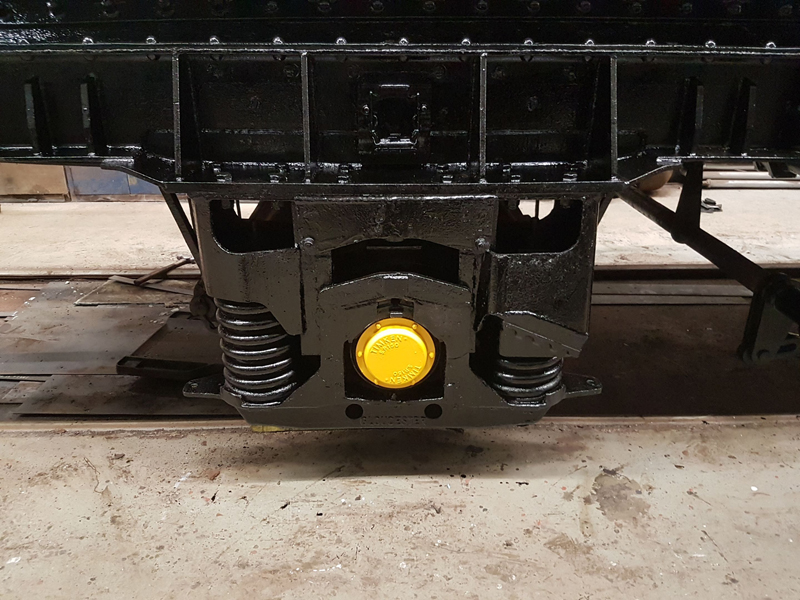
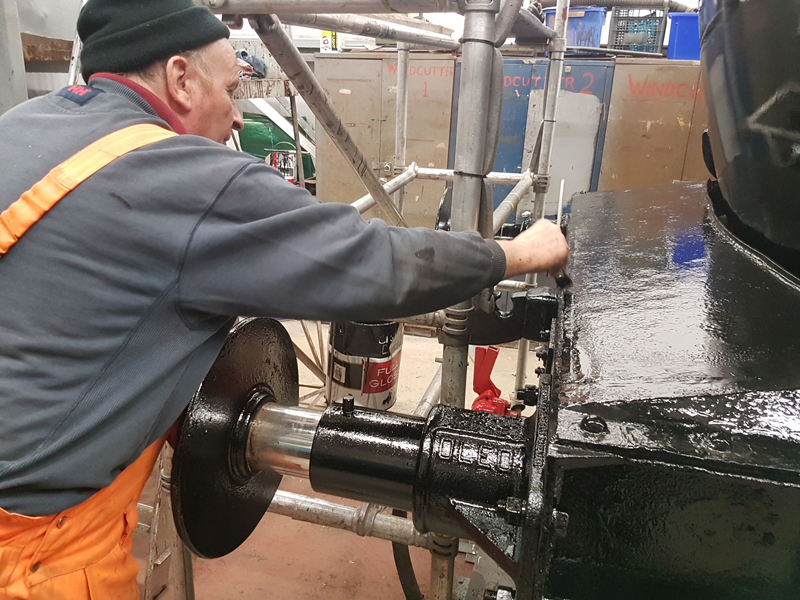
Once complete with the Brakevan Nick came over and prepared the West side bogies for Paint.
On to Sunday and we were joined by Jake. When I left Saturday I wasn’t solely happy with the letter S I had applied to the Brakevan. It was weighted more than the rest of the number and really looked out of place. This is an advantage of signwriting, I narrowed the whole letter and finished it to match the number it accompanies.
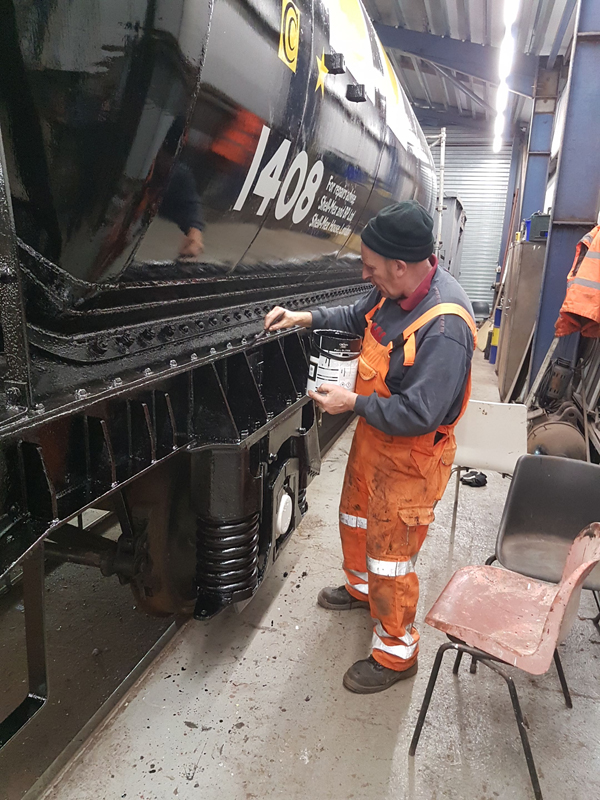
Nick and Jake continued with the underframe applying the bitumen based paint to the areas prepared the previous day. They also replaced 3 of the 4 top steps that were life expired.
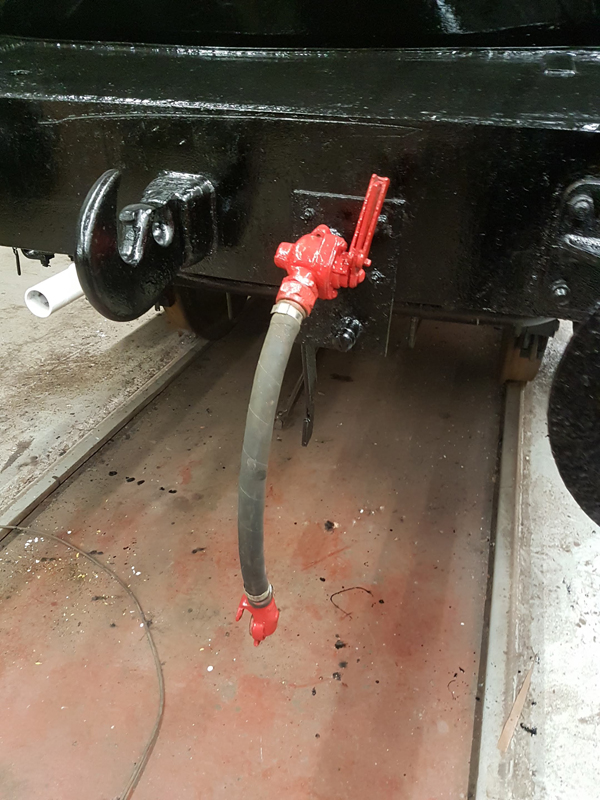
I continued with the tank flat applying top coat to the headstocks and applying paint to the details, Draw hook, Lamp irons, Vacuum pipe and jack screw threads.
I also sign wrote what would normally be a plate to indicate what direction to turn the handbrake wheel.
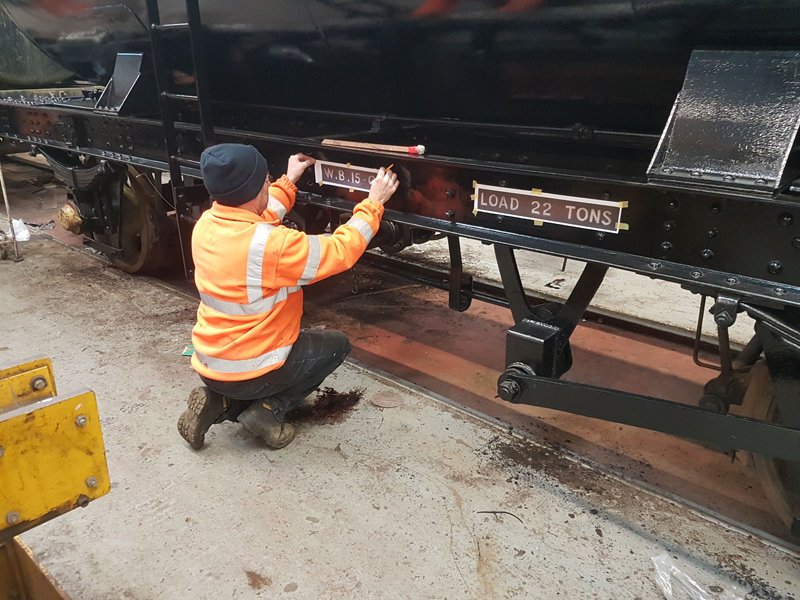
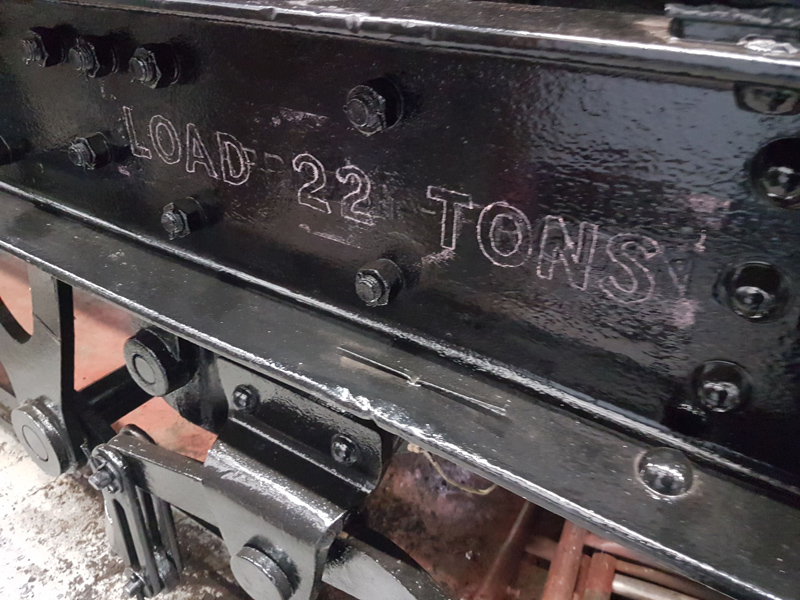
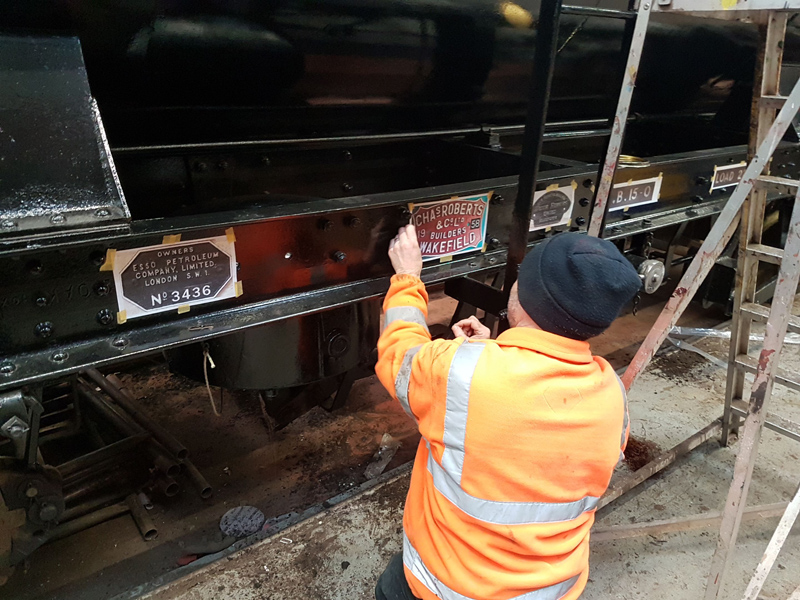
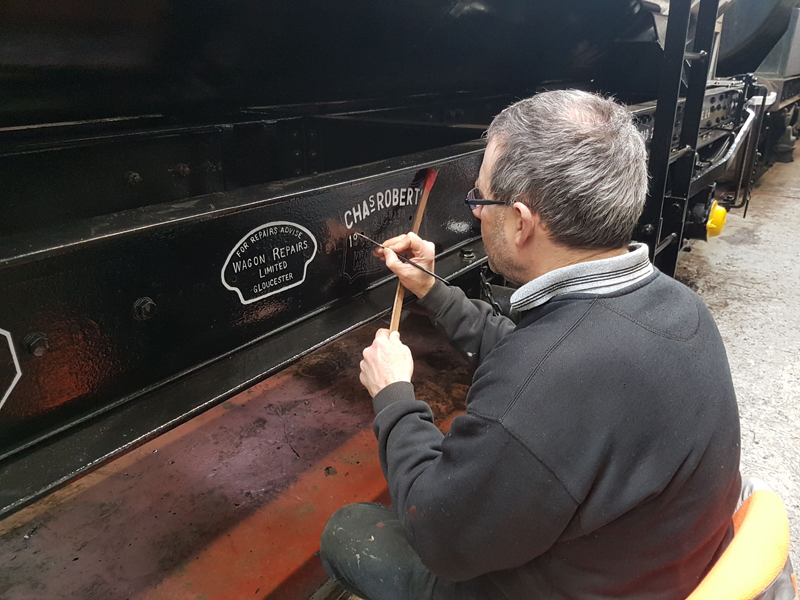
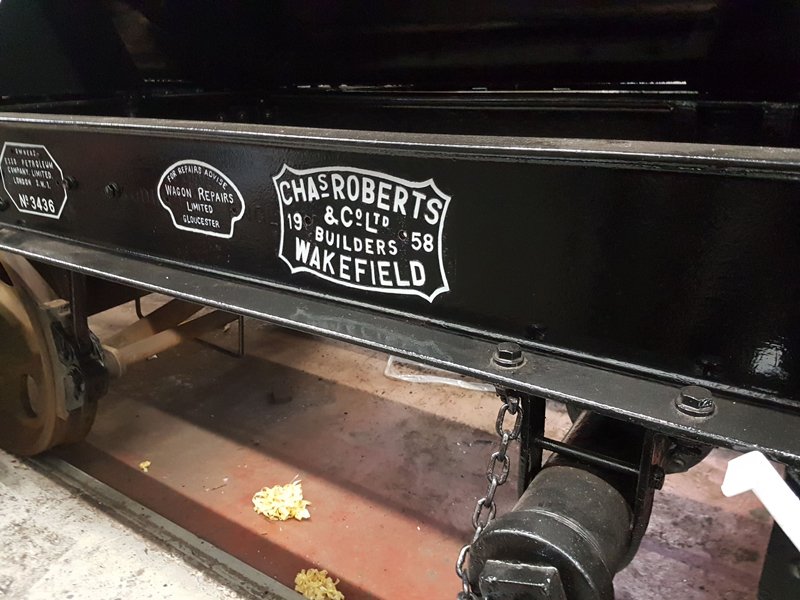
The final task once the underframe paint on the brakevan had dried was to fit the wagon plates and pick out the lettering on the repair plate.
Another week of earlies for me so anything can happen.
Once again a week of earlies and opportunity to carry out work in the week.
Most of my attention has been on the Tankflat, Tuesday Wednesday and a number of topcoats applied to the sides. As a Military wagon this is a Satin coat instead of the usual gloss. Thursday the headstocks were scraped down and cleaned off as well as the brake reservoir tanks.
As well as the Tankflat I also did a few jobs on the Southern Brake, tidying up the demarcation line on the inside. Painting the inside of the duckets, manufacturing some filler pieces for the floor under each door, undercoating a number of areas the spray gun could not reach and a touch of signwriting
On to Saturday and the full crew in attendance. Despite the forcast, we were blessed with blue skies and warm temperatures so the opportunity was taken to Gloss S56010.
Once complete again attention turned to the Tank flat, undercoating the headstocks and scraping down and applying bitumen to the east side of both bogies.
Sunday and down came the rain, unfortunately, this put a hold to the plans to continue painting. We were able to fit the filler pieces, painted over the previous days, and finished off the final detailing of the interior. Handbrake wheel painted, track circuit operating clips and the short-circuiting bar fitted.
It was also possible to apply undercoat to the ceiling and add white details to the doors.
Because of the rain, we spent most of the time carrying out a spot of tidying of our workshop accommodation. Finders are crossed for better weather next week.
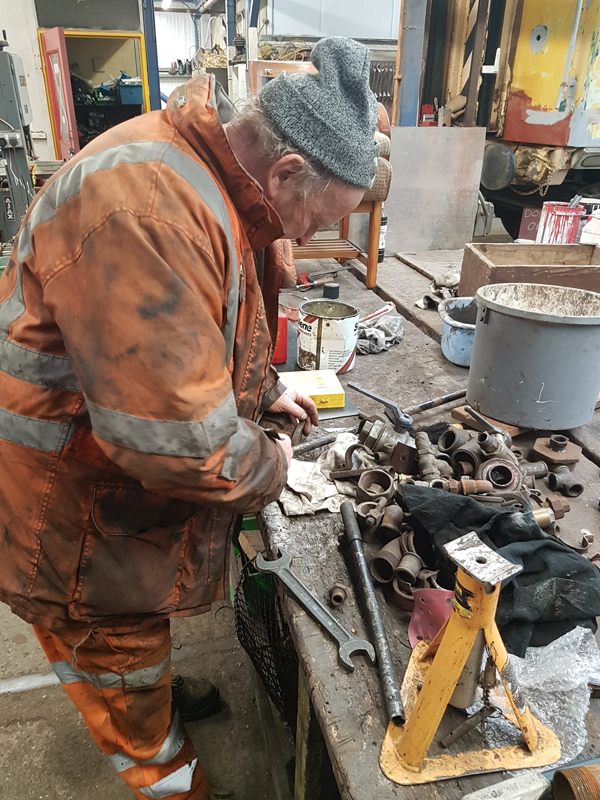
This weekend work has continued on the Southern Region brake van (S56010), and the Warflat (WGF 8127).
Now that Matt has finished his repaint of the Caledonian Weltrol, he has now turned his efforts towards titillating the Warflat. This vehicle is to be used in the upcoming Great Central Great War event, where it shall be on display loaded with a replica WW1 tank. Matt has scraped and cleaned down both sides of the wagon, and applied undercoat to them.
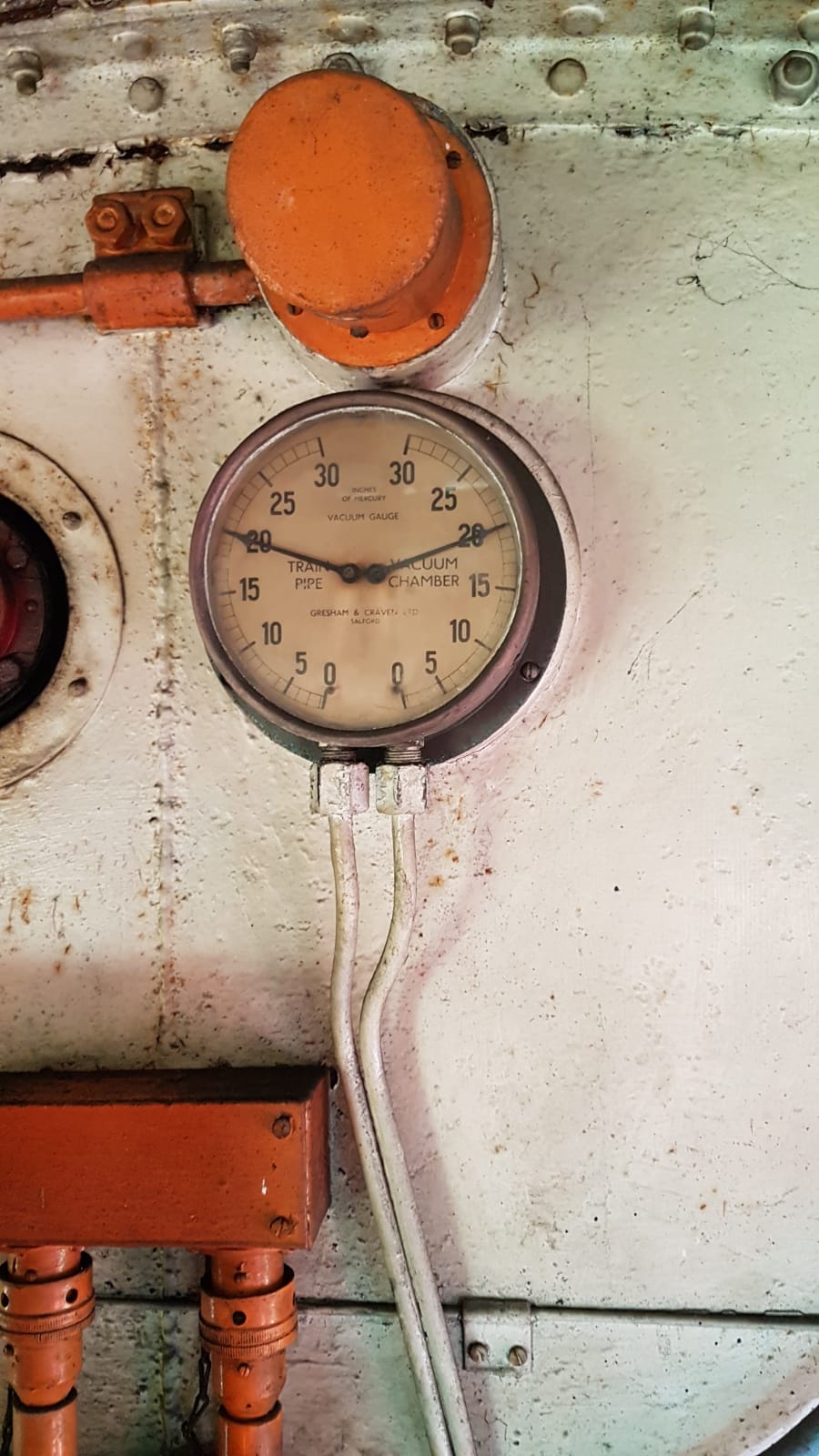
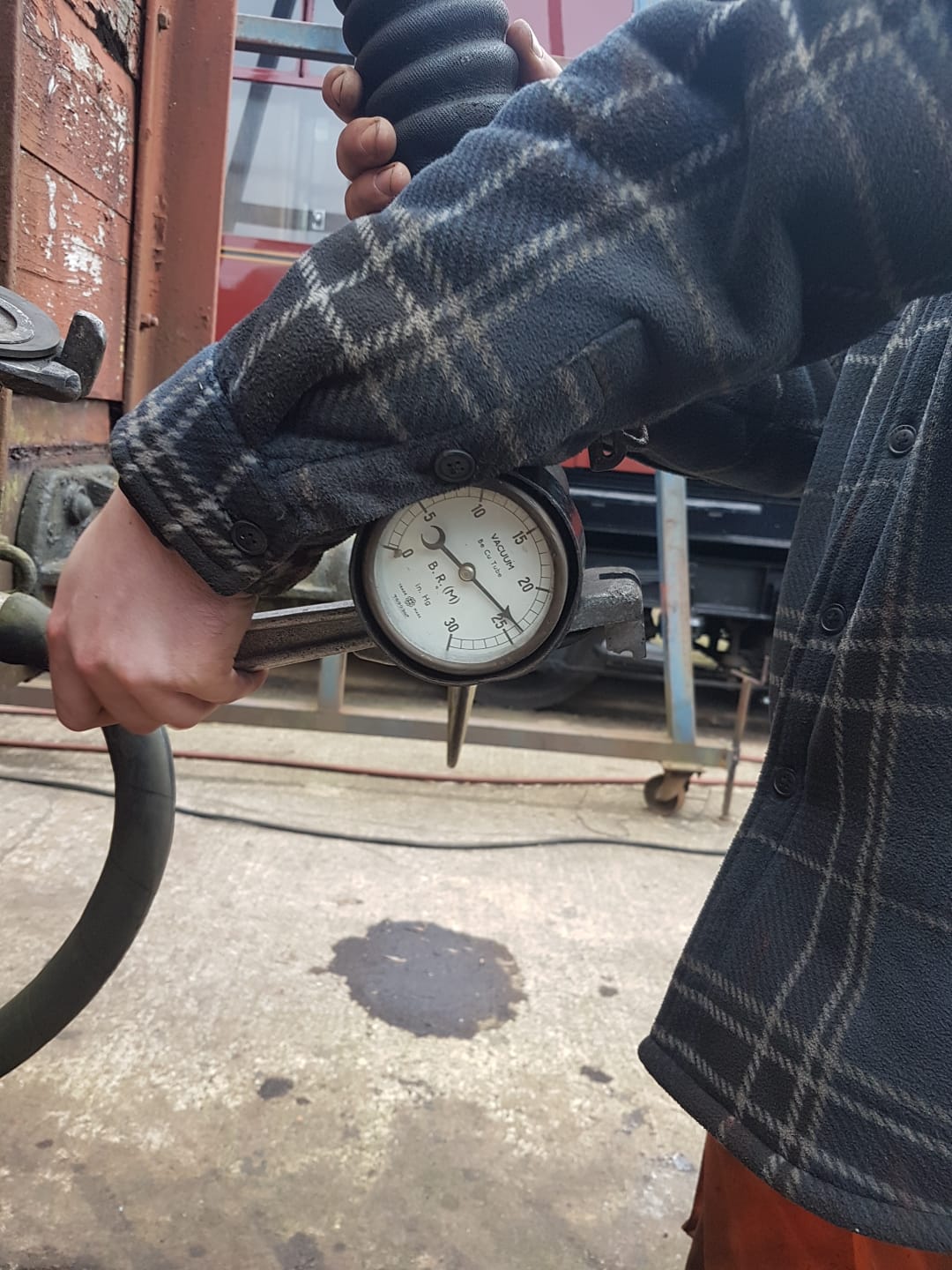
Unfortunately, a number of factors have prevented us from applying top coat the the SR brake van, mainly the weather. However Matt has continued in his crusade of detailing the interior of the van, completing the painting on the vacuum setter, the stove surround and making a mount for a shorting bar which we had in storage. Matt also refitted the vacuum gauge which had been polished previously. Some minor paint blisters have also been dealt with.
Nick, Jake and I have all been crewing the Travelling Post Office train this weekend. I may/may not have dropped a bag prematurely, and Jake has begun his training into become a fully fledged member of the TPO crew.
This week has seen me popping in after my early shifts to make a solid push on the interior of S56010. Starting from the top and working down Monday saw the application of White Gloss to the Ceiling. 2 Coats of Cream Tuesday & Wednesday. Masking and Undercoat Thursday and Friday a Coat of Bauxite.
A few further items remain, notably the duckets which require some surface preparation and the stove surround.
Not only have I spent time on the Southern Brake van but the Caledonian Weltrol has seen its restoration progress. Taking advantage of the weather I applied Black Gloss to the Buffers, Draw hook, shackles, Load plates and Handbrake, all in preparation for signwriting.
Friday saw the arrival of WGF 8127, our tank flat which this weekend received its special load for Great War Great Central.
On to the weekend and Nick, Ross and Jake rubbed down and prepared S56010 for exterior paint. All woodwork then received a coat of wood primer.
I, unfortunately, had to work but when I had finished I arrived to apply Signwriting to the Weltrols Eastside. Final push for Saturday was placing the WWI tank on to the Tank flat, assistance was sought from Quorn station volunteers. Jack had spent the day stripping the tank but it still had a sizable weight. With plenty of hands, the tank was positioned without to many problems.
Sunday and we started the day preparing the Bogies and top decks of the Weltrol for bitumen. This was to allow the wood primer on the brakevan to dry a little more as it was still a little tacky from overnight.
Once rubbed down Nick, Ross and Jake moved back to the Southern Brake and applied a layer of undercoat, the opportunity was taken to teach Jake a new skill, that being the use of the spray gun.
I continued with the weltrol and began painting the prepared areas, I was soon joined by the rest of the gang who continued the painting whilst I then completed the signwriting on the west side and headstocks.
The final task will be to paint the tires white which is typical of pre-grouping vehicles, apart from that the Weltrol is complete. As the sunsetted on the yard our final weekend task was to remove the wheels from Jacks tank, do it sits more prototypically on the Tank flat and reduces the likelihood of it rolling off the flat. This was a little tricky as we had to jack up the tank remove its wheel and lower, whilst laid under it in a gap no more than 2 feet high. It took a little longer than expected with it being 20:30 before we left.
This will require securing and this will be a task for the upcoming week.
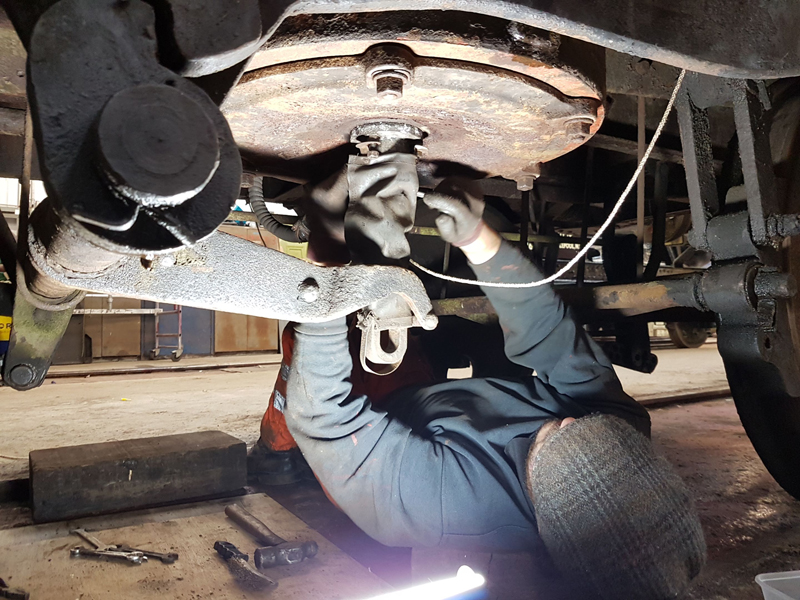
Steam Gala next weekend so come and see the box vans in operation.
At Quorn Wagon and Wagon this weekend, we have been continuing our efforts on the Southern brake van, S56010. Matt has also continued painting the Caledonian Weltrol, M300356, in readiness the the Great Central Great War event.
Saturday saw us receive the new framing for the north end veranda. The carpenter had replicated as much of the features of the beams as he could with them away from the van. This left Nick and I to do a little bit of fettling on site to make the pieces fit in the steel frame of the van.
The new cladding planks ordered for the van ended up being too thick for most places around the van (aside from the doors), including for the ends. On this end, I had to rebate each new plank for the post for sit in, so that the planks wouldn’t bow outwards. the rebates can be seen in the picture above. I had to further rebate the end of each plank to accommodate the door hinge timber, which sits in the corner upright.
Before assembly, the rebated areas were painted with wood primer. Jake then went round the van and painted any bare external timbers with wood primer, in readiness for undercoating. The south end veranda top beam also got treated with some filler, and then multiple coats of wood primer. Matt also cut and fitted some filler pieces to the top of the door hinge timber to fill on for a piece that had to be removed in construction
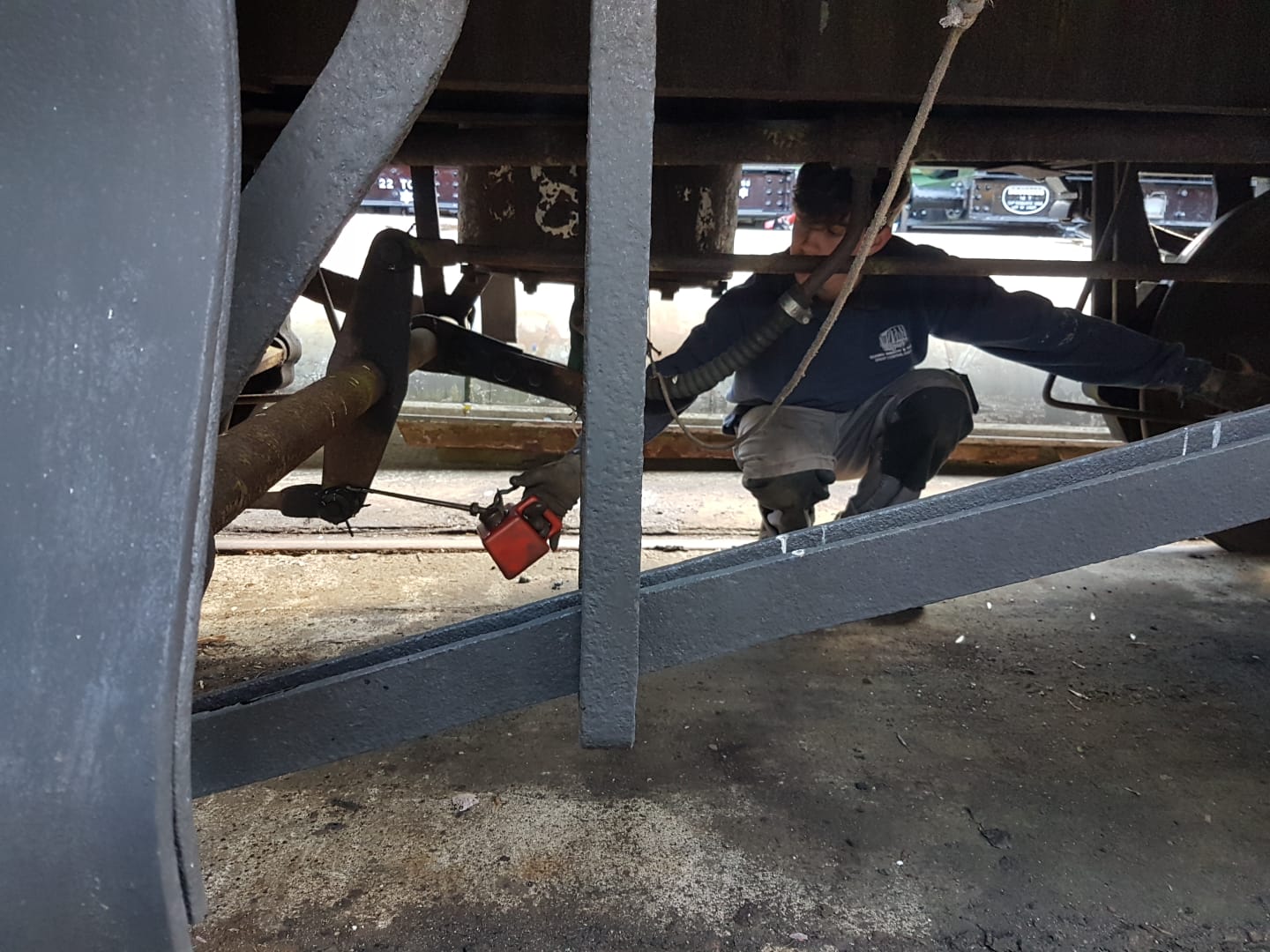
At the south end, the west side door was remove from the van, and some remedial work took place on the door hinge timber. Rust had built up behind the steel corner post, which subsequently closed up the door way, making the door stick. Once back together, the door had an even gap all the way down the shut side, and opened much better.
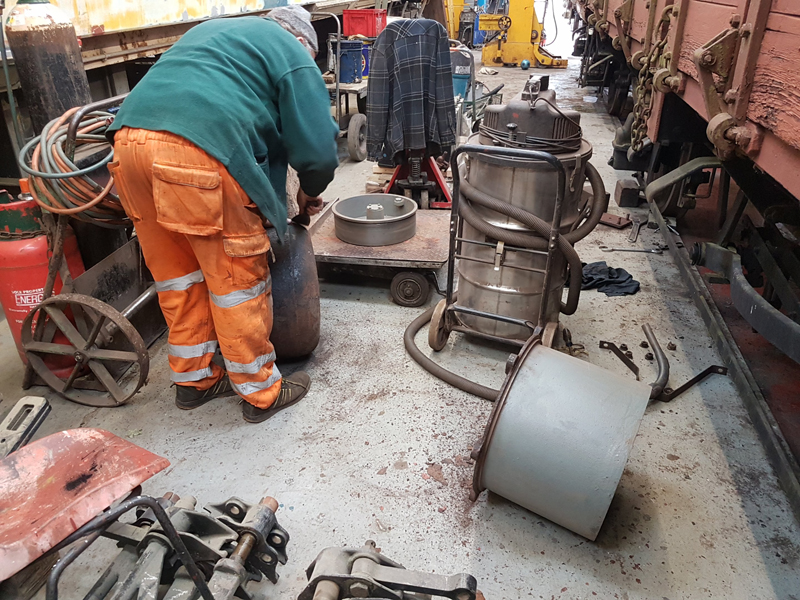
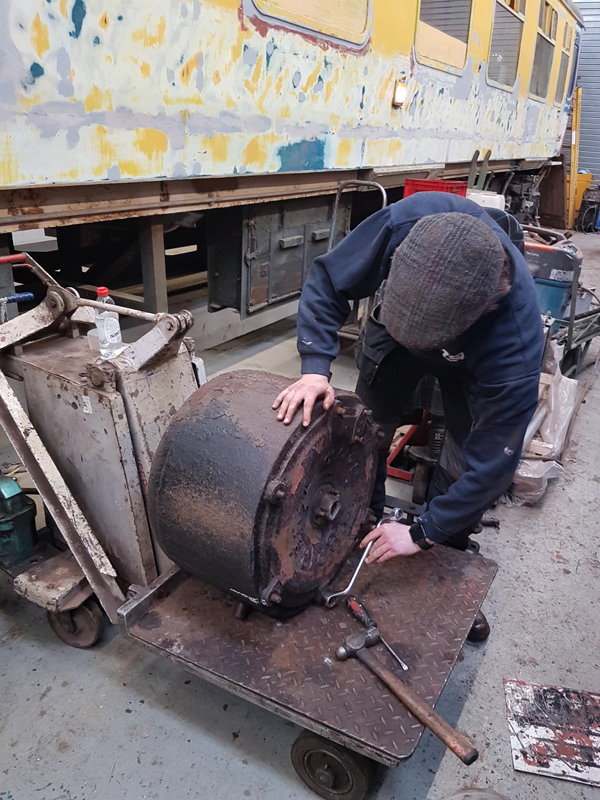
Jake, still having the primer and a paintbrush in his hand, painted the bare areas of the north end veranda internally and externally. Matt took this opportunity to finish off the Weltrol. During the course of the weekend, Matt also did the signwriting on the replica wagon plates for the Southern brake.
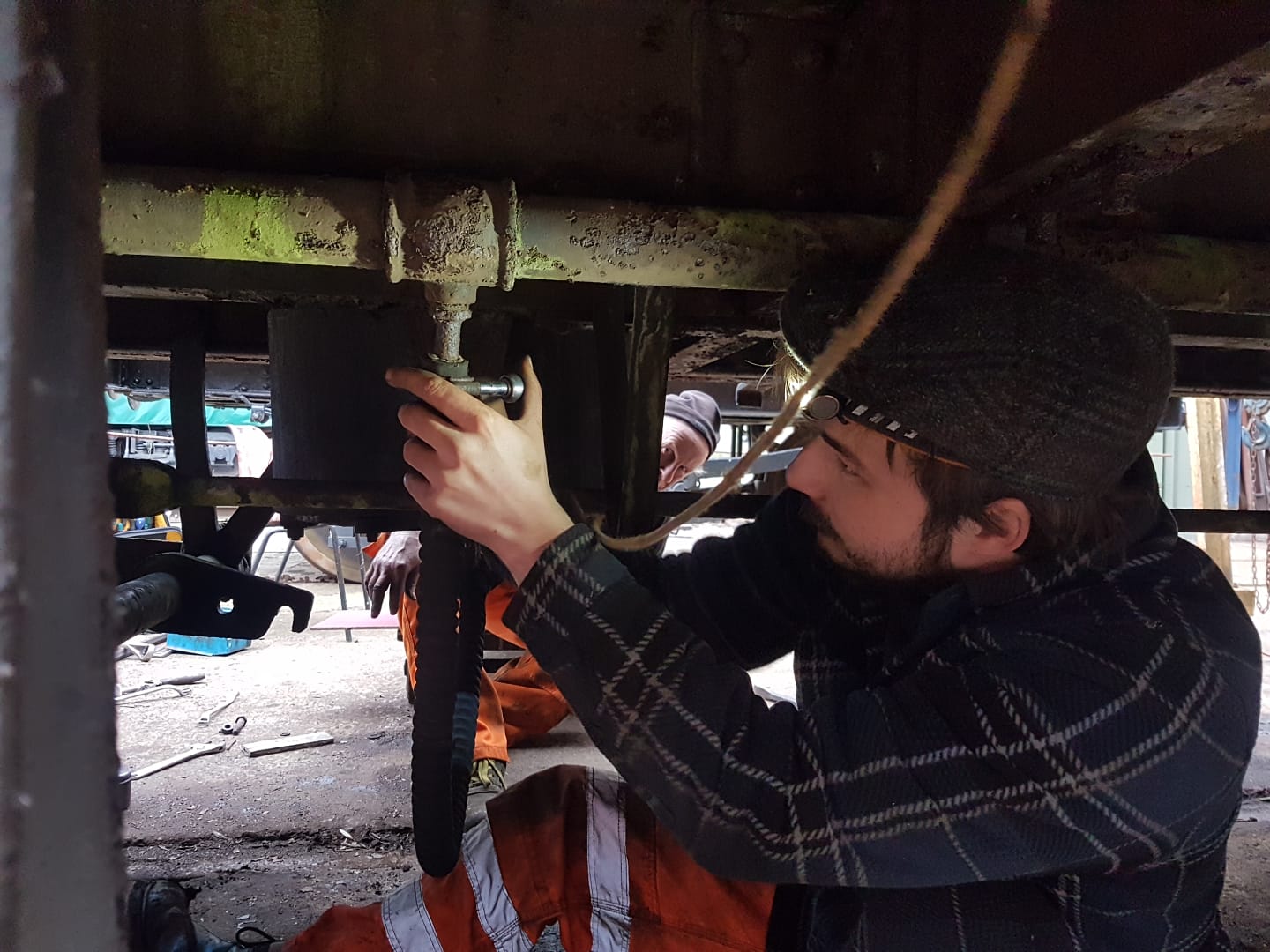
Matt and I primed the interior of the van, in preparation for the interior repaint which Matt is undertaking during the week, after his early shifts. There is still some scraping to do on the body sides and the south end veranda, then we shall be painting it!
This week has been full of activity for us. It all began on Monday with a Timeline Events / EMRPS photochater using the vans with visiting Warship D832 “Onslaught”
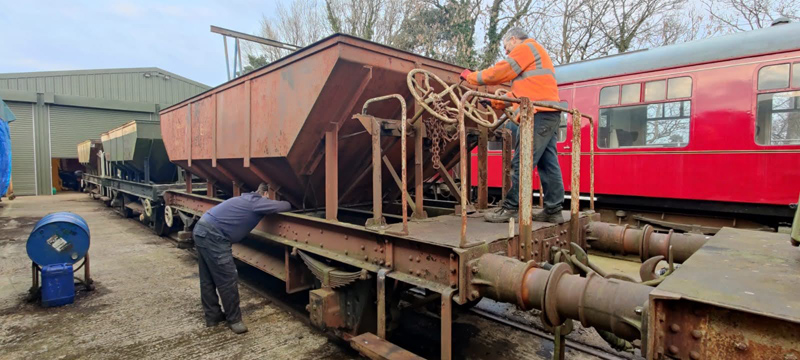
The 10th and 11th November sees the GCR commemorate 100 years since the end of the First World War. As part of this, the GCR is assembling a train of appropriate vehicles of either age or type. The first from our collection to see attention for this commemorative train is M300356, this vehicle, a Well Trolley (Weltrol) was built in 1913 by the Caledonian Railway and is being returned to CR livery.
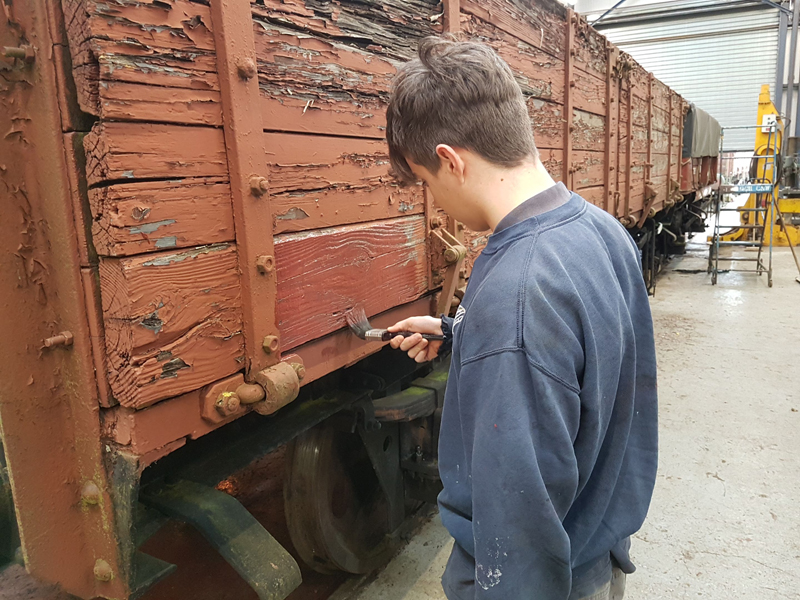
Tuesday – Friday saw the vehicle’s coating of Bitumin removed, this was quite a labour intensive task, Ross and I were helped by Jack Shaw (Great War event organiser) and Andrew Devine (Quorn & Woodhouse station foreman) We managed to completely stip the sides of the vehicle. Unfortunately, the rain stopped play Friday and we only managed to Red Oxide the East side.
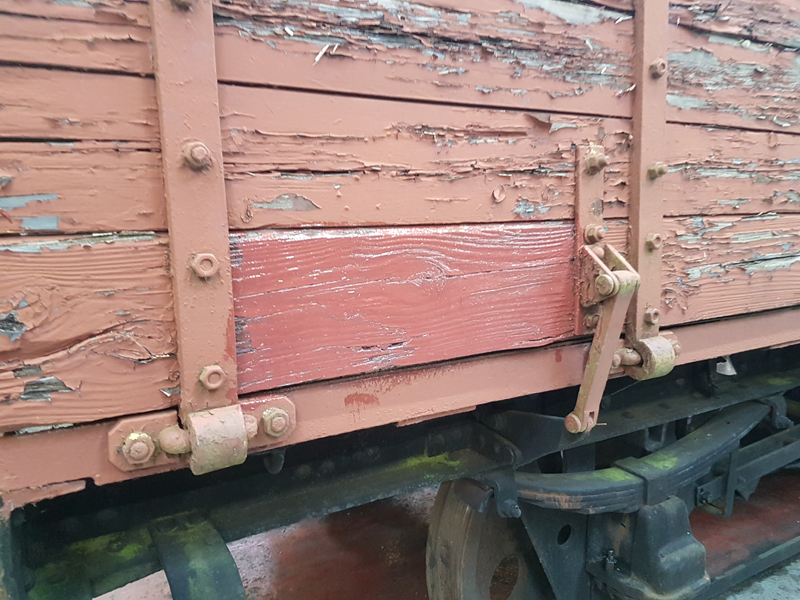
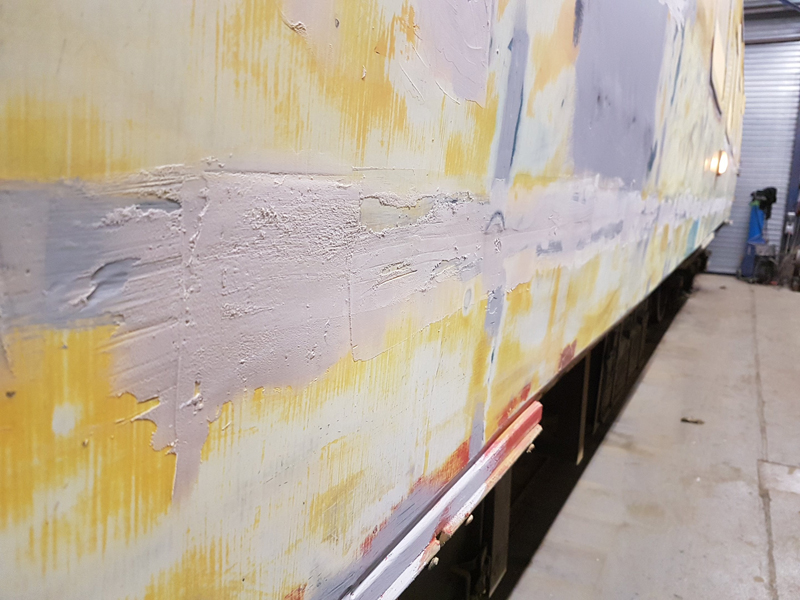
Glimmers of the vehicles past life became visible as the layers of paint were removed. Visible in the image below, flecks of Brick Red paint, the CR wagon livery we shall be applying. Also visible the thick layer of bitumen that had to be removed.
Saturday and a visit to the Gloucestershire Warwickshire Steam Railway after an invite to view the Carriage and Wagon Works at Winchcombe. It’s always nice to see how other establishments operate and to build a relationship that is mutually beneficial for all. In fact, this visit saw us deliver a BR Brakevan brake cross shaft needed for the refitment of the vacuum brake system to a vehicle on the GWSR. Our thanks go to Richard Stone and the other members of the GWSR C&W team for your time, patience and hospitality.
It was also nice to see GWSR’s latest wagon project, a BR built china clay wagon.
We also got to see Thomas the Tank Engine and a few of his friends
Back to the grind on Sunday and S56010. I completed the interior trim and turned my attention to the main cabin doors. Over the life of the vehicle these have become worn so much so that the door is essentially planing the floor. The top hinges were removed and moved up to attain the correct clearance at the bottom.
Jake and Nick continued removing rust from the veranda ends and red oxiding when back to solid metal.
Ross installed a new lock to increase the security of the vehicle.
Final job for the weekend was the Red Oxiding of the west side of 300356 and first gloss on the East side and buffer beams. The red brick does seem very close to Bauxite although there is a slightly deeper red tinge.