Category: Updates

  • 16/12/2018 – Odd jobs

    16/12/2018 – Odd jobs

    Saturday comes around once again, Matt is unfortunately at work and Jake is gorging himself on a Festive Scout camp.
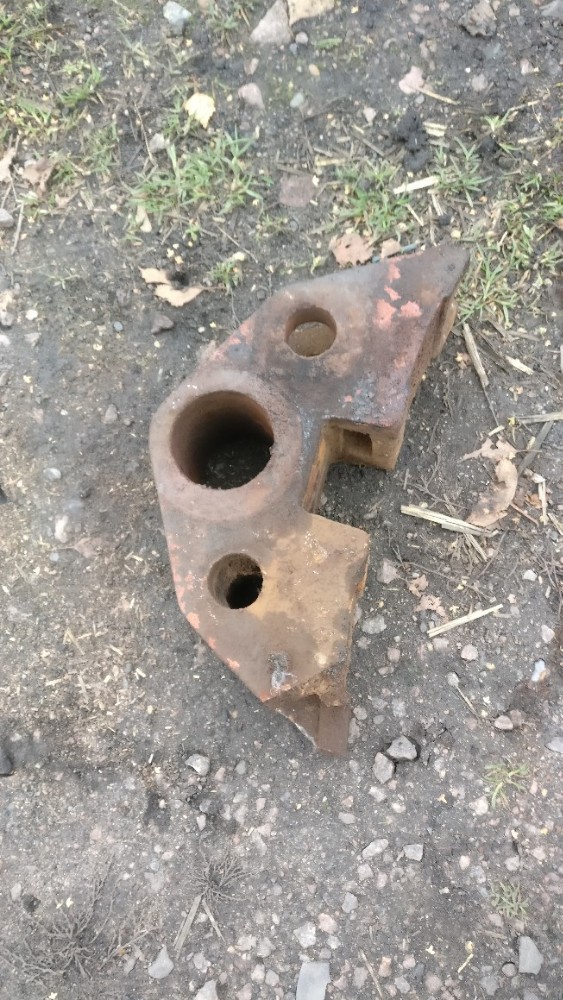
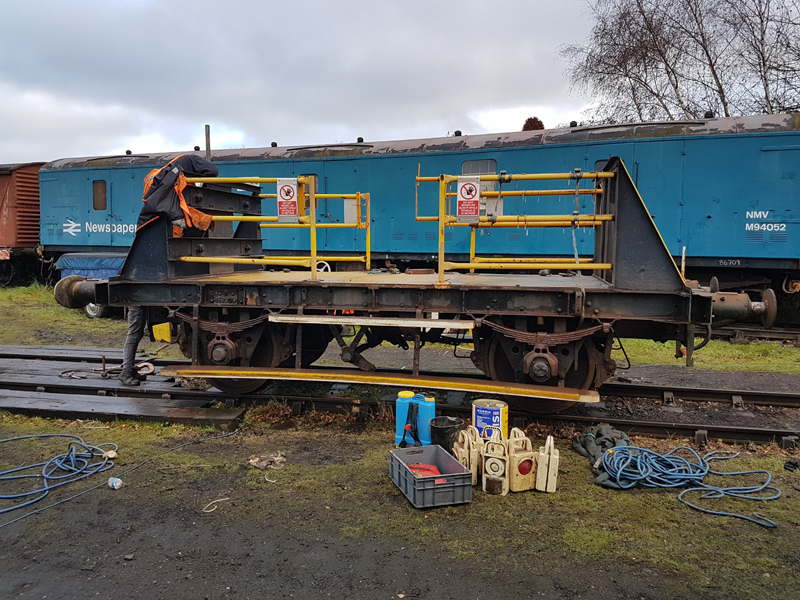
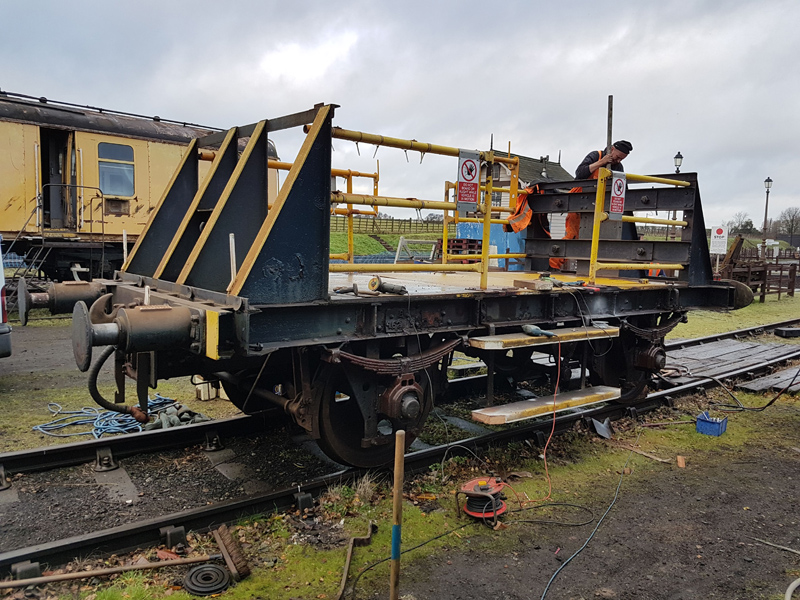
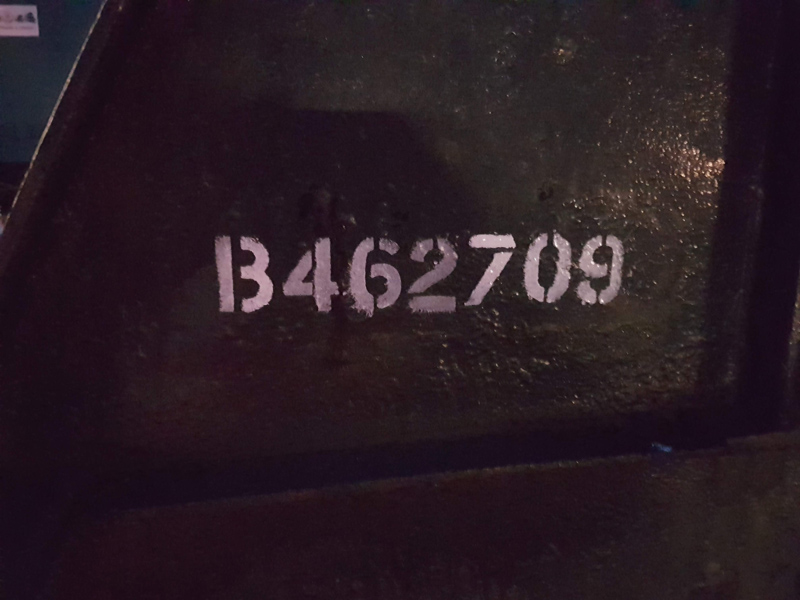
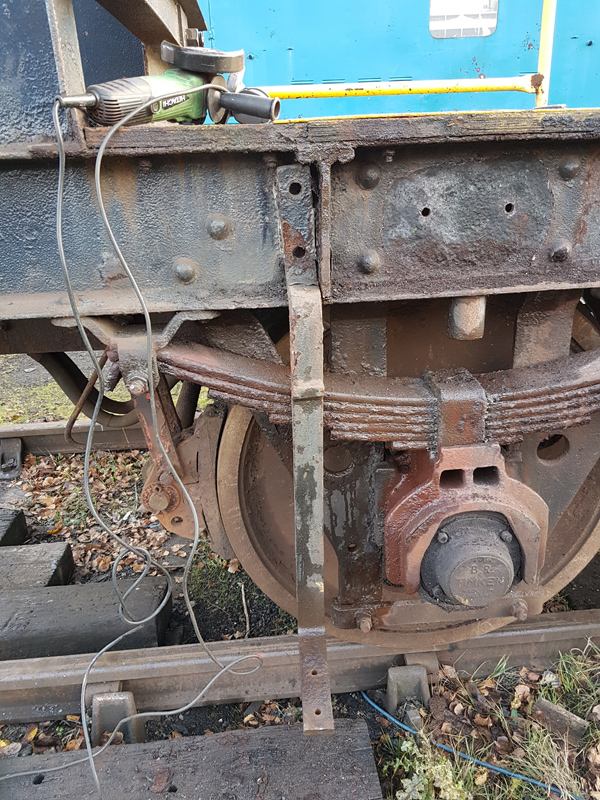
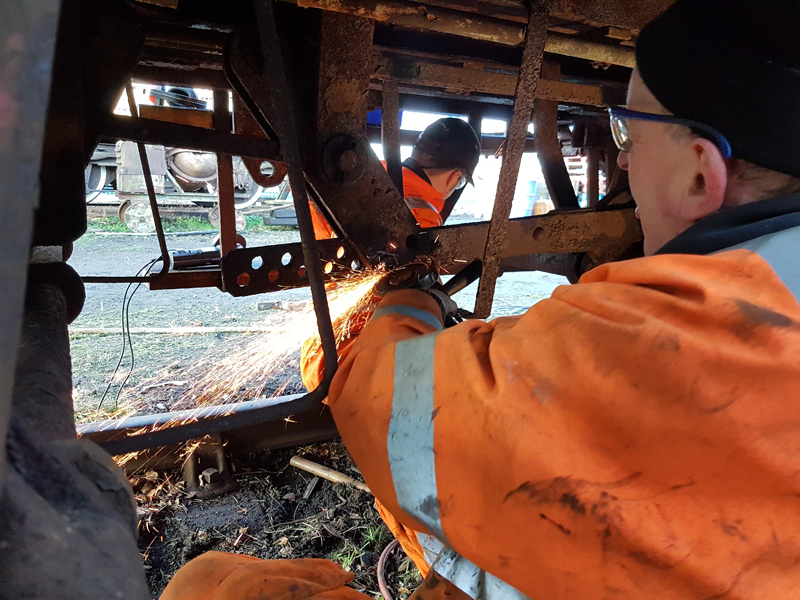
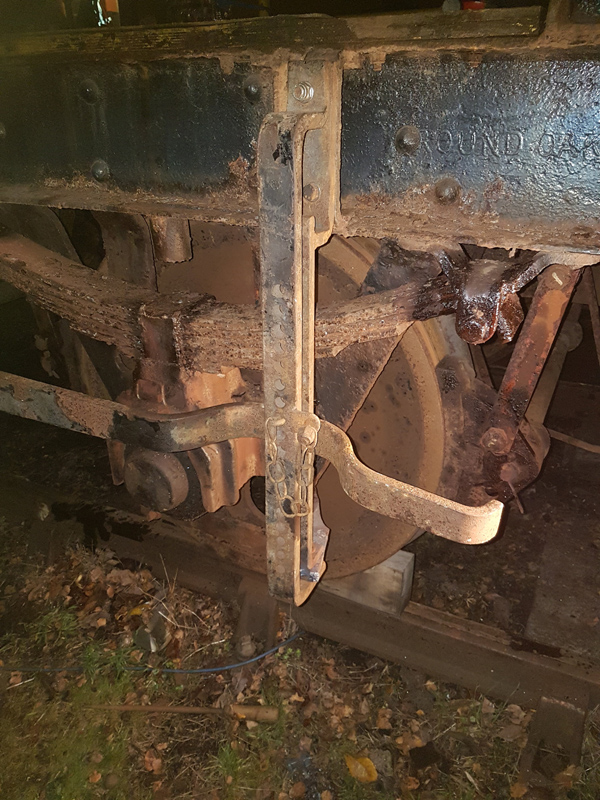
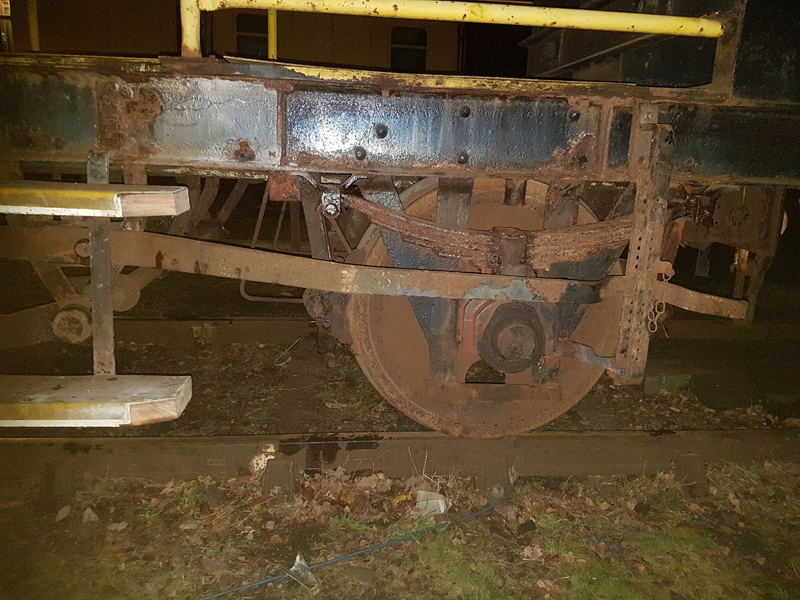
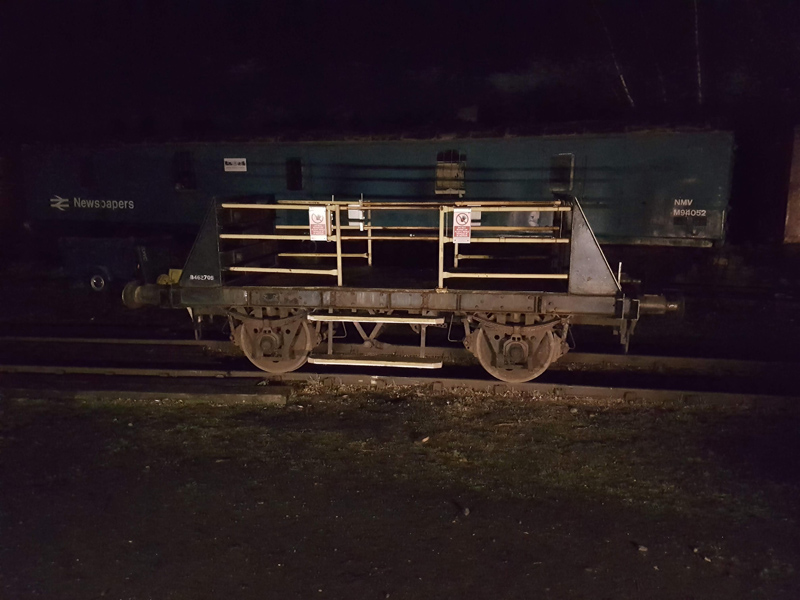
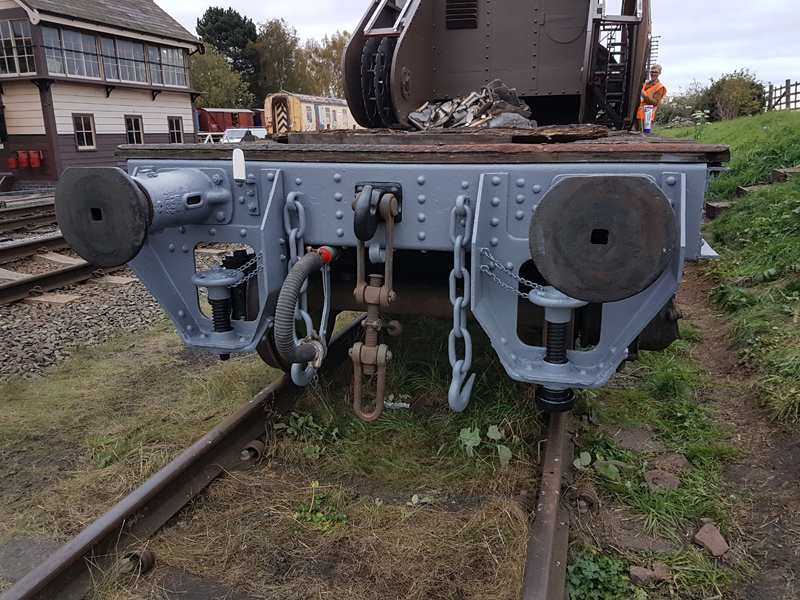
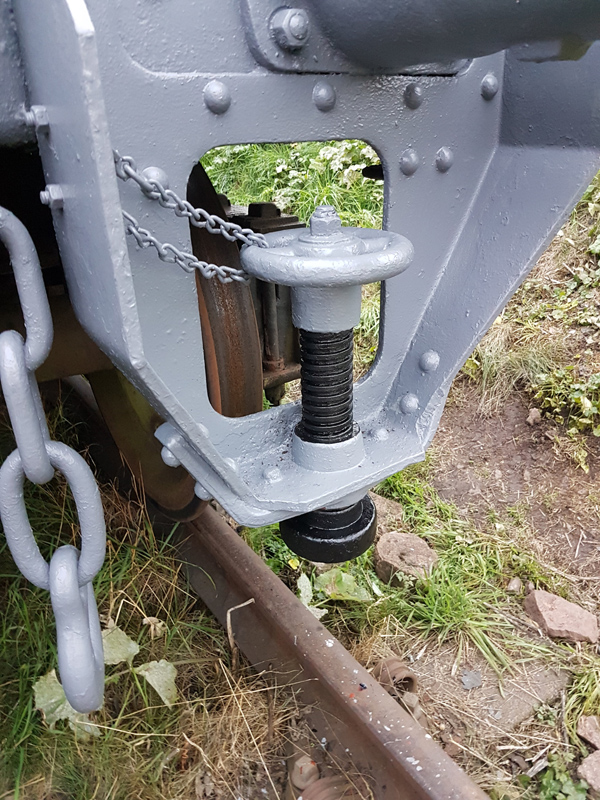
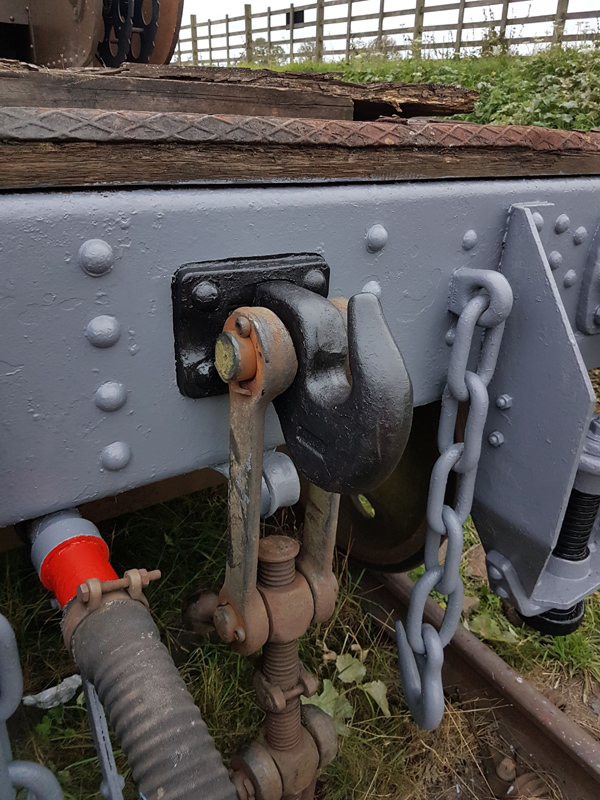
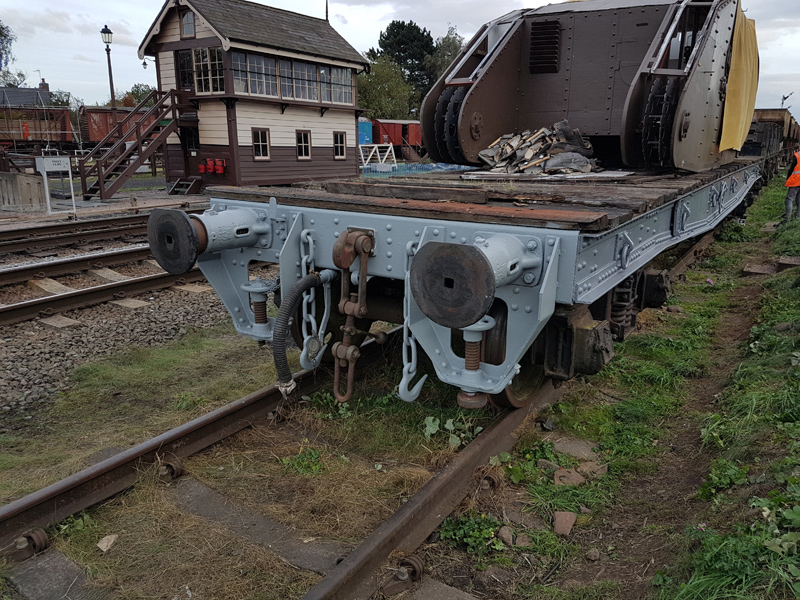
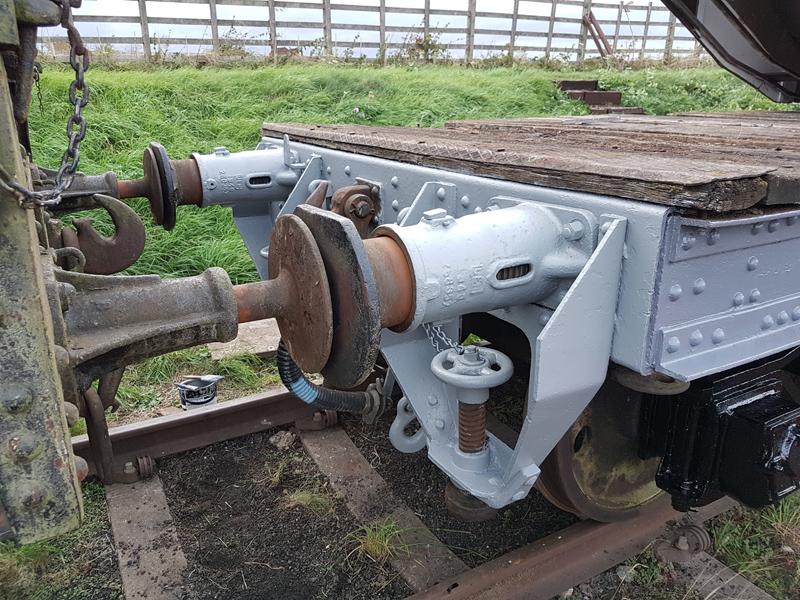
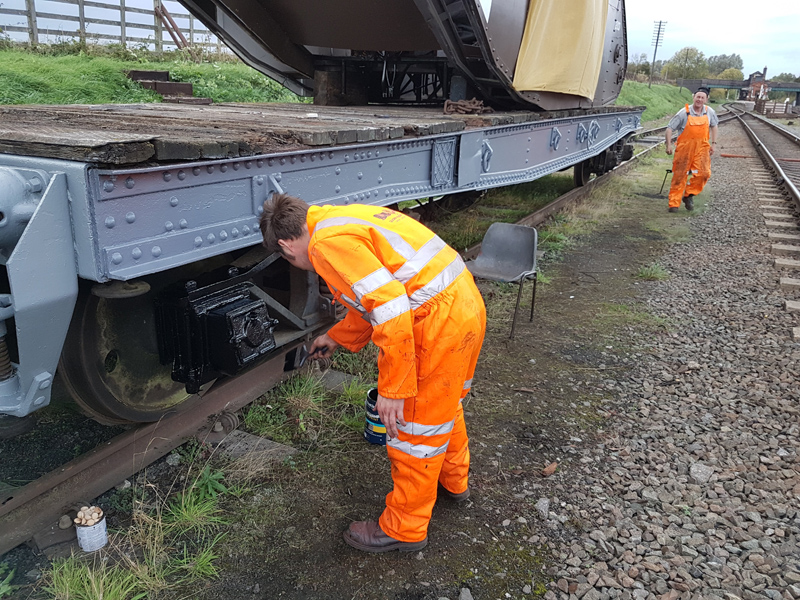
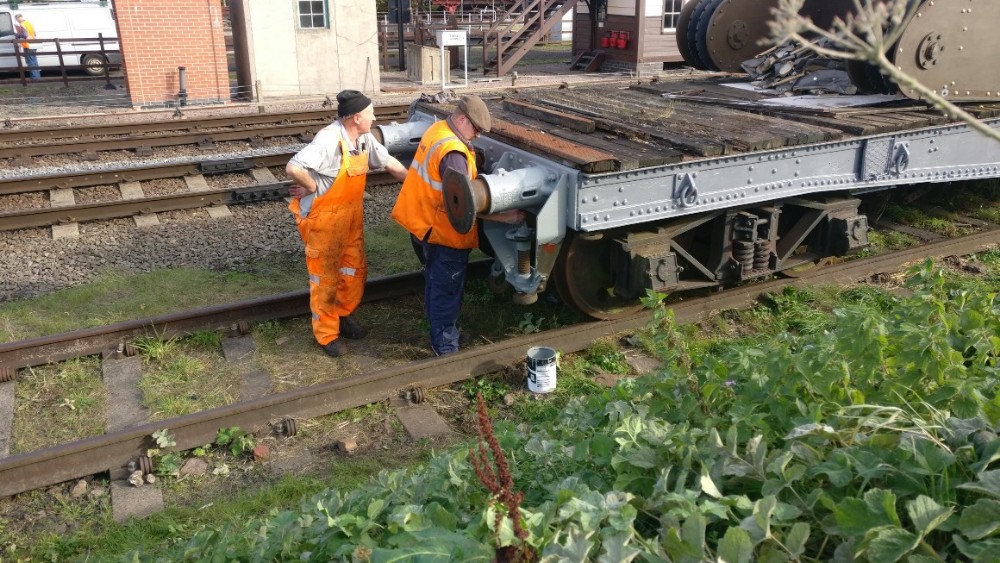
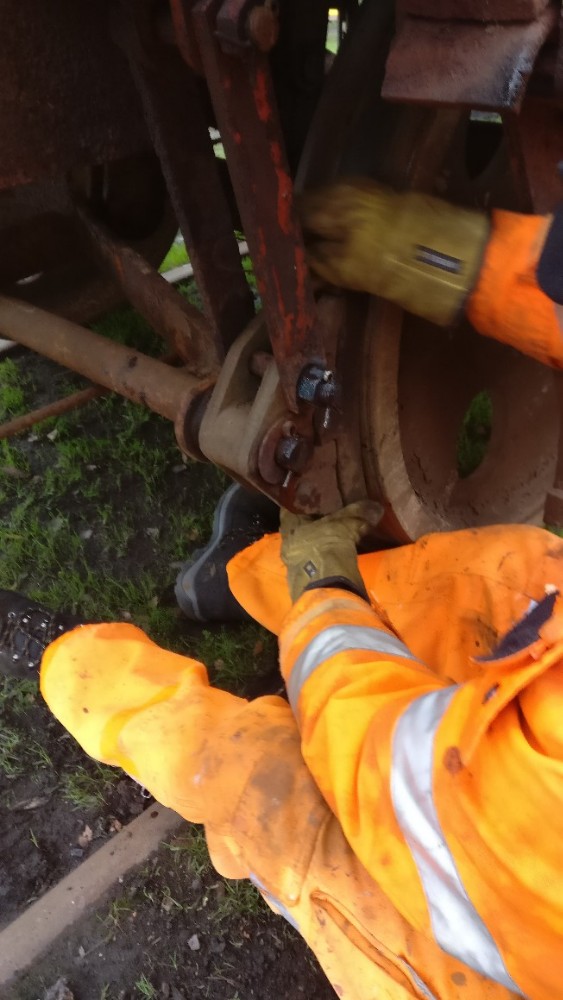
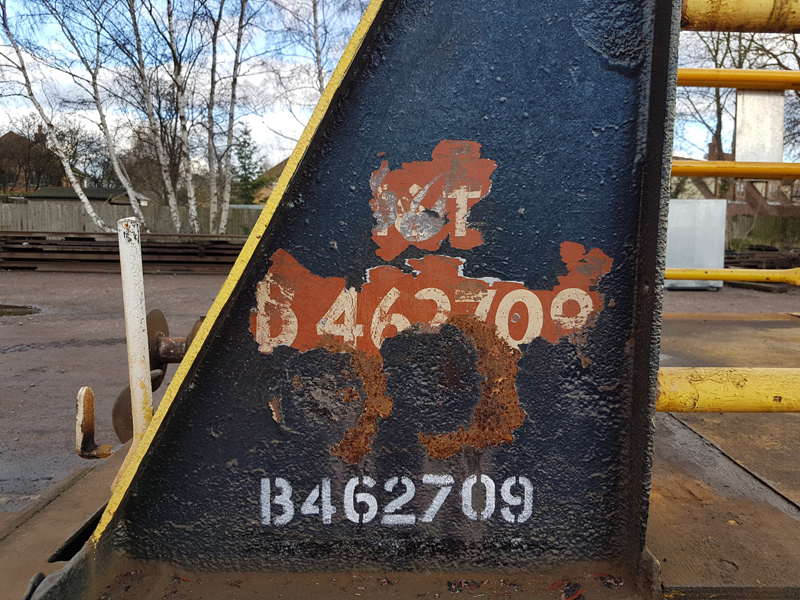
    Work continues on Palbrick B (B462709) to make it fit for movement. Last weekend, We had managed to remove 2 broken brake block carriers and had identified a 3rd to be changed. Armed with 3 replacement carriers, Nick and I set to work refitting the ones that had been removed, and replacing the last one. The final one was replaced due to the lower corner being broken off.
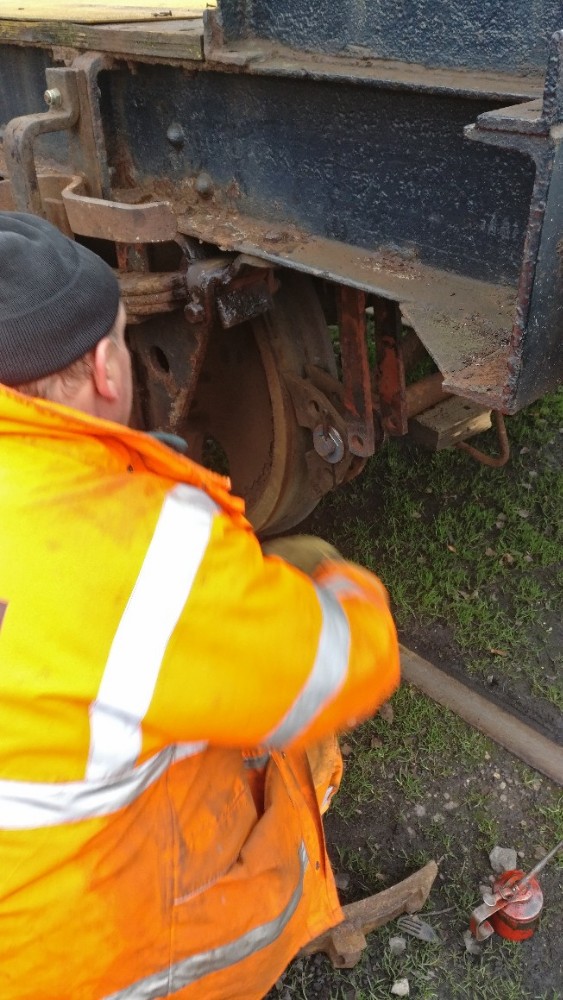
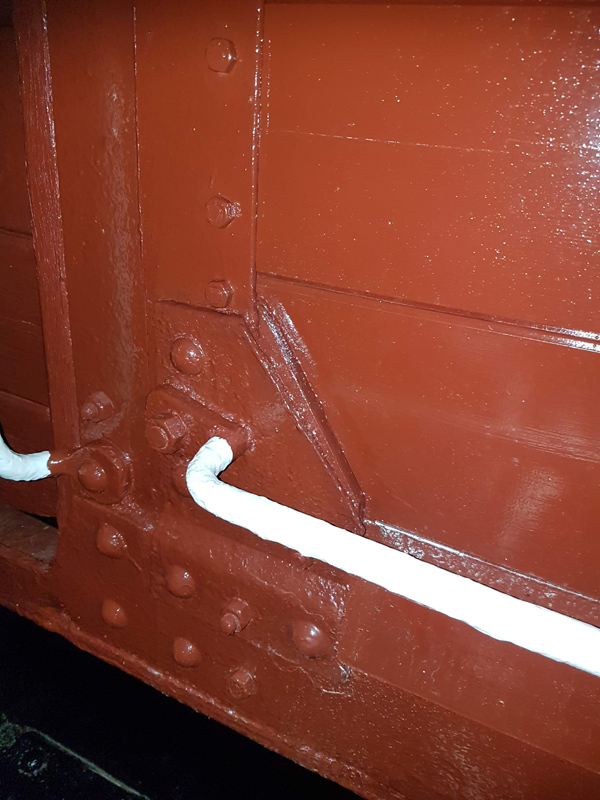
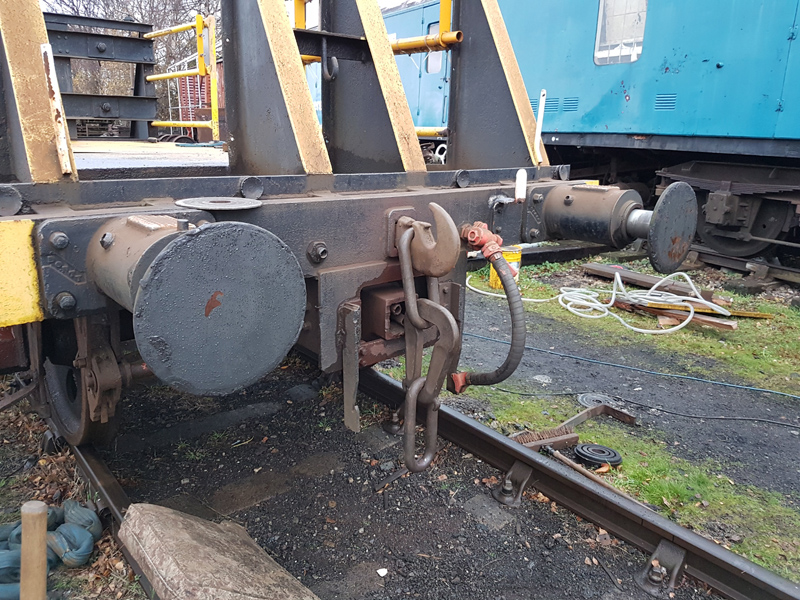
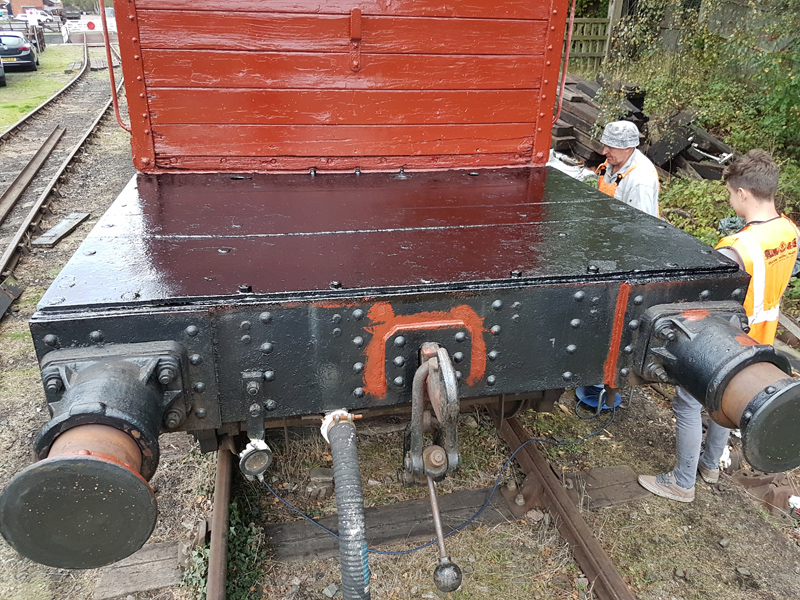
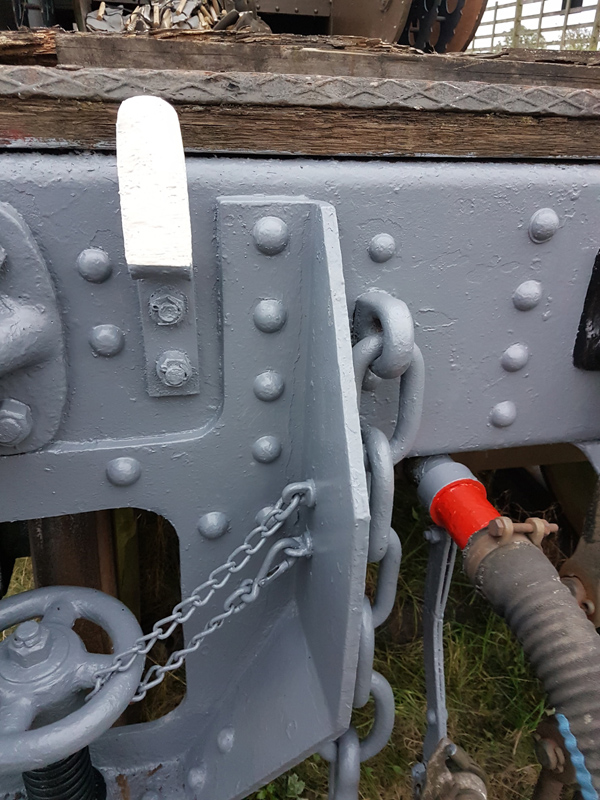
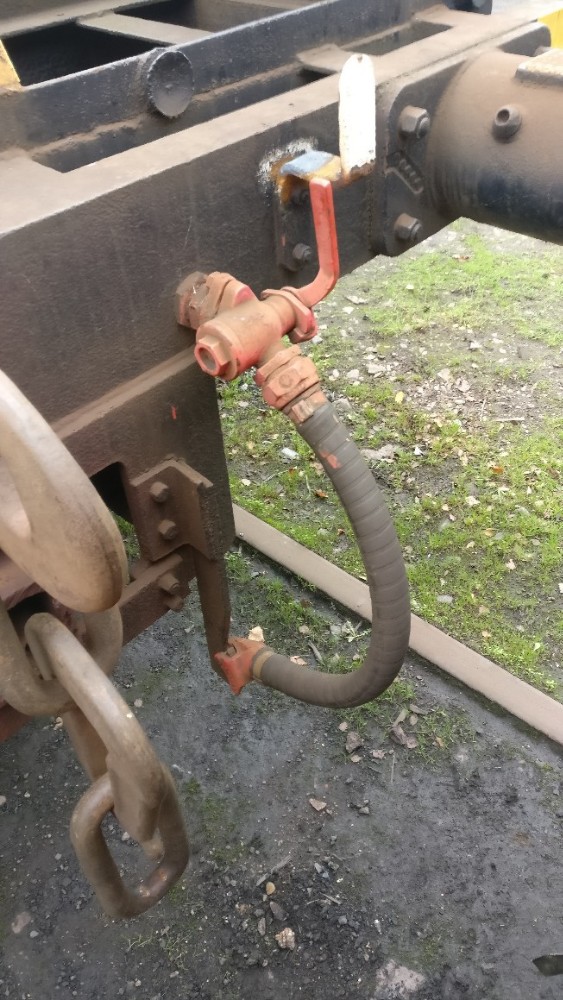
    I also refitted the air brake pipe cocks and hoses, so that now the wagon retains its air through pipe, although these now require to be painting white. When more is known about the wagons future we may reinstate the vacuum system.

    Once the brake blocks & carriers and the air pipes had been refitted, it was lunchtime! During lunch, the heavens had opened giving everything a good soaking, so Nick and I spent the rest of the day tidying in our tool van and workshop vehicle.

    On to Sunday and Matt continues this report.

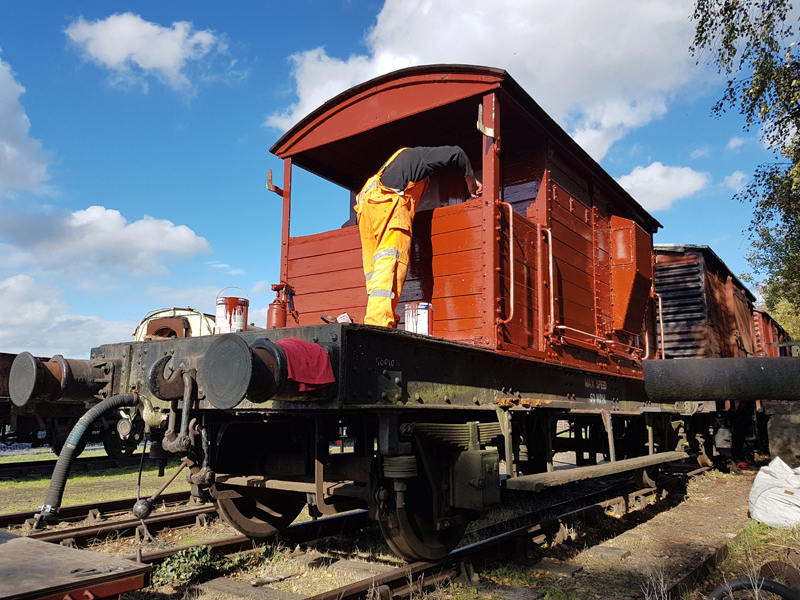
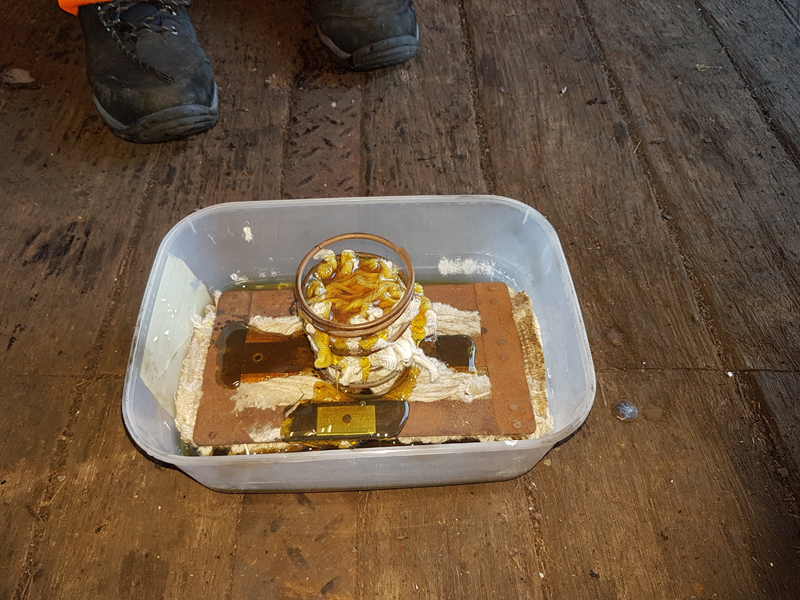
    First job and running maintenance on the Southern brake van.  This entails oiling of the brake rigging and pad exams.


    One of the pads was found to be worn and this will be replaced in due course although it requires at least 24 hours soaking in oil before the replacement pad can be fitted.20181216_104940
    Once this was complete Nick continued tidying the tool van.  Whilst I began “stitching” posters together.  These are for the station at Quorn and unfortunately, I can only print up to A3 so for larger posters, and not wanting to have them professionally printed for additional cost, I glue sheets of paper together.  To see the full range of posters visit Quorn station from Boxing day.


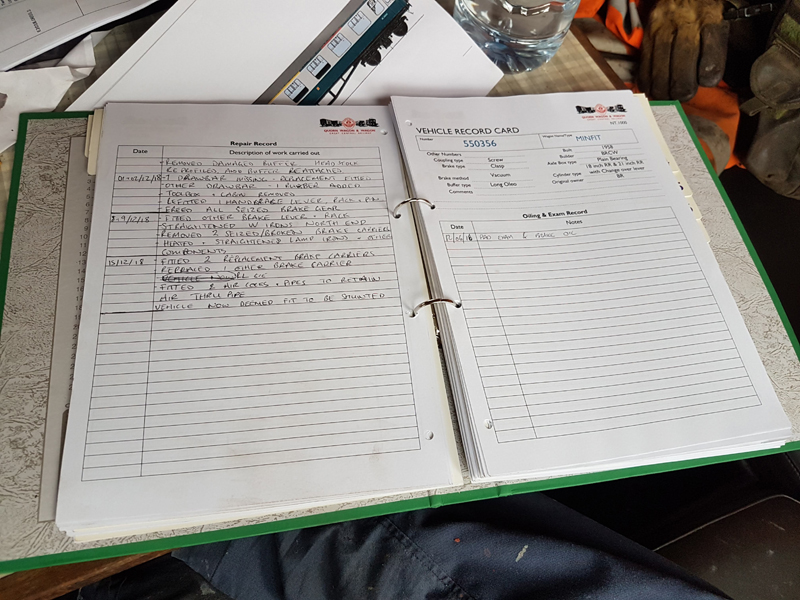
    Time was also taken to update the vehicle record cards, every vehicle we have has its own series of cards that detail all the exams and work that has been carried out.20181216_135312
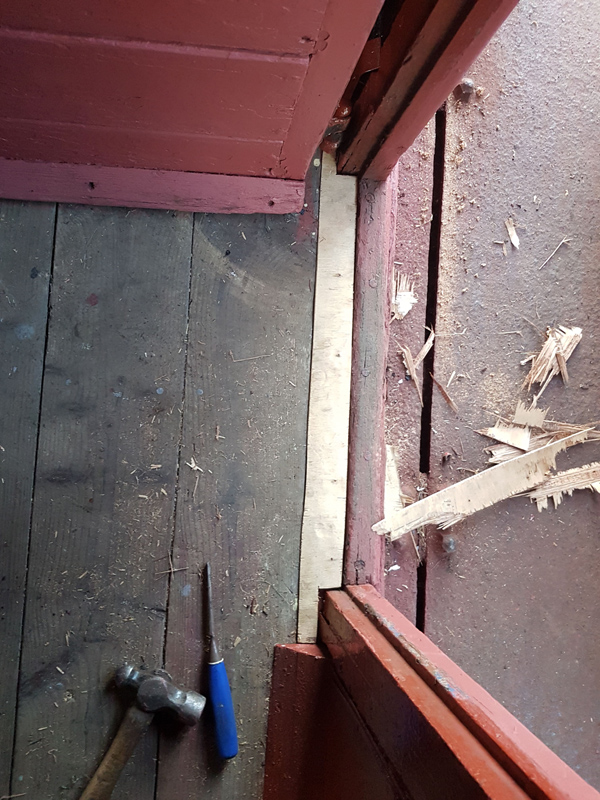
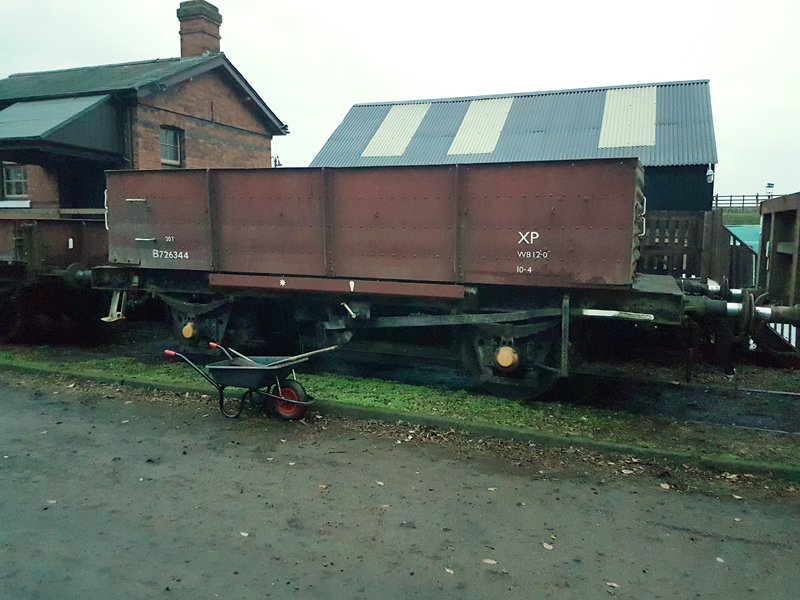
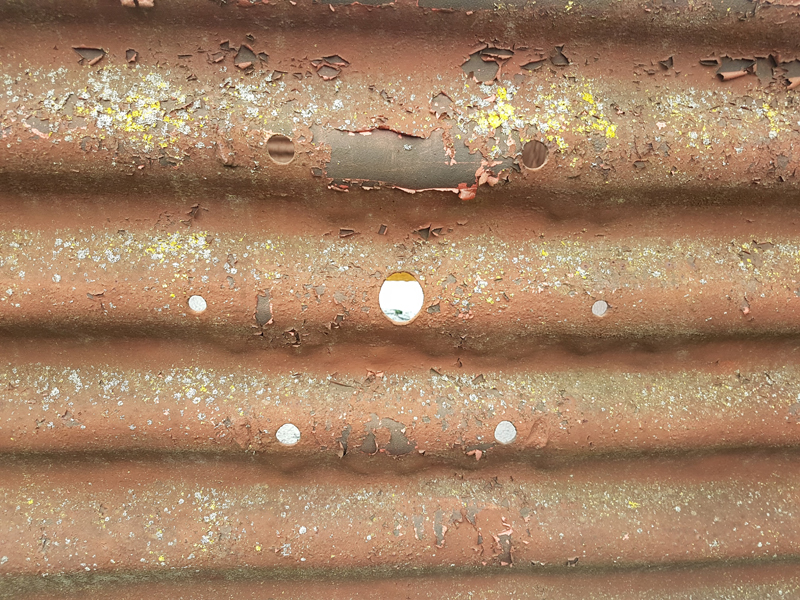
    Finally, our attention turned to our potential next project.  Dace B726344.  The intention is to restore the vehicle to its Shockhood B condition,  these vehicles were fitted with foldable hoods and this will be reinstated.  Nick took time to remove the moss and loose rust from the floor whilst I took measurements and began planning the installation of the 3 foldable hood bars.
    Next weekend our attention will be turning to routine maintenance with such a large fleet this is essential to keep them operational.
     

  • 09/12/18 – Feeling hot hot hot.

    09/12/18 – Feeling hot hot hot.

    Saturday begins, and work continues on the new arrival; Palbrick B462709. I didn’t manage to take any pictures, as Nick, Jake and I have been quite busy continuing to get the wagon fit to move. Matt was attending the Quorn Station Christmas Doo

    It had been brought to our attention that the vehicle was prone to derailment. As with all vehicles we work upon a thorough inspection is carried out.  We have attributed the vehicles poor running to a number of factors:

    1. The brakes had been seized in close proximity to the wheels restricting rotation under certain circumstances 

    2. The majority of the track at Litchchurch Lane is buried so the wagon, being light, is likely to ride on top of any obstruction of the flangeways

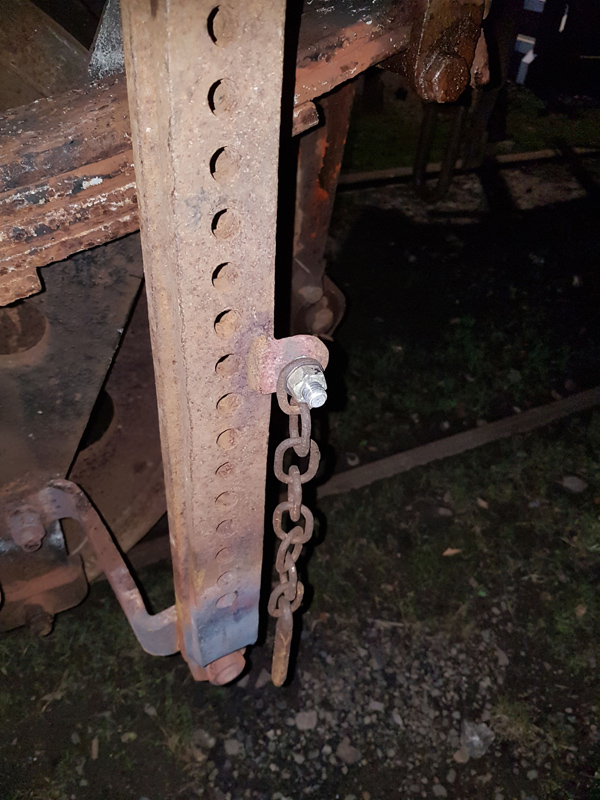
    3. At one end, the W-irons are not vertical and are forcing the wheelset in one direction.  Sat on straight track the wheelset is not sitting centrally and is hard up against the flange of one side with both irons pushing against the axle boxes

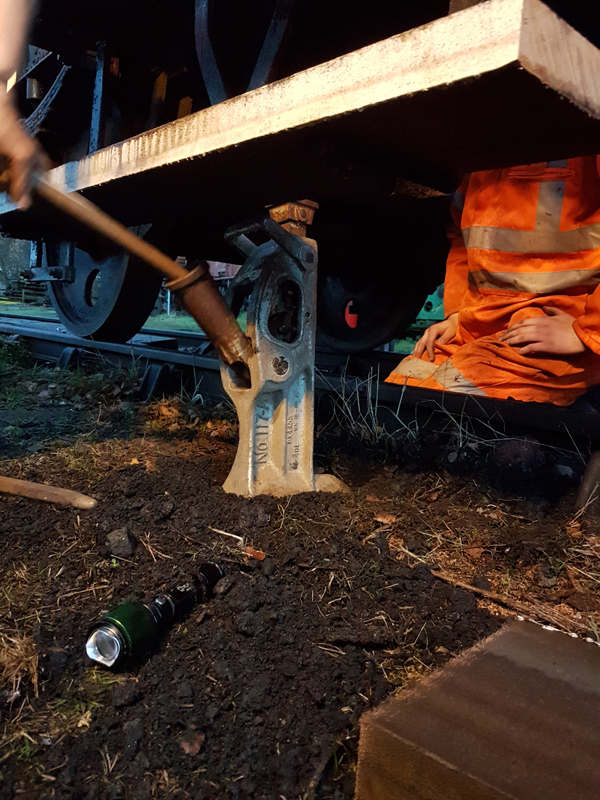
    All of these factors add to the likelihood of a derailment. As a matter of cause, we have lifted the wagon to be sure that the axle boxes slide up and down in the horn guides, which they do freely but we will address the W Iron issue.


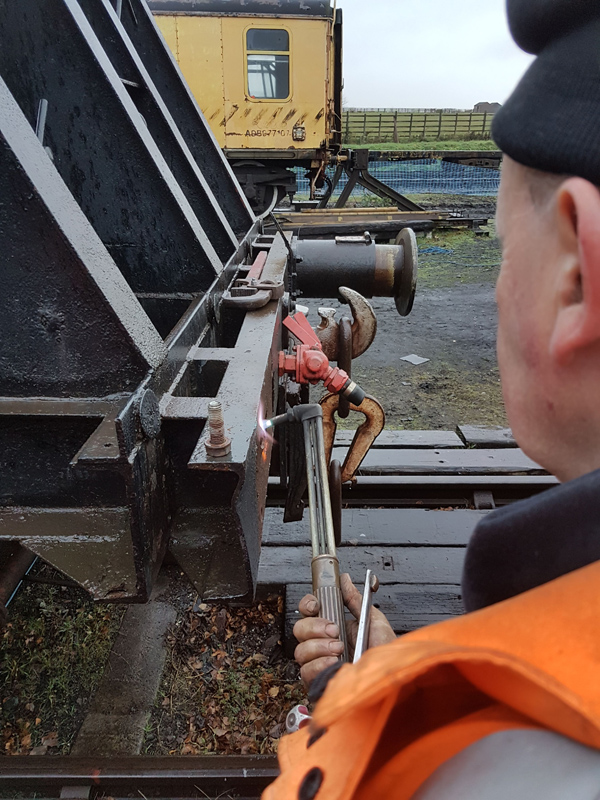
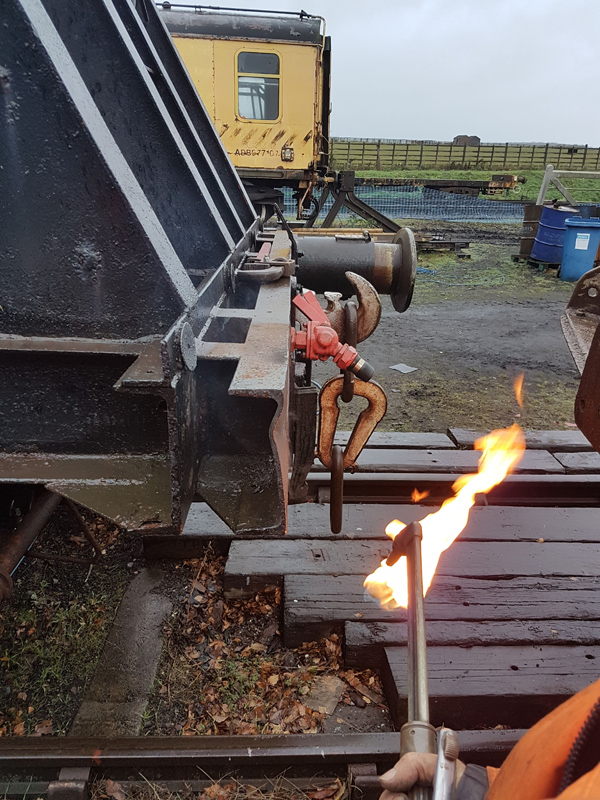
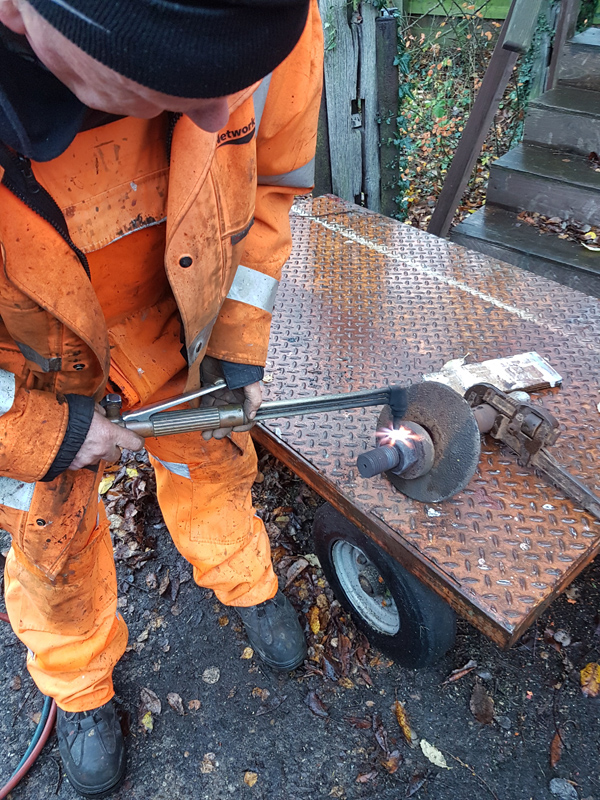
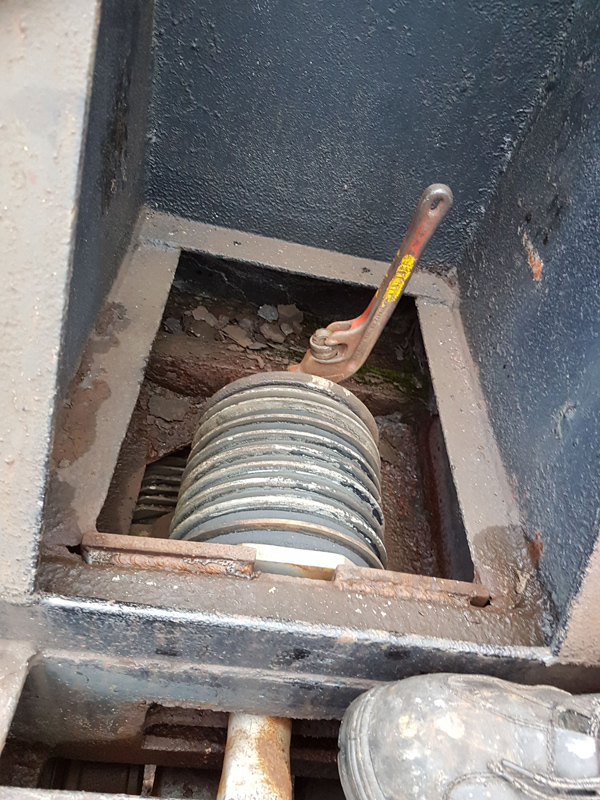
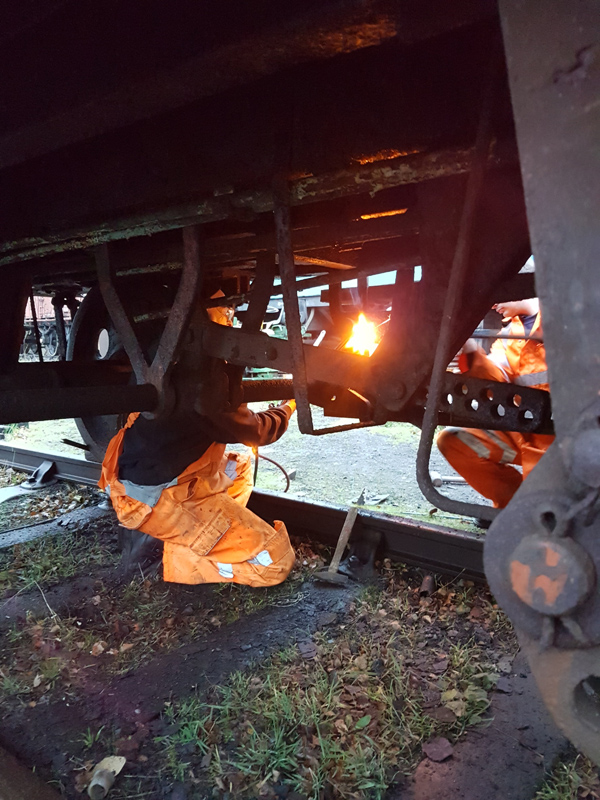
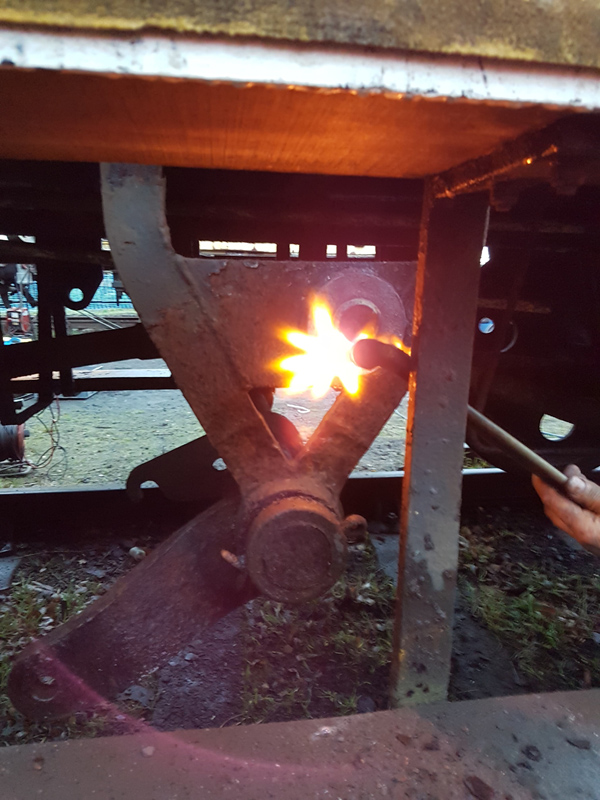
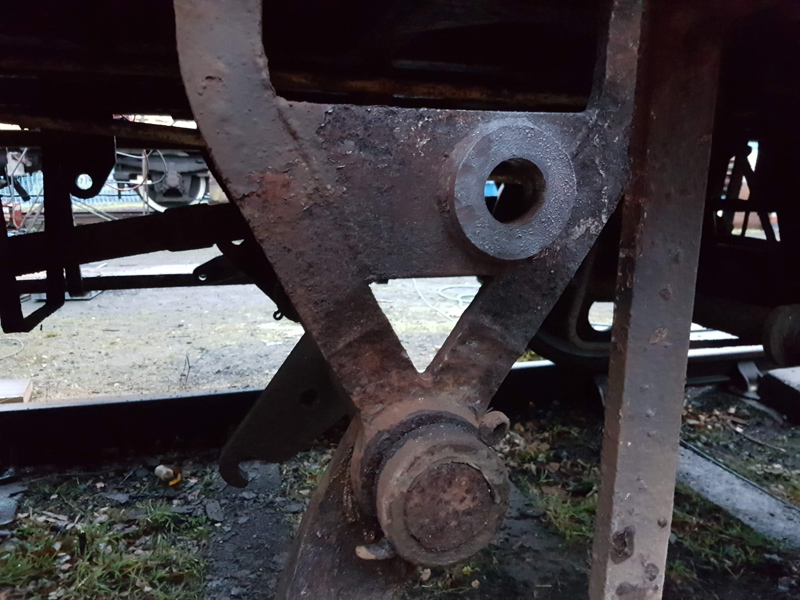
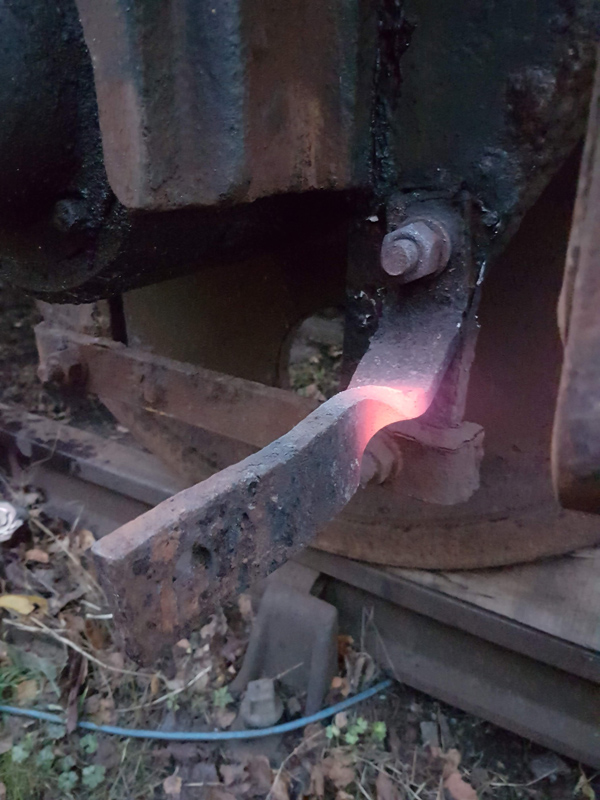
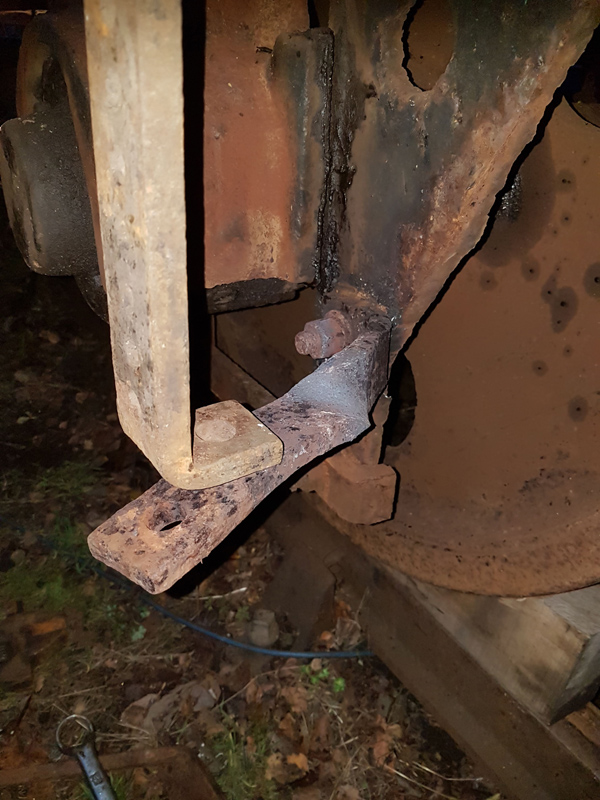
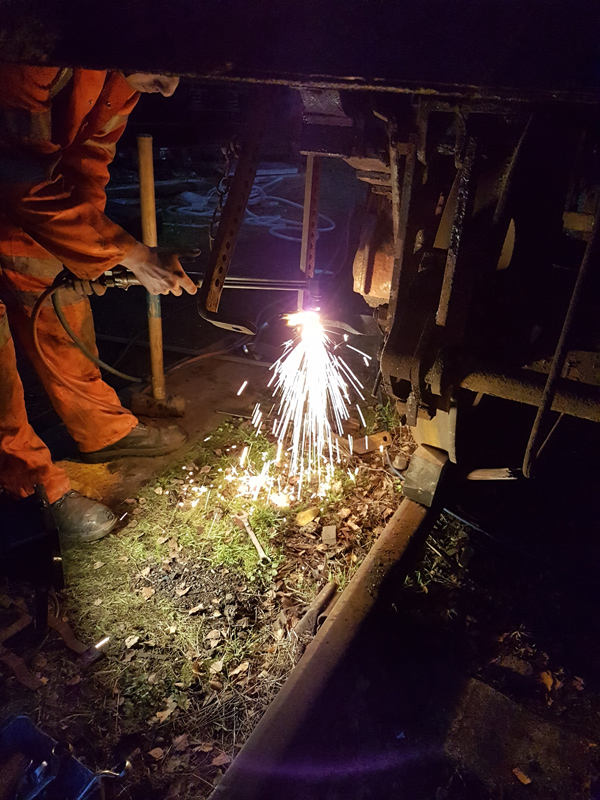
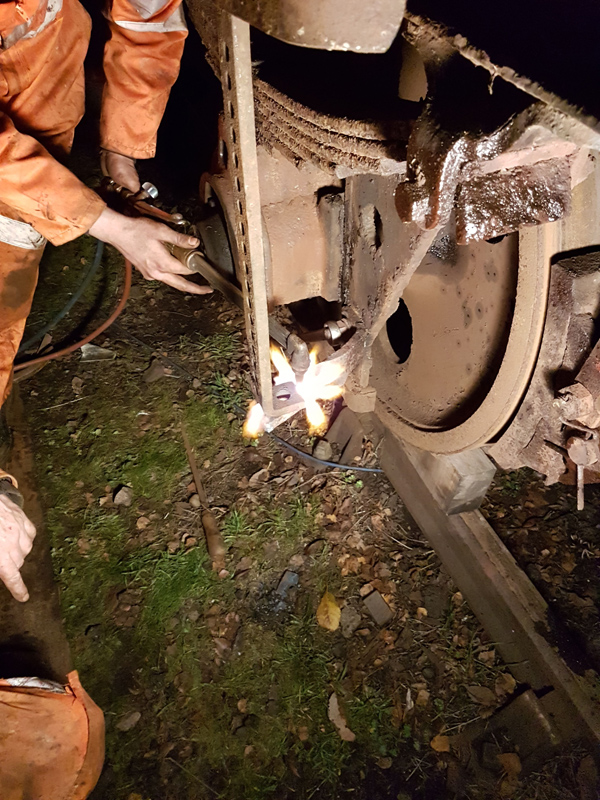
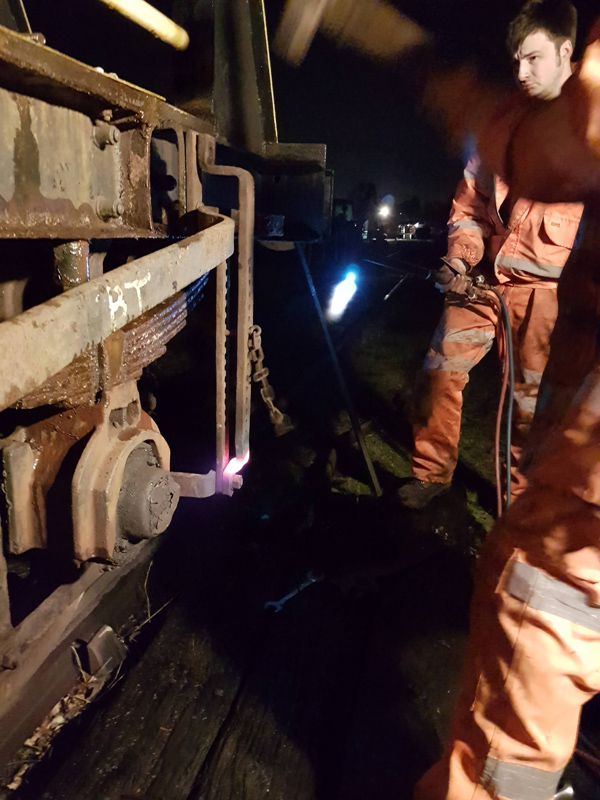
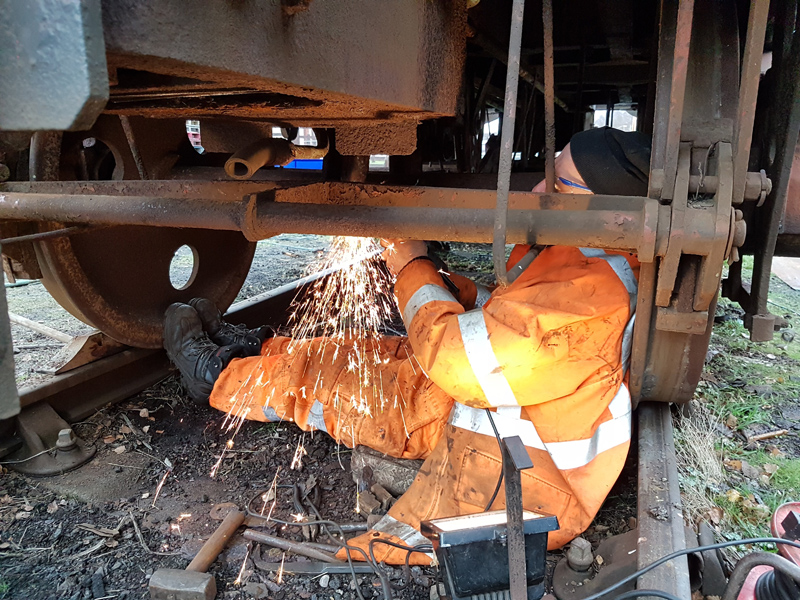
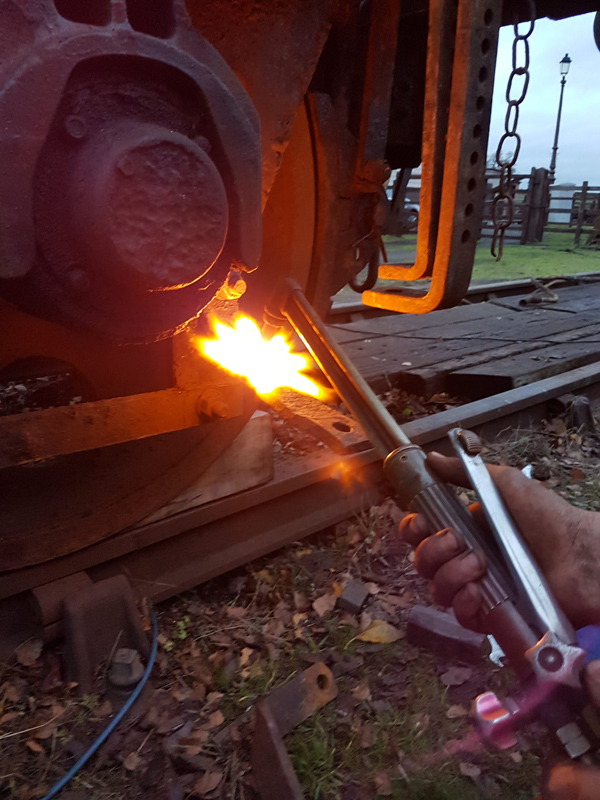
    Today also saw the Eastside handbrake fitted. The eagle-eyed amongst you will have read that last week we fitted the east side handbrake. The vehicle was turned in the week during work for the testing contract in Quorn South yard. The fitting of the handbrake was quite involved as we had to use the ‘hot spanner’ to adjust the handbrake rack so that the holes for the handbrake pin would line up. We also had to align the holes to mount it to the wagon, activity that continued long into the darkness.20181208_172015

    On to Sunday and it is Matt that continues this report. 

    Returning Sunday and straight into straightening out the W Irons.  Using the “heavy hammer” AKA a Volvo L70.  Pressure was first applied to the North West iron. The pressure remained and the top of the iron heated allowing it to relax into the more favorable position. This was repeated on the North East corner although the iron was pulled with heavy duty chain and again heated and allowed to relax.

    The result is a full set of straight W Irons one in each corner.  Again the wagon was lifted and the axle boxes proved to move freely.

    Next job and the removal of the seized brake block carriers.  Despite successful removal they were in a poor condition and are not fit to be refitted.

    This once again leaves the vehicle without brakes so it has been coupled to a Grampus and next week once spares have been recovered it will be reassembled.

    The brake pin racks were also fitted with pins.20181209_161804

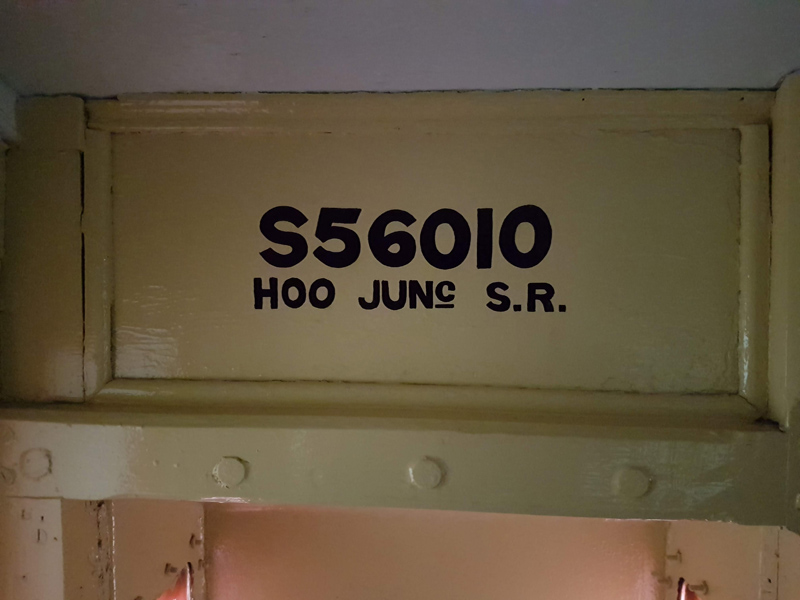
    I also did my time team bit and revealed the original running number.20181209_123213

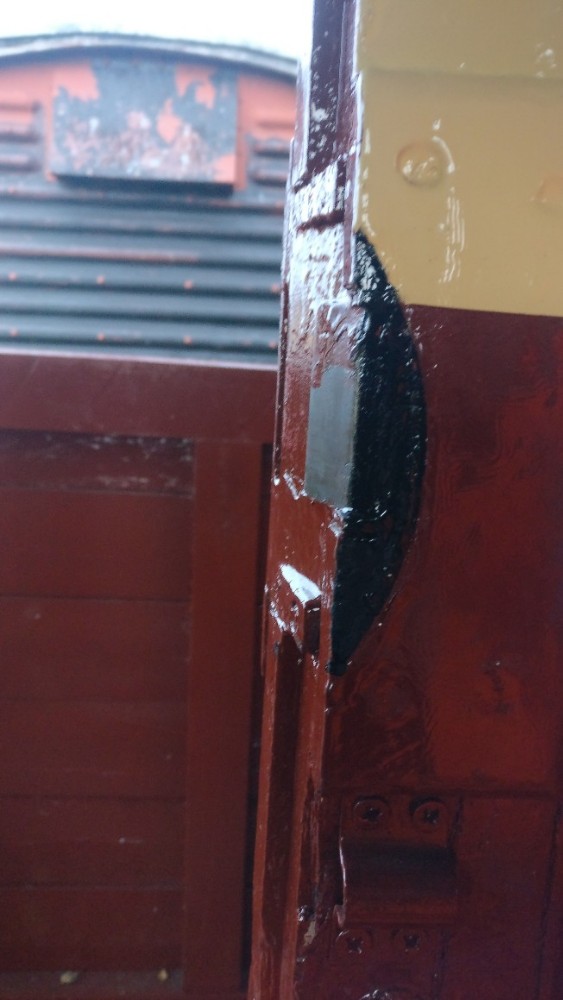
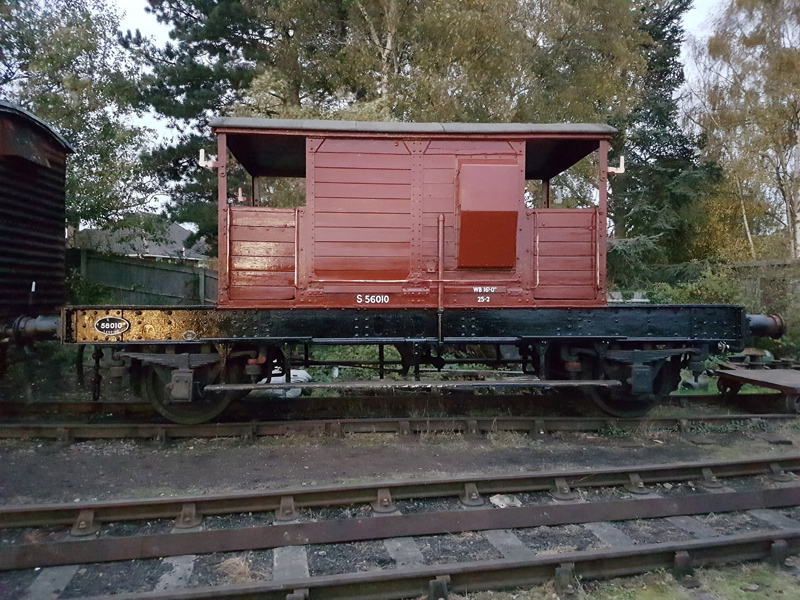
    S56010 is also absolutely complete and once the point is back in can be released to traffic.  The last job completed was the fitting of filler pieces in each corner of the bodywork which was sealed and painted.20181209_162432

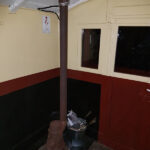
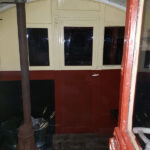
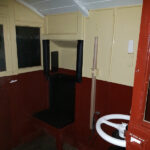
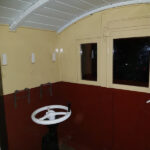
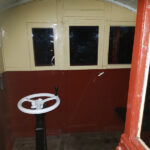
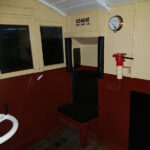
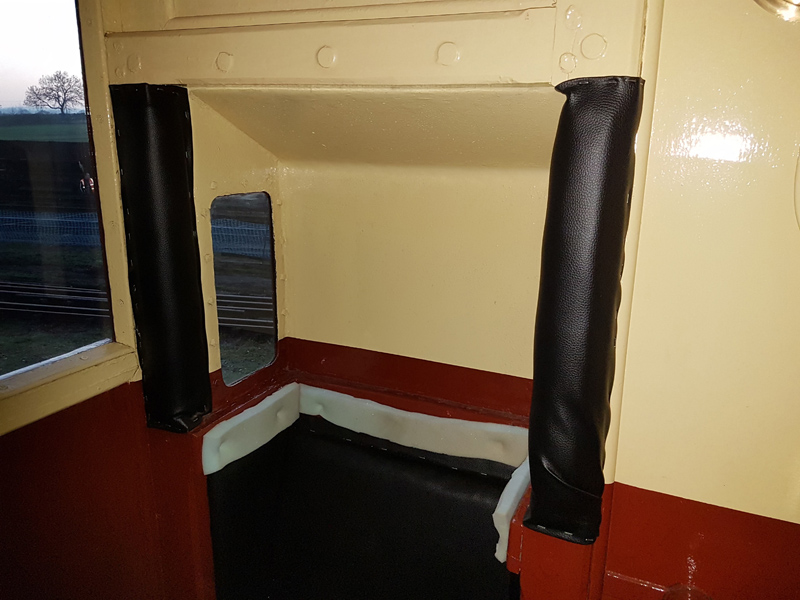
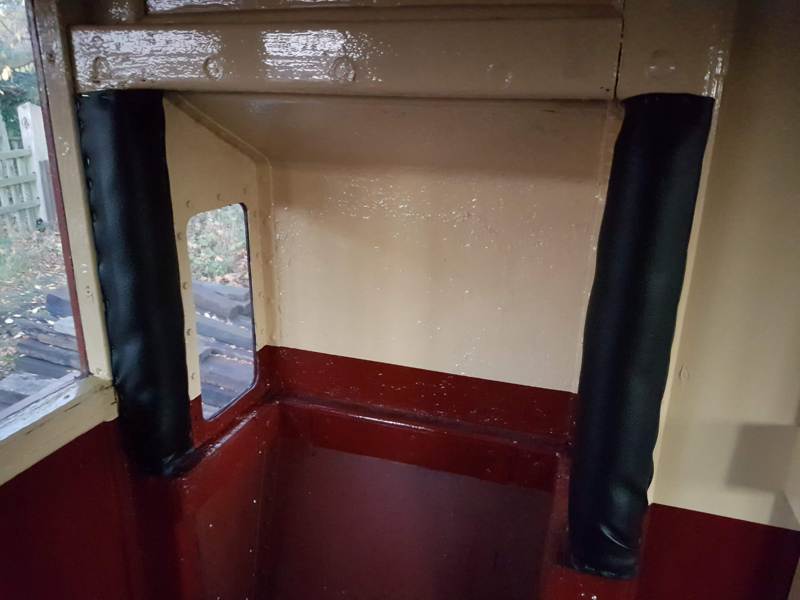
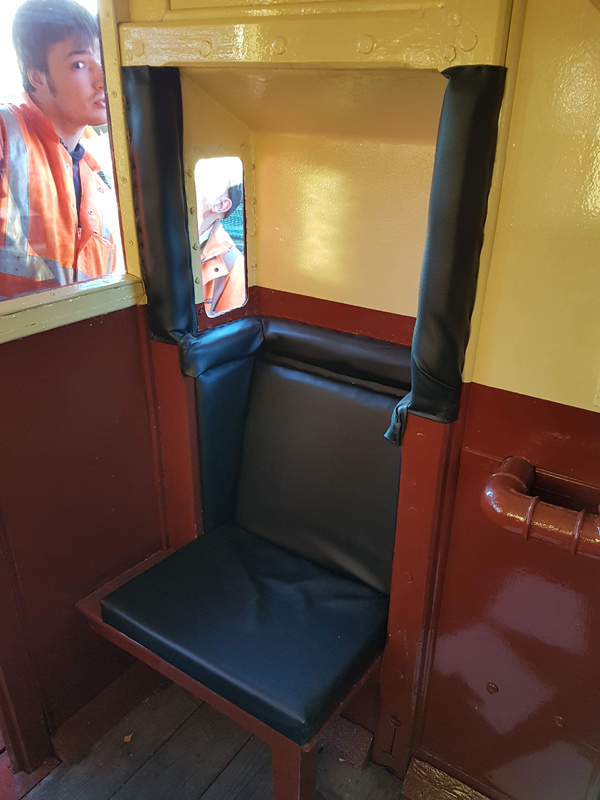
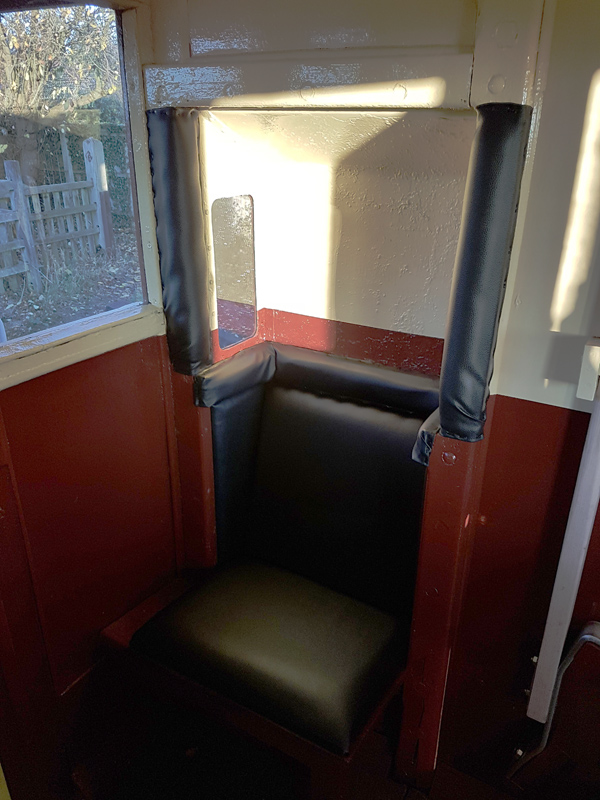
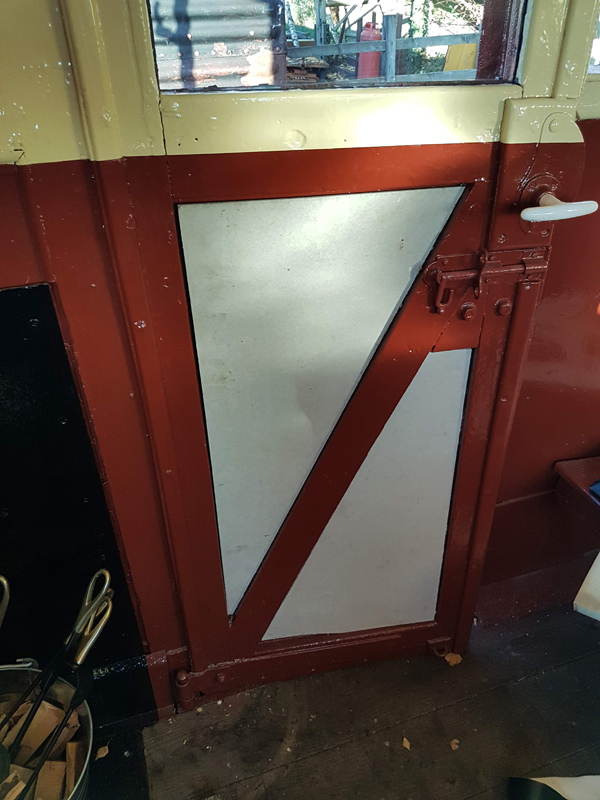
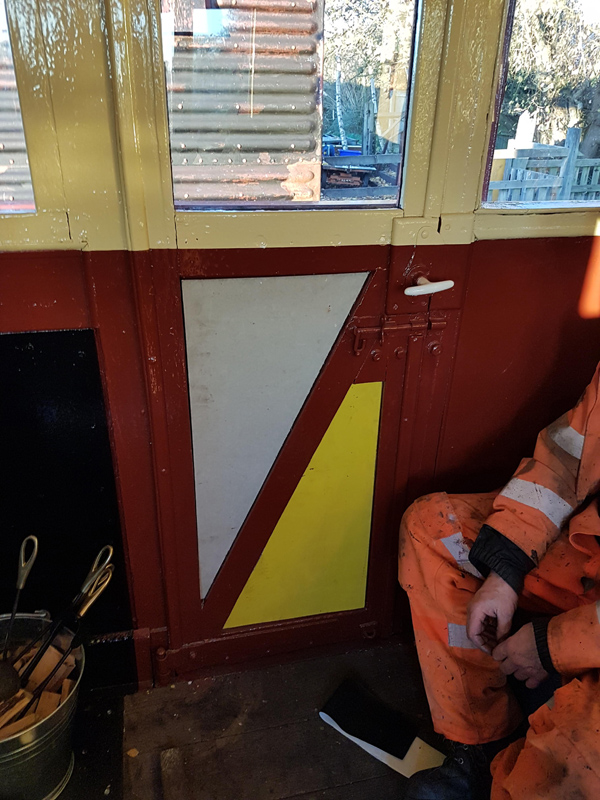
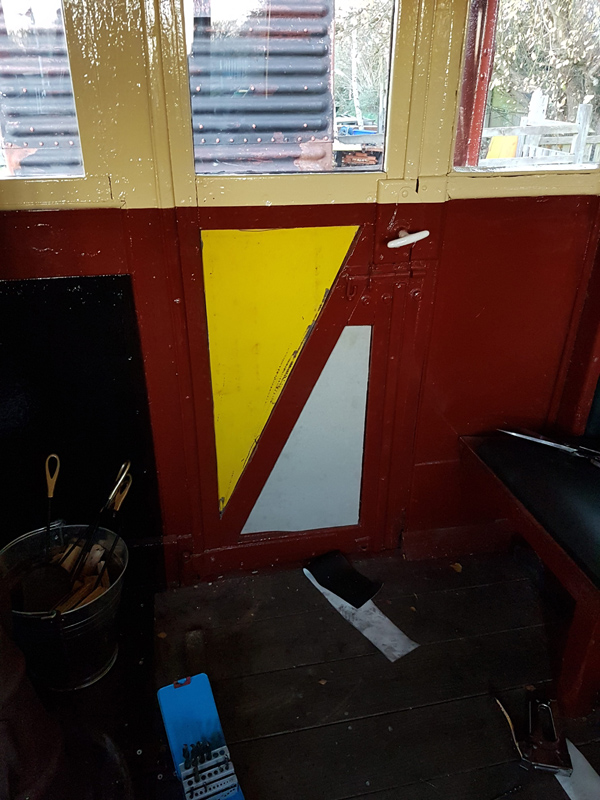
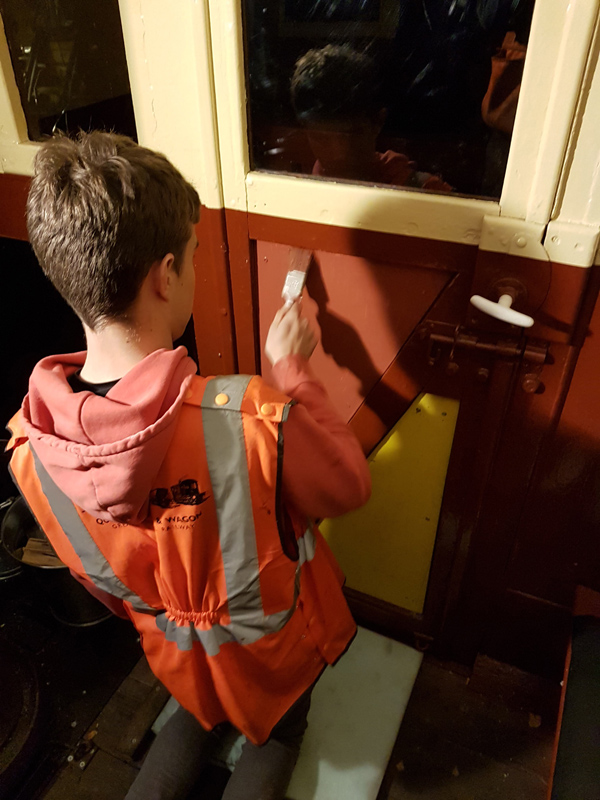
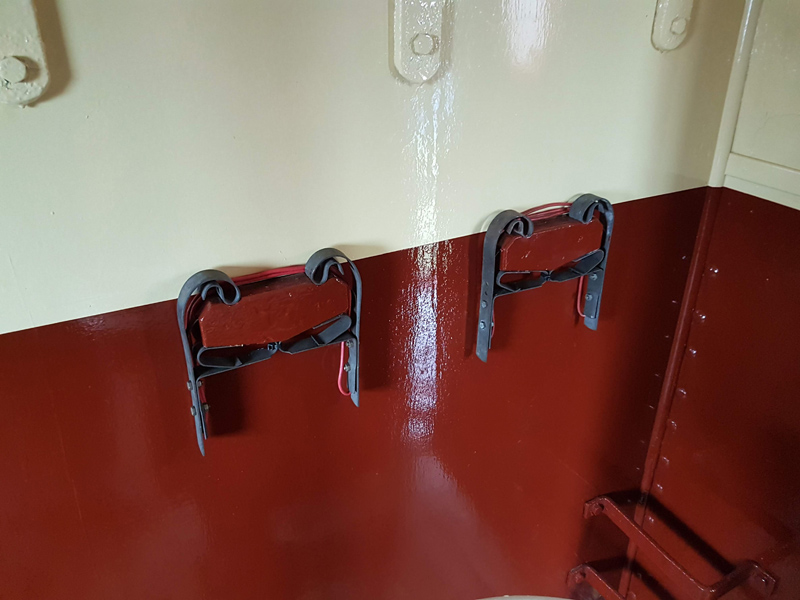
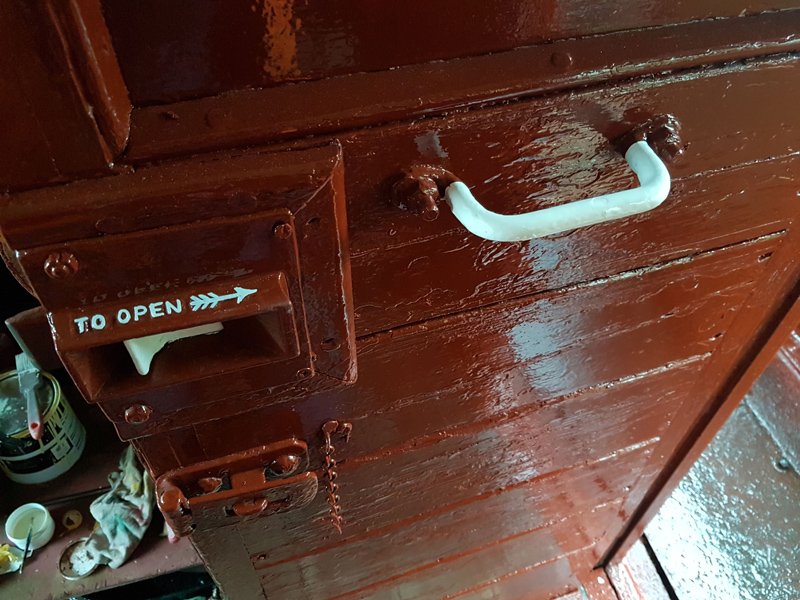
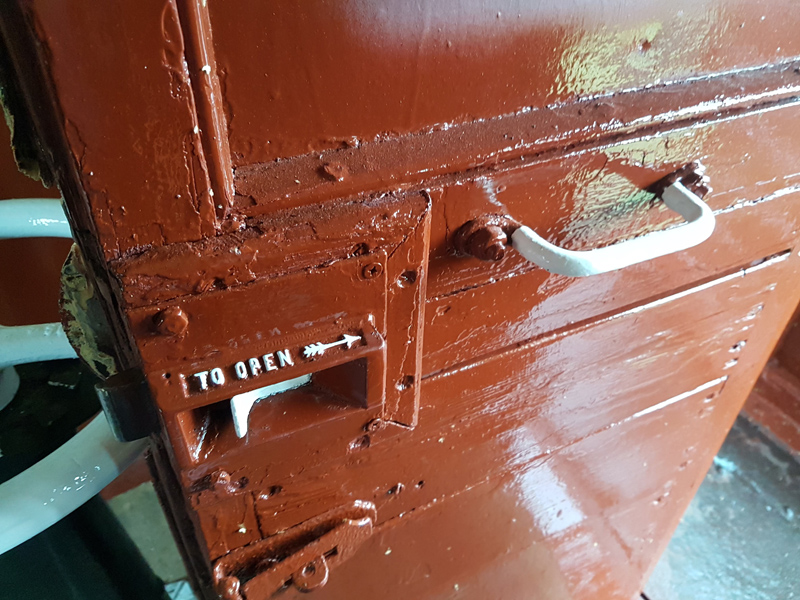
    I shall also add some images of the fully refurbished interior and those that remember it originally will notice the changes.  Unfortunately, we didn’t take any images before refurbishment but it was extremely work worn.


  • 02/12/18 – Bricking it

    02/12/18 – Bricking it

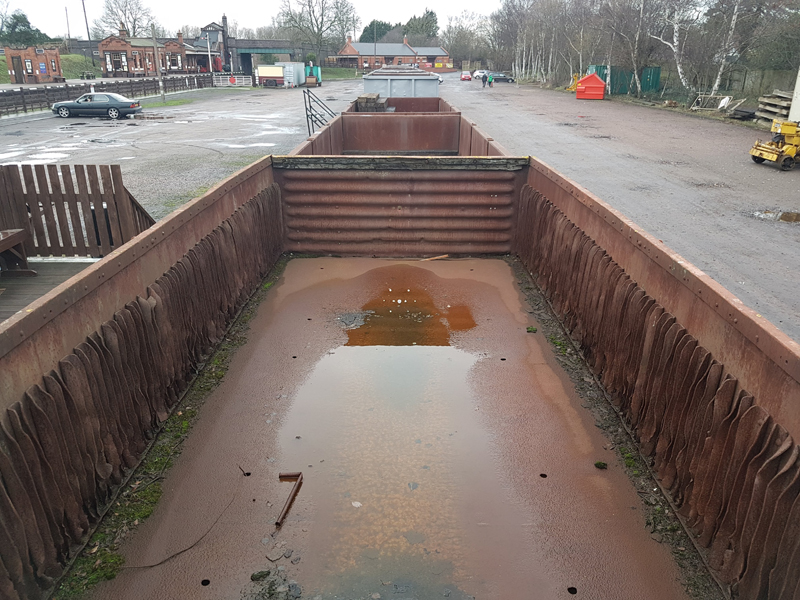
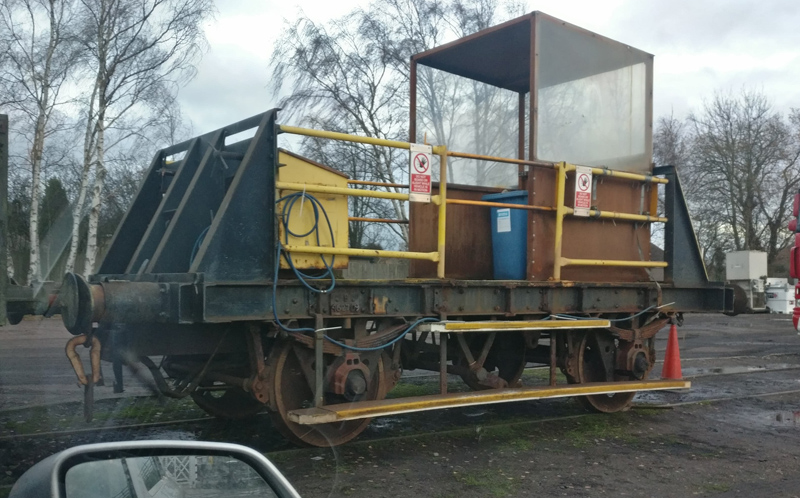
    With S56010 essentially finished our attention has turned to a new arrival.  Joining us from the Bombardier works at Derby Litchurch Lane Palbrick B B462709.  This vehicle was purchased with the intention of becoming a chassis for re-wheeling a box van.
    This decision may be altered as an alternative use with commercial possibilities has come to light but this requires discussion with the GCR before we announce further.
    For now, the vehicle is being made fit to move on the railway.

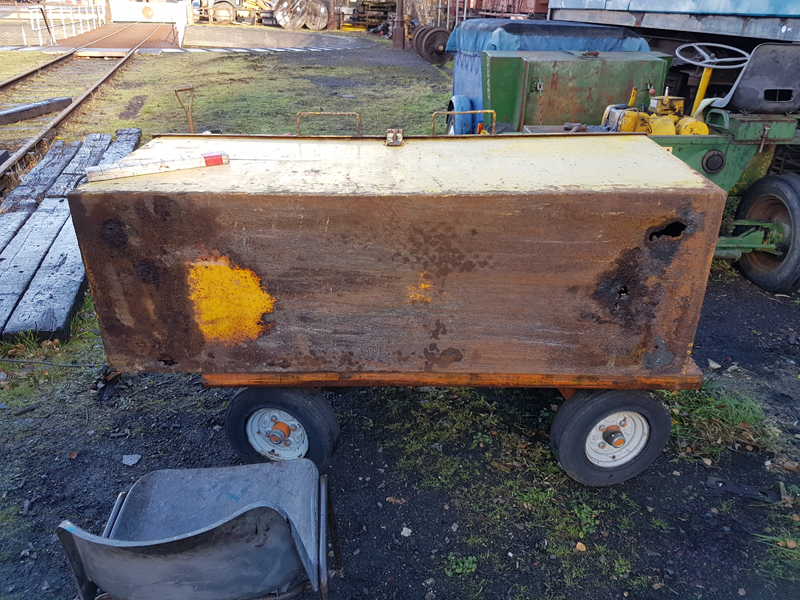
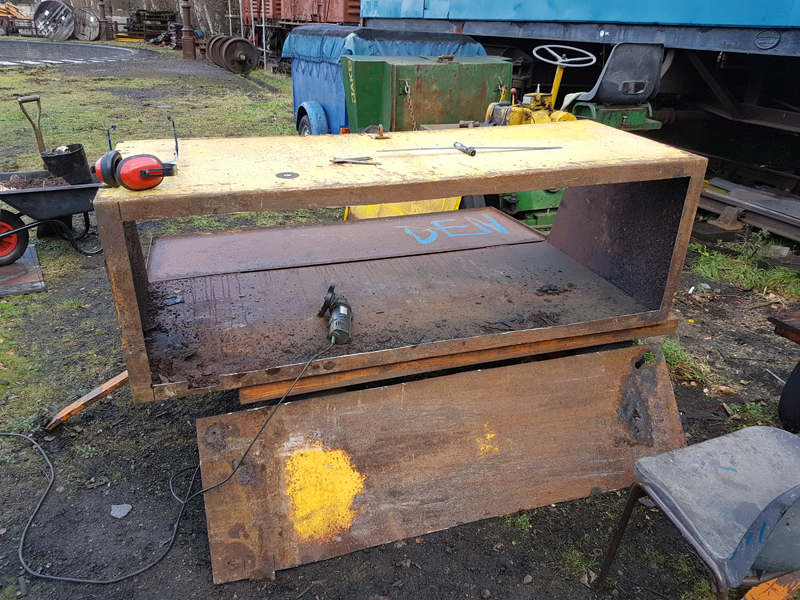
    The first job was to remove all of the equipment from the deck.  This included the toolbox and what can only be described as the wheelie bin shelter.  During its life at Derby, it was in use as a match wagon and site domestic wagon,  for clean up and de-icing duties both track and walkways.20181201_143143

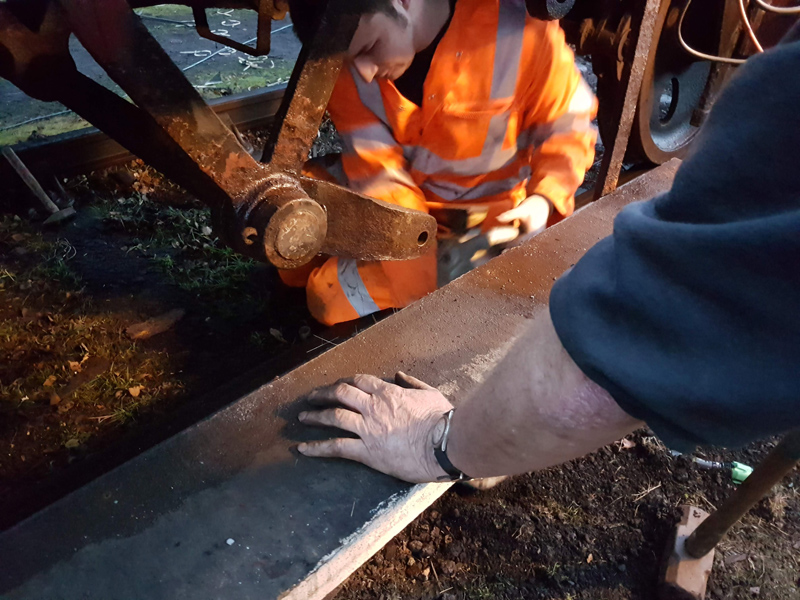
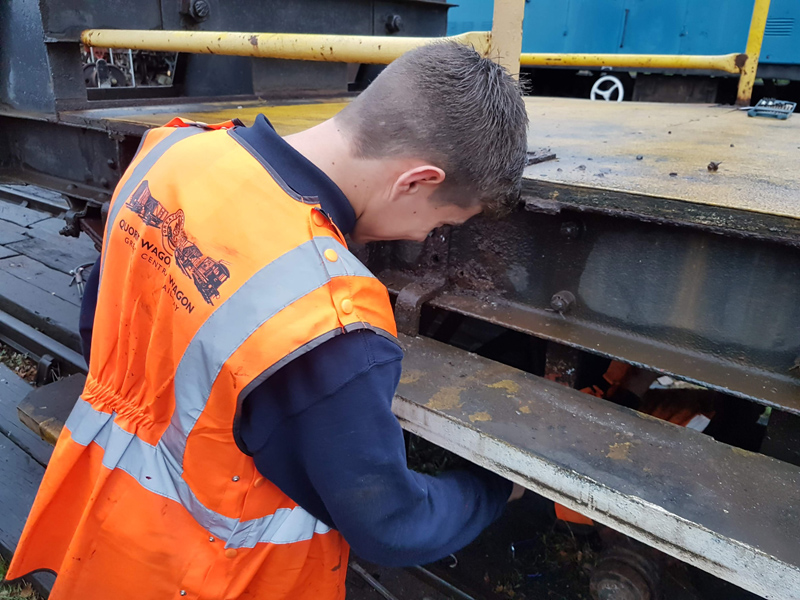
    My main task for Saturday was to address the step boards,  as can be seen above they have, at some time, taken a wallop.  As we are also reinstating the brake gear and to gain better access to the axle boxes the steps were shortened.20181201_143201

    This was carried out on both sides.  This involved removing the anti-slip coverings, shortening the boards and coverings then refitting said coverings.  I also had time to remove the east side footboard bracket as this was now redundant.

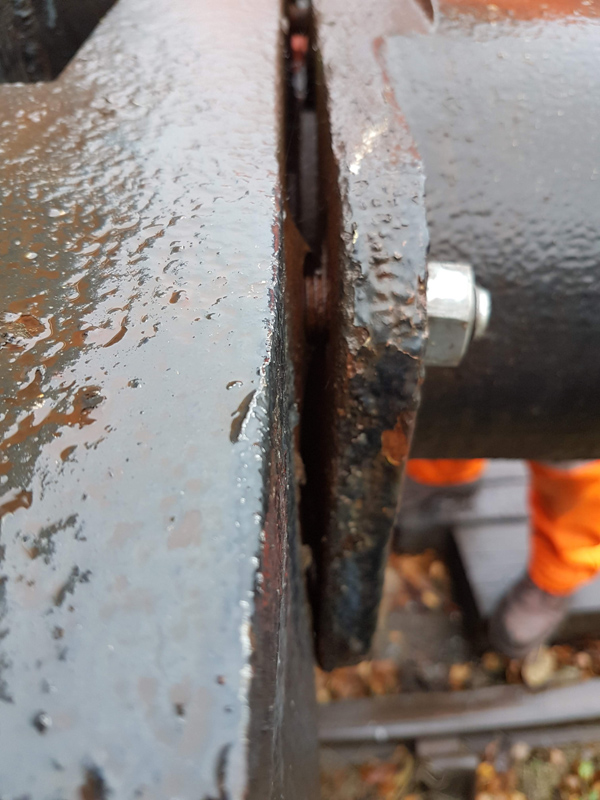
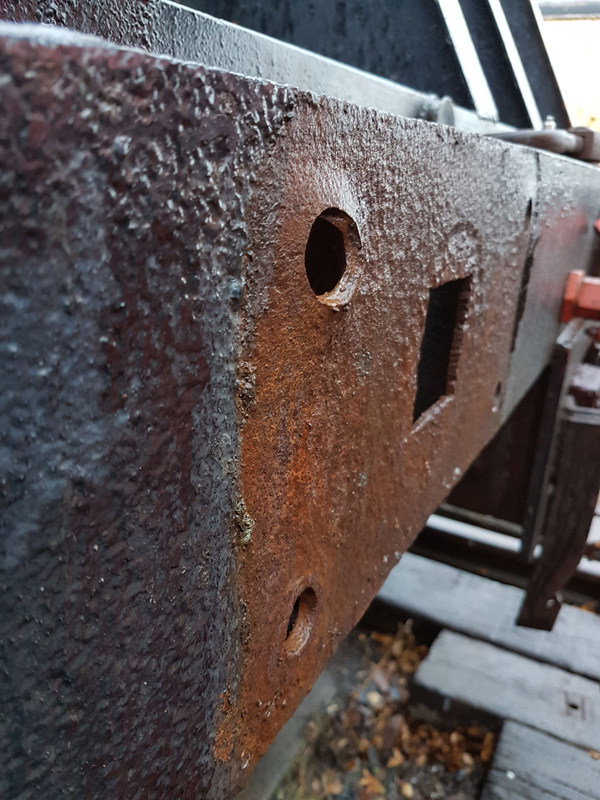
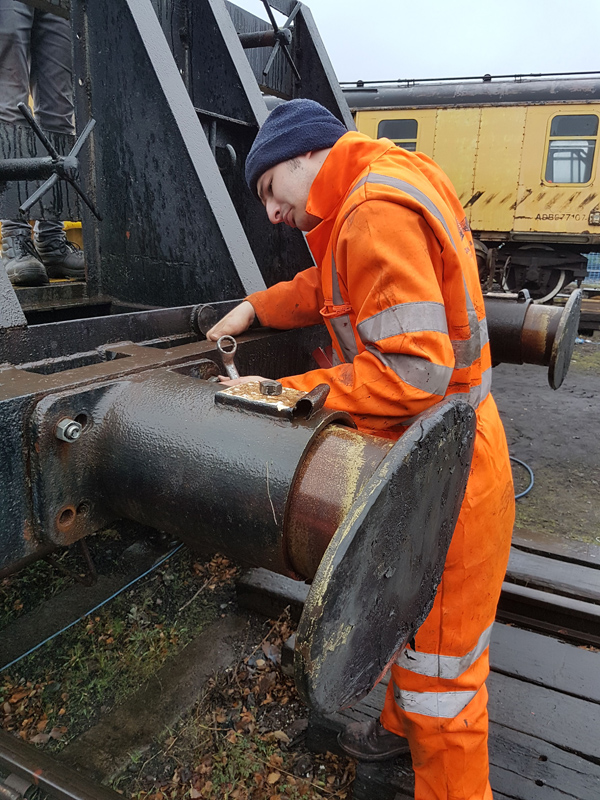
    At some point, the vehicle had taken a hit to the northeast buffer, this had pulled it away from the headstock.  The buffer was removed the area around the bolt holes that had deformed was heated and returned to its original profile.  The bolts replaced and the buffer refitted


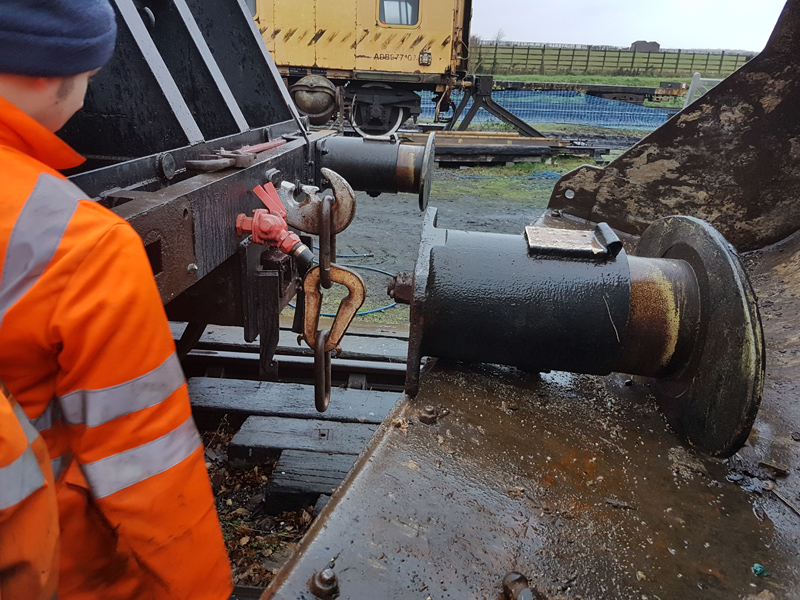
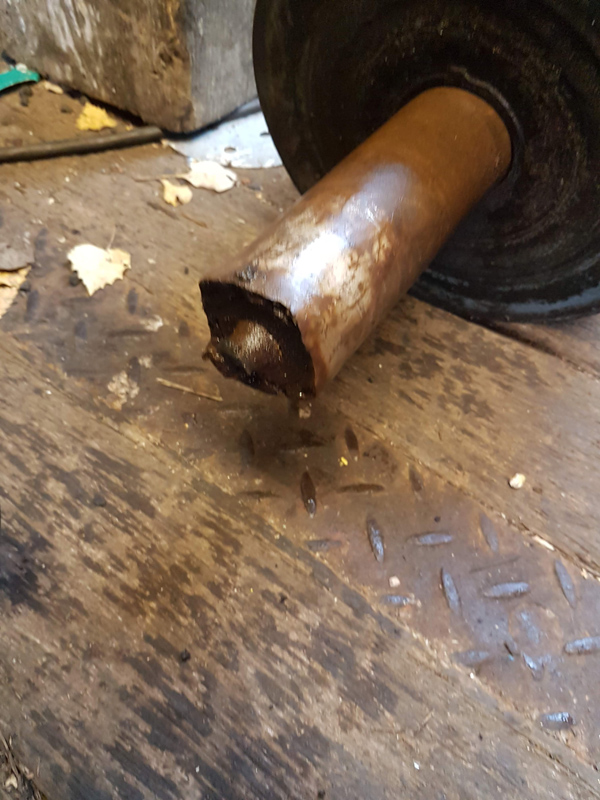
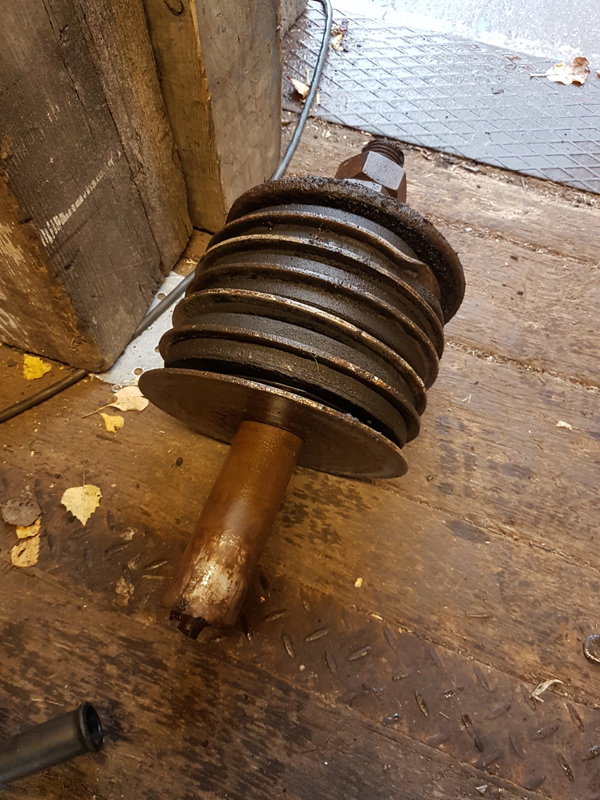
    The south draw hook had also sheared. What was left was removed useful components salvaged and a new complete draw-hook fitted.


    20181201_143218

    The other draw-hook at the north end was loose and missing a spring rubber.  This was undone and a new rubber fitted.  Of cause, the description of the work carried out is considerably shorter than how long it actually took.

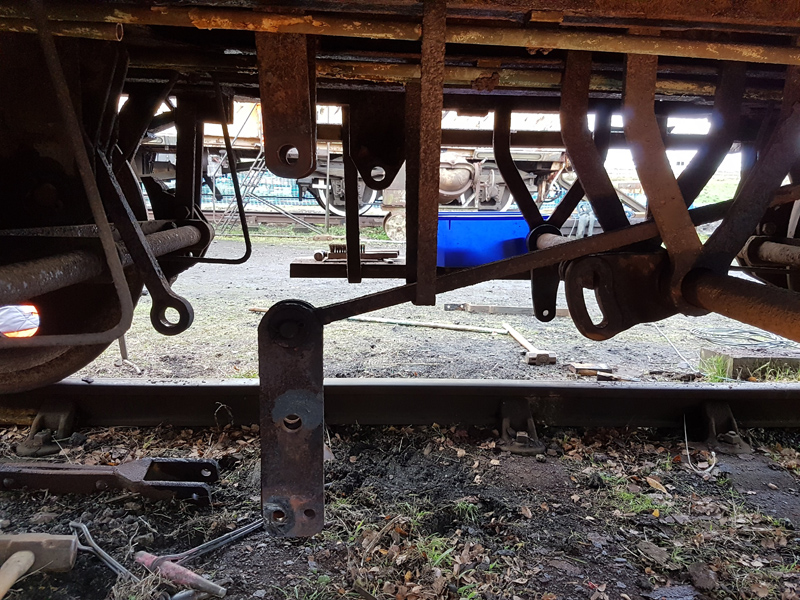
    With the light fading, we began to look at the brake rigging. Most of the linkages and pivot points were sized.  A few choice applications of heat and penetrating fluid was liberally applied and attempts were made to free off the linkages to no avail.  The pivot pin for the missing brake arm was also removed.
     

    Final Job for Saturday was the application of the running number.20181201_163628

    On to Sunday and I completed the removal of the redundant Stepboard support.  As well as the remains of the Wagon clips.  After which I removed the bottom of the toolbox as this had become rotten as it was used to store rock salt I also scraped and cleaned the inside of the box.  This will be receiving a new wooden bottom and will be fitted to the wagon with an air gap below.

    Nick and Ross systematically freed off, removed, cleaned up and refitted all of the linkages, pins, and pivots of the brake rigging.

    Once complete our attention turned to fitting a brake lever and pin rack, we used the bracket on the W iron that held the footboard with a little adjustment.  It was heated, twisted and hammered into position. With the lever fitted this results in an operational handbrake, although for the time being only from the East side.

    The vehicle can now be moved, braked and can be identified. More to do next weekend.20181202_181012


  • 25/11/18 – Don’t get hooked up on that!

    25/11/18 – Don’t get hooked up on that!

    This weekend has seen work on the Southern brake van (S56010) very close to completion. Next week should see the van ready to leave the yard.  On Saturday, I began the day by making running repairs to a new acquisition of Nick’s.

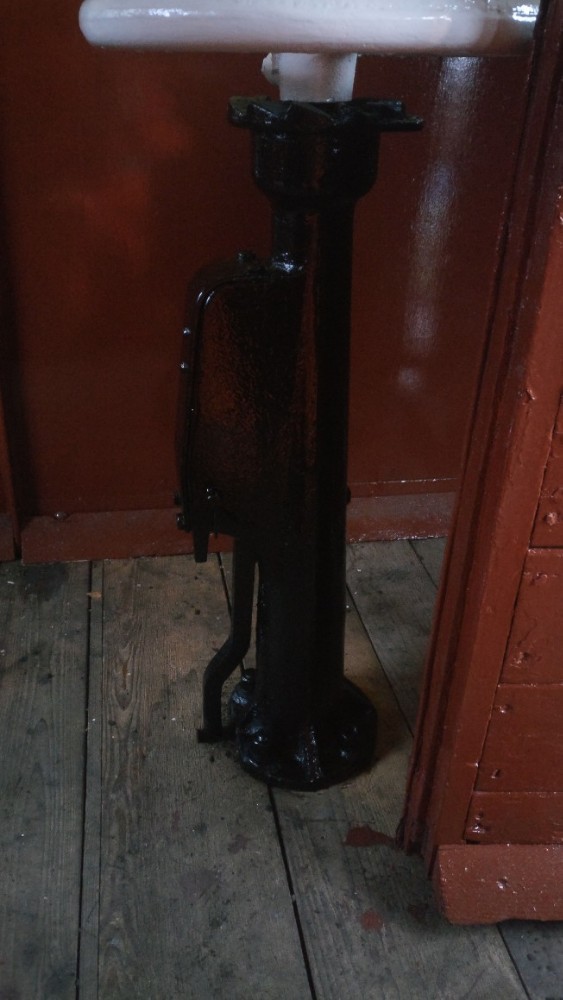
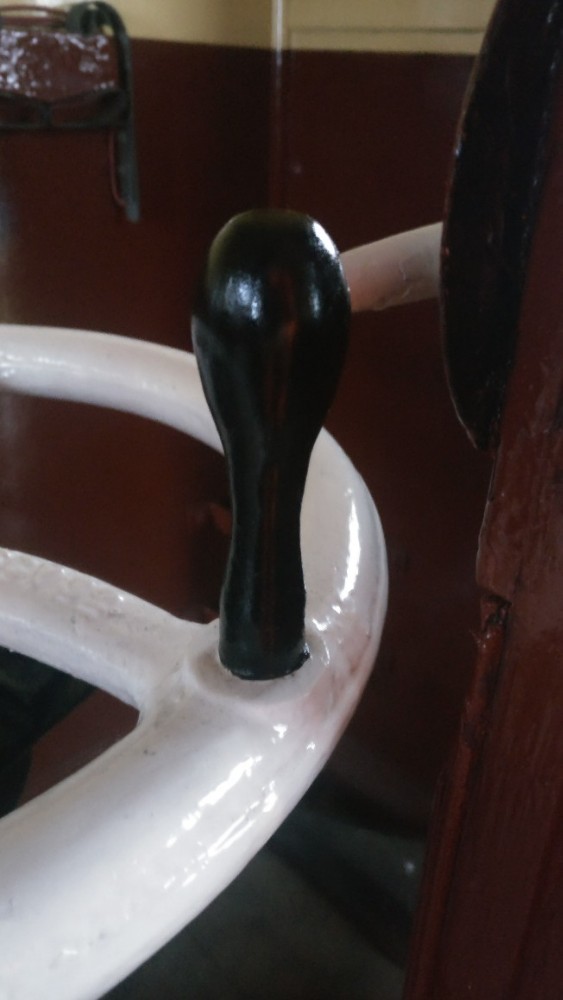
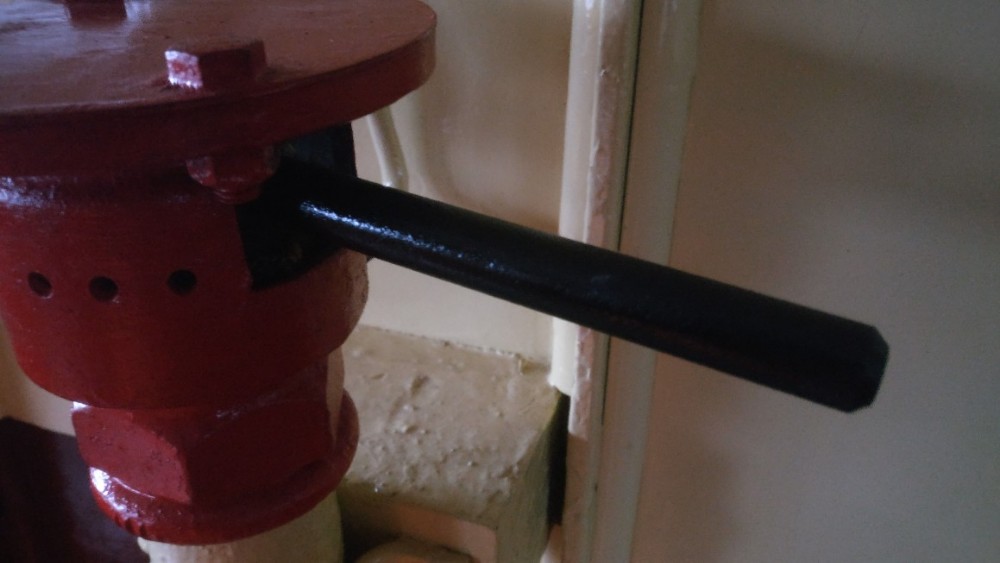
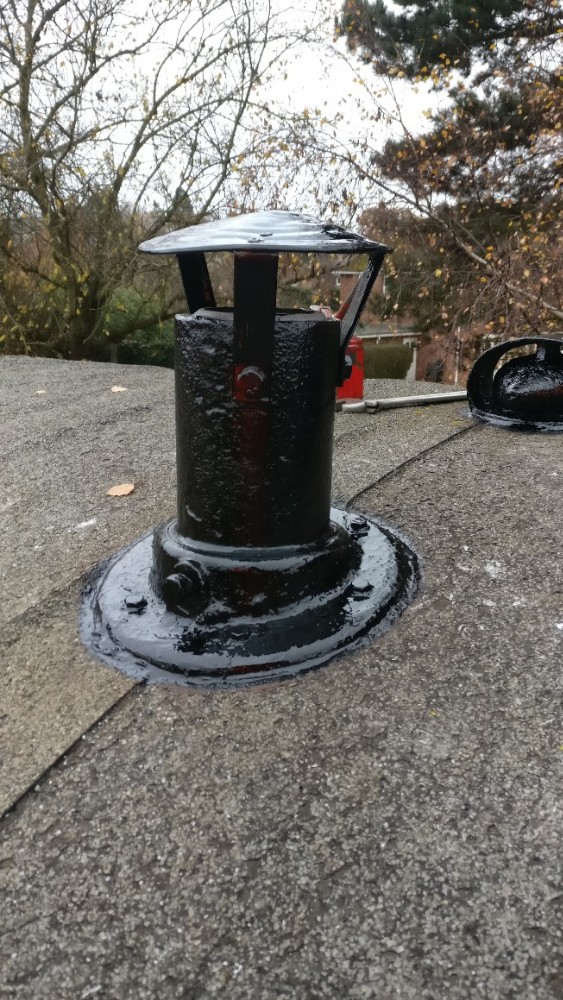
    Whilst I was doing this Matt painted the handbrake standard, stove surround, earth strap and vacuum setter handle in black gloss. This concludes the work for the interior of this van. Matt then went on to manufacturer a chimney cowl for the stove pipe.  See if you can work out what it is made from! It is small enough to not be noticeable, but should be large enough to keep the rain entering the stove and causing damage.

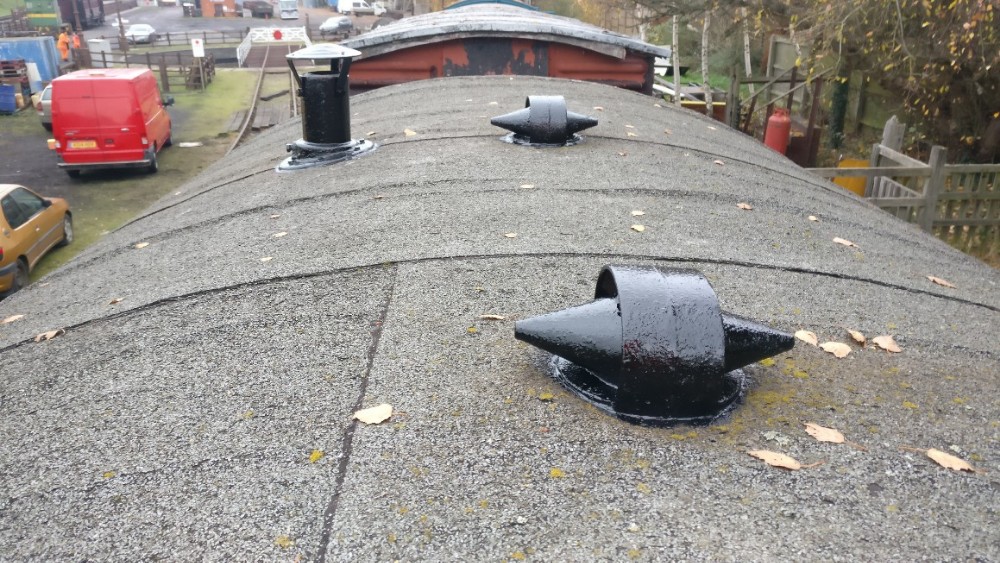
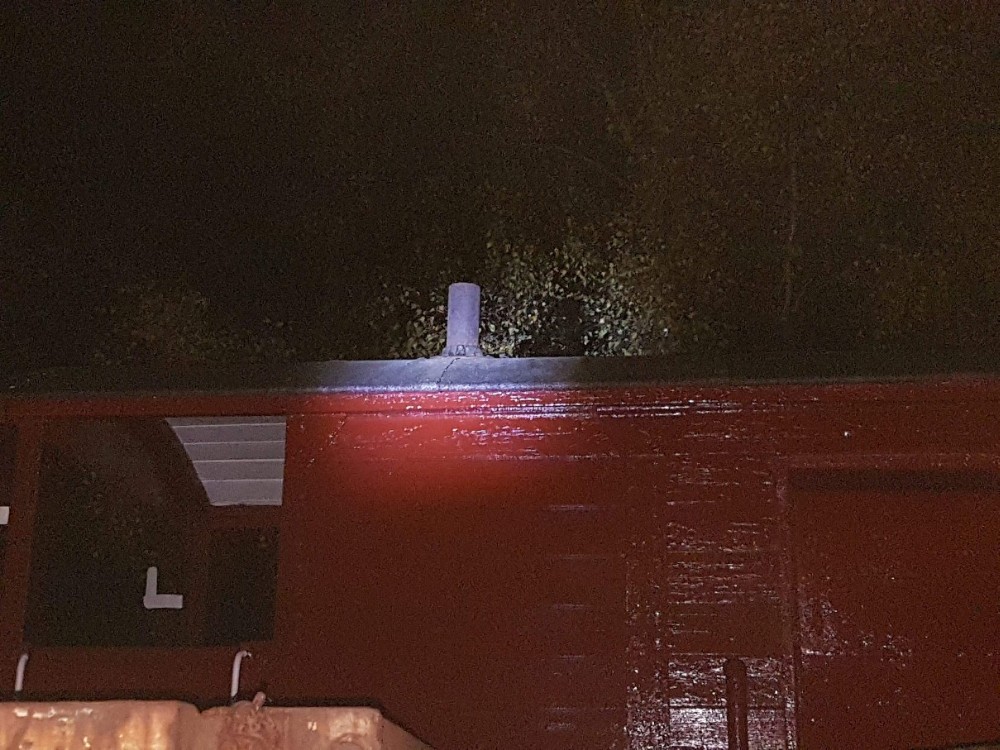
    Now finished replacing brake pads, I assisted Matt with fitted the cowl to the chimney. The stove pipe was drilled and tapped in 3 locations to accept M10 bolts, which also will help to prevent the inner flue tube from wobbling inside the outer sleeve. Matt then painted the stove pipe, and the 2 torpedo vents in black bitumen paint.

    Whilst these were going on, Jake had painted the East side step irons in black bitumen once the old step board had been removed. Jake then primed the new step board once a chamfer had been planned on to the edge. Matt got his signwriing paint out and picked out the lettering on the handbrake standard.

    The day finished with Nick and I cutting out some filling pieces for some external pockets and priming them. Matt has also sign written our sign. 

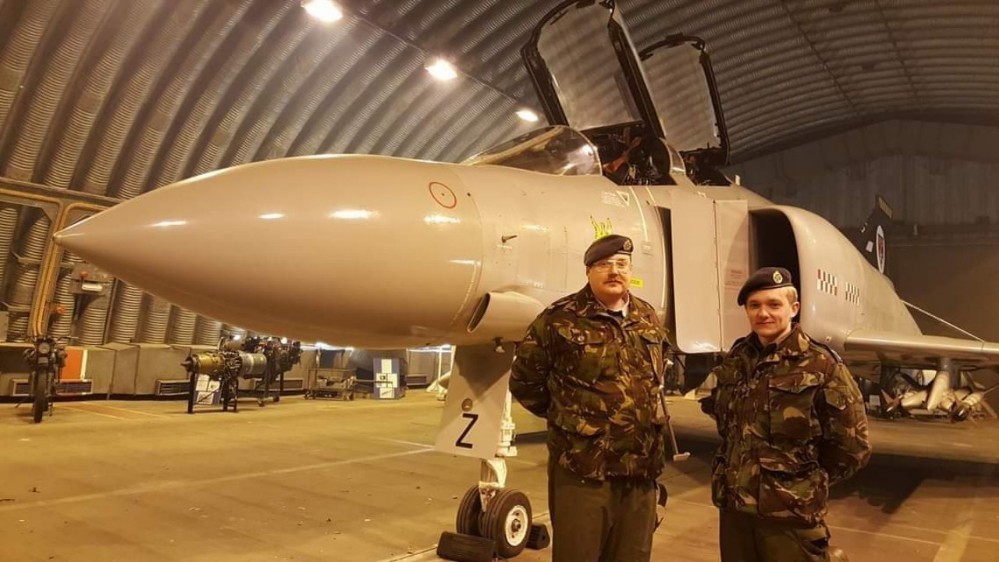
    Sunday rolls around, and Matt is off playing with a Phantom. 

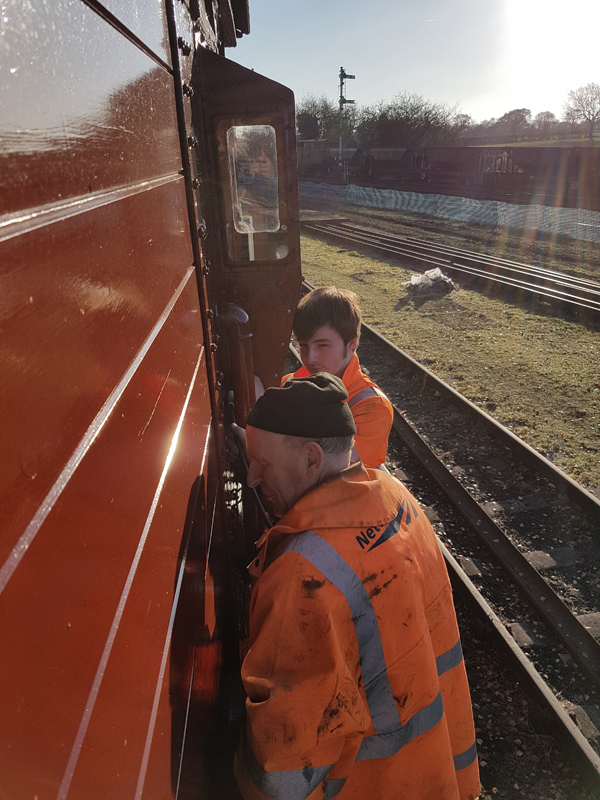
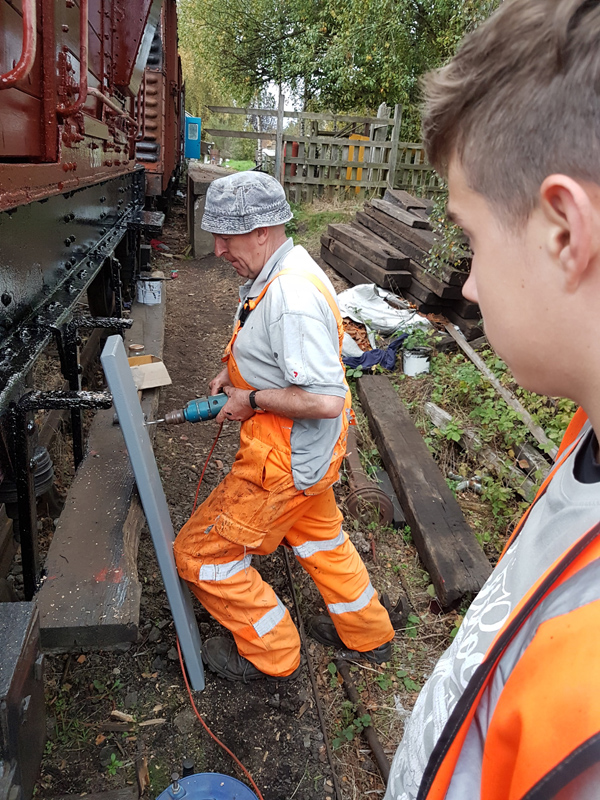
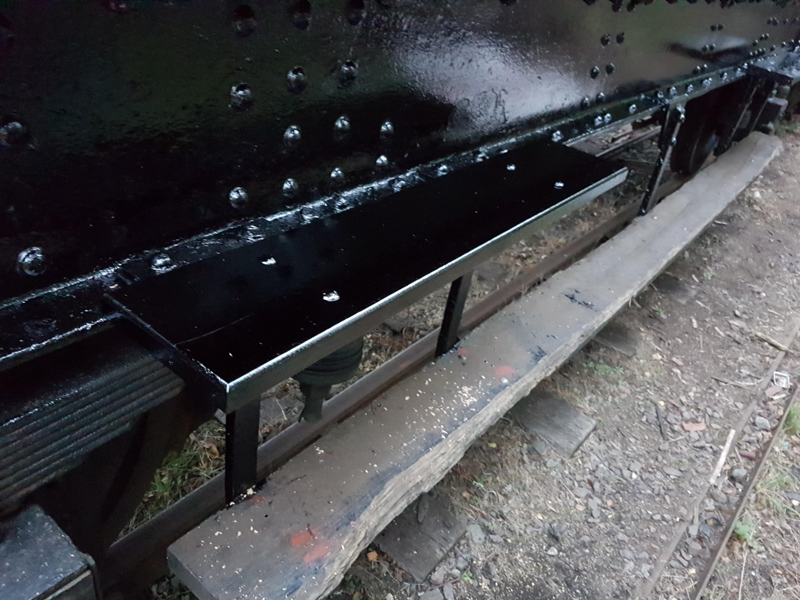
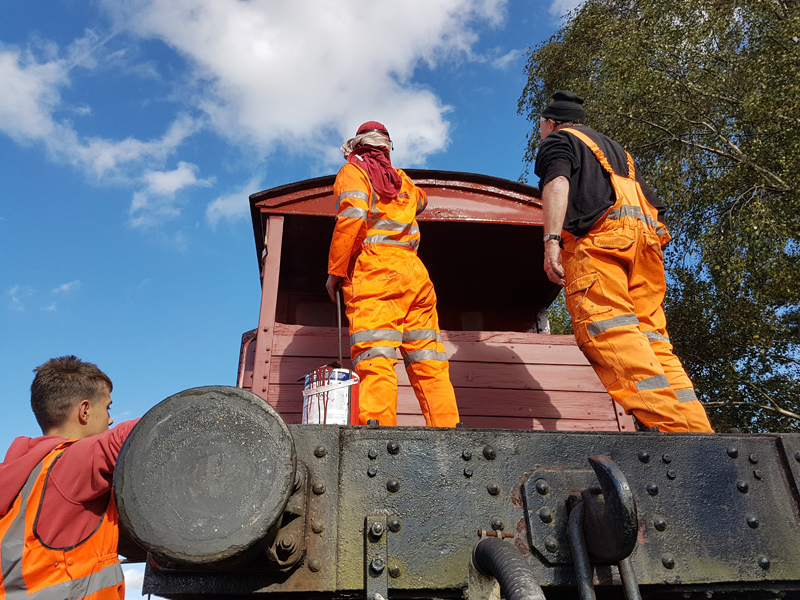
    Nick, Jake and I fitted the east side stepboard, with was still slightly tacky. Once fitted we found some of the step irons were not vertical.  We used a 5 ton ratchet strap and various landscape features to pull the irons back to vertical. Once we’d done this, we drilled the board and bolted it into position.
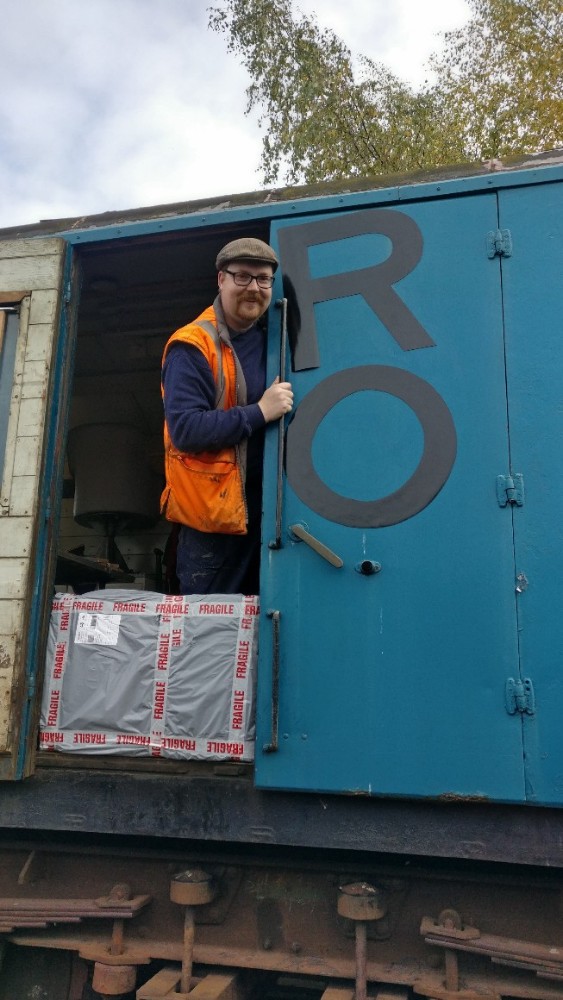
    We then let Jake loose with the bitumen paint again to paint the stepboard. Jake left Nick and I at 1400 to entertain visiting family. Nick and I journeyed to Swithland to retrieve components stored in the van train to begin our next project! Read next week to find out what this exciting new project is!

  • 18/11/18 – Home Comforts

    18/11/18 – Home Comforts

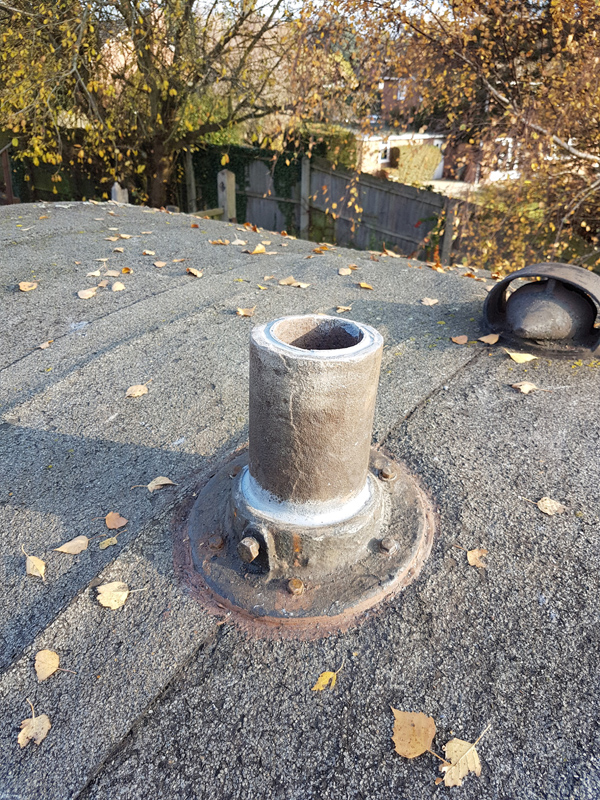
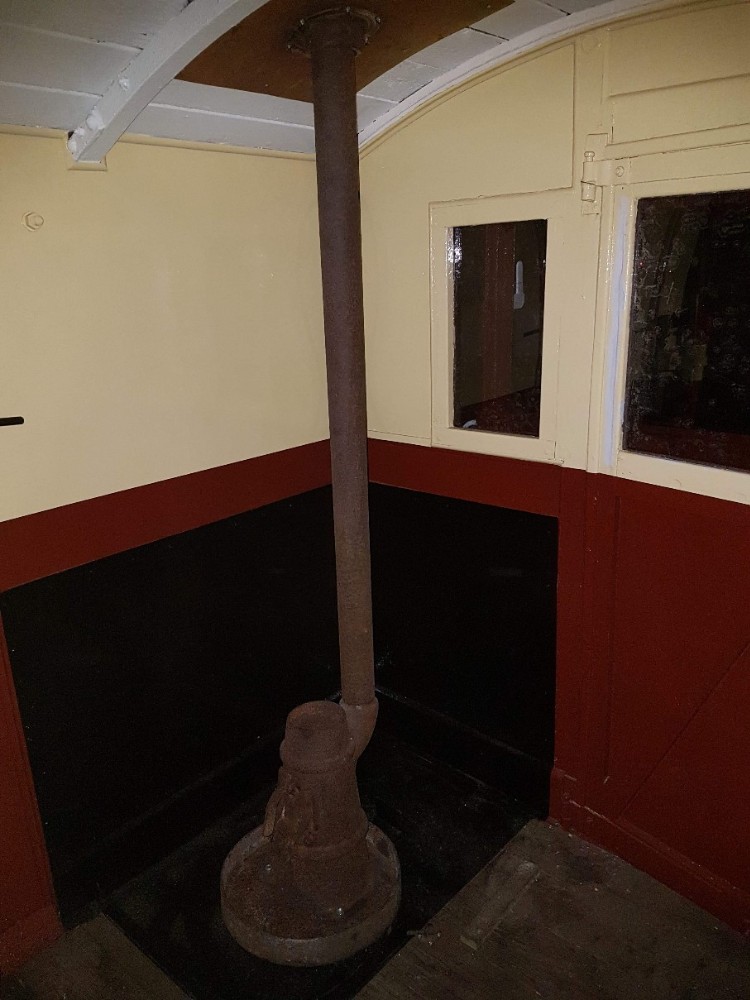
    Having spent a week looking at images of SR Pillbox brakes my thought was S56010‘s stovepipe is too tall.  Although within the loading gauge we made the decision to lower it.

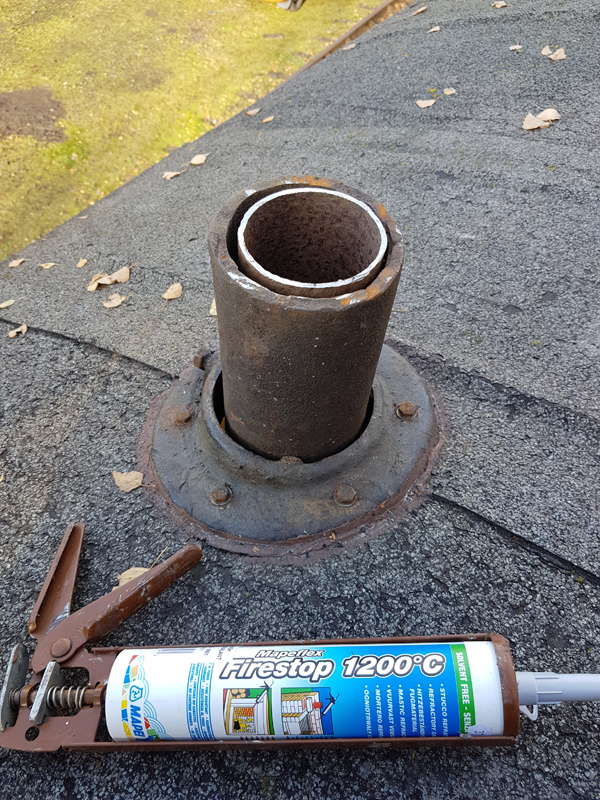
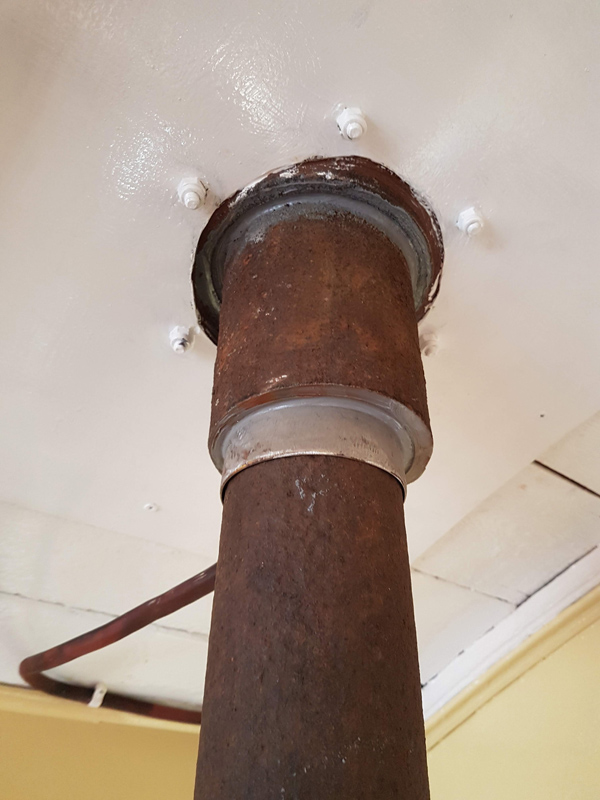
    Once lowered I applied heatproof sealant between the Outer Stovepipe and cast roof fitting and the inner and outer stovepipes, both externally and internally.

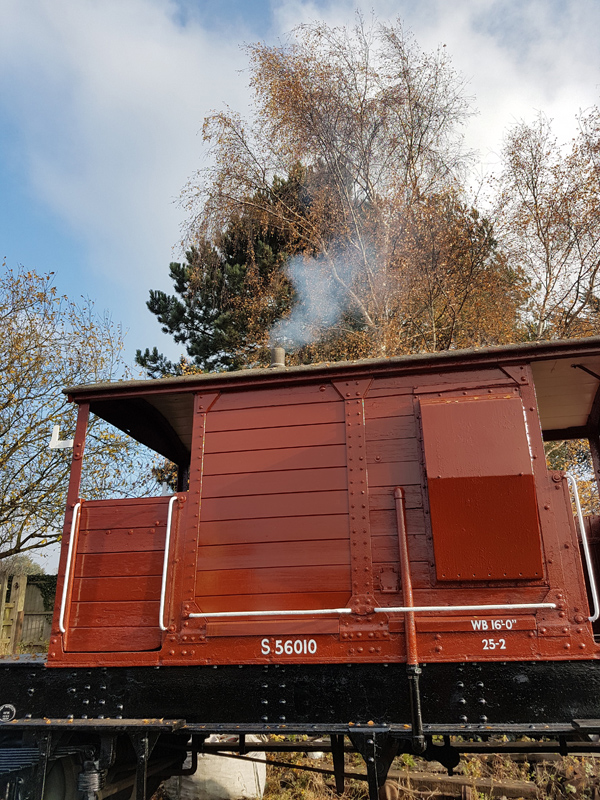
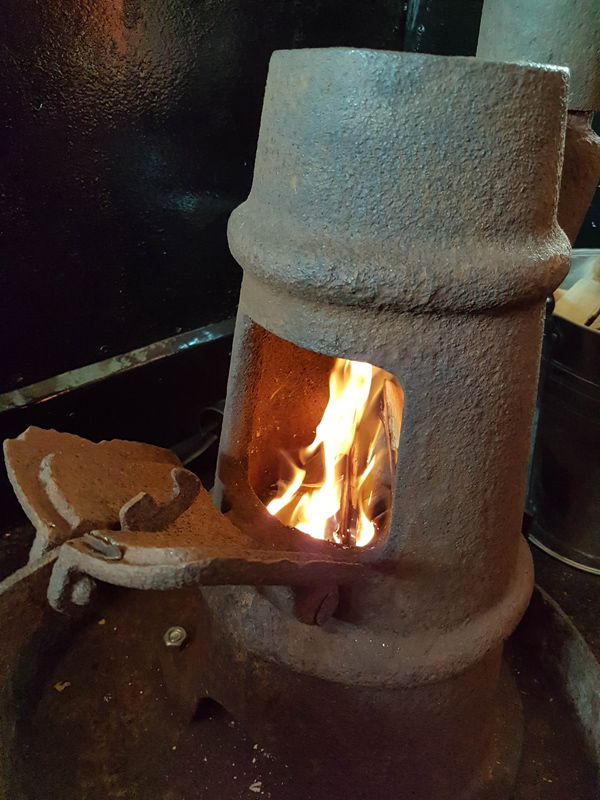
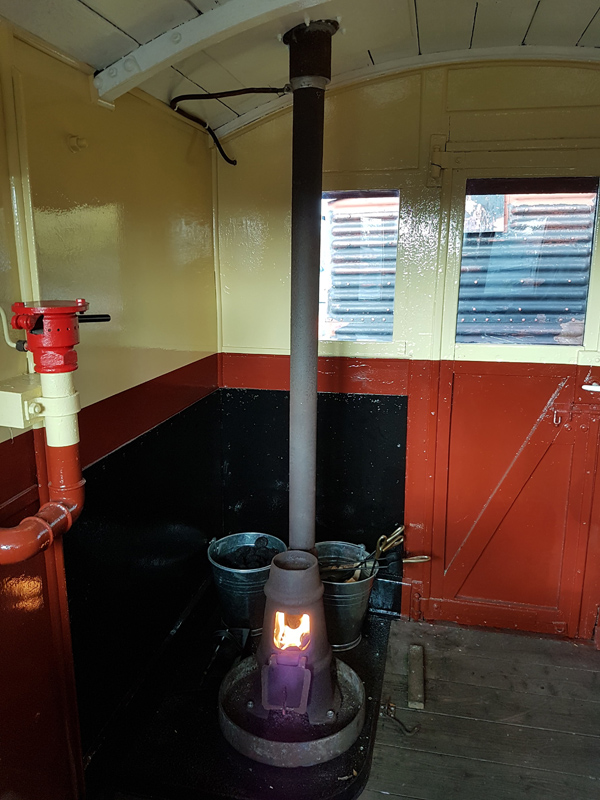
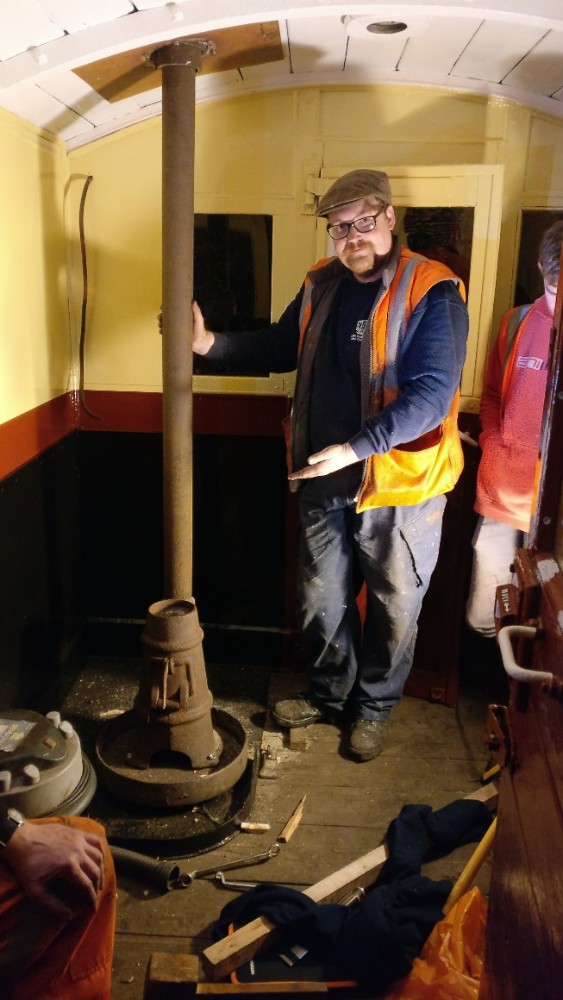
    Once this had cured we moved to a preservation first.  Since its arrival in 2005, the brake van has never had a stove. Having now fitted one we lit the first fire in at least 13 years.

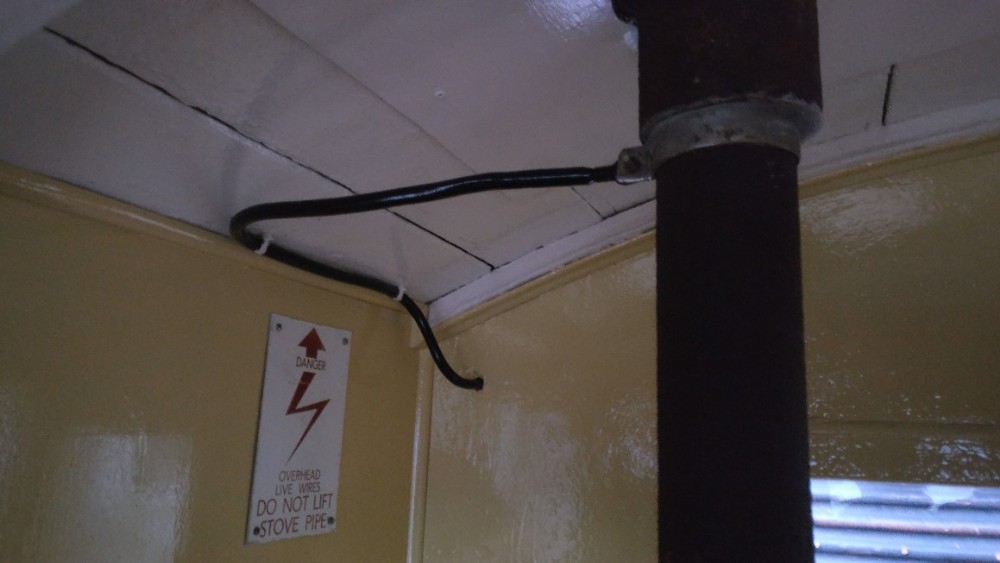
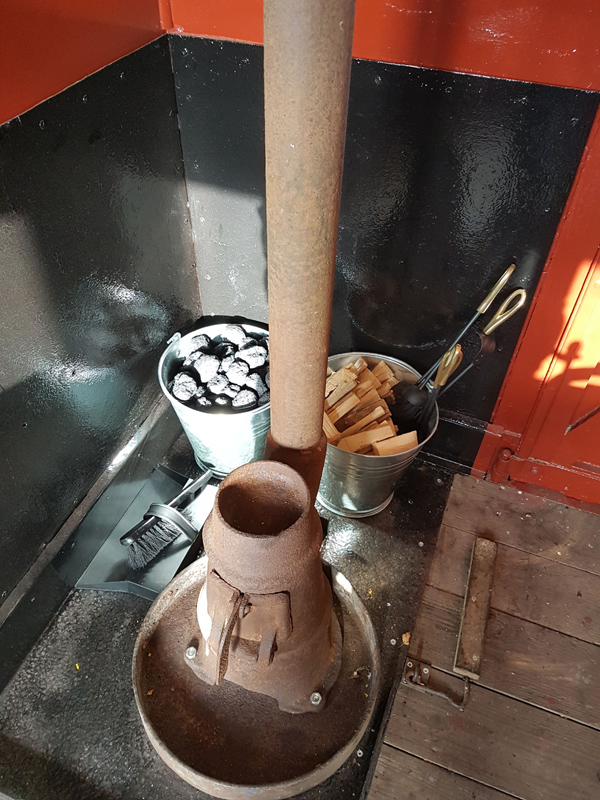
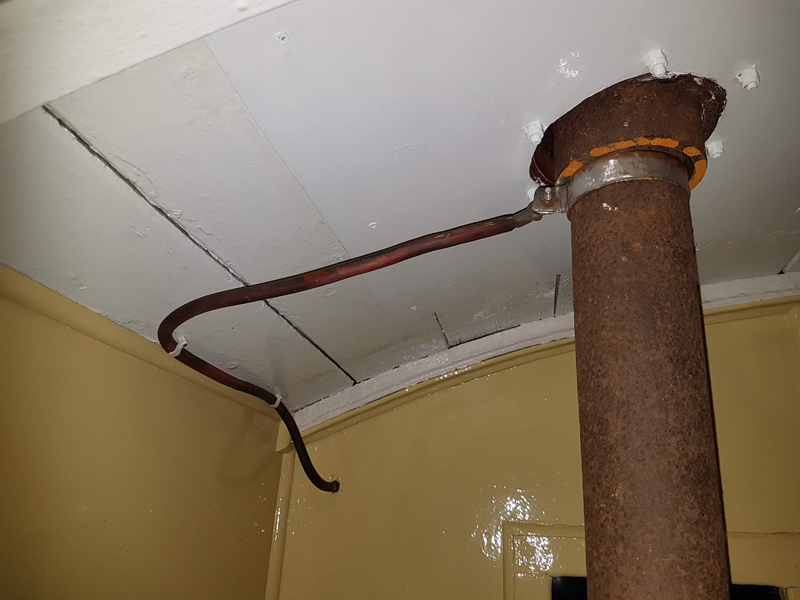
    In the week I had purchased galvanized buckets, dustpan and “fire irons” for the van when I dropped these off I also added the earthing cable for the stovepipe.

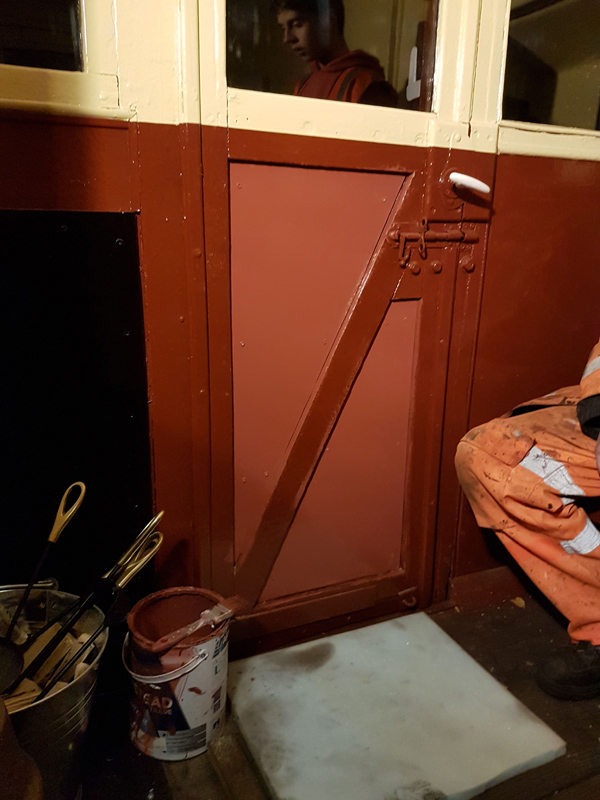
    In the now warmed van, Ross and I fitted the ducket head cushions for the Guard.

    20181117_171551

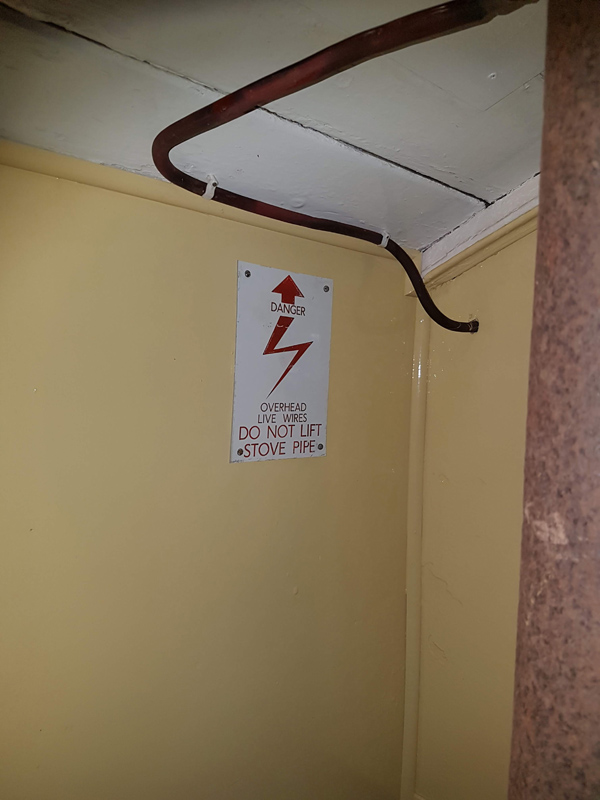
    To finish off Saturdays tasks the original stove pipe sign which was saved when the interior was dismantled was refitted in its original position.

    On to Sunday and the main task was the final fitment of all the upholstery.  Ross and I completed the east side cushions and I fitted the Guards cushions that fits above the main backrests and finally, all of the staples were painted black.

    The main cushions were also screwed into position from outside the duckets and the screw heads then painted by Jake.

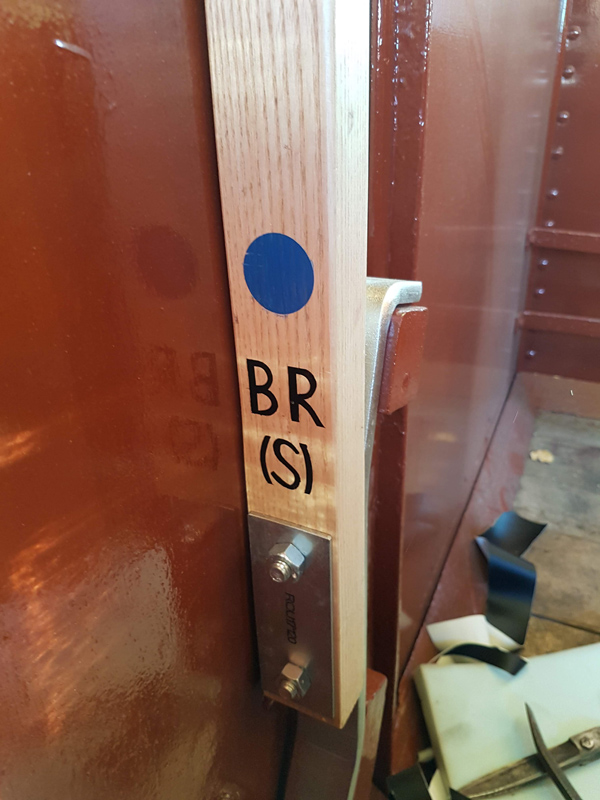
    Whilst I had the black paint out I also added a BR(S) to the short circuit bar.20181118_142402

    The whole teams’ attention then turned to the fitting of insulation to the North end door.  During our test fire of the stove, we found if the door was left opened it started smoking.  So we added insulating material, steel covers and Jake primed them.

    One more morning of work left and then we need a new wagon to work on.  Next week you’ll find out which.

  • 11/11/18 – Lest We Forget

    11/11/18 – Lest We Forget

    A small update this week, due to Great War Great Central Event, and the slow winding up of the Southern Brake van.

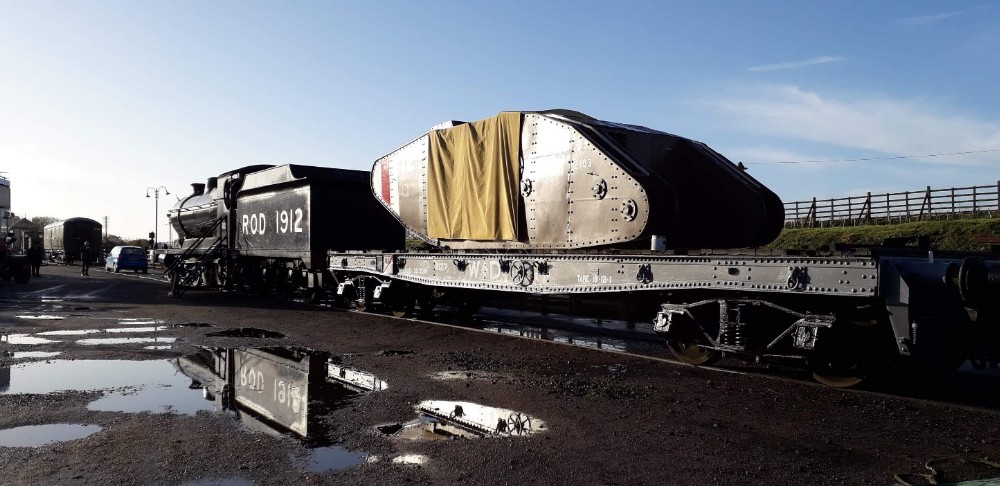
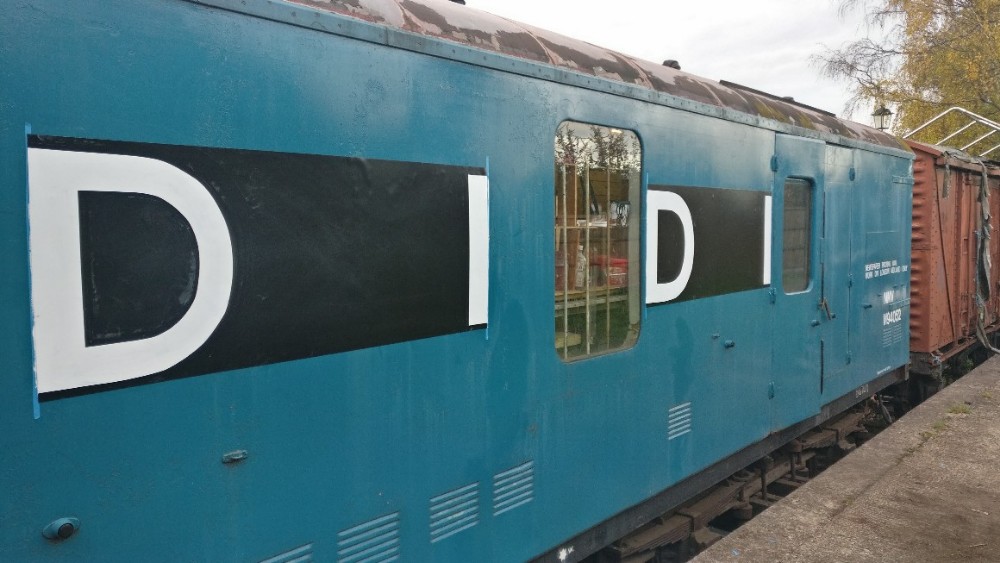
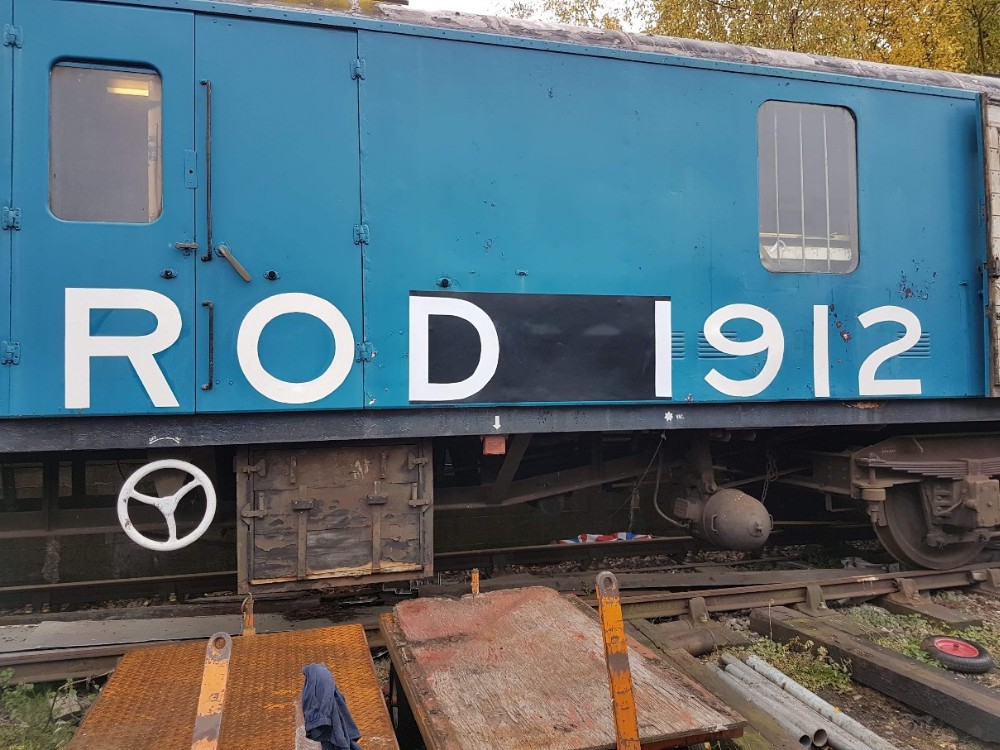
    The event that we have been building up to for months has now taken place. For the centenary of the Armitice, Jack Shaw has been preparing this event based around the First World War, to commemorate those who lost their lives. For the event, as you’ve read here, our Warflat and Weltrol have been stripped and re-painted into a livery appropriate for the period. Most of this work was done by Matt, with a little bit of help along the way from others. Thank you Matt for all the work you put into these vehicles. They look great, and you should be very proud of your efforts.  Both Matt and I dressed up as WW1 Royal Engineers for the event to staff the footplate  of ‘ROD 1912’ (O4 63601) and talk to people as they come aboard the locomotive.

    Nick and Jake have completed a small amount of work this weekend on the Southern Brake (S56010)  Both, armed with a paint brush, put the finishing touches to some of the interior details, which leaves the upholstery to finish and an outer lower step-board to change. Last week I said that the stove would be lit for the first time in the van, but this will now take place next week. We still also have to make a chimney cowl and seal around the chimney to prevent water leaking in.  I have cut out the leatherette for the seats, and this now needs sewing up and stapling to the cushions.

    Thanks for reading!

  • 04/11/2018 – I’ve put the stove on, time for a sit down.

    04/11/2018 – I’ve put the stove on, time for a sit down.

    Work at Quorn Wagon & Wagon continues on the SR brake (S56010), and preparation work carries on for Great War, Great Central with Matt working on the ‘re-branding’ of the O4.

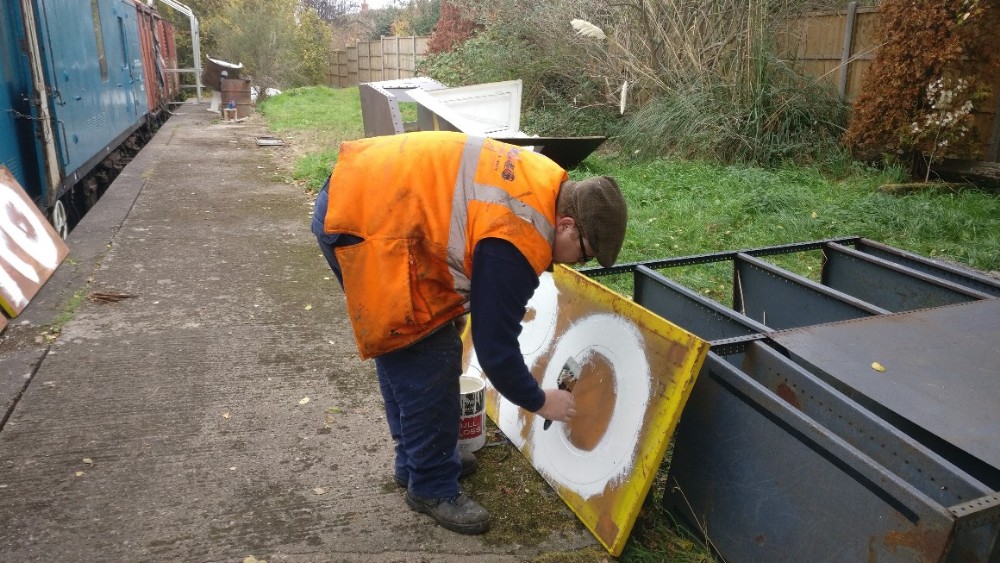
    Saturday saw Jake painting the veranda ceilings in white gloss to match the BR and the LMS brake (B954268 and M730562), whilst Nick and I dealt with a misbehaving heater and extension cable in the mess coach.  After Tea, Nick and I cut out the seating boards ready for upholstering. Matt spent the day cutting letters out of magnetic sheet for the Great War, Great Central event, once they had been cut out, he painted them in gloss white.

    Back to the brake van on Sunday with Nick, Jake and I put a 2nd coat of white on both veranda ceilings,  the ‘so called’ one coat paint had failed us!  Turns out the verandas aren’t really meant for 3, which resulted in much hilarity. Surprisingly, neither of the three of us got covered in any white paint. Once the mandatory tea had been consumed, Nick and Matt went to a local farm to retrieve an eBay purchase: a brake van stove, base and stove pipe! We have been planning to refit a stove in the SR brake since its rebuild started. the stove is something that has been missing for some time, and got so far as having the base plate in. The eBay purchase finishes of the puzzle.

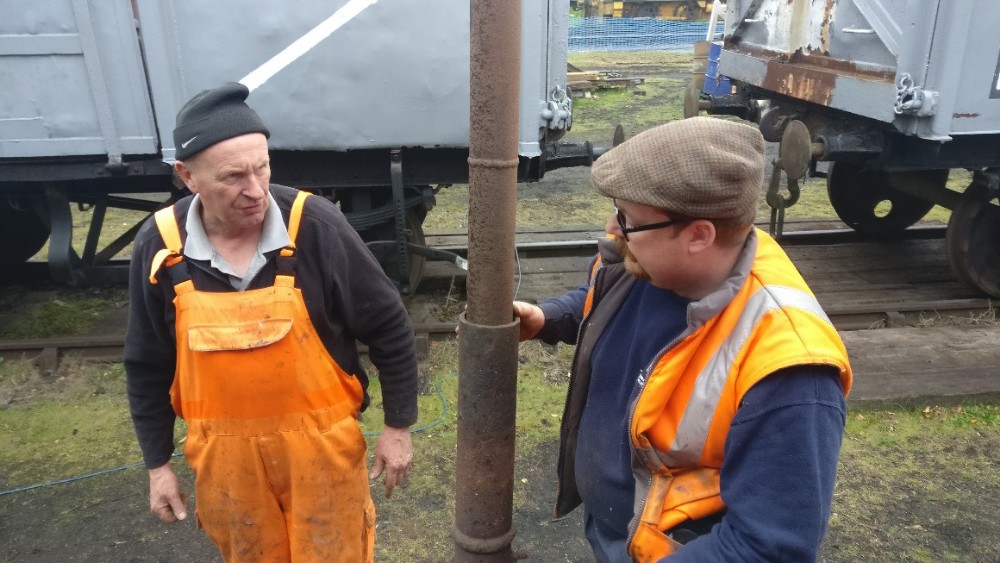
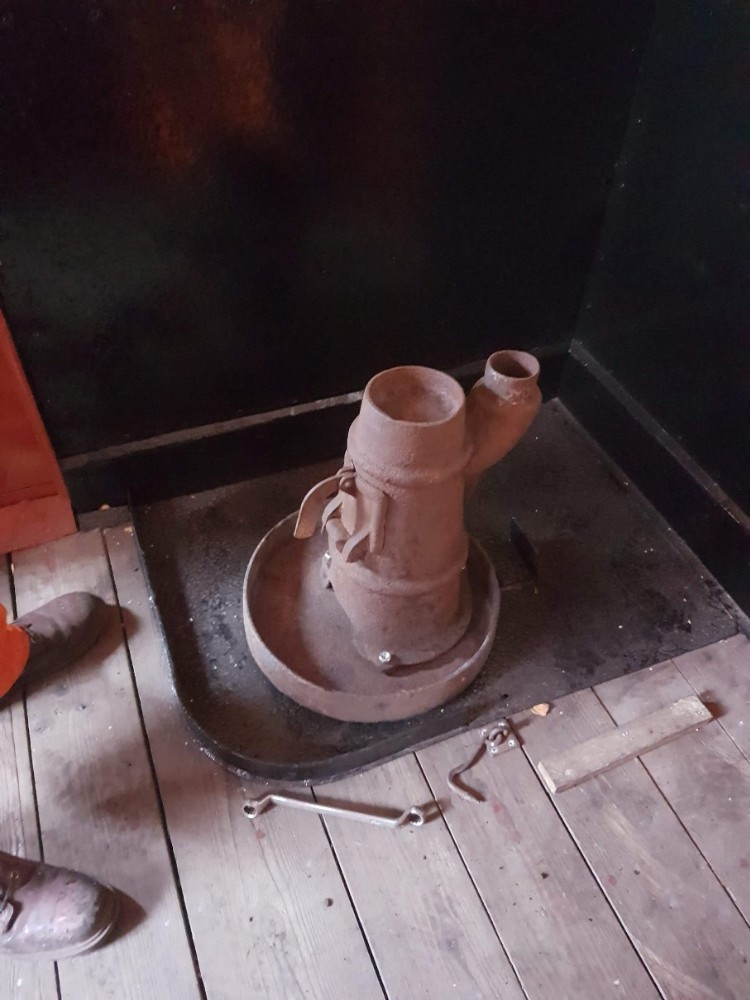
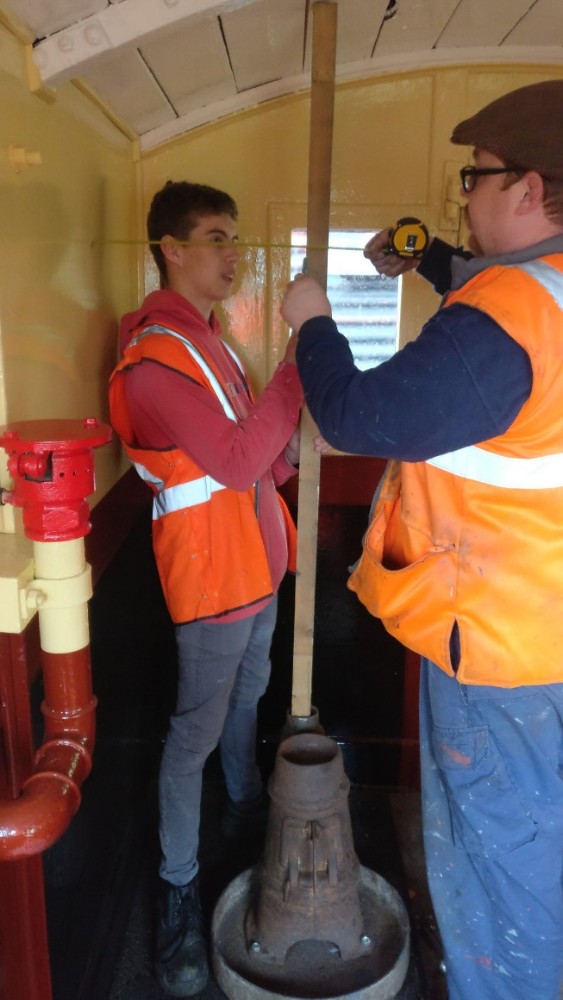
    The stove was first de-scaled internally and externally, with some grinding taking place on the flue outlet so that the pipe would fit over. The stove was then fitted in the van, and using a highly accurate piece of wood, we began marking out the hole for the stove pipe for exit the roof of the van.

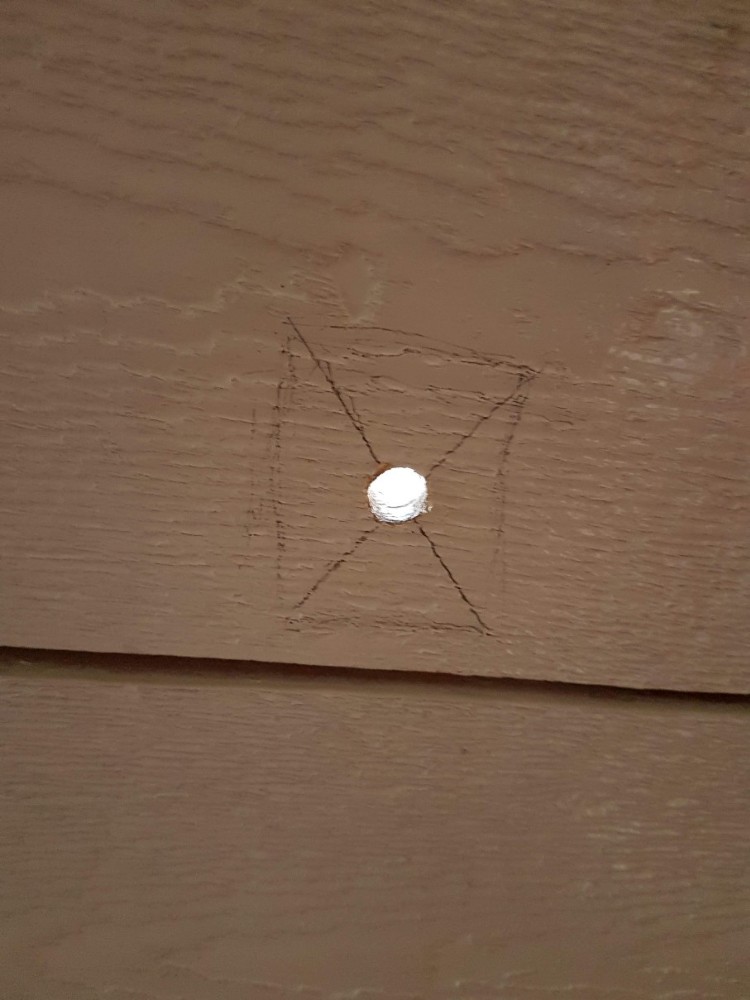
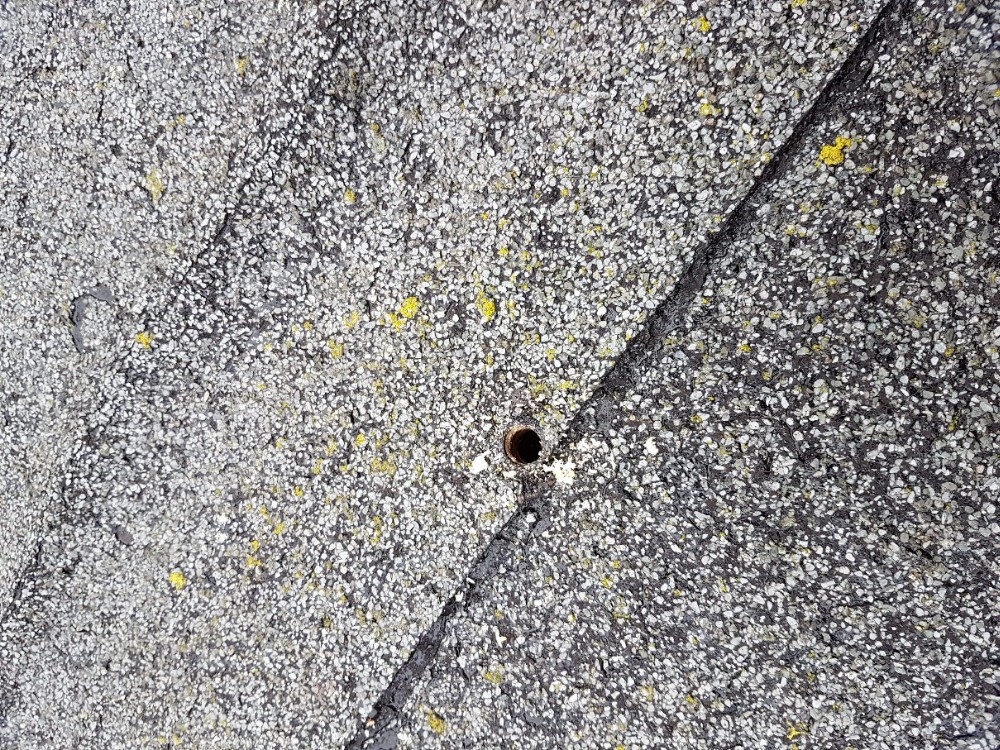
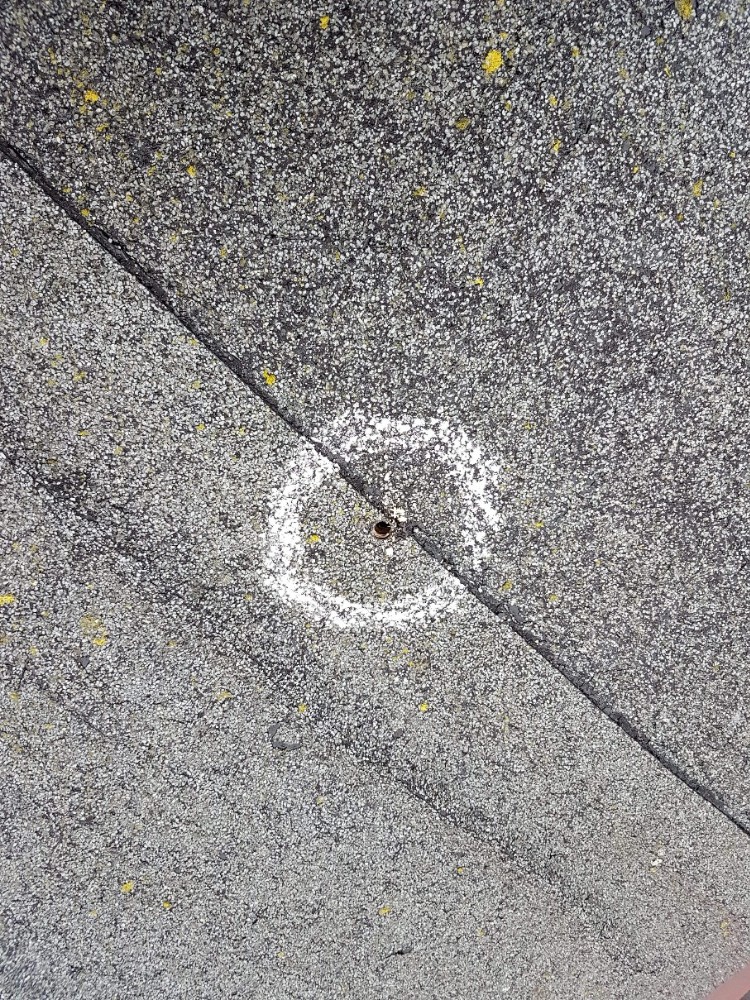
    Drawing round the piece of wood, and then joining the diagonal corners and the resulting square gave us a x to aim for. Matt then drilled through the roof in the middle of the x to transfer the mark from inside to outside of the van.

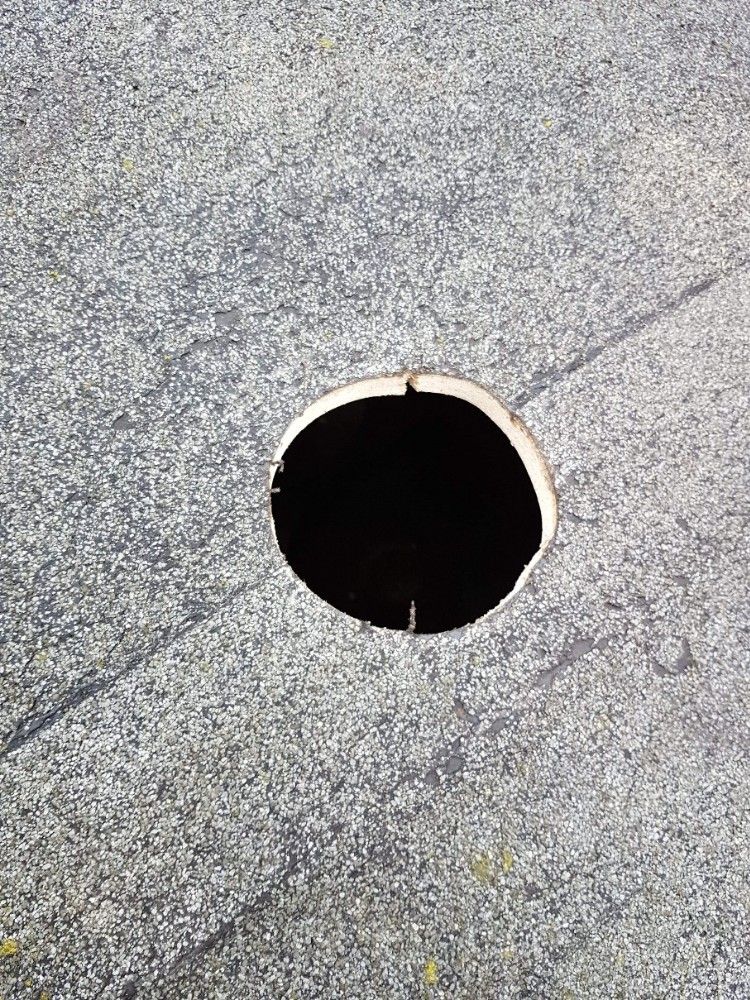
    Using the casting that holds the pipe, a circle was drawn around the drilled hole which was then cut out using a jigsaw.

    wp-15414006346133630159859911564300.jpg

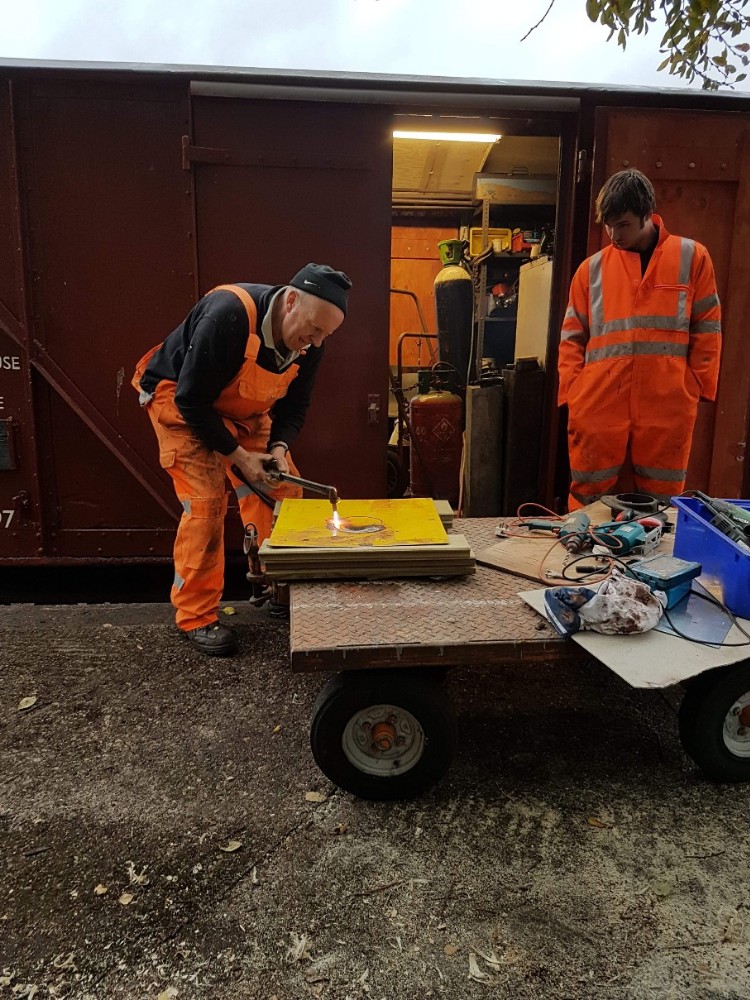
    Having now descending from the van, Nick and Matt then cut a similar hole in some insulation material and a steel sheet to protect the roof boards from the heat of the stove pipe.

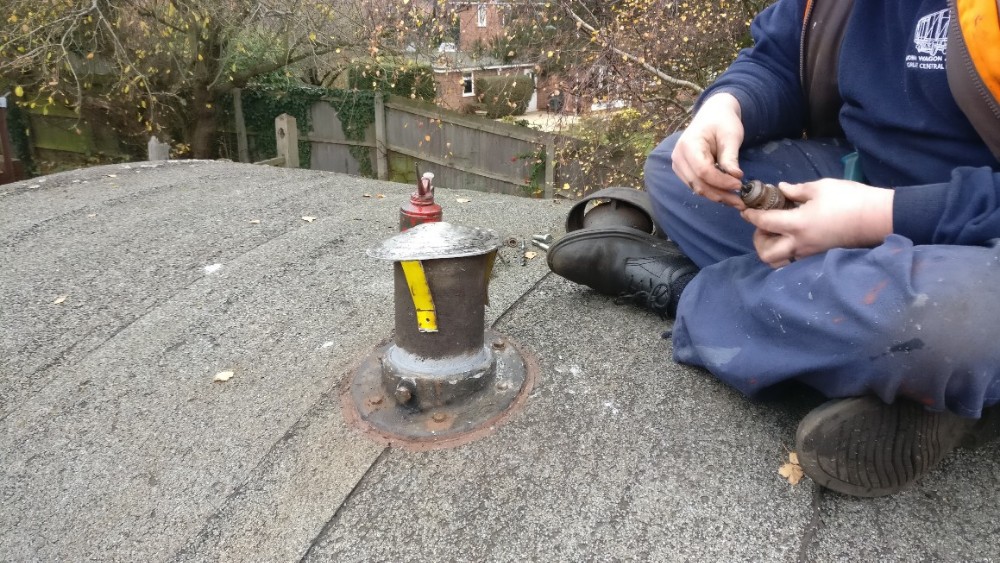
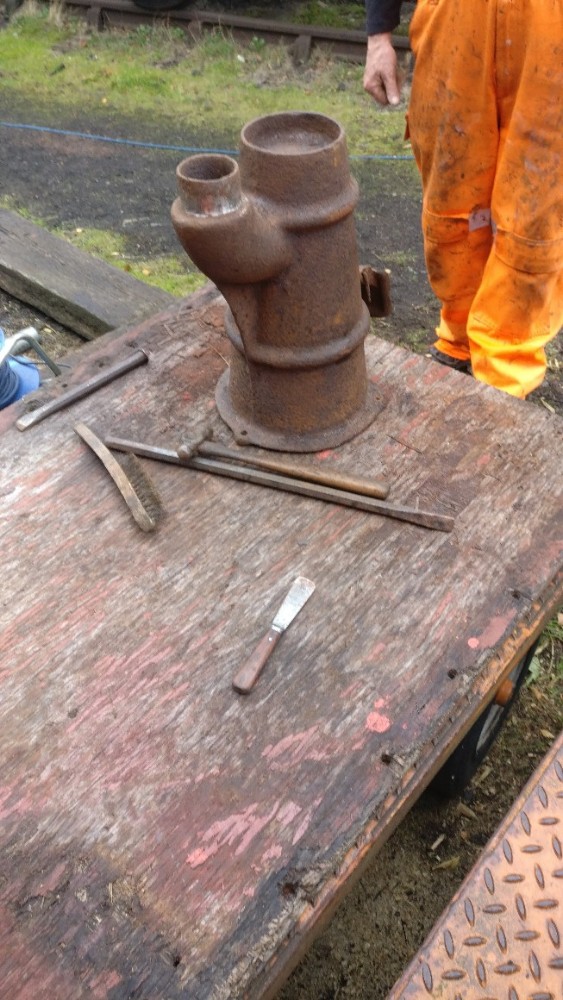
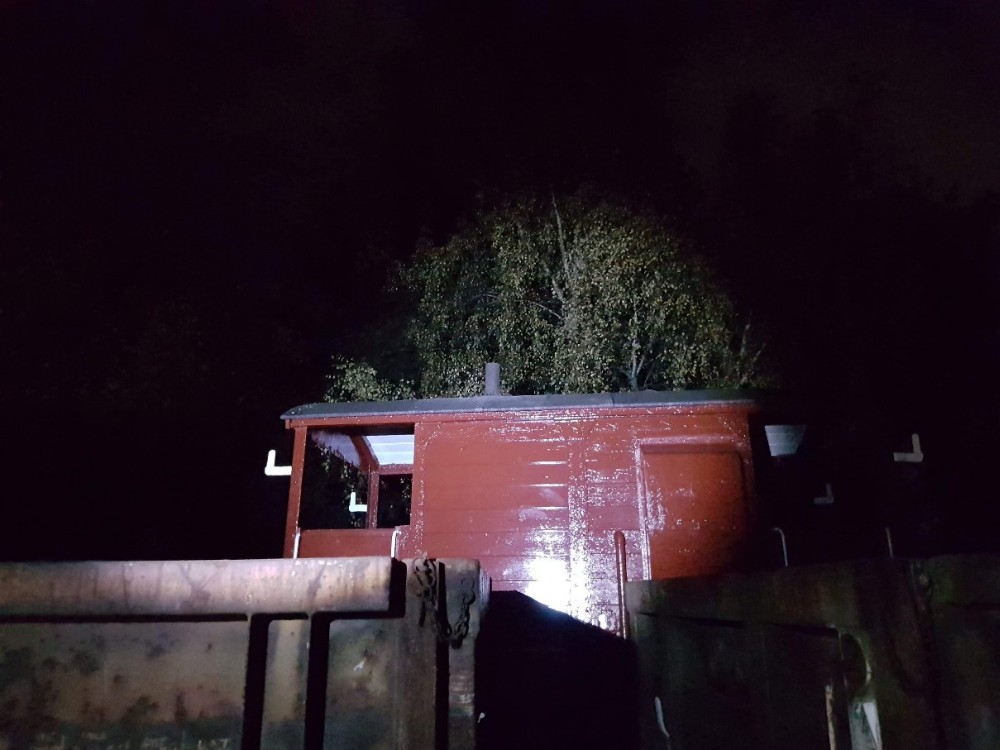
    The assembly was then taken to the roof and clamped into position to allow through bolt holes to be drilled to fix the casting, insulation and steel sheet to the roof. This was then sealed with mastic. The stove pipe we received with the stove was too small for the casting on the roof, and the cast iron stove pipe we had in store was too short to be able to be used. We decided to use a section of the cast iron pipe as a sleeve for the smaller steel stove pipe. We positioned the cast stove pipe so we could mark it for cutting. Having cut that down and putting it in position, Matt then carefully threaded the steel flue tube through the cast pipe and up onto the roof. to finish the job, Matt came up on the roof with the angle grinder (and some lights) to trim the pipe down to match the length of the cast pipe.

    The finished result below. Alas we couldn’t light the stove this weekend, as it had got too late, but at some point next weekend the stove will have a ceremonial first lighting.

    Whilst Nick and Matt worked on the stove fitting, I spent some time with my sewing machine building up a seat for the west side ducket. This was a pain to fit back into the ducket, so I am looking to review the assembly method so see if I can make it fit easier. It is at least comfortable and looks good.

    Thanks for reading, and join us again for next week’s update.

  • 28/10/18 – Did you set the clocks back?

    28/10/18 – Did you set the clocks back?

    As I stated in the last update I was on a week of earlies.  Monday I made a start on replacing the windows of S56010.  Unfortunately, there was only time to replace 5 out of the 6 vestibule windows.

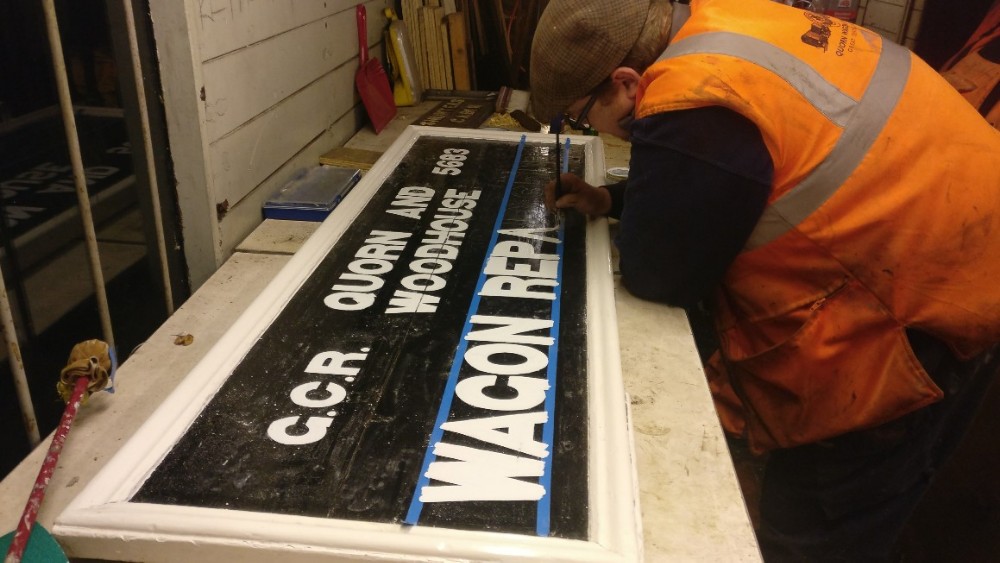
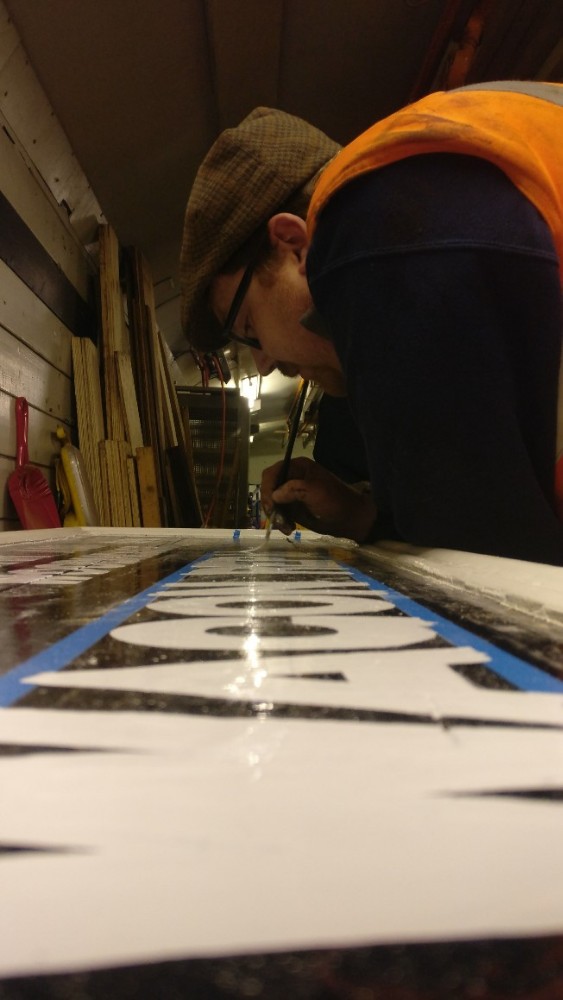
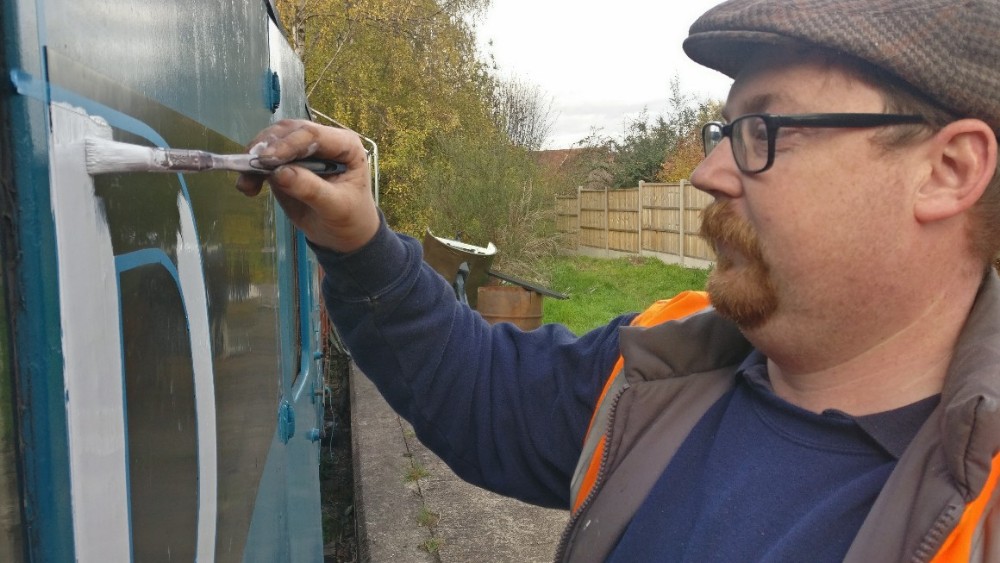
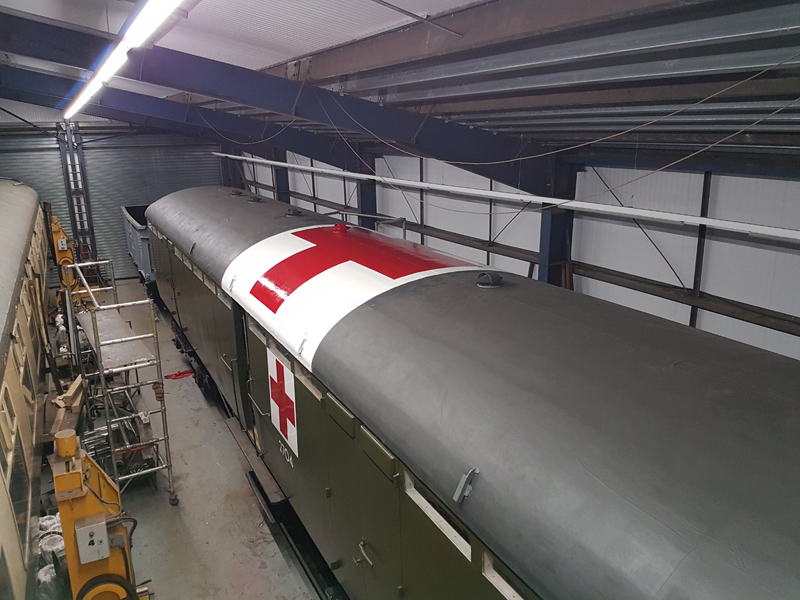
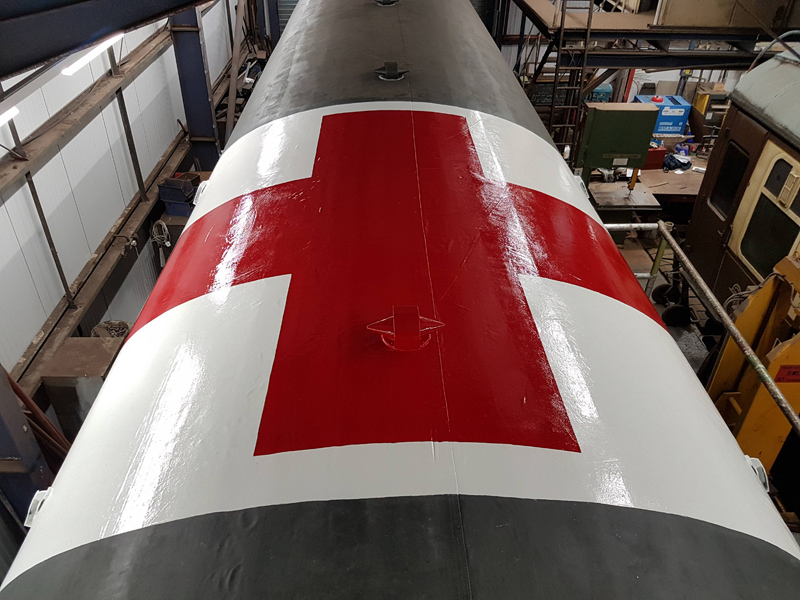
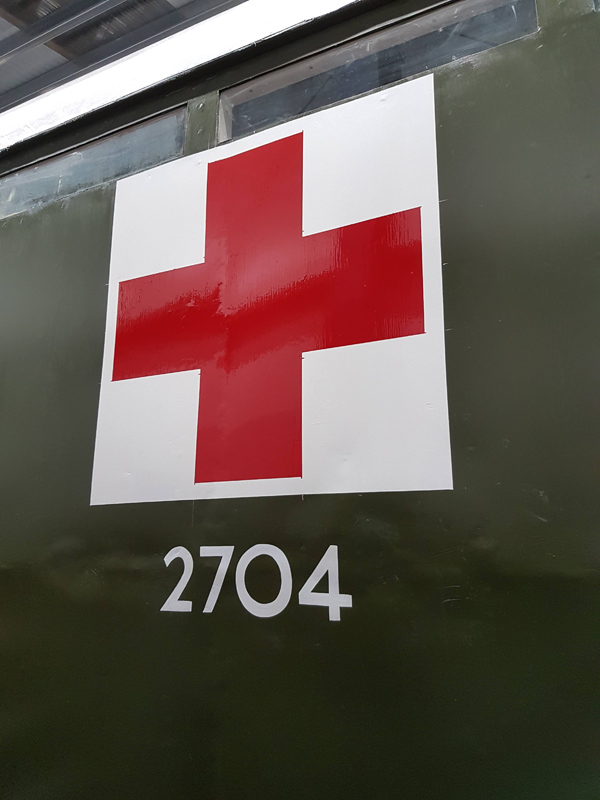
    For the rest of the week, I have been carrying out work for Railway Vehicle Preservations as part of the ongoing preparations for Great War, Great Central on the 10th & 11th November. I have been Signwriting their Ambulance Coach in readiness for the event.

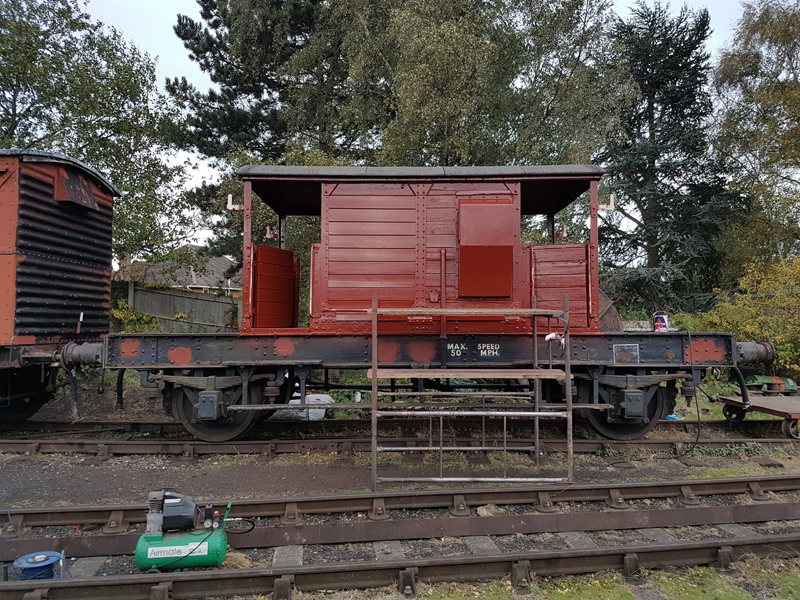
    On to Saturday and Nick and Jake in attendance, before the weather turned for the worse they were able to paint the headstocks of S56010.  The rest of the day turned to prepare for a number of future projects and generally tidying the sidings.

    Sunday and everyone on site.
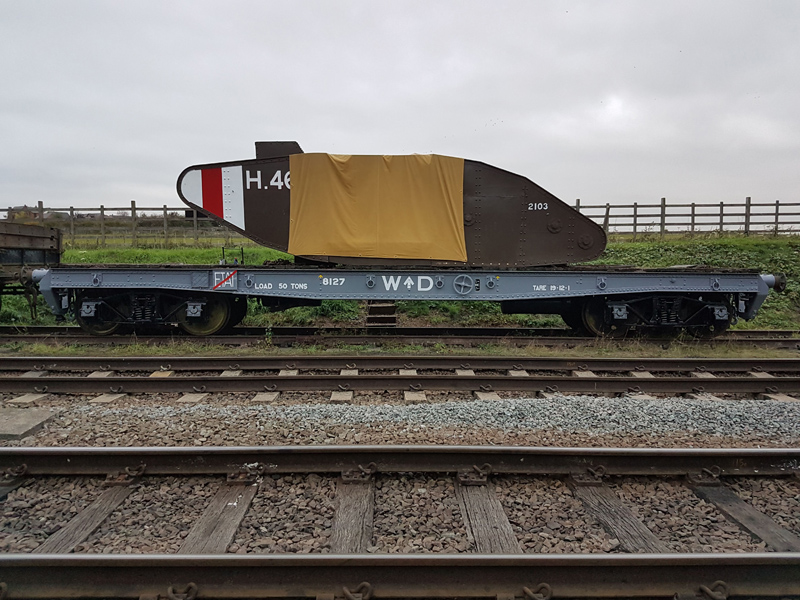
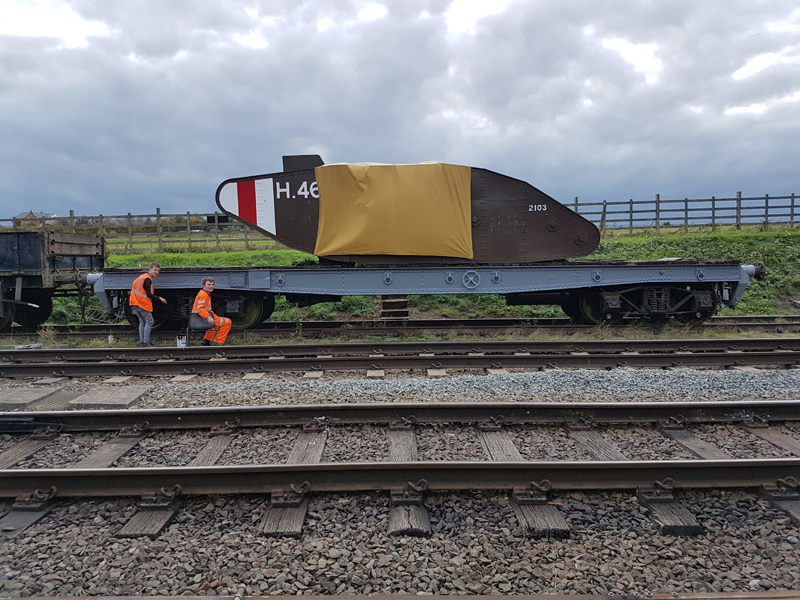
    Ross and Jake started with spraying the Bogies of the Tankflat as I added the final detail, the fictional registration plate.  After the Remembrance event, this will be altered to more accurately reflect the vehicles 1942 origins. With these final details complete this brings a close to the repaint of this vehicle.

    Back on to the Southern brake and myself and Nick completed the replacement of the van windows I began on Monday.  Only one of the original panels remain as this was an original glass one still in situ and was easily cleaned up.

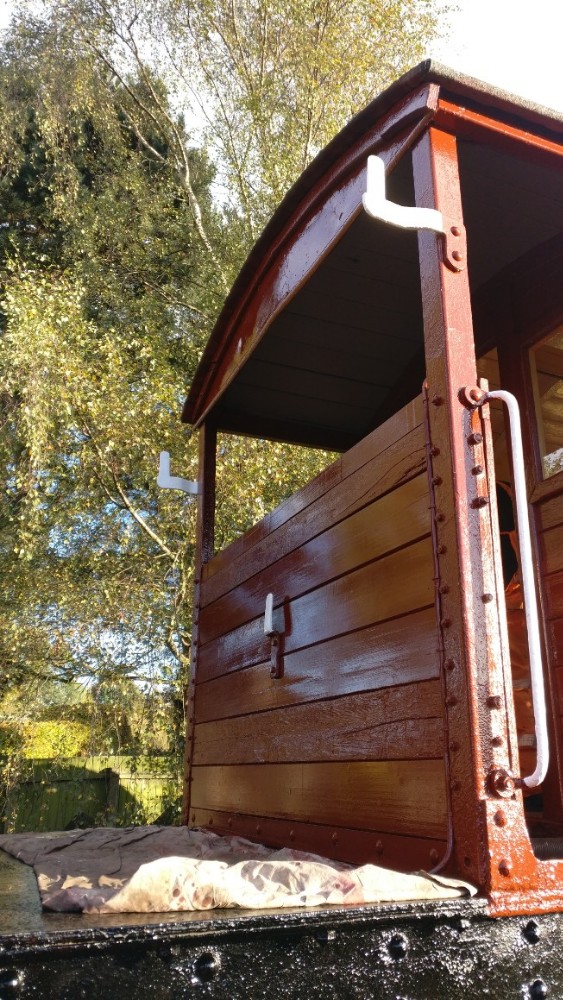
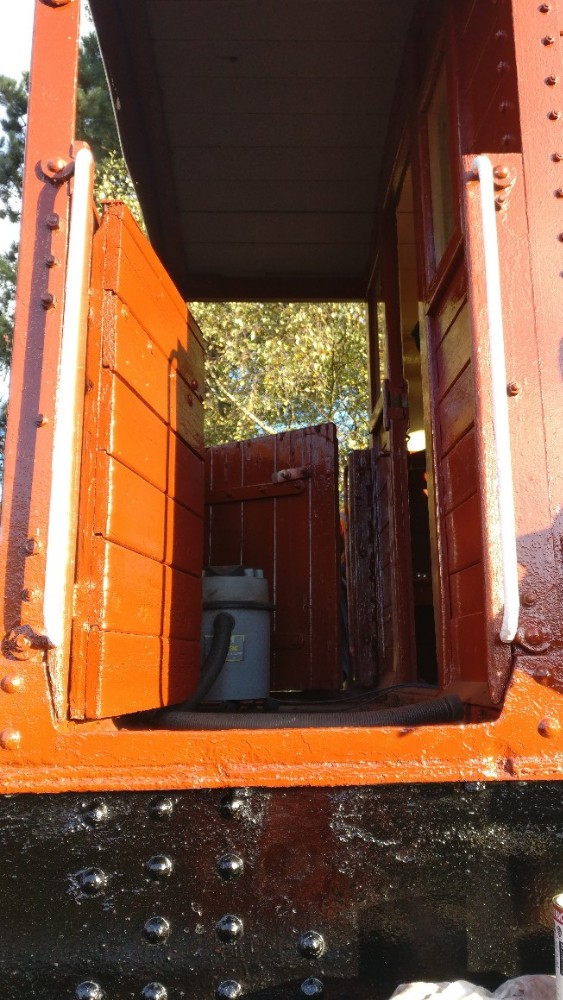
    Ross and Jake then joined us to add the external white details, Handrails and Lamp brackets.

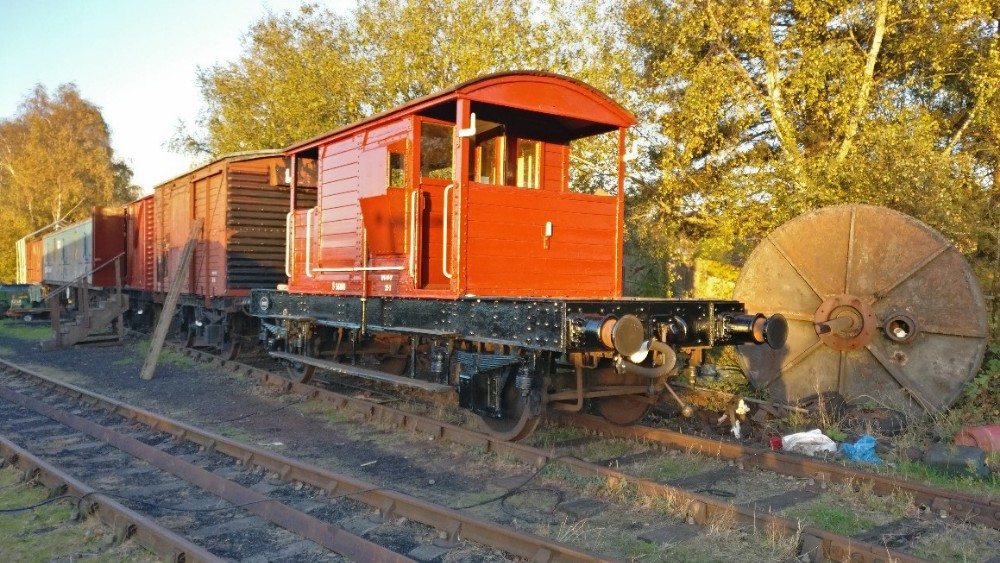
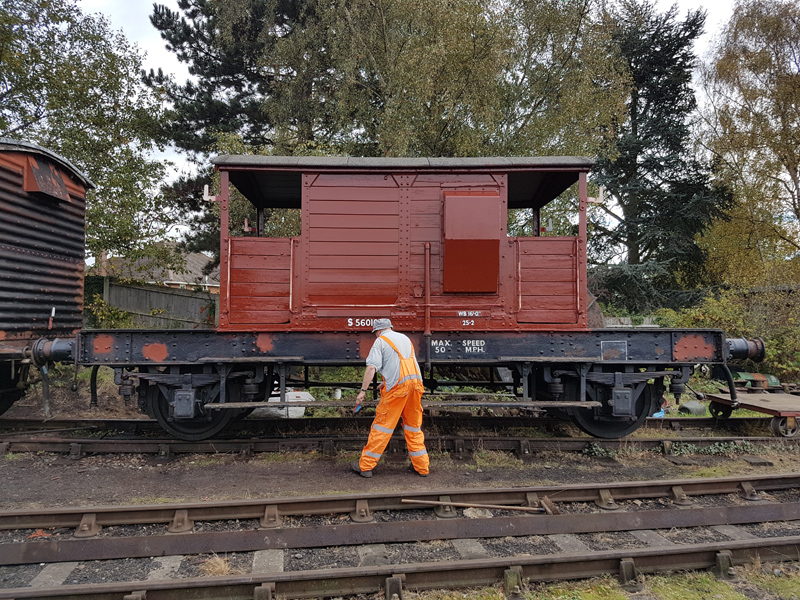
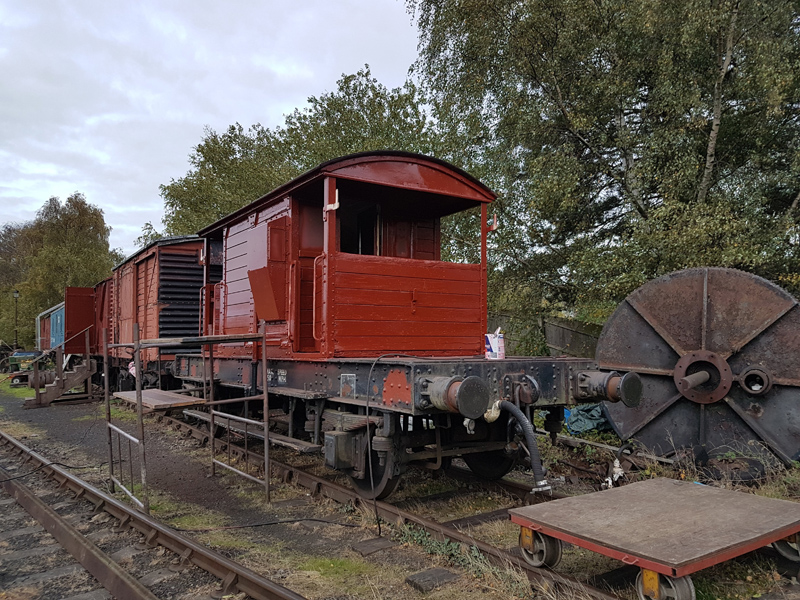
    As can be seen below the vehicle is very much approaching completion and has come along way from the poor state the vehicle had reached.

  • 21/10/18 – Evolution of an S

    21/10/18 – Evolution of an S

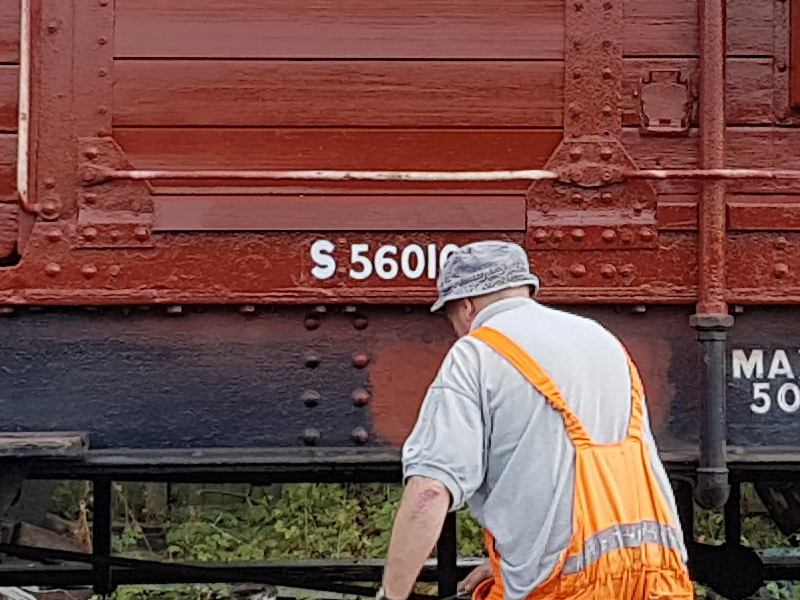
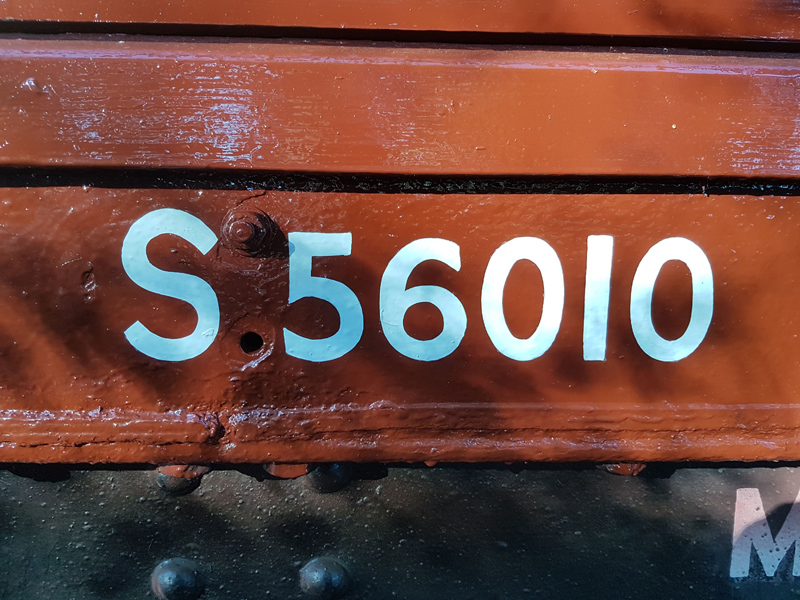
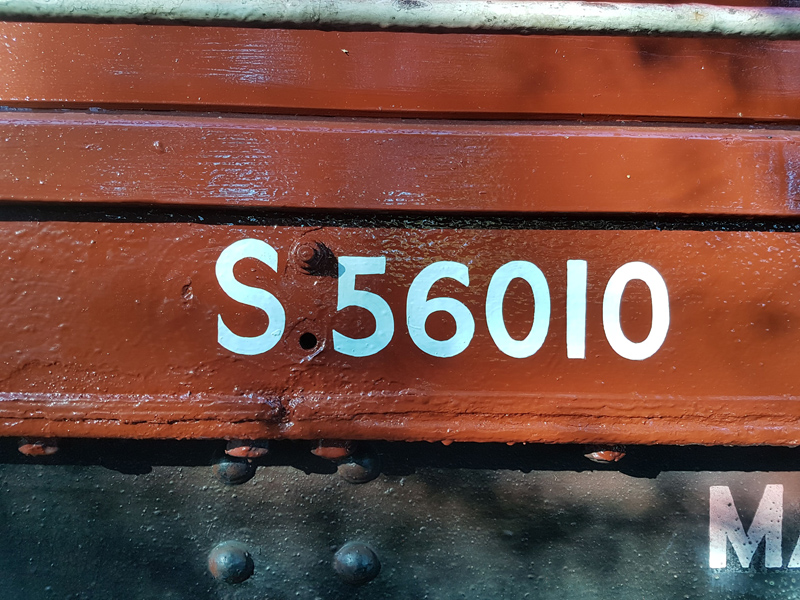
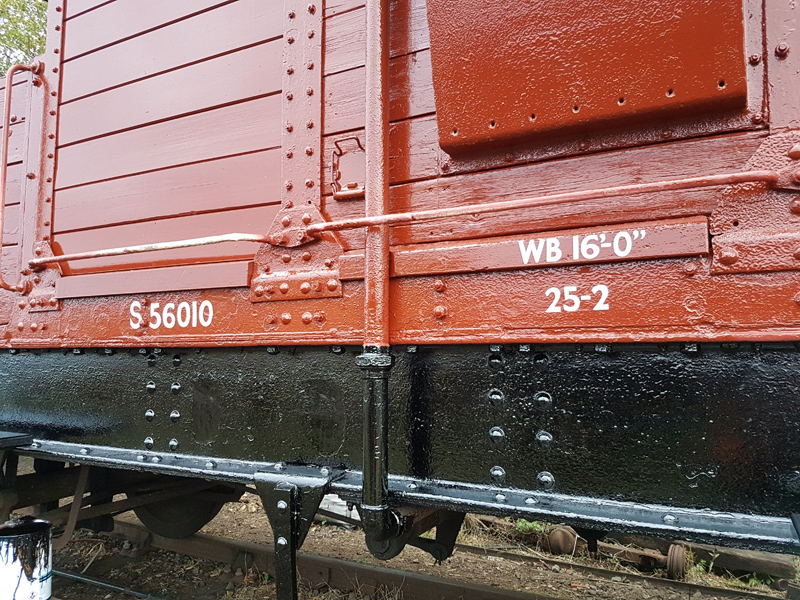
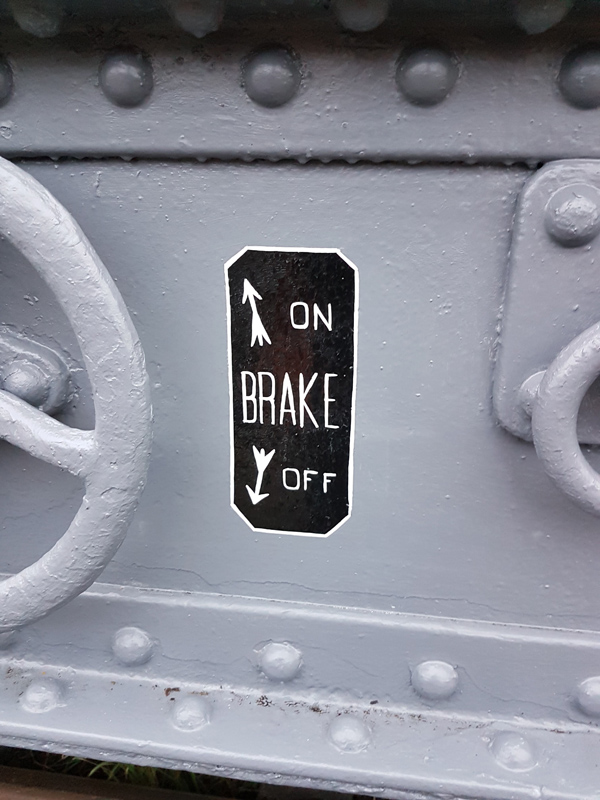
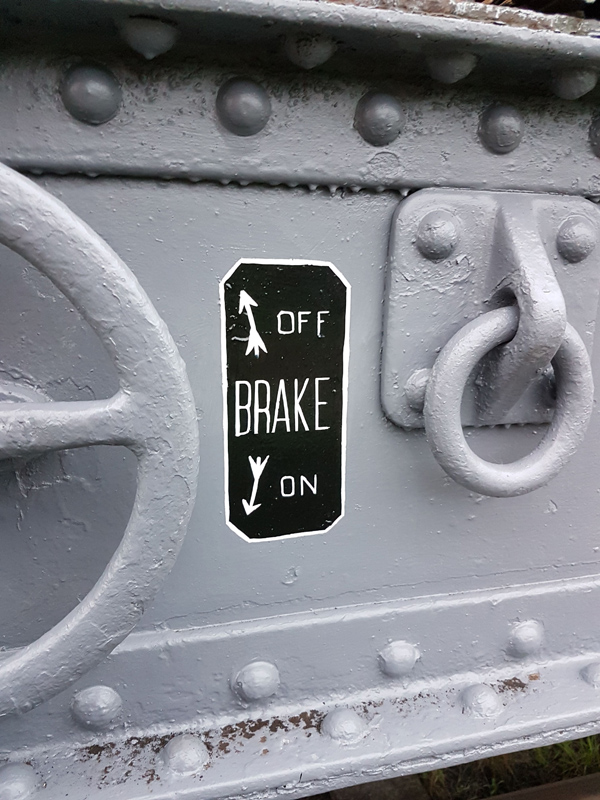
    Just myself and Nick on Saturday for me a full day of signwriting and for Nick a full day of scraping. Nick prepared the underframe of S56010 for painting, sole bar, headstocks and running gear.  My first task also centred around S56010 applying the running number, wheelbase and tare.20181020_120910

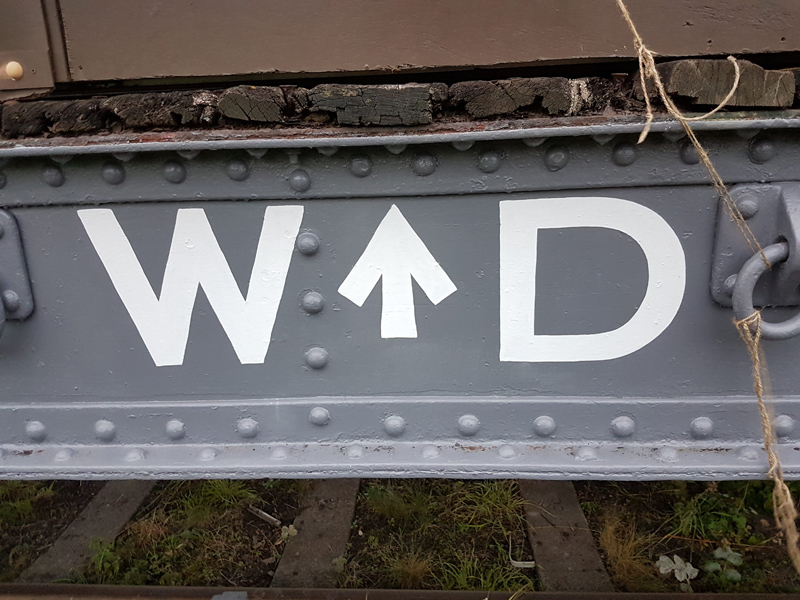
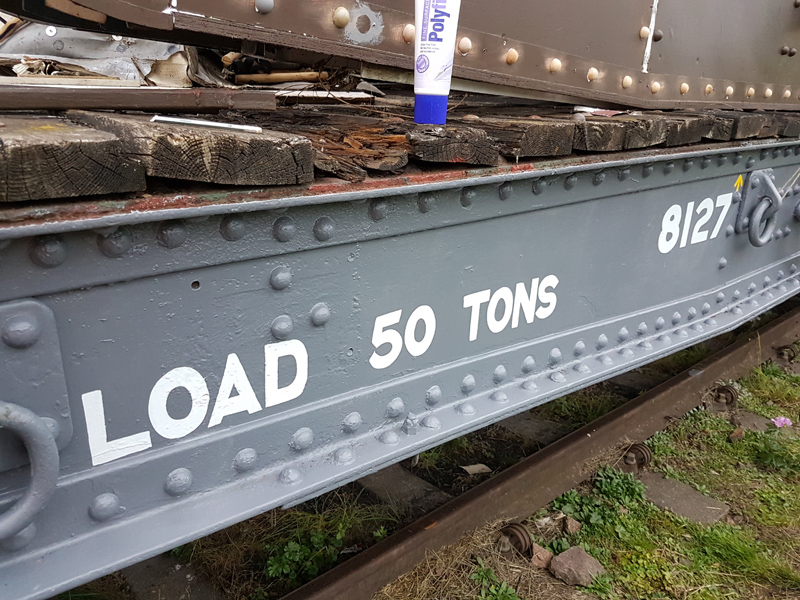
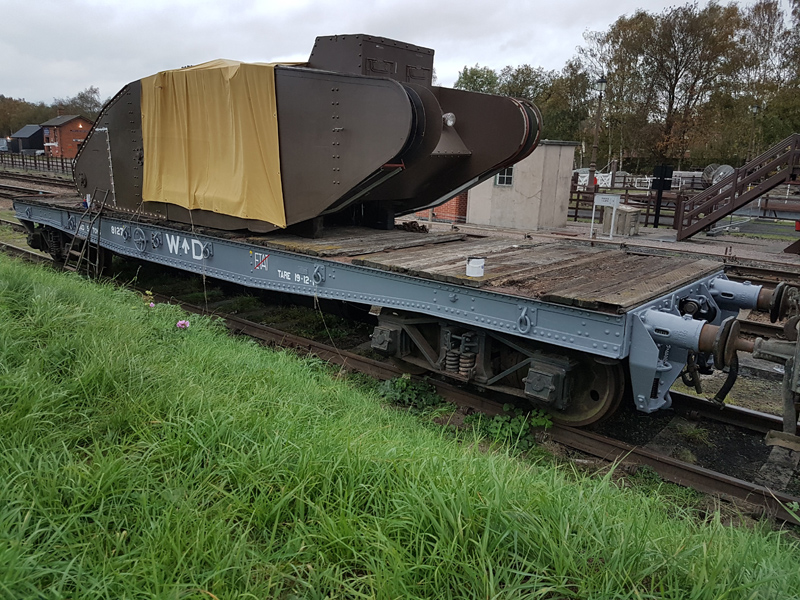
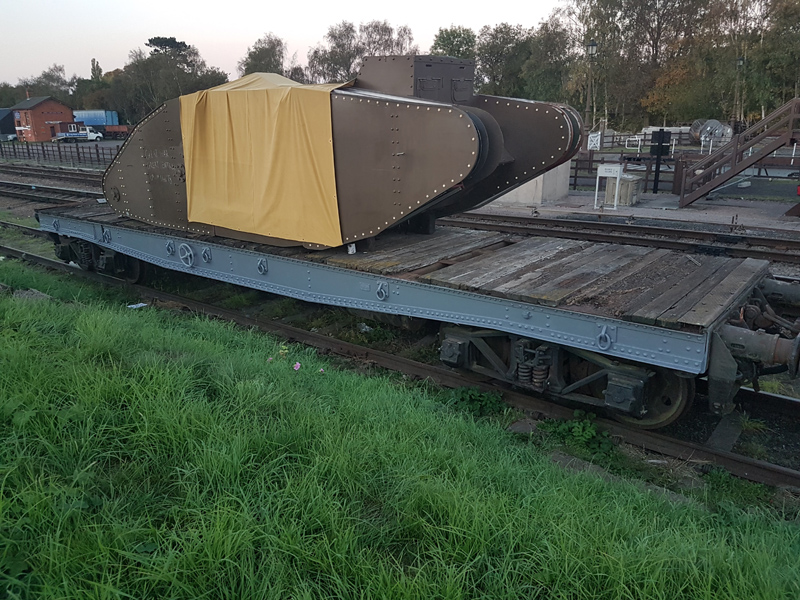
    I then moved over to the Tankflat. Although it is a 1942 built vehicle for the purposes of the Remembrance event it is receiving the livery of a first world war flat.  Visually there is little difference between a 1st or 2nd World war built vehicle.  Those built in the 40s are able to carry a load of 50T the earlier ones being 40T.  This is distinguishable by the riveted L angles along the entire length of the main frame, top and bottom.

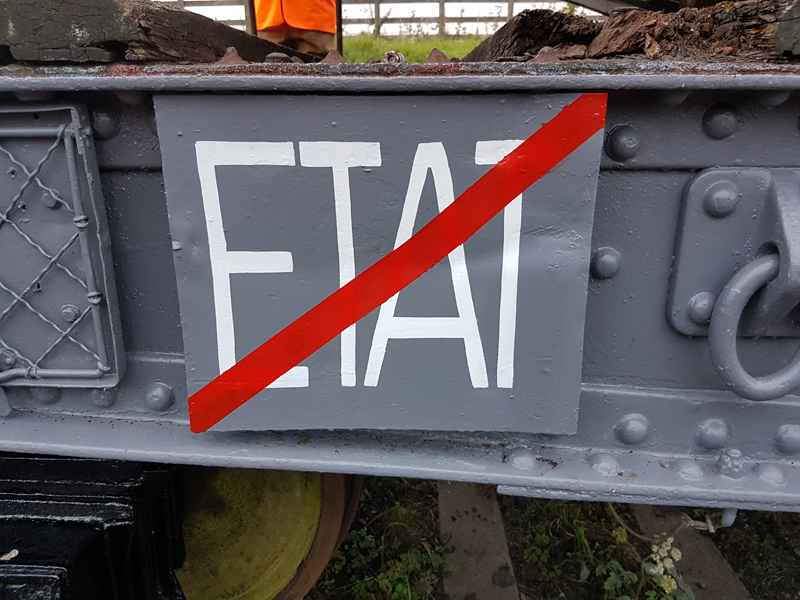
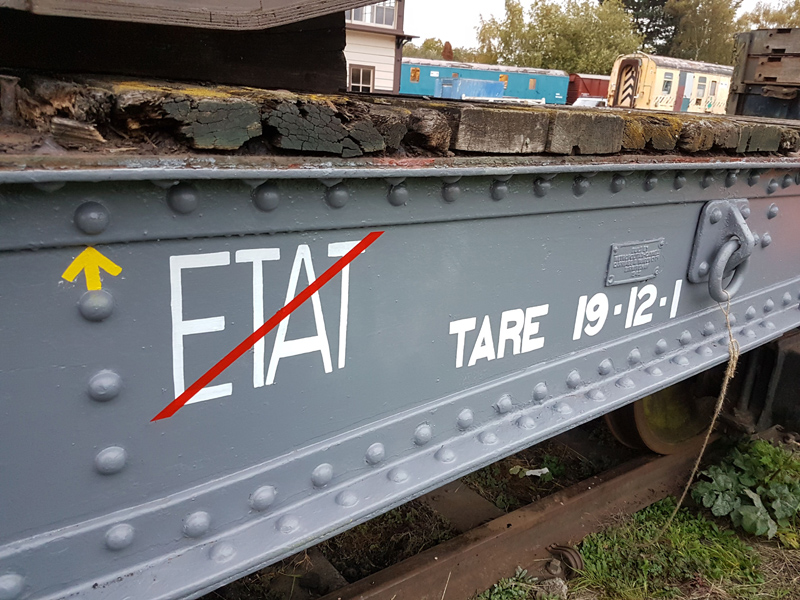
    The marking ETAT was added to vehicles that went to France and translates as State,  referring to the National State Railway,  this means the vehicle is maintained and operated as part of the French railway system.  When crossed out the maintenance and operation returns to the War Department and the Railway Operating Division.

    Once complete with the Brakevan Nick came over and prepared the West side bogies for Paint.

    On to Sunday and we were joined by Jake. When I left Saturday I wasn’t solely happy with the letter S I had applied to the Brakevan.  It was weighted more than the rest of the number and really looked out of place.  This is an advantage of signwriting, I narrowed the whole letter and finished it to match the number it accompanies.

    Nick and Jake continued with the underframe applying the bitumen based paint to the areas prepared the previous day.  They also replaced 3 of the 4 top steps that were life expired.

    I continued with the tank flat applying top coat to the headstocks and applying paint to the details, Draw hook, Lamp irons, Vacuum pipe and jack screw threads.

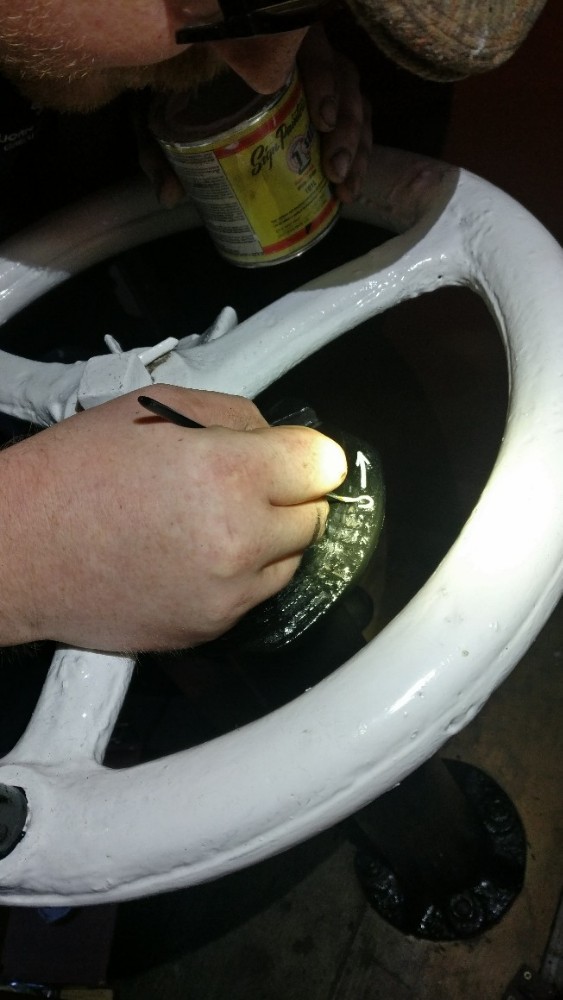
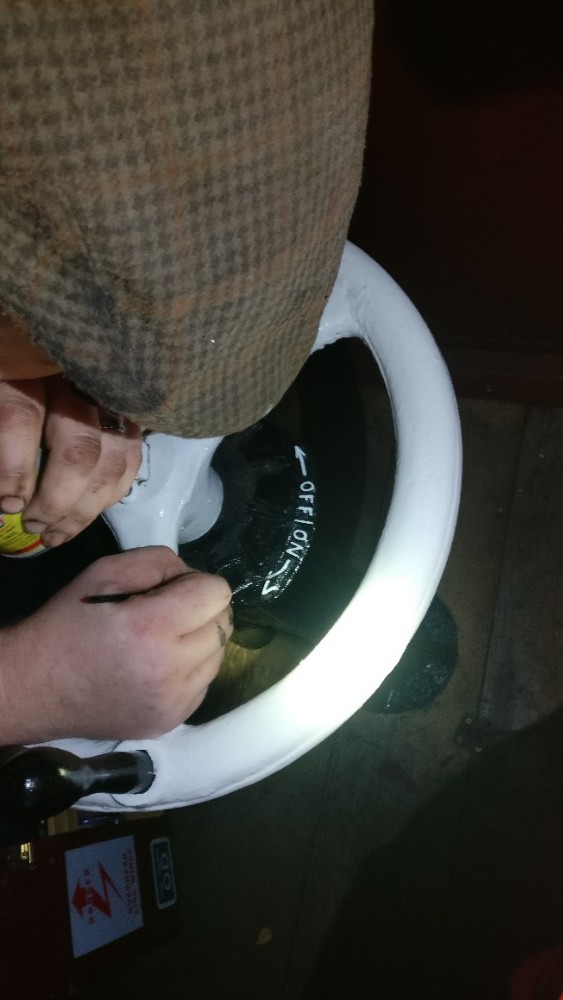
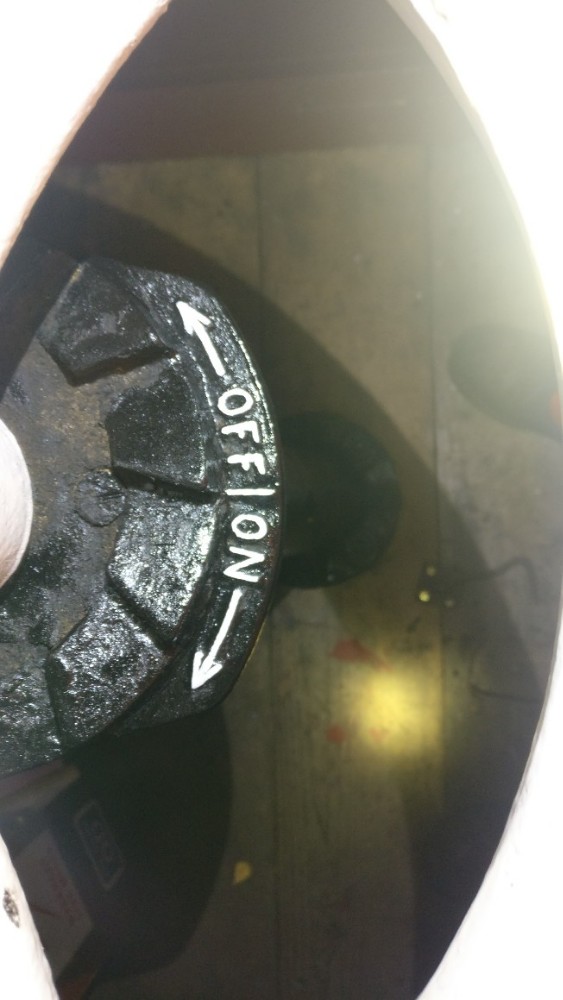
    I also sign wrote what would normally be a plate to indicate what direction to turn the handbrake wheel.

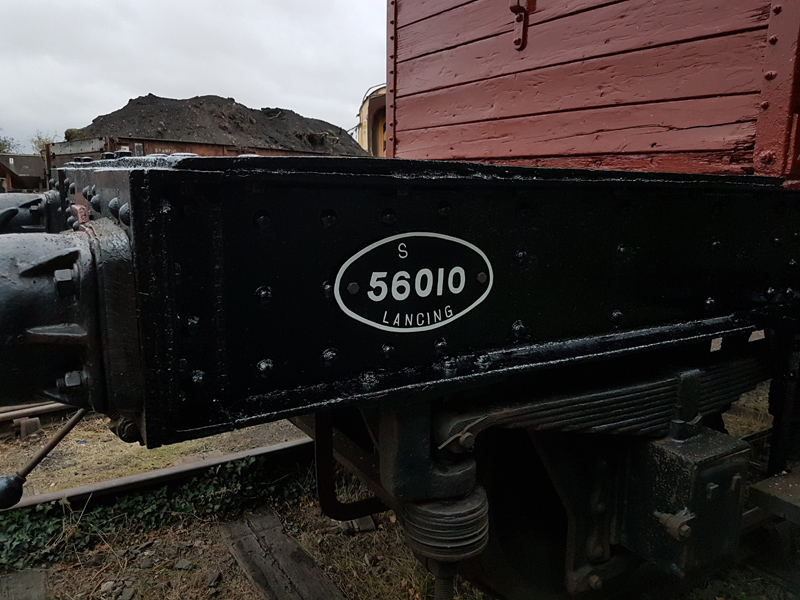
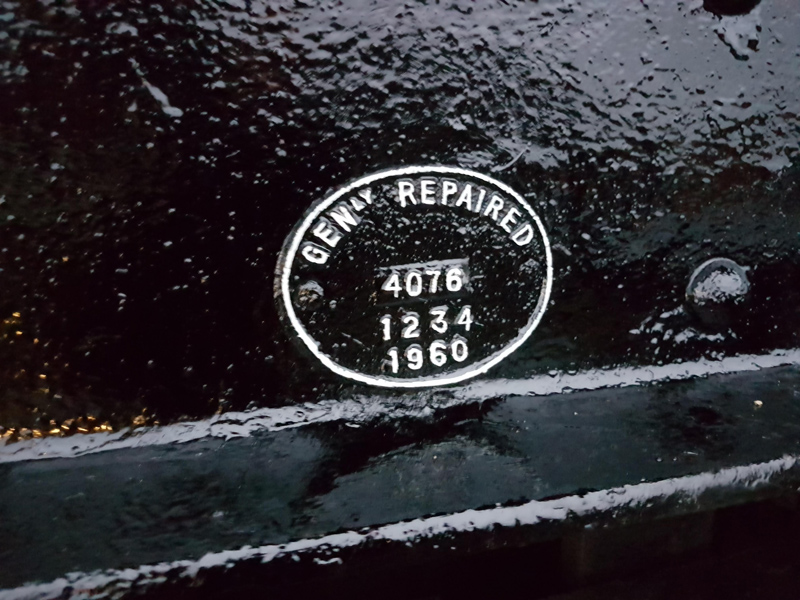
    The final task once the underframe paint on the brakevan had dried was to fit the wagon plates and pick out the lettering on the repair plate.

    Another week of earlies for me so anything can happen.

  • 14/10/18 – Down came the rain and washed the wagons out.

    14/10/18 – Down came the rain and washed the wagons out.

    Once again a week of earlies and opportunity to carry out work in the week.

    Most of my attention has been on the Tankflat, Tuesday Wednesday and a number of topcoats applied to the sides. As a Military wagon this is a Satin coat instead of the usual gloss.  Thursday the headstocks were scraped down and cleaned off as well as the brake reservoir tanks.

    20181010_182130

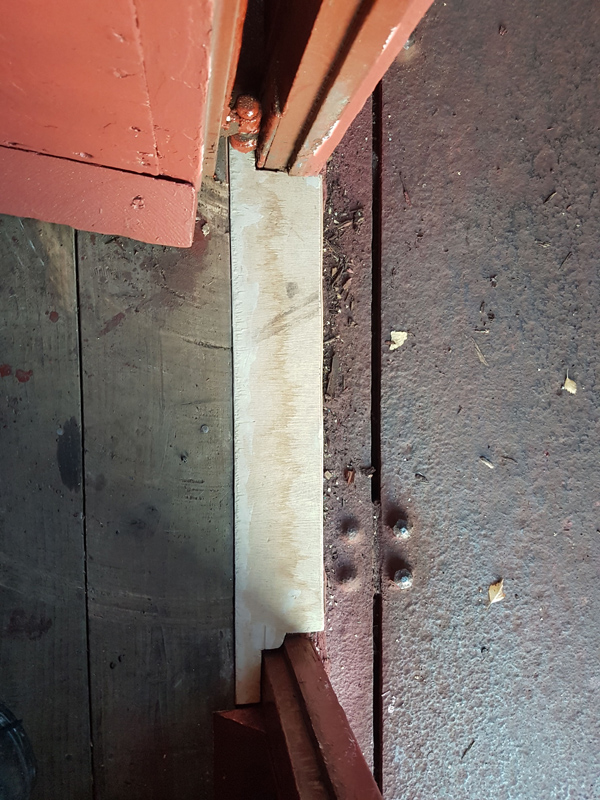
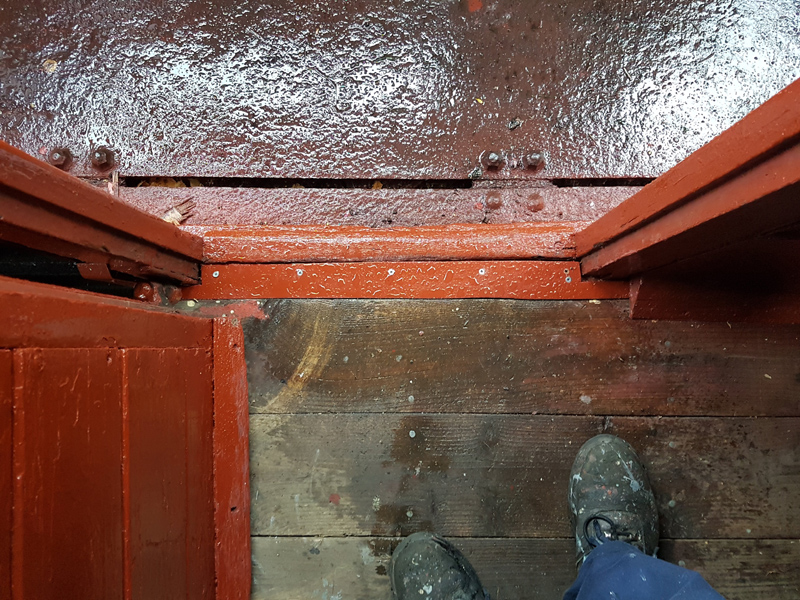
    As well as the Tankflat I also did a few jobs on the Southern Brake, tidying up the demarcation line on the inside. Painting the inside of the duckets, manufacturing some filler pieces for the floor under each door, undercoating a number of areas the spray gun could not reach and a touch of signwriting

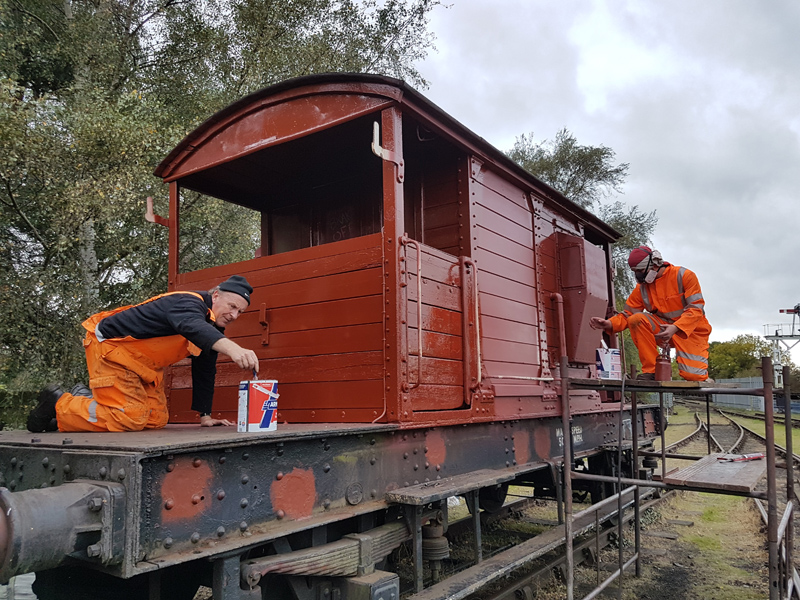
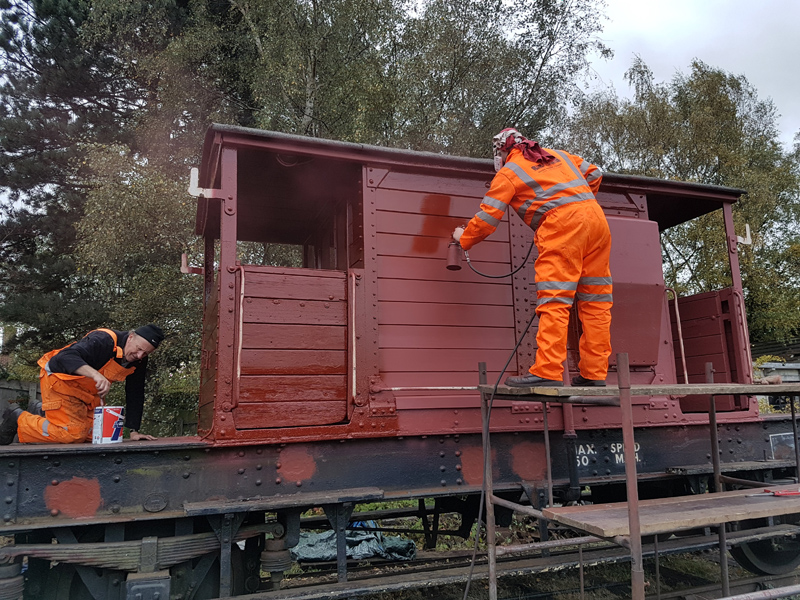
    On to Saturday and the full crew in attendance.  Despite the forcast, we were blessed with blue skies and warm temperatures so the opportunity was taken to Gloss S56010.

    Once complete again attention turned to the Tank flat, undercoating the headstocks and scraping down and applying bitumen to the east side of both bogies.

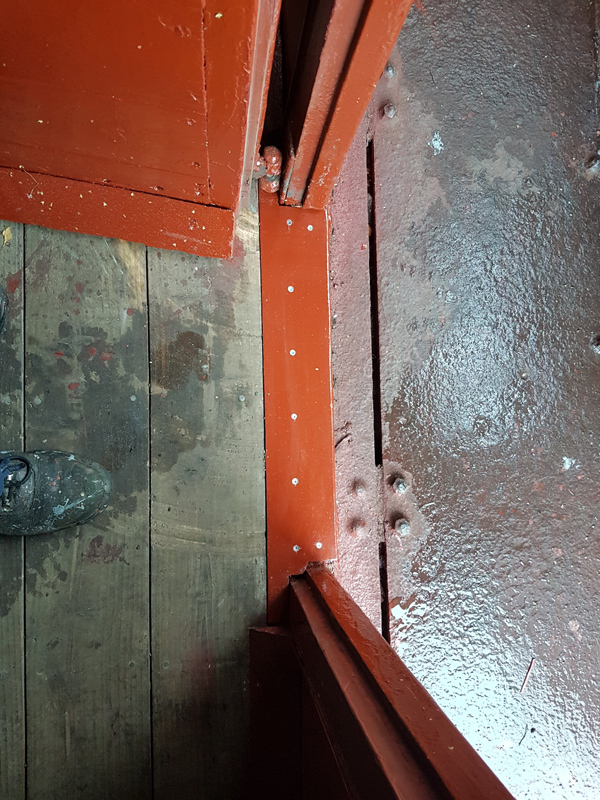
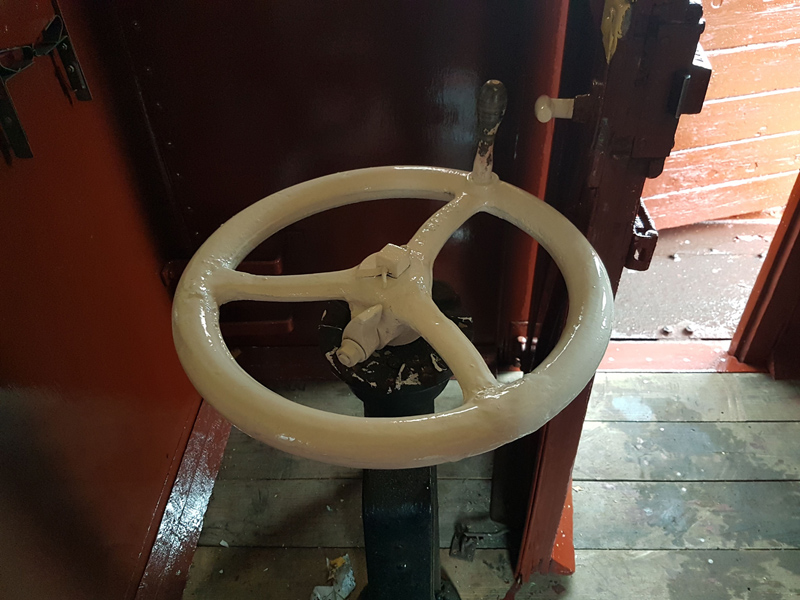
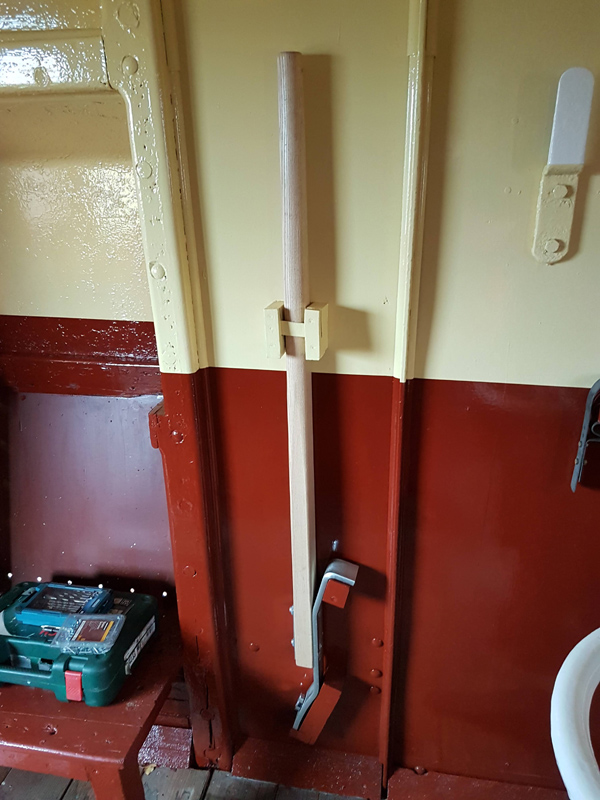
    Sunday and down came the rain, unfortunately, this put a hold to the plans to continue painting. We were able to fit the filler pieces, painted over the previous days, and finished off the final detailing of the interior. Handbrake wheel painted, track circuit operating clips and the short-circuiting bar fitted.

    It was also possible to apply undercoat to the ceiling and add white details to the doors.

    Because of the rain, we spent most of the time carrying out a spot of tidying of our workshop accommodation. Finders are crossed for better weather next week.