Tag: 1919

  • 25/8/25 – Bare barrels, a poorly Edward and a finished TTB

    25/8/25 – Bare barrels, a poorly Edward and a finished TTB

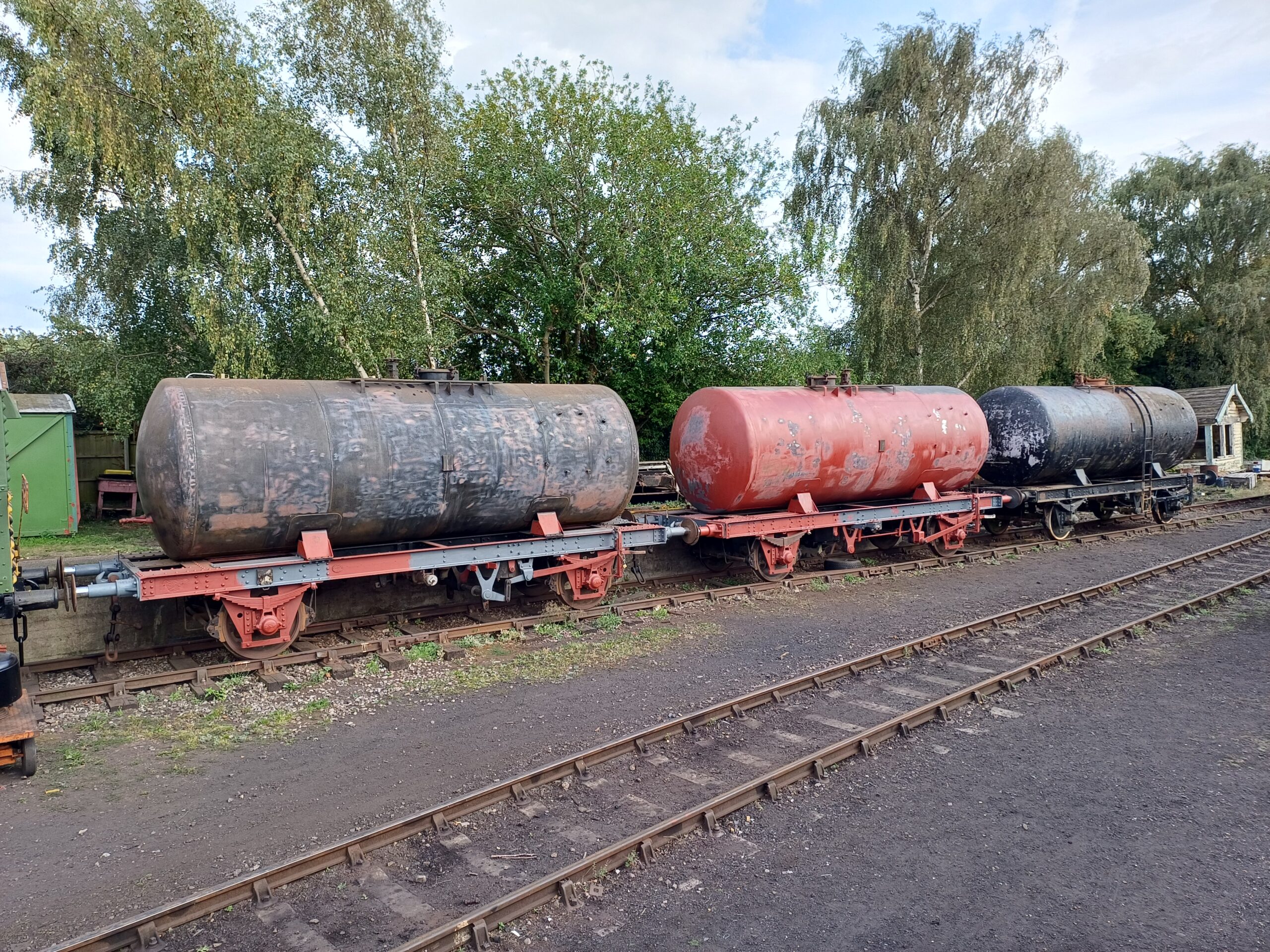
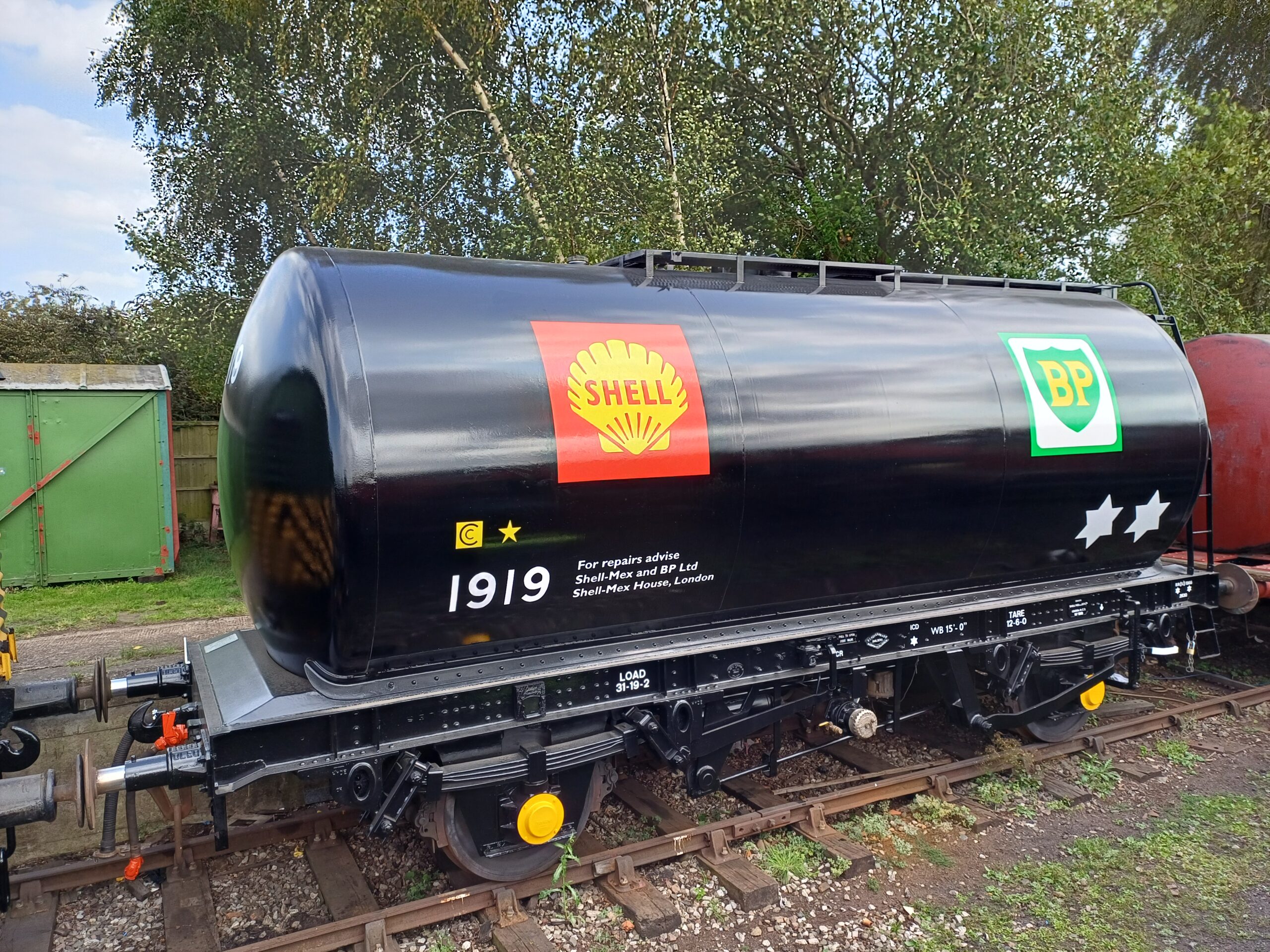
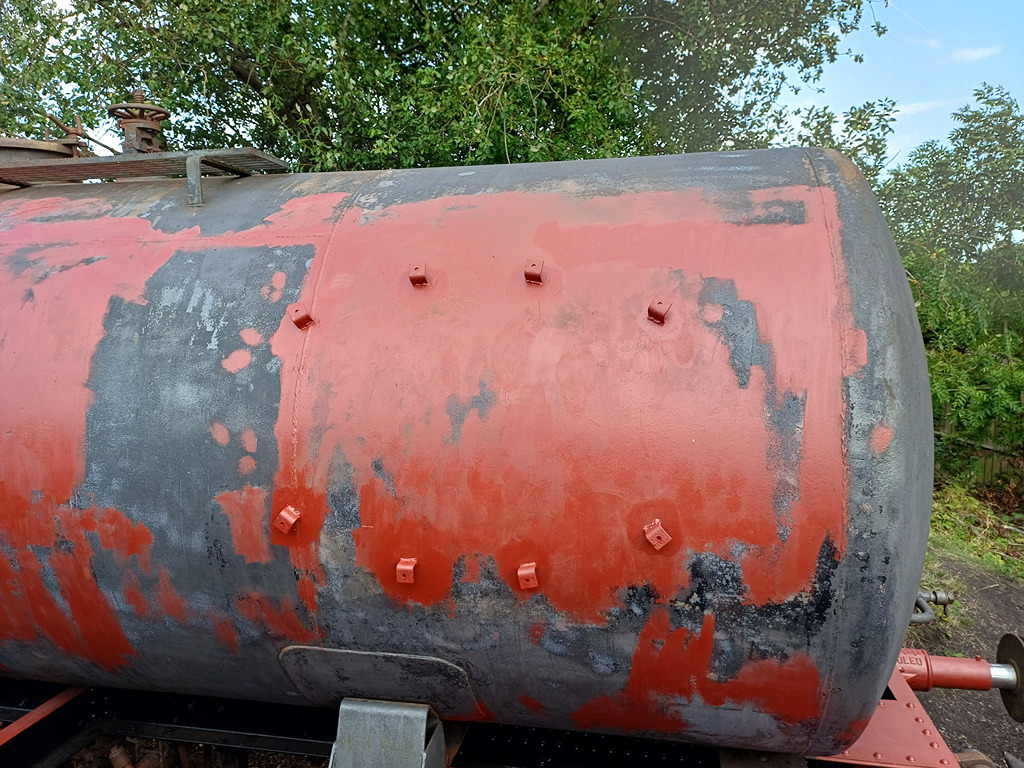
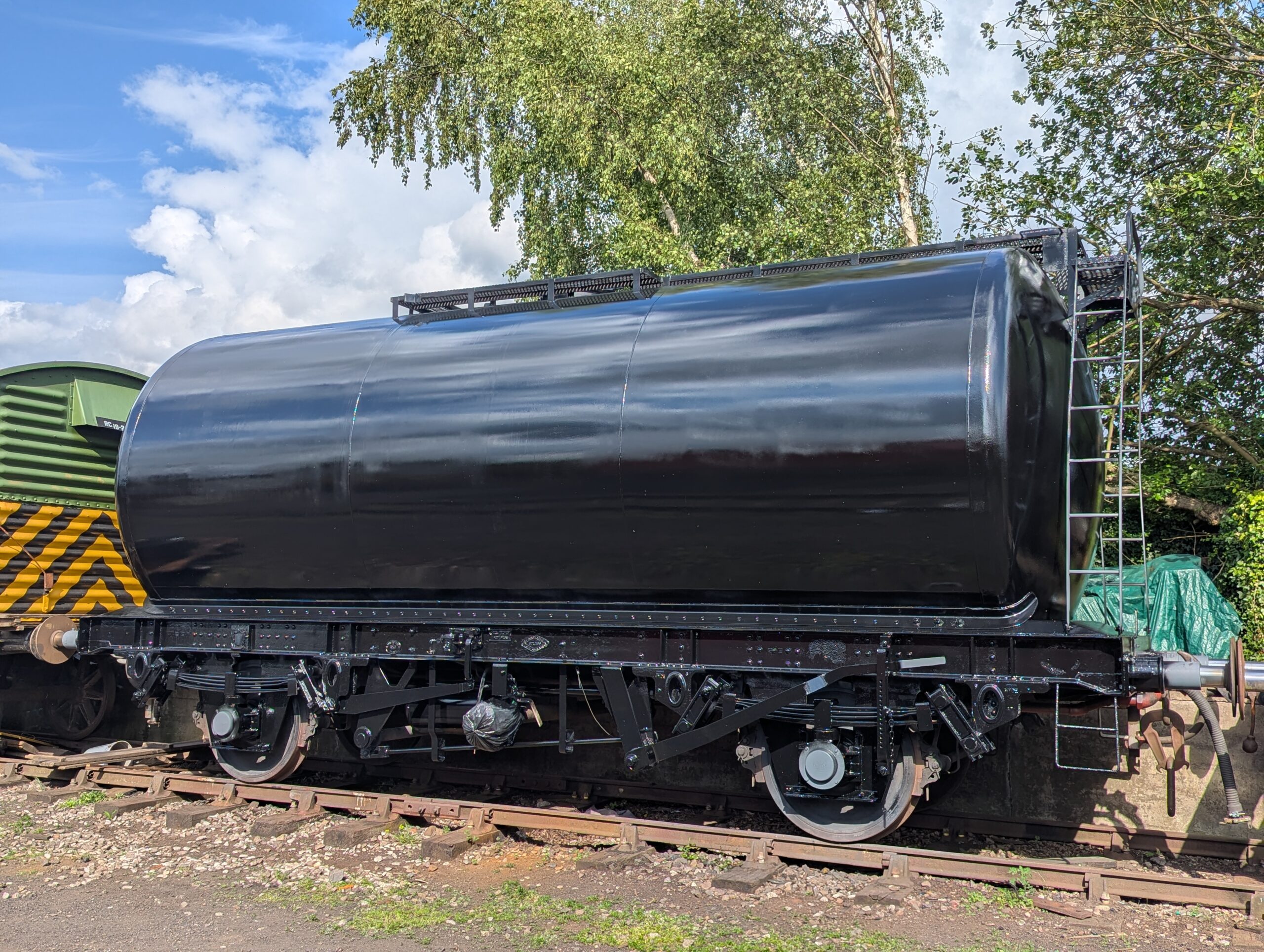
    Hello all, and thanks for reading this week’s update from Quorn. This weekend, its been a case of getting 1919 ready for release to traffic and pushing on with the Esso (3606, 3621 and 3854) tanks to get them ready for paint.

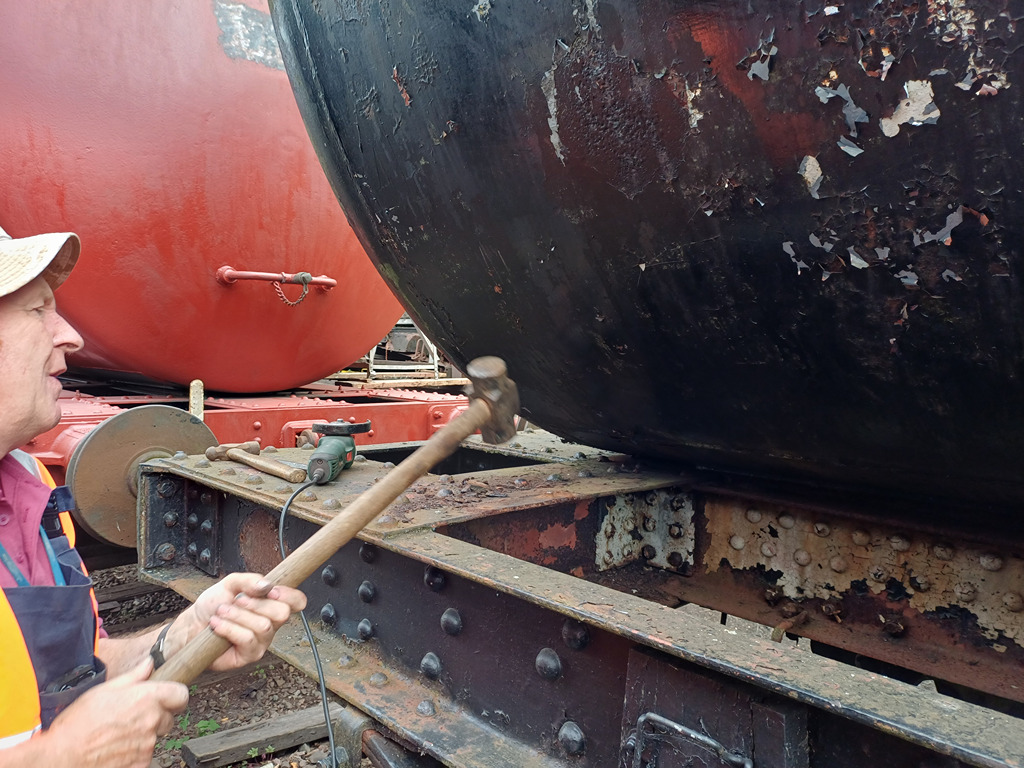
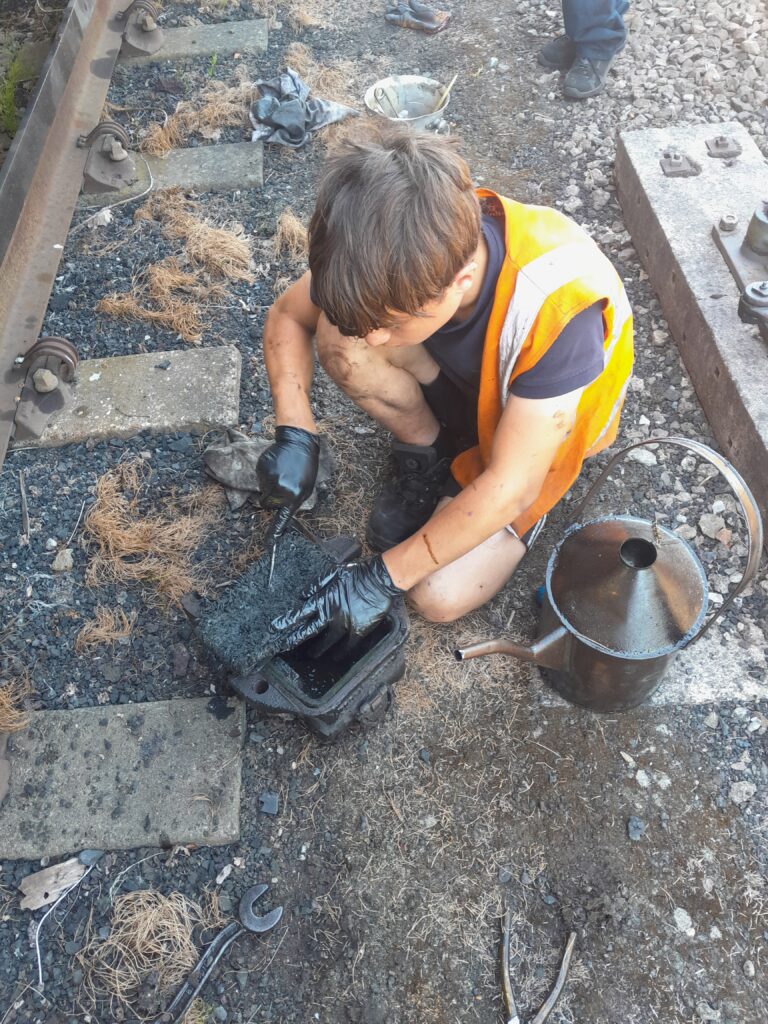
    3621 and 3606 got a last bit of sanding and preparation to remove what has been revealed through the coat of primer. A bit of make do and mend came into play with the sanding disc not sticking to the backing pads. We’ll have to get some more on order!

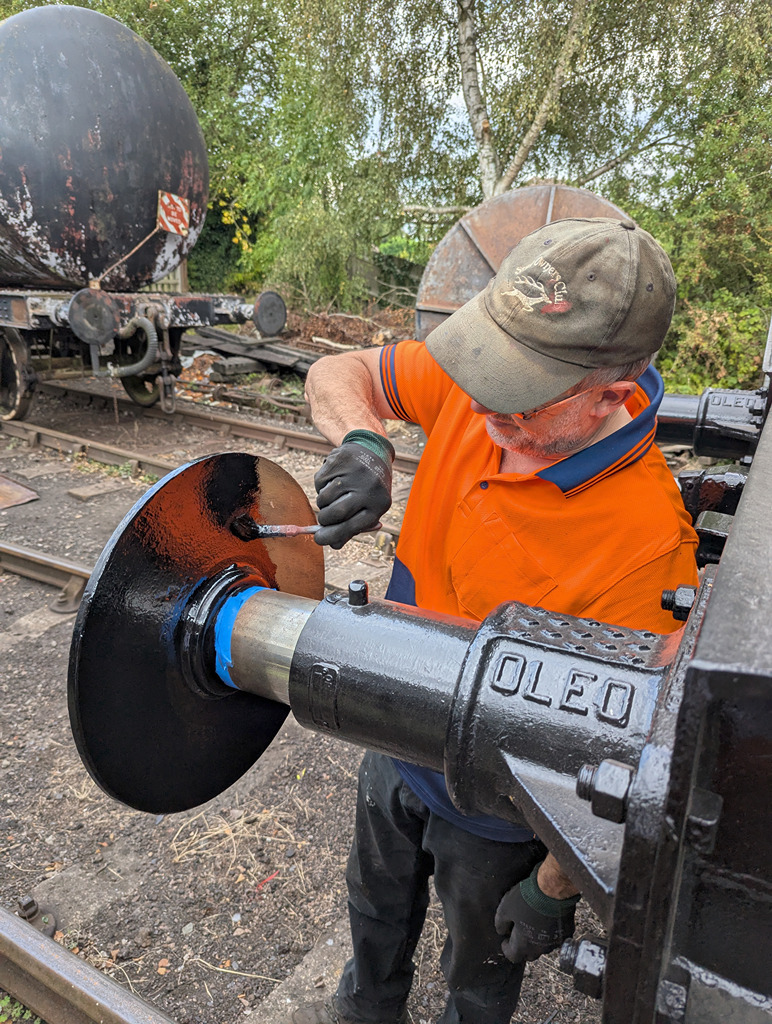
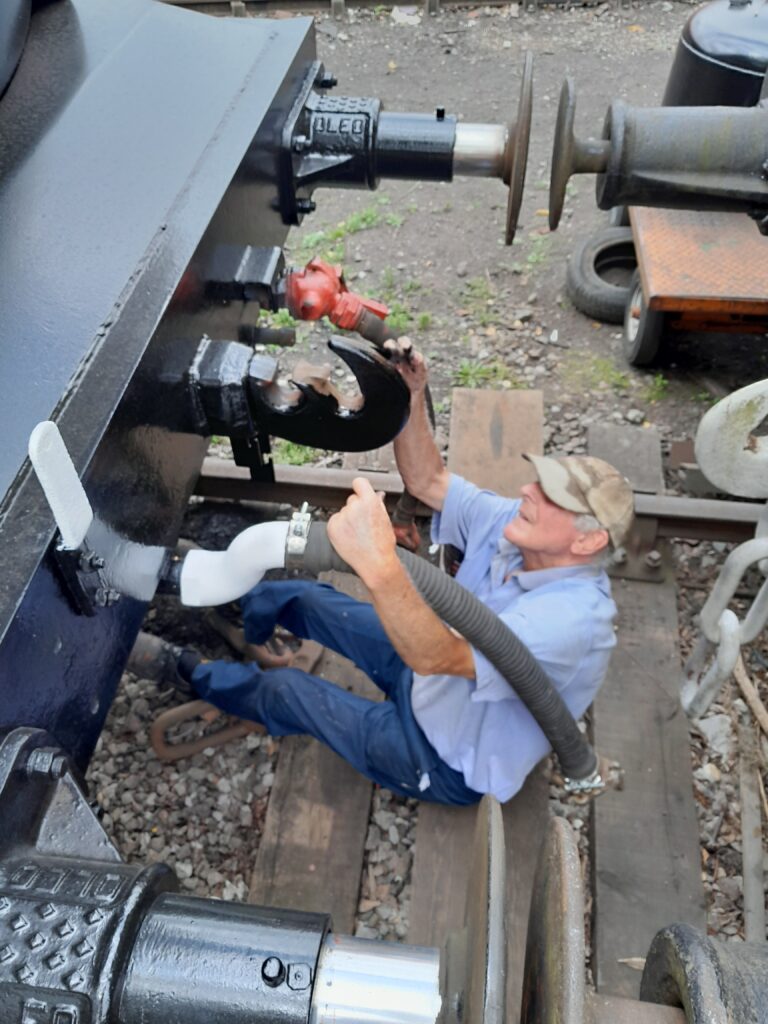
    We took the opportunity with many hands to remove 1919 from the dock and collected together the three Esso tanks on the dock road, after which I removed the OLE warning flashes from all three.

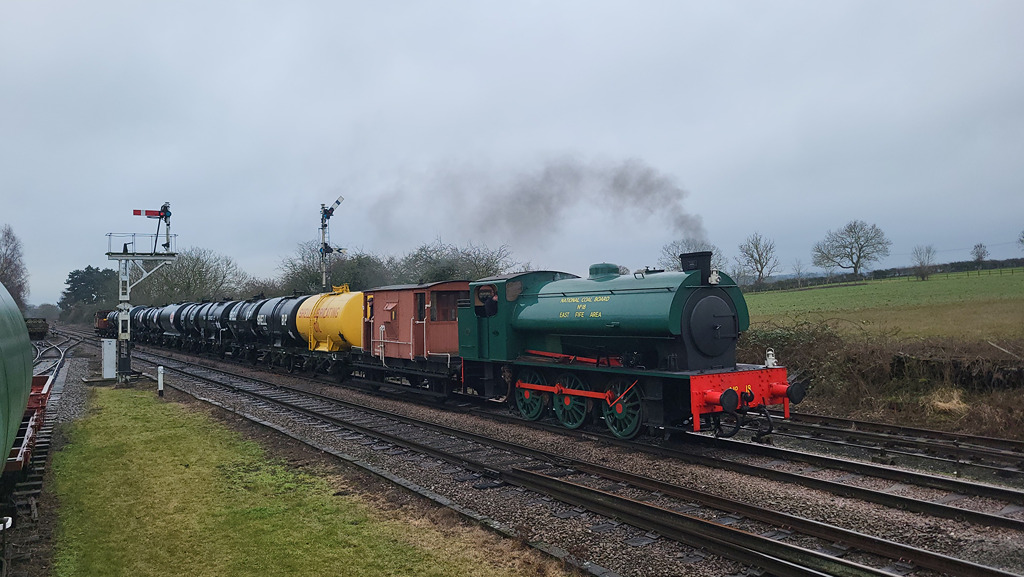
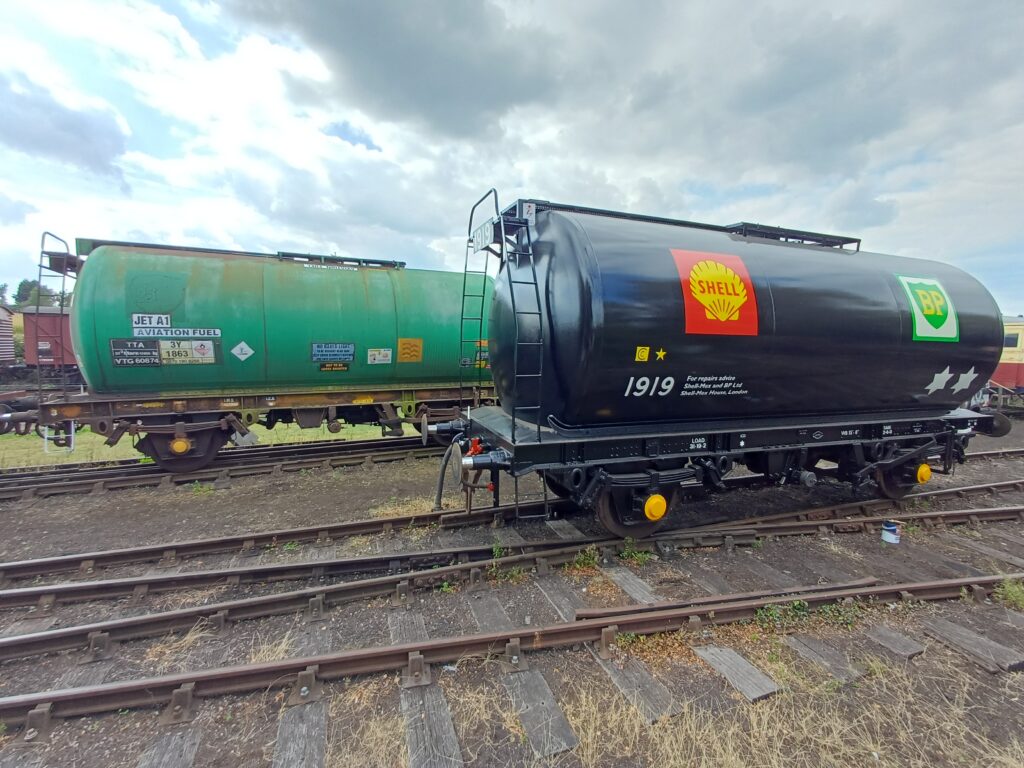
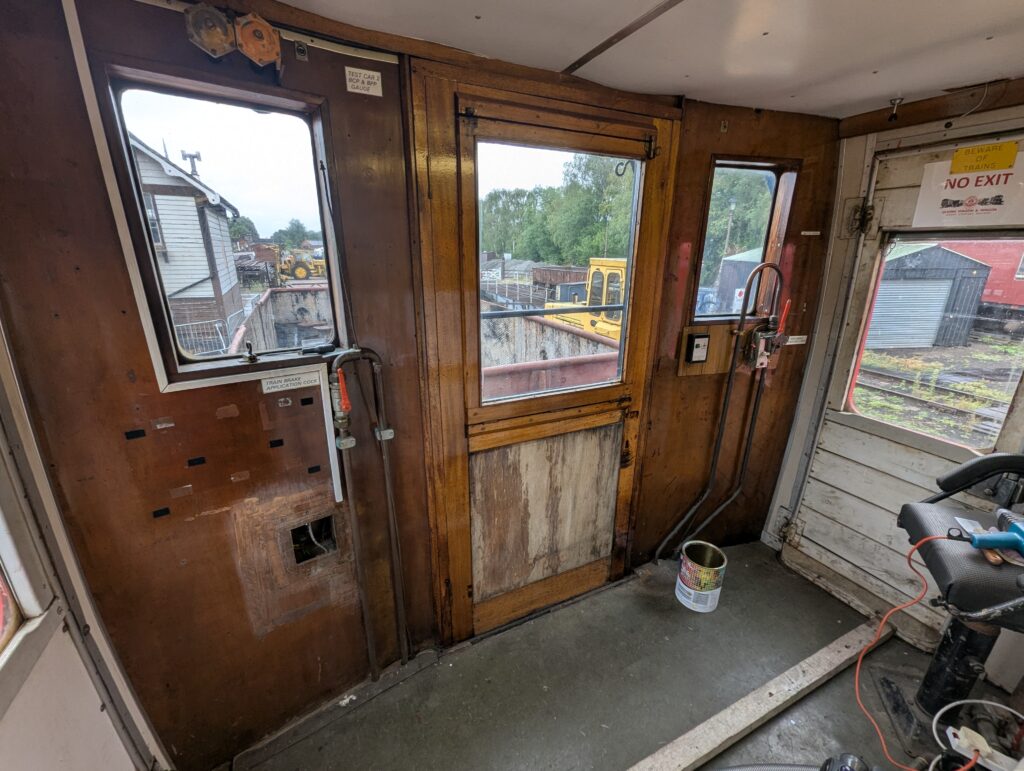
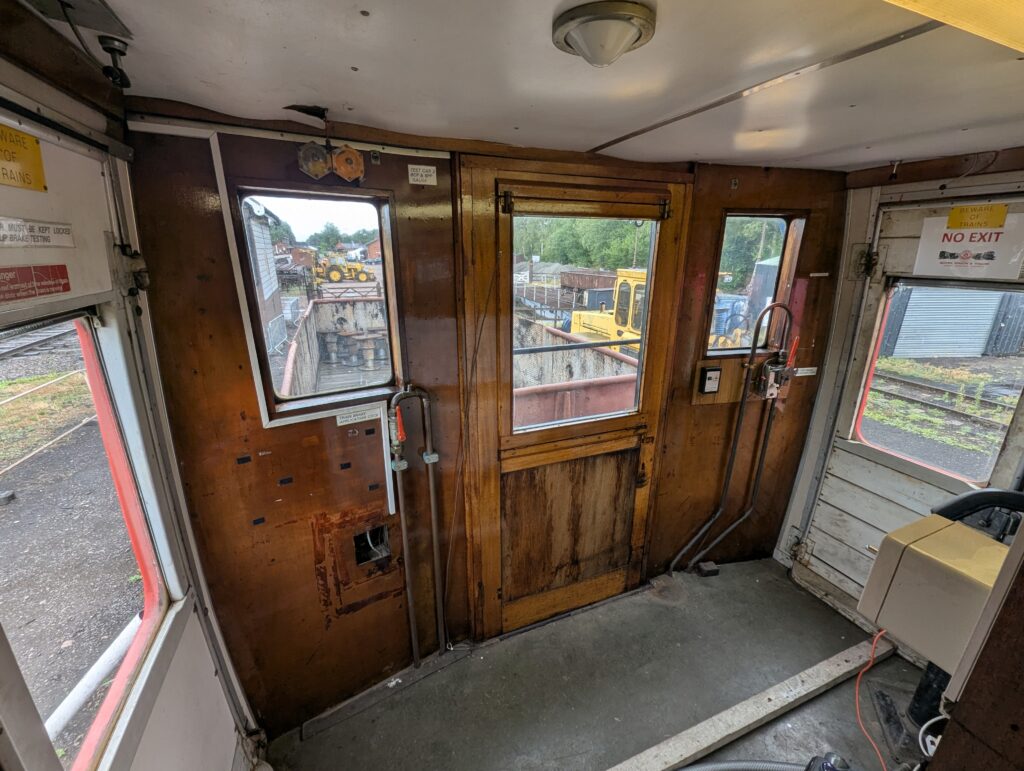
    A quick before and after with 1802 and 1919

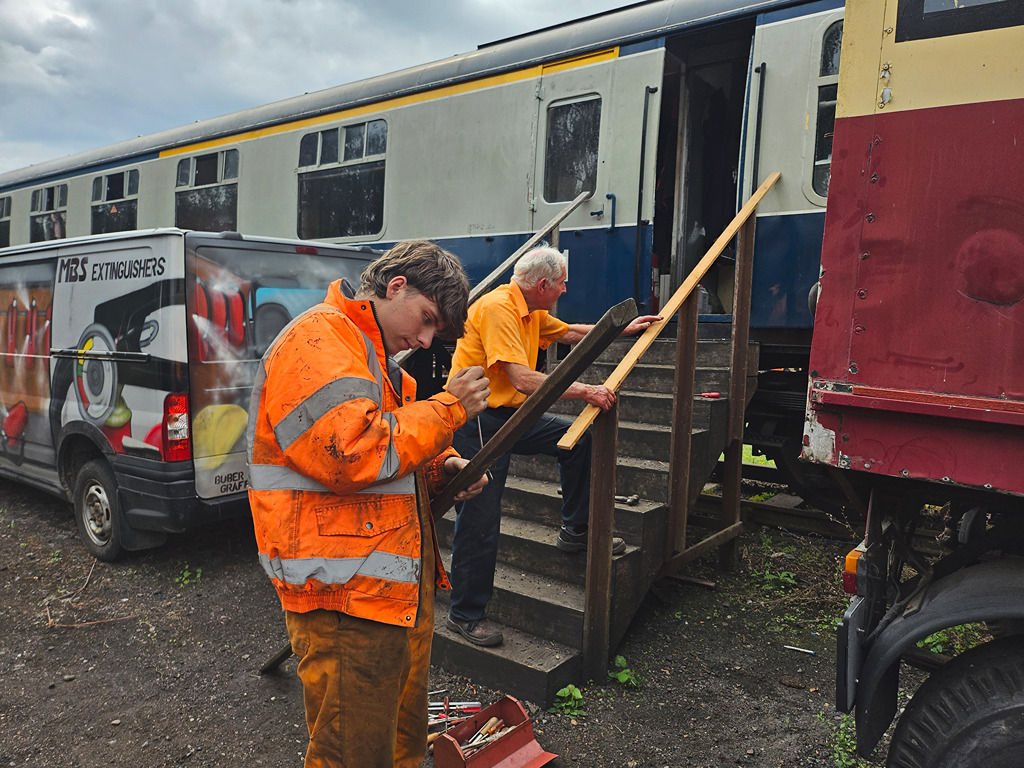
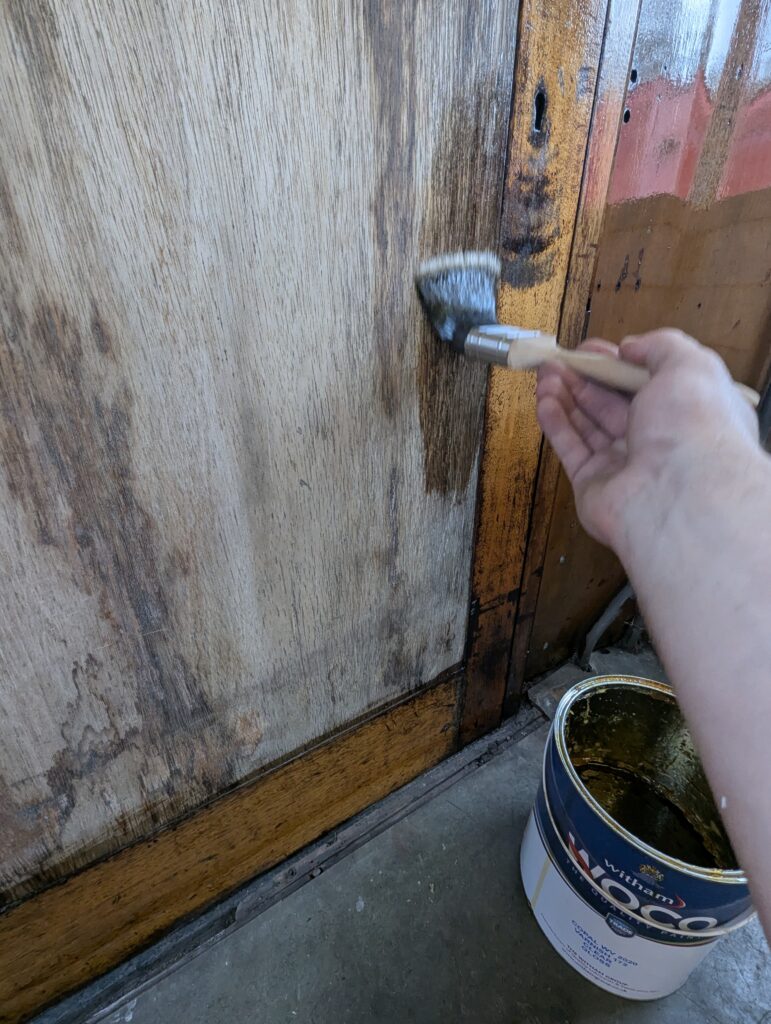
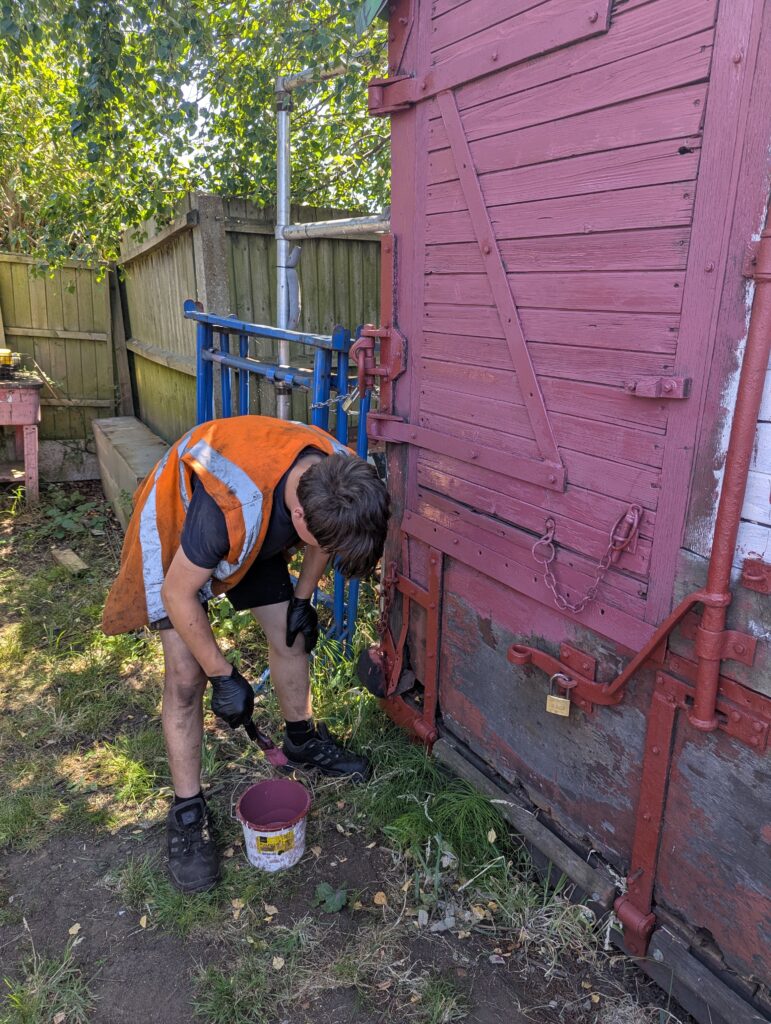
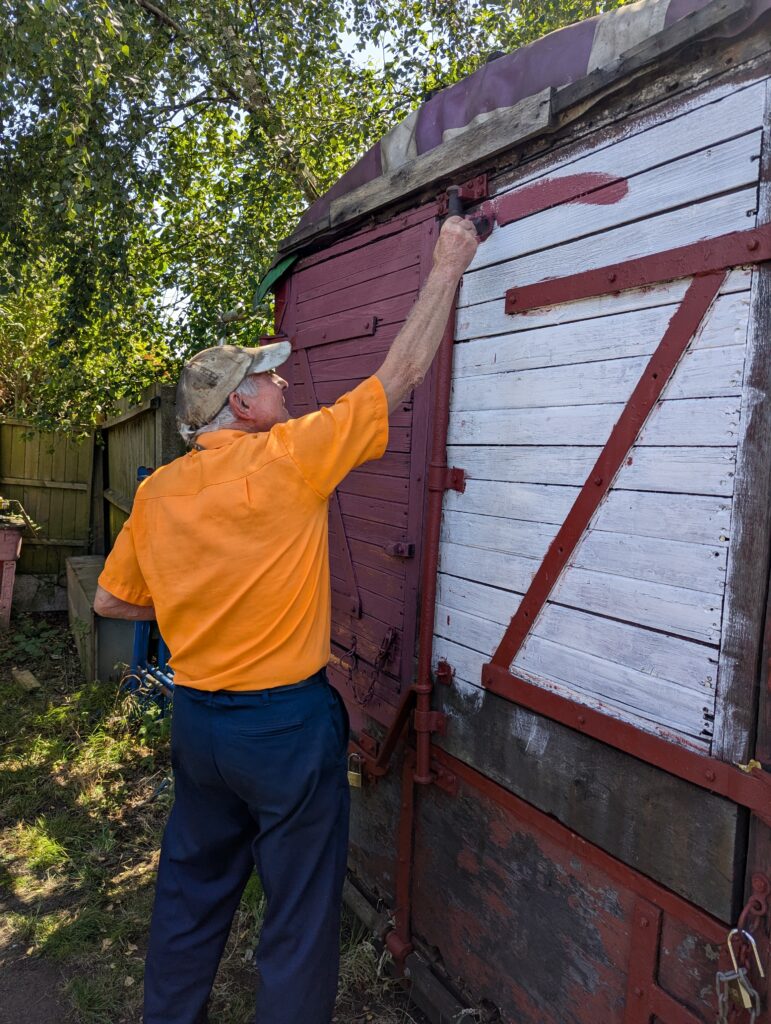
    1919 sat on the middle road where Dave touched in some of the black paint and prepared the logos for a coat of varnish. Ernie and Harry replaced the hand rail into the coach after several of the team had received splinters from the last one.

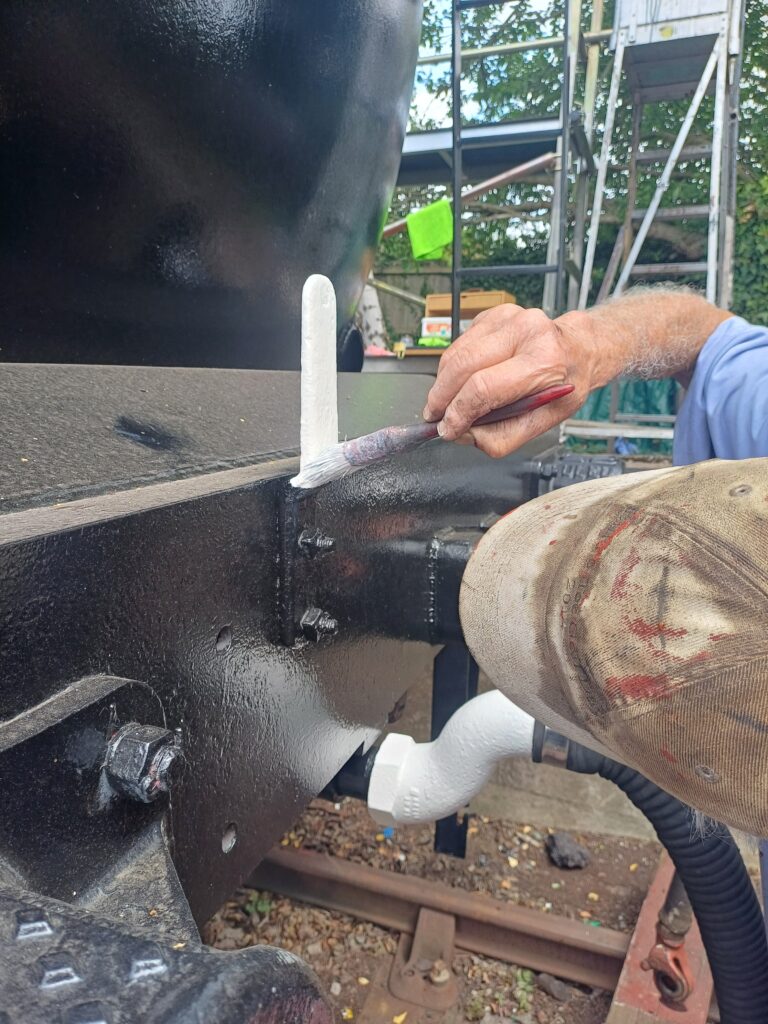
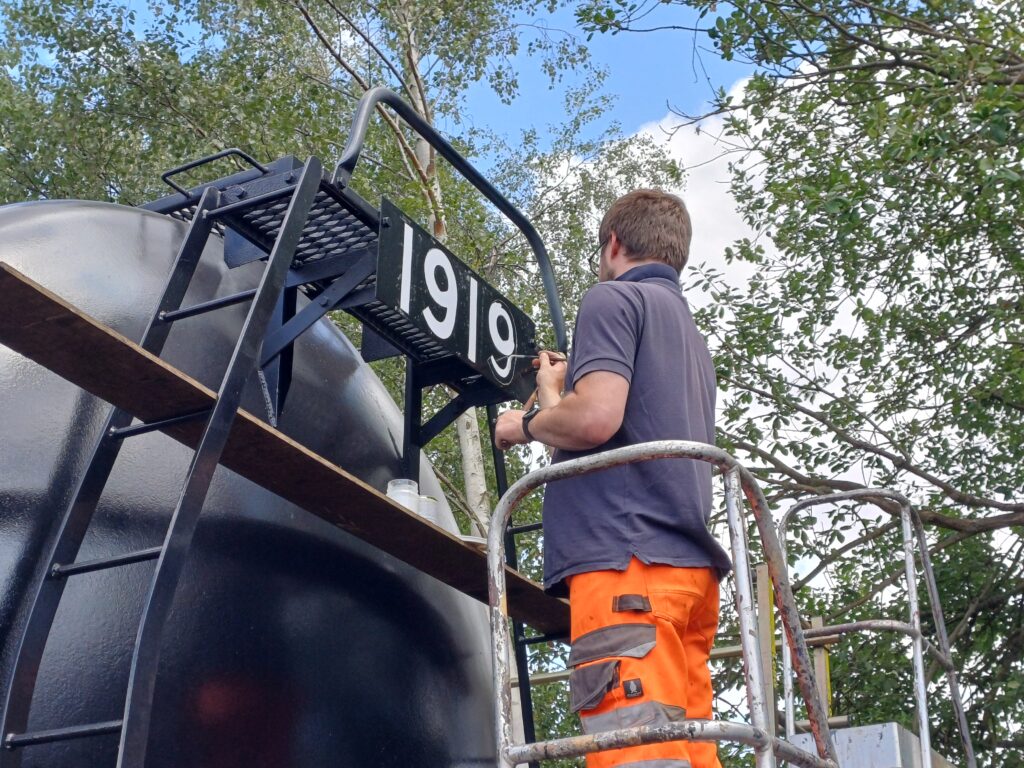
    Dave sign wrote the OLE flashes onto 1919, and then applied a coat of varnish over the Shell and BP logos to ensure their longevity. The sanding continued, though the compressor seemed to be struggling and nearly stalling. The fuel pump has developed a serious leak, so it is time for some long overdue TLC for Edward.

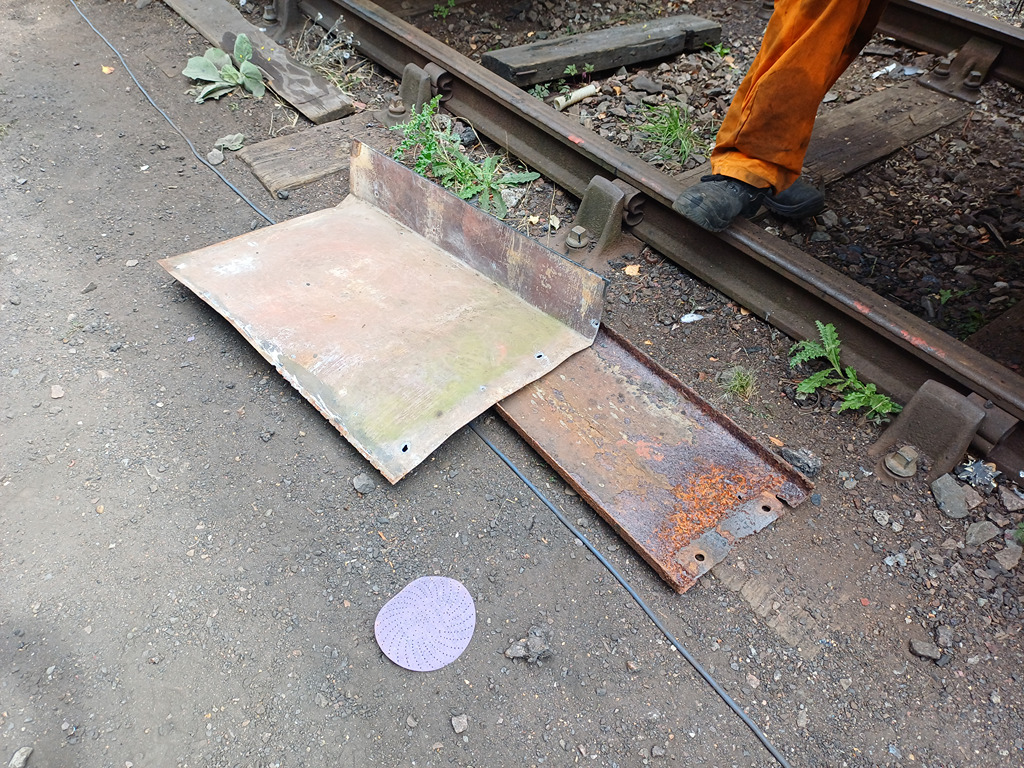
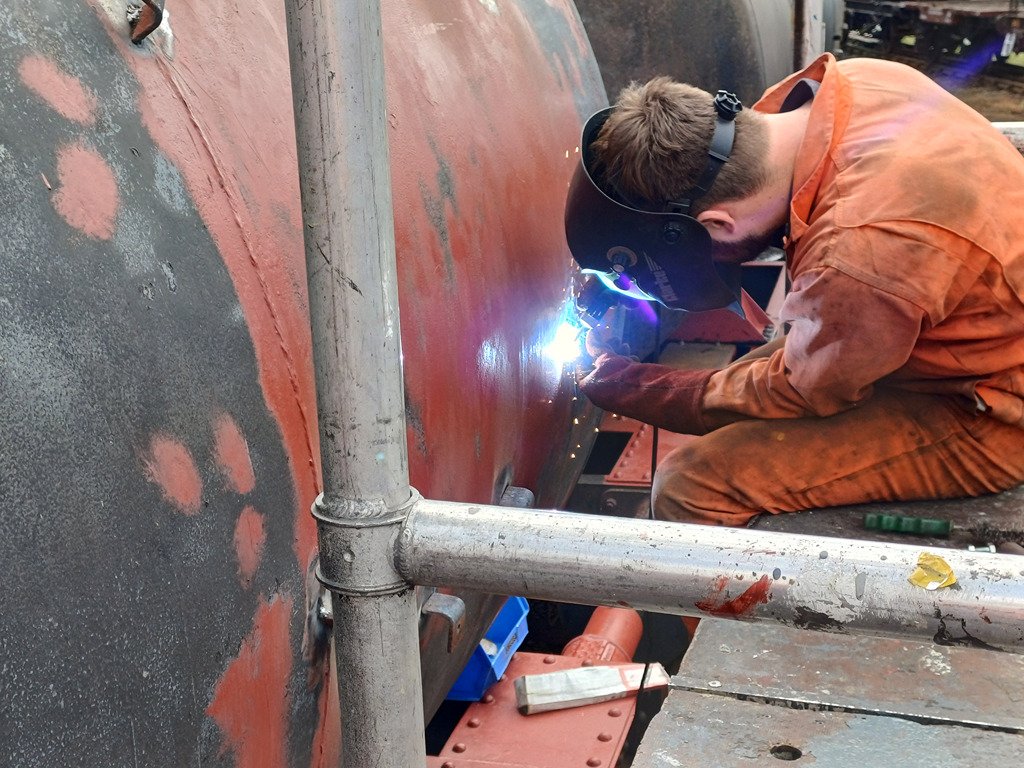
    I concentrated on welding the blanks to 3606 to cover over where pipes had been installed for its static use. Nick and Ernie looked at removing a tray that had been installed to 3854 and Ernie tidied up the weld remnants.

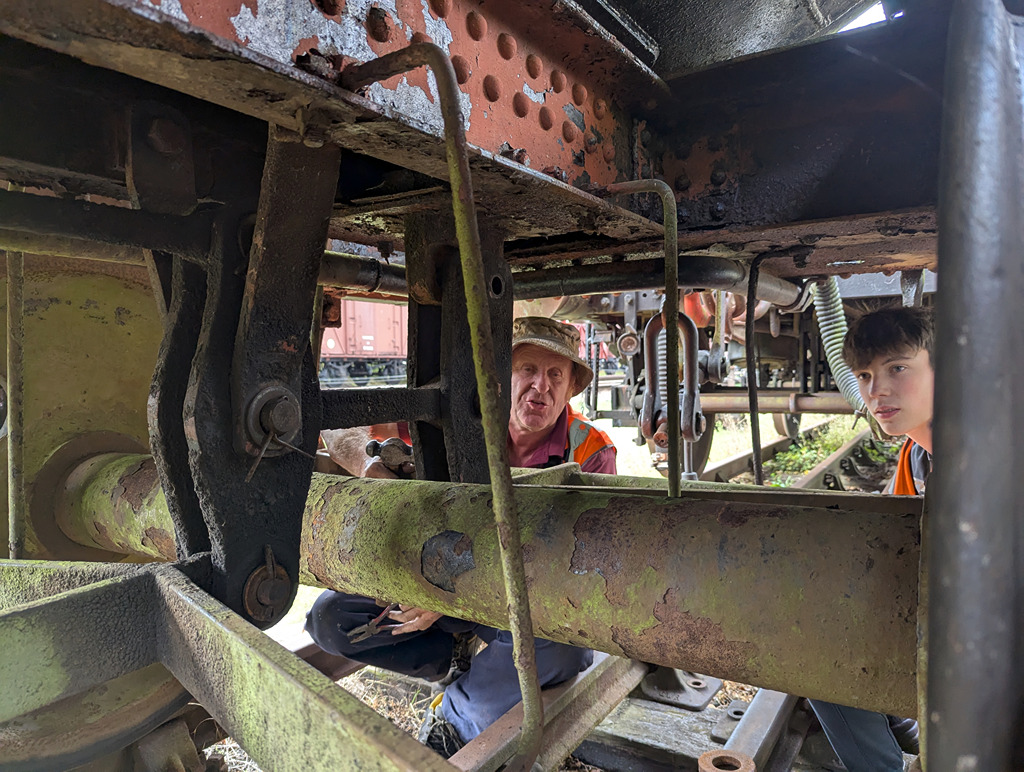
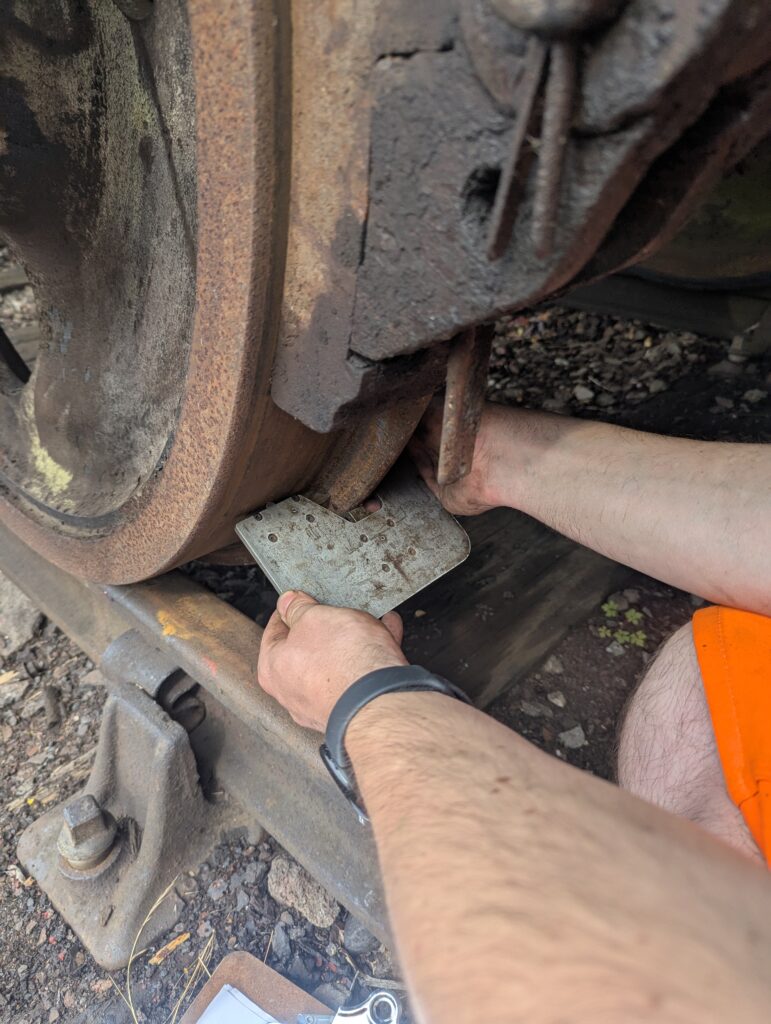
    Dave and I undertook the final inspection of 1919, checking it before output and completing our form ready to hand over to Jamie. I checked the flange gauge against the calibration specification, and found it to be spot on. With help from Tom and Dan, we undertook a test of both the air braking system and the vacuum through pipe. The through pipe was satisfactory, however the air brake system appear to not be working which requires further investigation.

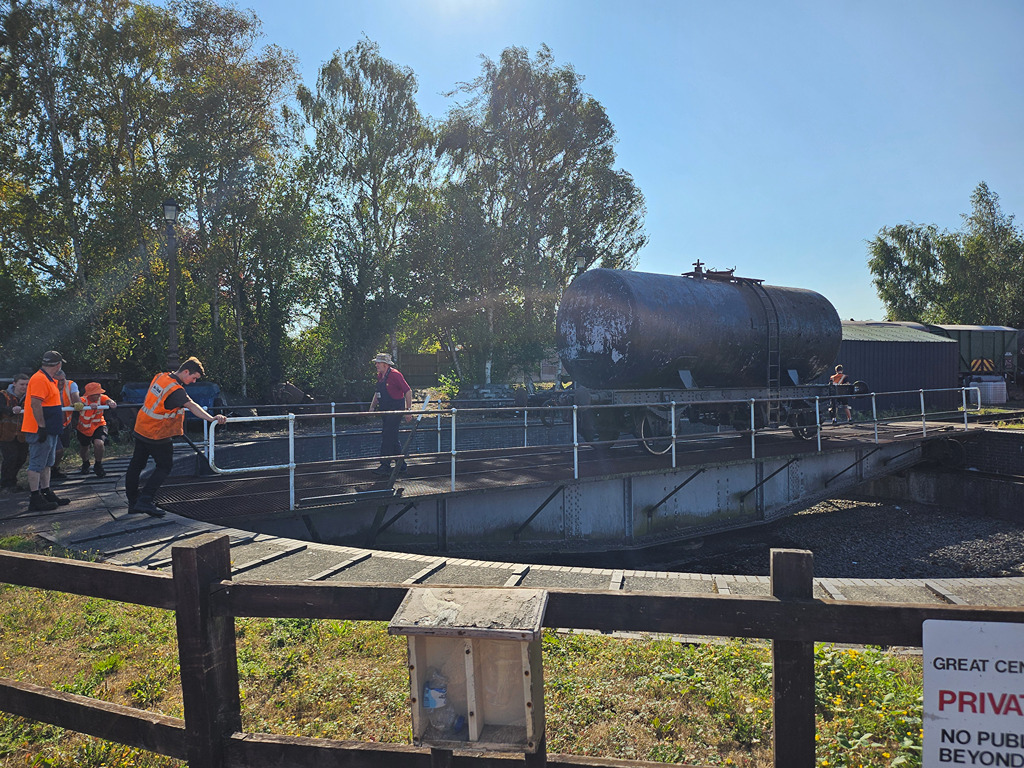
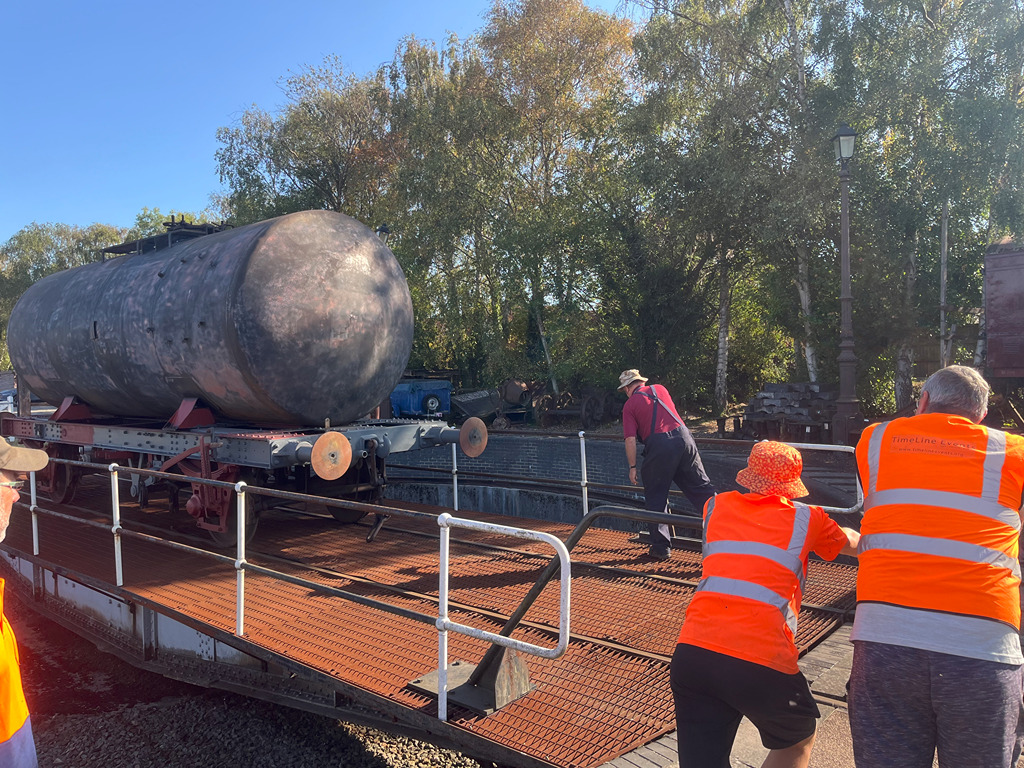
    The team undertook another shunt to release both 3606 and 3854 to turn them on the turntable. This allows us easy access to both vacuum cylinders, the former to refit and the later to remove and overhaul.

    Edward was stripped and drained down, with some other issues found including a failed water pump bearing and the silencer no longer being connected to the exhaust. Charlie and Dan gave everything a few coats of heavy duty degreaser and washed it off, making it a lot easier to trace any further leaks.

    With 3606 been turned, Nick decided to refit the overhauled vacuum cylinder with assistance from Oliver and James.

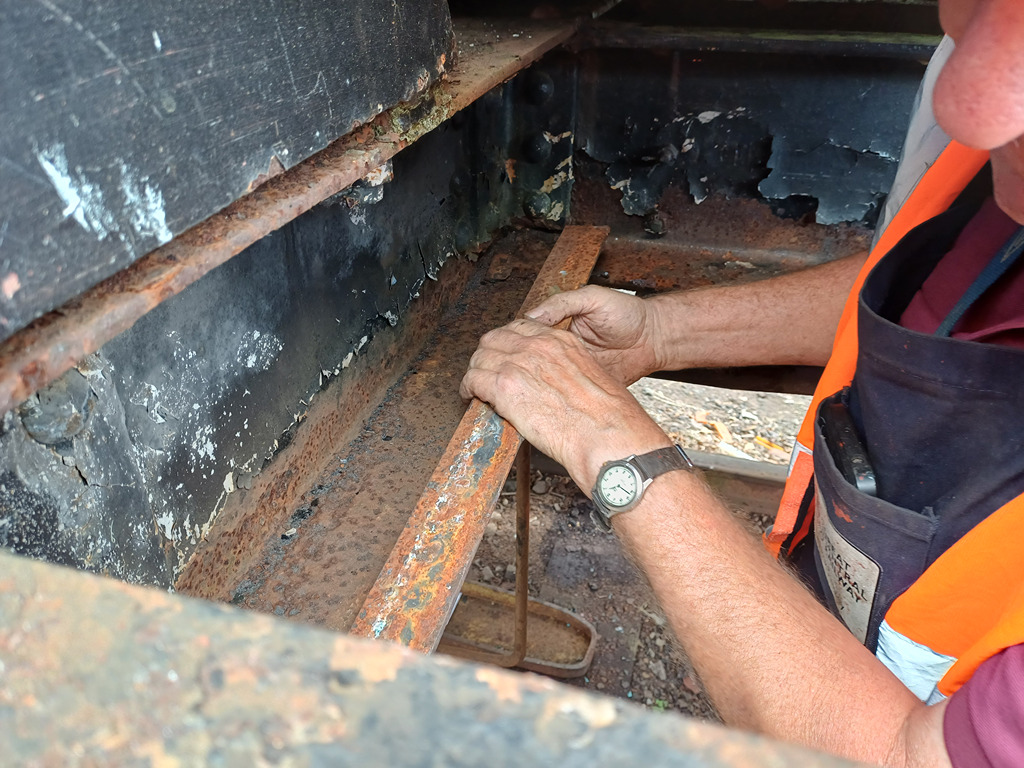
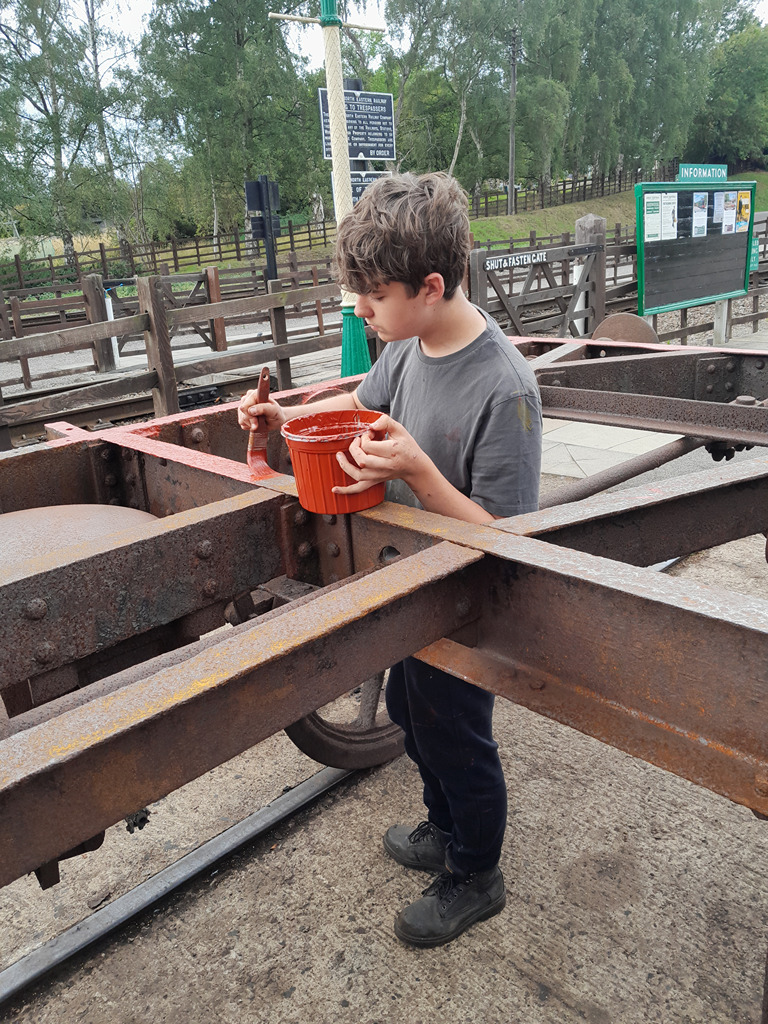
    Mark, Tom and James concentrated on the last bits of old paint and tar on 3606, which is now ready for primer.

    Edward has become top priority now as we need him for compressed air, but we’ll keep moving with the tanks and get them painted. Come sand see how we get on next week. Thanks again for reading!

  • Insight 12/08/25 – Large Logo Application

    Insight 12/08/25 – Large Logo Application

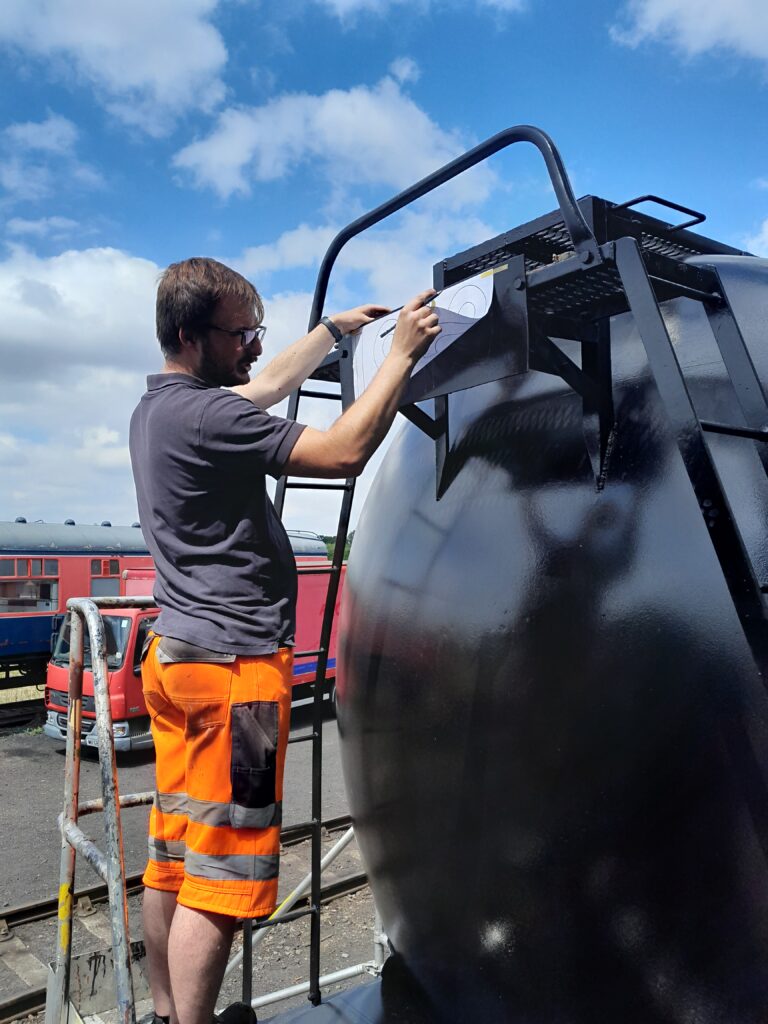
    Hi all, we’ve had a few queries about how we go about applying the large logos or numbers to wagons such as the running numbers or Shell and BP logos on tank 1919; so here’s a brief insight of how we go about it.

    1 – No, we don’t use vinyl’s or stickers !….

    2 – we draw up templates on the computer (full size) then print them out full size; larger templates have to be printed in parts and pieced together to form the full size paper template.

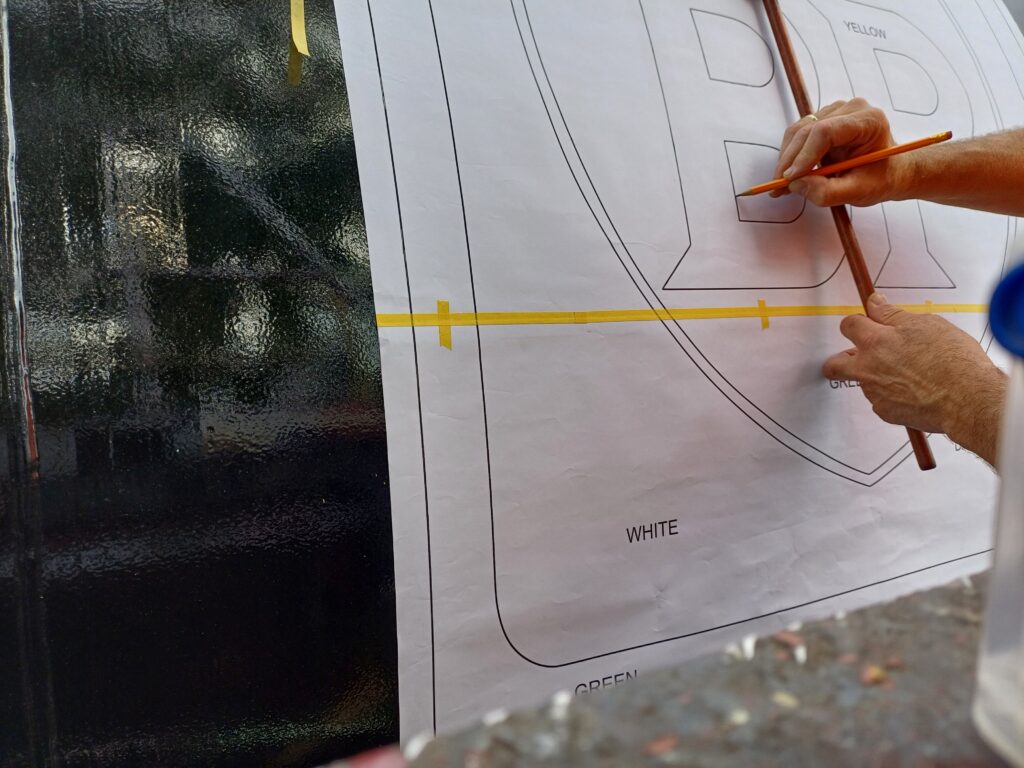
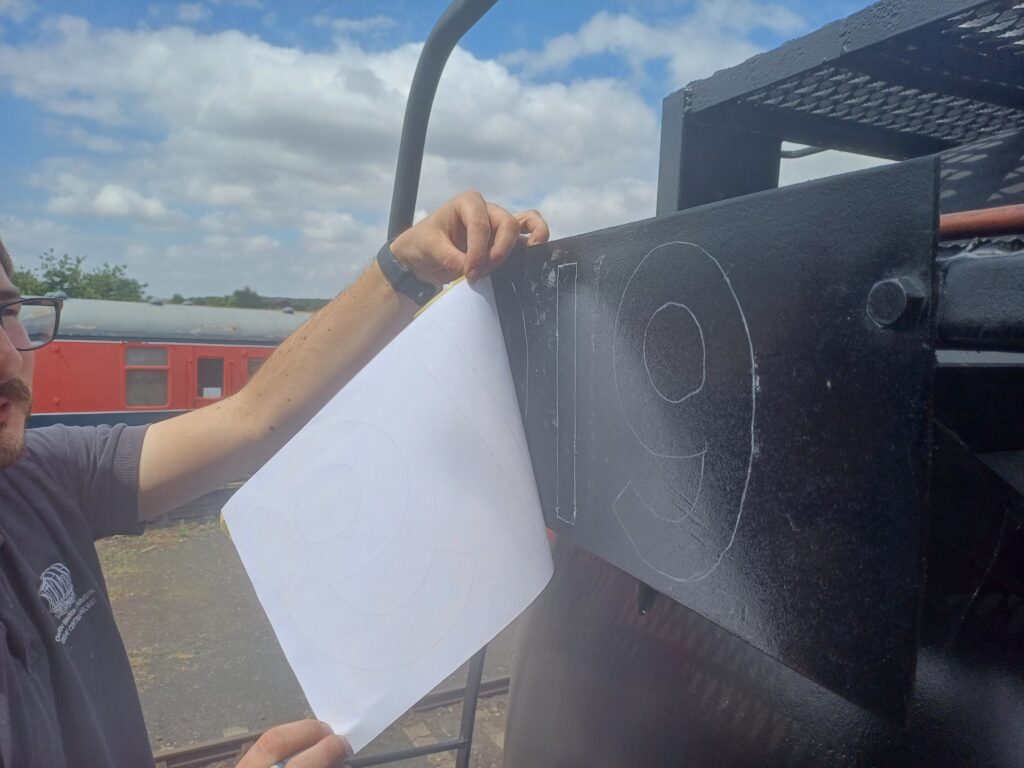
    3 – Once ready, the template has chalk rubbed to the back, rubbing over with fingers to ensure even application, then shake off any excess. White chalk is used for a black background, and red or blue coloured chalk for lighter areas.

    4 – Where necessary the wagon is prepared, such as for multi-colour logos where the background area is undercoated and the base colour applied.

    5 – The template is then positioned onto the wagon and taped to hold it in position and ensure it’s flat to the surface.

    6 – A pencil is then used to carefully trace around the outline of the logo or numbering

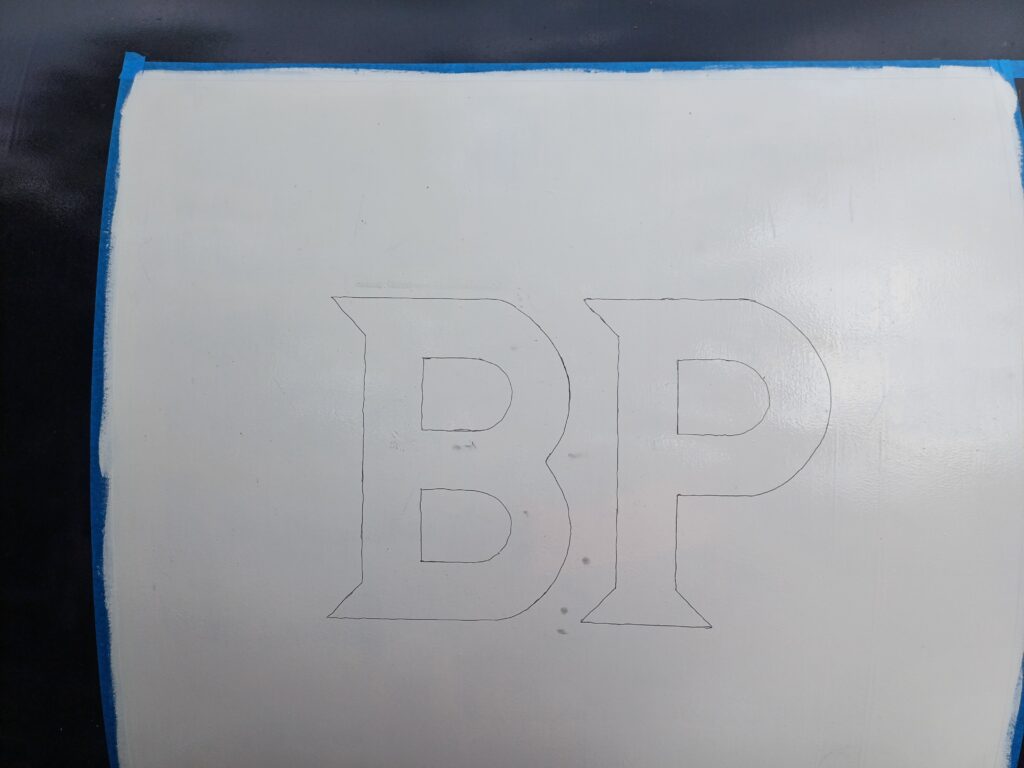
    7 – The template is then removed to reveal an chalked outline of the numbering or logo on the wagon. It may be easy to see on the black, but not so clear on the yellow background !

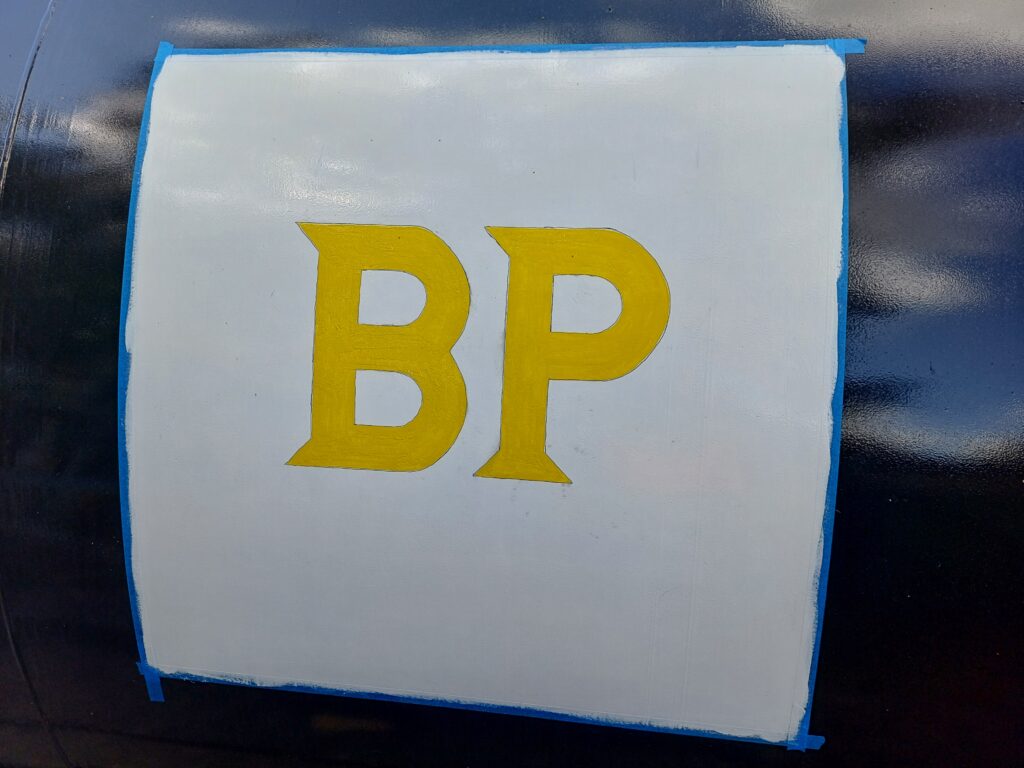
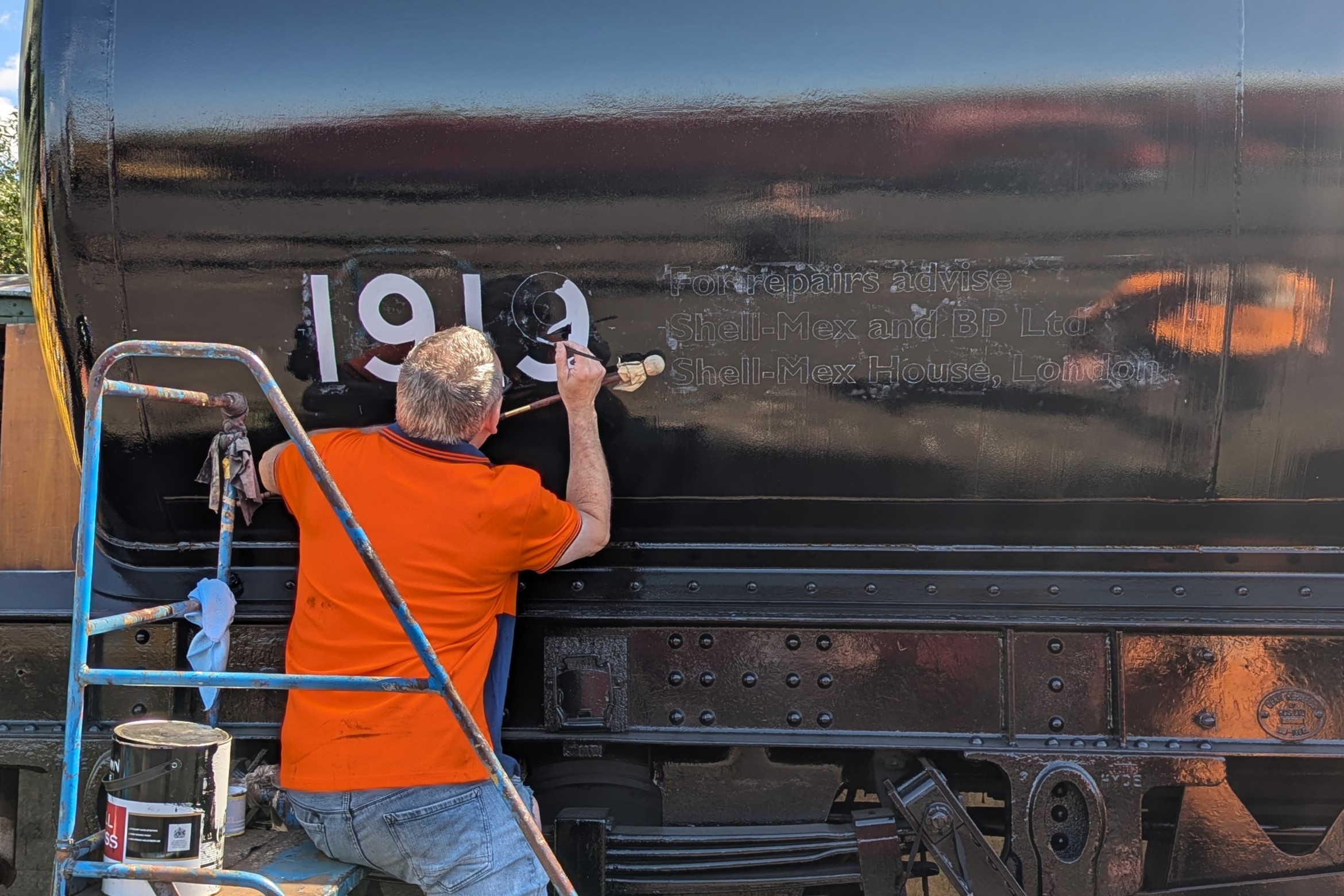
    8 – It’s then time to get out the paint and brushes. Normally starting at the lower left corner so as to reduce the risk of resting the mahl stick in any wet paint. The chalk outline is used as a guide for painting the numbers or logo.

    9 – For the larger logos the outlines are painted first using a signwriting brush, then the main areas painted with a larger brush.

    10 – The completed logos are left to dry thoroughly, then a coat of varnish is applied to help them last a bit longer and deter fading.

    Thanks for reading, all the best from the Quorn Wagon & Wagon team.

  • 10/08/25 – Large Logos, Lugs and a little bit of welding

    10/08/25 – Large Logos, Lugs and a little bit of welding

    Hello everyone, and welcome to another update from Quorn. Now that I’ve come back from the frivolities of my wedding and from staffing HydroFLEX at the Greatest Gathering, I’ll give you a run down of what has happened for us this week.

    At Rothley, good progress had been made by the C&W team on both the Lowfit with its previously poorly dragbox and the shock absorbing High Goods with its rotten corrugated end being replaced for some spare good material. Additionally, the Lowfit chassis has received more black paint and the chassis for the Palshocvan body had been needle gunned and primed, getting it ready for the body to go on. Thanks to Jamie, Pat, Kyle, Rob, Noah and Steve, we’re looking forward to having these back and getting them in traffic.

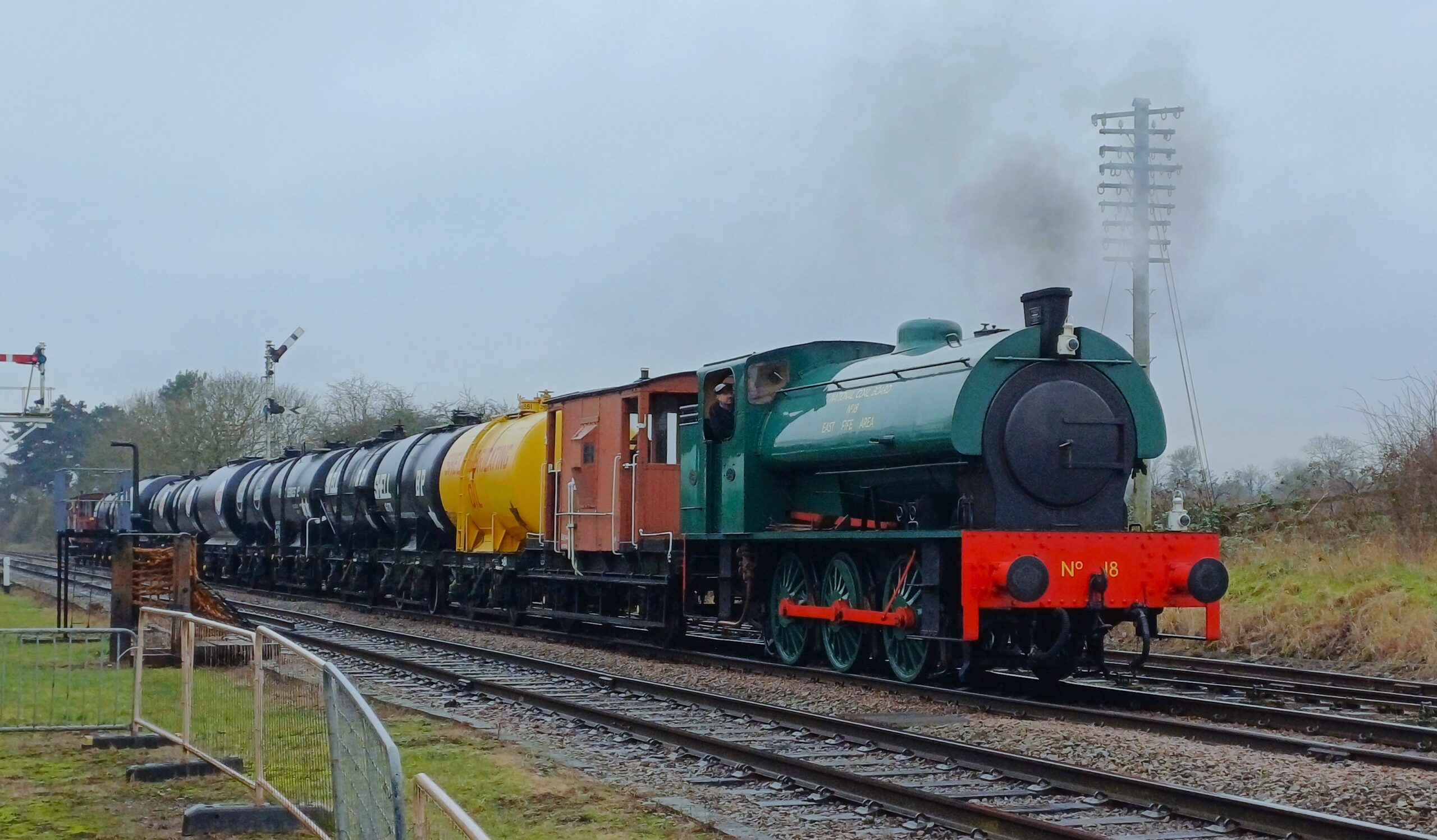
    The week prior, the tank train had applicable vehicles receive a bearing exam and all vehicles had their brake rigging oiled.

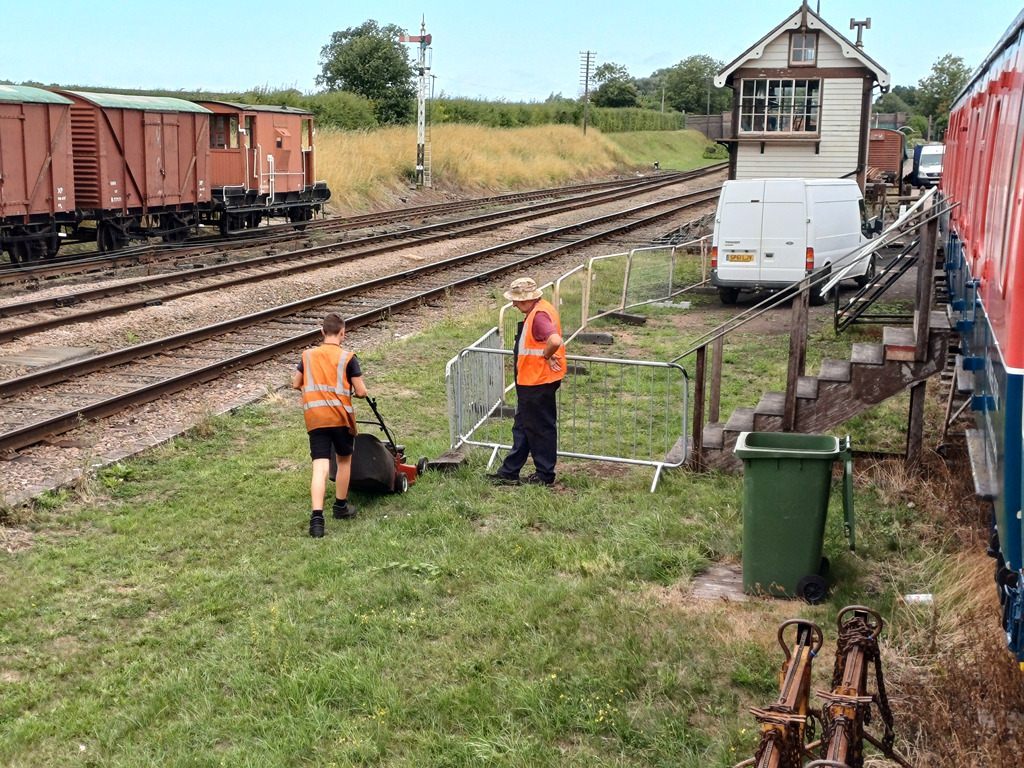
    On to this weekend then, and after my time away its nice to see the amount of progress that has been made. Before the trains started running, Charlie (with Nick as lookout) mowed the grass between Road 1 in the South Yard and the running line.

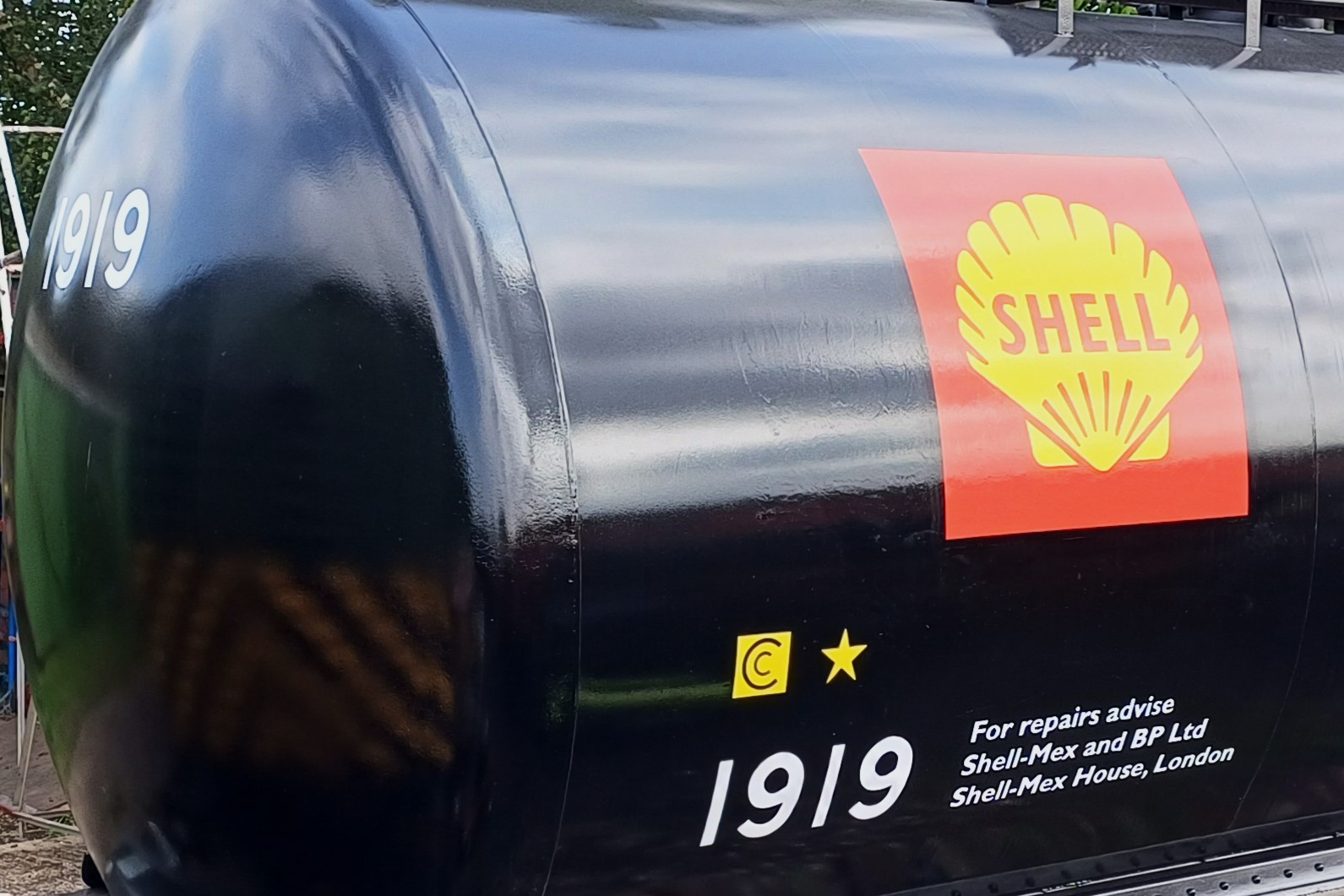
    Dave got started on the east side Shell logo, getting it chalked up and completed in the morning.

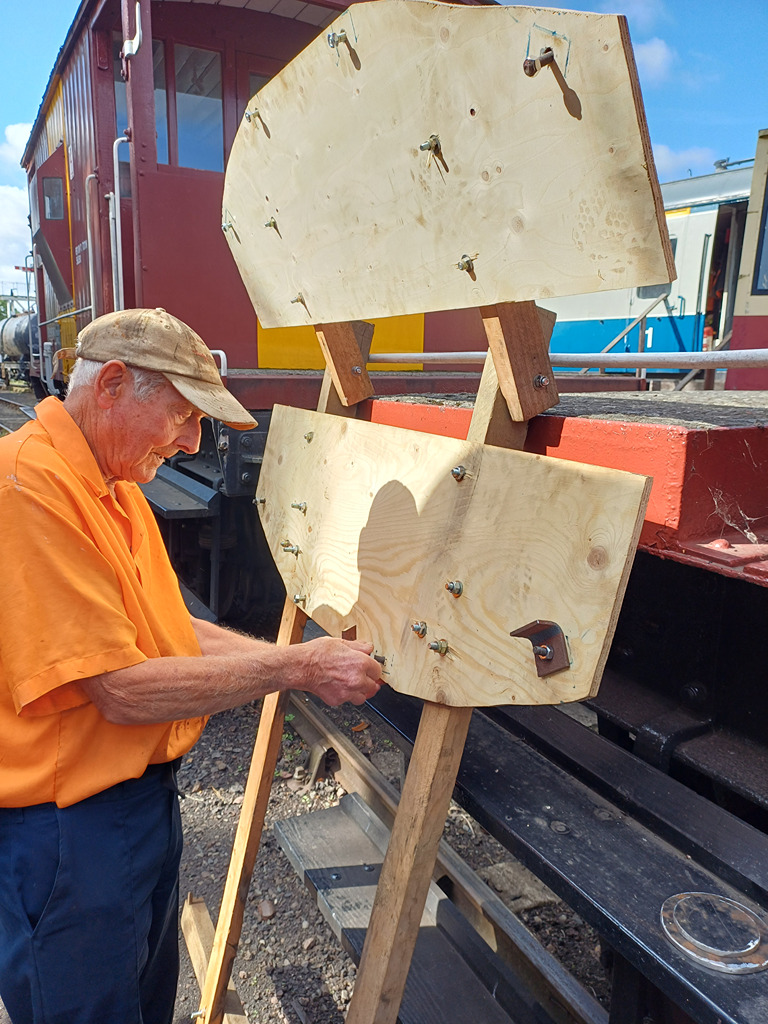
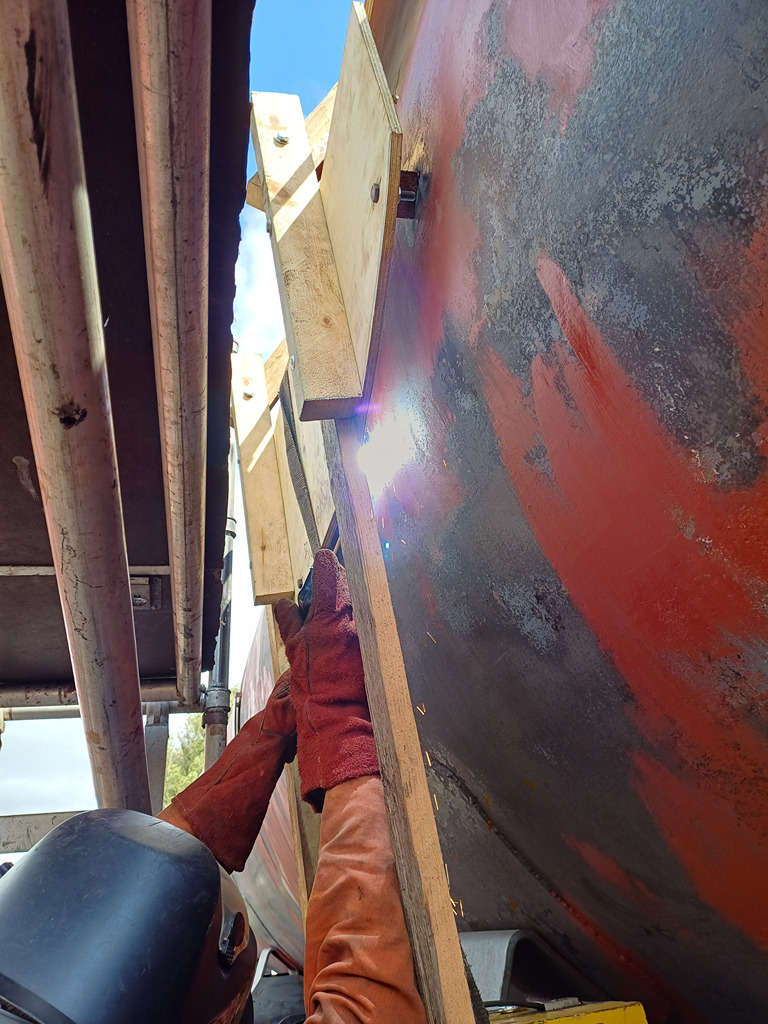
    Ernie and I got the Esso plate jig out and welded the plate brackets back on to 3621. We started on the west side, and the jig made the work really easy, though the height from the ground did add a complication. I modified the jig to allow a bit of access to the bottom ring from the top which made the east side lugs even easier. the west have been fulled welded, and then received a dose of wire brushing by Nick and painted with a coat of primer by James. I ran out of 3.2mm electrodes before finishing the west side, but we can catch that at a later date.

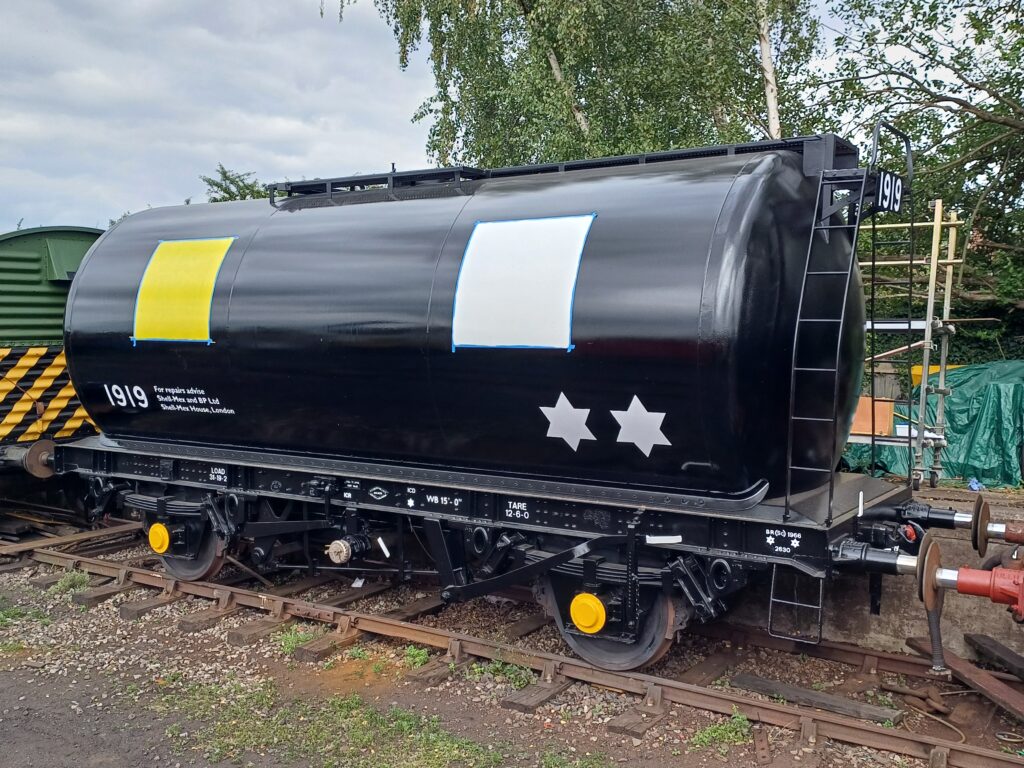
    Dave got the west side Shell logo on 1919 and touch up the green on the BP logo. This is among the last jobs on this tank, though we will be varnishing each of the logos on this tank. That leaves us to complete our paperwork before handing it over to Jamie for its acceptance FTR. I measured the flange height and thicknesses, which were showing a nearly brand new P5 profile. Dave applied a wheel 1 arrow to the tank to assist us in future inspections.

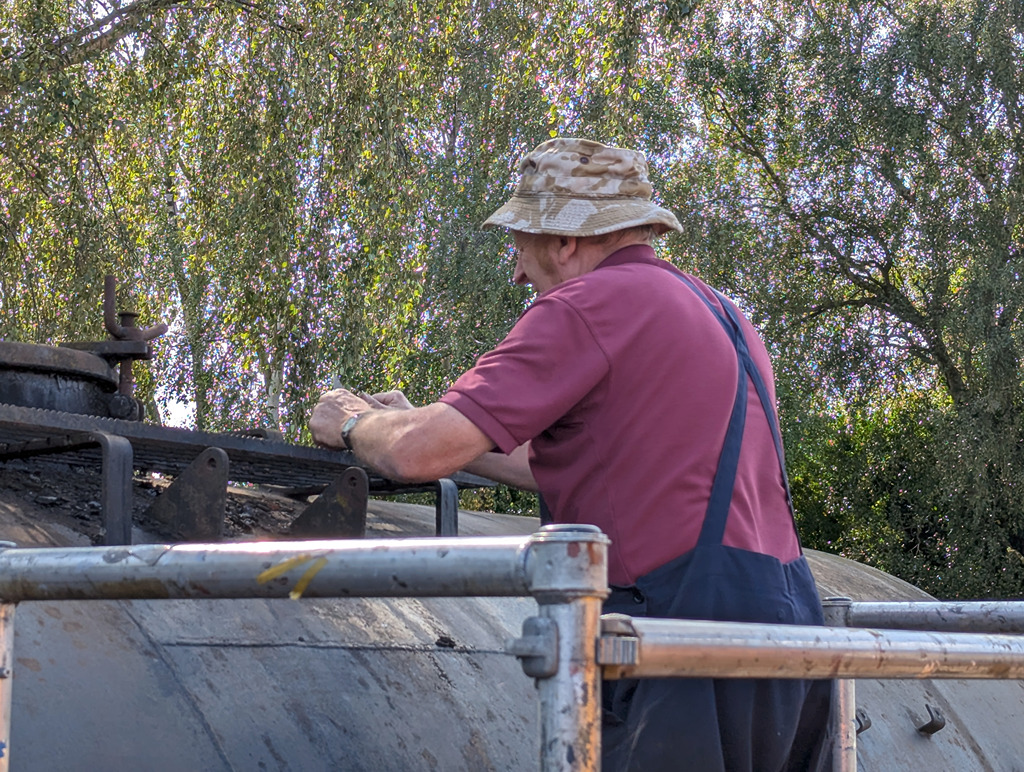
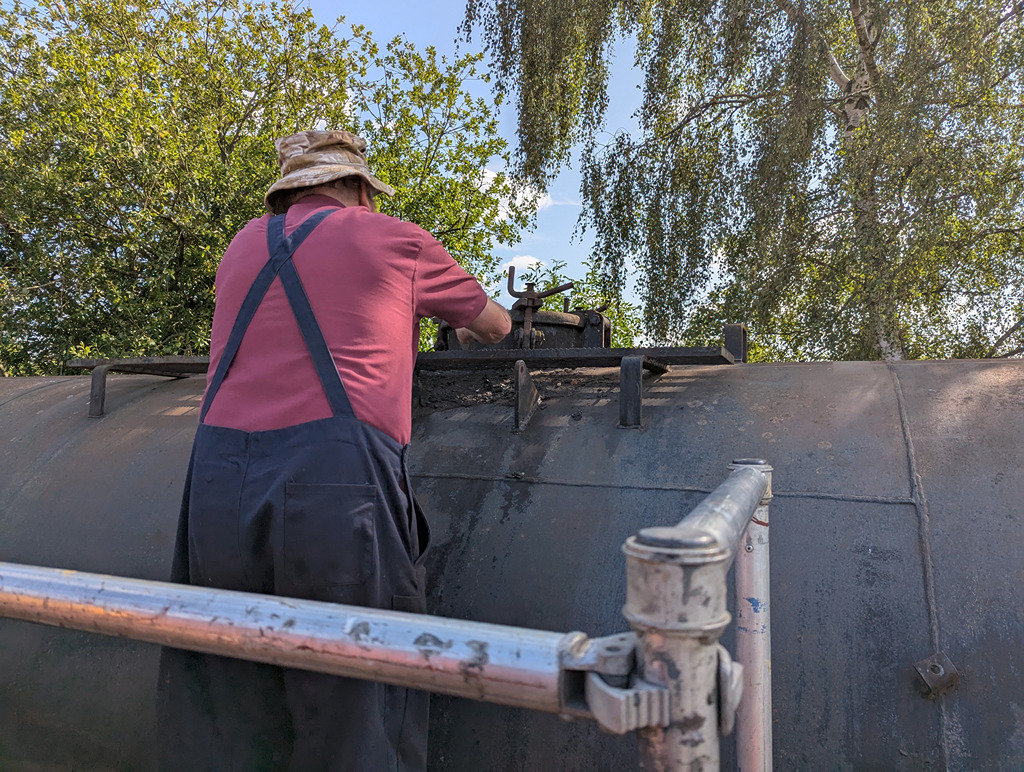
    3621 had its lid securing turnbuckles freed off and oiled courtesy of Charlie and Ernie, plus an extra pipe stub in the filler neck was removed and blanked and Nick got the scaffolding down to 3606 to scrape the the tar residue from around the filler neck and around the top of the barrel. This needs a bit more scraping and a bit of degreaser before we can paint it. I went round 3606 with the big ratchet to make sure that all the side support bolts were tight. I’ll be adding a blob of weld to each exterior bolt to ensure that they don’t come undone.

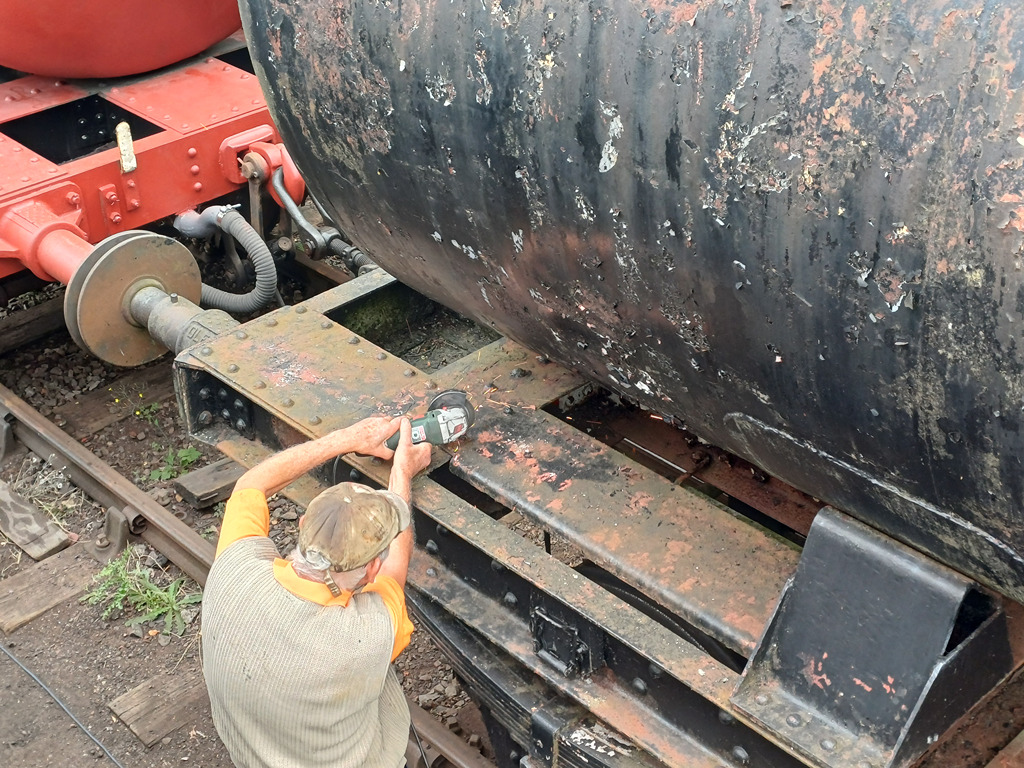
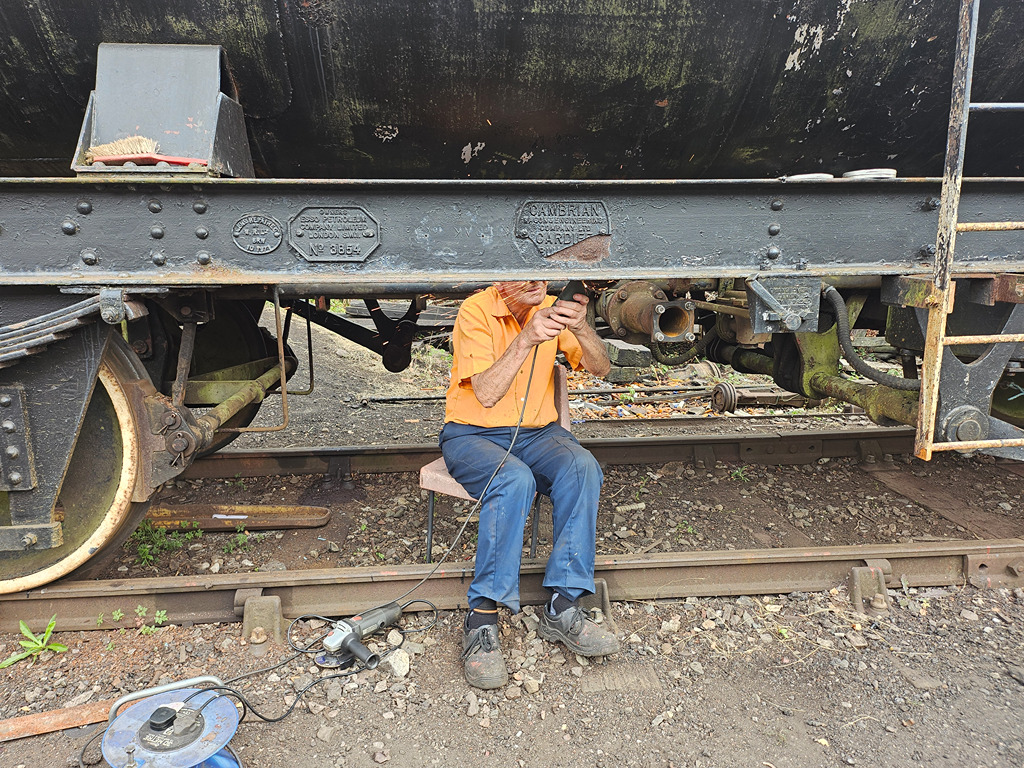
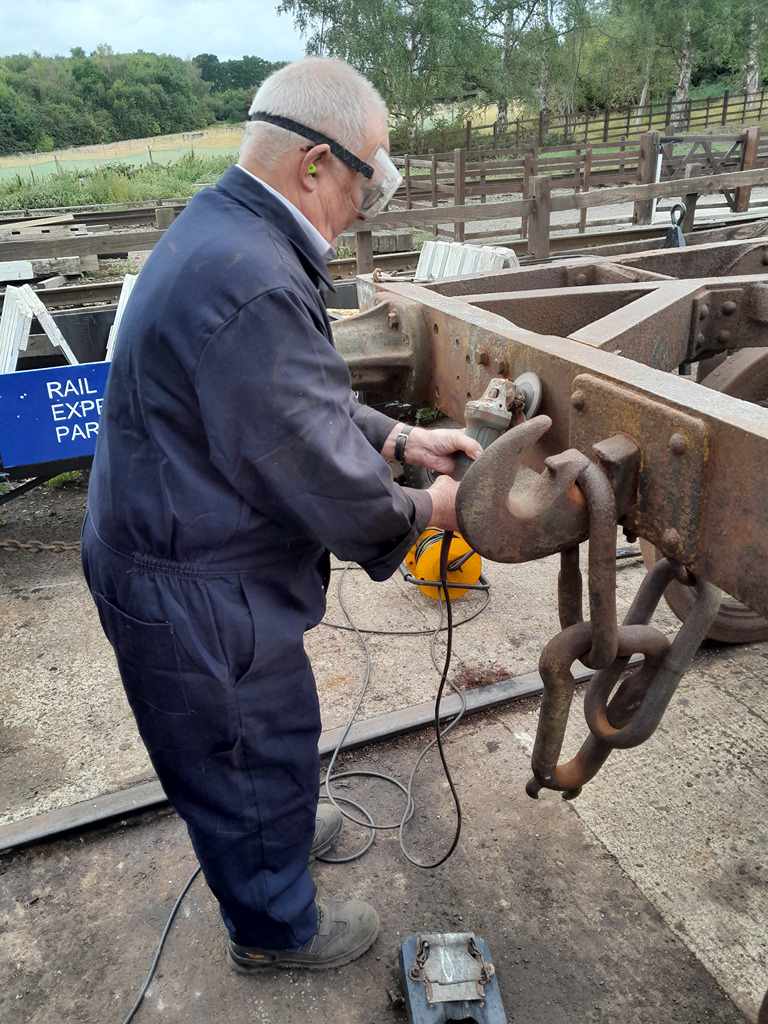
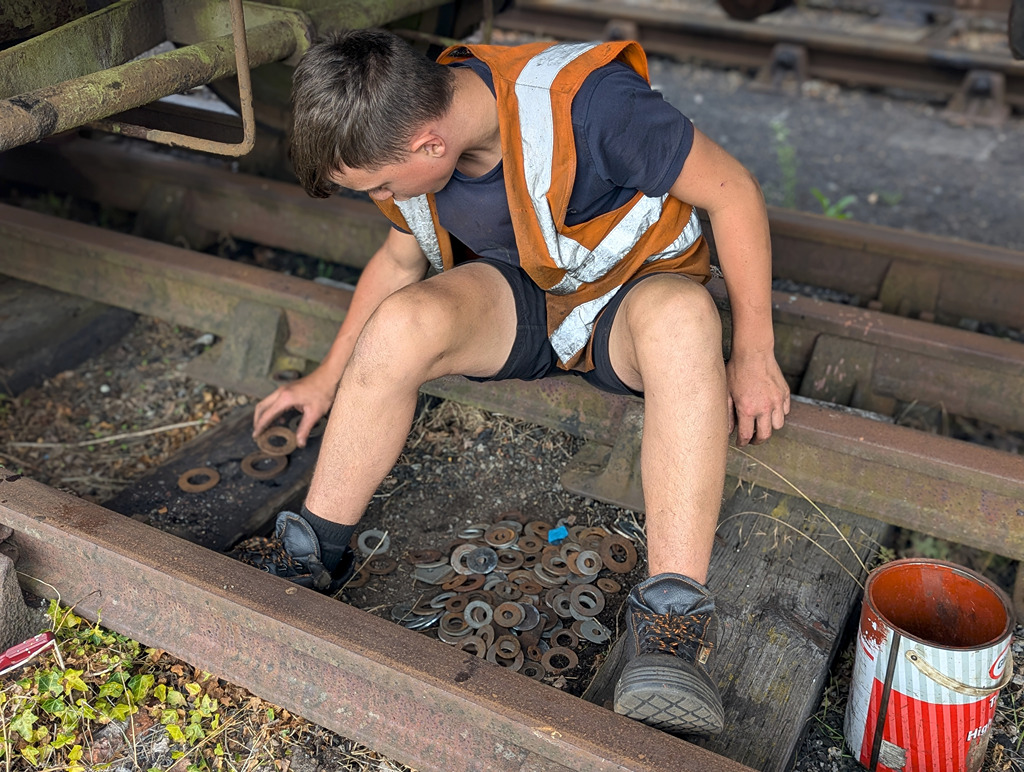
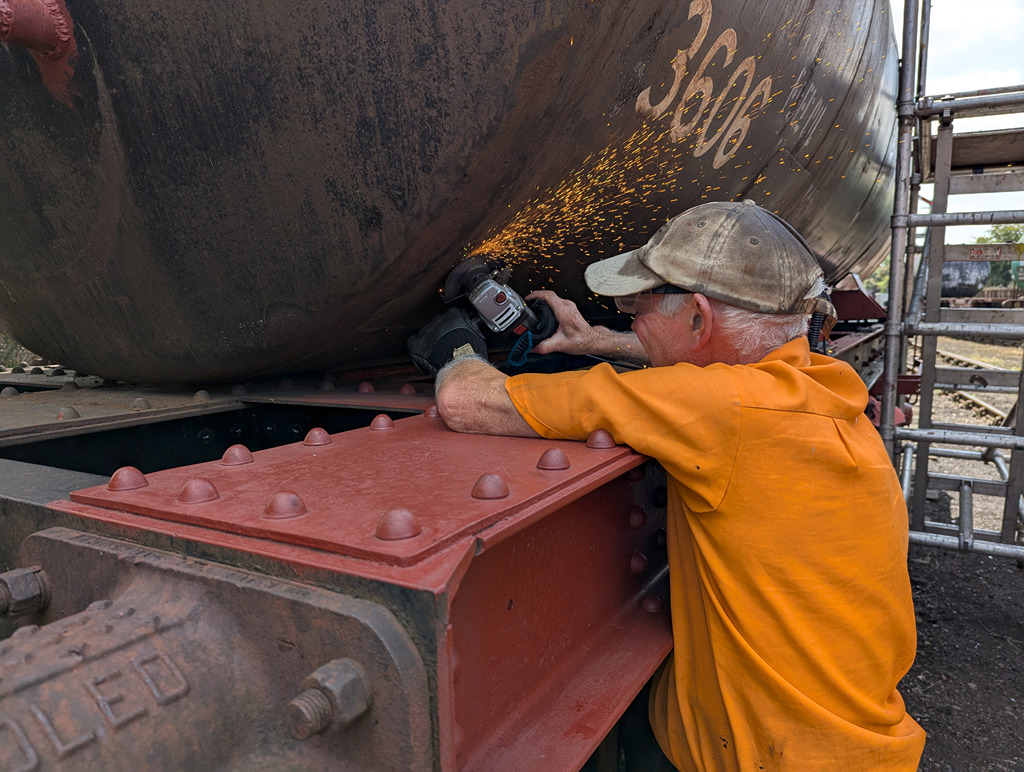
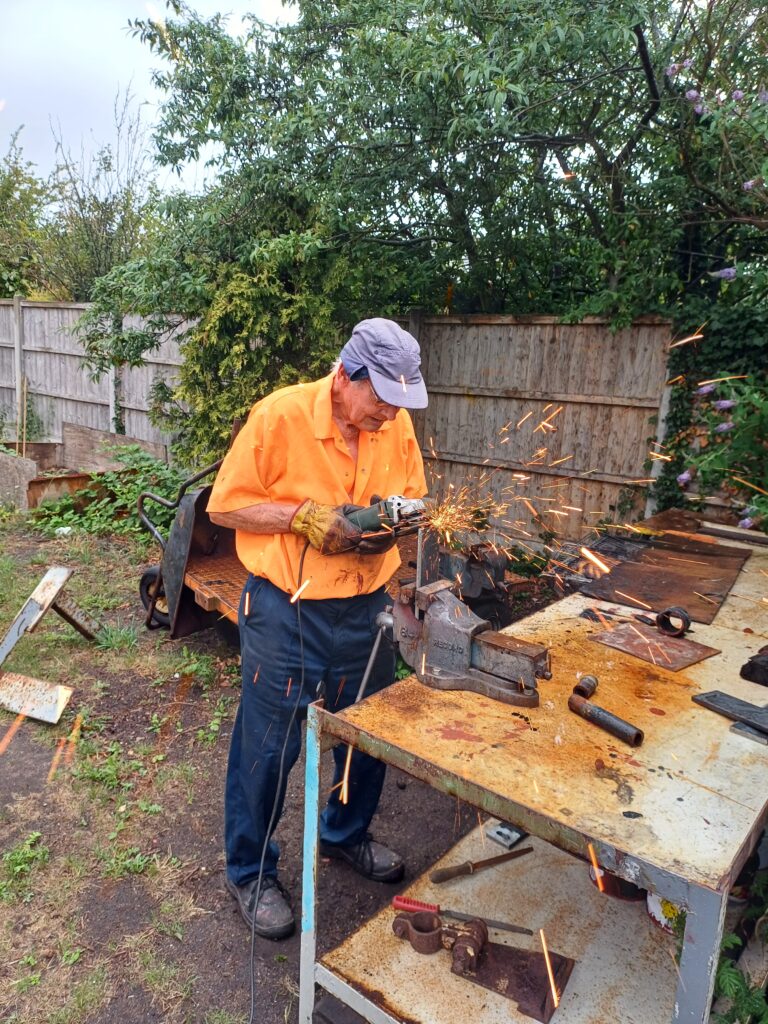
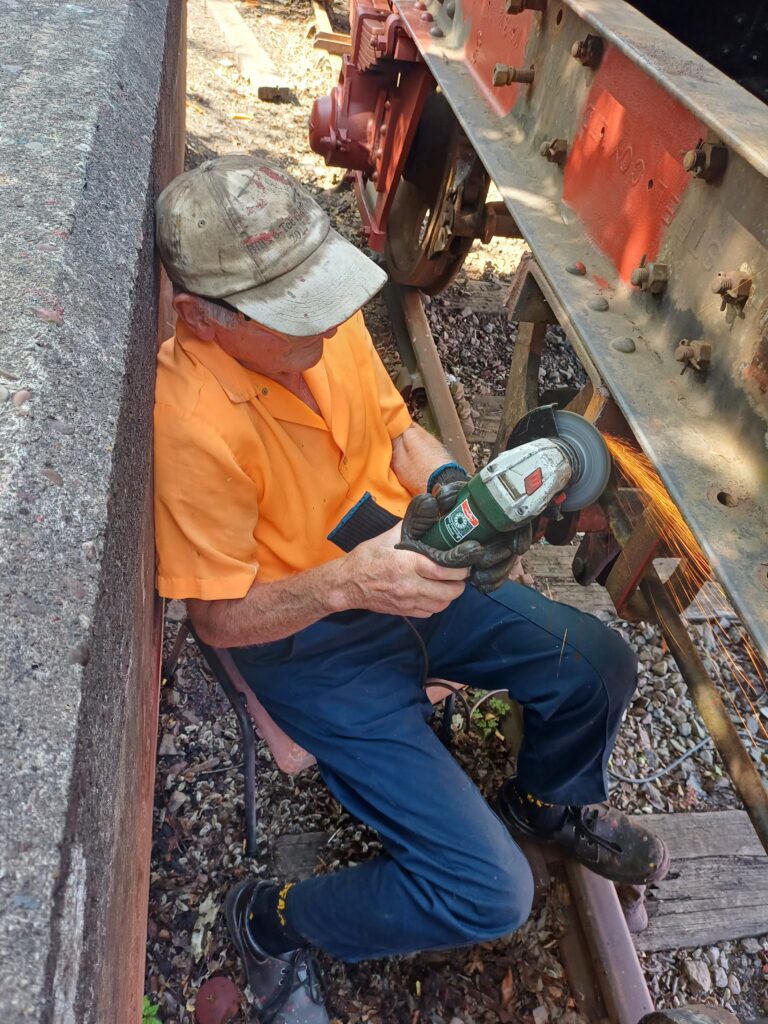
    Ernie used an angle grinder to clean up the support remnants on 3606. Nick, Charlie and James took the washer tin over to 3854 to put new washers in the brake system where they were missing.

    Lastly, Charlie and James gave the BEVs a clean and a charge before Railway at Work next weekend. Do come down to the railway next weekend to experience the sights, sounds and atmosphere of a by-gone era, showing how goods and passengers were moved around the network. We’ll be there helping to tell the story. Join us then!

  • 03/08/25 -Then there were Six !

    03/08/25 -Then there were Six !

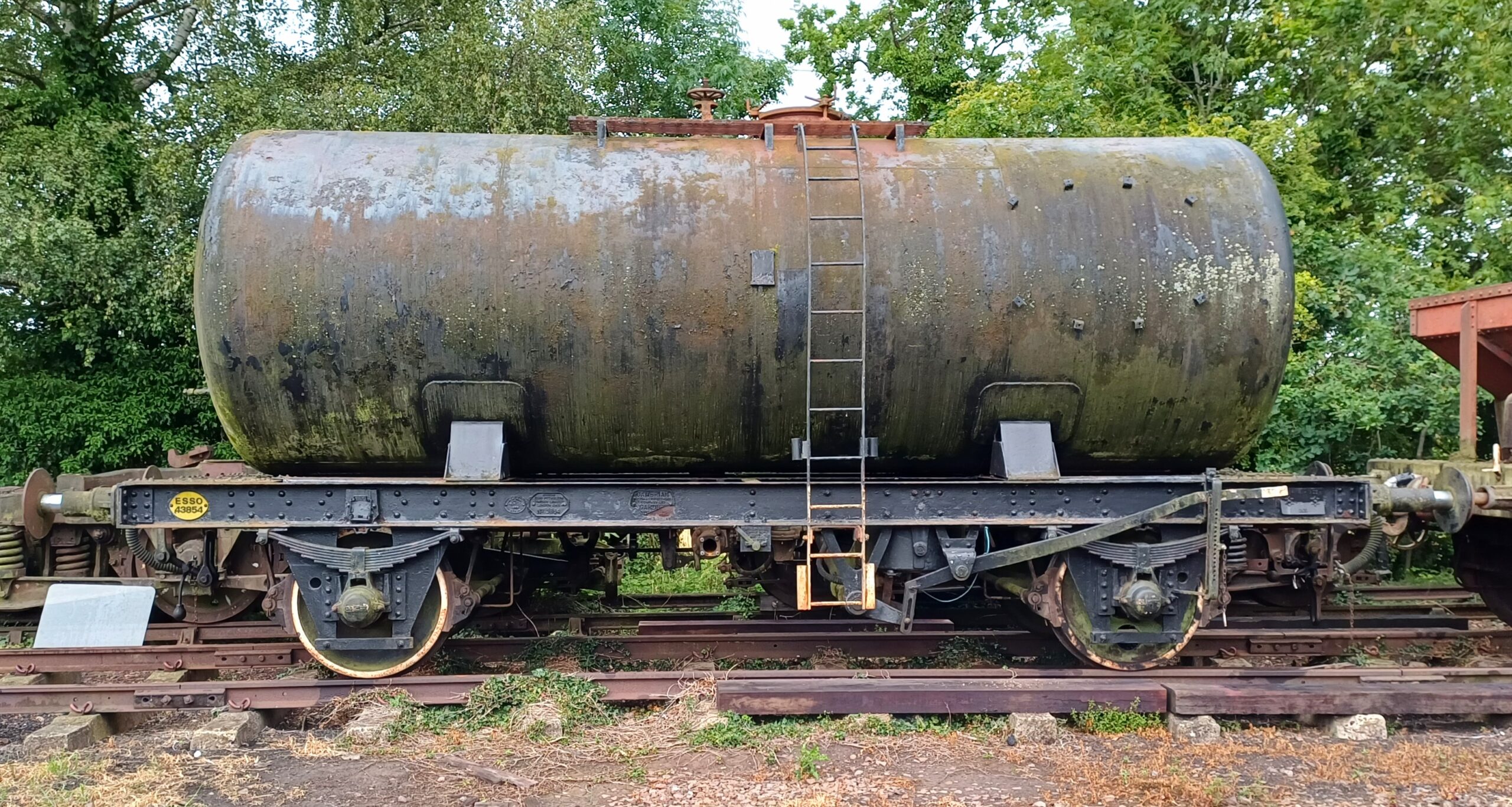
    Hello and welcome to another bumper update from the team at Quorn. We have a new arrival, 22T capacity Esso petroleum tank 3854, built by the Cambrian Wagon & Engineering Company in 1958. The tank arrived on the 22 July from Llangollen, whilst Grampus wagon DB985884 departed on the same day being transferred up to the GCR(N) at Ruddington on loan.

    Tank 3854 joins the others of this design we have in the fleet, with six of this type now at the GCR. The plan is to restore this along with 3606 and 3621 to match the three already completed 3436, 3711 and 3777.

    On the 24 July our friends at Lauda Fabrications made a start welding the tank barrel of 3606 onto the underframe, the north end seams on both sides were completed.

    Lauda Fabrications also brought along the the supports that they had fabricated up for us using the drawings that Ross had produced. Ernie set to work trial fitting these around the wagon to sort out which of the 4 supports fitted best in which location. The mounting holes were then marked up ready for Lauda to drill out.

    The 26th July was a busy day with a few tasks on the new tank 3854, including replacing a missing handbrake pin, fitting lamp irons, grinding off the odd tubes that had been welded to the side of the ladders, and giving the tank barrel and underframe a good pressure wash.

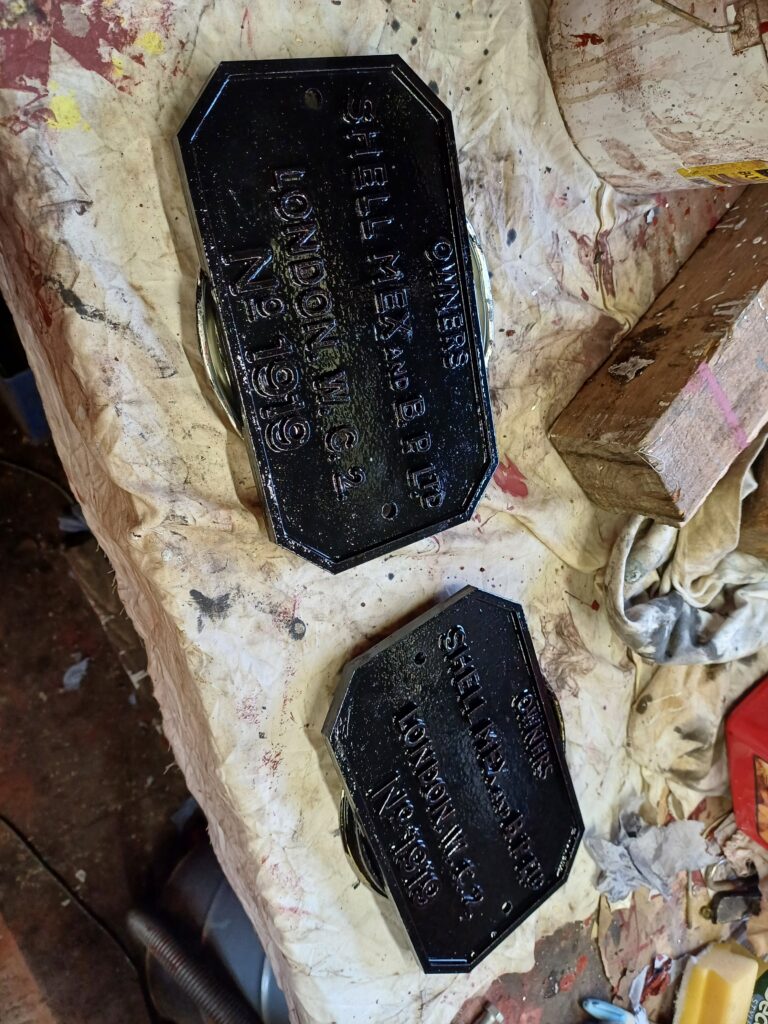
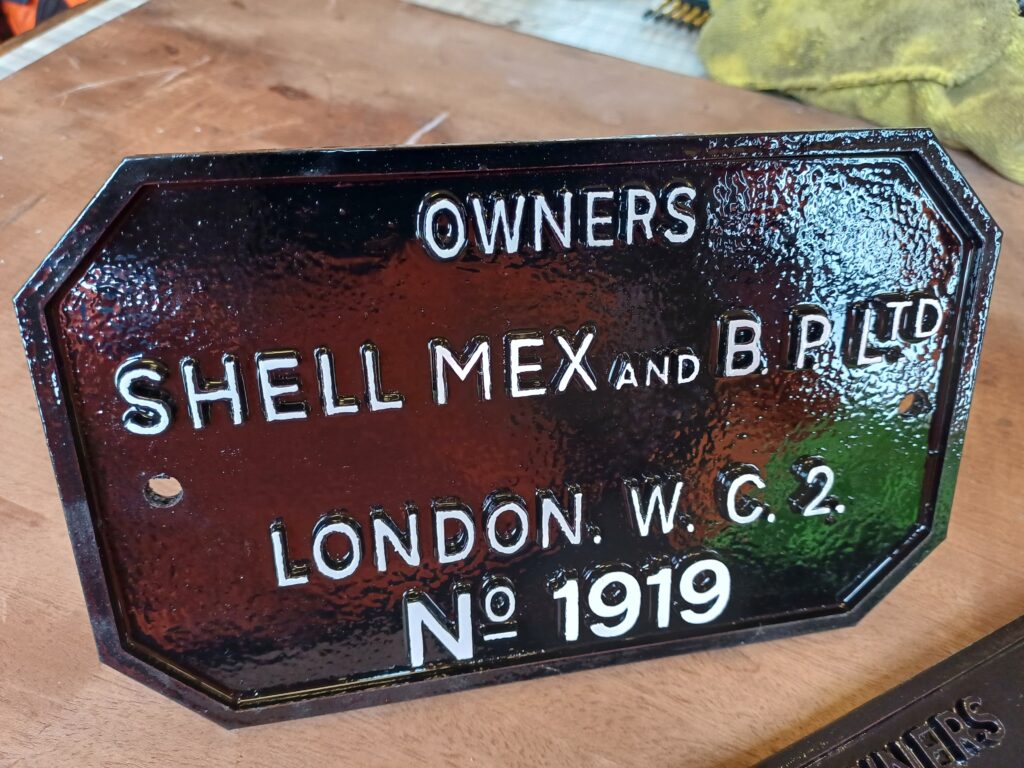
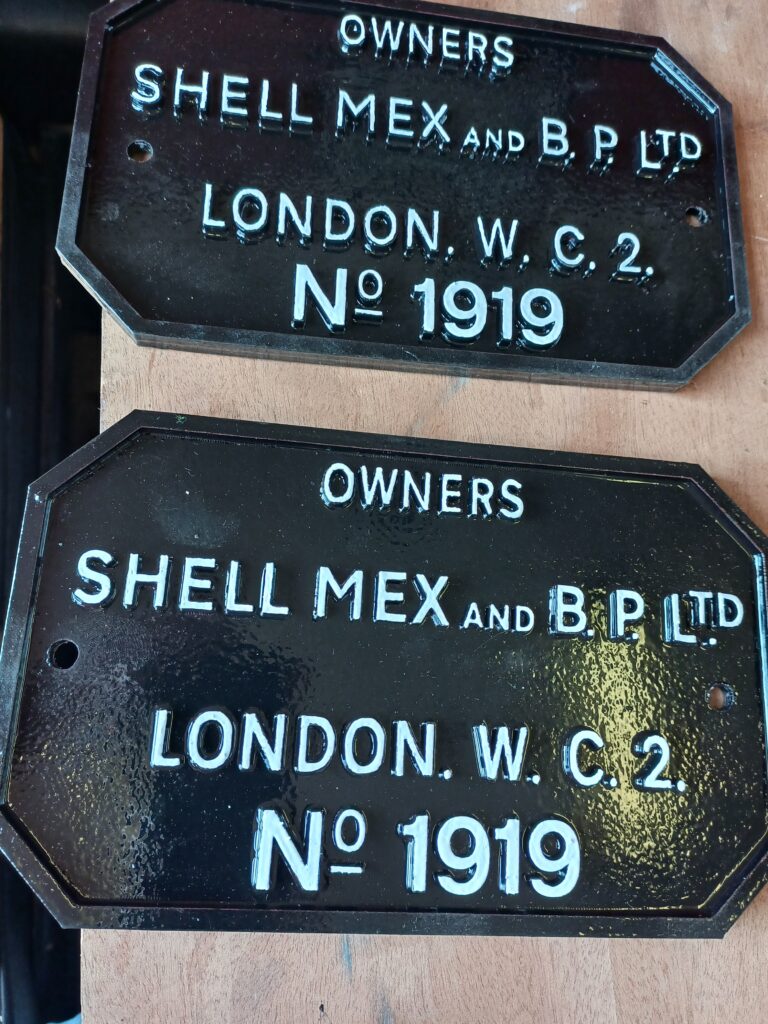
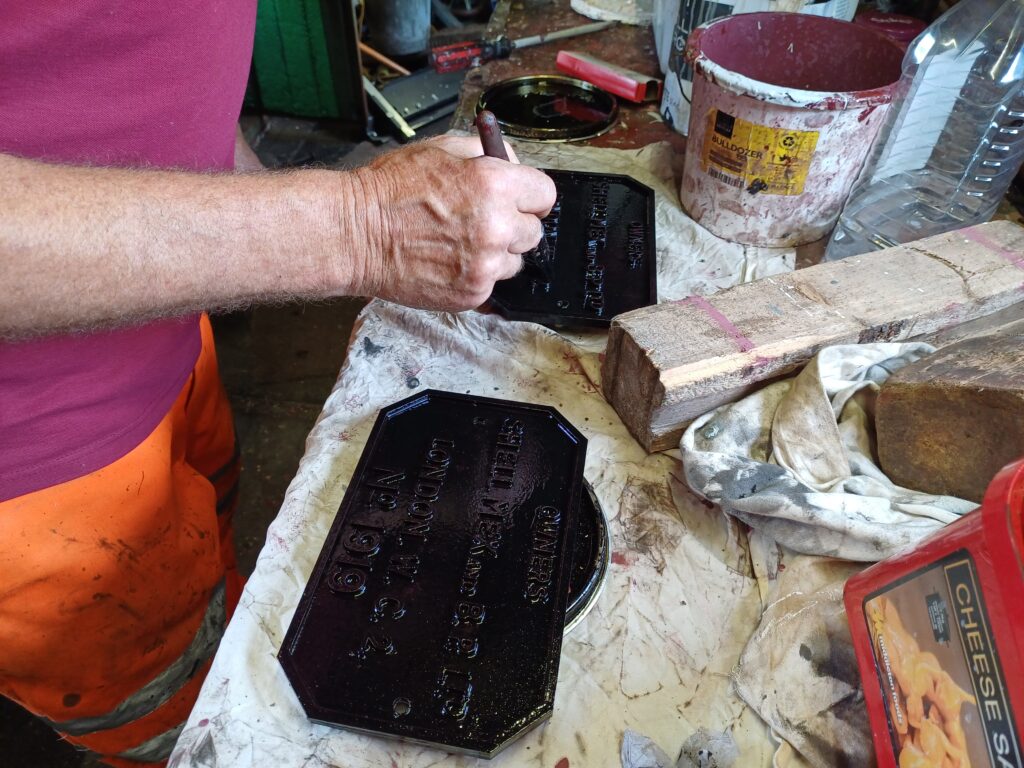
    The painted up 3d printed Owners plates were fitted to tank 1919.

    Work on tank 3621 continued with barrel, scraping, sanding and red oxide primer application where necessary on any areas of bare metal.

    Some progress was made with the tank side logos and commuted charge signage on tank 1919.

    The south end tank mounting was welded up on the 28th July and the drilled out supports returned from Lauda ready for painting and fitting. The step ladder mounting brackets that Ernie had made up were also welded into place.

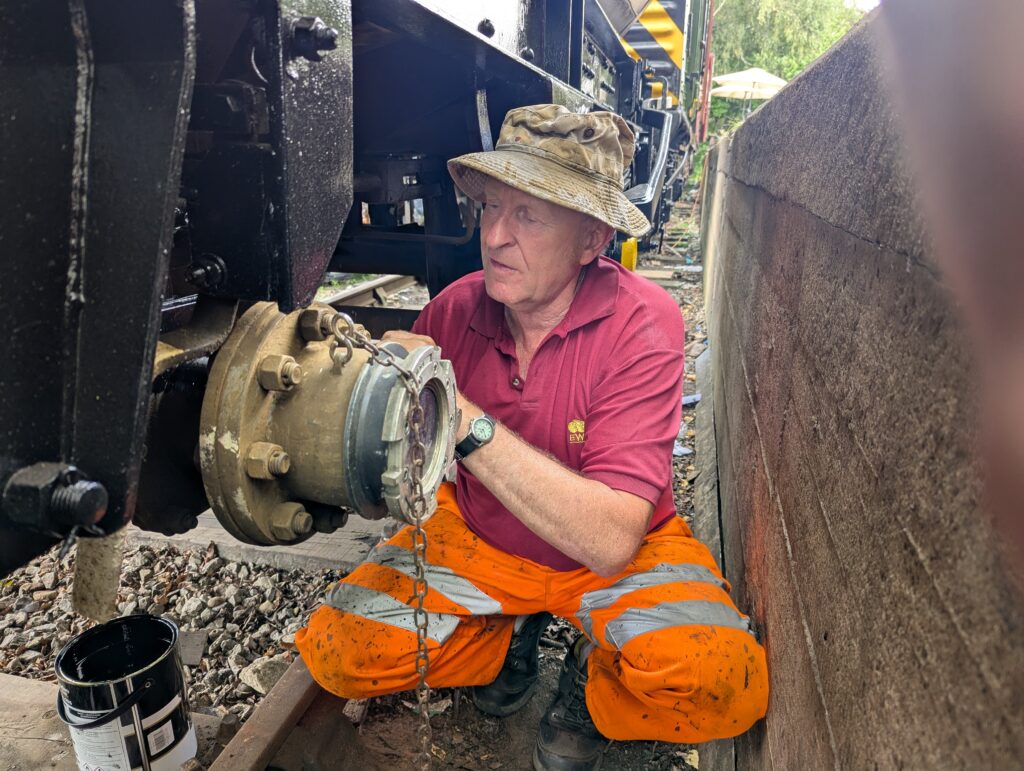
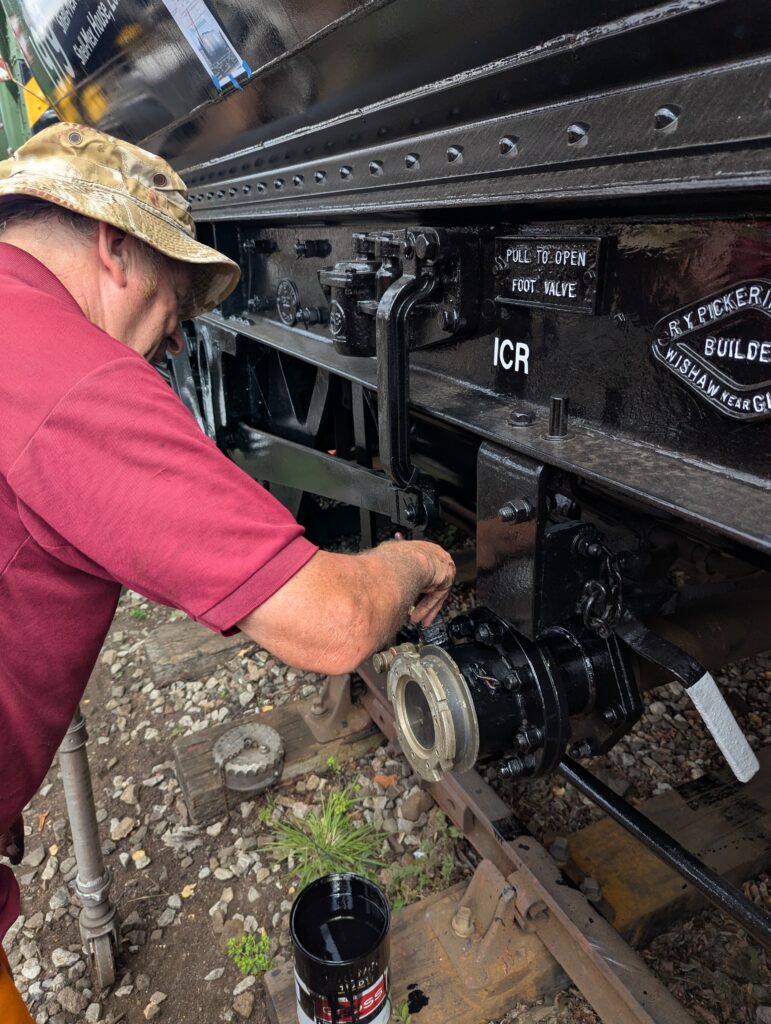
    Dan painted the air brake valves and pipe connectors on tank 1919; and also applied some gloss Bauxite to the planks on Brake Van B954268 that had been previously undercoated.

    In the week after his wedding Ross was busy back at work looking after the Hydroflex train at the Greatest Gathering weekend in Derby.

    The fabricated tank supports were primed and undercoated before having some black gloss applied to the undersides on the 2 August.

    The ladder mounting brackets and barrel welds on tank 3606 were cleaned up and red oxide primer applied, and the tank barrel support pads got some black gloss.

    Further work was done on the tank barrel logos on 1919 including the green on the BP logo on the east side getting a second coat, and the commuted charge signage completed.

    Suitable bolts were chosen and the tank supports on 3606 were trial fitted one by one, ensuring alignment and packing where necessary to give even contact in each case with the tank barrel.

    Once all were aligned then they were bolted down securely.

    Sunday 3rd August I continued with the west side BP logo on tank 1919.

    Some more sanding and cleaning up on tank 3621 was progressed.

    Ernie ground off two extra pipes that had been welded to tank 3606, then cut out two blanking plates that will be welded to cover the resultant holes.

    I marked out and applied the running number to the north end of tank 1919.

    An inspection of the van train that was stabled in the Down siding at Quorn revealed a damaged roof felt letting in water on the Southern Brake Van S56010. A new piece of felt was cut, sealant applied and stapled in position across the affected area of the roof. This should keep it water tight until a full roof covering replacement can be affected.

    That about wraps up over 2-weeks work for the team, I’ll leave you with pics of the four tank wagons, all progressed a little bit further.

    Cheers of now, Dave

  • 20/07/25 – Making the most of the wet weather

    20/07/25 – Making the most of the wet weather

    Hello everyone and welcome to another update from Quorn. We’re eager to get 1919 finished, but this weekend the wet weather has diverted us to other things.

    Dave popped in on Friday to get some more paint on 1919, concentrating on the yellow aspects, so the yellow Private Owner symbols and the BP on the east side of the barrel. He also got some red out and put a first coat on the air brake pipe cocks and pipe ends.

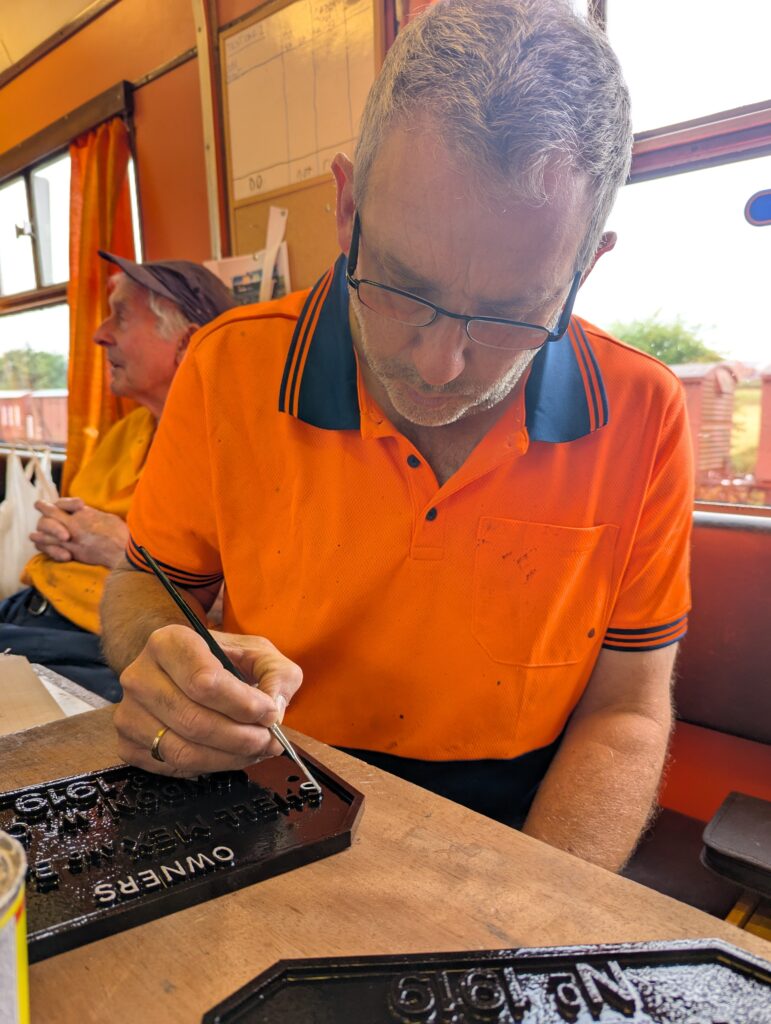
    With the weather being as it was, we opted to do inside jobs. Dave started off picking out the letter on the Shell-Mex Ltd plates he’s 3D printed for 1919.

    We’d recently picked up a few tyre profile gauges, which were well coat in surface rust and dirt, so Ernie very gently cleaned that up and applied a coat of oil to prevent them rusting again.

    Once there was a gap in the weather, Ernie got the grinder out to prepare the ladder brackets he’d made and slotted during the week. These have now been chamfered ready to weld to the chassis.

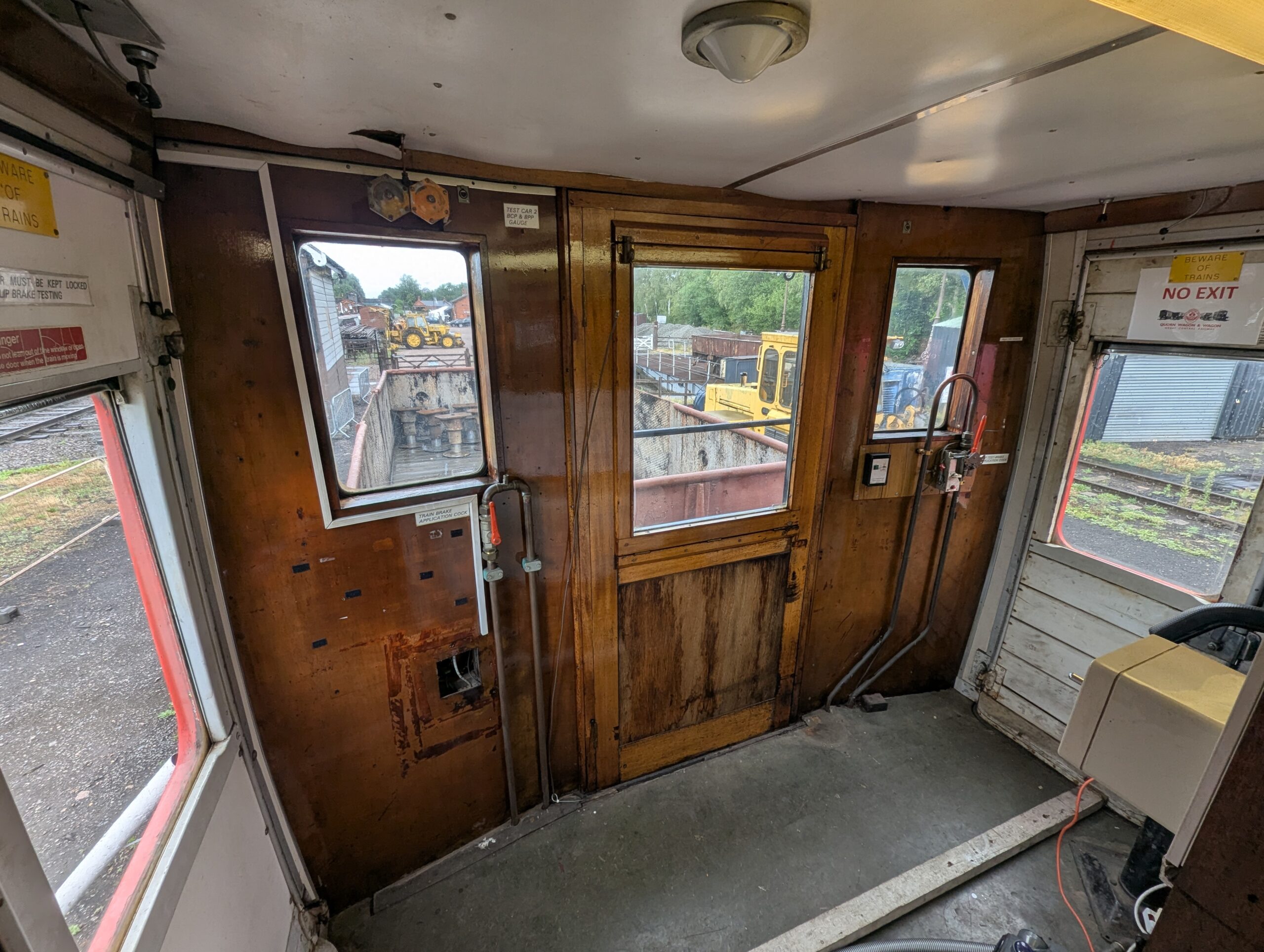
    Dave and I went into the Test Car and starting sorting though the test area, and removing some of the less period appropriate signage. This led to the scouring pads coming out and some of the more tired wood work got scraped and scuffed, and whatever fittings that could be removed where.

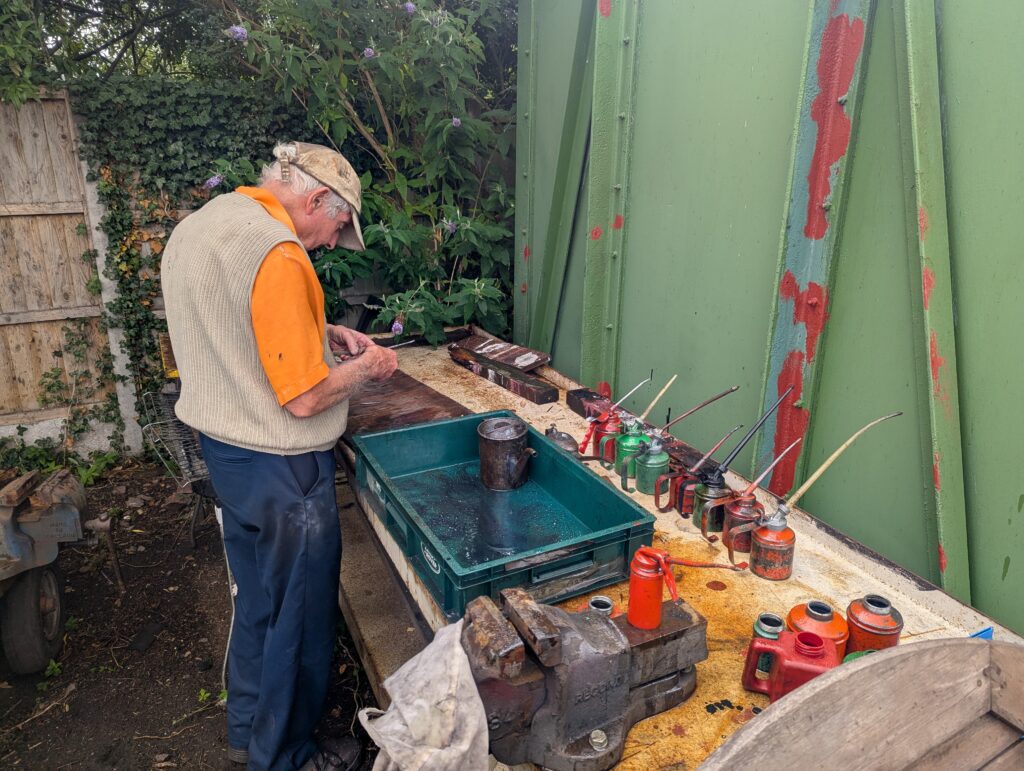
    Ernie cleaned a few more gauges, and also checked through the oil cans, throwing away those that don’t work and filling up those that do.

    I went into the Test Car and applied varnish to the slip end paneling, the desk drawers and to the toilet door and door frame which looked a whole lot better for a coat of varnish.

    Nick put up more shelving up in the fish van, which has made the fish van much tidier and will allow us to sort out some of the our collected stuff into more suitable locations.

    Using one of the new gauges, I measured the flange height and thicknesses on the two Esso tanks, plus two spares sat by the tool van.

    Thanks for reading this week’s update. Next week there won’t be an update, so join us again in two weeks to find out what we’ve been up to.

  • 13/07/2025 – Bumper Summer Update

    13/07/2025 – Bumper Summer Update

    Welcome to two-weeks worth of summer news from the team at Quorn. We have carried out axlebox maintenance on much of the fleet, supported the Rail200 event and continued to progress the tank wagon restorations.

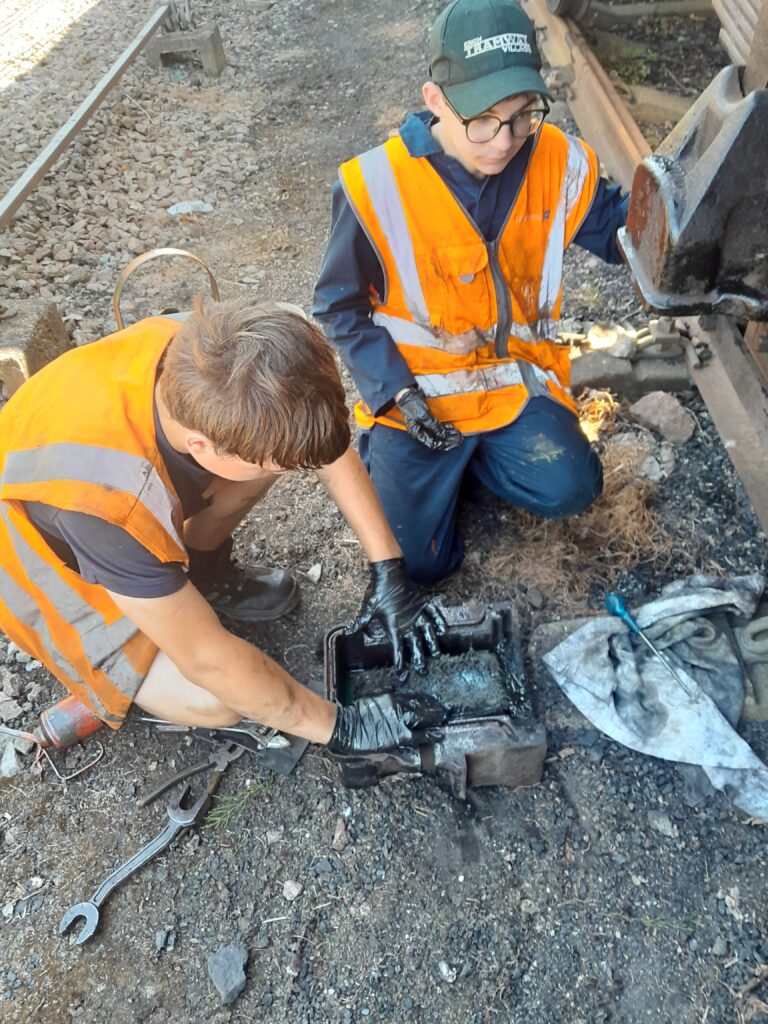
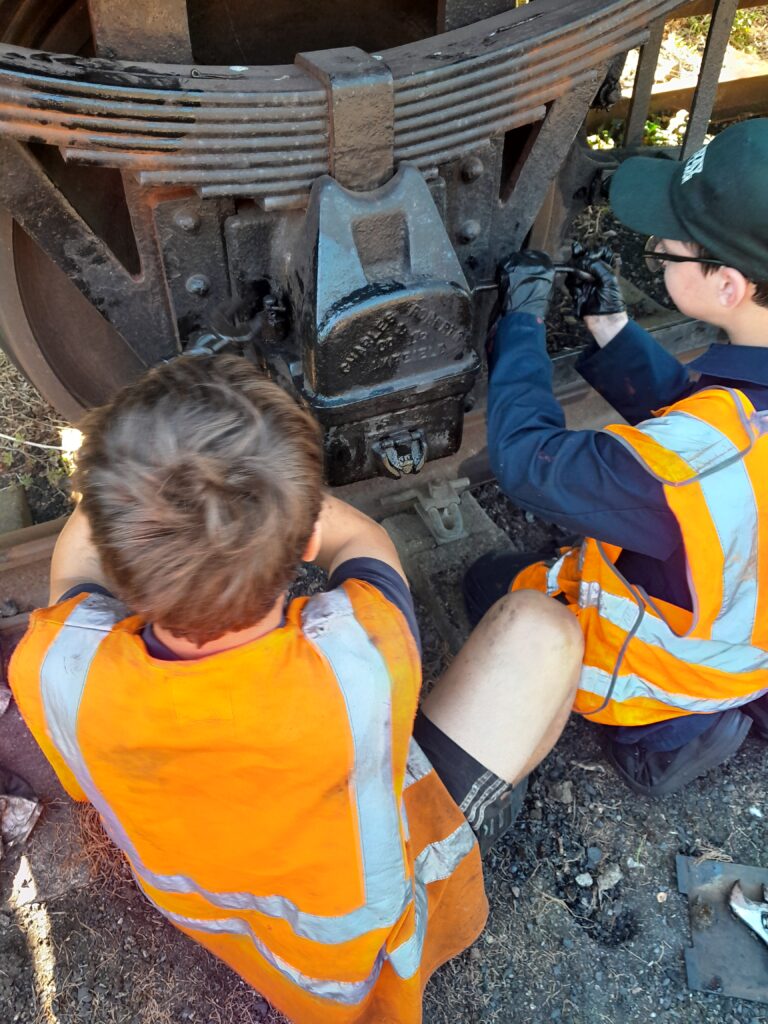
    All wagons in the mixed goods rake and some in the van train were given their annual axlebox maintenance which involves checking for water ingress and removing any signs of water or emulsified oil, journal inspection, pad condition check, cleaning the pads, re-oiling the pads and topping up the reservoir with fresh oil. The axleboxes are then re-assembled with new split pins as necessary.

    Tom, Oliver, Dan, Harry and Charlie all learning the process from Nick and doing much of the work on 35 wagons.

    One of the spare corrugated wagon end sections was removed from it’s storage in B721587 and transported to Rothley where it will be used to affect repairs on the badly corroded end of Shock High Wagon B724570.

    The brake gear on Brake Van B954268 was oiled up.

    The bubbling paintwork on a few planks on the west side of Brake Van B954268 was sanded by Mark, Tom, Oliver & Dan, and the affected planks treated with undercoat.

    I continued with the lettering on the west side of tank 1919.

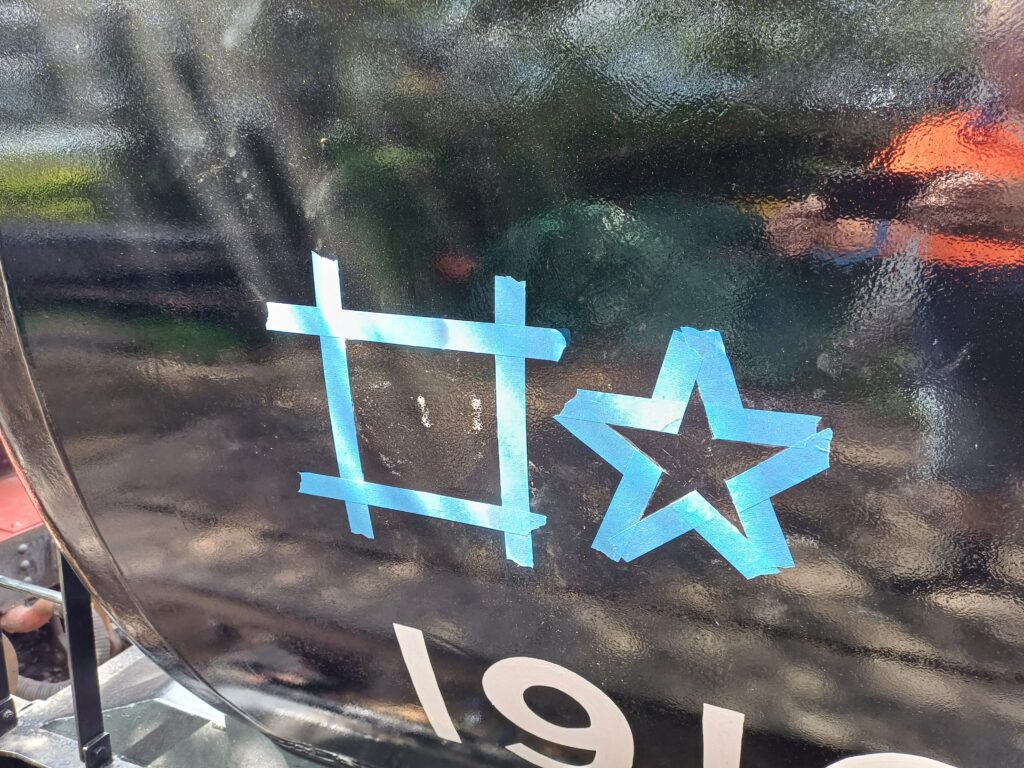
    Then applied the operational speed rating stars. The two stars for wagons, authorised to run at higher speeds, i.e. above 35 miles/h, but not allowed to run in passenger trains.

    Charlie helped fit the wagon information display boards to the mixed good rake in Quorn Yard for the Rail200 weekend.

    We also welcomed visitors including some good friends into the Test Car during the weekend.

    During the week, some more axleboxes in the van train were attended to by Nick, Tom and Oliver.

    Onto to Saturday where Nick Charlie and Daniel finished off the axle boxes on the van train while trying to stay in the shade

    Dave and I continued the push on with the sign writing on 1919, with Dave getting a good start on marking out in the cooler temperatures. I made a start with the fast traffic stars.

    Ernie carried on with preparing the ladder brackets on 3606, ready for them to be welded back together in preparation for two new ladders.

    Both Charlie and Ernie finished the day applying undercoat to the storage container on the dock.

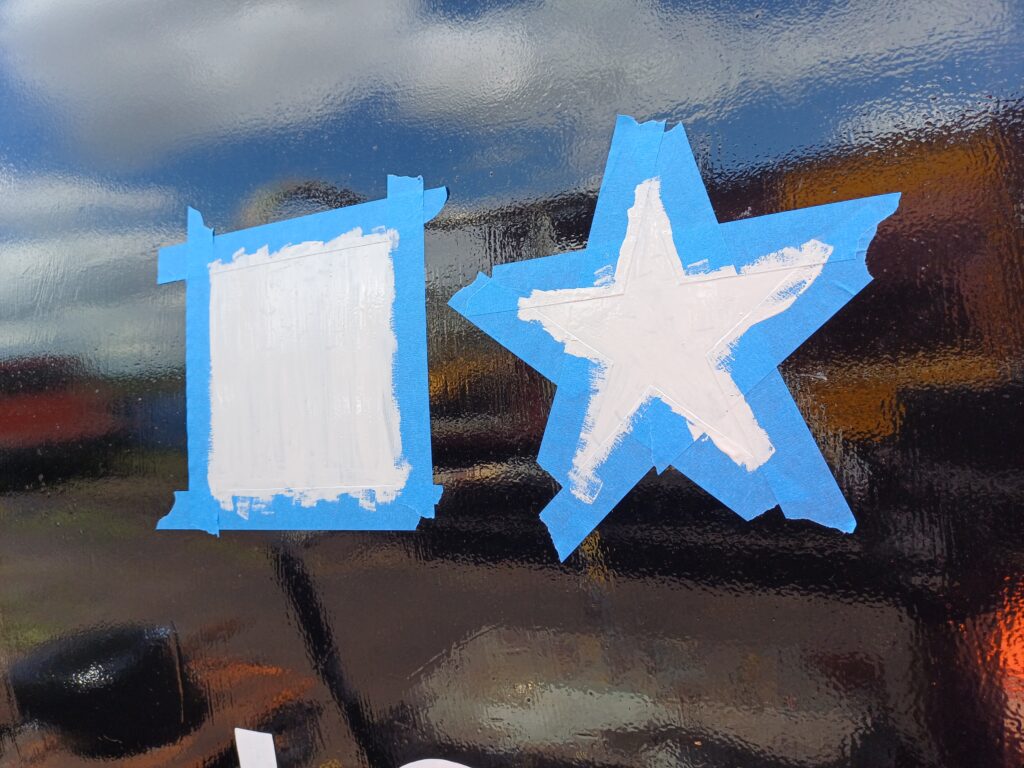
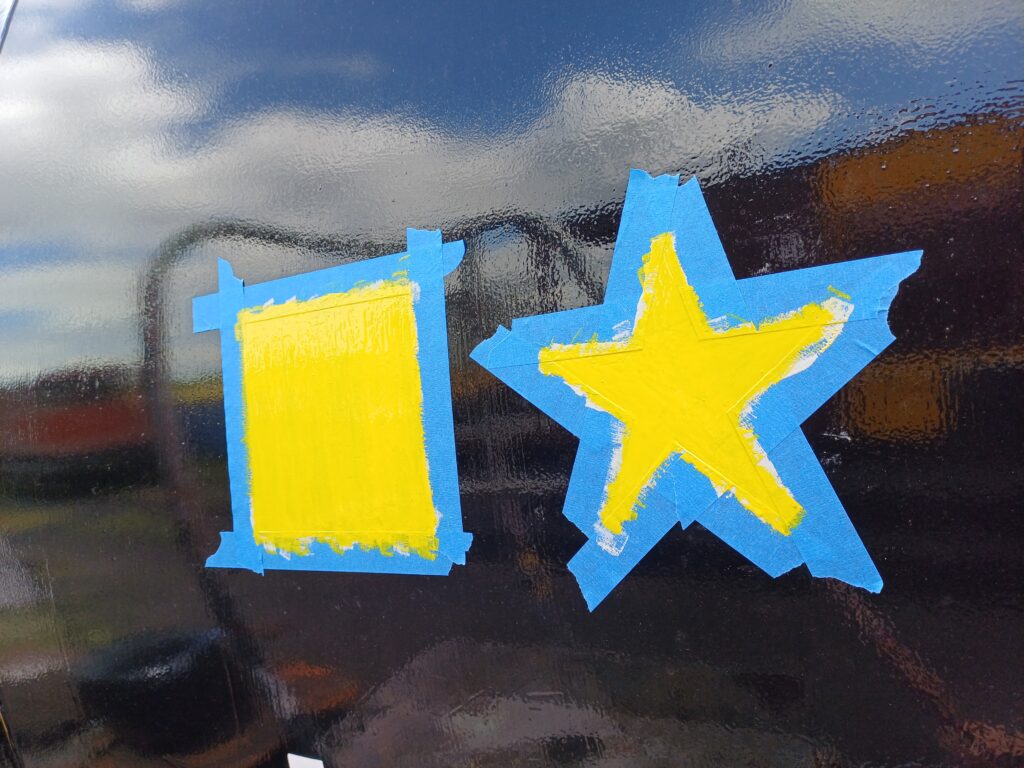
    Dave and I started off Sunday by marking out the logo squares on the barrel on the West side of the tank, starting by measuring heights and central positions, then getting the template onto the wagon to trace its outline before applying masking tape.

    This was followed by a quick scuff, readying the square for undercoating by Ernie.

    While Ernie did this, Dave and I finished off the signwriting on the East side, with Dave finishing of the ‘repairs’ panel, and me the solebar lettering.

    Ernie carried on with the white undercoat, undercoating the lamp brackets. Followed up with a dose of gloss black on the drawhooks, air pipe stowage brackets and steps.

    I made a start on one of the end numbers, choosing the nice easy flat plate!

    Dave painted all four logo squares in their respective colours; two white and two yellow. He also took the time to wipe off the chalk outline from the text with a damp cloth.

    Nick used the gloss black to paint the discharge pipework and the replica Shell-Mex owner’s plates, ready to go on the wagon. The plates were drilled prior to being painted with the black paint.

    Dave picked out the east side cast plates while Ernie floated around with the white gloss paint, painting the now dry lamp brackets, the foot valve levers and vacuum swan-necks.

    Nick repaired an axlebox pad where the spring had failed, utilising a spring found on a life expired pad. This will re-enter stock after a bit of a soak.

    That wraps up this update, thank you for reading. Next week will be more work on 1919, which is tantalisingly close to be completed, with one barrel number still to do plus the large Shell and BP logos. Join us then, in the hopefully cooler weather!

  • 29/06/2025 – Original Identity

    29/06/2025 – Original Identity

    Hello and welcome to this weeks update from Quorn as tank 1919 gets its original 1966 as-built identity back.

    The top coat of gloss had applied really well last week, therefore we were able to make a start with the lettering on 1919. Over the last few weeks the templates have been prepared and printed. These were carefully cut to size and assembled as necessary.

    Working on the west side of 1919. the positions of the templates for the tank barrel and solebar lettering were marked onto the wagon, then templates chalked and attached in place.

    The chalk was transferred to the wagon by tracing the lettering.

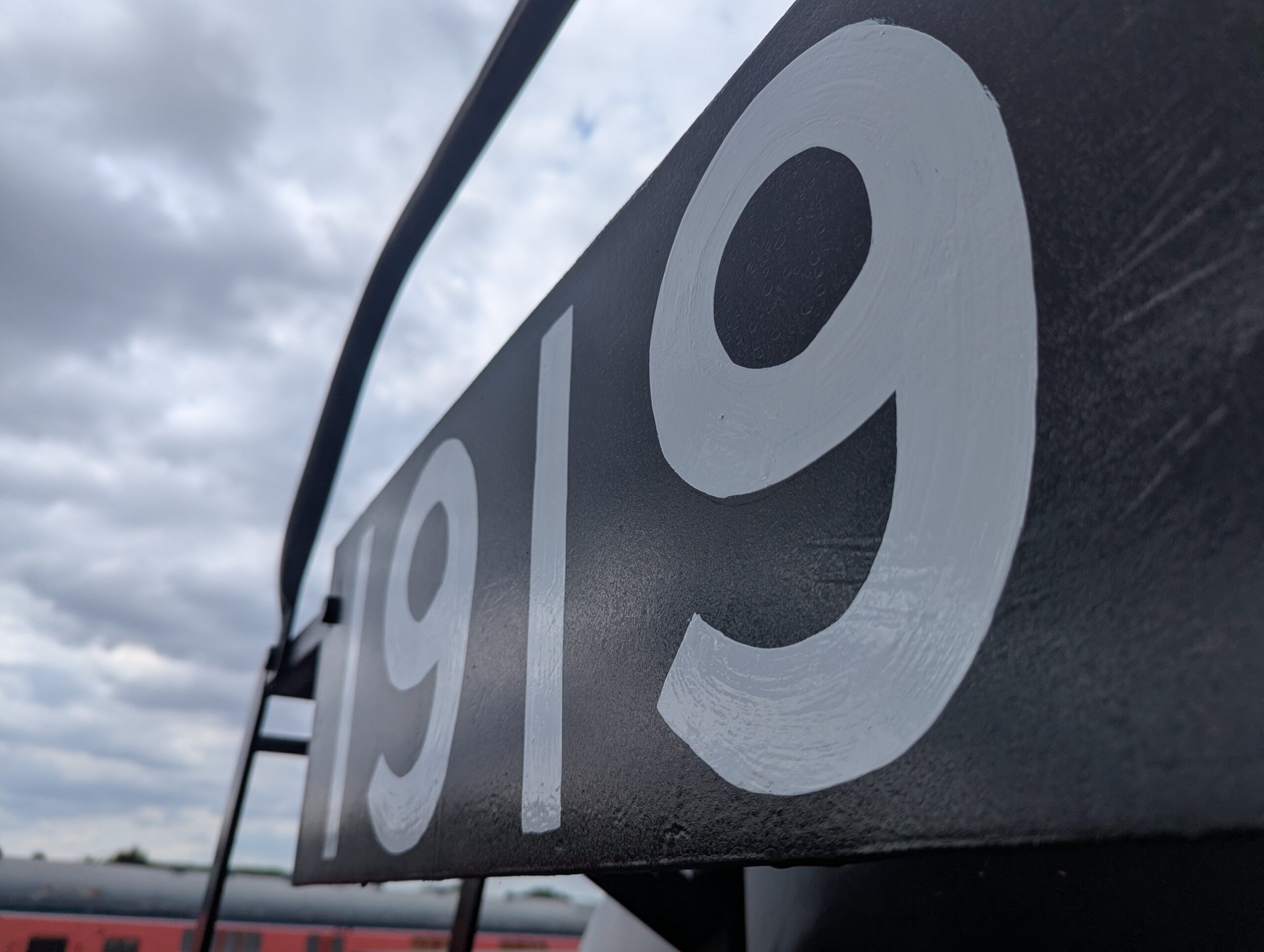
    I then set to work painting the lettering, starting with the running number; thereby giving the wagon back its original 1966 identity of 1919.

    Whilst I was busy with the signwriting, Ross and Nick removed one of the ladders from tank 3621 that will be used as a template to produce the two new ladders required for tank 3606.

    Ernie cleaned up the ladder mounting brackets on 3606 in readiness for fitting the new ladders.

    A stuck buffer on the Iron Ore Hopper wagon B439708 was attended to.

    Mark, Tom, Oliver , Charlie, Dan and Daniel oiled and tested the operating wheels and brakes on the Dogfish and Herring engineers wagons.

    After a short break out of the sunshine, they continued, oiling and testing the handbrakes on the mixed freight and van train.

    I continued with the tank side lettering, using our gazebo for a bit of shelter from the sun.

    Whilst Dan applied some white undercoat to the axlebox covers.

    The solebar lettering for Wheelbase, Load and Tare weights were next.

    On the east side of the wagon Dan, Ernie and myself marked out the positions for the two Shell/BP logos. The templates were positioned and the outlines chalked onto the wagon, then tape applied to the outline.

    The logo areas were keyed with a scotch bright pad then undercoat applied; light grey to the left hand box and white to the right one.

    The axlebox covers were given a coat of yellow by Ernie whilst I picked out the west side builders plate and foot valve instruction plate.

    Thanks for reading, join us again next week for the GCRs Rail200 event where we’ll have the Test Car open to visitors on the Saturday 5th July.

    All the best, Dave

  • 22/06/2025 – 2nd Coat

    22/06/2025 – 2nd Coat

    Welcome to this weeks update from the team at Quorn. We continue to progress work on the three tank wagons 1919, 3606 & 3621; and we help out RVP replacing the TPO equipment.

    Tom, Oliver and Nick helped the RVP team.

    It’s unusual to find spindle type buffers stuck compressed, however one was noted on Grampus 985884; this was dealt with swiftly by Nick.

    The tank barrel on 1919 was keyed with scotch-bright pads ready for its second coat of gloss black.

    Some of the underframe areas on tank 1919 that were not accessible with the spray gun, including the new vacuum pipe and the buffers were hand painted in gloss black.

    The outer section of the heating coil pipe on 3606 was adjusted slightly to get it level; then the whole pipe was wire brushed and treated to a coat of red-oxide primer.

    The new (but slightly over length) buffer mounting bolts and lamp bracket bolts on tank 3621 were trimmed to length and given a coat red oxide primer.

    The spray equipment was prepared, a couple of the spray gun air pipe joints re-sealed. The gloss black paint was mixed then measured out for thinning.

    Once the thinned paint was mixed thoroughly it was checked for the correct consistency then was filtered into the spray gun pot.

    We tackled the two ends of the tank 1919 first, followed by the east side.

    The west side was completed in the afternoon.

    Further scraping and red-oxide priming was carried out on tank 3621.

    Thanks for reading, the next steps for tank 1919 will be detailing, signwriting including the logo application; once we’ve finalised the templates.

    As for tank 3621 there is still much to scrape and prime on the underframe, then there’s the tank barrel to sand as well as the Esso logo plate brackets to weld into place.

    Join us again next week, all the best, Dave

  • 15/06/25 – Another Black(ish) Tank

    15/06/25 – Another Black(ish) Tank

    Hello everyone and welcome to this week’s update. This week, we’ve followed up the undercoat on 1919 with a gloss coat and continued the re-assembly of 3606.

    1919 first then, although windy, Saturday was a perfect day for painting with it being dry and warm out so came the spray kit. With eight litres of thinned down paint, I applied a solid first coat to the tank barrel and sole bar all round, with the west side underframe getting a look in too.

    Charlie cleaned up our spare direction switch for the Brush Pony trucks, and also cleaned up the top of the underframe on the Lowfit, making good work of the whole frame and applying some red oxide primer.

    With the paint drying on 1919, our attention turned to 3606. We’ve had a sample bend section supplied to check which was close, but required some alteration to fit, which was carried out between Nick, Ernie and I. Some bends were altered and a section of material let in to extend the front section. this can now go back to the supplier so that they can make the full foot wide support pieces for this tank.

    The heating coil pipe on 3606 was also completed, with Nick and Ernie having to recover one of the cutting rings from the compression fitting being used to complete the work. The bent sections where fitted together, then I welded them to the bosses on the tank, as would have originally been done.

    That wraps up this week; next week maybe another coat on the 1919, or it could be something else. Lets see what the week and the weather hold for us. Thank for reading

  • 01/06/2025 – Grey Tank

    01/06/2025 – Grey Tank

    As we move into June, we get the spraying equipment out to give tank 1919 its undercoat.

    On Saturday the final parts of the underframe were scraped and needle gunned.

    A few areas had some red-oxide primer applied, which dried quickly in the sunshine.

    During the week a replacement for a missing 4″ tank top cap was created by 3d printing, this was sealed to the adaptor and will be fitted to the tank in due course.

    Whilst the 1940s weekend was getting into full swing in the yard, we got the BBQ equipment out to celebrate Ross’s birthday, as a much enjoyed change to a birthday cake. The salvaged and repaired picnic tables being put to good use.
    HAPPY BIRTHDAY Ross ! Thanks for the BBQ 🙂

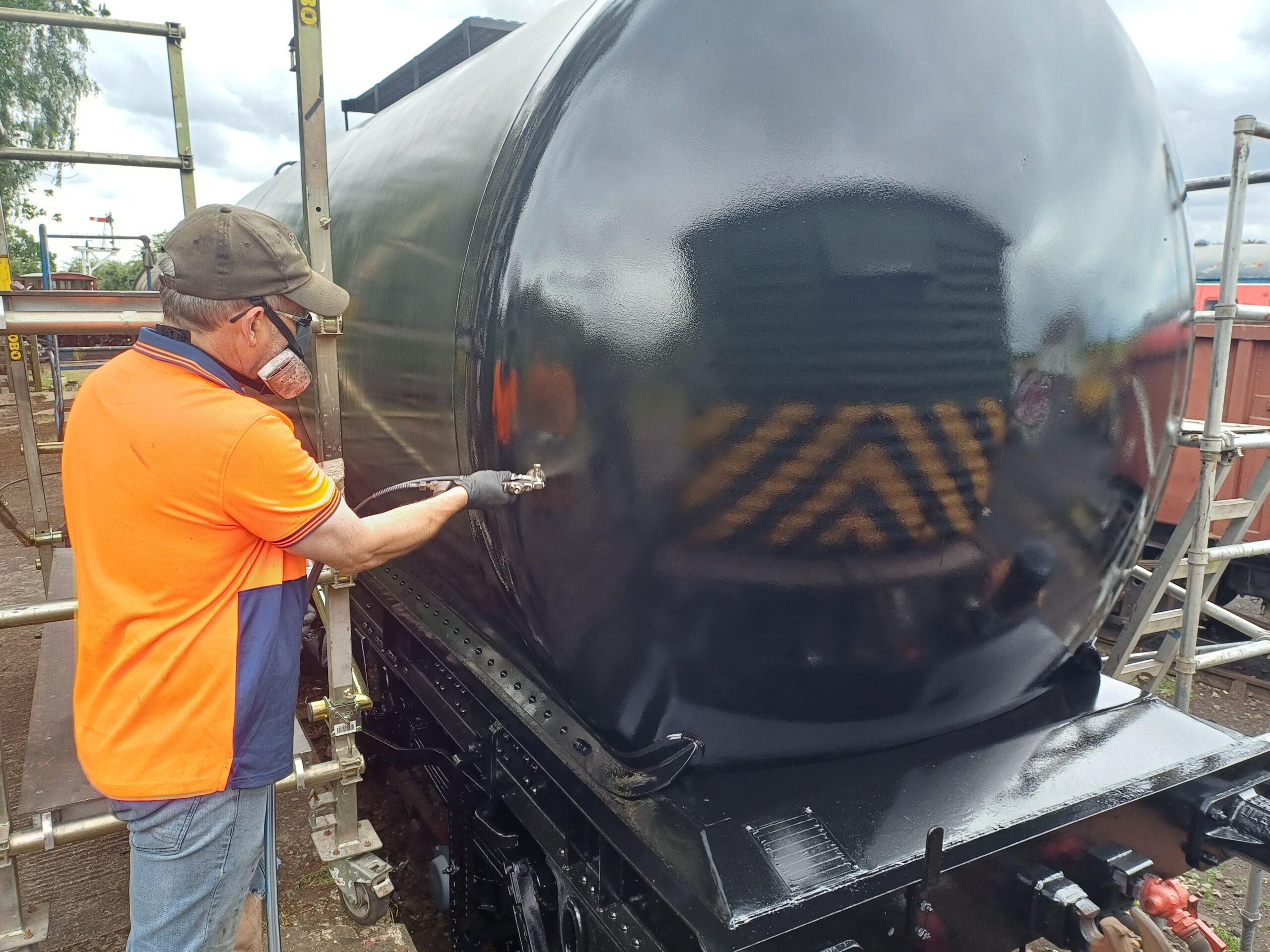
    After lunch Edward the compressor was topped up with diesel and we got prepared to start applying the undercoat. The spray gun was set-up, the paint was mixed and thinned; once we had the right consistency this was poured through a filter into the paint sprayer can.

    Over the next few hours Ross and myself sprayed the tank barrel, with a little help from Dan and Harry who also tried their hand with the spray gun.

    Once the barrel was covered, we continued with the west side underframe.

    On Sunday the last few areas of the east side suspension were given a coat of red-oxide, which thanks to the sunshine dried quite quickly.

    The headstocks, buffers and east side solebar were hand brushed with undercoat. These areas were not easy to get to with the spray gun due to the wagon being in the dock. The ladders were also undercoated.

    Another lorry curtain side sheet obtained from a lorry breakers was prepared ready to be used for van roof coverings. After cleaning and removal of the shackles and straps the sheet was measured up; luckily it’s just big enough to be able to get two 12T van roof coverings out of. Once Charlie had cut the sheets they were folded and stored.

    My attention turned to making a jig that will help us with positioning of the Esso logo plates on tank 3621. Unfortunately the Esso plate brackets were removed at some point in the tanks life. The jig will allow us to position the brackets correctly for welding into place. Having tank 3606 alongside with brackets still in-tact made creating the jig much easier. Two ply sheets were clamped to the two upper and lower sets of brackets on 3606.

    The ply were cut to shape to allow access to the brackets for welding. Holes were then drilled and the ply was bolted to the brackets.

    Timber was then used to create a frame down to the solebar for positioning vertically, and a separate timber up against the handbrake rack to position longitudinally. Frame parts were then made to join the upper and lower ply sections together. Once I was happy with the fit, all parts were drilled and bolted together.

    The finished jig was then un-bolted from 3606s brackets.

    Once we have made the new Esso plate brackets for 3621 these will then be bolted to the back of the jig, and the frame positioned onto 3621 so the brackets can be welded into the correct place.

    So a very productive (and enjoyable) weekend for the team, join us again next week, all the best, Dave