Tag: 3606

  • 16/03/25 – The Big Reveal…

    16/03/25 – The Big Reveal…

    Hello every one and welcome to another update from Quorn. This week we are finally able to reveal what we’ve been teasing for a little while, what is actually happening to CEGB 48521. The tank train also had the wash and brush up finished, and a work continued generally on the tanks we have in at the moment. Onto the reveal then…

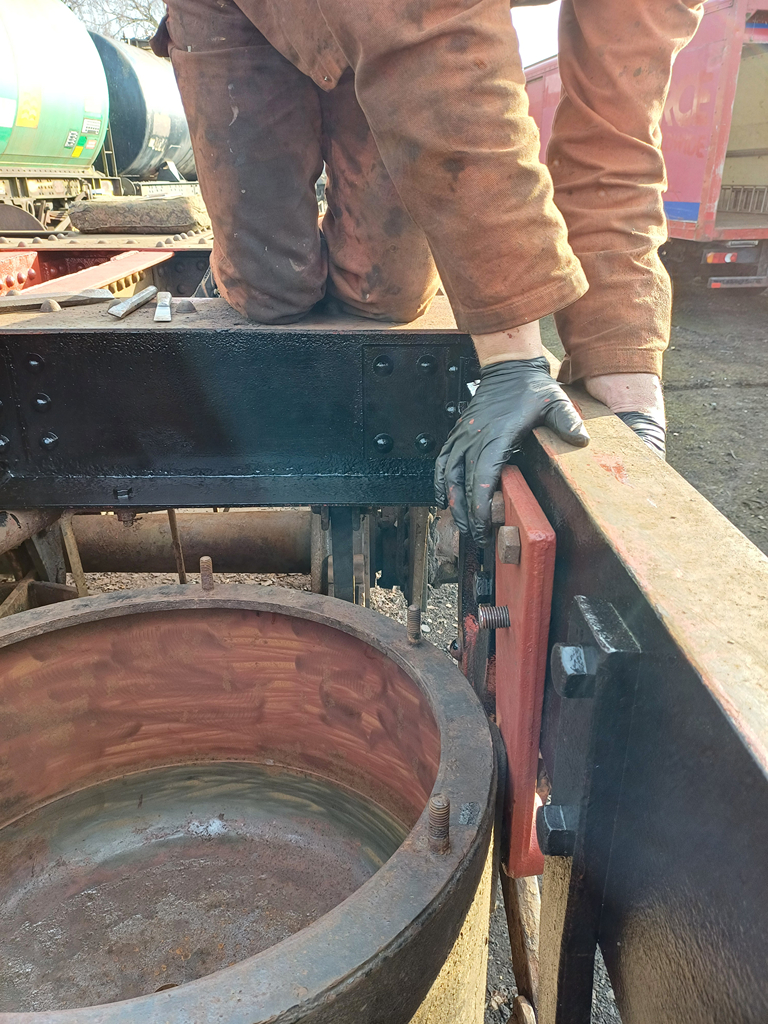
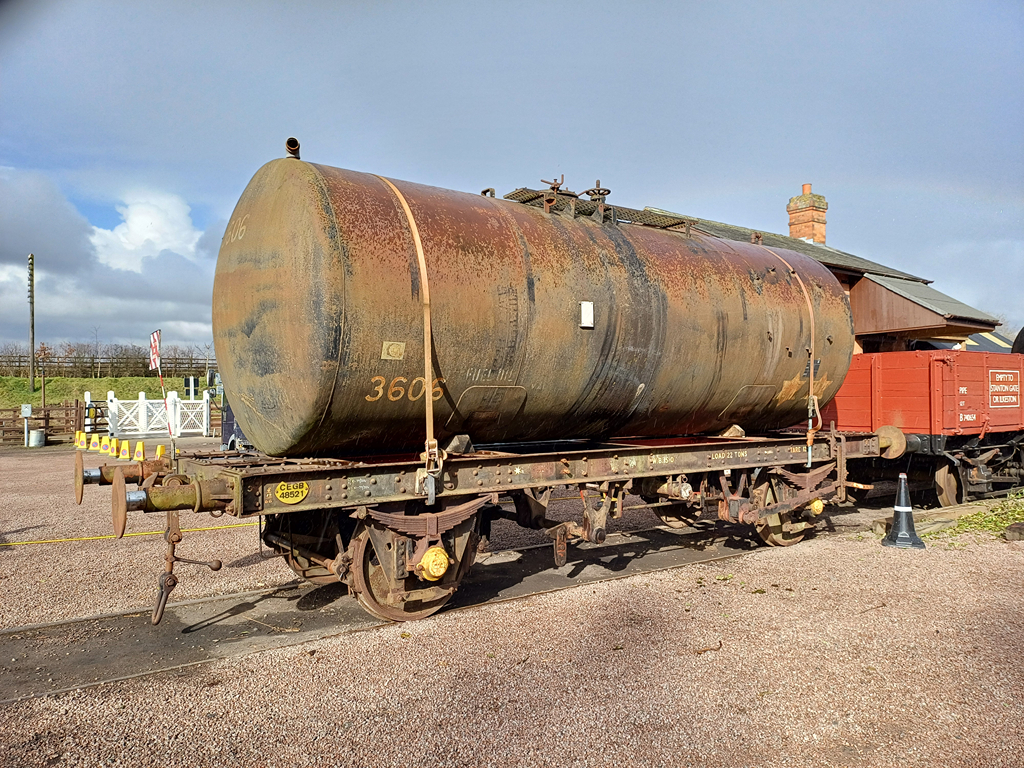
    With thanks to our friends at the National Wagon Preservation Group, we were tipped off about a frame less tank barrel at a transport yard near Retford. The barrel arrived on Monday 9th March, and was dropped into place on the CEGB 48521 that’s just arrived from Foxfield. After a bit of careful nudging, the outlet flange was able to be bolted up to the discharge pipe of the chassis, locating the tank in the correct place. Despite being one barrel from Hurst Nelson and the chassis from Charles Roberts, the two fitted together well and await some parts to be made, and the barrel to be welded to the chassis. One of the pictures is courtesy of Jamie Swanson who kindly dropped in to assist.

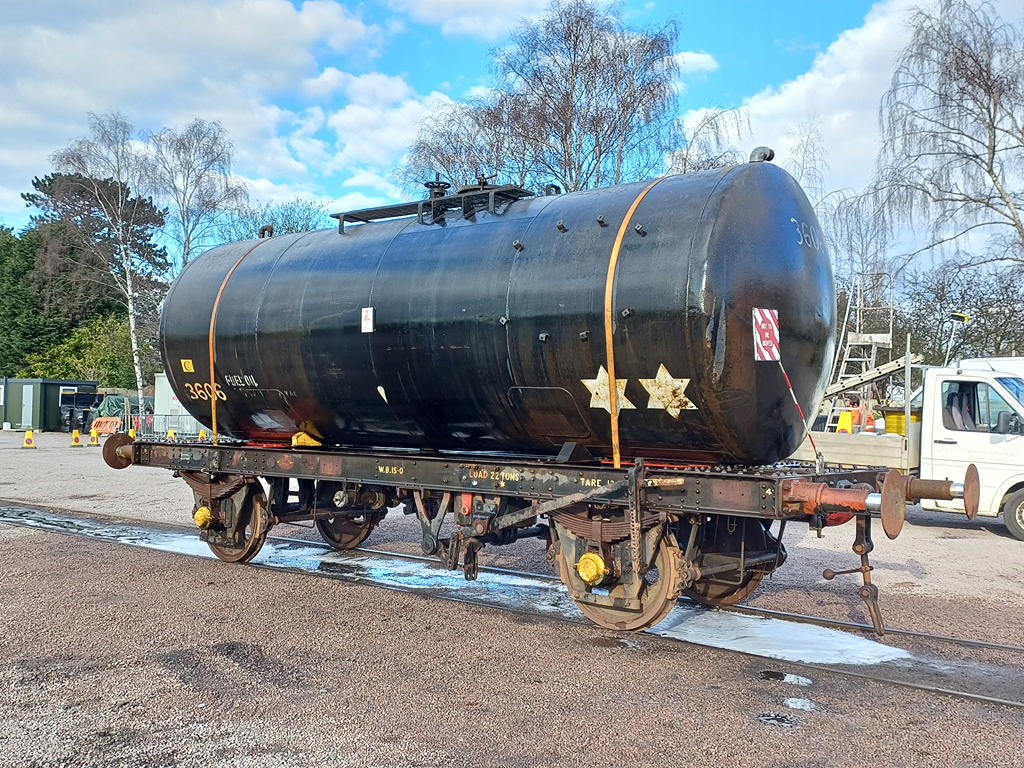
    Further thanks to Chris at NWPG, we now know the identity of both the chassis and the rest of the identity of the barrel. When the barrel is painted, it will continue to carry 3606 and the tank will used this identity going forward. The chassis used to carry 3797, so we shall make a small nod to its history in some way. It was found that there were no records for 3606 beyond 1975, so the barrel has been without wheels for at least 50 years!

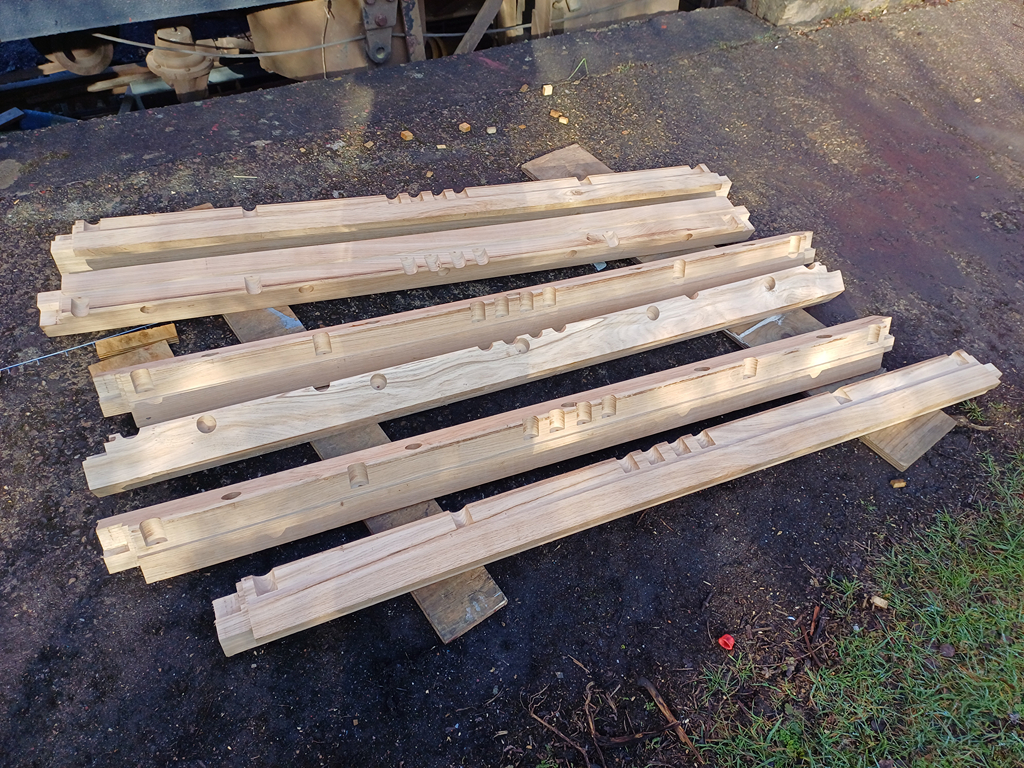
    We’ve now taken delivery of 6 hardwood door ‘noggins’ (top door frames) for the vans, which will help us finish the work on the 4 currently at Rothley. These will be stored until the vans make their way back to Quorn.
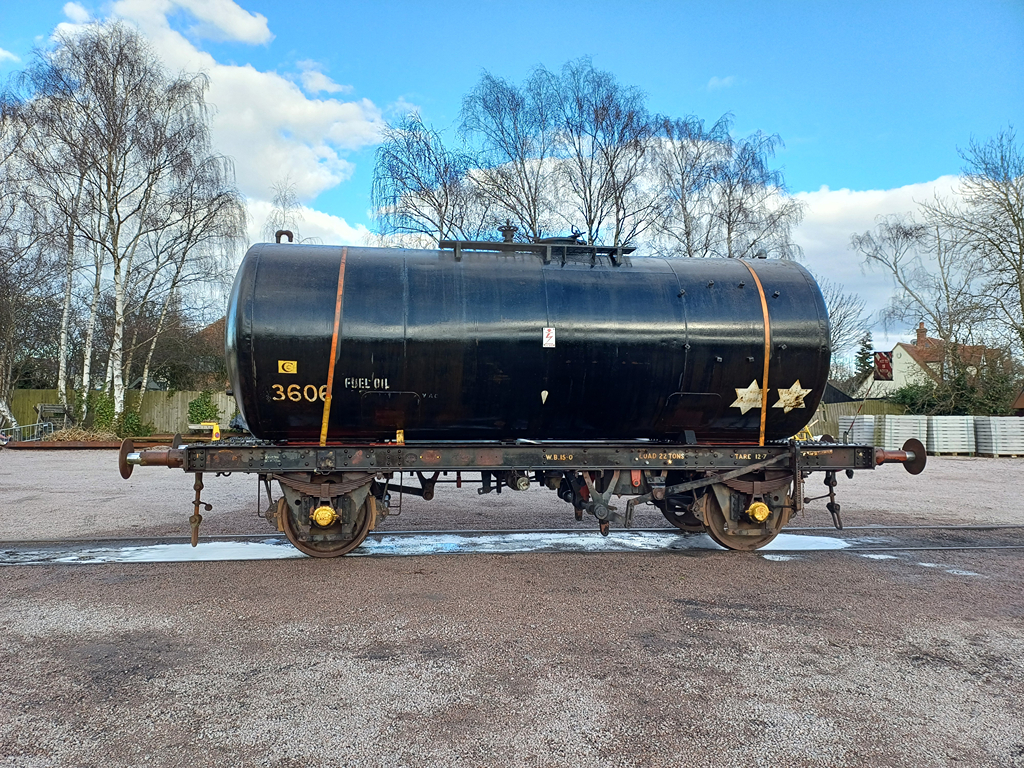
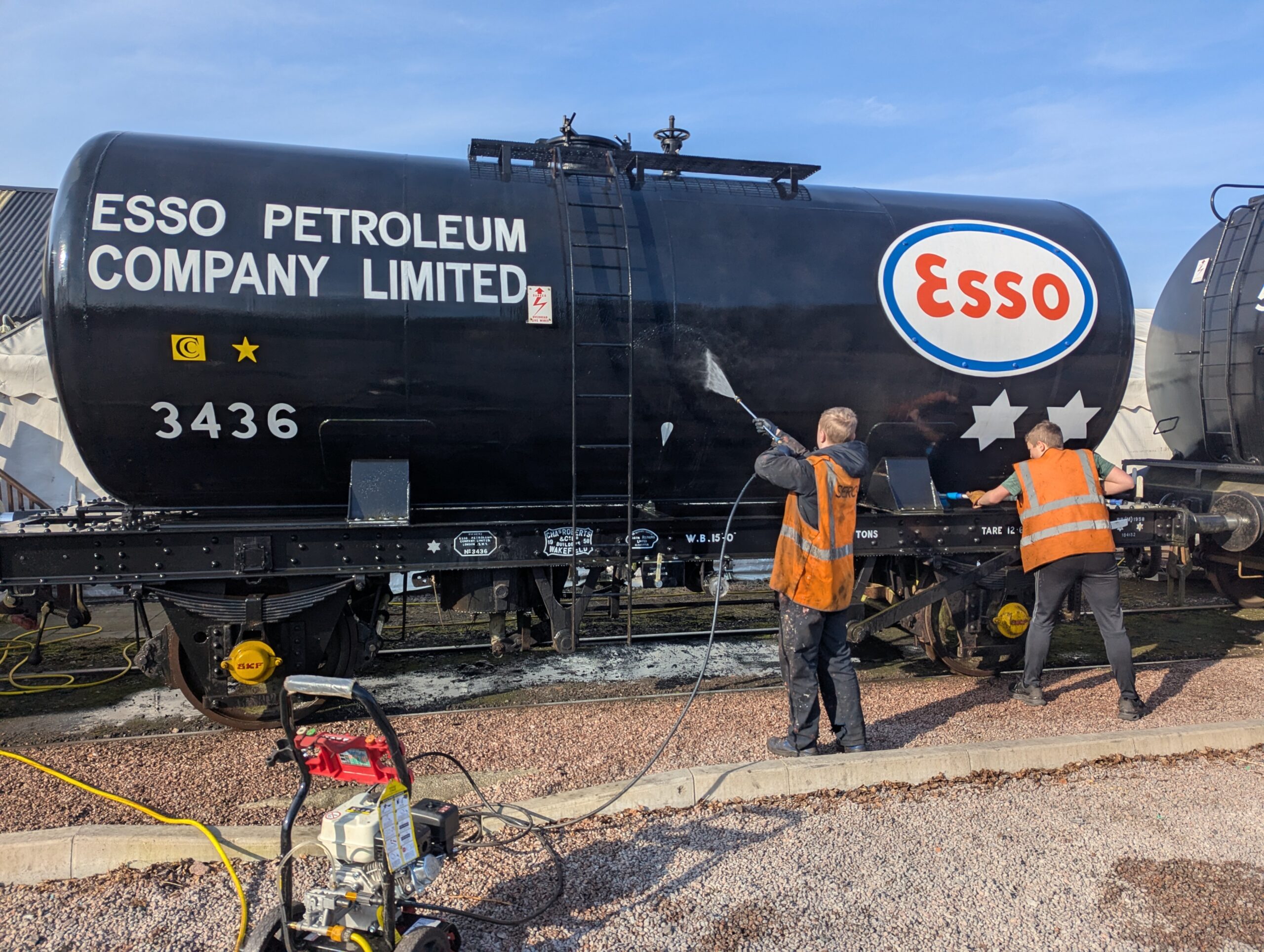
    Dave and I concentrated on washing 3606 in the yard, making it a bit more respectable. We used some new chemicals which worked very well at getting the decades of built up grime off the tank. The paint has held up quite well considering it is likely to be is only coat!

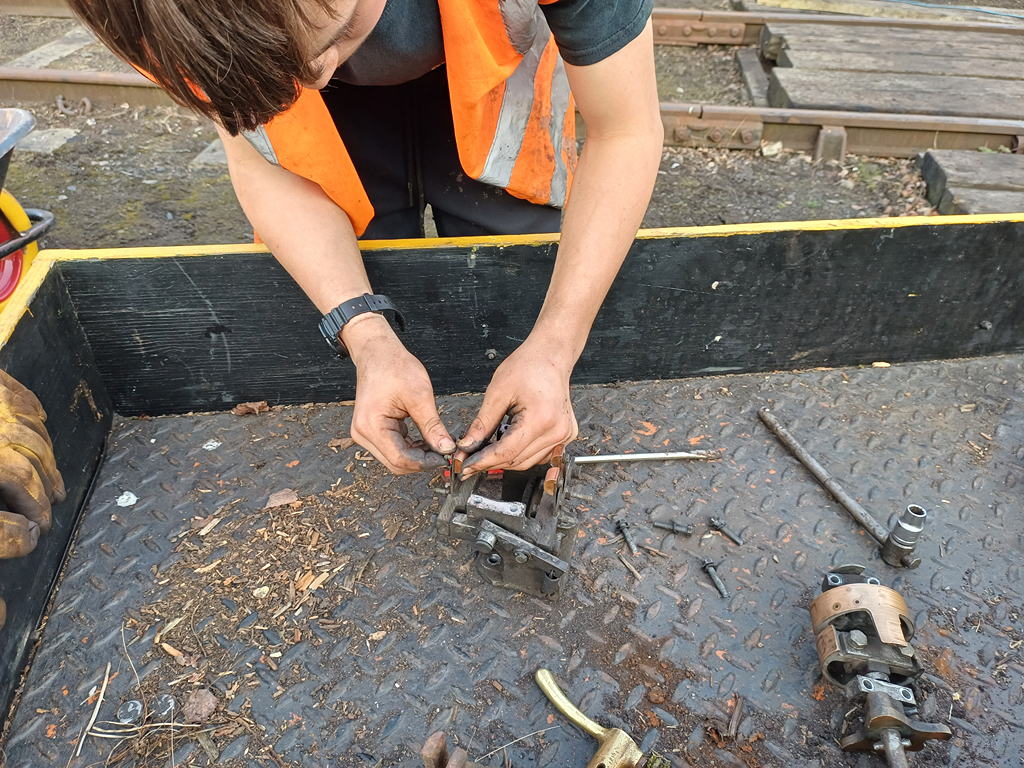
    While we did this, Nick, Ernie, Harry and Charlie fitted buffers to the north end of 3621 and dismantled a vacuum cylinder, getting it ready to fit to 3606.

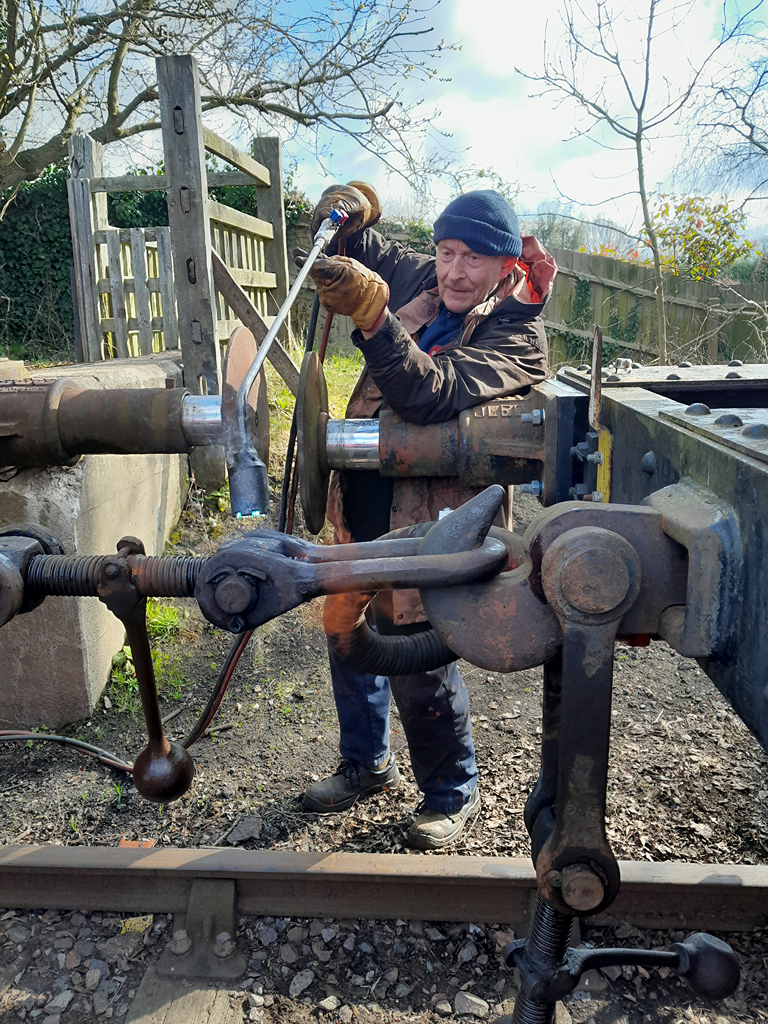
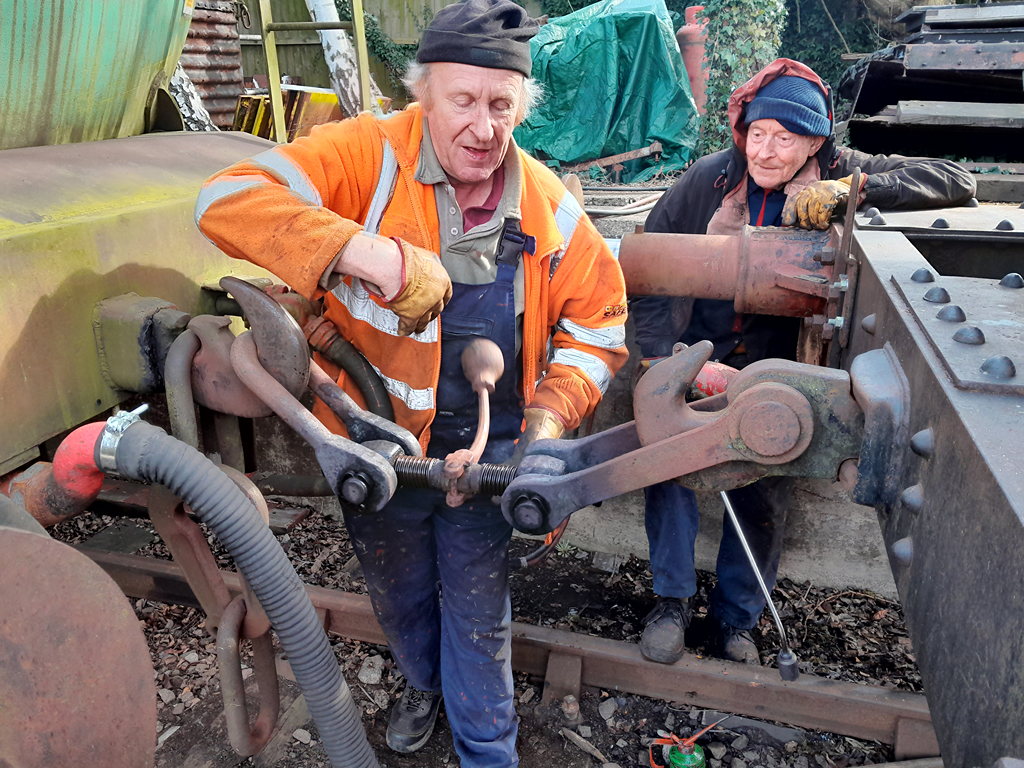
    A small shunt round in the morning moved 3606 into the dock, this was done by hand to reduce the risk of the barrel shifting at this early stage. Nick and Ernie made a start freeing the UIC screw couplings fitted to 3606.
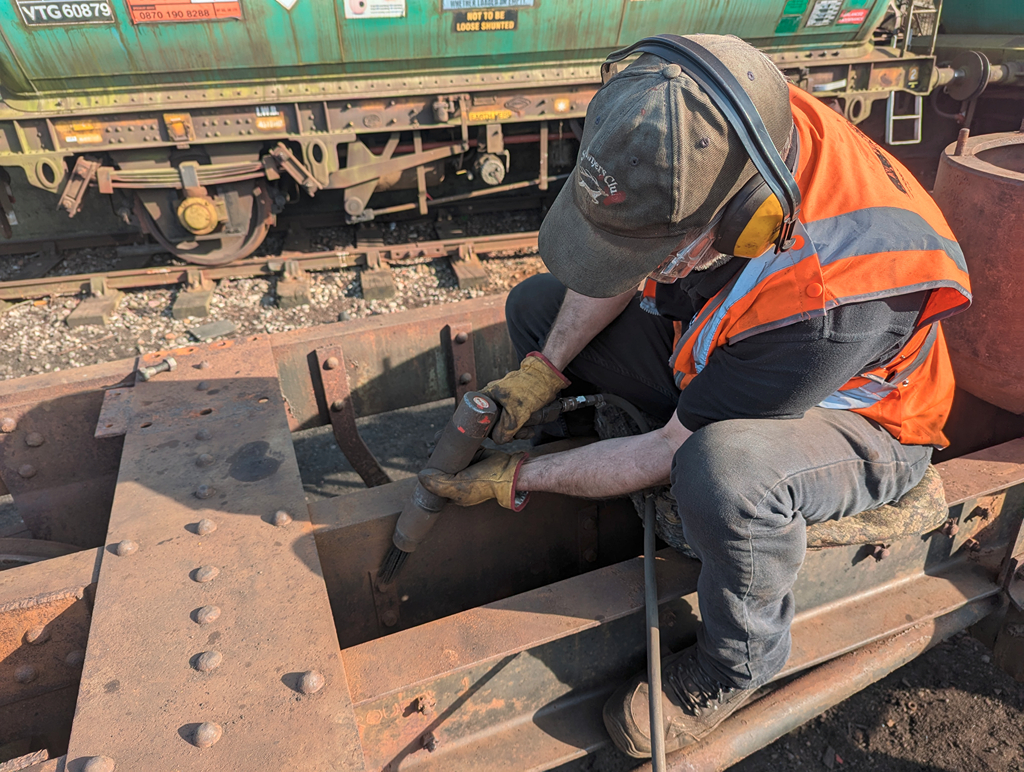
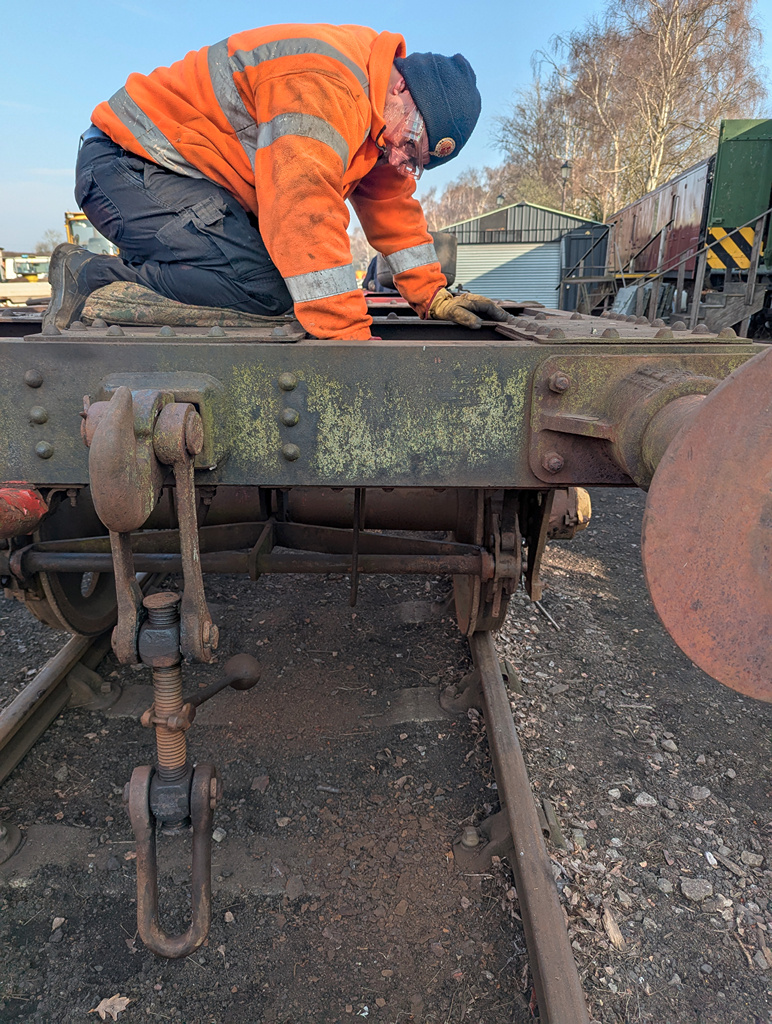
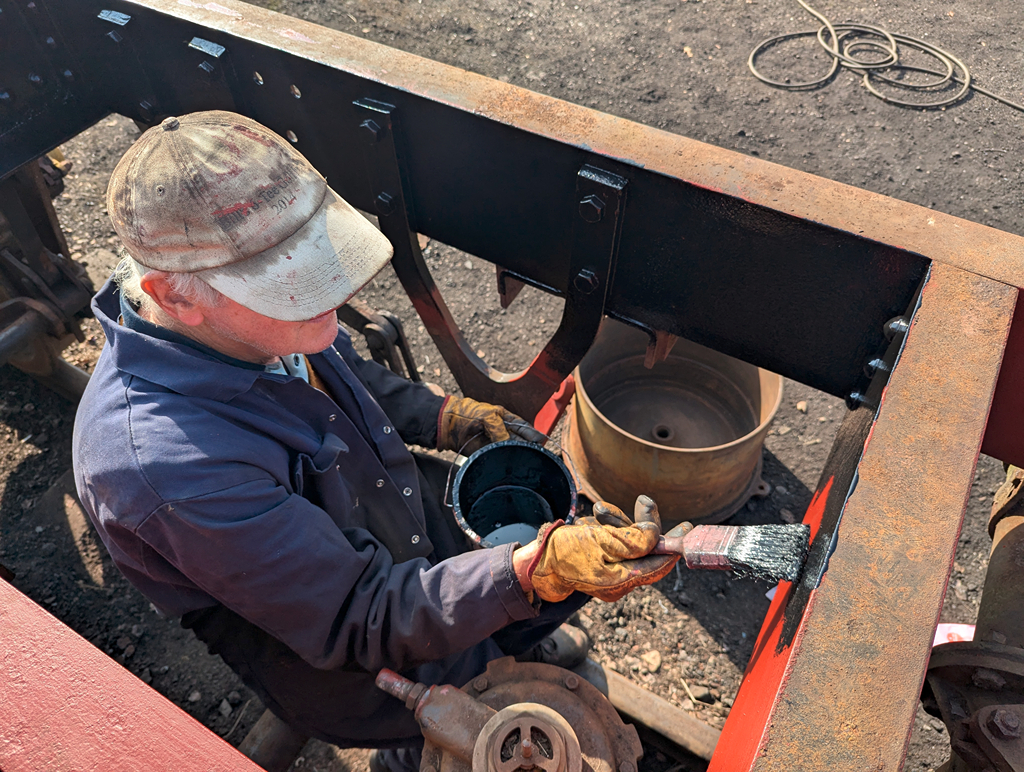
    Harry and new recruit Brad used the needle gun, hammer and chisels to descale the pockets adjacent to the buffers on 3621. We’ve not quite worked out why they’ve been designed as they are has they are quite the trap for water and other rubbish! Ernie also got stuck in on the action, removing two of the splash guards from 3621 and starting to chip away at the scale. Dan applied some primer to 3606, in one of the areas not got to before the barrel was fitted.

    Oliver, Tom, Charlie, Mark and I concentrated on the west side of the tanks, running down each one with and cleaning all the grime off them. The new snowfoam from Jennychem worked very well at loosening the accumulated dirt, so it was a very worthwhile purchase!

    That wraps up what has been a quite exciting week! We’ve now got a lot of cleaning down and preparation to do to get the tanks ready, but they are going to look fantastic! Join us again next weekend for another installment, thanks for reading!
  • 09/03/25 – Tanks and Track

    09/03/25 – Tanks and Track

    Hello all, and welcome to another weekend’s update from us lot at Quorn. We’ve got a lot of plates spinning at the moment, with lots and lots of tank work going on. We’ve also had a go at track work this week, laying an extension to make ourselves more room for project vehicles.

    We’ve continued the push on the tank wagon chassis, CEGB 48521, with Dave, Harry and Ernie making good progress on needling gunning and scraping the scale, corrosion and old paint from the chassis.

    Nick, Charlie, Dan, Mark and I sorted out the siding extension, first the vehicles were moved down clear of the joint to the buffer stop. after then the materials were laid out and the buffer stop moved back to make the room for an extra 30ft of rail to be let in.

    The primer came out to treat the cleaned down chassis areas, with quick progress being made. A kit of vacuum cylinder parts was retrieved from the van train in the down lie-by, which we’ll revisit later.

    With the sleepers laid out and the rails dropped in the chairs, it was time to fit the fish plates and key the rails into the chairs. With a bit of packing done, the vehicles were rolled back down the buffer stop and tidying up around the site and moving the steps back into position.

    More needle gunning occurred on Sunday, with more areas receiving the prep, prime and then some satin black top coat.

    Now the track has been extended, the attention then turned to the tanks in the yard, giving them a wash. The east side of the rake was tackled, with the west side still to do. The before and after on the yellow Shell Lubricating Oils tank was startling!

    While the tank washing took place, Charlie busied himself cleaning and servicing our spare BEV parts.

    An unserviceable vacuum cylinder was dropped into one position of the chassis, firstly the dome then the cylinder. This cylinder will never be used, so a supporting strap will be manufactured to ensure the cylinder does not rotate in its trunions. The last job of the day was to push the chassis down into the yard.

    Next weekend, some of the teasers and work we are doing will start to make a little more sense. With good enough weather, we will continue down the west side of the tank train prior to its departure on the 25th March.

  • 02/03/2025 – Just the Chassis

    02/03/2025 – Just the Chassis

    Hello and welcome to the first March 2025 update from Quorn. This week we welcome another arrival, the chassis from an ex. Esso 35T tank, and we get to work freeing off the seized brake rigging.

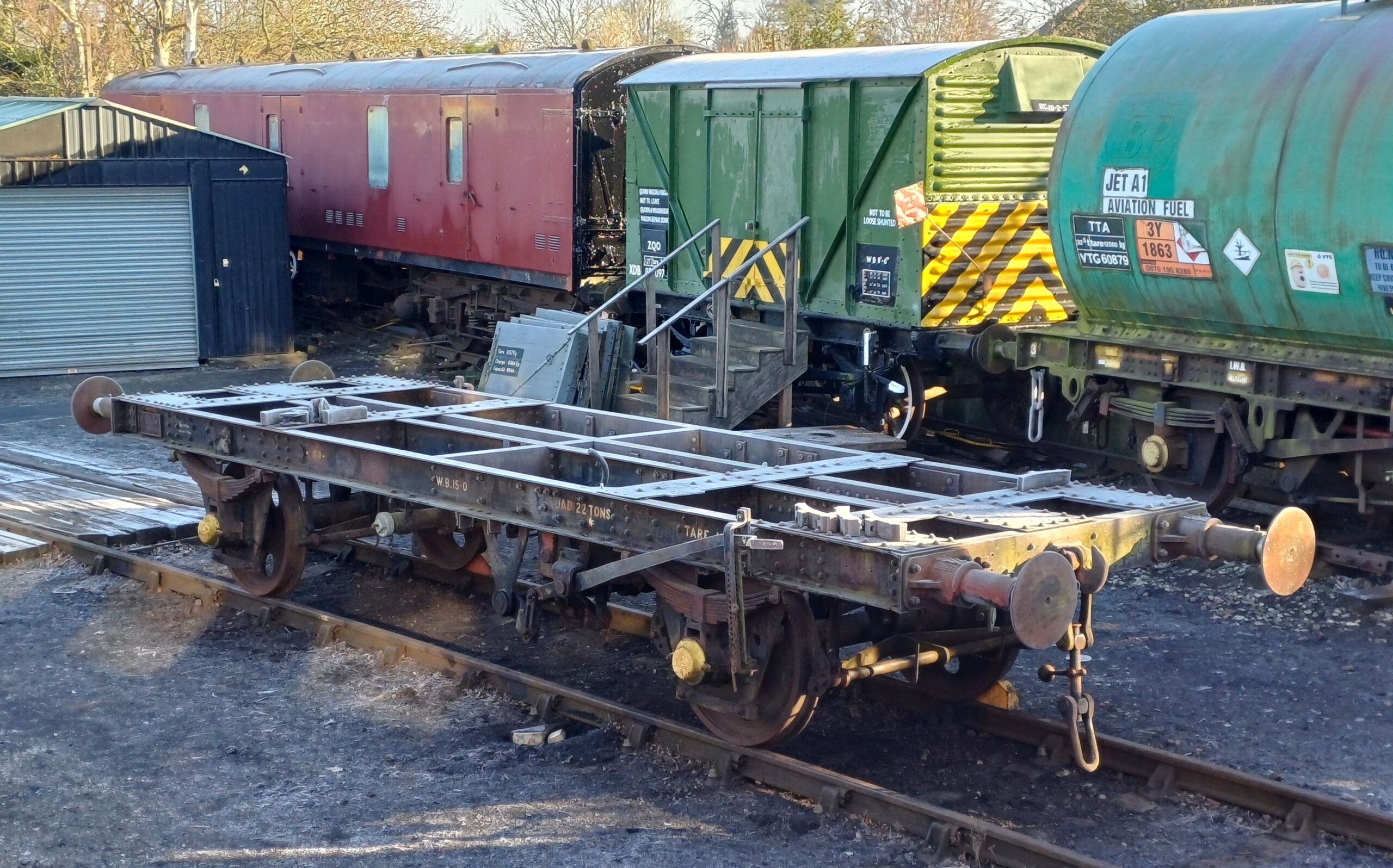
    The chassis was built in 1958 by Charles Roberts as a 35T tank for Esso. It passed to the CEGB at Meaford Power Station and was renumbered 48521. At some point the tank barrel was removed and it was preserved at the Foxfield Railway in 1991. As yet we have not established it’s original Esso identity.

    The chassis had arrived with a number of old sleepers stored on top; the first job was to get these removed which Nick did on Friday.

    With the chassis empty and looking very much like a part-built Airfix kit, we could give it a proper inspection. In general it’s structurally in very good order, although the brakes are completely seized on, the couplings are seized up and all the rubber hoses are perished. On Saturday with Nick, Ernie, Ross, Charlie, Harry and myself on-site we made a start trying to free up the brakes so the chassis could be moved. A couple of pins were removed from the brake rigging to separate the rigging into sections so we could tackle each end of the chassis separately.

    The seized brakes were however being really stubborn, so the Volvo was called upon to provide a little extra grunt to move the bow girders and subsequently get the brake blocks free from the wheels.

    This proved successful and allowed us to move the chassis from the yard into our working area. Once there we could get the power tools and heating equipment to the chassis. Ernie got to work removing the spark guard plates which Ross had numbered up. Some of the old tank barrel mounting rivets were also removed.

    The pressure washer was used to remove as much of the muck, debris and old grease from the brake rigging joints, whilst the remaining parts of the old barrel mountings were dealt with.

    The brake blocks and carriers were removed from the south end, a number of which required a little heat to release the pins; these were then cleaned up by Charlie and Harry.

    We worked our way back along the south end brake rigging joint by joint, heating where necessary to free up the pins and allowing each section of the rigging to move freely. The joints were then well oiled.

    Pins were removed from the vacuum brake cylinder piston rods, and heat was applied to the cross shaft, however despite this the centre section of the rigging and cross shaft parts were not wanting to move freely. All the joints were well oiled and left to soak.

    A start was made removing the brake blocks and carriers from the north end and the brake cylinder mounting trunnion bolts were freed off; whilst Nick and Ernie had a go at freeing of the south end coupling with a little heat.

    Sunday continued much the same with Nick, Ross, Ernie, Mark, Tom, Oliver, Dan, Charlie and myself on-site. Despite the oiling up yesterday our efforts to try and un-seize the cross shafts failed. We therefore decided that it would be easier to get the vacuum brake cylinders out of the way; they need to be removed anyway for overhaul. The piston rods and safety loops were removed from both cylinders, one release valve came away easily however the other was seized solid. Dan made a start refurbishing one release valve.

    Nick and Charlie continued with the north end brake gear dismantling and cleaning up whilst Ross, Ernie and myself got the vacuum cylinders ready for removal. The Volvo was used to lift the cylinders out of the top of the chassis, a much easier task without a tank barrel in the way, rather than having to drop them out underneath. In order to release each cylinder from their trunnions we did need to burn off the lower mounting bolt as these had been fitted the wrong way round.

    The second cylinder was removed in the same manner, with a bit of heat needing to be applied to the trunnions to release them.

    Making the most of the sunshine, Mark, Tom and Oliver got to work with some Black Gloss on the north end of the GUV.

    With the tank chassis vacuum brake cylinders out of the way we were able to dismantle the brake adjuster and apply some heat to release the cross shafts.

    We then moved along the chassis towards the north end heating and oiling to release the each of the seized brake rigging joints.

    The linkages between the north end bow girders needed dismantling to free them off.

    The brake rods, links and pins were all cleaned up.

    Then re-assembled with a good dose of grease in all joints.

    The final parts to be assembled were the brake adjuster; to do this span-set straps were fitted across the bow girders at both ends to bring the blocks up to the wheels. Then with 1/2″ spacers fitted between one block and the wheel at each end, the straps tightened. The adjustment pin was then fitted in the nearest aligning hole and the straps released. The handbrakes were then checked for operation at both ends.

    Although there is still much to do, we’re happy to report we now have a free rolling chassis with operational handbrakes.

    Join us again next week; all the best, Dave