Author: rloades109

  • Vehicle Profile #6 – Salmon

    Vehicle Profile #6 – Salmon

    Thank you to Matt for the articles on signwriting. A very useful reference for those of us looking after and modelling heritage rolling stock. For this weeks update, I’ve gone back to the Vehicle in Profile series to look at what is the longest wagon in our fleet – a Salmon.

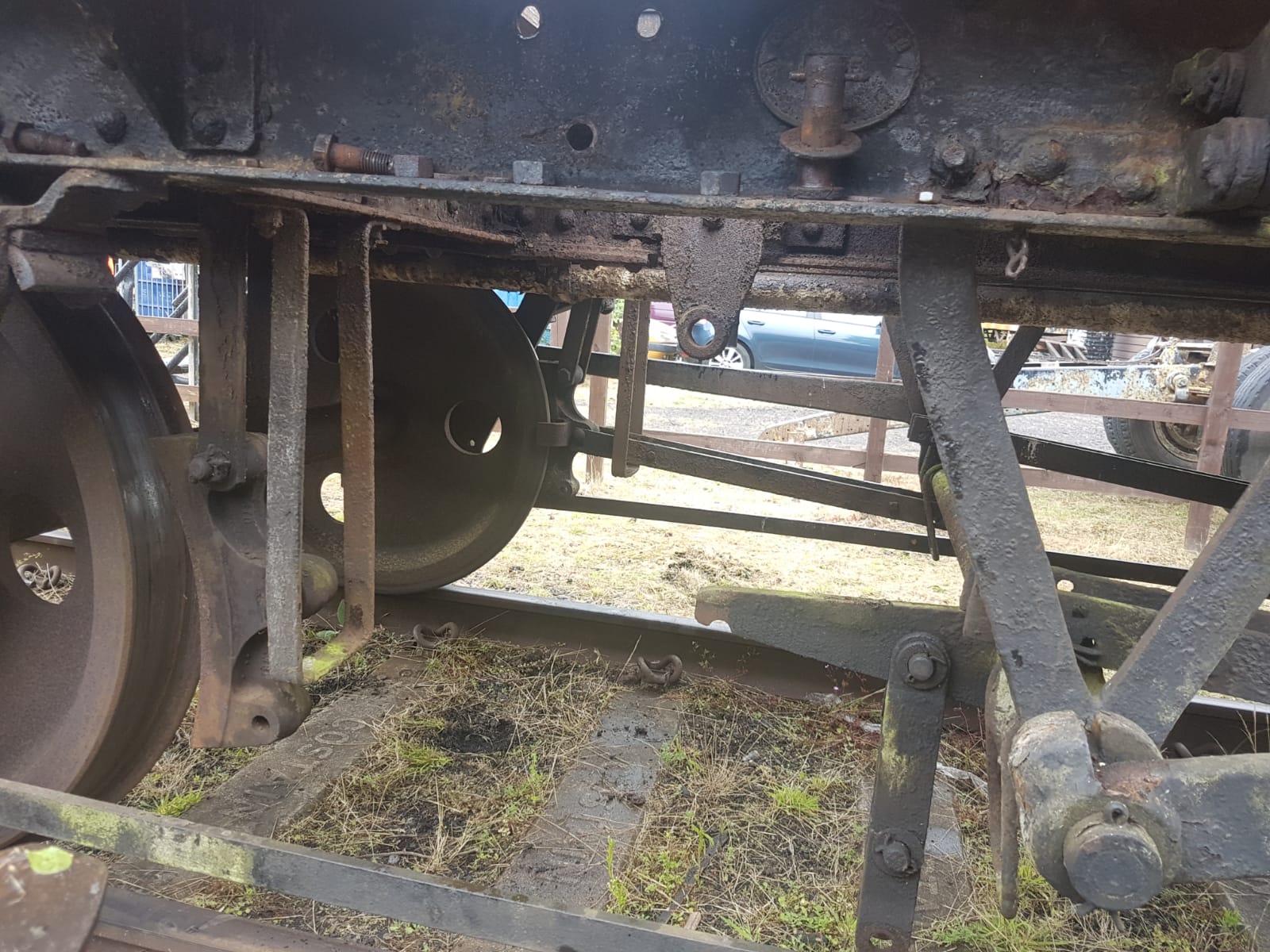
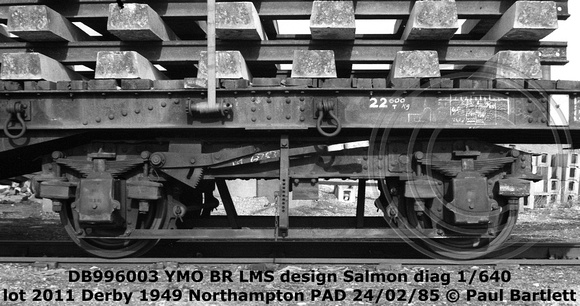
    Built to an LMS design, the Salmon was built between 1949 and 1961 to 15 different lots. In that time many sites and companies built them including Head Wrightson Ltd, G R Turner and British Railways at Derby and Wolverton. The designs started with diagram 1/640, which had LMS style bogies with an independant ratchet handbrake on each bogie (shown in the picture below). There was a wooden floor down the 62ft length of the wagon with 5 bolsters. Early on Salmon were found unfitted or fitted with a vacuum through pipe.


    Paul Bartlett's Photographs: BR LMS design Salmon Diag 1/640 YMO &emdash; DB996003 YMO 03
    Image courtesy of Paul Bartlett’s excellent website.


    Later designs of Salmon had  Plateback bogies with a wheelbase of either 5ft. 6in. or 8ft. These still had oil axleboxes so were limited to 50mph. In the TOPS era these were classed ‘YMO’. In the 1980s some of the fleet of Salmon were overhauled and had air brakes fitted, with extra tie down points added for ratchet straps. These became YMA or YMB depending on whether they retained the vacuum through pipe or not. In the late 90s two wagons were fitted with roller bearing bogies. A further 125 wagons were converted. The conversion didn’t result in a speed increase for the wagon, but bought about reliability improvements. For those remaining in service further conversion work was undertaken in 2009 to add 3 bolsters to the wagons to simplify the loading of track panels. The bolsters would locate the track panel on the wagon laterally and longitudinally. These conversions received another TOPS code, YKA, and another fishkind name; Osprey.

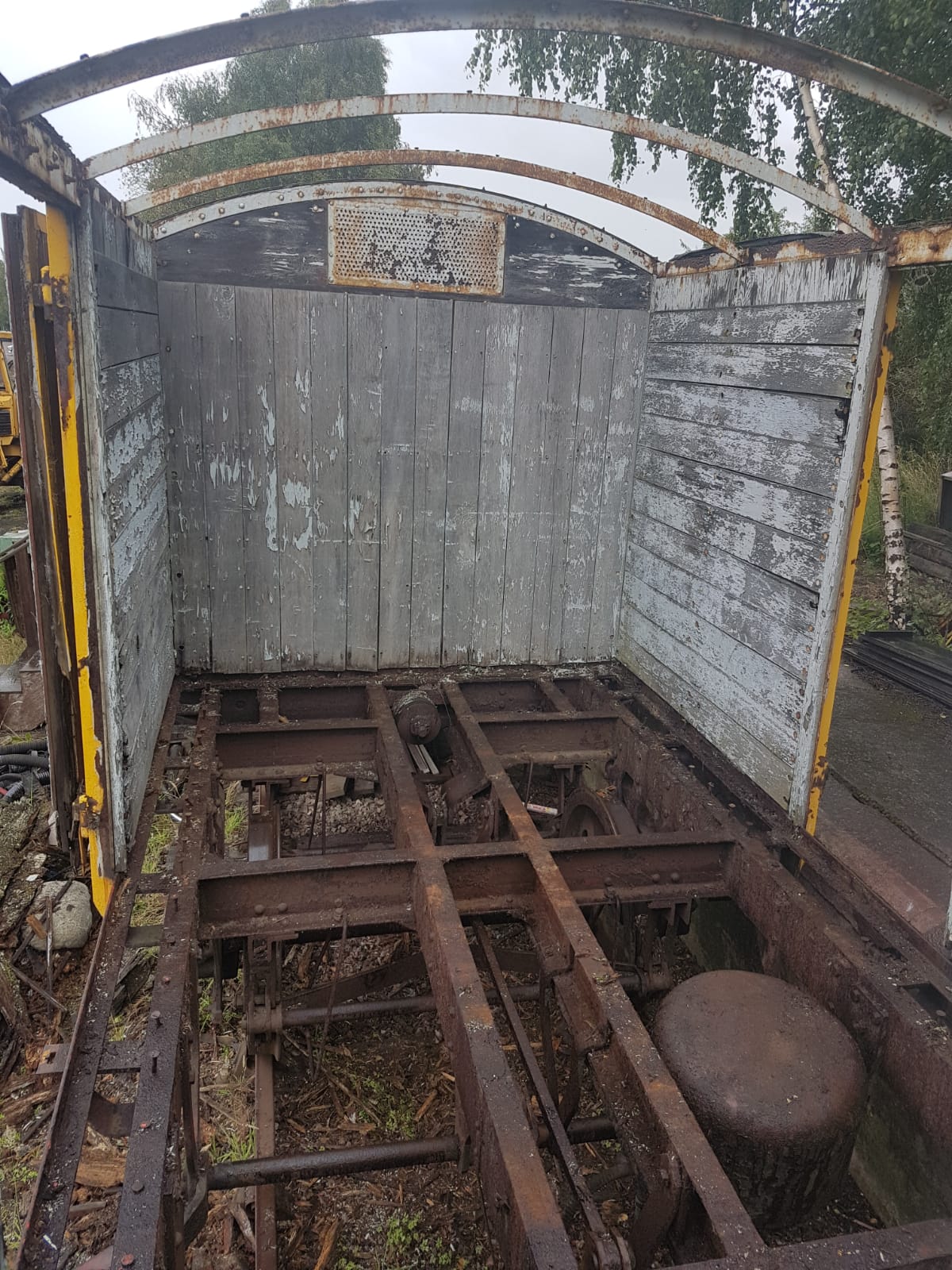
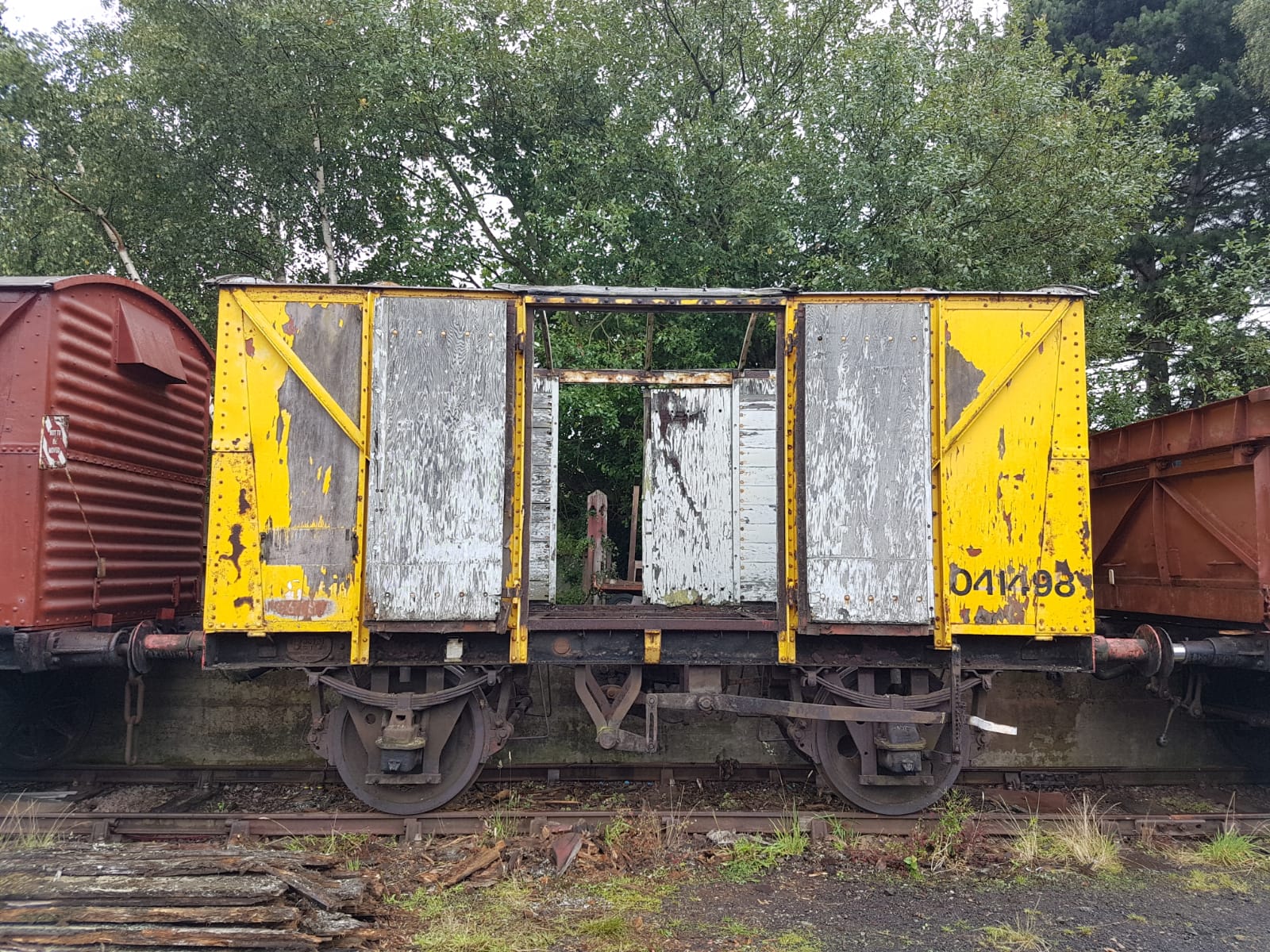
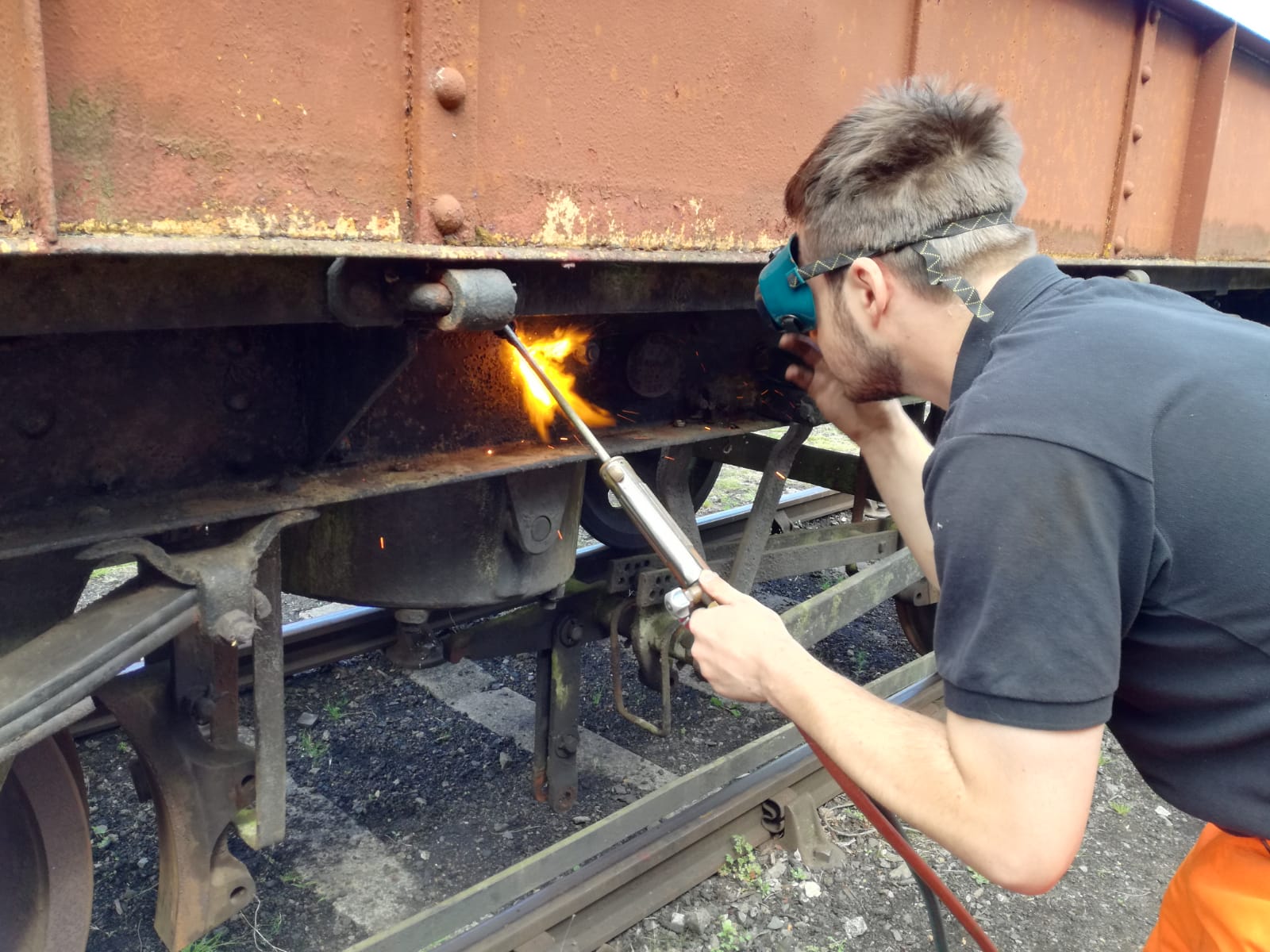
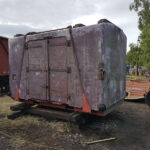
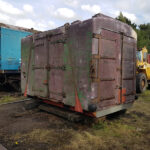
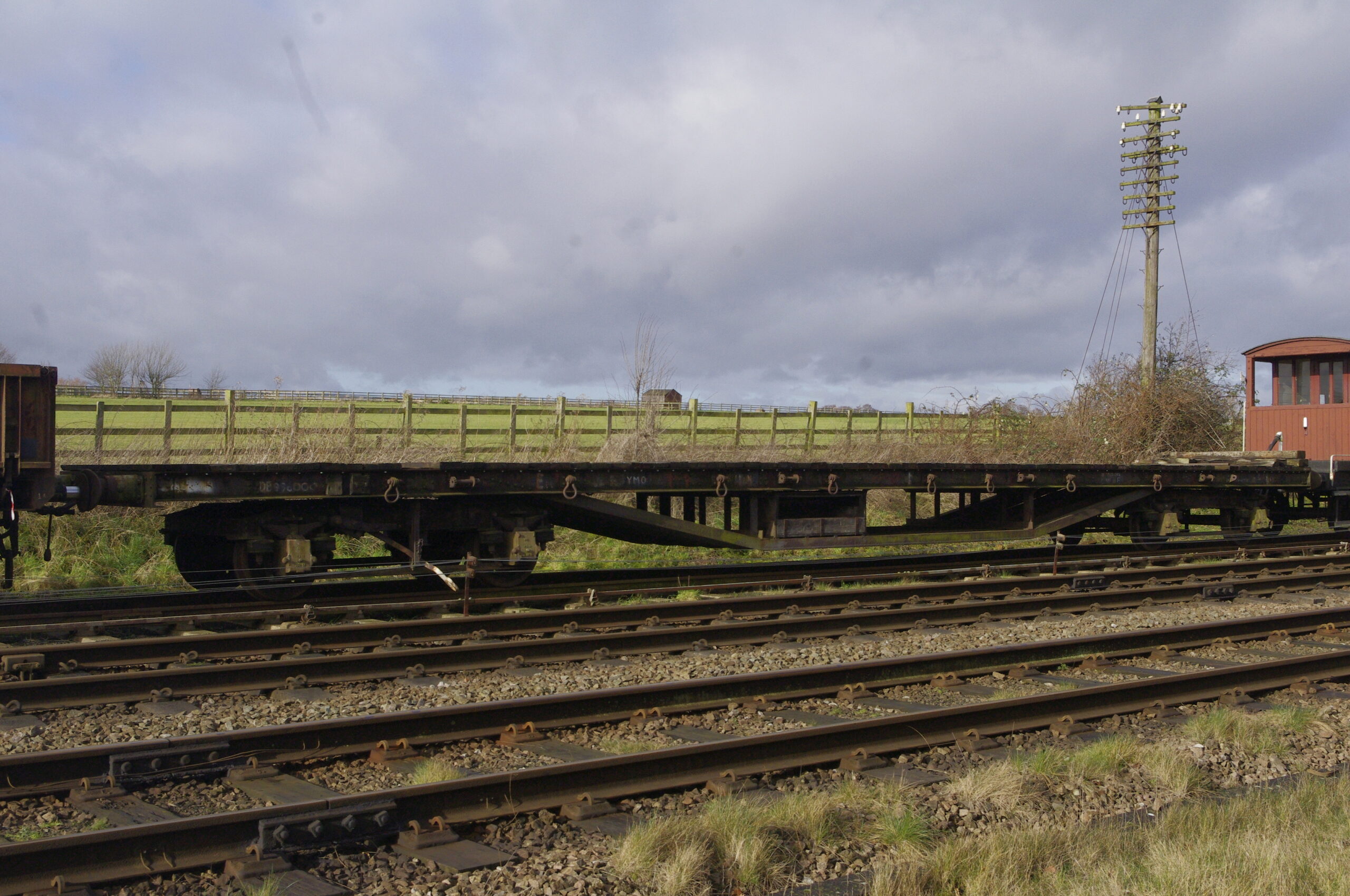
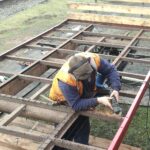
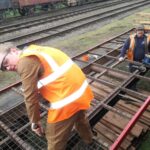
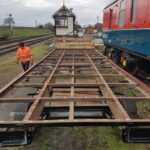
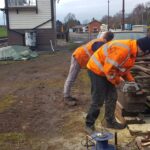
    Our Salmon is the sole survivor of the LMS designed batch. Numbered DB996000 is was the very first Salmon built by BR to the LMS design. It was built at Derby Litchurch Lane works in 1949. Not a lot is known about its service life, but this wagon ended up as an internal user with the number 024717. It served at the very works it was built at as a vehicle to move items around the works. We don’t know exactly when it was confined to the works, but the earliest sighting on departmentals.com puts it at Litchurch Lane in 1985. It served in this role until 2014, where it was donated to us by Bombardier Transportation.  Soon after it had arrived various accoutrements were ground off and a floor added using used sleepers cut in half down the length. With a pad exam and oil up of the brake gear it was released to traffic and has remained available ever since.

    Thank you for reading! We hope everyone is keeping safe and healthy at this time.


  • Vehicle Profile #5 – Rudd

    Vehicle Profile #5 – Rudd

    Last week, we published a profile of the Grampus wagon, a versatile 20 ton capacity engineering wagon. Our next Vehicle Profile covers their one of their replacements; the Rudd.

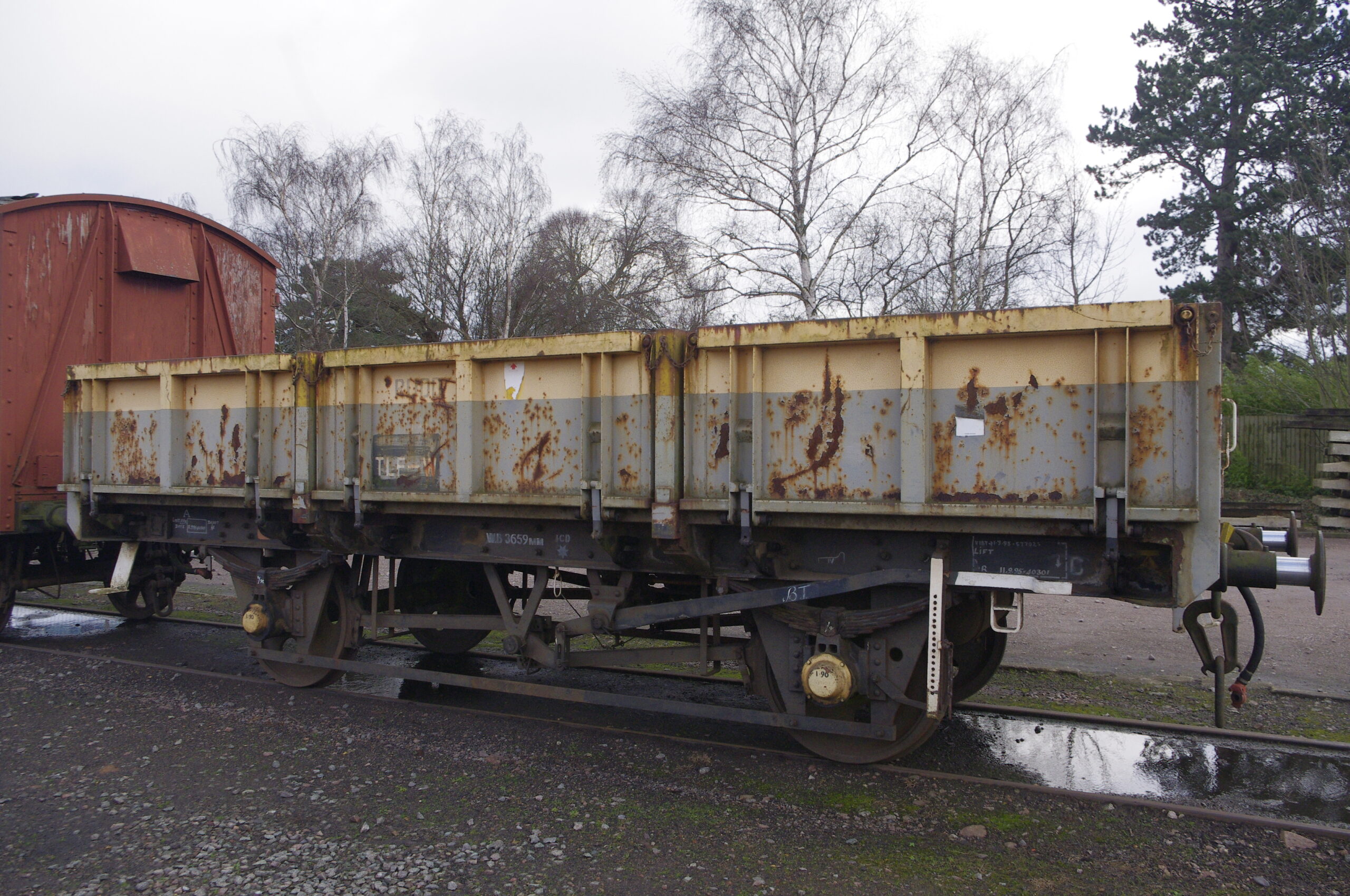
    With design of the Grampus and other engineering wagons becoming unsuitable for the change in working methods, replacement wagons were converted from stored HTV coal wagons to varying designs. These use the Fishkind names of the Tope, Clam and Rudd. Of note to us are the Rudd design, of which we have 3 examples.

    • DB972018, converted at Marcroft in 1990 to design ZB001A. In its past life it was HTV B429632 built at Gloucester Railway Carriage and Wagon in 1958.
    • DB972608, converted at CC Crump in 1991 to design ZB001A. Its HTV number was B429763 built by Hurst Nelson in 1957
    • DB972681, converted at CC Crump in 1991 to design ZB001A. It was HTV B424802 built in 1957

    The Rudd name initially appeared in 1987 on converted Grampus of which one (DB984194) is preserved at the Nene Valley. These conversion retained the Grampus’s single skinned slab doors but had rebuilt with non-removable ends and air brakes.

    The Rudd named was later reused on a design had the same three doors per side, fixed ends and air brakes as the Grampus based conversion, but had stiffer ends and a different design of door which made them less susceptible to damage by mechanical loading equipment. The doors on the Grampus are heavy and require 2 or more people to lower and raise them. The Rudd doors, while arguably heavier, can be opened and raised by one person; benefitting from the use of door control equipment. Using the door control equipment also meant the ‘bangers’ fitted to the underframe wouldn’t require fitting removing a potential for trapping hands.

    Of the 3 designs intended to replace the likes of the Grampus, and other similar engineering wagons, the Rudd lasted the longest primarily due to their air brakes, while the Tope and Clam retained Vacuum. By 2005, an estimated 2 Tope remained in traffic, with 3 Clam. By contrast, 278 Rudds remained in traffic until 2008.

    Back to our Rudds, like our Grampus they remain fit for use and their turn in the restoration queue remains behind the wooden bodied vehicles in the mixed freight.

  • Vehicle Profile #4 – Grampus

    Vehicle Profile #4 – Grampus

    _IGP6846.JPG

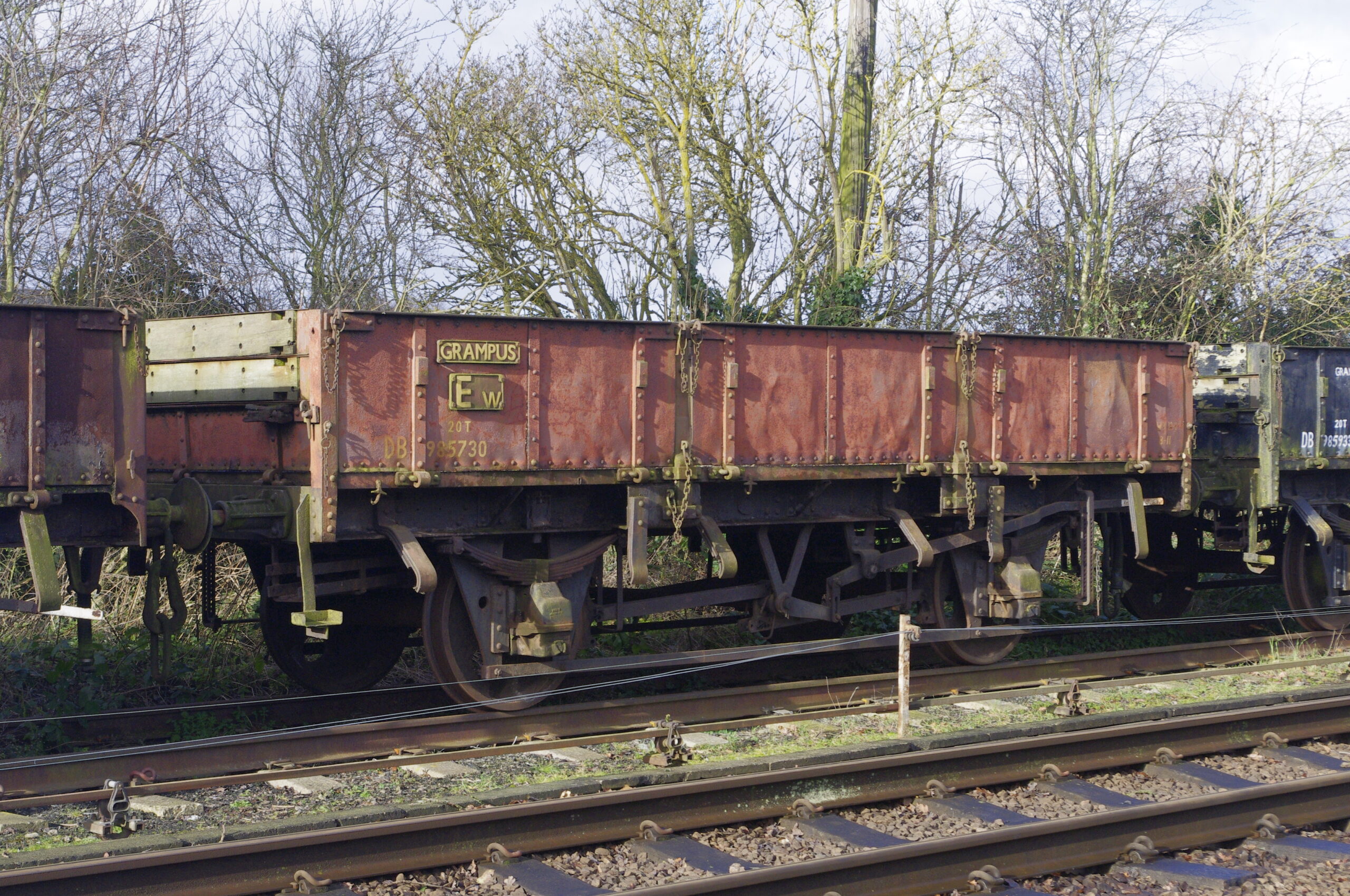
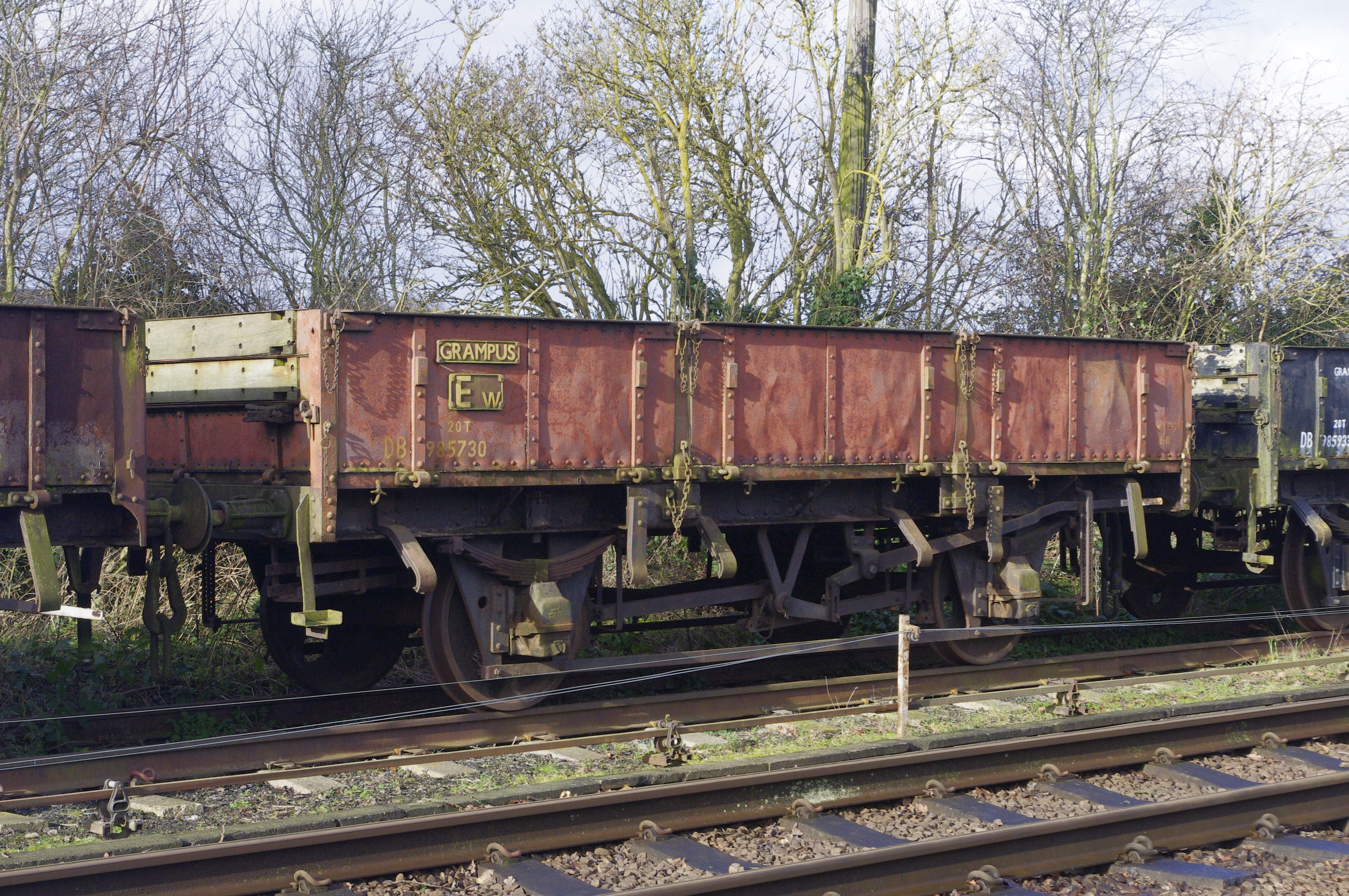
    Grampus are 20 ton multi-purpose engineering wagons, designed by British Railways and built between 1951 and 1961. The design is based heavily on the earlier GWR all steel Tunny (which we also have one of) and Starfish, with ends similar to the Southern region Lamprey. Grampus had a 20 ton capacity and as such had 10″x5″ axle boxes. Our fleet show a variety of variants of these. Most of these wagons were built unfitted, though few were vacuum braked. Our fleet, naturally follows this model, with six being unfitted, and one being vacuum fitted. Details of our fleet are below.

    NumberYear BuiltAllocated RegionAllocated Region
    DB9846421957Eastern RegionChesterton Junction Central Permanent Way Depot
    DB9847131957Western RegionCO
    DB9857301954North Eastern RegionDarlington Reclamation Depot
    DB9858841953Scottish RegionGreenhill Creosoting Depot
    DB9859331954Midland RegionLiverpool
    DB9905851952Midland RegionNorth Wales
    DB9914081959Eastern RegionDistrict Engineer Ipswich

    Grampus are built with three drop down doors and two removable cast iron stanchions per side. Across the end of the wagon there are two removable planks on the end, which can be stowed in pockets under the end of the wagon. The end of the wagon also has a drop down door to allow wheeled vehicles to roll from one wagon to another. These make the wagon very versatile, able to be loaded and unloaded by hand and able to take loads over the length of the wagon.

    Being a truly versatile wagon, they could carry sleepers, ballast and chippings. In the era of the steam loco, it carried loco ash away from depots for re-use elsewhere. However in more modern times, with mechanised loading machinery, the wagon’s single skin steel doors, wooden floors and removable end planks made them susceptible to damage. The later Rudd and Clam wagons suffered with this less as they had much stronger doors (though Clams had no doors), solid ends and steel floors.

    All but one of our fleet have had steel floors fitted in place of wood, and where doors have been damaged, particularly at the top, we have tried to straighten them as best we can. Doing this means the doors shut correctly and can be retained by the pins. Ours stand ready to be used, receiving regular maintenance awaiting their turn in the paint queue. As they are all steel, they do stand the weather better than any of the wooden bodied wagons we have in the fleet which take the priority in the queue. Join us next time for a profile of their successor, the Rudd.

  • Vehicle Profile #3 – The Yellow Coach

    Vehicle Profile #3 – The Yellow Coach

    Up next in Vehicle Profile Series we have coach very important to us, and is very much missed. The coach formed the base of our operations since 2011, and has all the usual mess facilities needed for us to work on the wagons of the fleet.

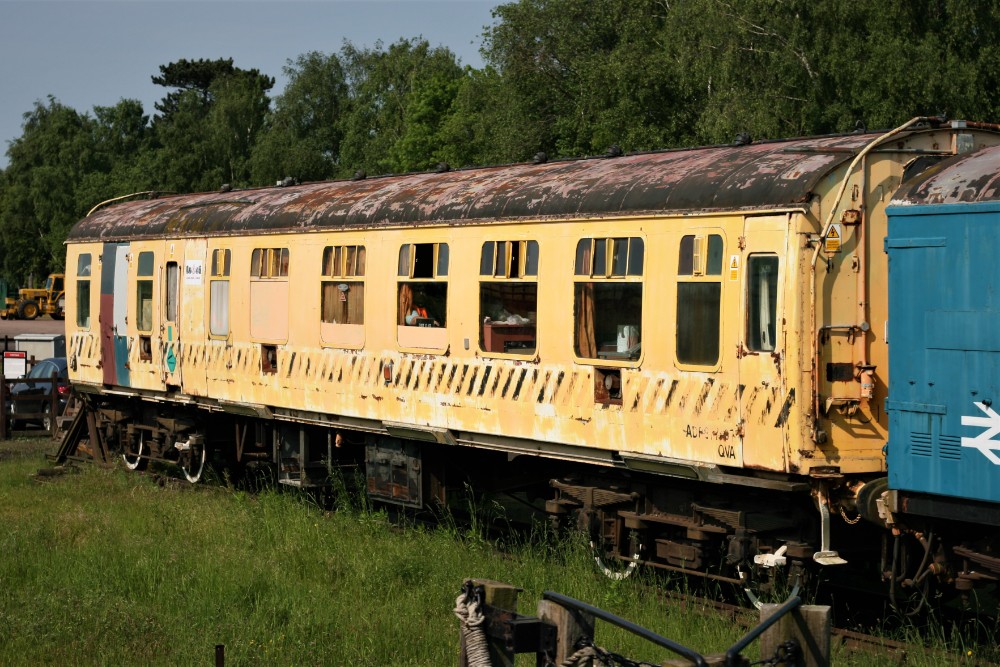
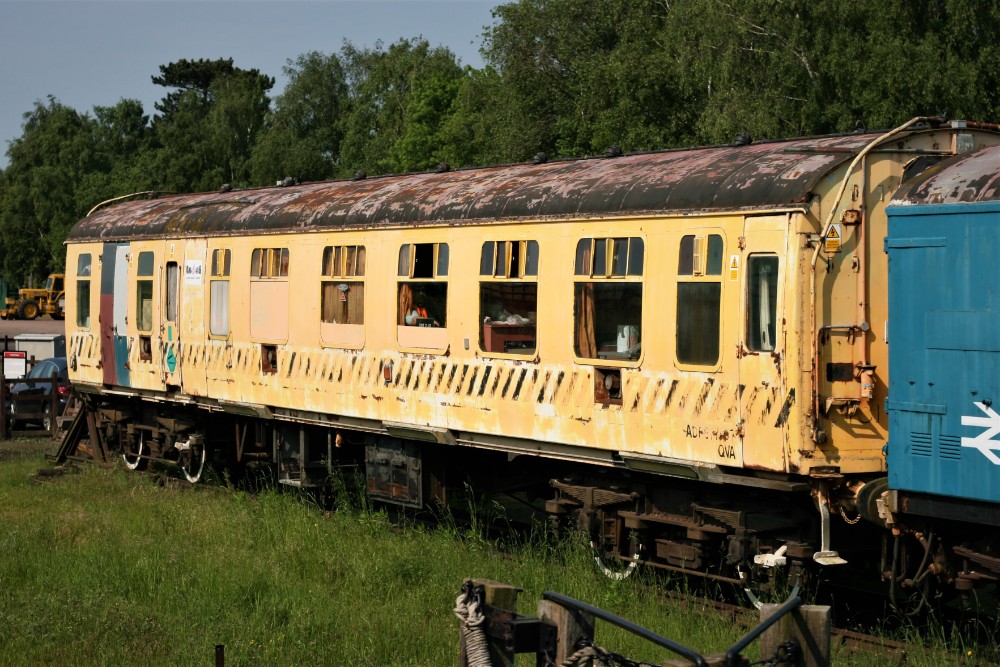
    The Yellow Coach – ADB977107 (Sc21202, E21202)

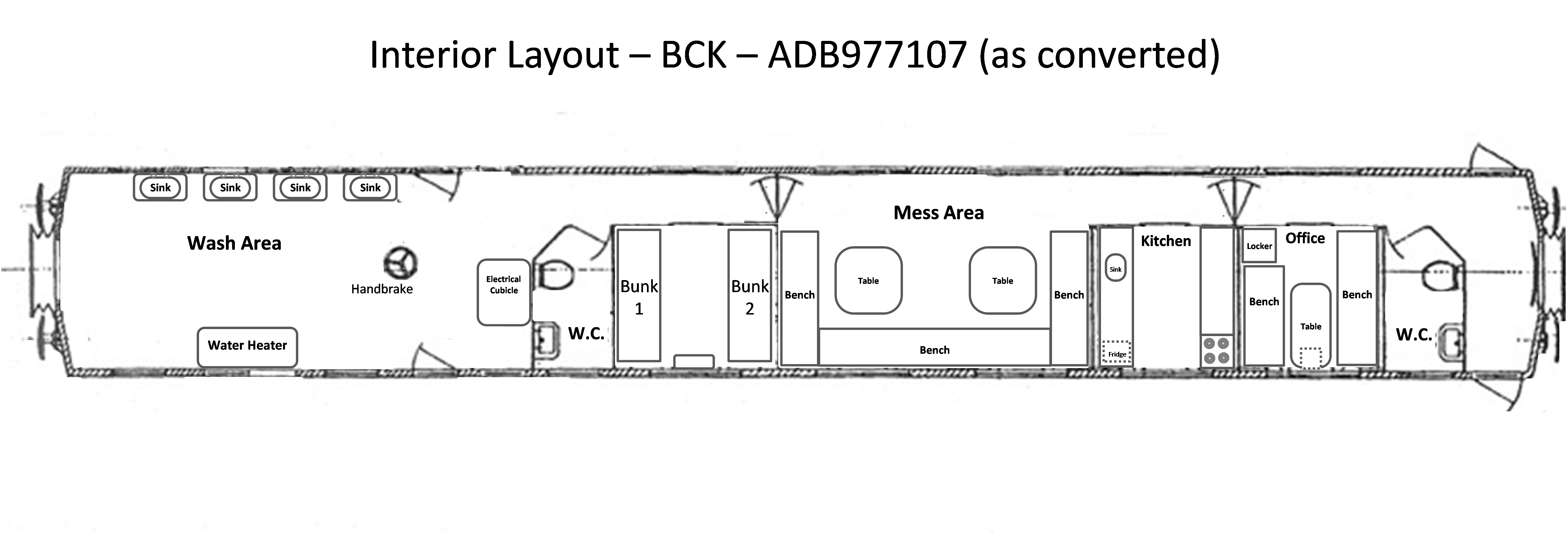
    The vehicle we refer to as the ‘Yellow Coach’ was built in 1958 at Metro Cammell in Washwood Heath, Birmingham as 21202, a Mk 1 Brake Composite Corridor [BCK] coach to diagram number 171, as part of lot number 30425. It was converted for use at a Breakdown Train Unit (BTU) staff coach in 1983 at Slade Green being fitted with BR Mark 3A ex.EMU trailer bogies. The modifications undertaken as part of its BTU role included:-

    • additional heating
    • additional lighting
    • kitchen area
    • sleeping compartment with four bunks
    • mess area with large tables
    • office compartment
    • water heater
    • washing area

    Re-classified as QVA and renumbered ADB977107 it was then transferred to Eastleigh where it was used in the breakdown train until the mid 1990s. The coach continued in breakdown train use moving to Crewe. Finally after moving to Wigan the coach had fallen out of use by 2010 and was stored at the Wigan Disposal. From there it was bought on the 23 July 2010 by Nick Tinsley, and subsequently moved to the GCR. It resided in the sidings at Quorn for many years, providing a base for the Quorn Wagon & Wagon group. In 2019 with the condition of the body deteriorating, and requests from the railway to tidy up the yard, the coach moved to Rothley where it is receiving much needed body repairs, electrical system modifications and interior restoration.

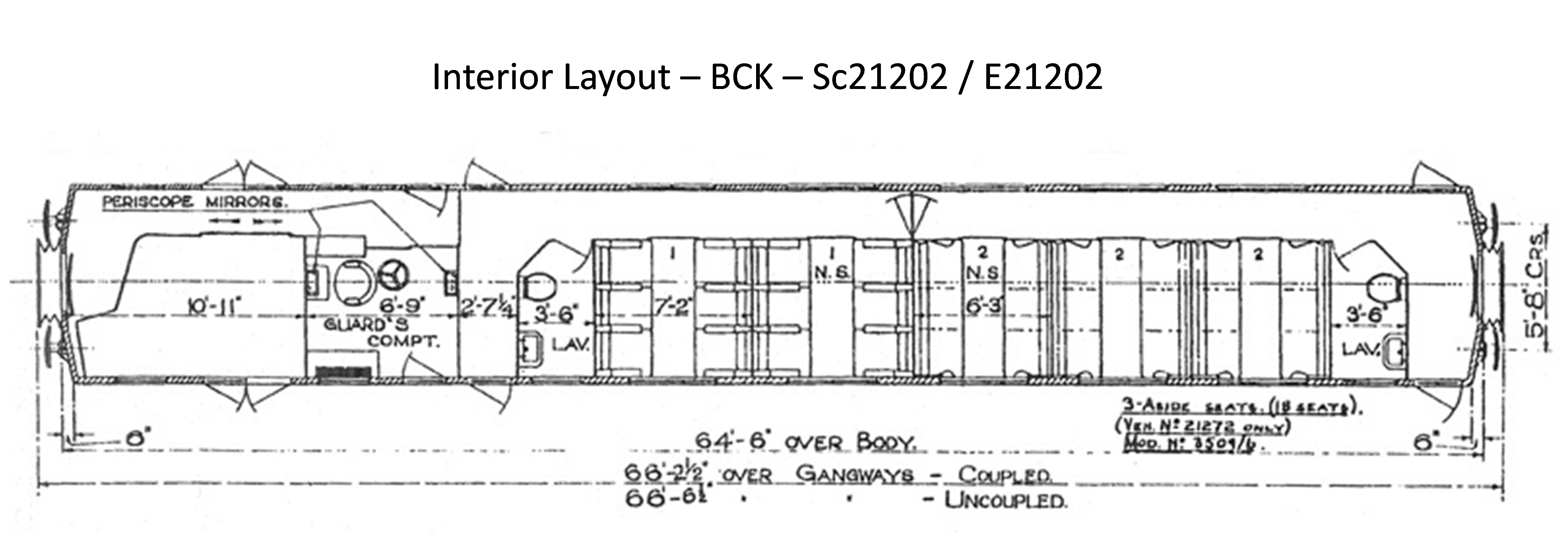
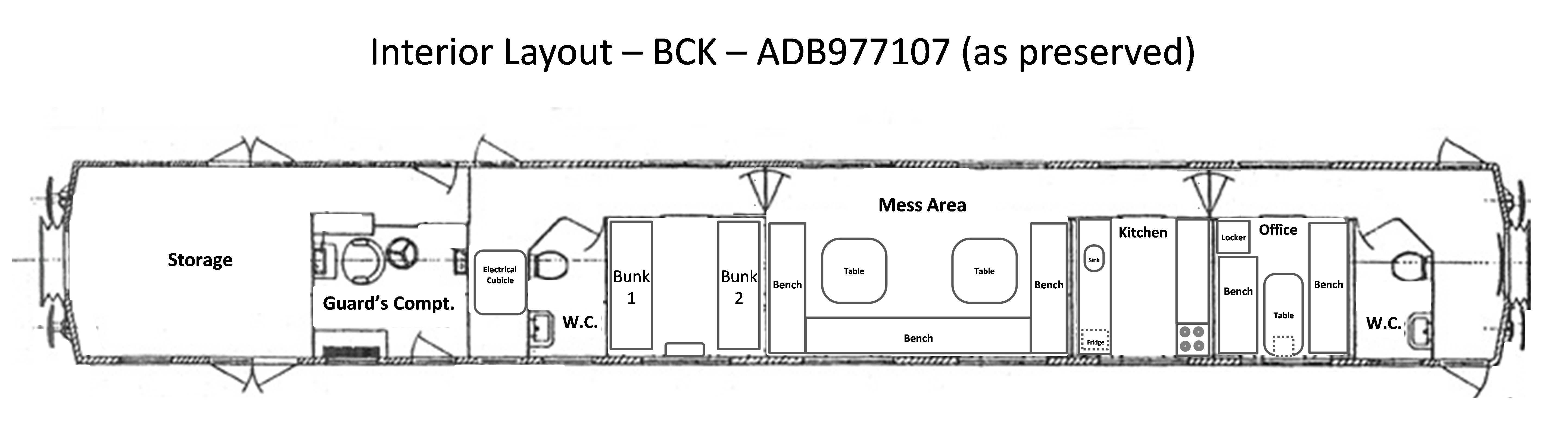
    Below are some diagrams of the layout of the coach, in service as a BCK, when converted to breakdown train use and now, in preservation.

    BCK - Sc21202 Layout Diagram

    BCK - ADB977107 Layout Diagram As Converted

    BCK - ADB977107 Layout Diagram As Preserved

  • Vehicle Profile #2 – Test Car 2

    Vehicle Profile #2 – Test Car 2

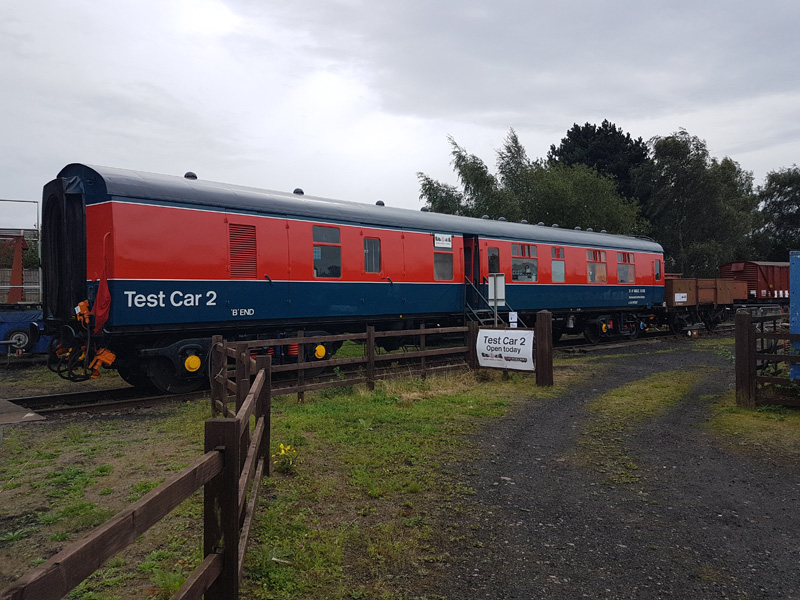
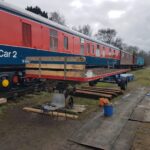
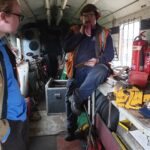
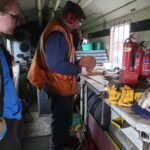
    Carrying on with our Vehicle Profile series, we have a vehicle you have already seen plenty about. Test Car 2 is currently in use as our mess facility while ADB977107 is receiving bodywork attention. We have previously opened the Test Car at Galas, something which we plan on doing again, though it currently remains to be seen when that will be. Thanks to Dave for pulling the summary together for Test Car 2.

    TEST CAR 2 – ADB975397
    This special coach was built in 1962 at Wolverton Works as 35386, a Mk 1 Brake Second Corridor [BSK] coach using Commonwealth bogies as part of lot number 30699. It was transferred to the Department of Mechanical & Electrical Engineers [DM&EE] at Derby in 1974 and renumbered ADB975397.

    For the next 35 years Test Car 2 was used primarily for slip/brake testing, which was the preferred method of assessing the brake stopping distance performance of new or modified rolling stock. This test method allowed the brake stopping distance of a vehicle to be measured independently and not influenced by other vehicles coupled in a train.

    The layout of the interior of the coach was adapted specifically for this role including the installation of:-

    • a Perkins 3-cylinder 20-kVA diesel generator,
    • 240v electrical installation, a distribution panel and shore supply,
    • test instrument racks,
    • large table top area,
    • on-board instrumentation systems,
    • slip-coupling,
    • oleo buffers,
    • specially modified air and vacuum brake system,
    • large drop-down gangway door window,
    • inward opening access doors,
    • test gauges,
    • heating,
    • lighting,
    • an underframe mounted 90-gallon fuel tank,
    • 10 bar air compressor with 150-litre air reservoir,
    • workshop area,
    • battery chargers,
    • secure storage for the instrumentation cables,
    • a kitchen with cooking facilities,
    • re-sited the toilet compartment,
    • additional body-end windows.

    During its working life as a test car, ADB975397 is estimated to have been used in excess of 450 occasions for slip/brake testing. It remained at the Derby based Railway Technical Centre until its withdrawal in 2008; Test Car 2 was then moved to the Old Dalby Test Track in 2011 and stored by Serco until it was secured for preservation in 2016 by Matt Baker, and moved to the Great Central Railway. The decision was made by the Quorn Wagon & Wagon Group in 2018 that the unique Test Car 2 would be retained as a test car in preservation, unlike so many similarly preserved test coaches that have been re-converted for passenger use. The restoration work has been undertaken by the Quorn Wagon & Wagon Group at the Quorn & Woodhouse station yard. The interior layout retains the ambience of 1990s testing life whilst display boards provide visitors with an insight into the history of this Test Car, including details of how and why slip/brake testing was carried out.

  • Vehicle Profile #1 – Air Braked Steel High

    Vehicle Profile #1 – Air Braked Steel High

    While we aren’t able to get on site to take part in any work to give you any updates, I’d like to continue with some different content to keep people interested and give people something to interact with while we are socially distancing. These might take the form of a profile of a vehicle in the collection, describing its history; or sharing some British Transport Films that are favourites of the team. Please let us know if there is anything you’d like us to explore.
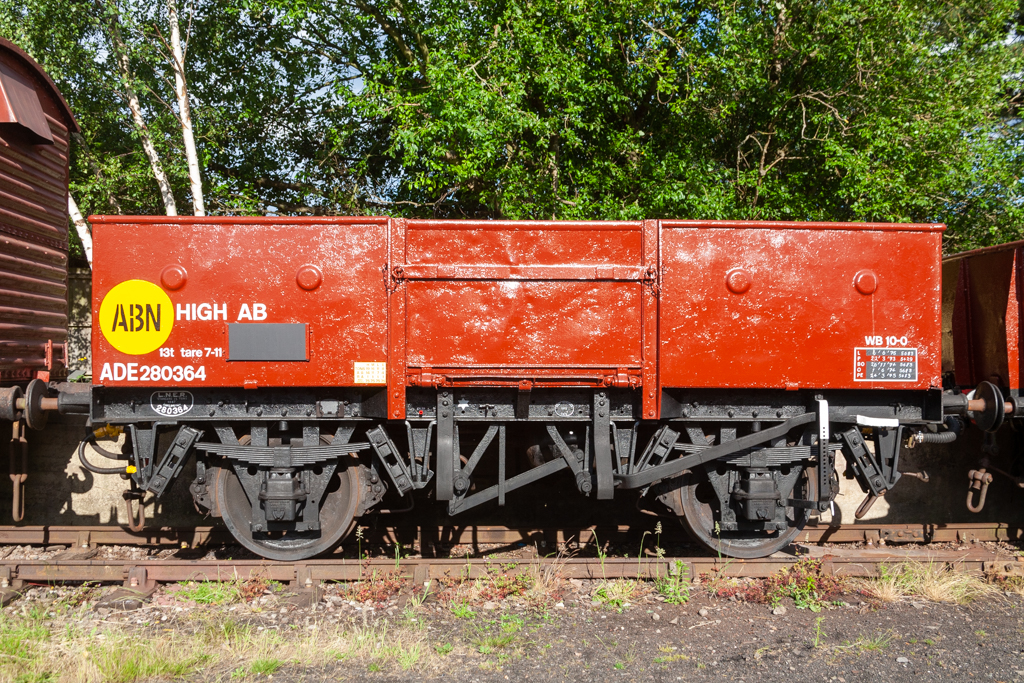
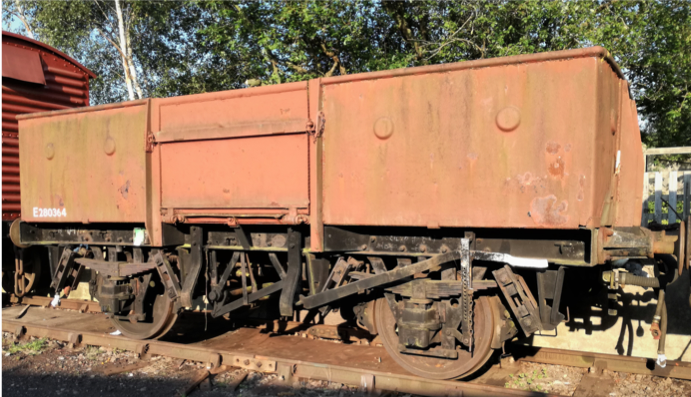
    Tonight, I’ll start with E280364, our Air Braked LNER Steel High.
    All-Steel Highfit wagon E280364
    Type OHB
    Diagram No. 194
    Capacity 13 Tons
    Wheelbase 10ft
    Built 1947 in Darlington
    During 1970 a total of 40 wagons of five types were modified by BR Western Region, for a trial of air-braked wagon operations with increased operating speeds between Oxford and Worcester.
    The modifications that allowed the maximum operating speed to be increased from 45 to 60 mile/h included:-
    Uprating the suspension leaf springs from 5-plate to 9-plate,
    Converting from shoe type to BR long suspension links,
    Installation of two-pipe auto-air brake equipment.
    The wagons that were modified for the trial comprised:-
    Twelve, 13T All-Steel Highfits (OHB)
    Twelve, 12T Vanfits (VVB)
    Seven, 12T Palvanfits (VPB)
    Four, 22T TubeVB (STB)
    Five, PlateVB (SPB)
    The trials ran until 1972, following which all 40 wagons continued in service as part of the then growing fleet of air-brakes wagons.
    The All-Steel Highfit wagons of which E280364 was one, continued in network service until the late 1970s. They were then transferred into departmental use for carrying spare parts between depots, the last being withdrawn in 1992.
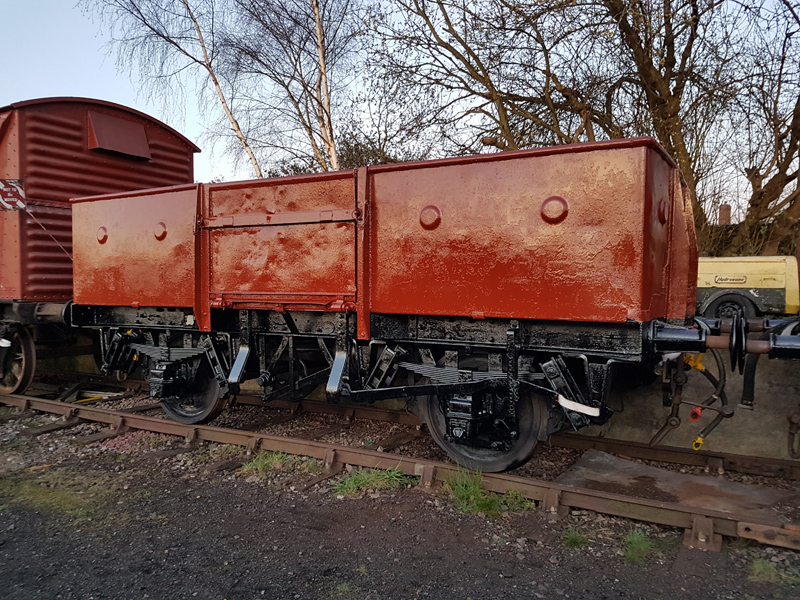
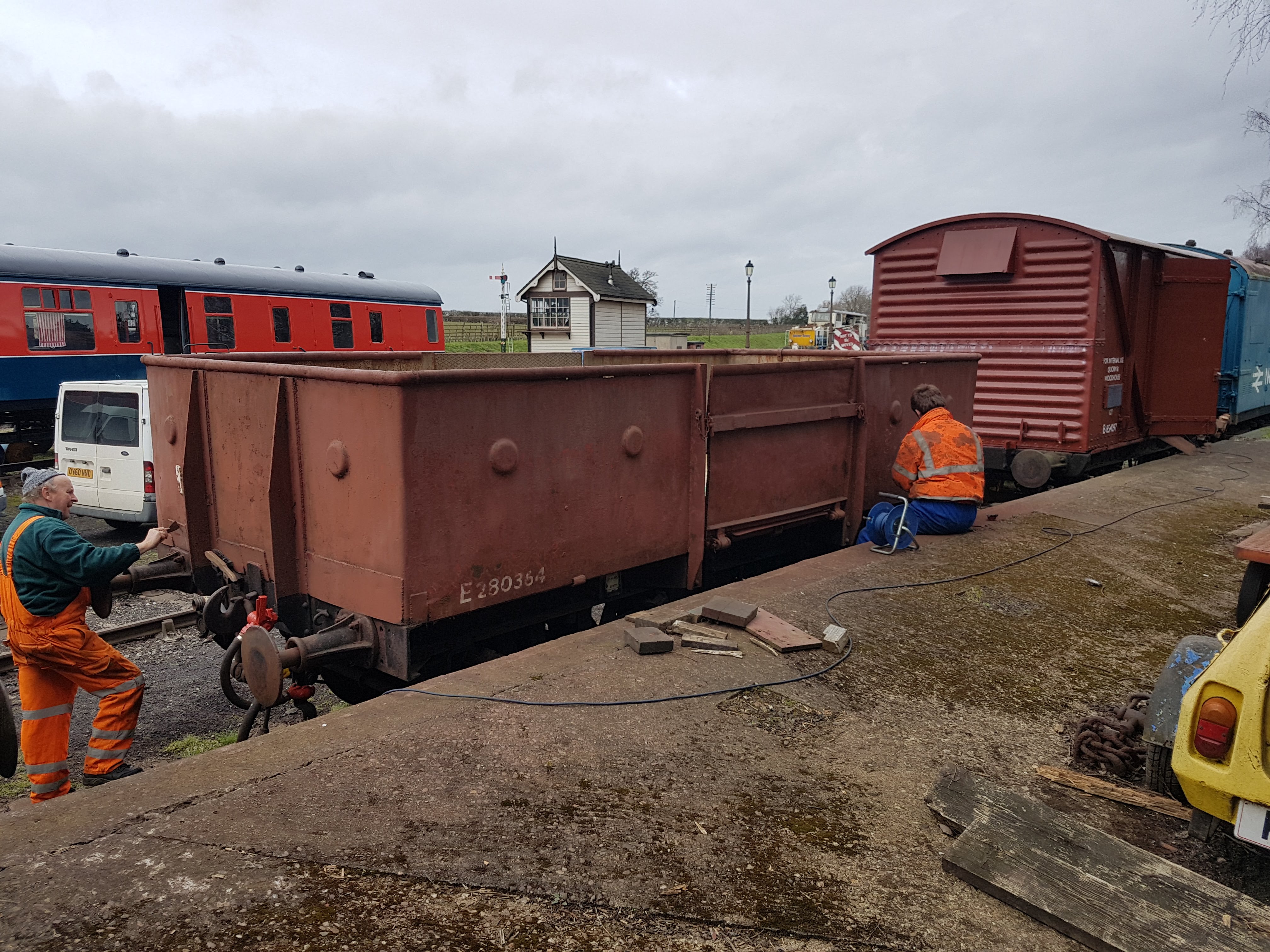
    E280364 which was built in Darlington in 1947, was rescued for preservation by Nick Tinsley in late October 1990 from Peterborough Wagon Shops, and is currently undergoing restoration by us. When we left site E280364 was sat in its bauxite gloss top coat, with the underframe having been sprayed. It awaits signwriting before this vehicle can be released to traffic.
    E280364
    20200322_182043
    20200321_125332
    20200307_124224

  • 15/03/20 – Spray it and hope it sticks…

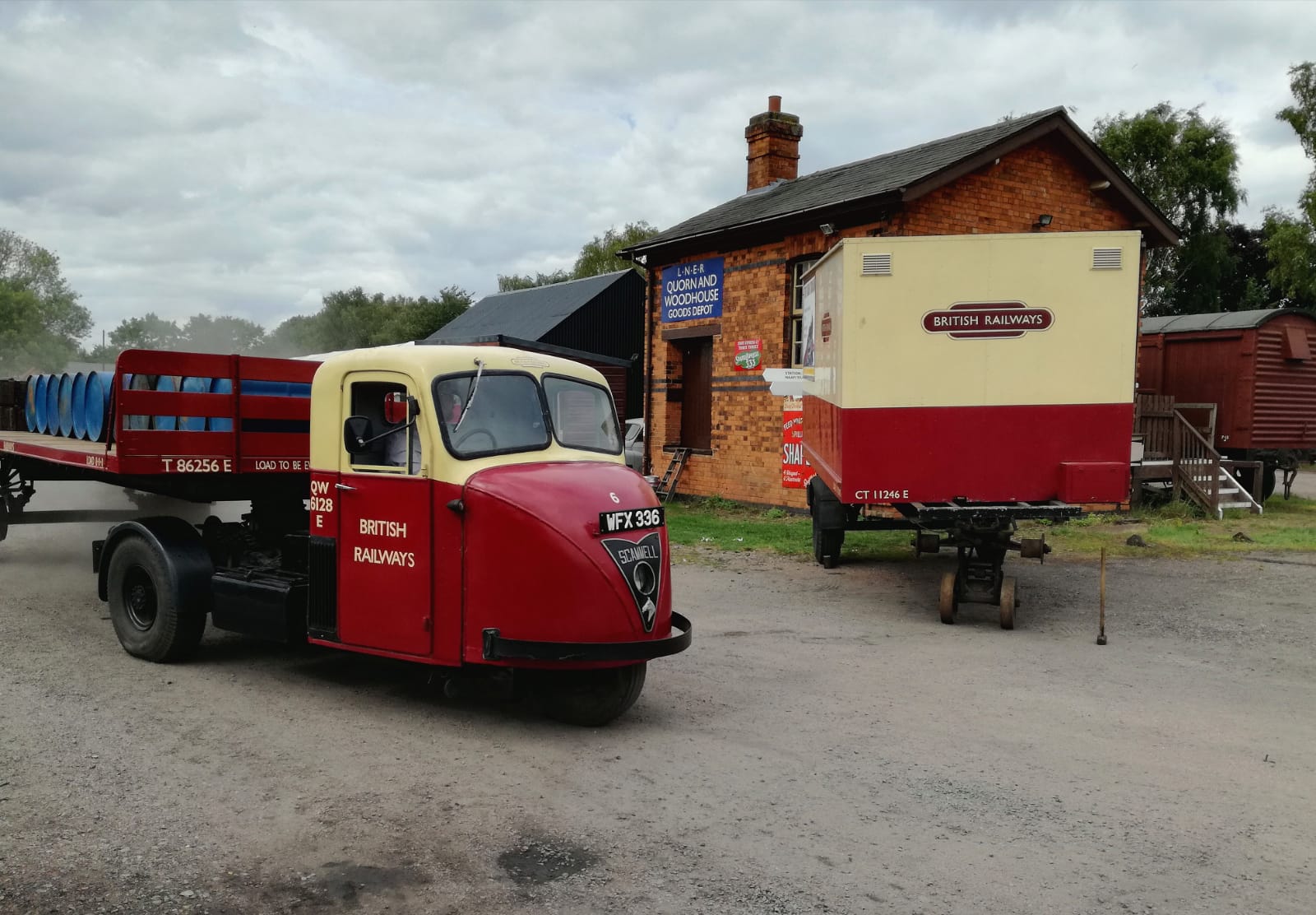
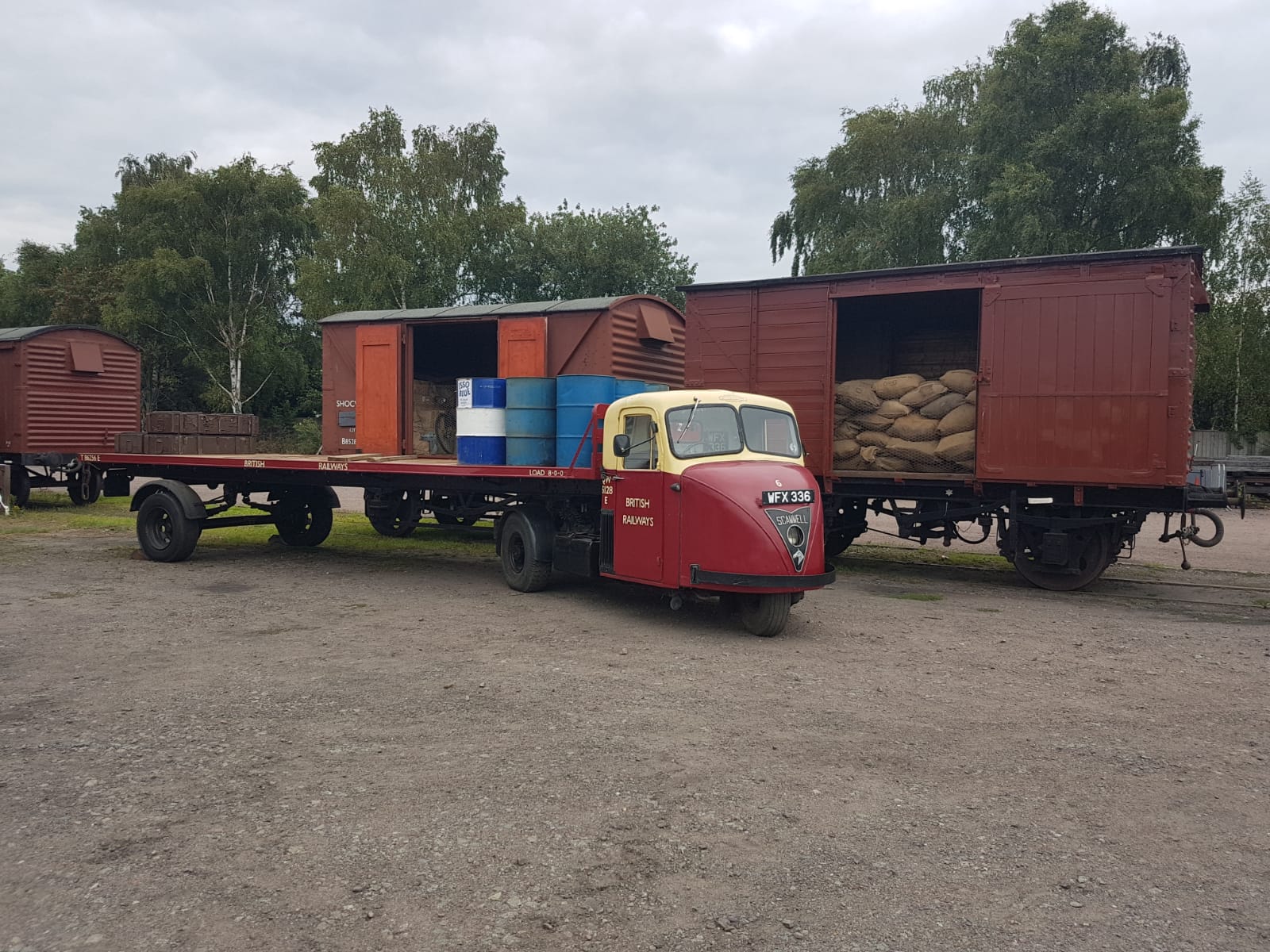
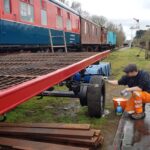
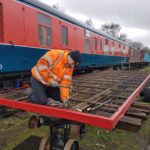
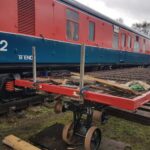
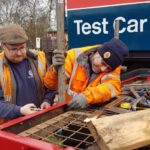
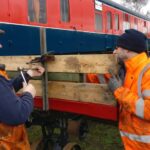
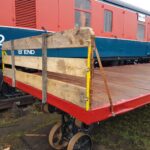
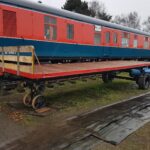
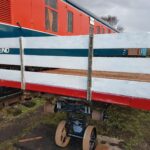
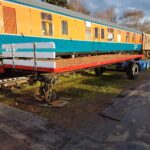
    Before we move into the weekend’s activities, I’ll touch on some progress Matt has made with the flat bed Scammel trailer. The main C channel has been painted in Crimson, in readiness for the floor to be fitted. The load securing hooks have been painted in black, this had waited until the main top coat had been completed. The floorboards also got delivered.

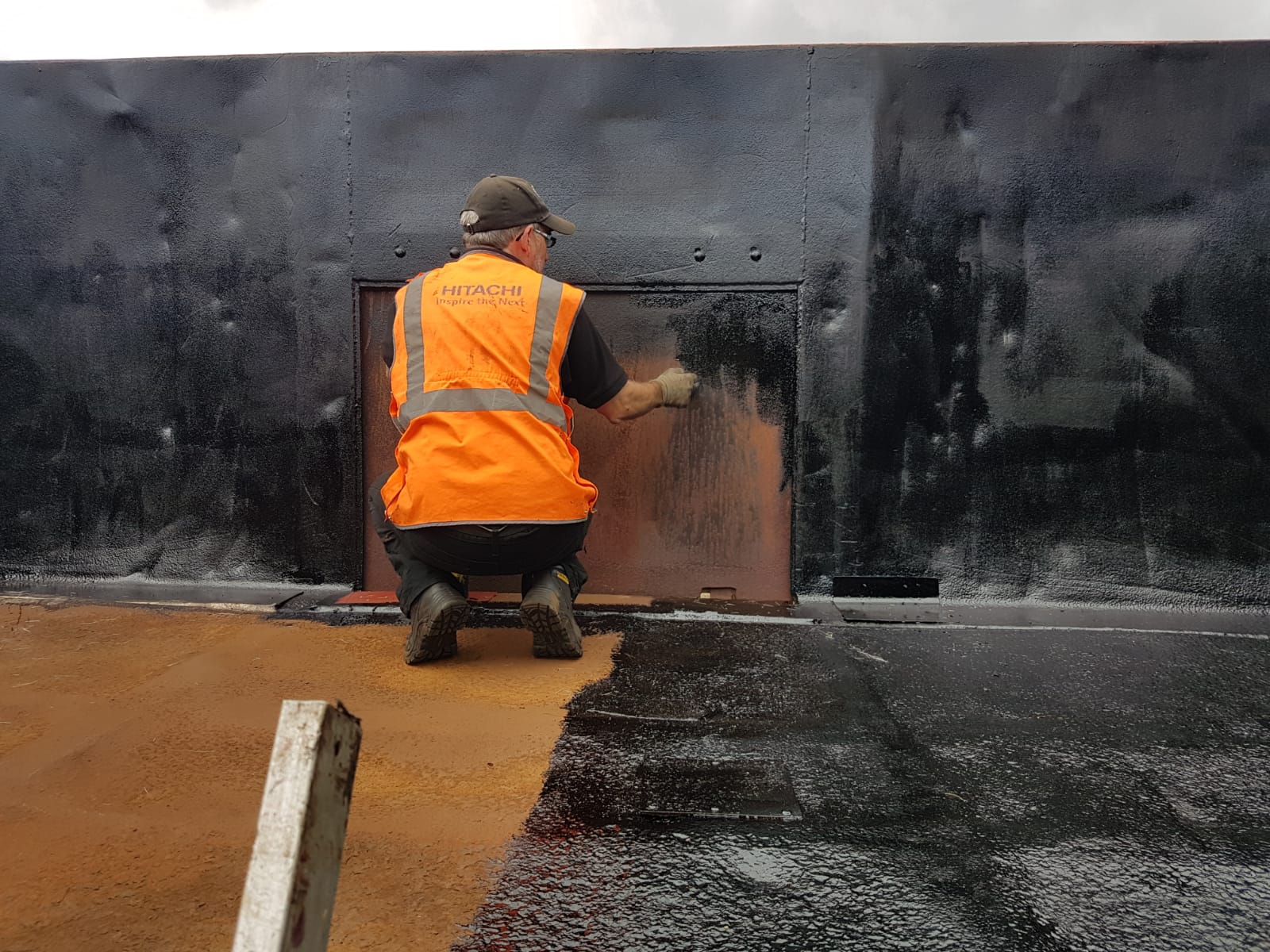
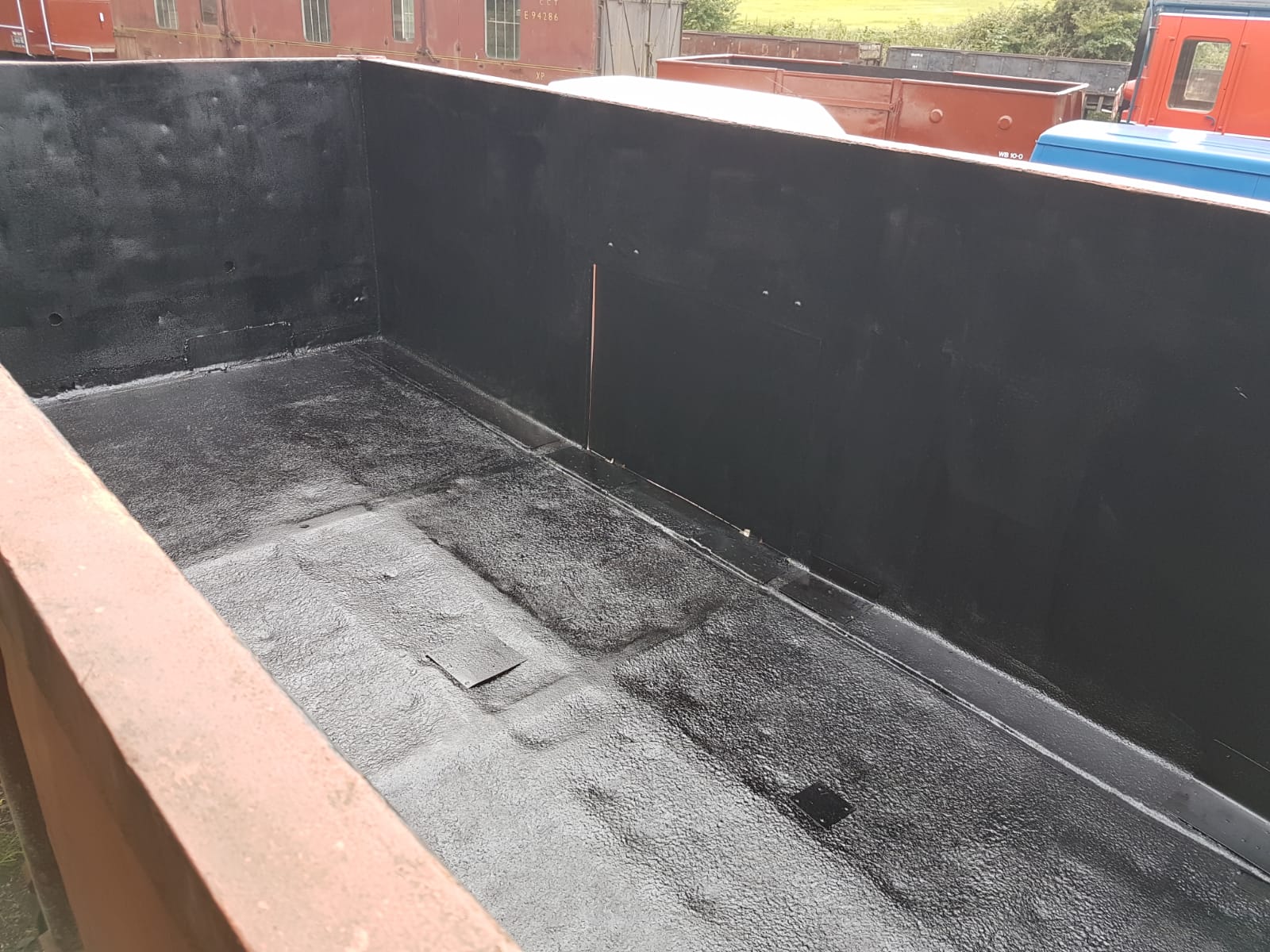
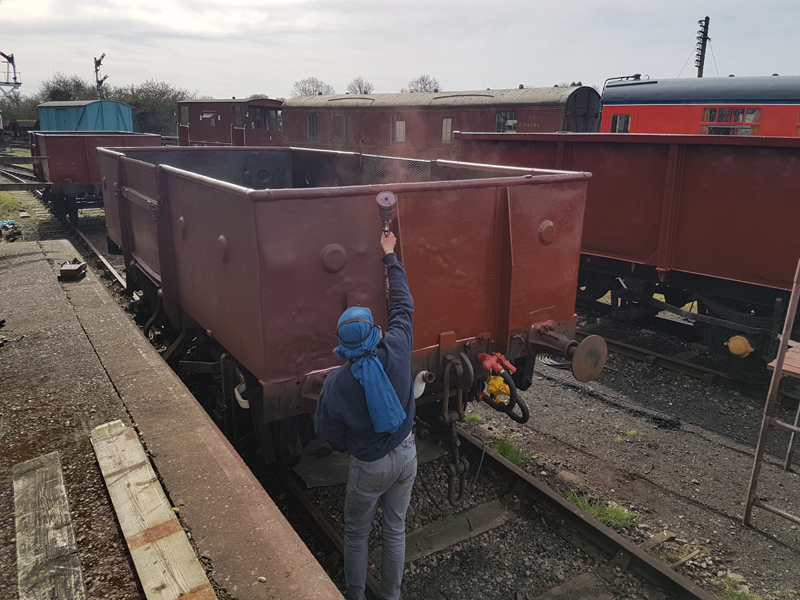
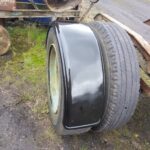
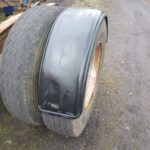
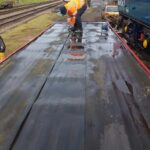
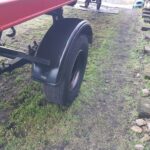
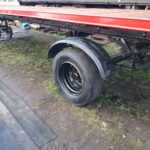
    My job started by cleaning the tyres and rubber mudguards on the trailer. While I was doing this Matt and Dave removed the rubber floor fitted for its duties as a farm trailer. Once cleaned, I applied some products to the tyres and mudguards to give them a bit of shine. This done I surveyed and re-assembled the spray gun and pressure pot ready for the first use this year. We had to use the small green compressor to spray due to the compressor in the Test Car still being broken.  Eddie, Harry and James continued to paint the interior of the 2 Steel Highs with bitumenous paint. Jake and I waited for a gap in the weather and started spraying the 3 wagons; 2 Highs and the Tippler. By the end of the day all three wagons were in undercoat, ready for gloss.


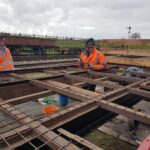
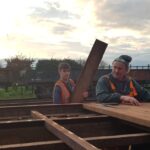
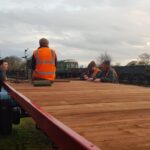
    Jack, Matt and Dave constructed a Headboard for the trailer, and then started fitting the floor… until it was found that the planks wouldn’t fit without taking out the mesh. This had hoped to be able to stay in for rigidity, but not all things go to plan!

    With the mess out of the way, the floor fitting began. Matt marked each plank and Dave cut them. Soon the floor was all down and the trailer board fitted.

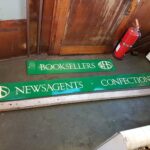
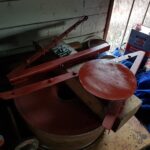
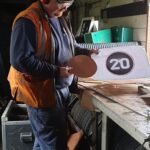
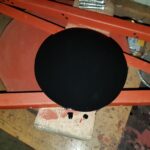
    On Sunday, with the weather set back to wet, Matt started by completing some signwriting for the WHSmiths kiosk at Loughborough. In a gap in the weather I changed the front wheel on my car following a slow puncture (which was getting faster!) and blew up all the tyres, and then did the same on other members of the QWW fleet.  Completed, I set about the compressor to remove the electric motor for replacement. Matt started fabricating a supporting strut for the trailers headboard which was a tad wobbly. These got an angle fitted to the back of them for stiffness and then primed. Matt then cut out and primed a disc for the 20mph warning on the trailer.

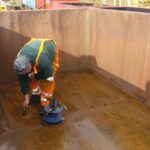
    I assisted Nick with drilling drain holes in the Iron Ore Tippler’s floor. These are so placed to drain the water while trying not the drip on any brake rigging.

    To finish off, I fitted the trailer’s number plate holder and Jack and Matt refitted the rubber mudguards and primed the wood on the headboard. Once the primer had dried, Matt also put the 20mph disc into gloss black.

    Thanks for reading, and all being well we’ll be back next week, hopefully with, a repair compressor and 3 wagons in bauxite gloss (weather and health being well!)

  • 01/03/20 – Flats, Feeds and Filming Fun.

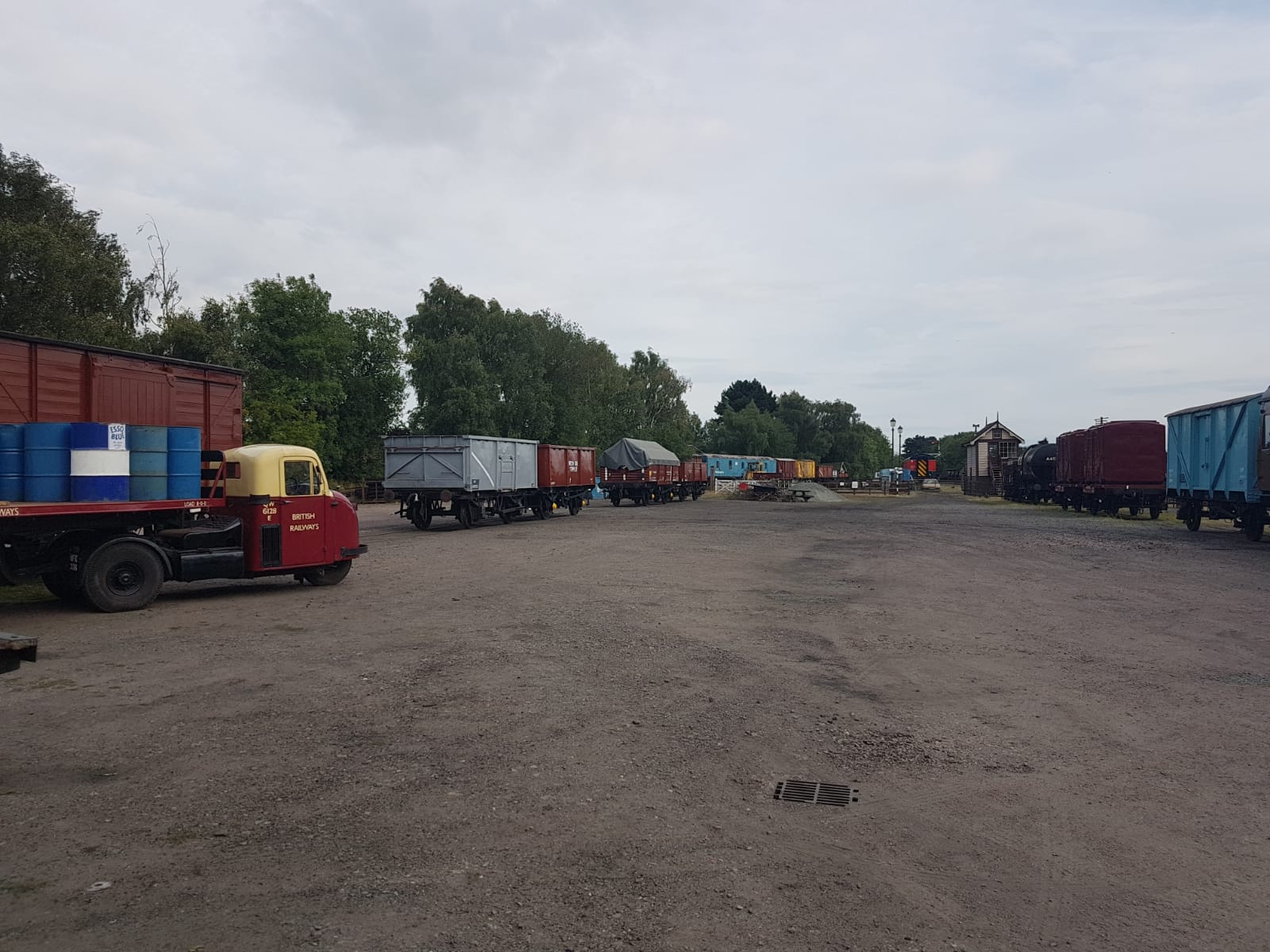
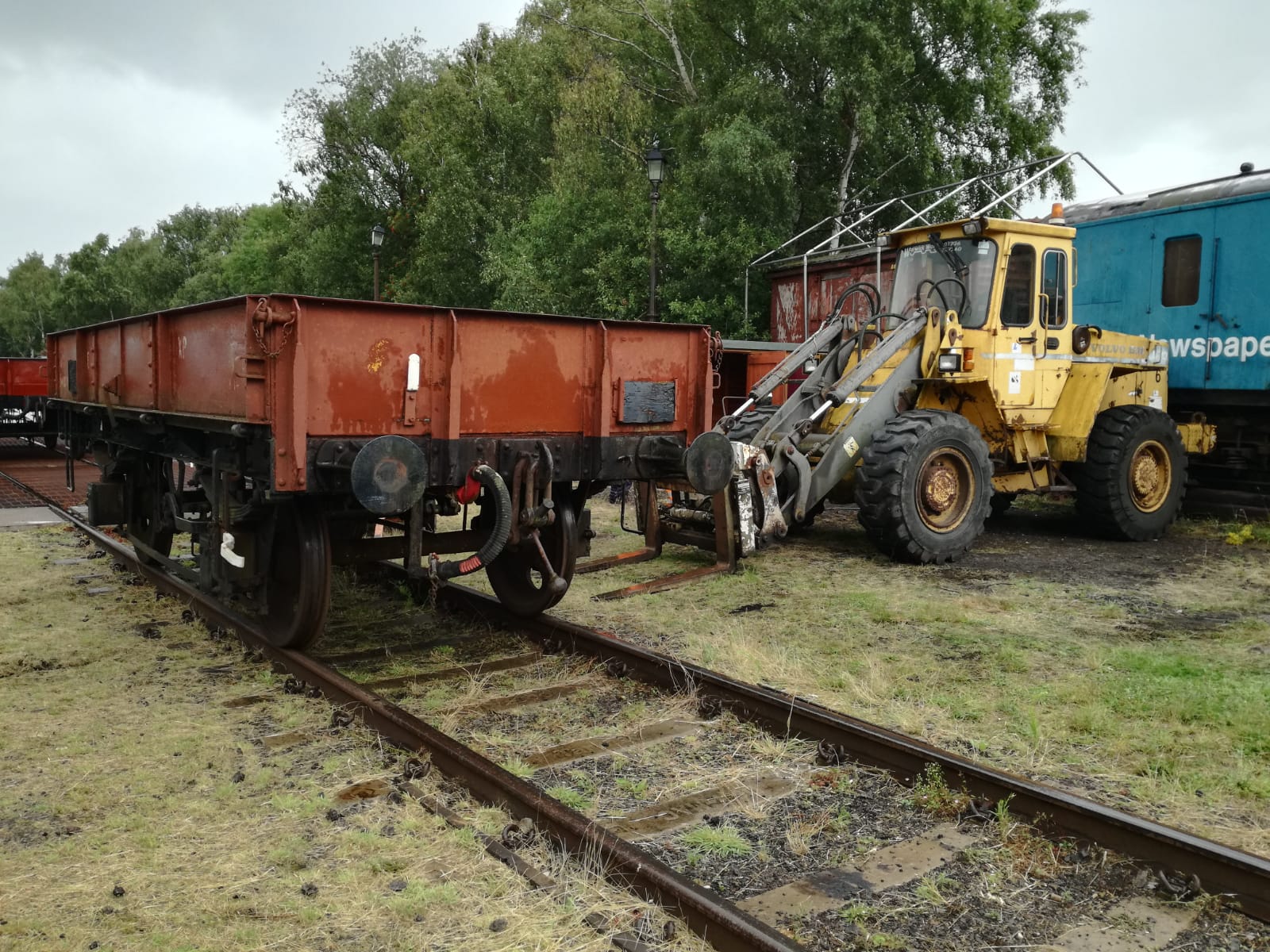
    Welcome to another update from Quorn (yes, actually Quorn!). Saturday had the full team bar James in attendance, though I arrived late and I had to collect some electrical supplies. The main objective of the day was to move the trailers about using the dolly that came with the flat trailer. Once a battery was changed on the Volvo, it started straight up and we were able to pick up the dolly and reverse it to the box trailer. An issue with the coupler height on the Volvo led us to making a solution that fixed to the forks. This made positioning the dolly easier with improved visibility but the 3 pivots in the consist made for some tricky maneuvering! The box trailer was moved into the yard and the flat trailer has been turned around.

    I undertook the repairs to the Test Car electrical system. You may remember some months ago that the contactor for the Generator feed would not hold closed. We don’t have any reference to the design of the electrical switchgear which makes fault finding the system difficult. I’d not been able to find the fault, so we’d opted to change out the changeover system to a simple changeover switch. Thank to a colleague of Dave’s, Syd, we have a suitable switch which I have fitted and successfully tested. With some new switching arrangements we can now changeover the supply to the Coach. The compressor was struck up and we tested a newly acquired tyre blower.

    Eddie and Harry continued prepping the Steel Highs and Tippler for paint. These are getting tantalisingly near, and only await slightly warmer weather.
    On Sunday Matt, Jack, Dave and I donned our reenacting clothes, with a guest appearance from some friends of Matt and Jack, Jed and his wife. We’d dressed in 1950’s period uniforms and clothes, and used them along with Madge and the Van train to shoot some footage which is to be used in the advertisement video for the upcoming Goods Galore gala. Keep your eyes on the Railway’s social media for this video.

    With the flat trailer now the other way round, Dave, Matt and I attended to a large dent in the trailer with a large sledgehammer.  We got the worst of it out, and Matt and Dave fitted a new corner cap, as per the other side.

    I took the opportunity to look over the ‘Wagon under Test’ lamp used when carrying out a slip test. I took the internal boards out to find the internal accelerometer and been removed and not in the most reversible manner. As I don’t know enough about the lamp, I’ve opted to remove the internals and replace it with a microcontroller and accelerometer that I can program to replicate the functionality. of the lamp. Eddie and Harry continued prepping the wagons, focusing on the internal surfaces of 280364. The interior of the wagons will be painted in bitumen paint.

    Thanks for reading. Most of what we are doing recently is very weather dependant, so I can’t really predict what we’ll be doing. There’s plenty to do, so do join us and see what we get up to!

  • 16/02/20 – Dennis the Menace

    Hello All, hope you all haven’t been blown/washed away by Storm Dennis! This weekend has concentrated again on the Yellow Coach, though Dave, Matt and Jack had a day at Quorn on Sunday sorting some bits out for Madge and Goods Galore, but first some news from last week. In our haste to leave the Heritage Railway Association Awards to avoid the wrath of Storm Ciara, we had not picked up our runners up prize for the Communications Award. David Morgan very kindly dropped it off at Loughborough for us to pick up.

    Coms

    Nick, Jake, Matt and I were in attendance Saturday, slowly making headway with the coach. Jake and I tried to pull some more wires through for the bedroom but unfortunately failed due to the amount of elbows in the run. Nick did some small jobs until he went to drop his van to be looked at. Matt cut out and primed a headboard for the Fish and Chip specials. Having failed with the wire pulling I gave up and replaced the board at the back of the mess room heaters. All of the vertical heaters on the coach seem to have suffered a bit of heat damage behind them, so the opportunity has been taken to repair some of the damage and stop it happening in the future. Once finished with the headboard, Matt made some standoffs for the junction boxes I’d fitted underneath the coach.
    Sunday had Nick and I at Rothley, Nick bitumening the back side of the metal that has been welded in during the week, in Jamie’s lunch hours. I gave the heater board a lick of paint then reassembled the heaters with some 3/4″ spacers to introduce an air gap between the heater and the wall. I then made some supporting brackets for the conduit runs underneath the 2 bunk beds.

    Matt, Dave and Jack completed the following jobs at Quorn:

    • Fitted 1950s number plates to Madge
    • Completed the trailer poster boards by adding a black border to the grey box
    • Removable number plate fitting added to the trailer
    • 20mph sign sign written and affixed to the trailer.
    • Several sacks stuffed for Goods Galore, with 2 sacks left to fill.

  • 02/02/20 – And its all Yellow

    We have continued working on the Yellow Coach for a number of reasons, firstly we’d like it back at Quorn, and secondly we went off the weather forecast which said it would be raining and horrible for Saturday. Back to the Yellow Coach, and Saturday saw Jamie come in and finish up welding the southwesterly corner of the coach. This looks so much much better now than it did when it left Quorn.

    Nick spent the day removing rust from under the south end vestibule floor which was sitting 1/2″ higher than normal and assisting Jamie where required. He then started removing the vinyl wrap from his latest road acquisition.

    I spent the day playing with conduit again. Last time we worked on the coach, Matt and I managed to get all the sockets fitted, with conduit fitted to these and run through the floor. Today I fitted a short section of flexible conduit in the kitchen to substitute for a section in the kitchen cupboard. This time, with assistance from Jake, I extended the conduit to reach the main 240v trunking. Most conduits dropped through the floor required removing and trimming.img_20200201_0931563247906092254168903.jpg

    Matt fitted some of the flexible conduit I’d bought above the first class toilet door to run the wires for the thermostat. Once completed Matt used the unexpected good weather to begin signwriting Madge’s trailer, ready for a charter in April.

    Sunday saw me continue on the coach electrics. Dave assisted me withdrawing the coach’s existing heater wires. We disconnected all of the heaters by cutting the cables and then pulled the redundant wiring out of the trunking. I’m quite glad that we opened up the heaters and removed the wiring, as one of the heaters under one of the two bunks had some very distressed wiring.img_20200202_0933504080457362016131182.jpg

    Matt spent the morning at Quorn, de-postering the van train and continuing to signwrite Madge’s trailer. Dave joined Matt around lunchtime to do some little bits and bobs and look around a second Scammell trailer bought by the owning group.

    For once, I wasn’t happy with something I’d done. We’d run the conduit to the trunking, but for all but the kitchen socket, I hadn’t drilled them into the trunking, which gave me some leeway to change the conduit. To cut down on the wires running down the trunking. I’ve instead attached 2 junction boxes to the trunking to split down some of the wiring.

    Nick continued stripping the vinyl wrap from his van, assisted by Harry. Eddy continued his cleaning spree, starting on the insulation material above the mess room heaters and the corridor ceiling. It may not seem it, but Eddy is cleaning 30 years of muck and cigarette staining and it is making such a difference to the interior of the coach.img_20200202_1554533963632197219973101.jpg

    Next week will be a smallish update, but for very good reason. Its the Heritage Railway Association Awards and we are picking up our one award, and will find out if our two nominations turn into awards. Join us then, thanks for reading!