Hello and welcome to an Easter holidays update from the team at Quorn.
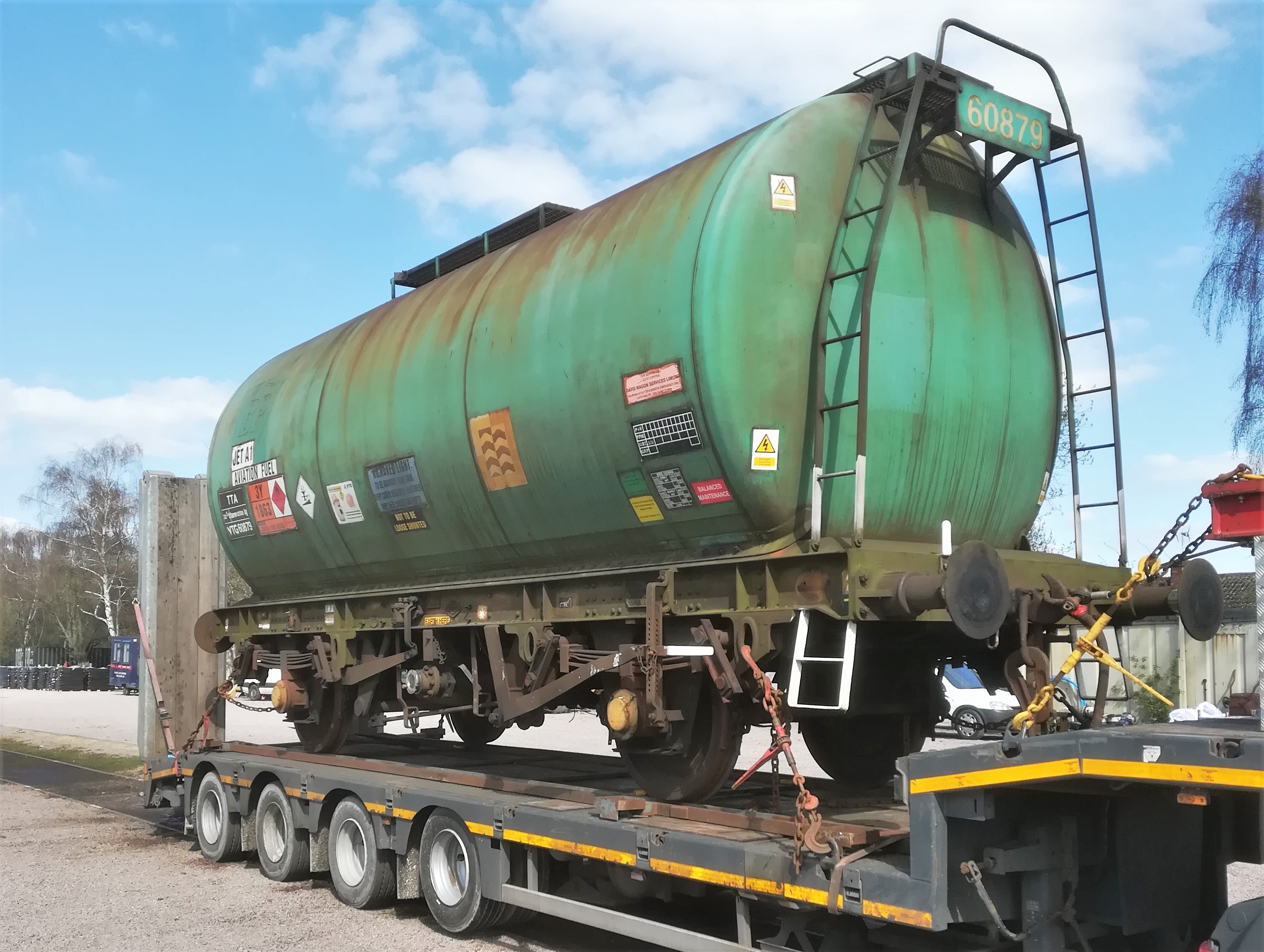
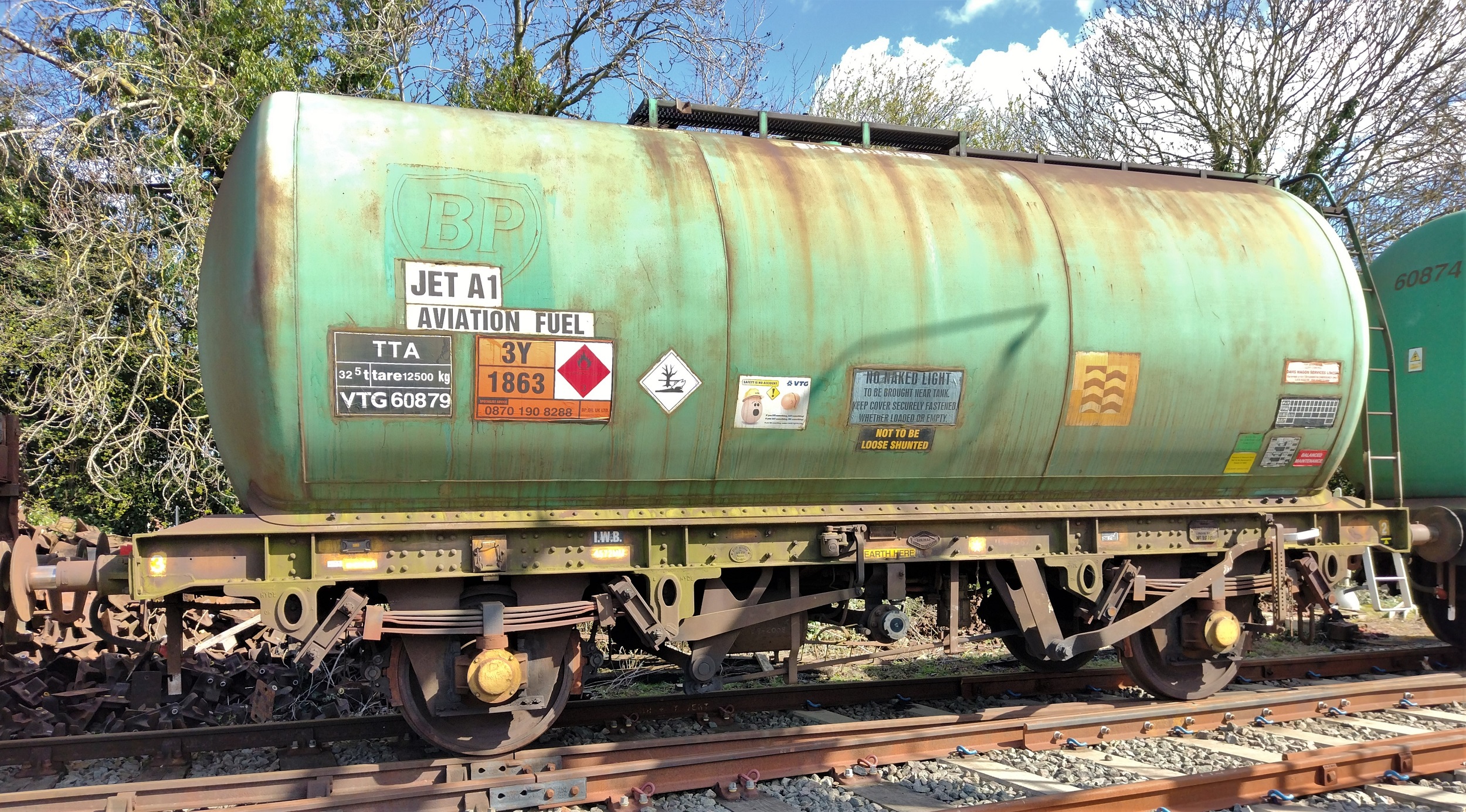
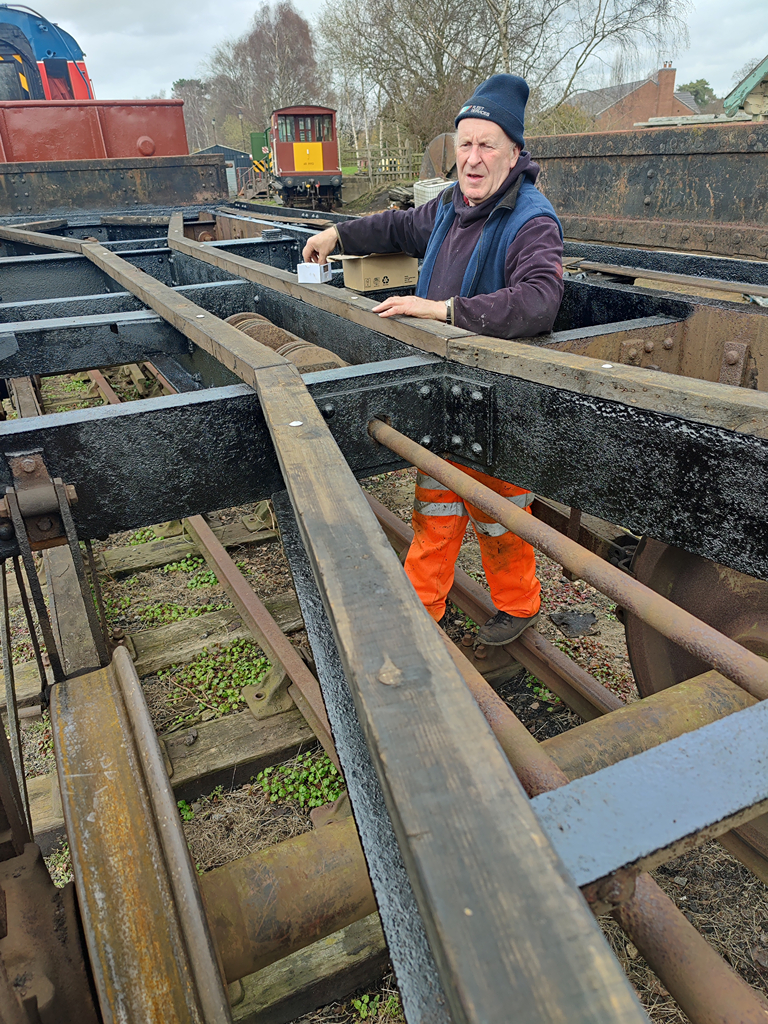
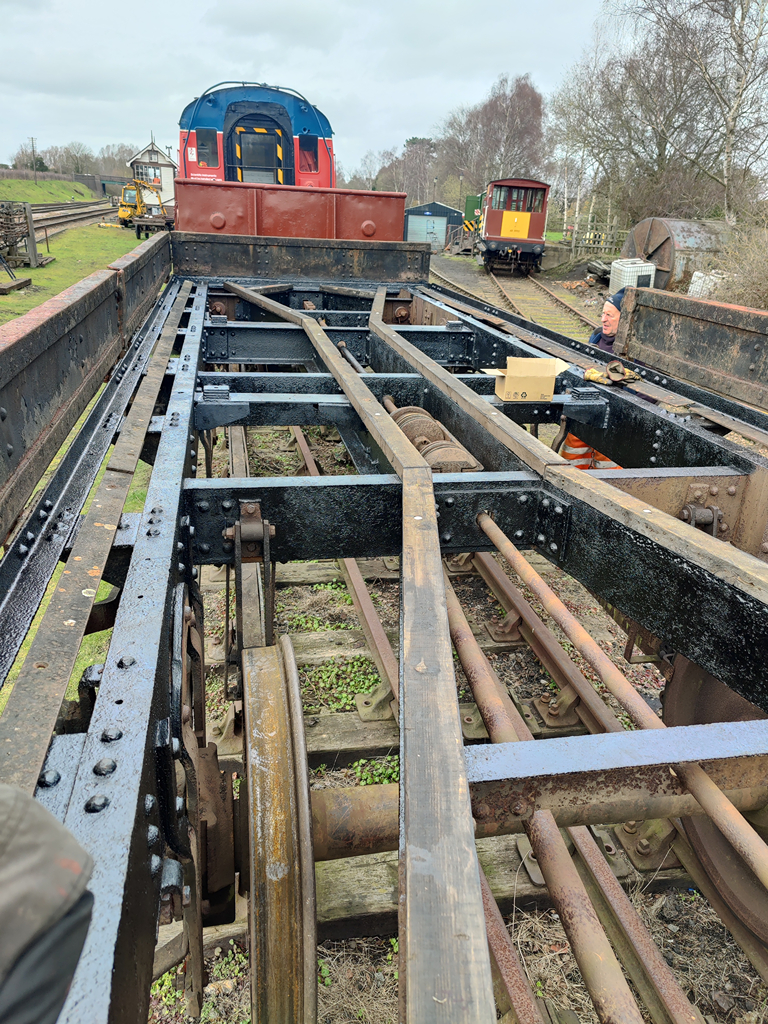
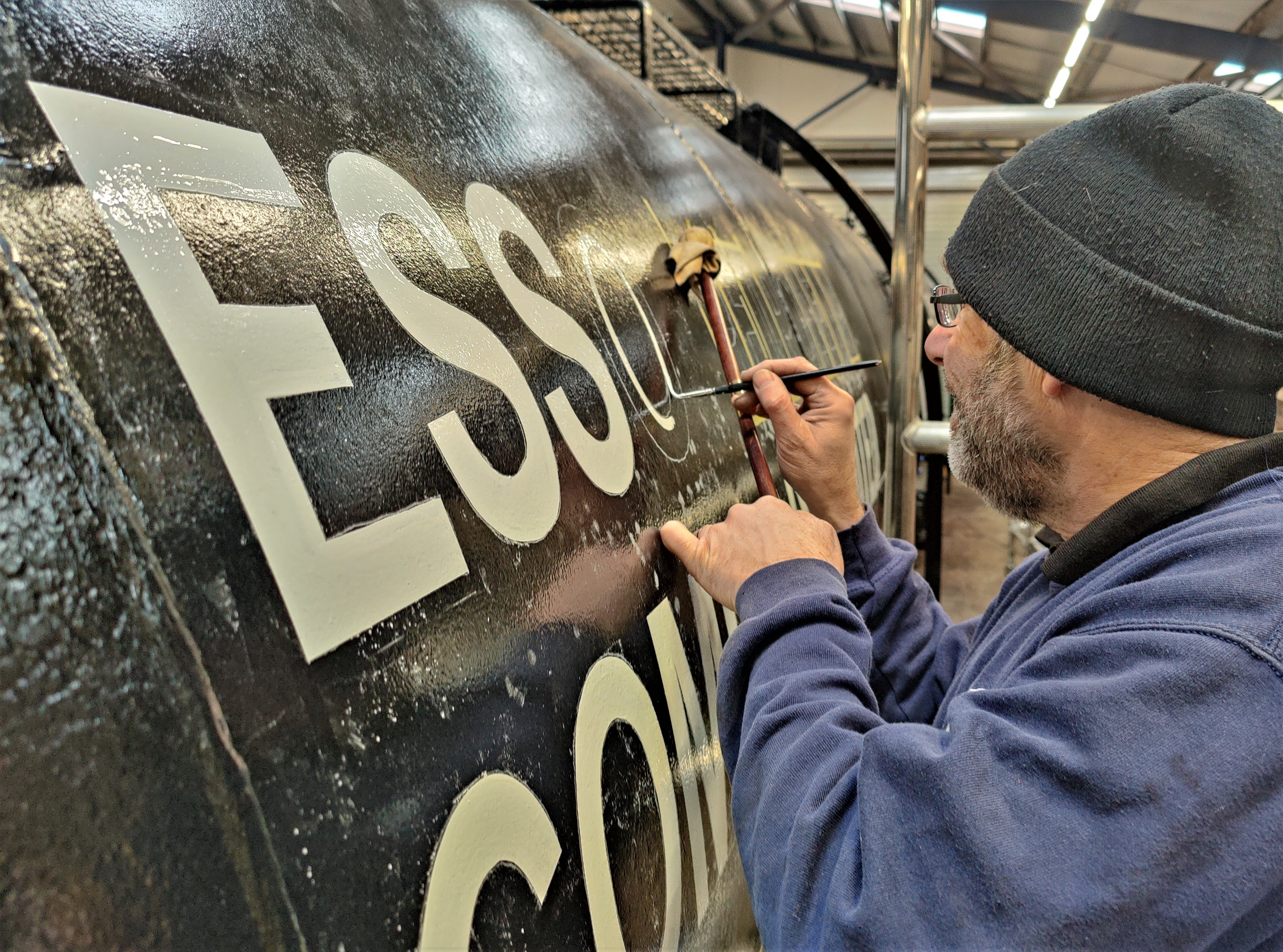
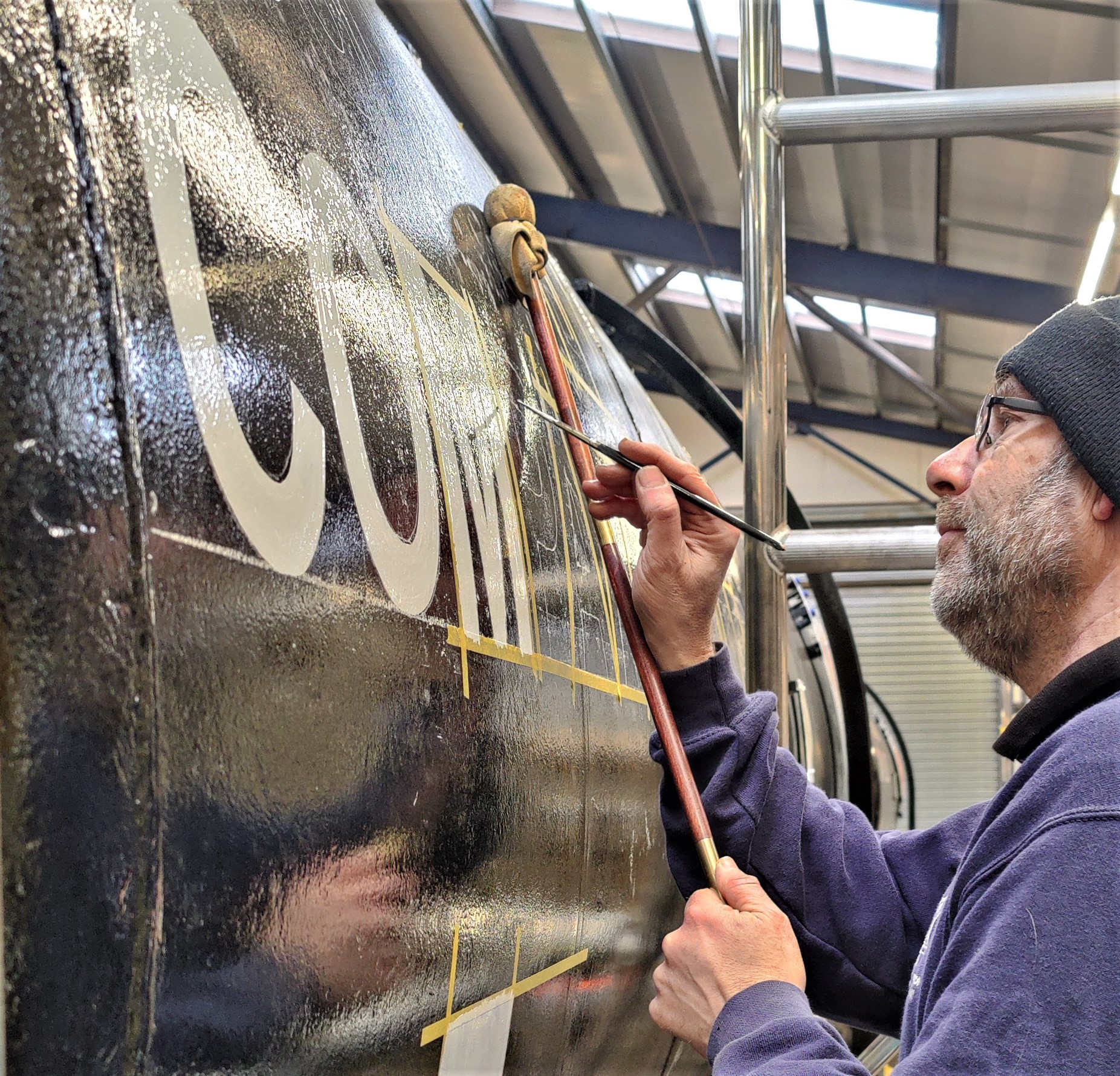
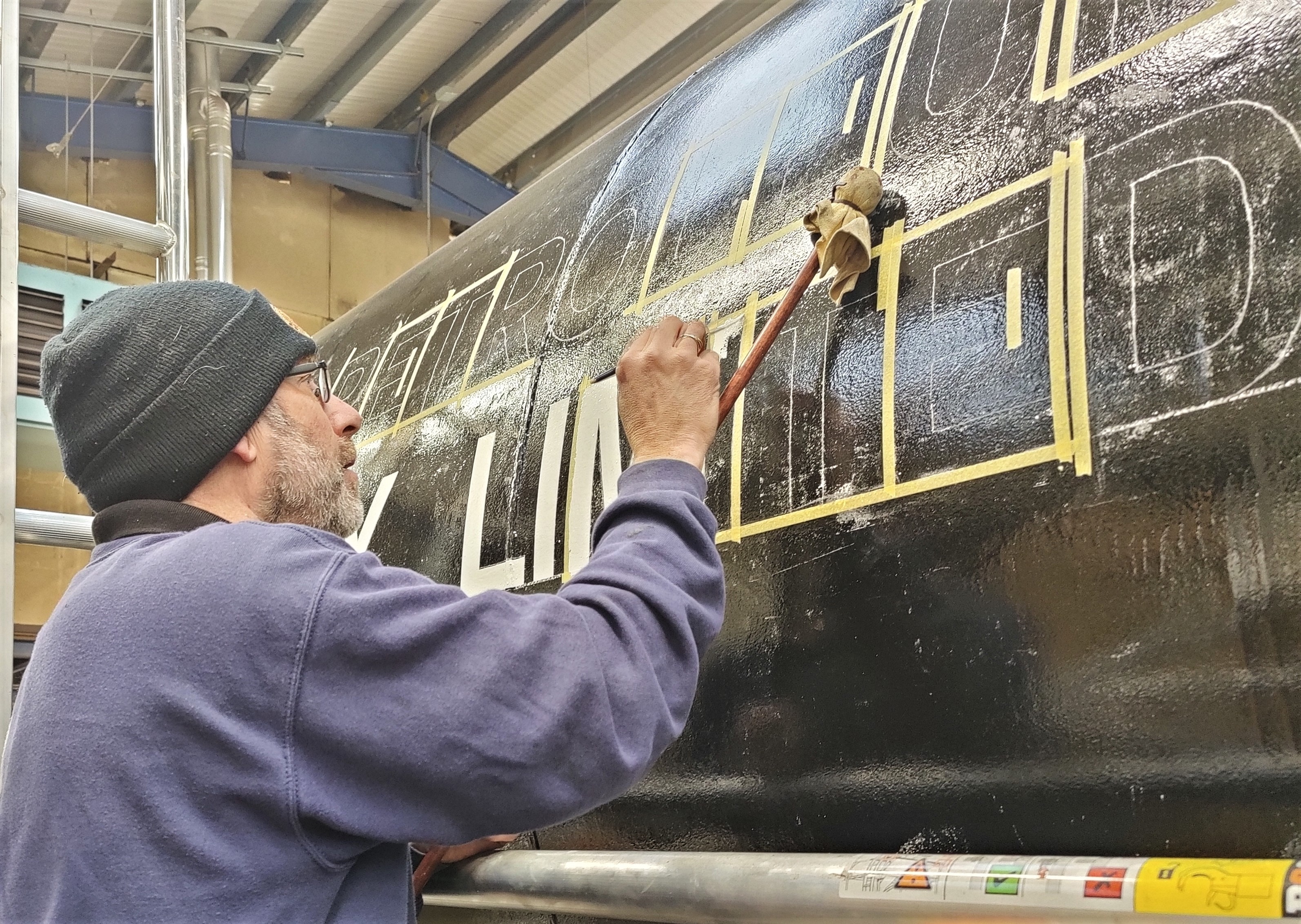
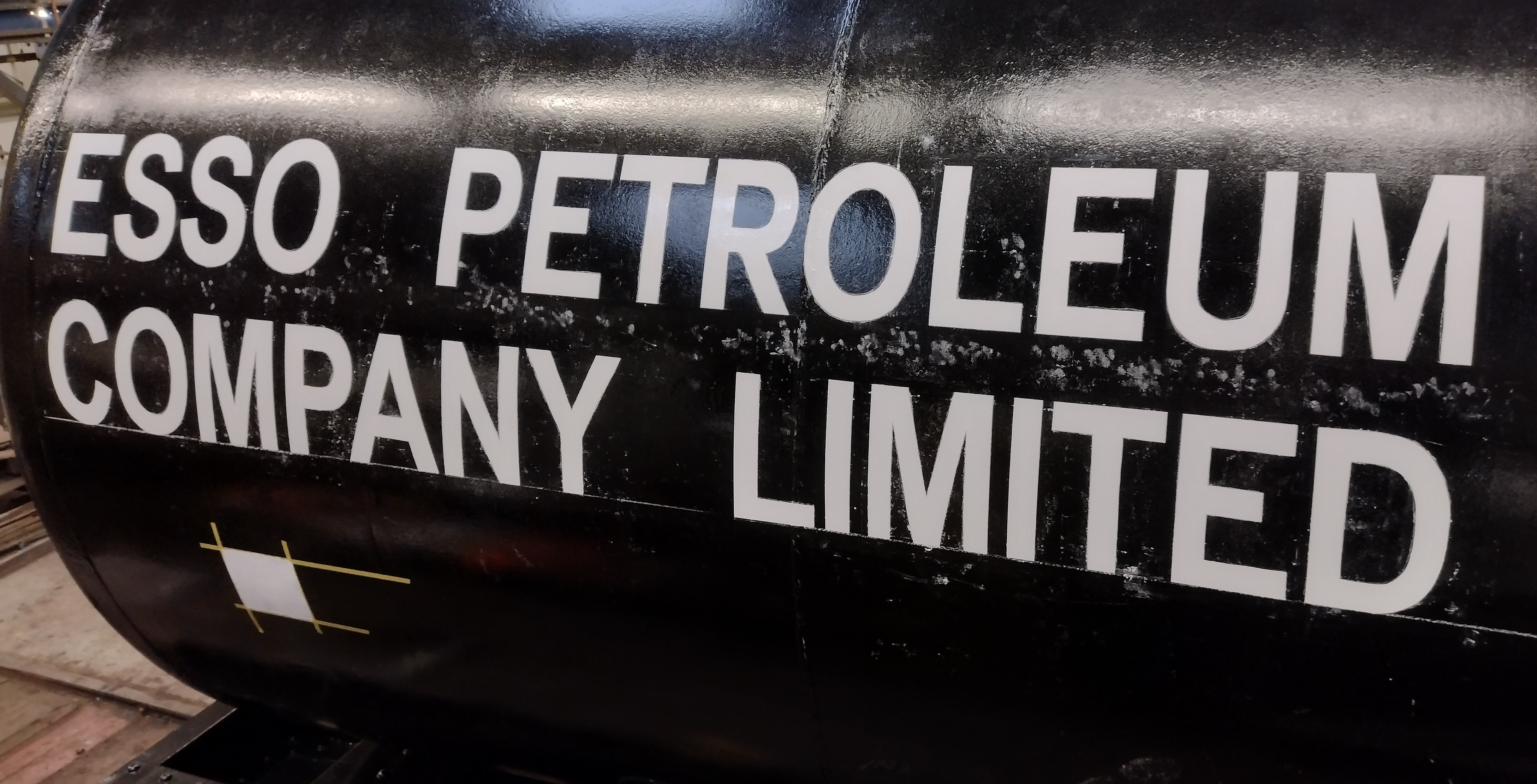
The big news this week is that our two ex.VTG, 1966 built TTA tank wagons have finally arrived from Gascoigne Wood (near Selby). The first to be delivered was 60879 (original number 1919) on the 3rd April, the second 60874 (original number 1802) arrived late on the 3rd and was unloaded on the 4th April 2023.
A total of thirteen wagons have been saved from the last batch of twenty-two, 4-wheeled tank wagons to operate on the mainline network. These two and another 11 which have been saved by the National Wagon Preservation Group at the Dean Forest Railway. They were latterly used for aviation fuel transportation between Grangemouth and Prestwick Airport.
We plan to restore both the tanks into a 1960s period livery; 1919 will be used by the GCR as an additional water carrier tank, whilst 1802 will be restored for inclusion into the tank train.
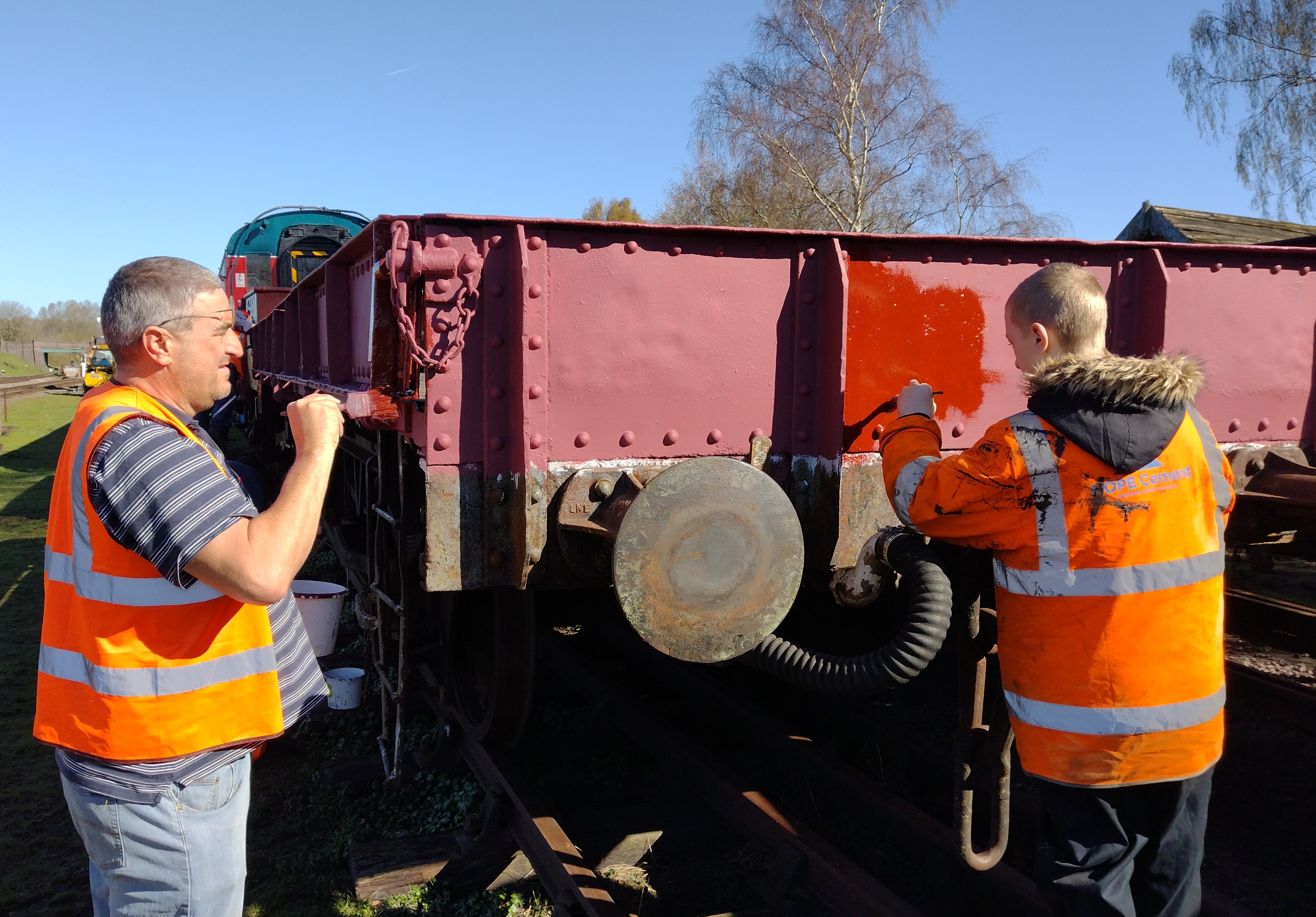
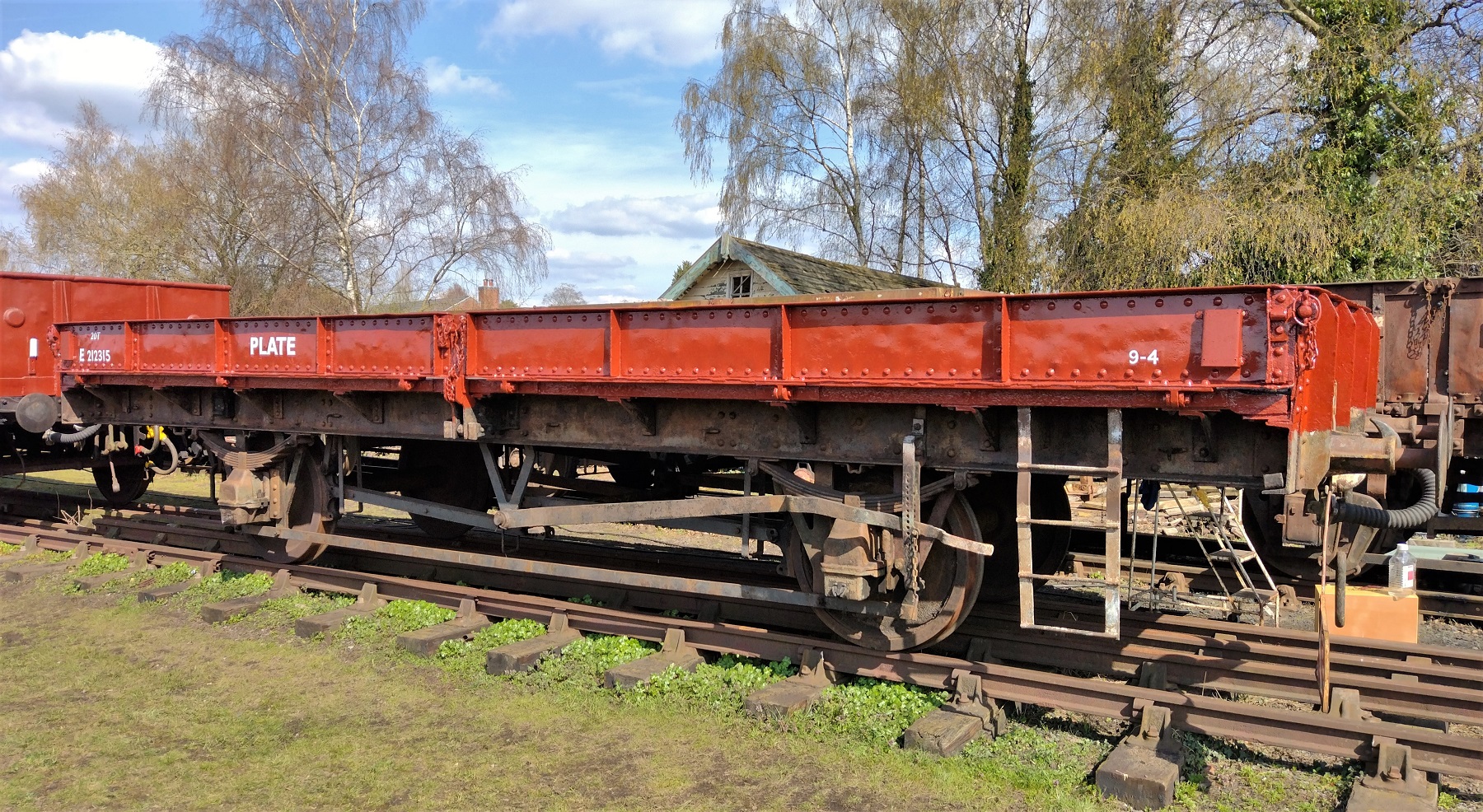
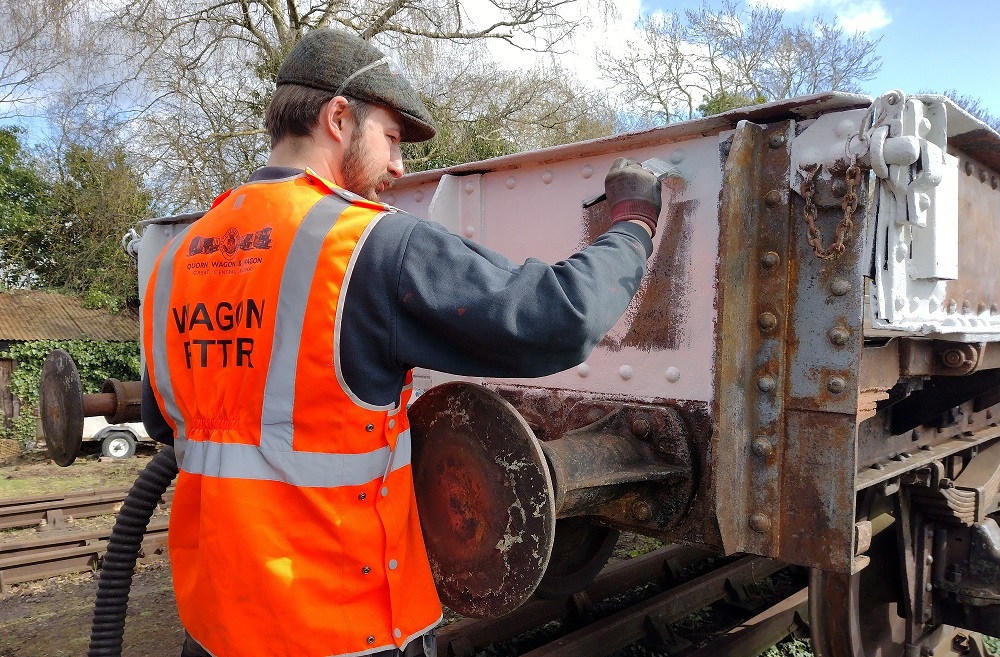
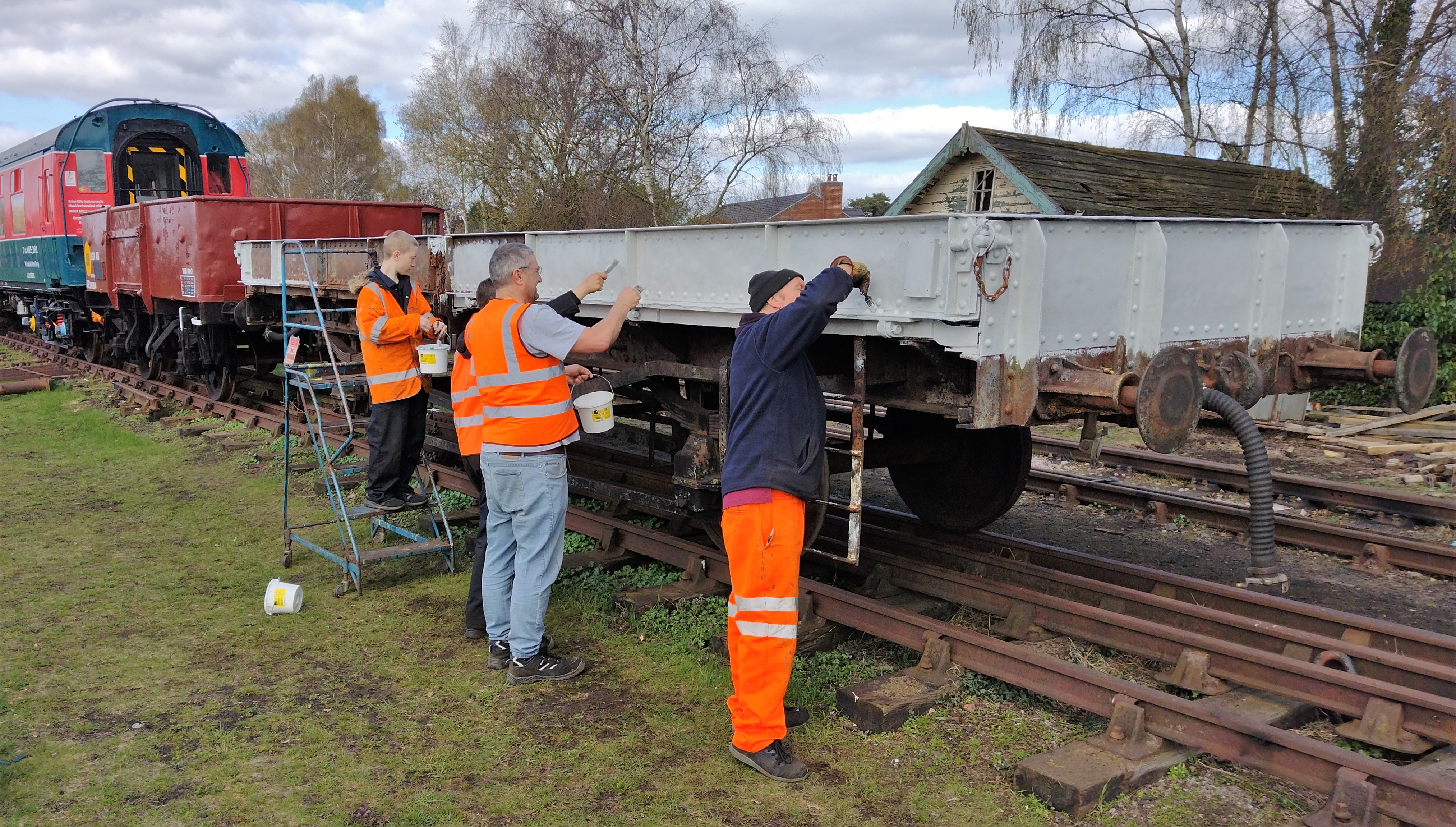
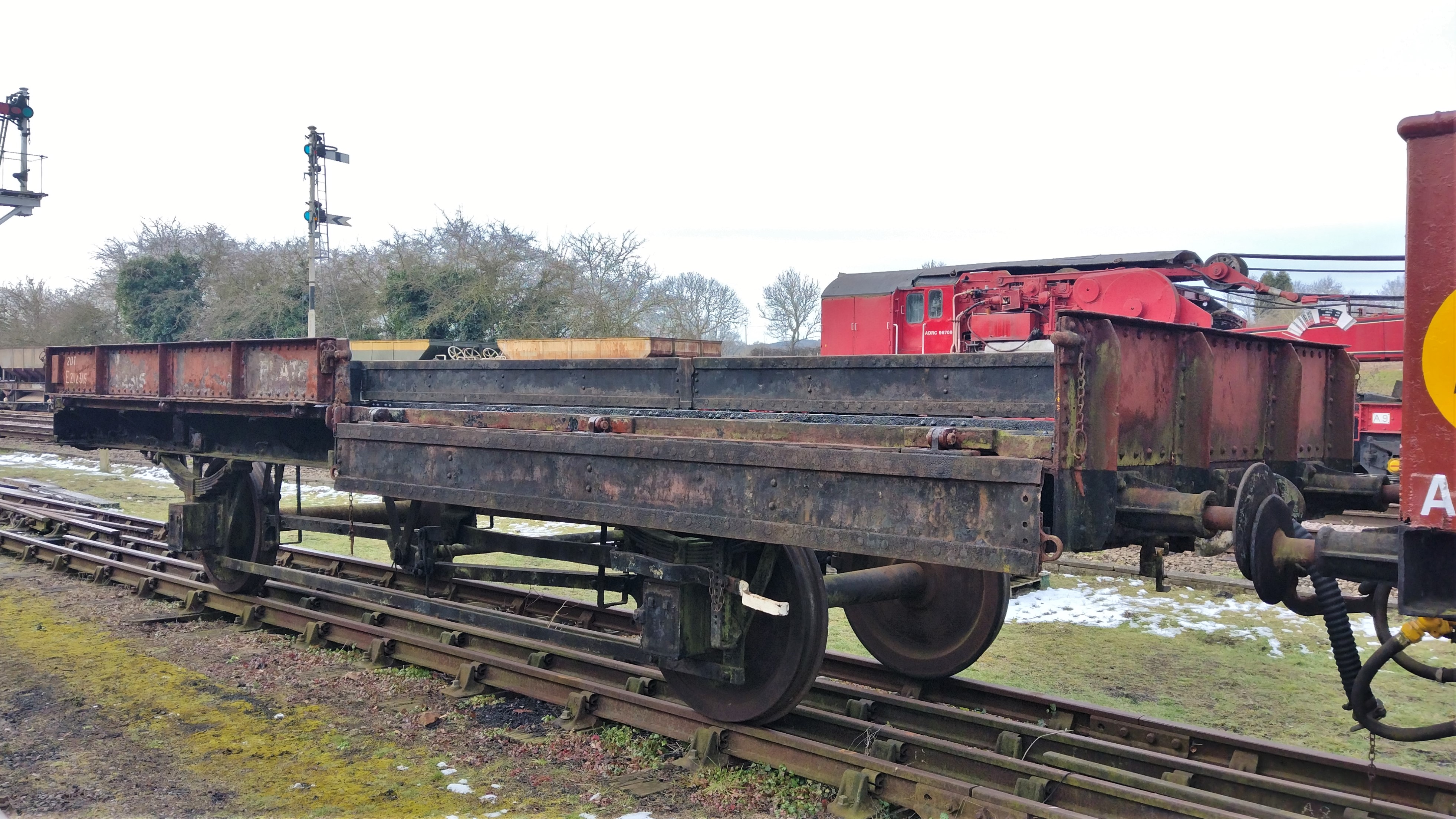
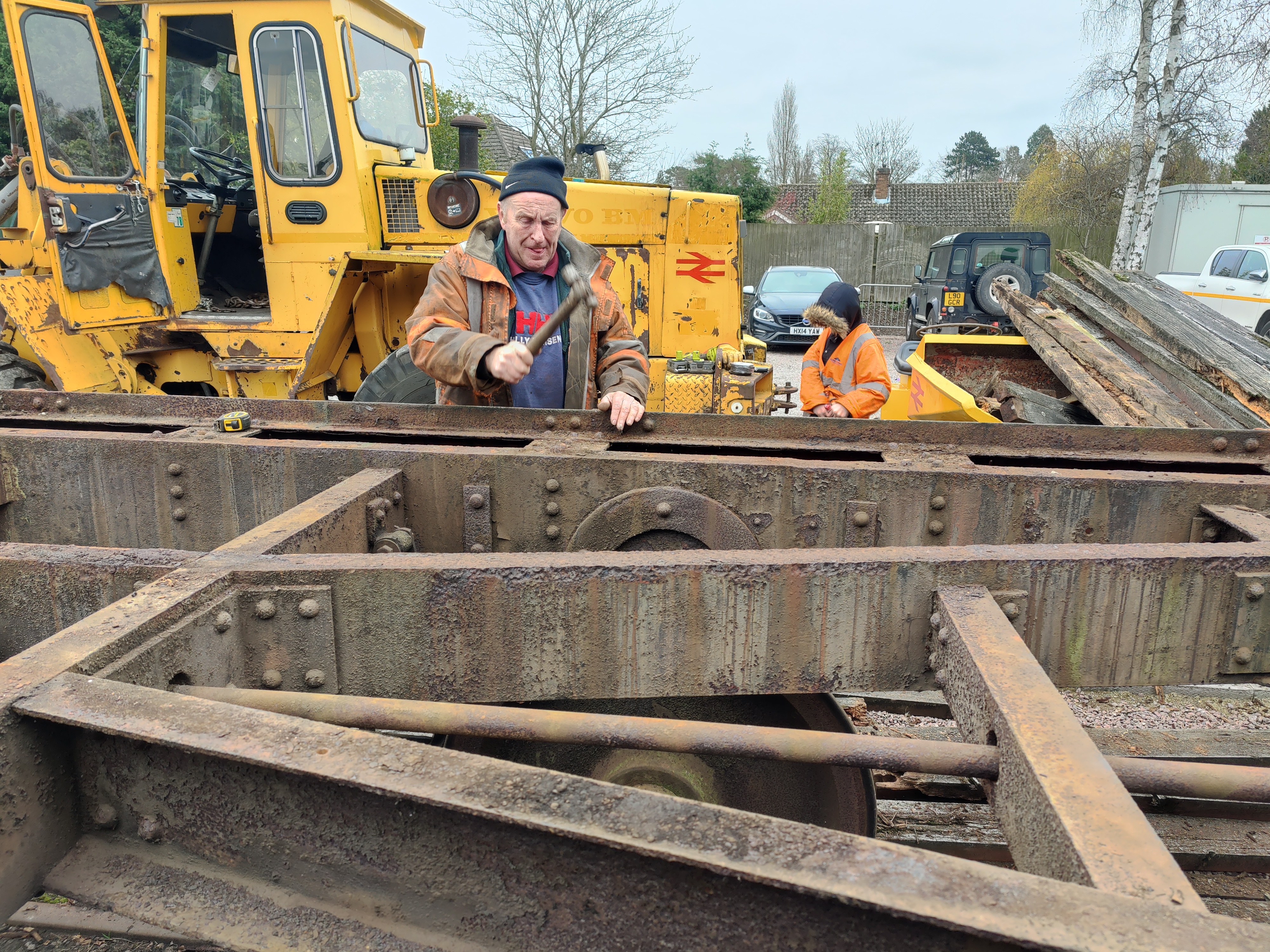
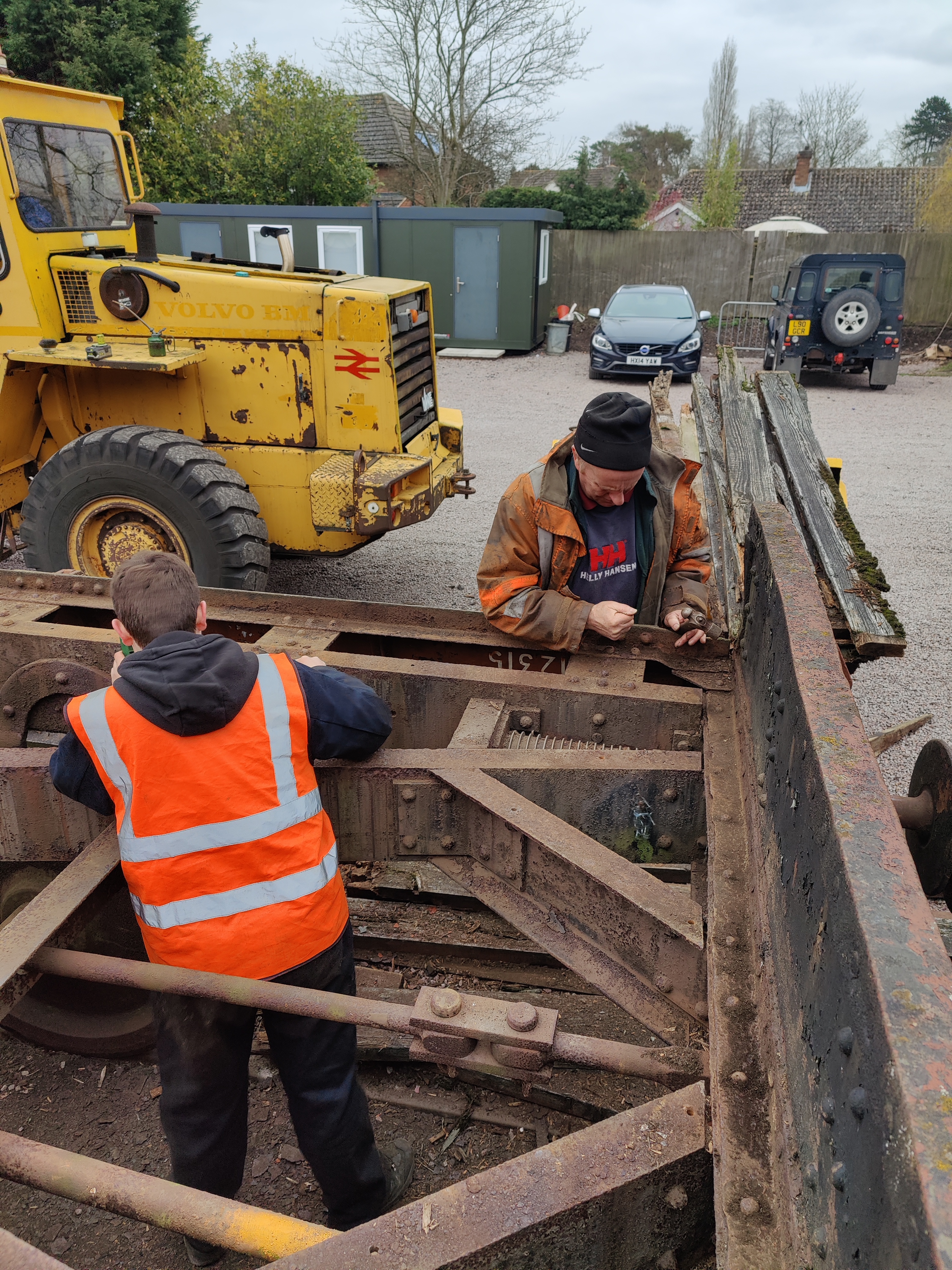
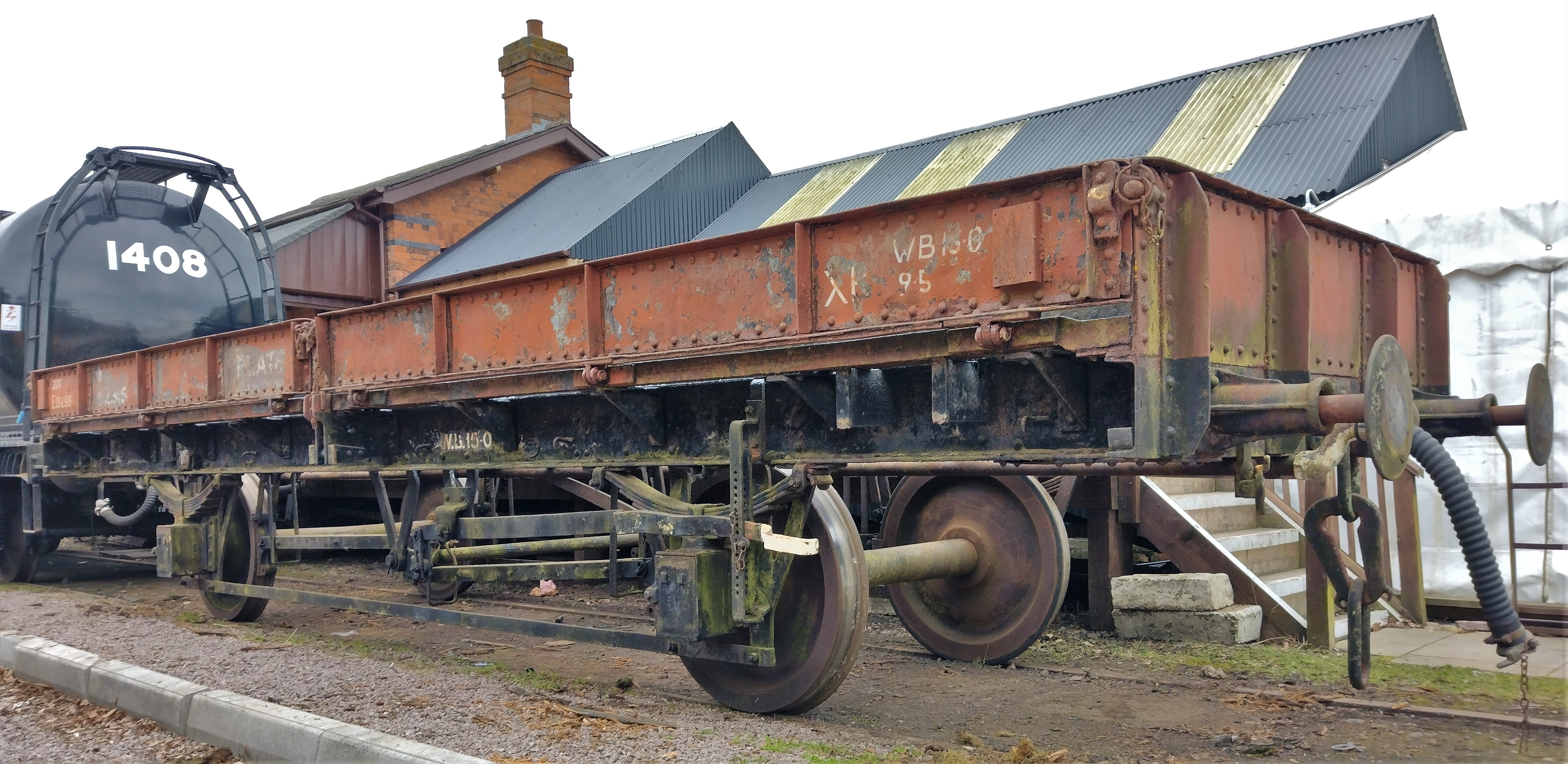
Making the most of a couple of days of sunshine during the week, the undercoat was applied to the plate wagon E212315.
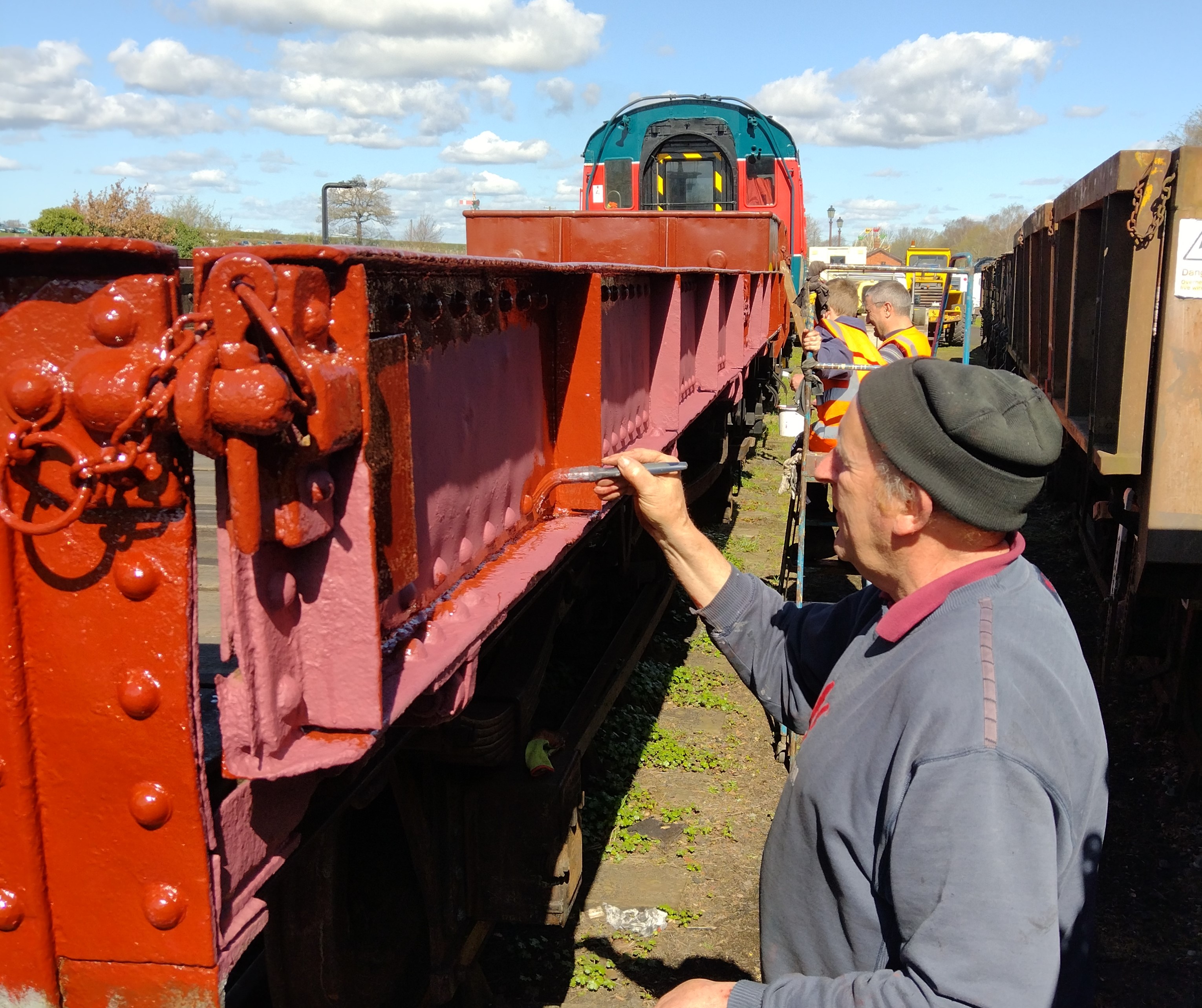
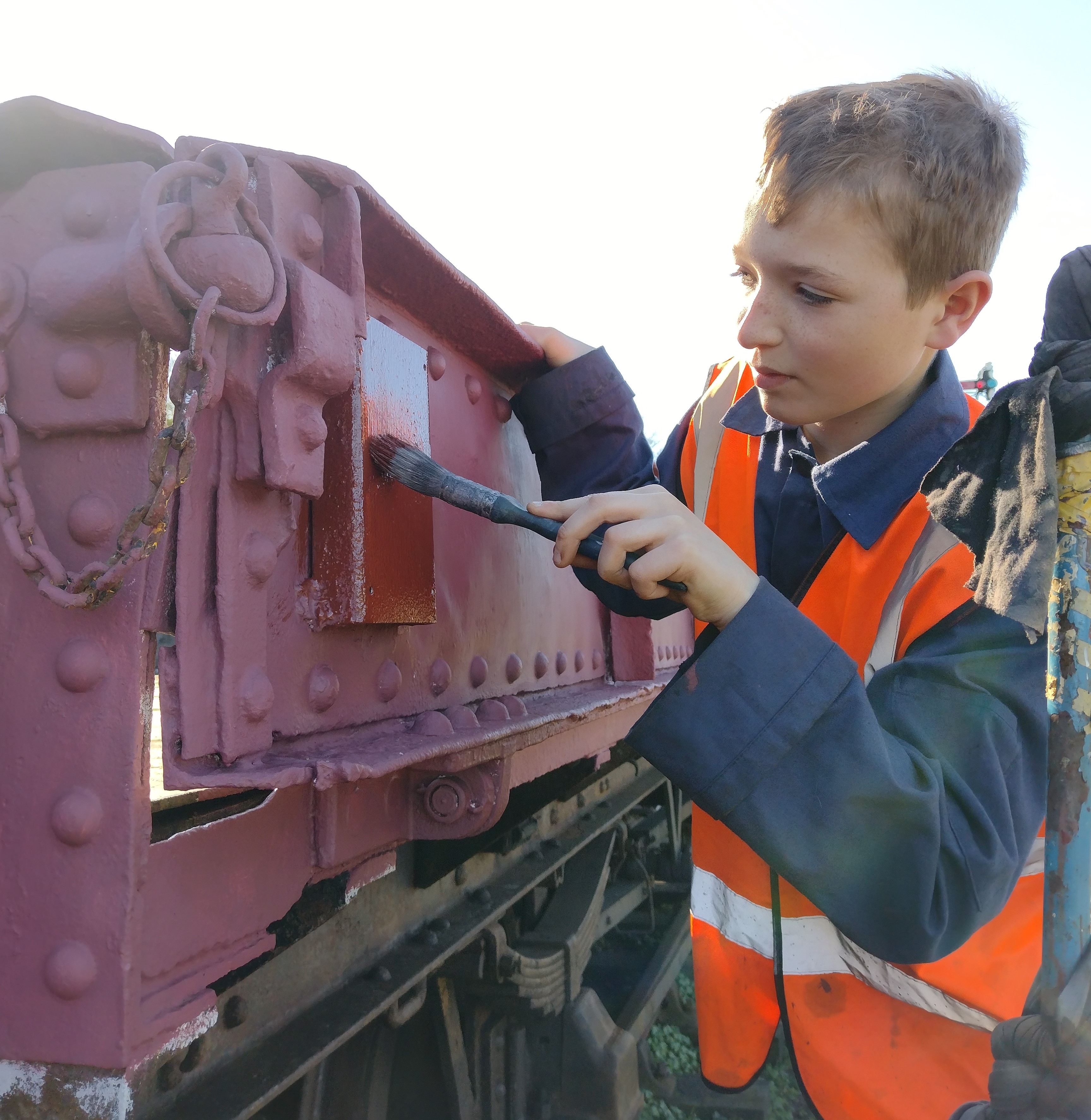
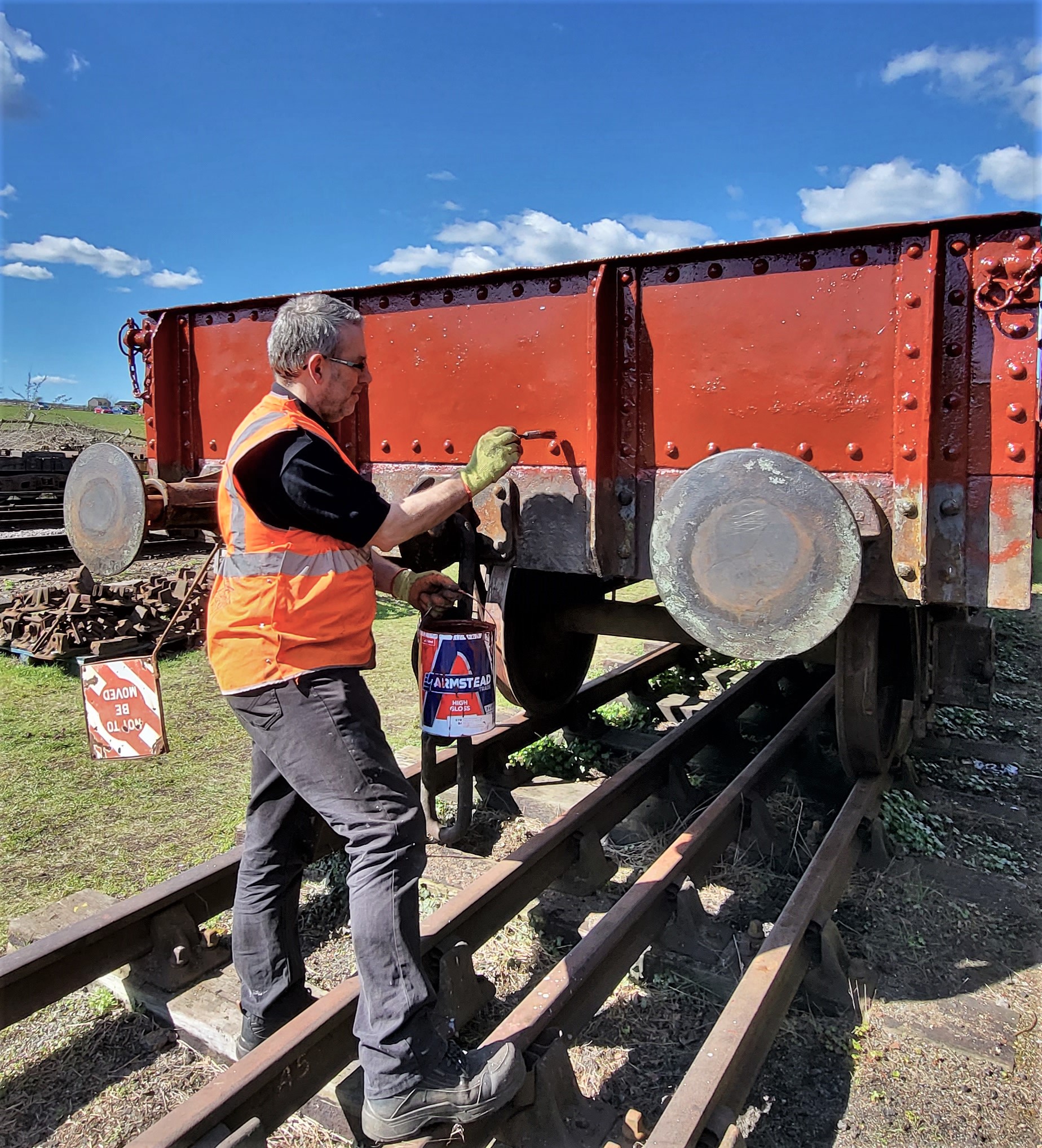
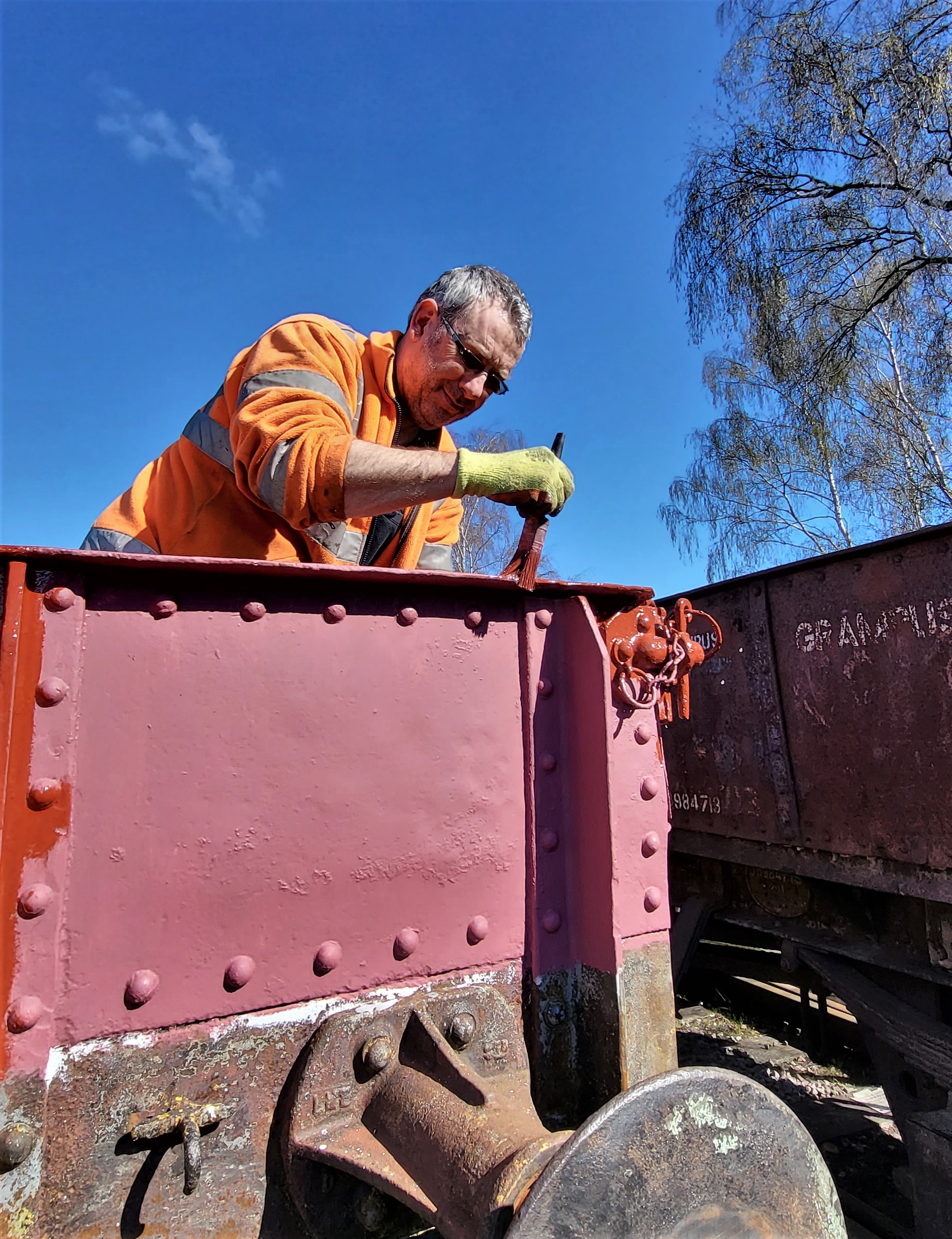
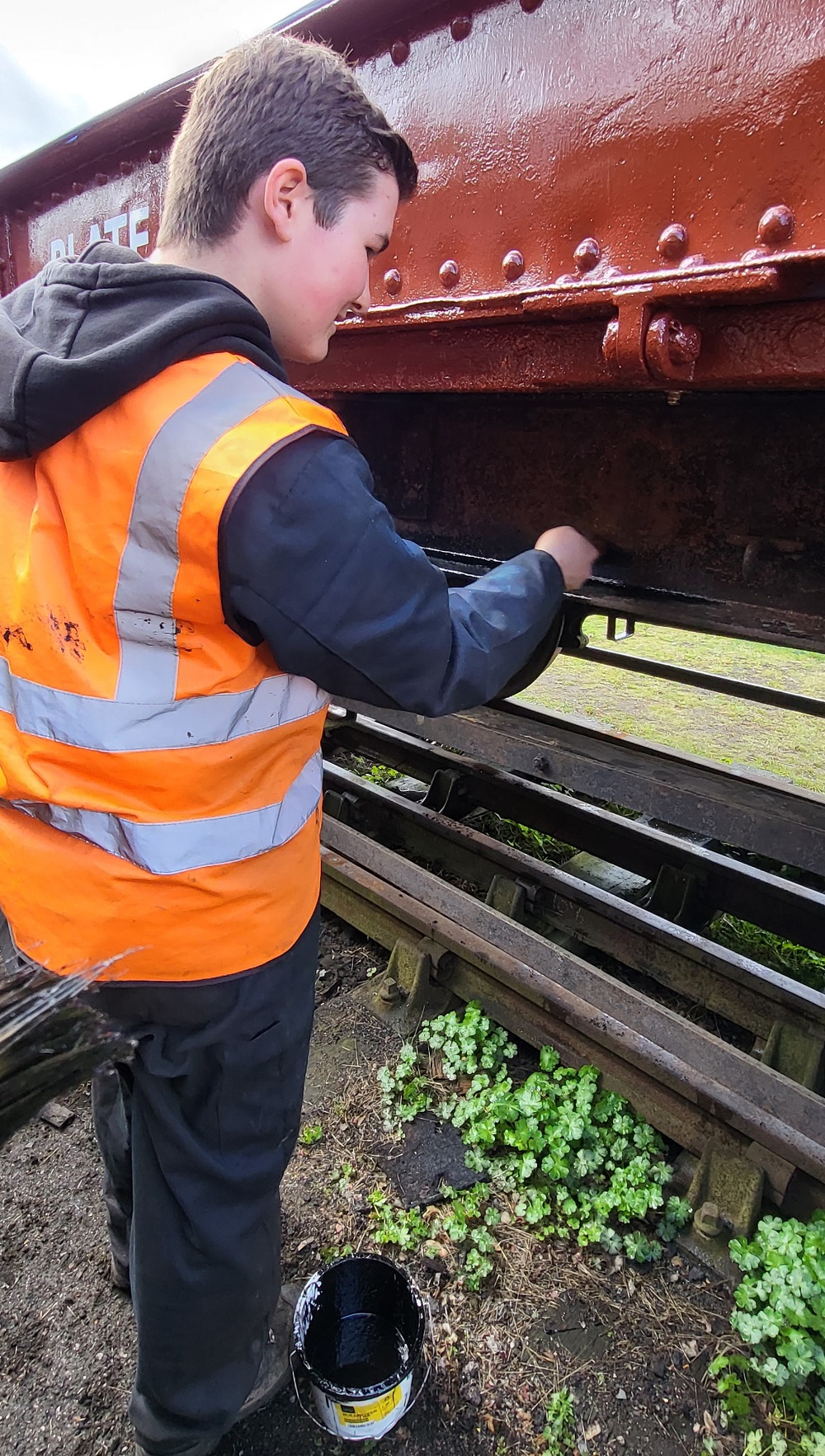
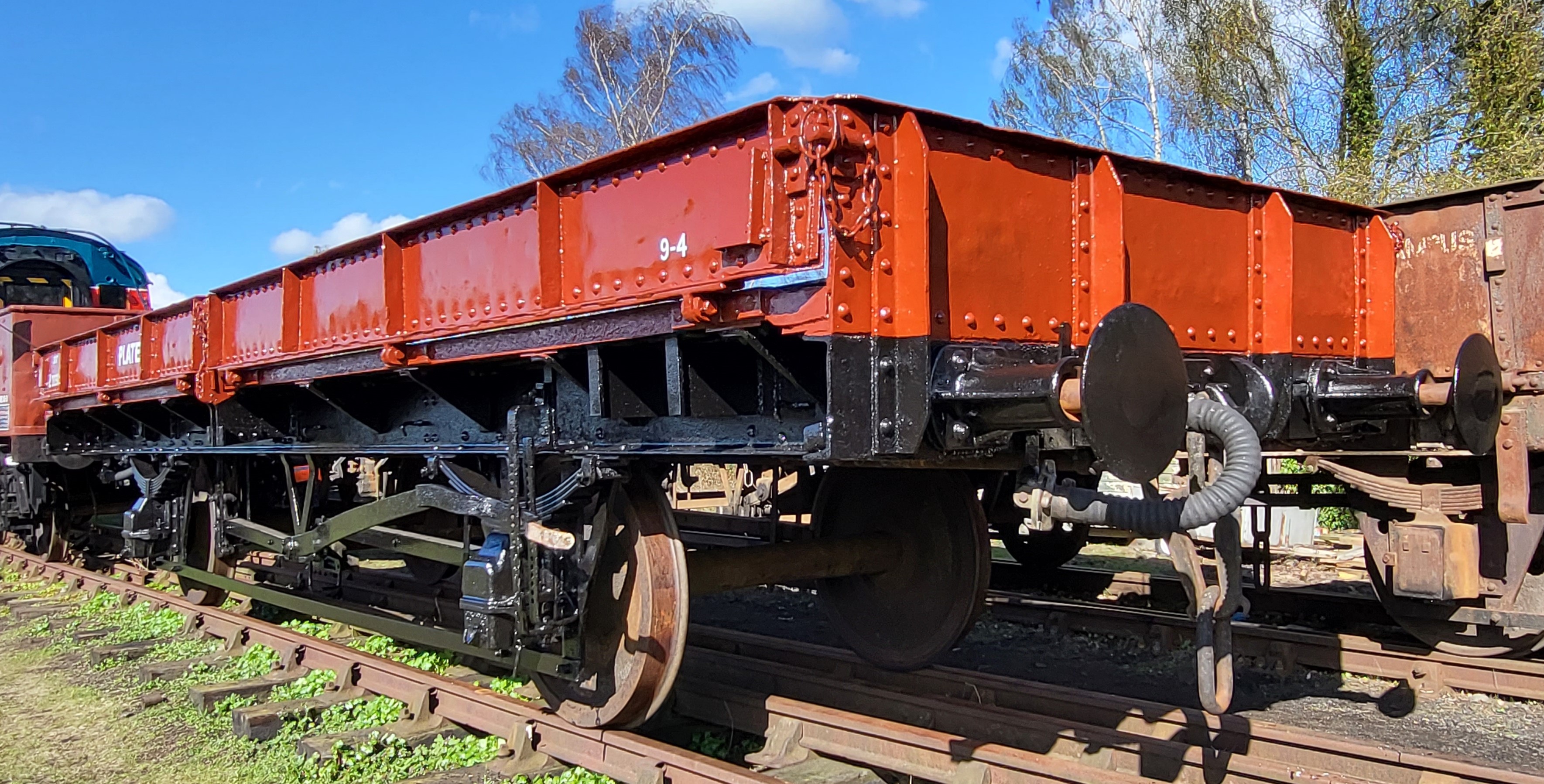
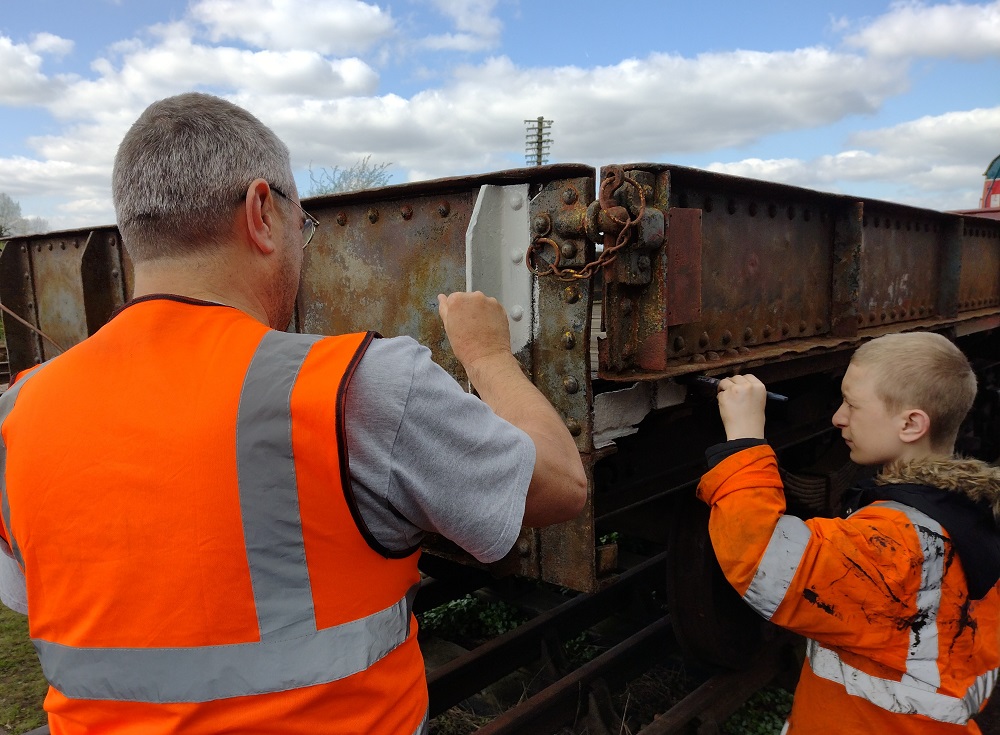
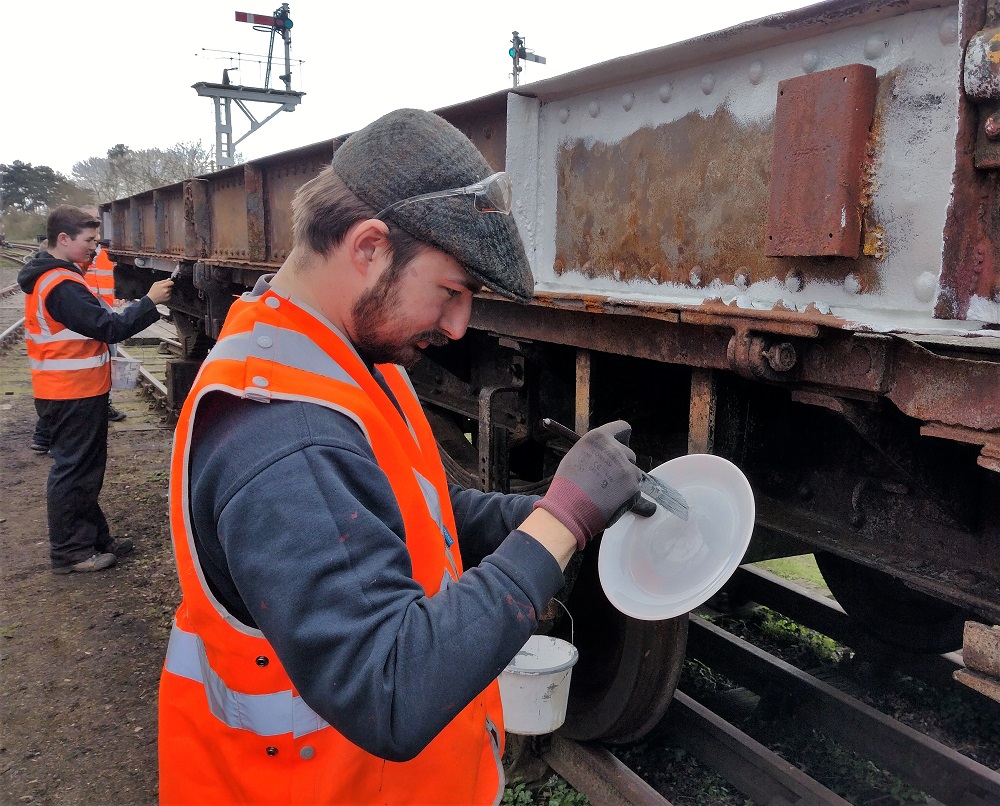
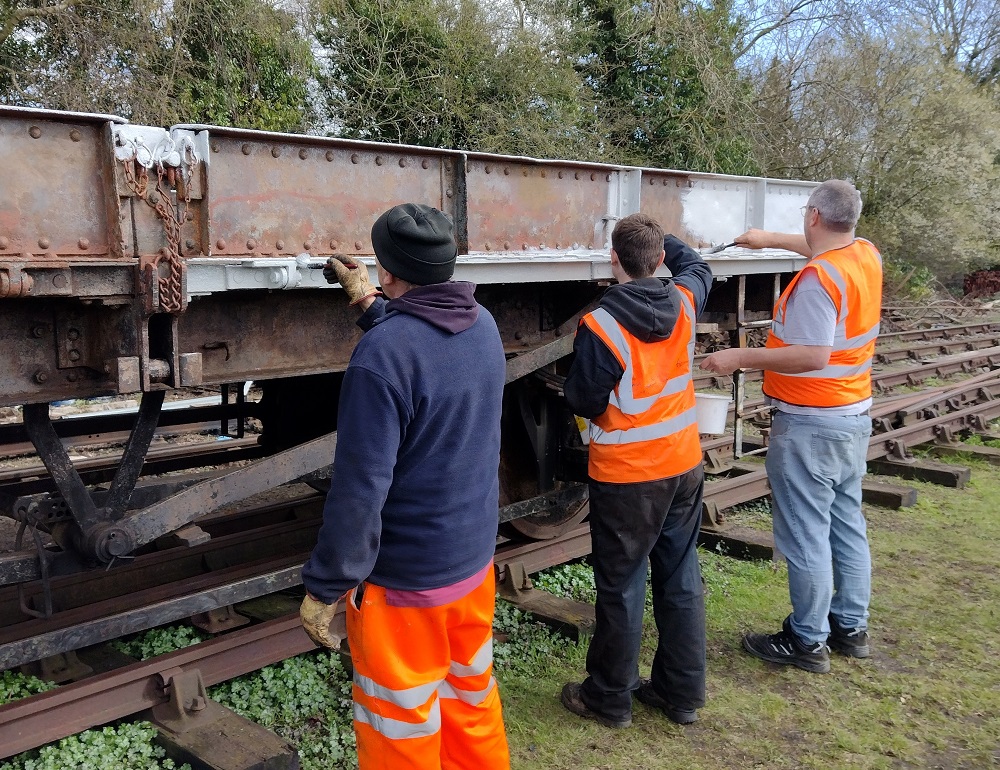
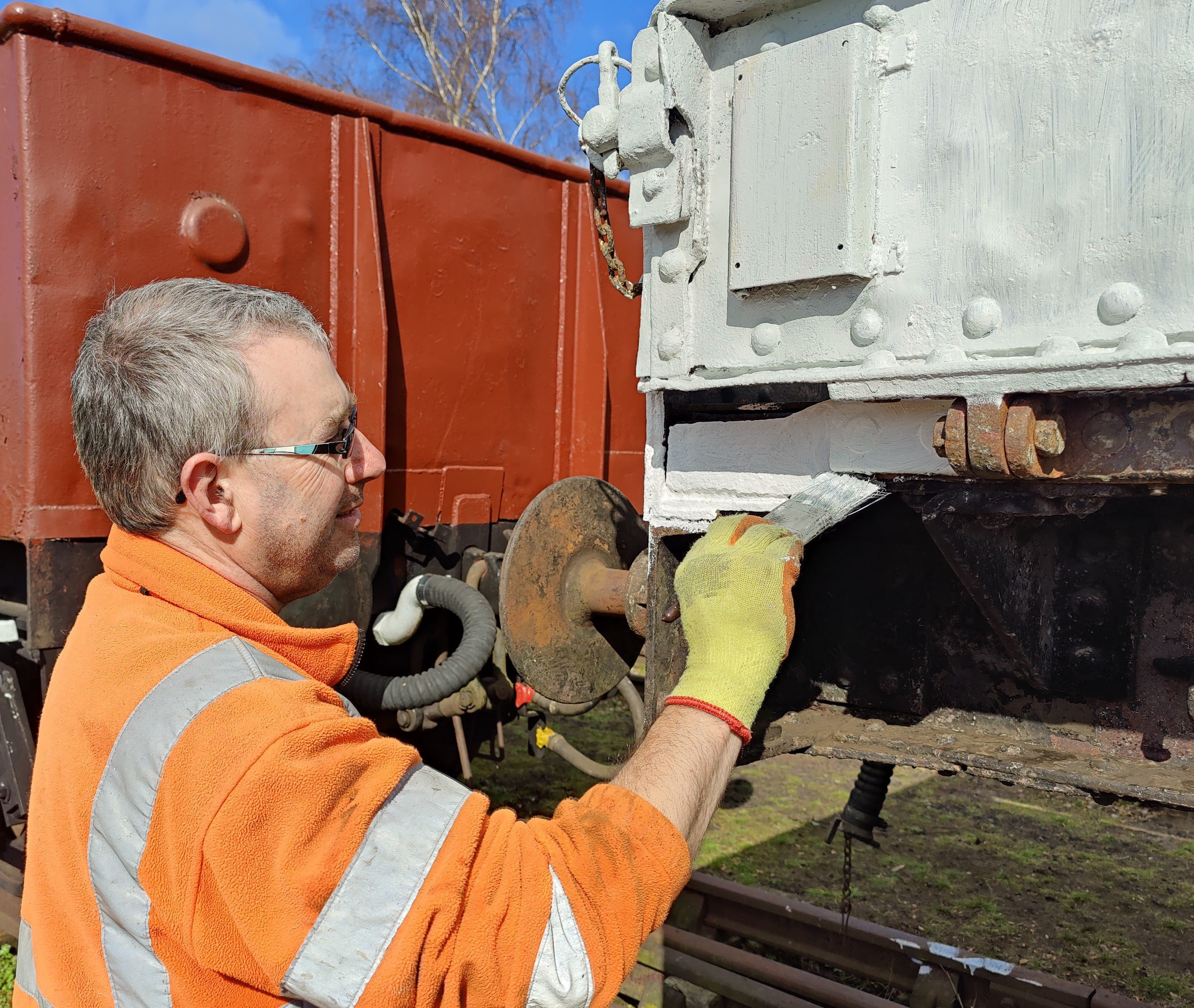
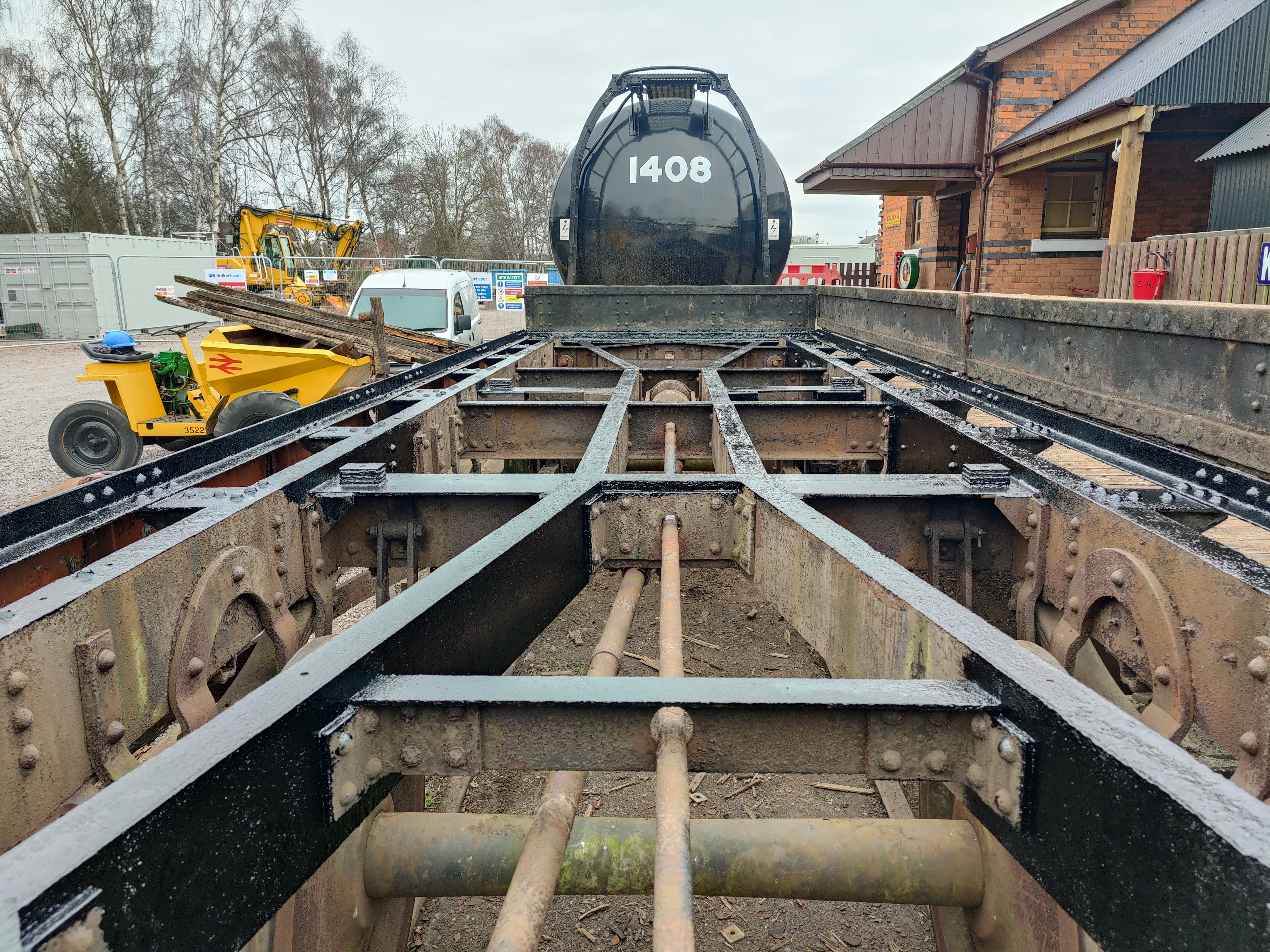
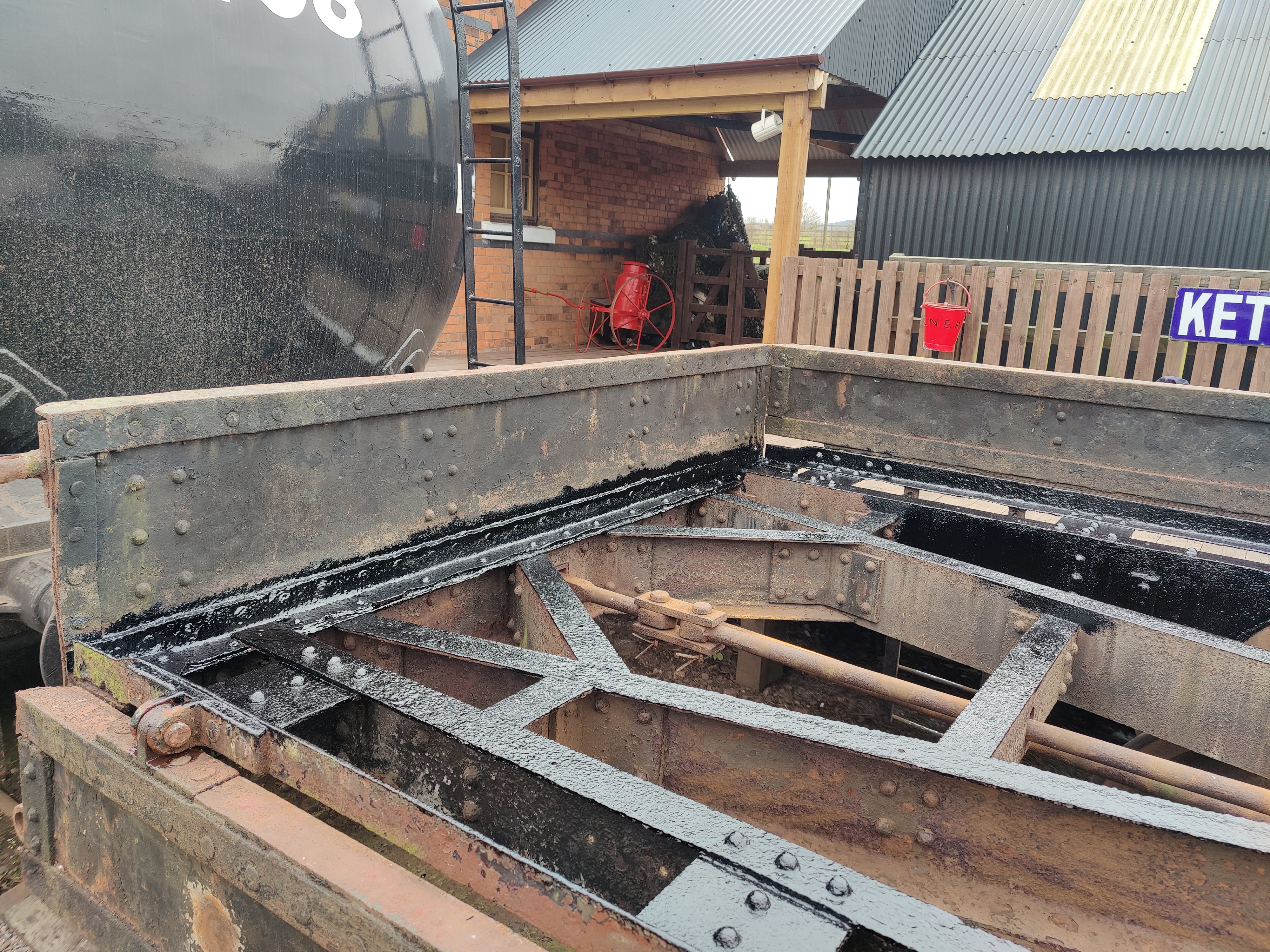
On Good Friday, Nick, Mark, myself, Dan and Oli were on site and we got to work with the gloss Bauxite paint on the plate wagon.
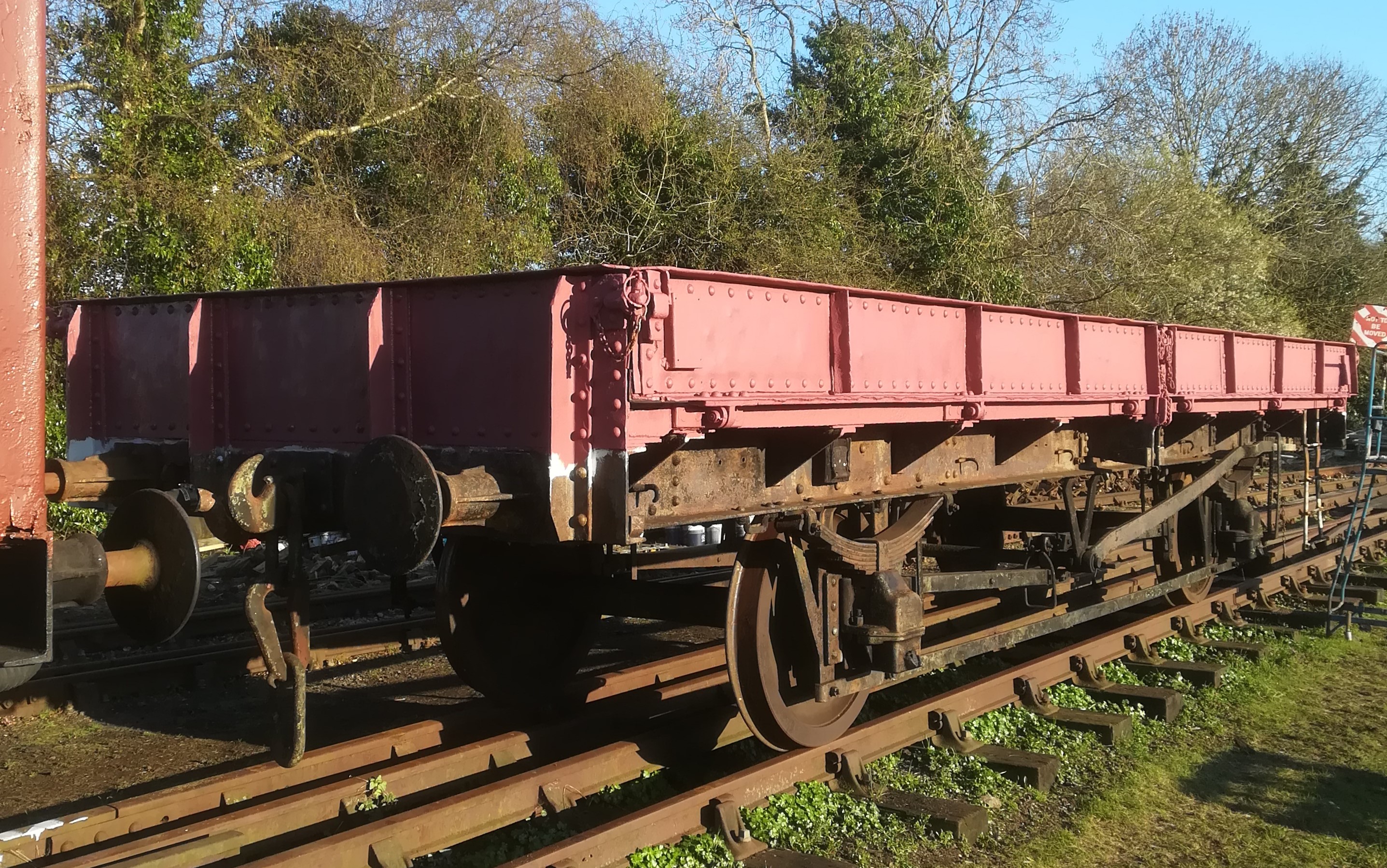
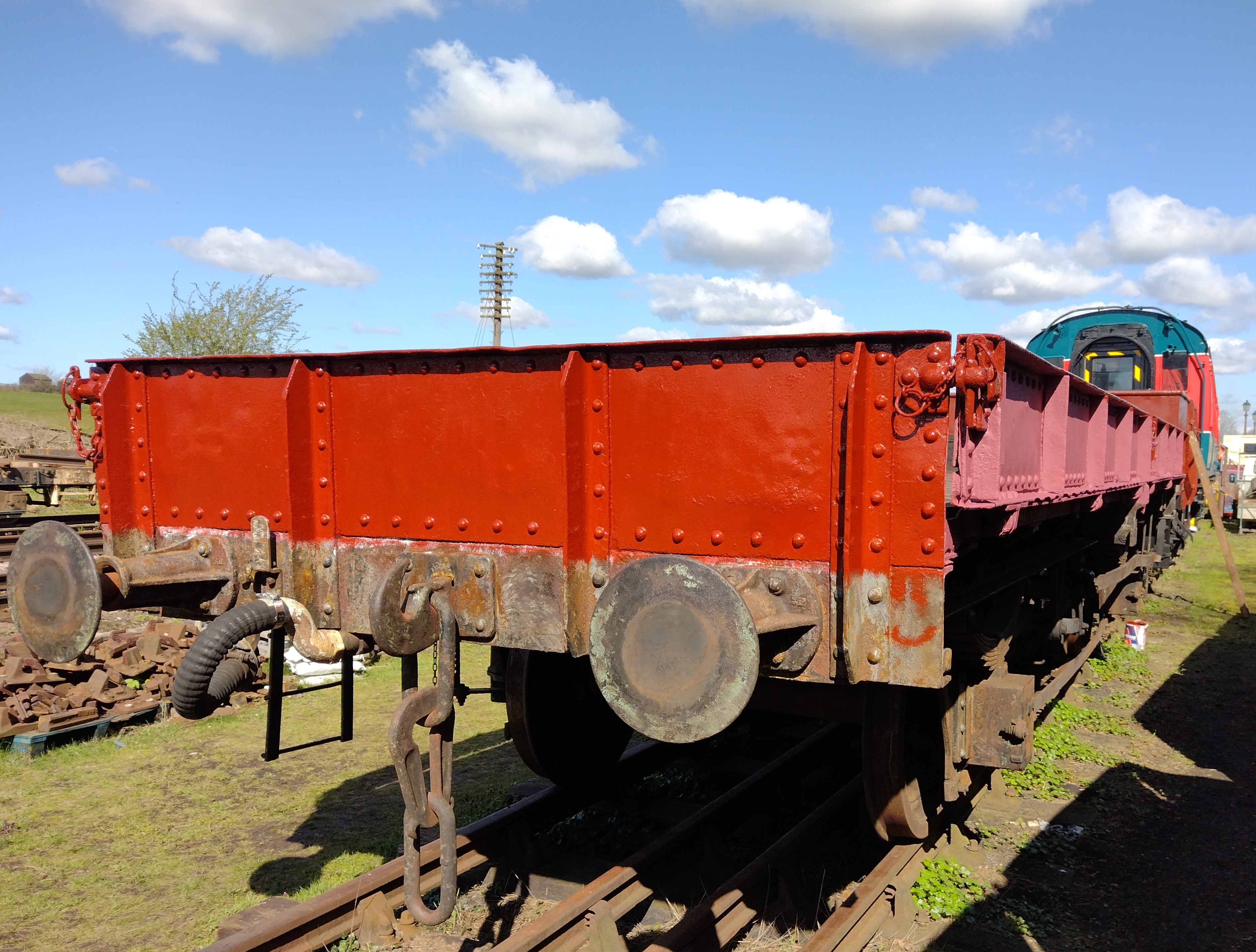
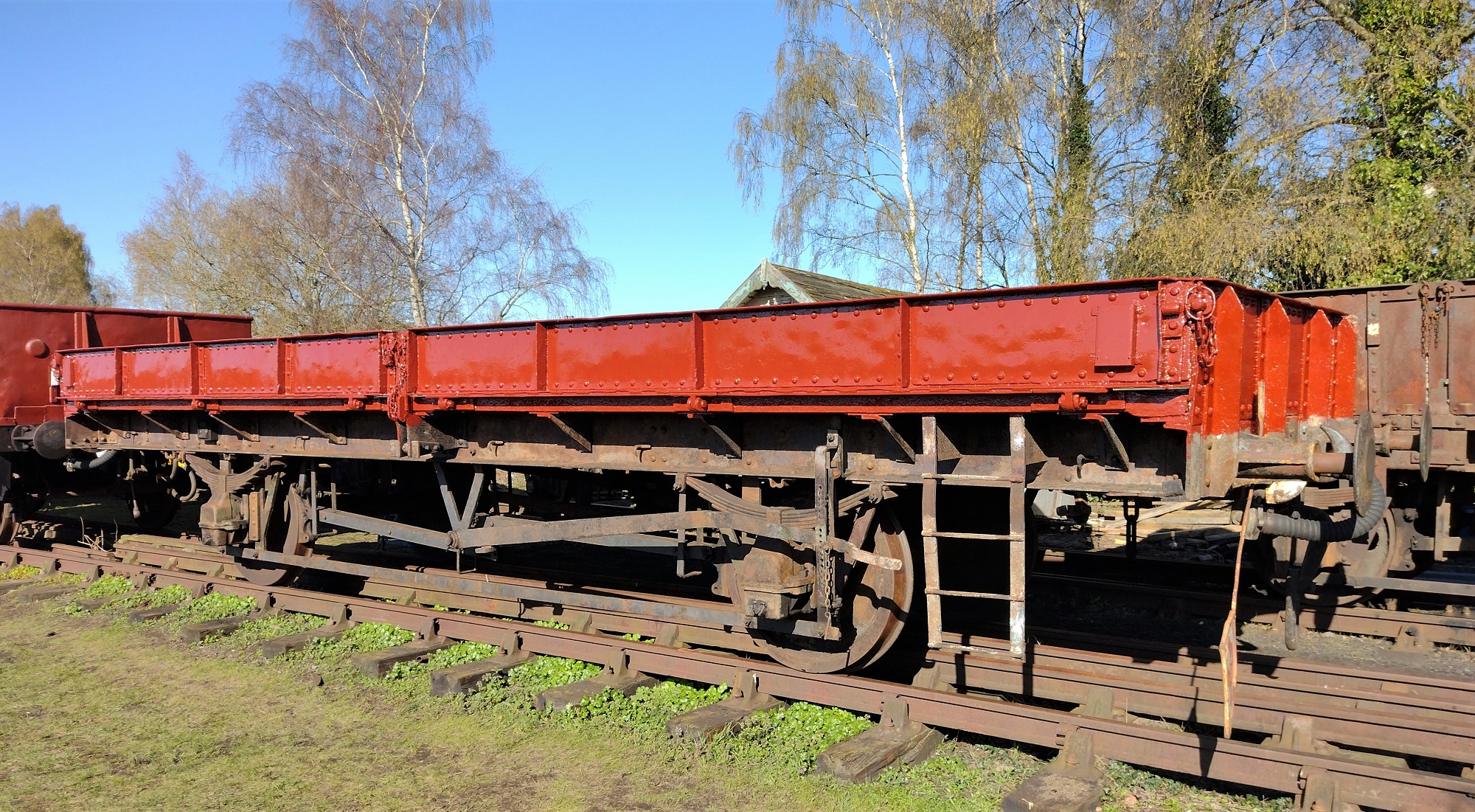
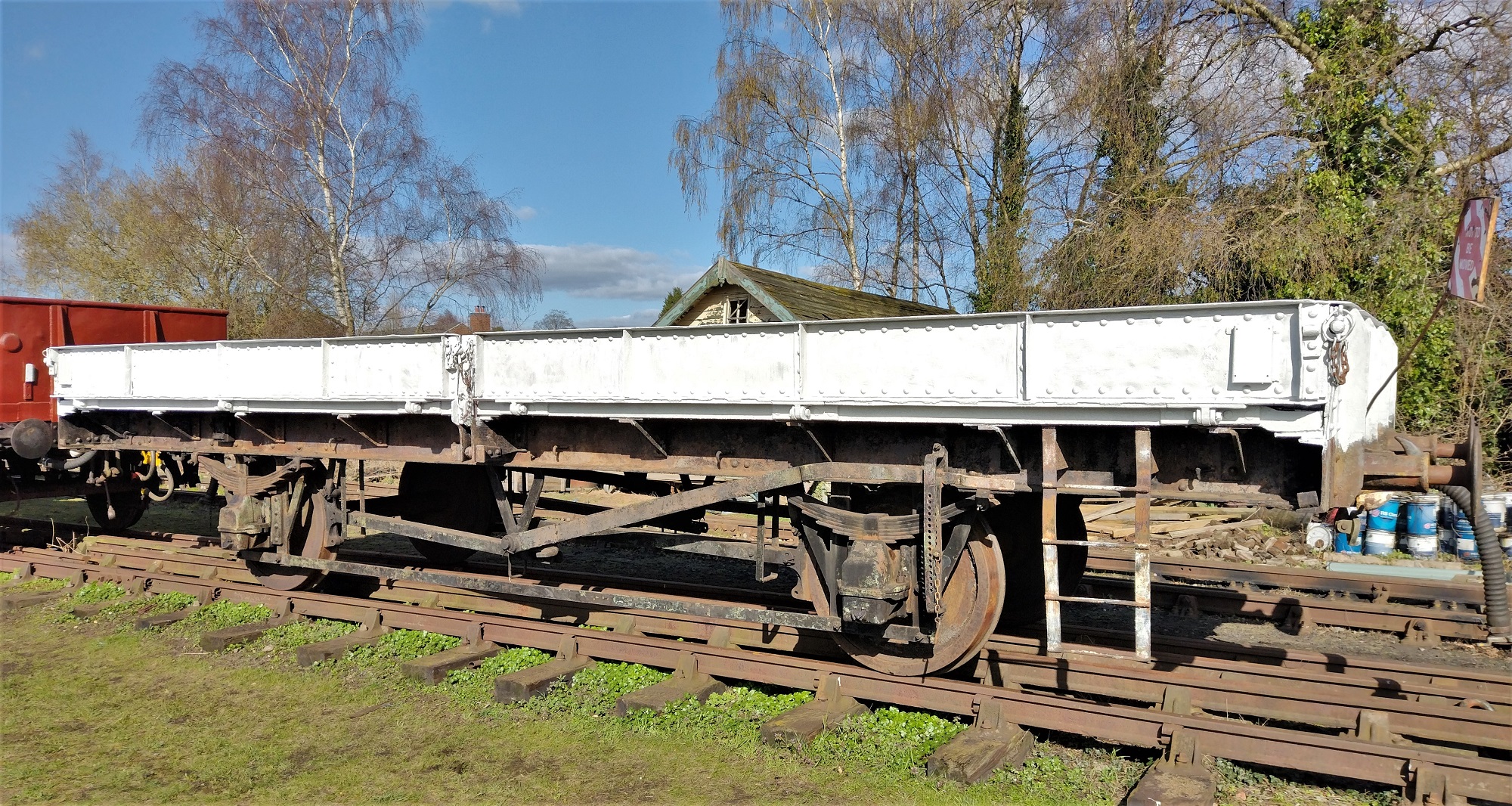
By the mid-afternoon the plate wagon was looking much smarter.
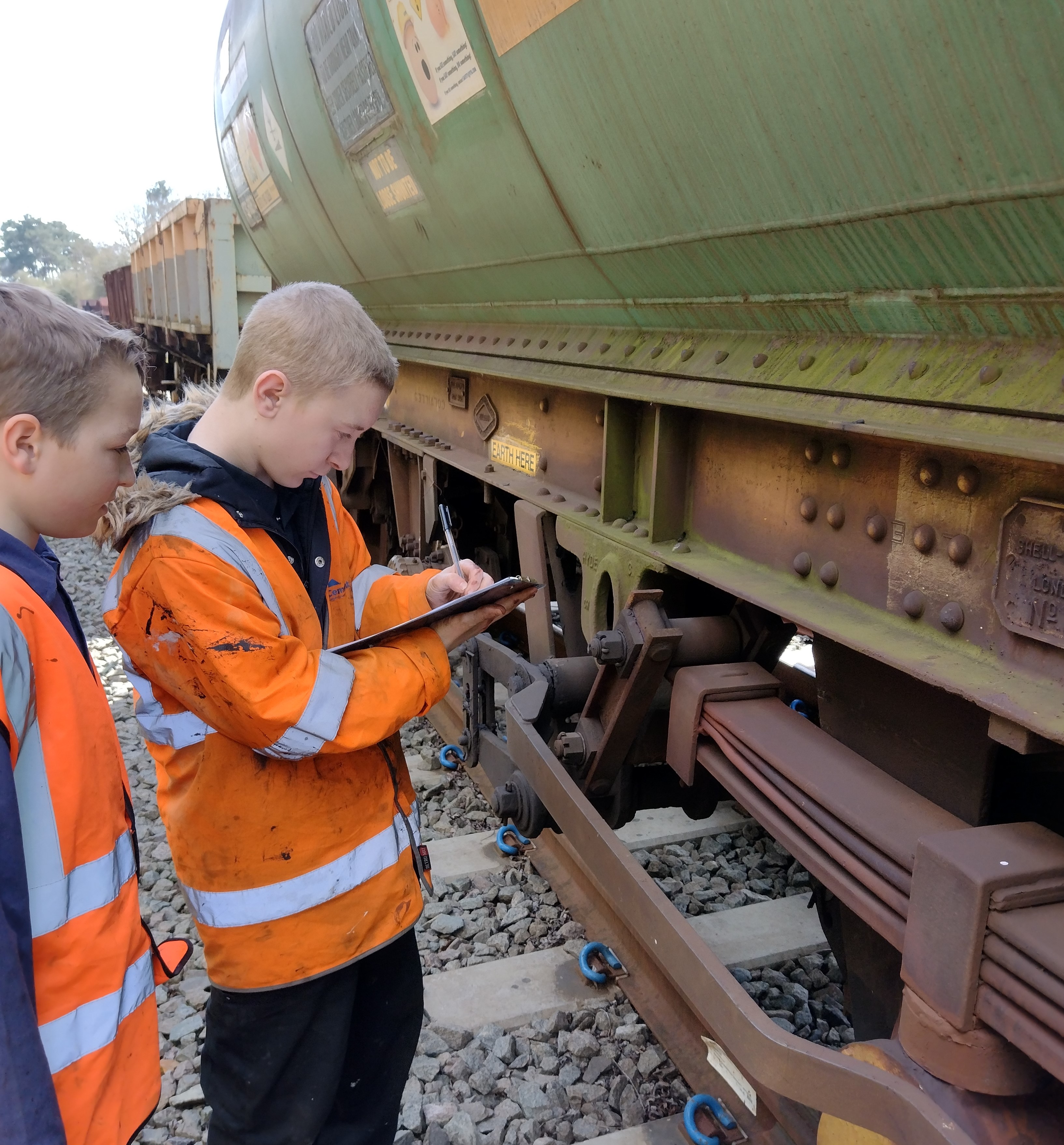
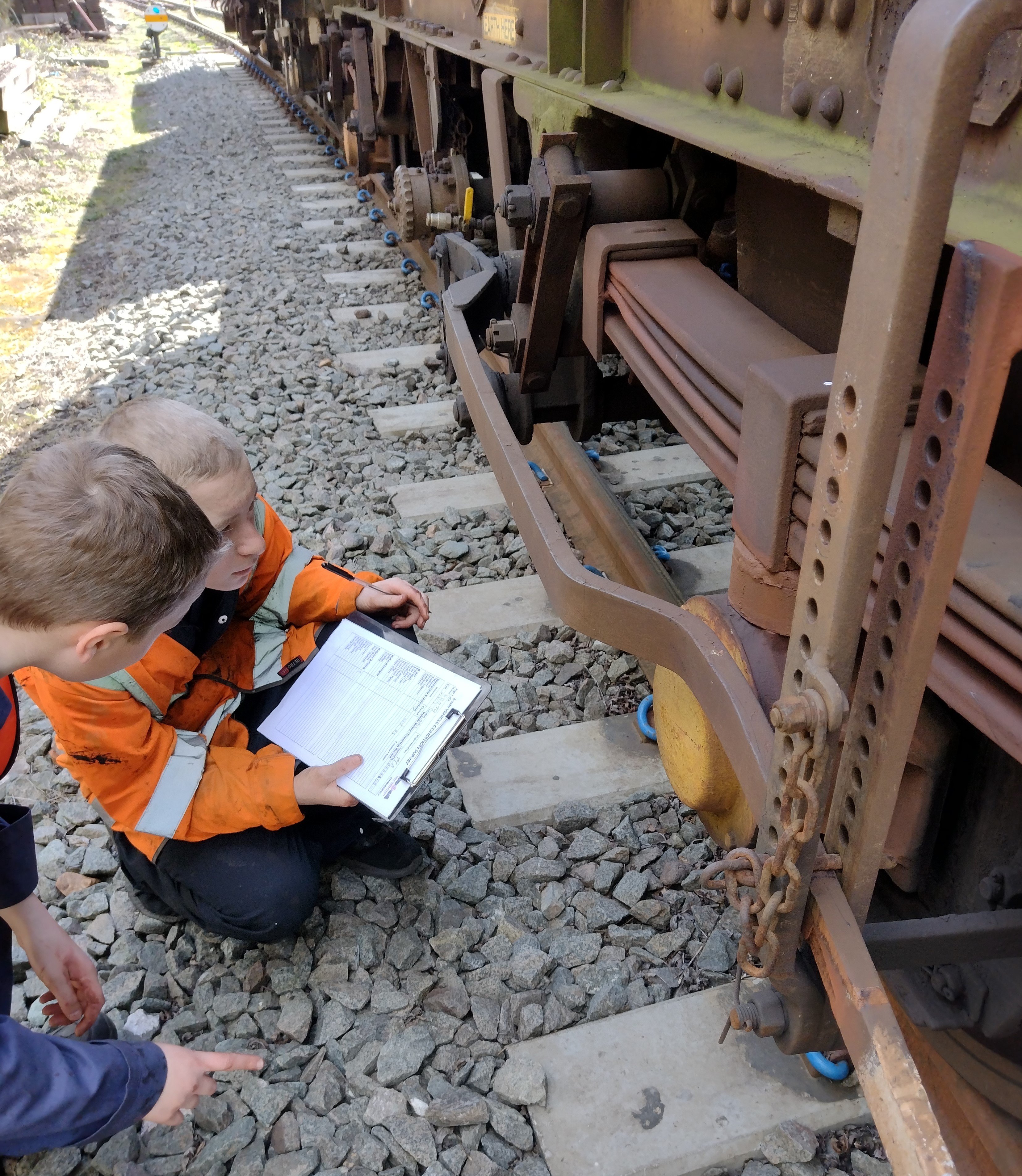
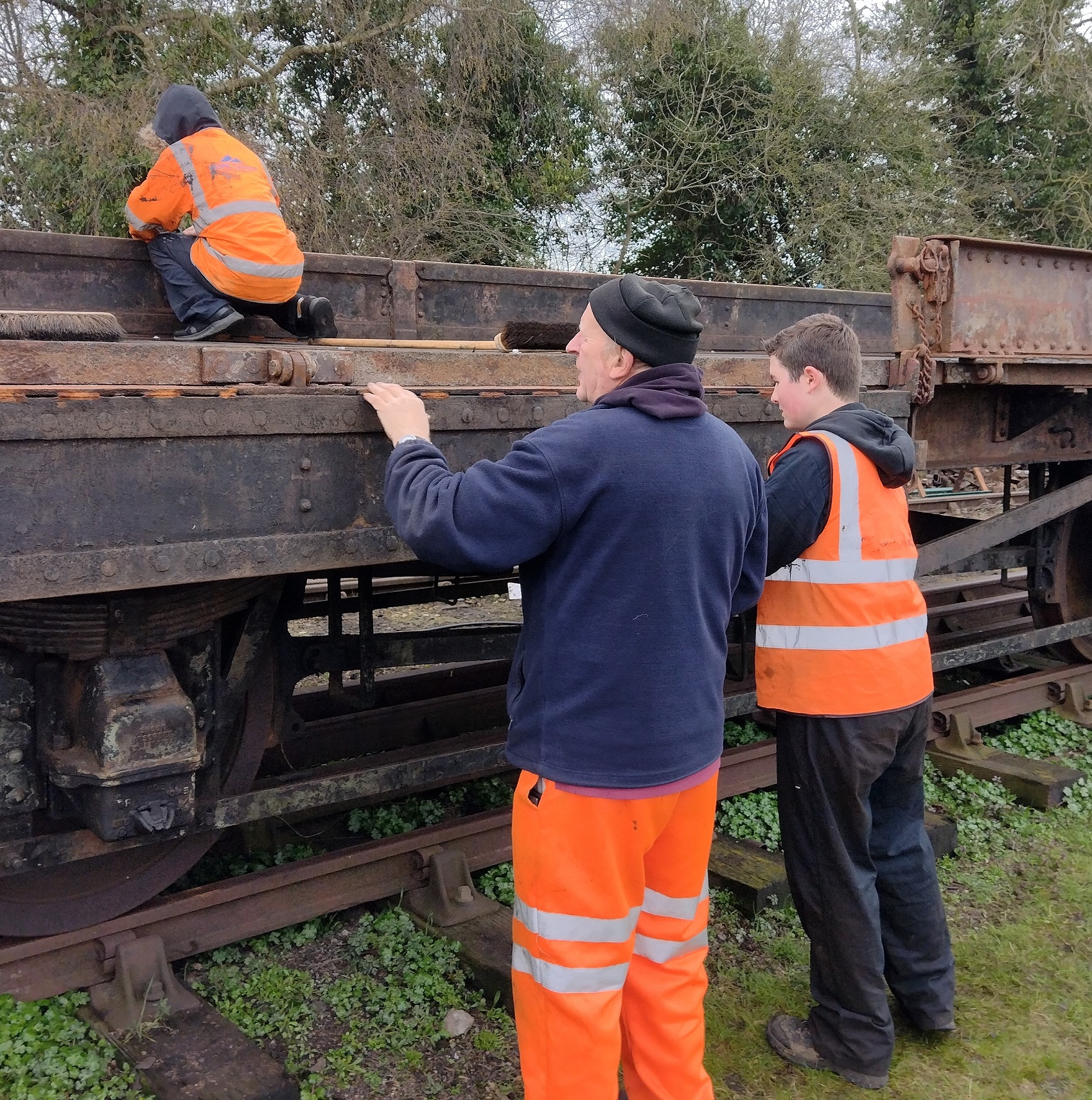
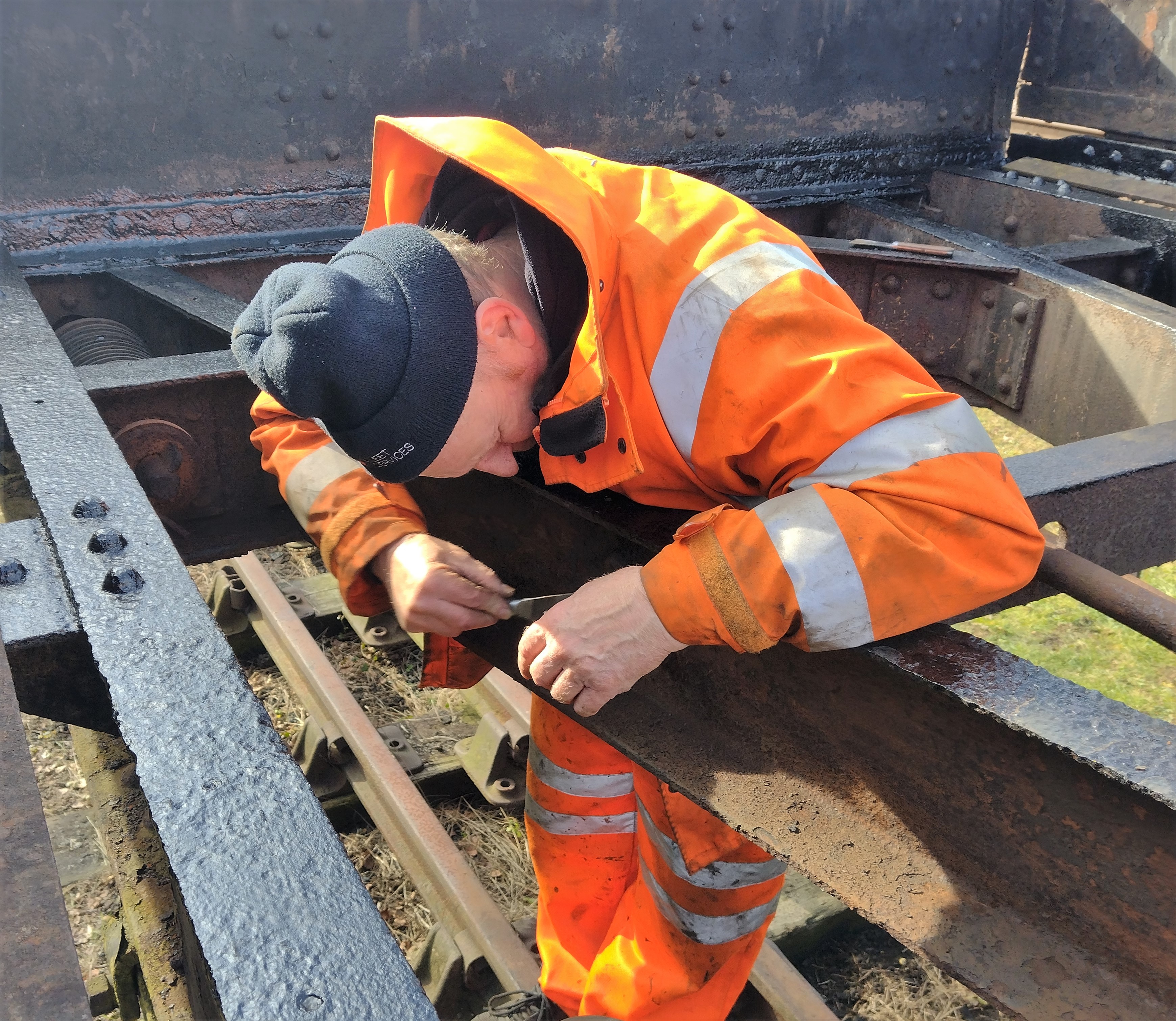
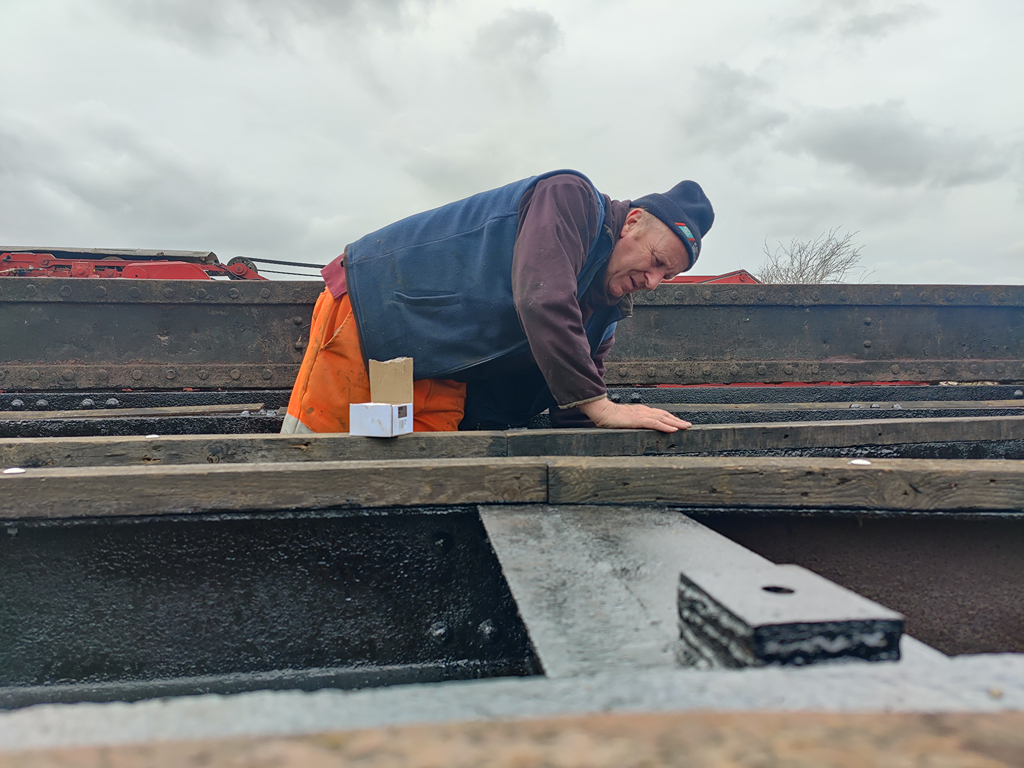
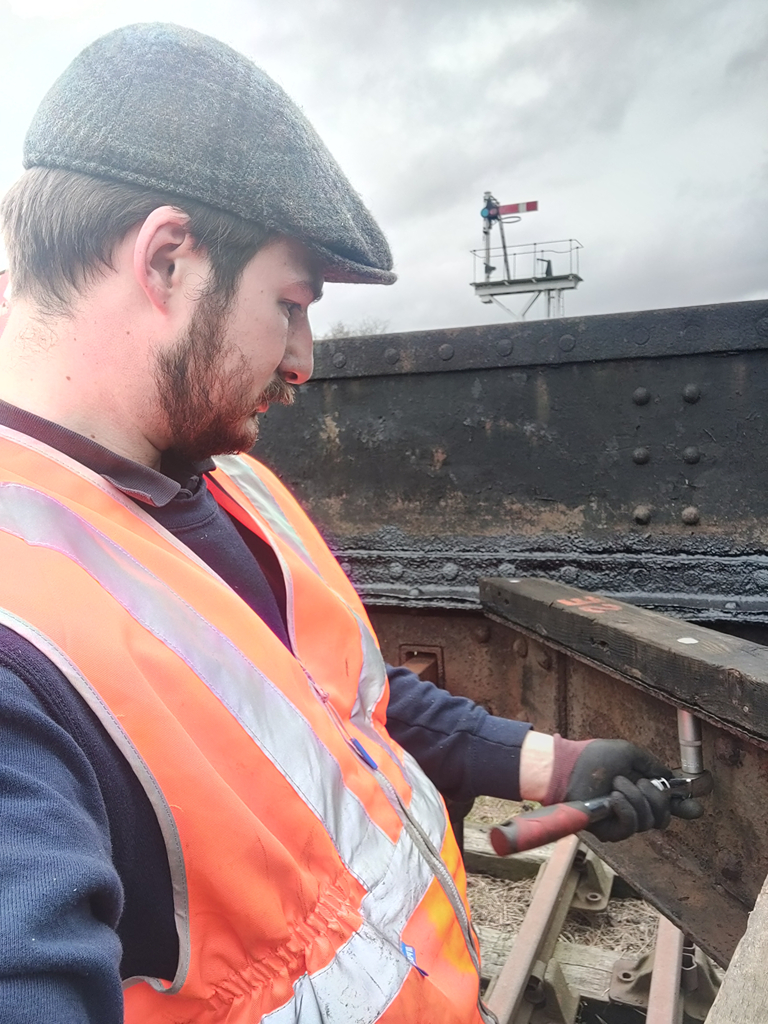
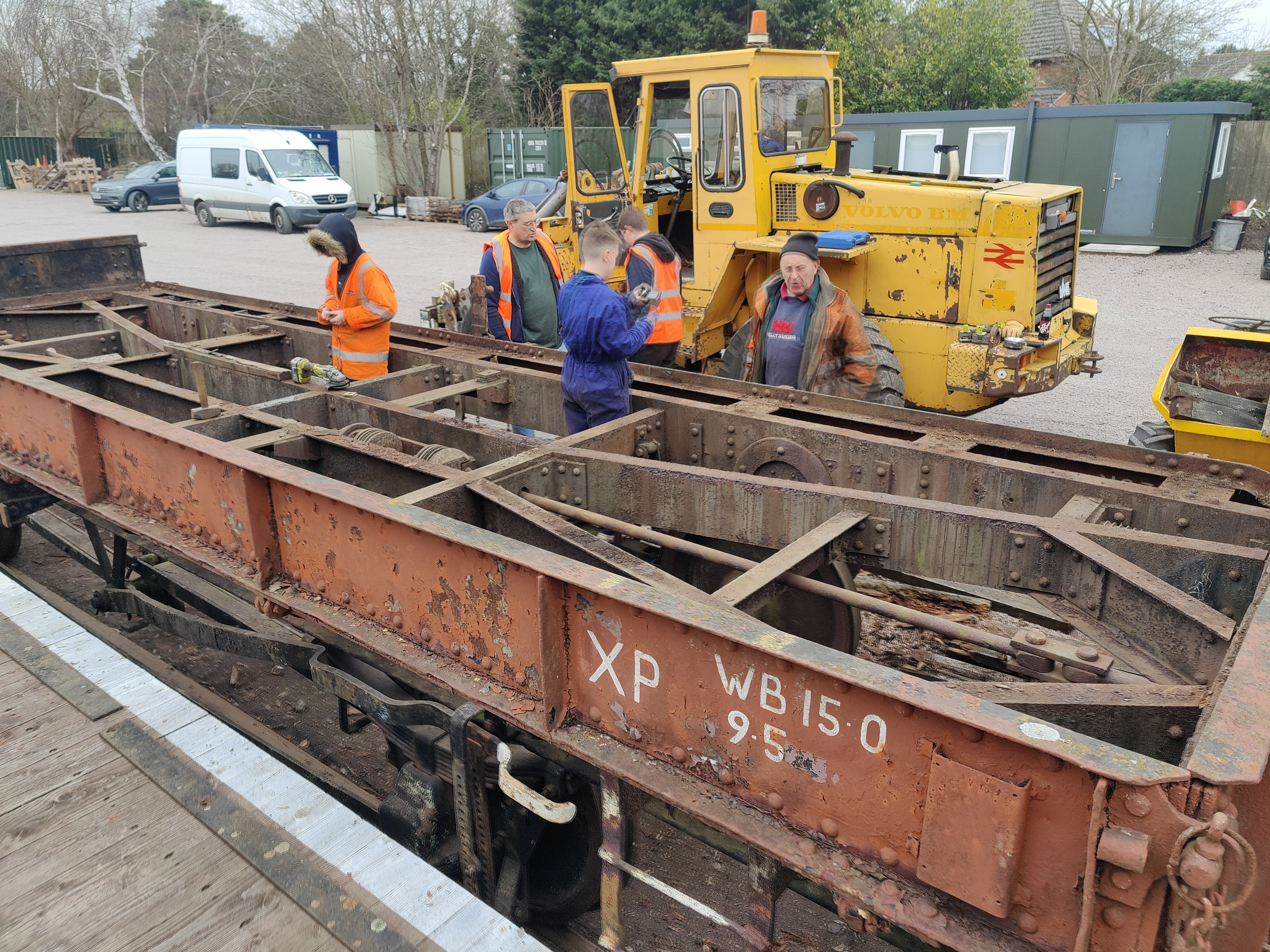
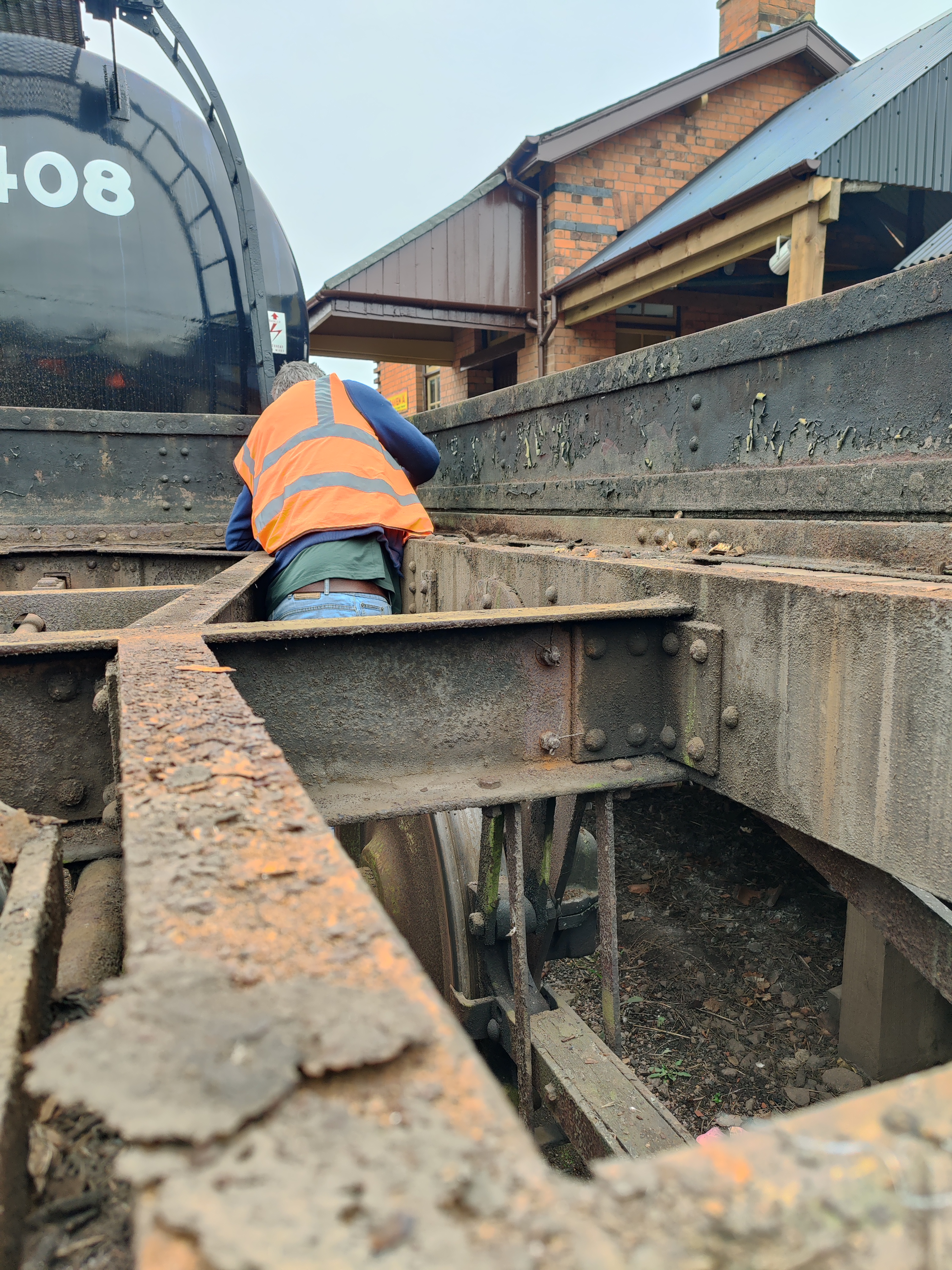
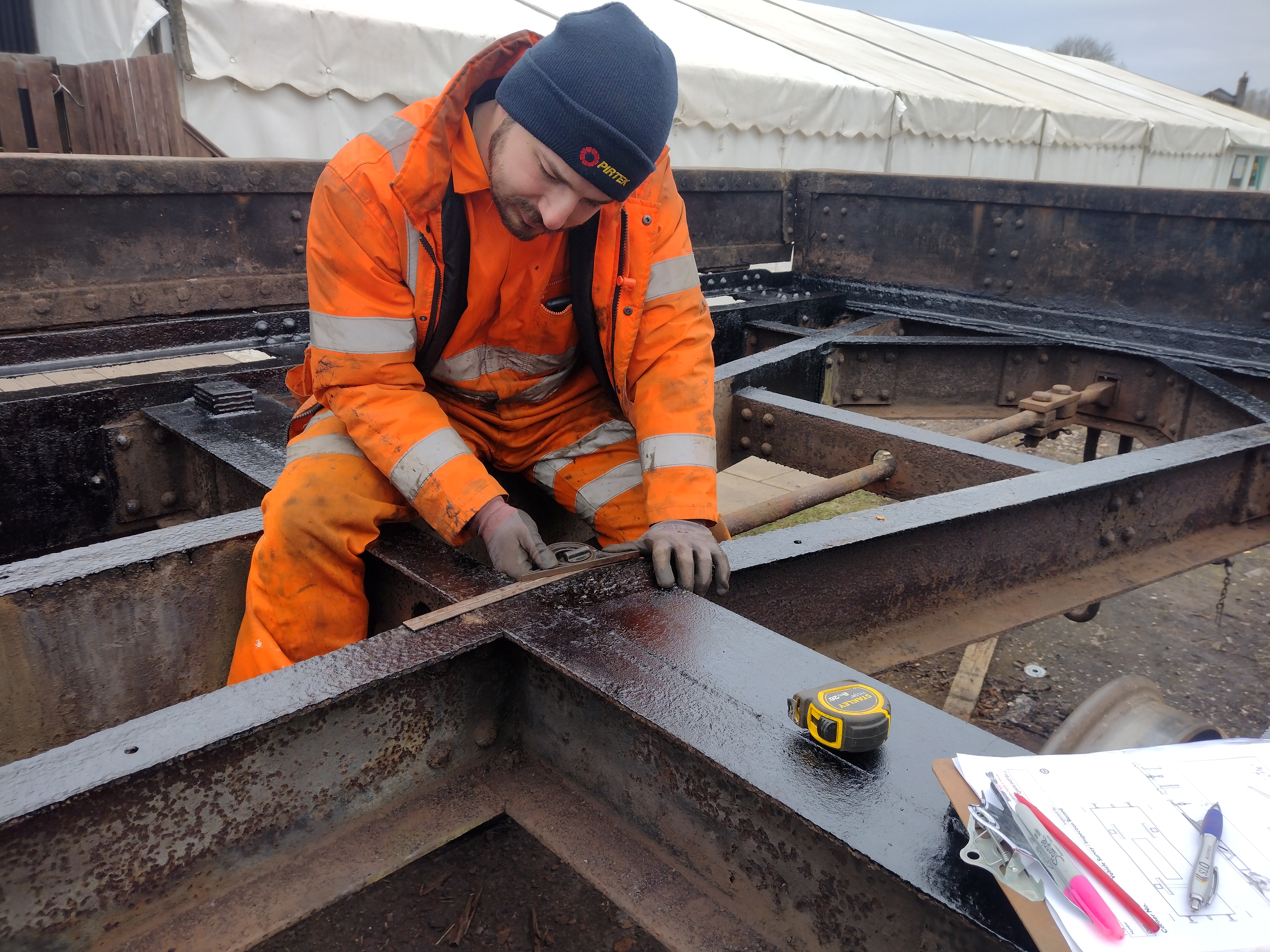
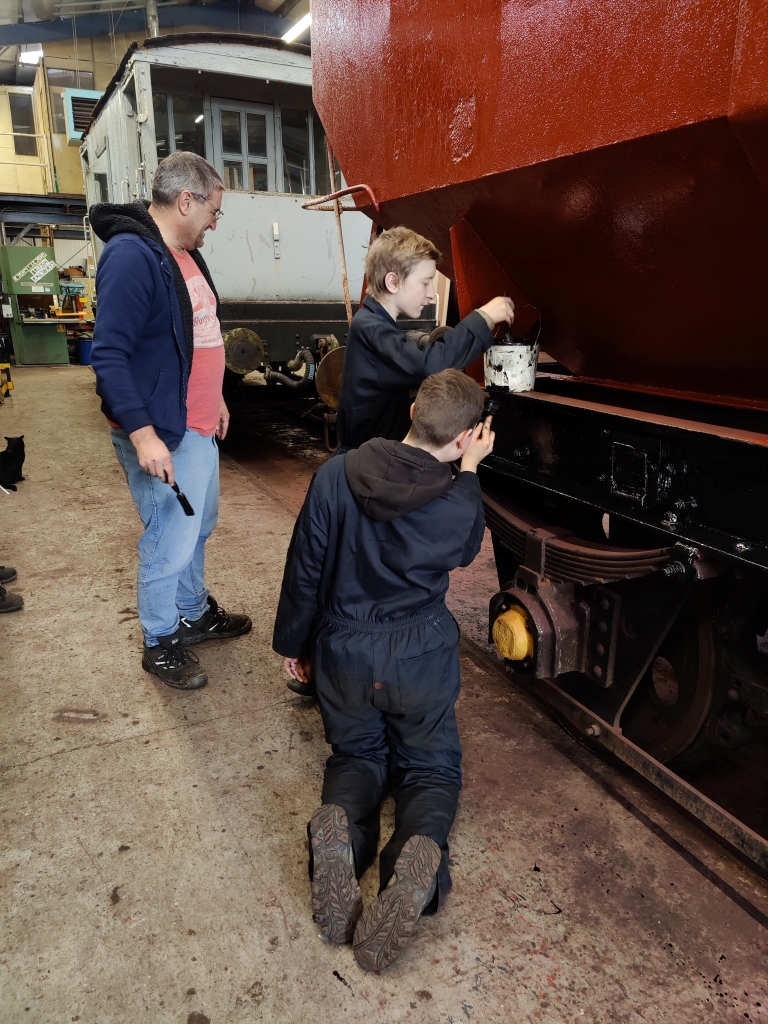
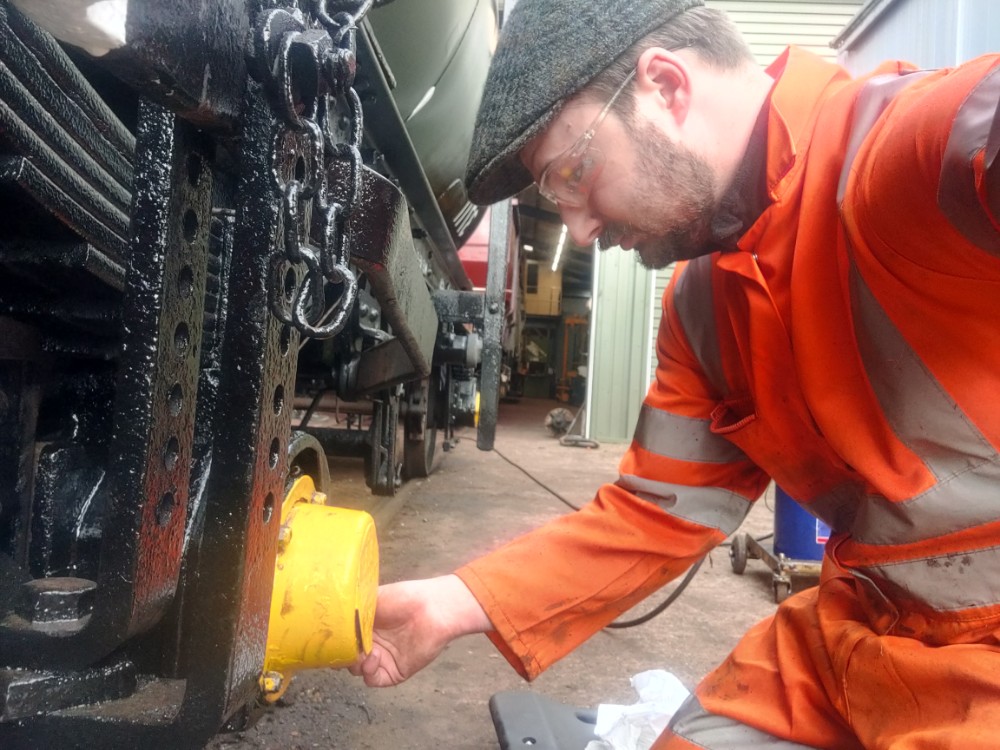
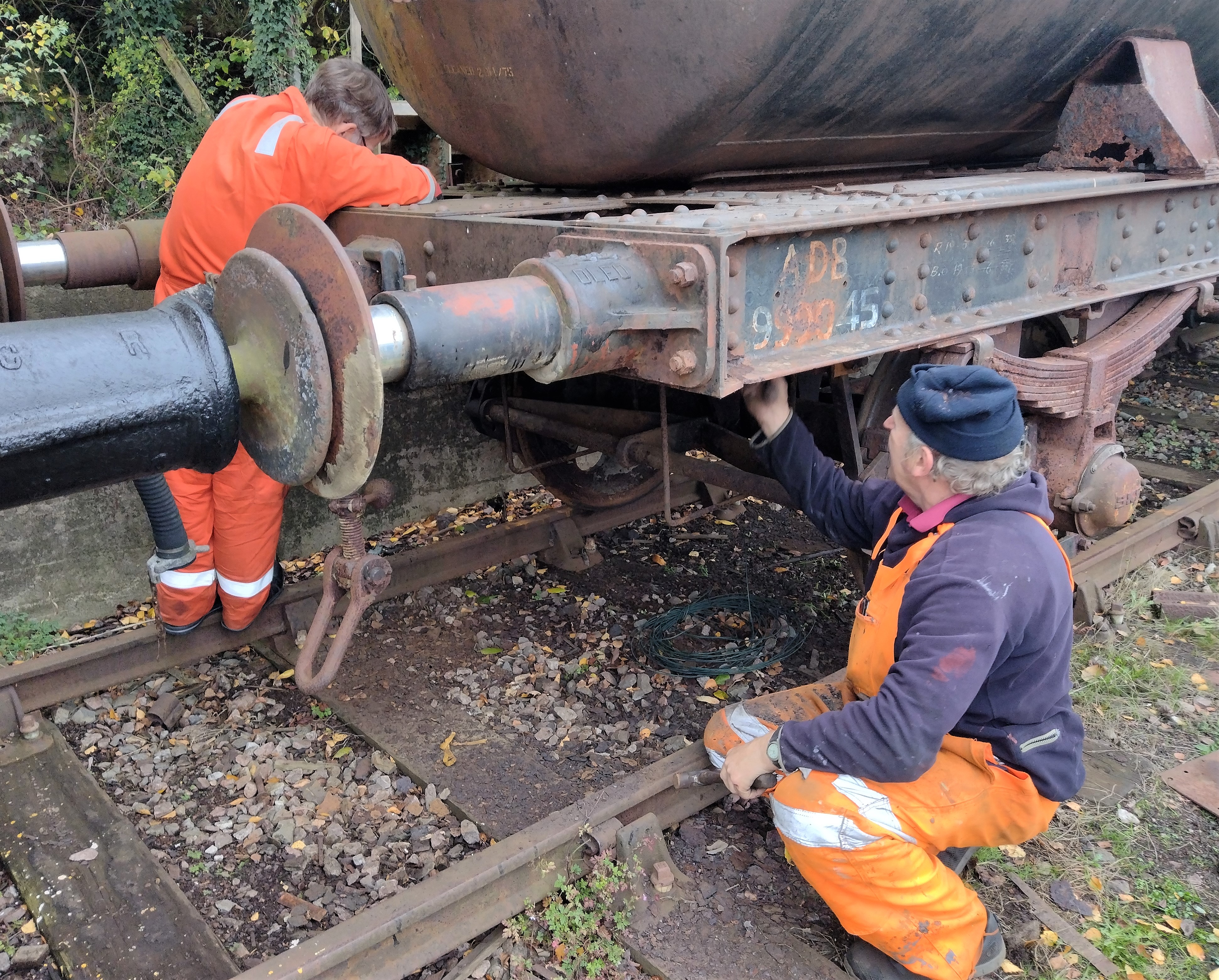
Dan and Oliver helped me with our first good inspection of the new arrivals; our Vehicle Condition Survey forms were completed for each tank wagon. Overall they are in very good order with only minor work being required to make them operational.
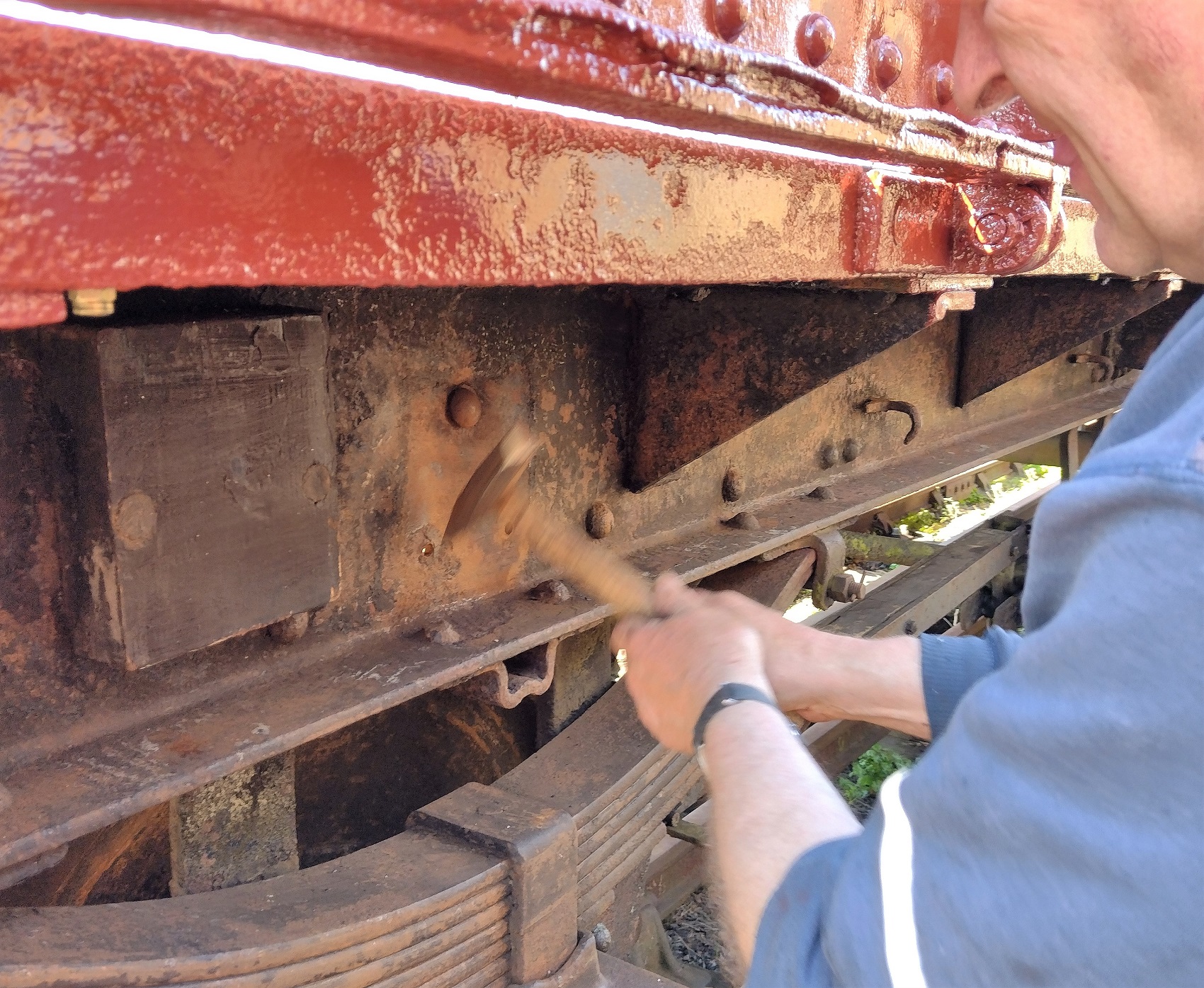
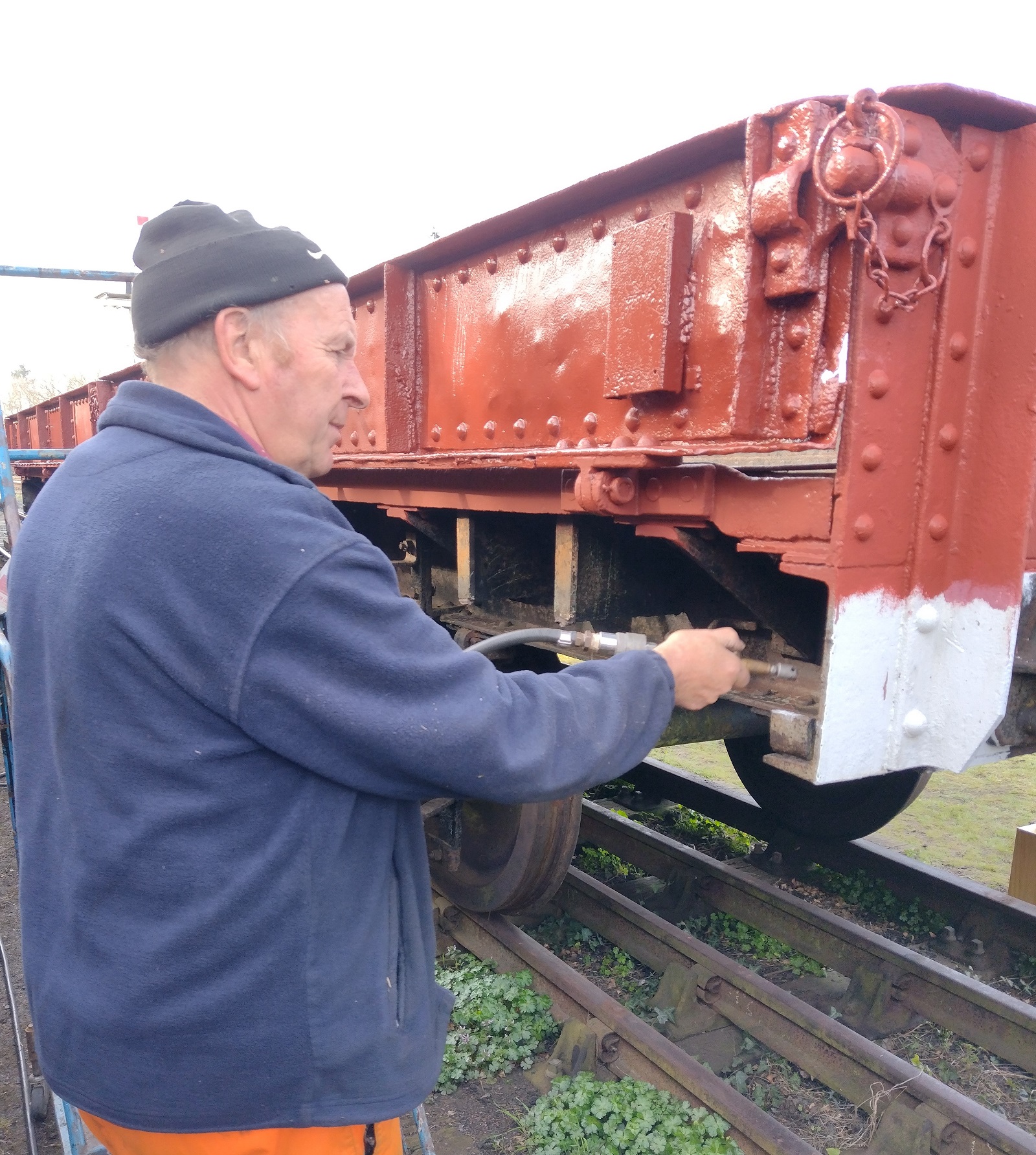
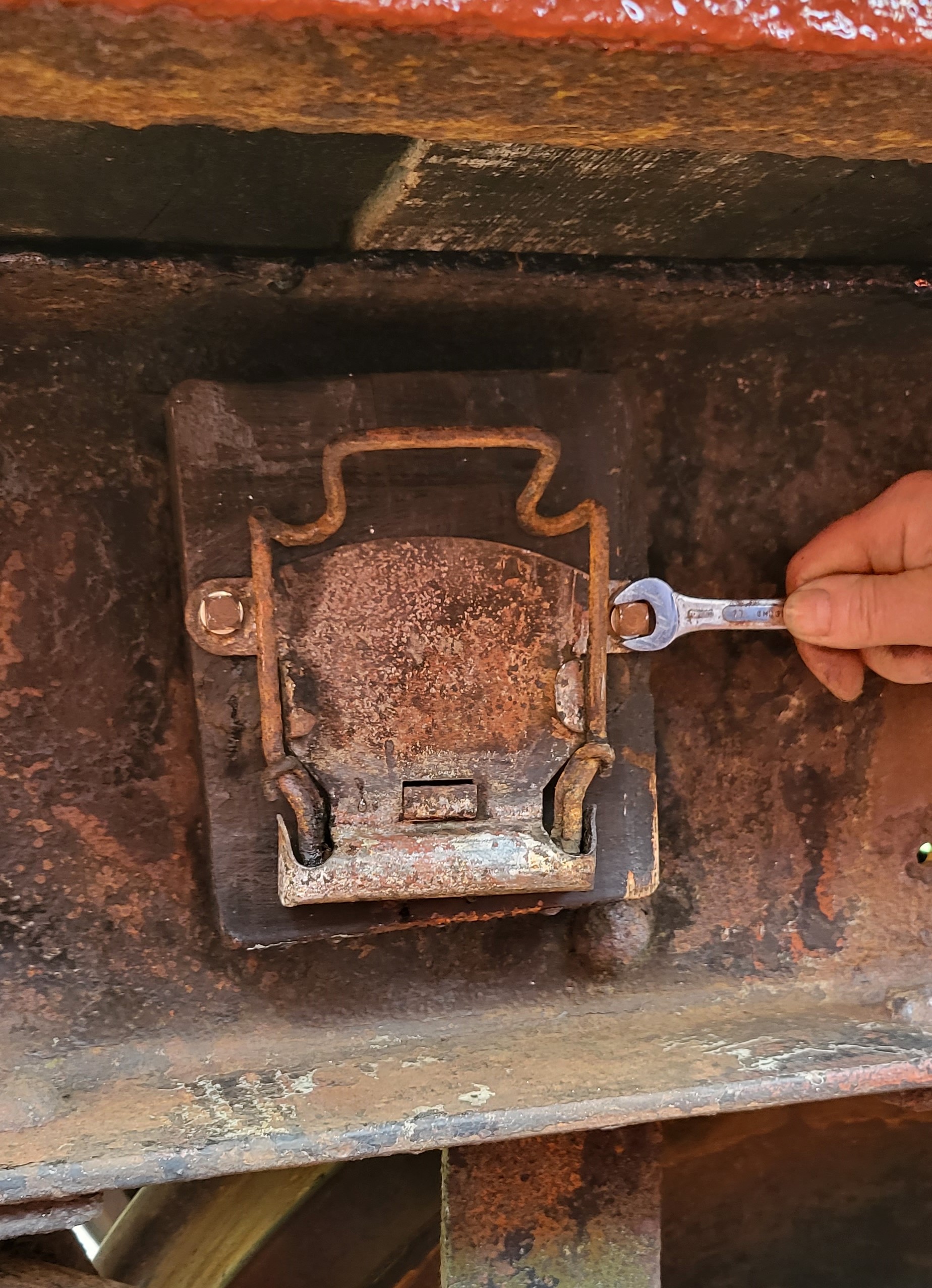
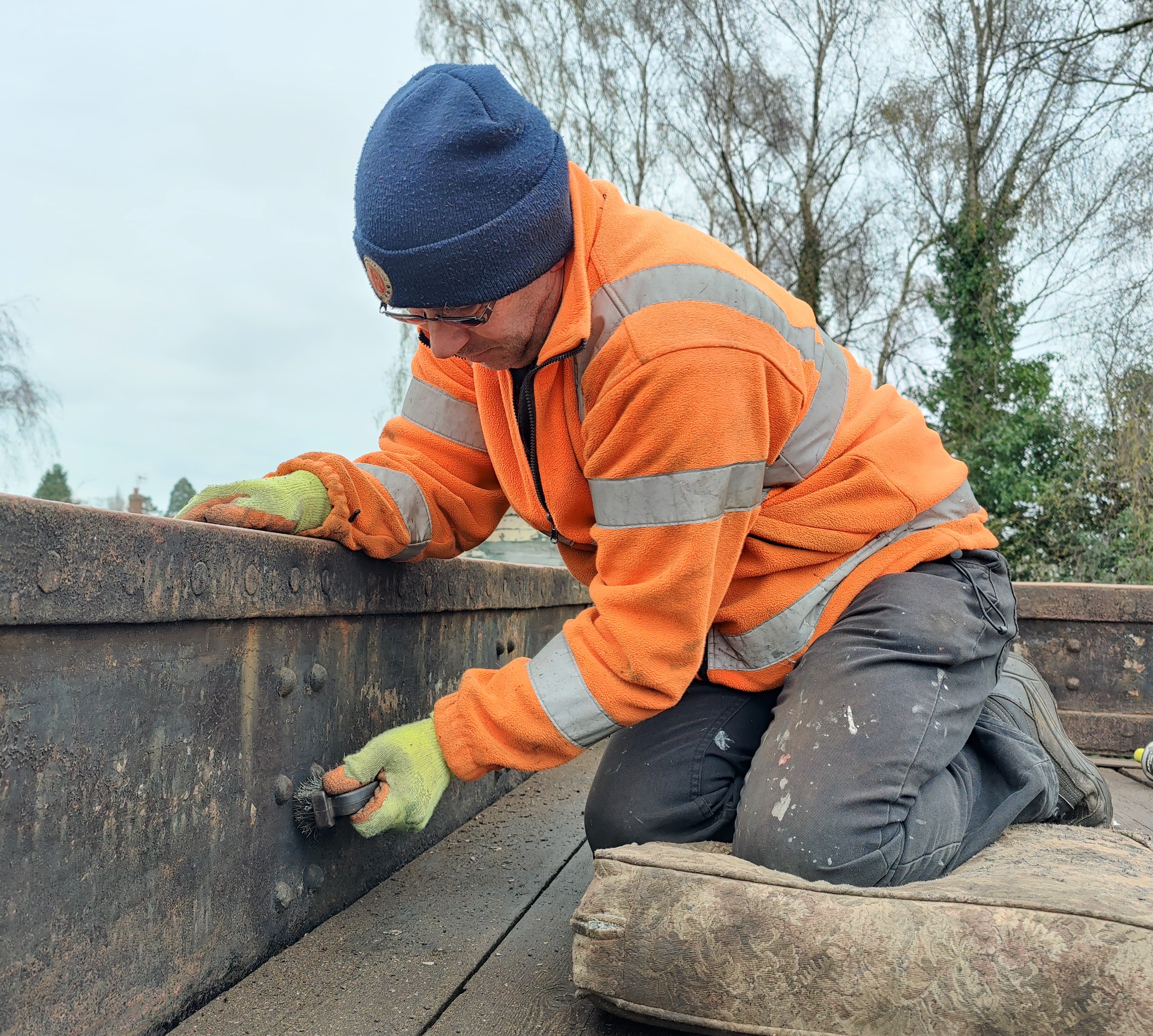
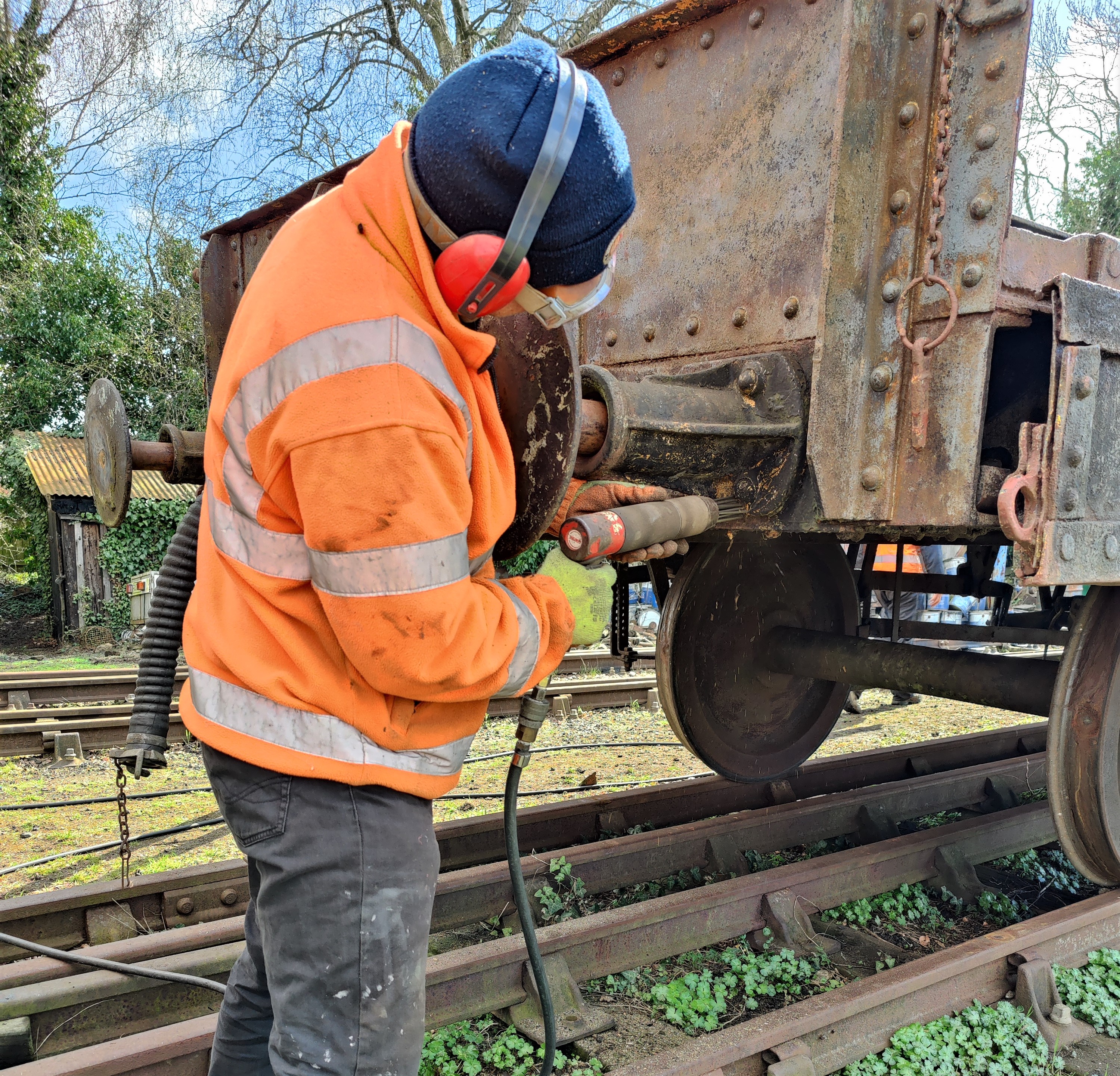
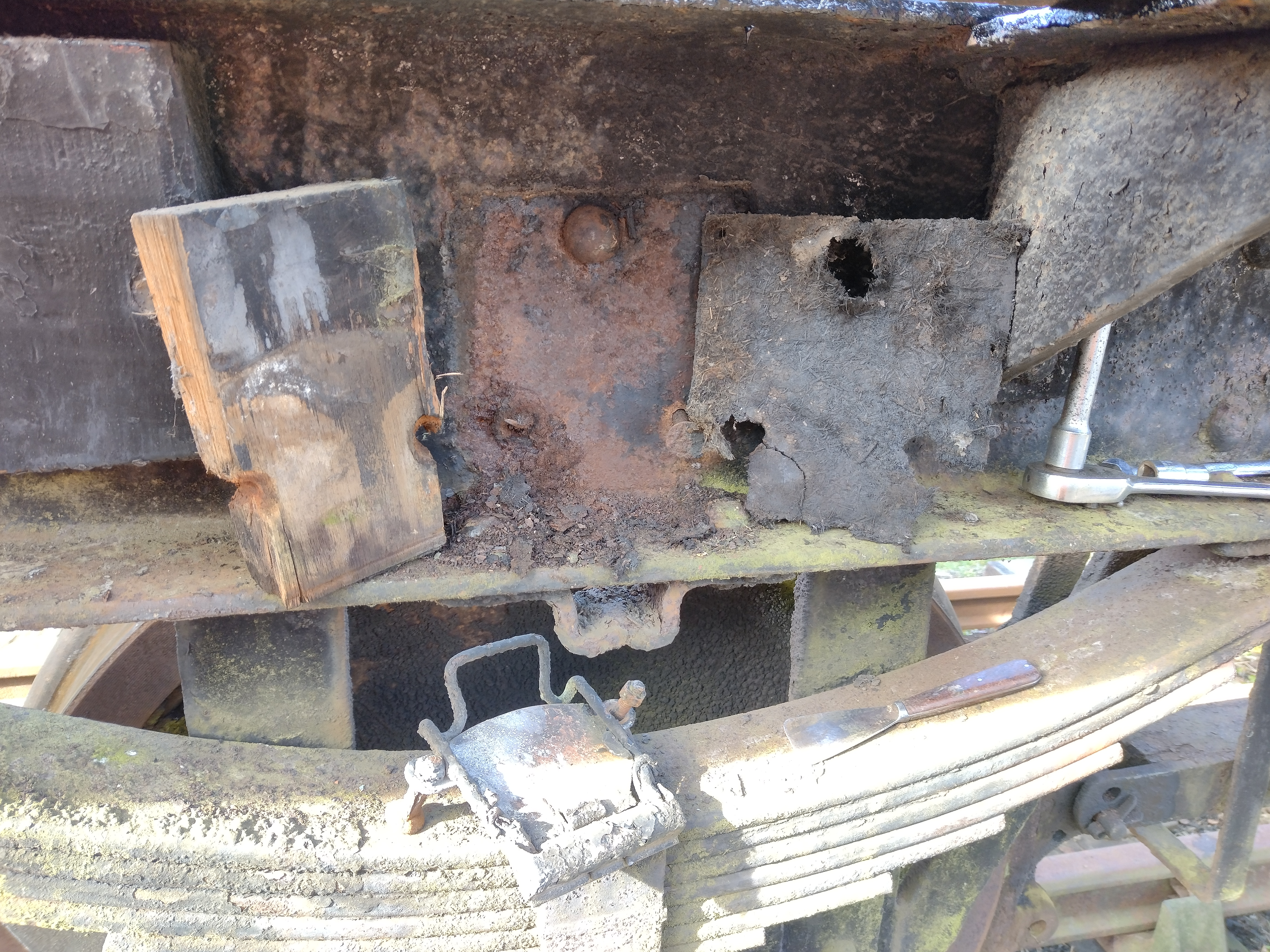
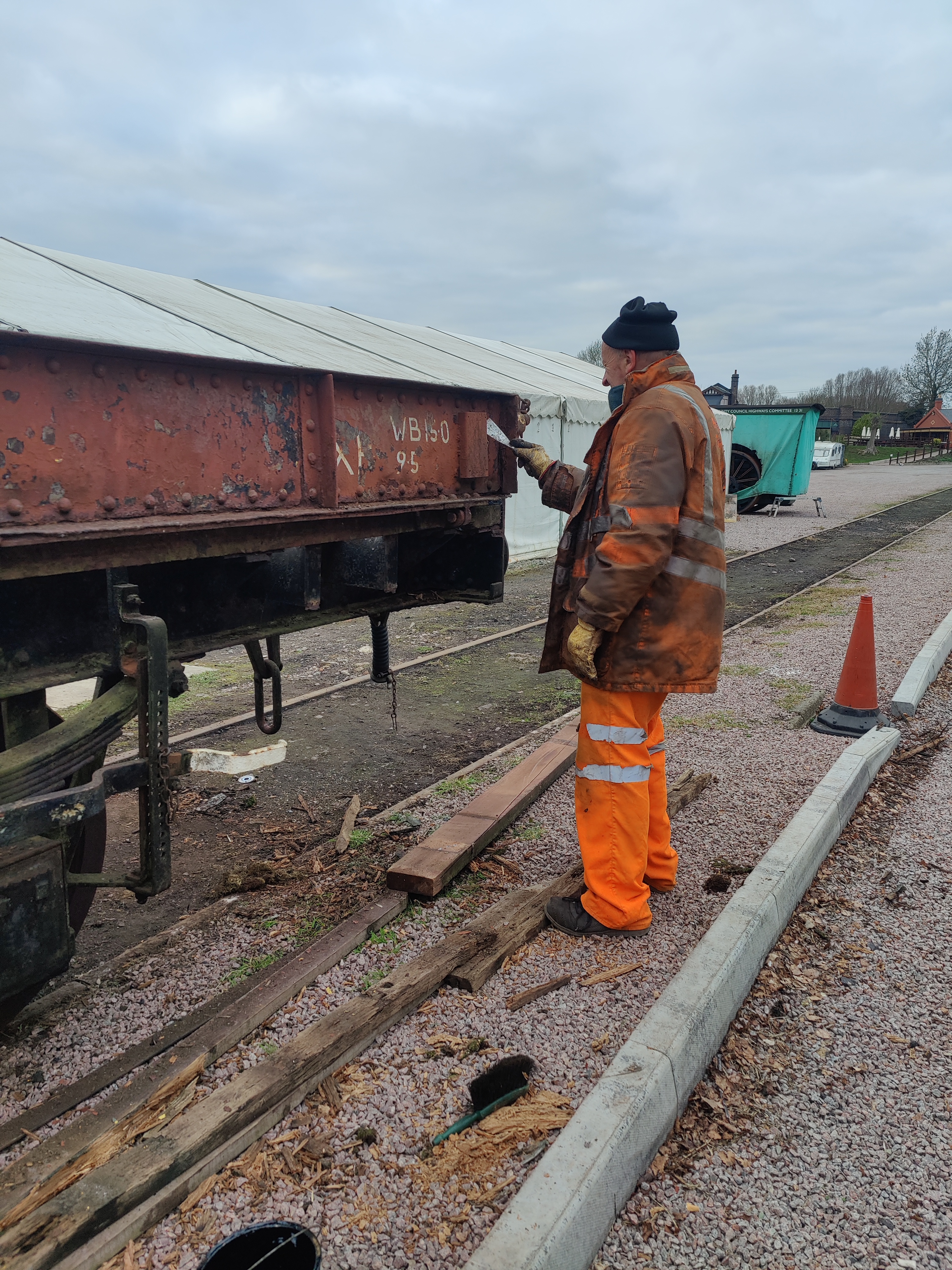
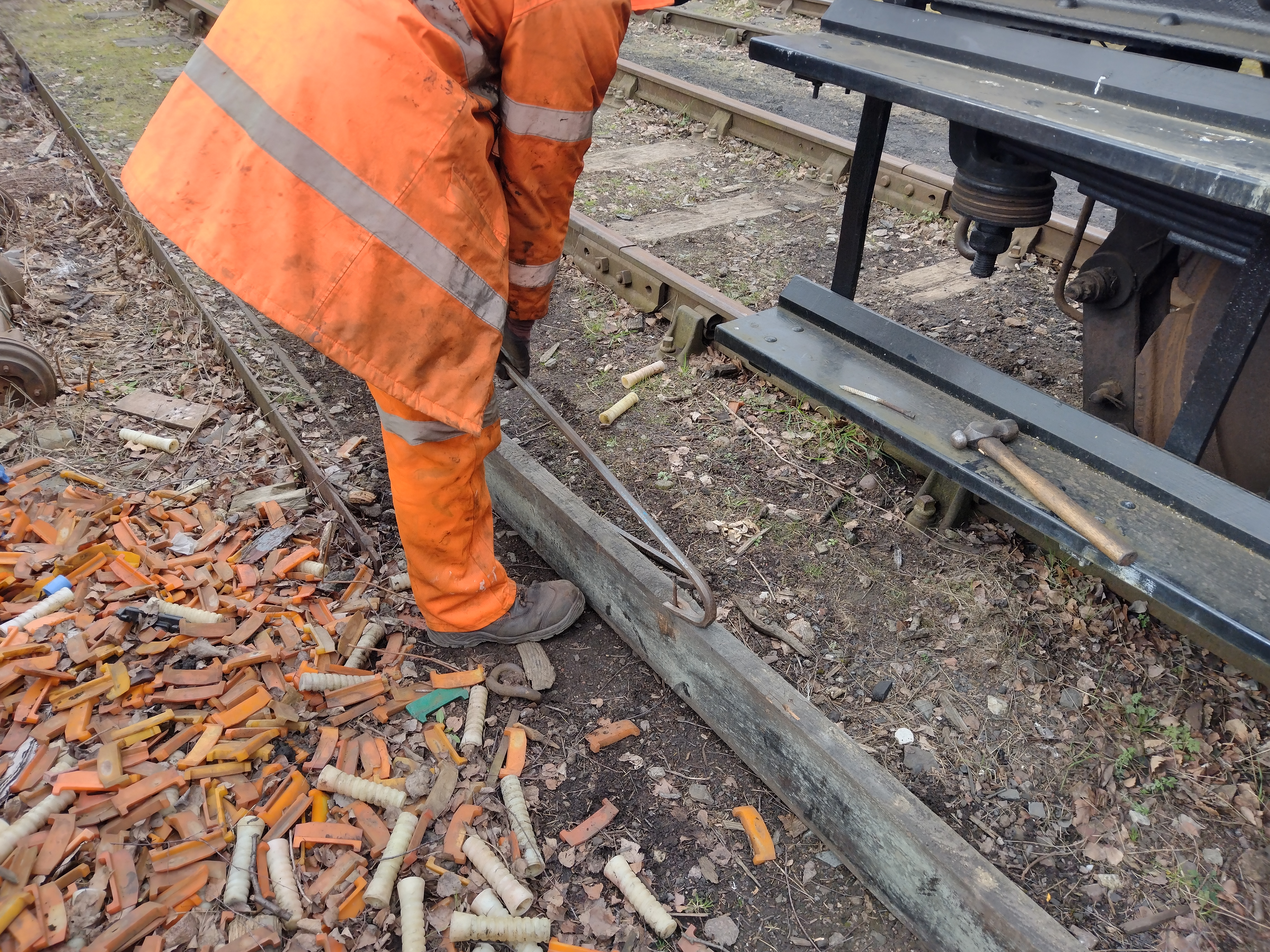
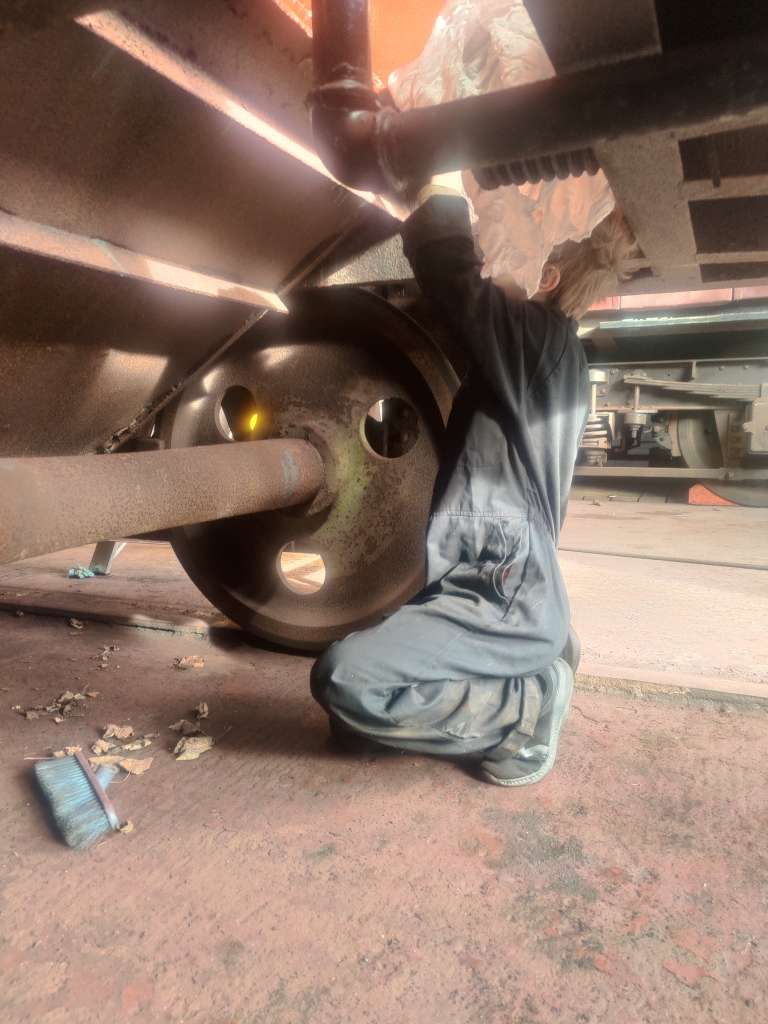
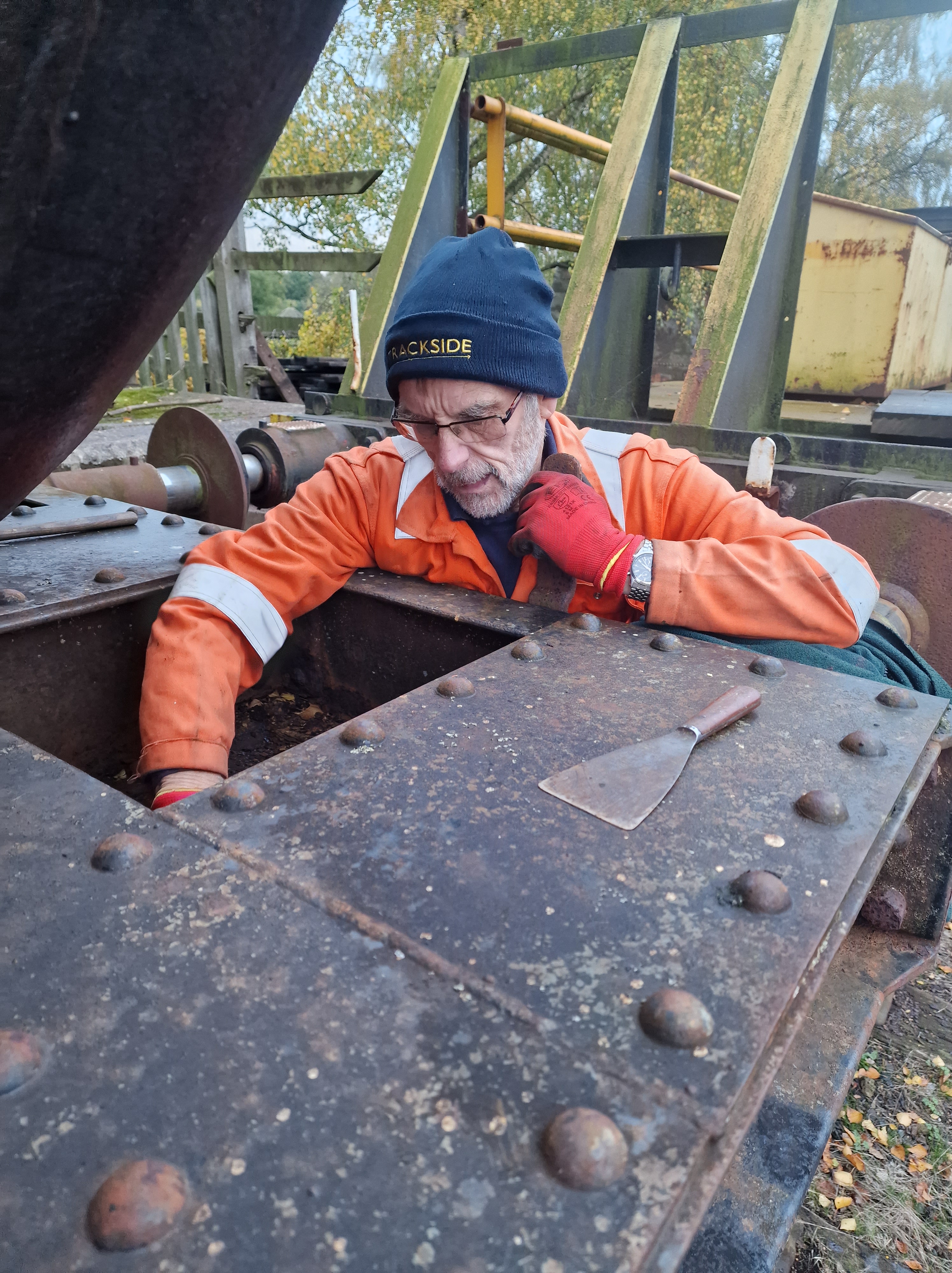
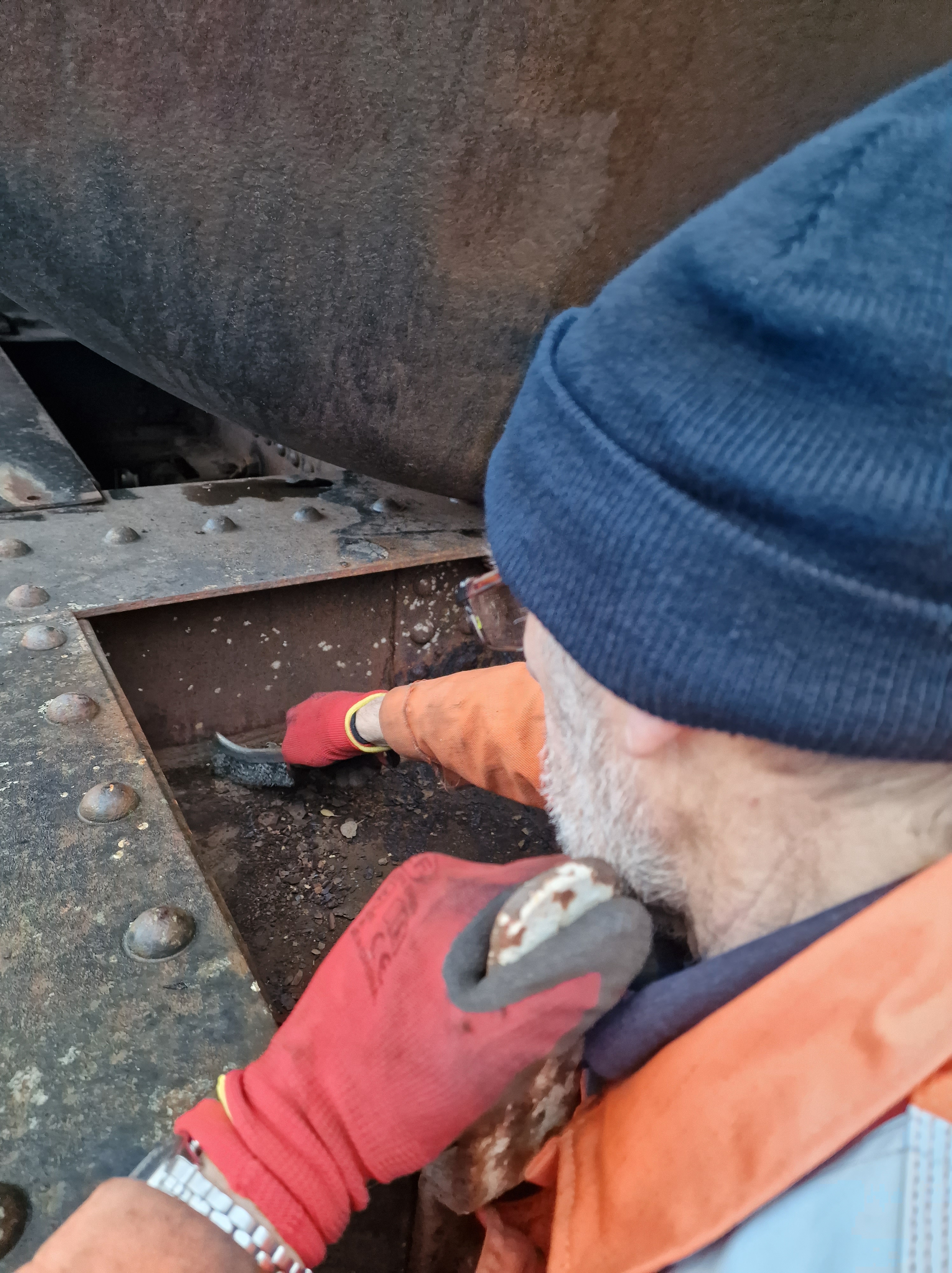
On Saturday with just Nick and myself on site a few areas on the underframe were attended to in preparation for paint, including some stubborn rusting where the label clip block had rotted away. The air line was used to clean down any debris.
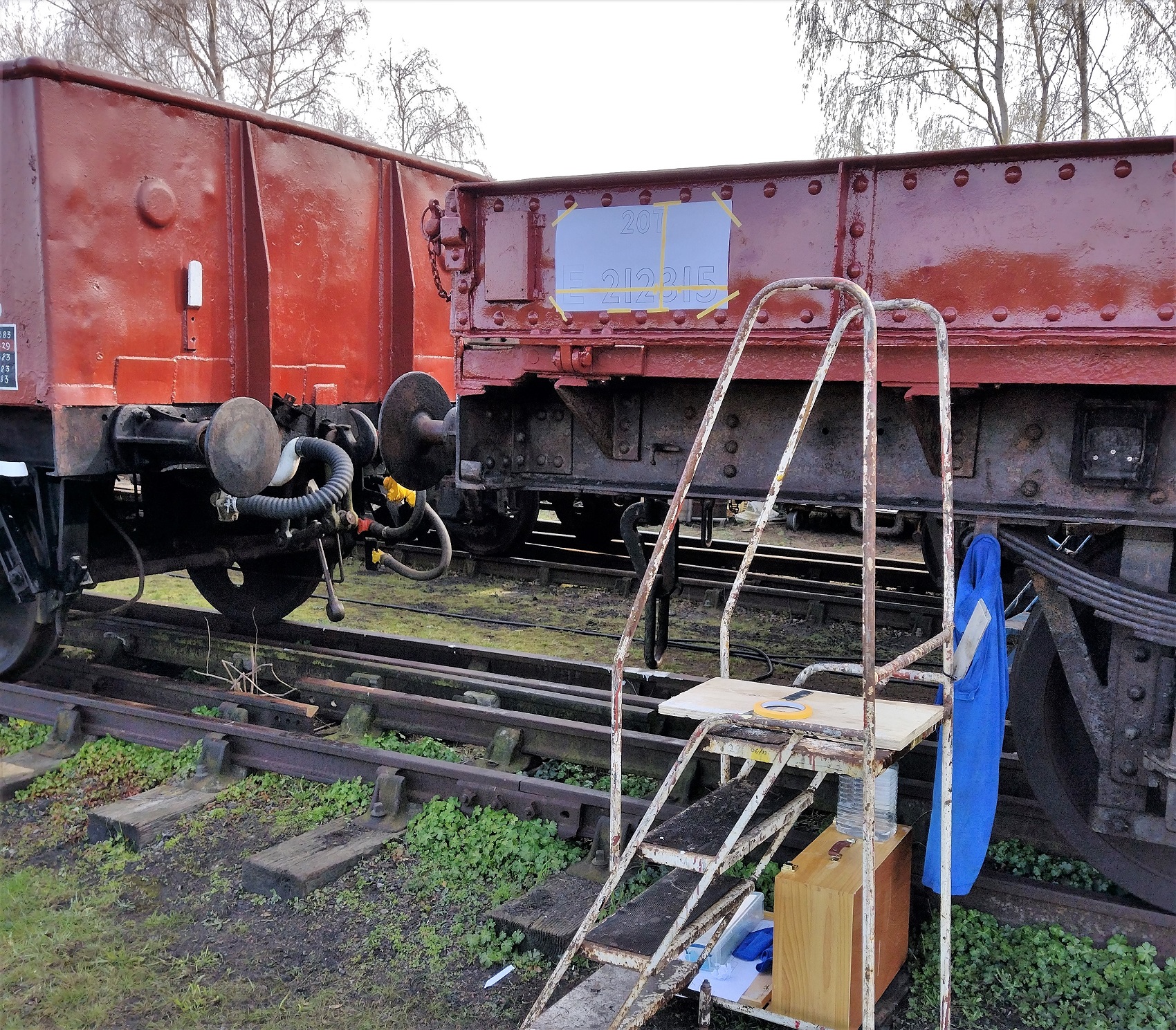
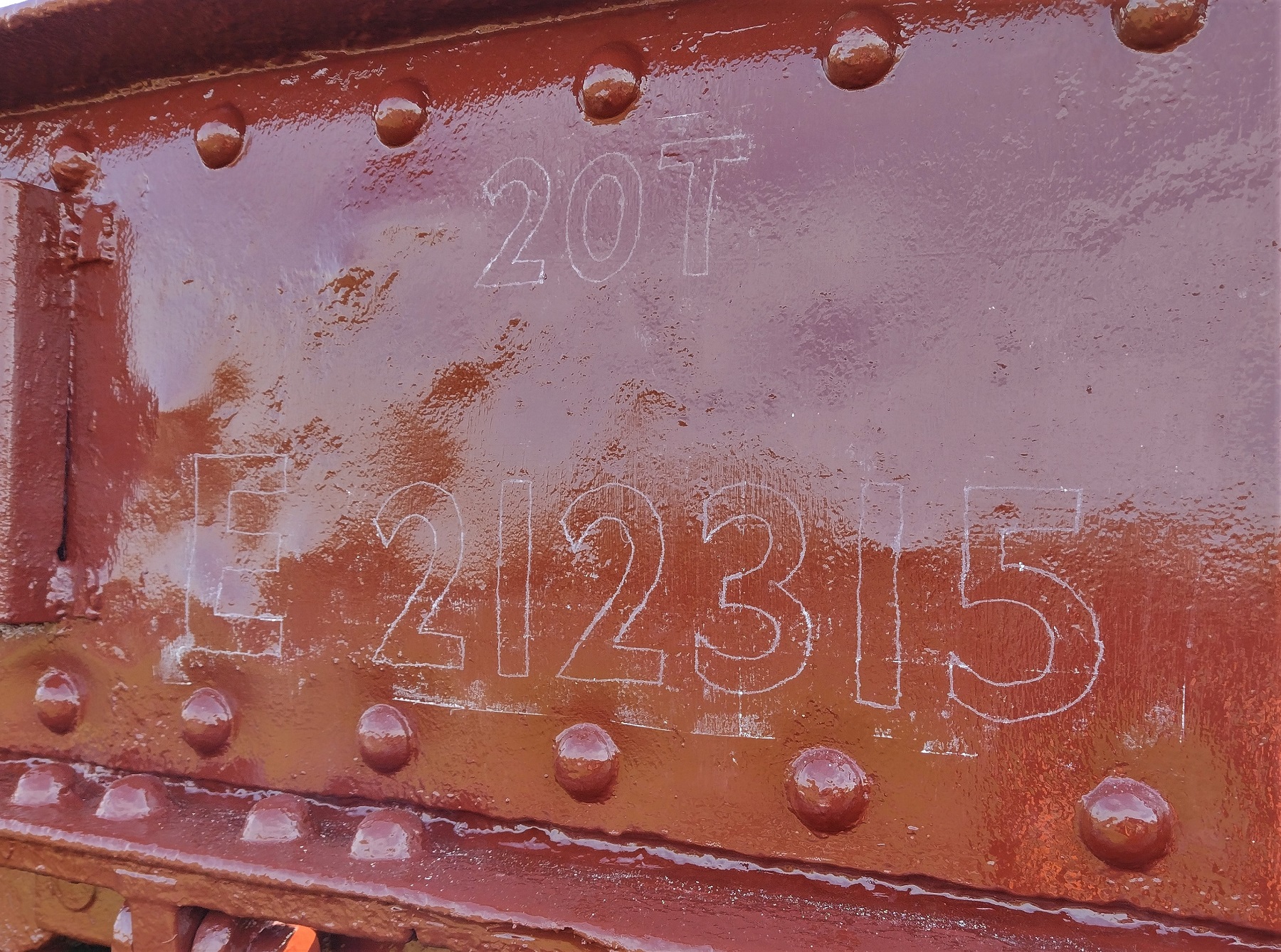
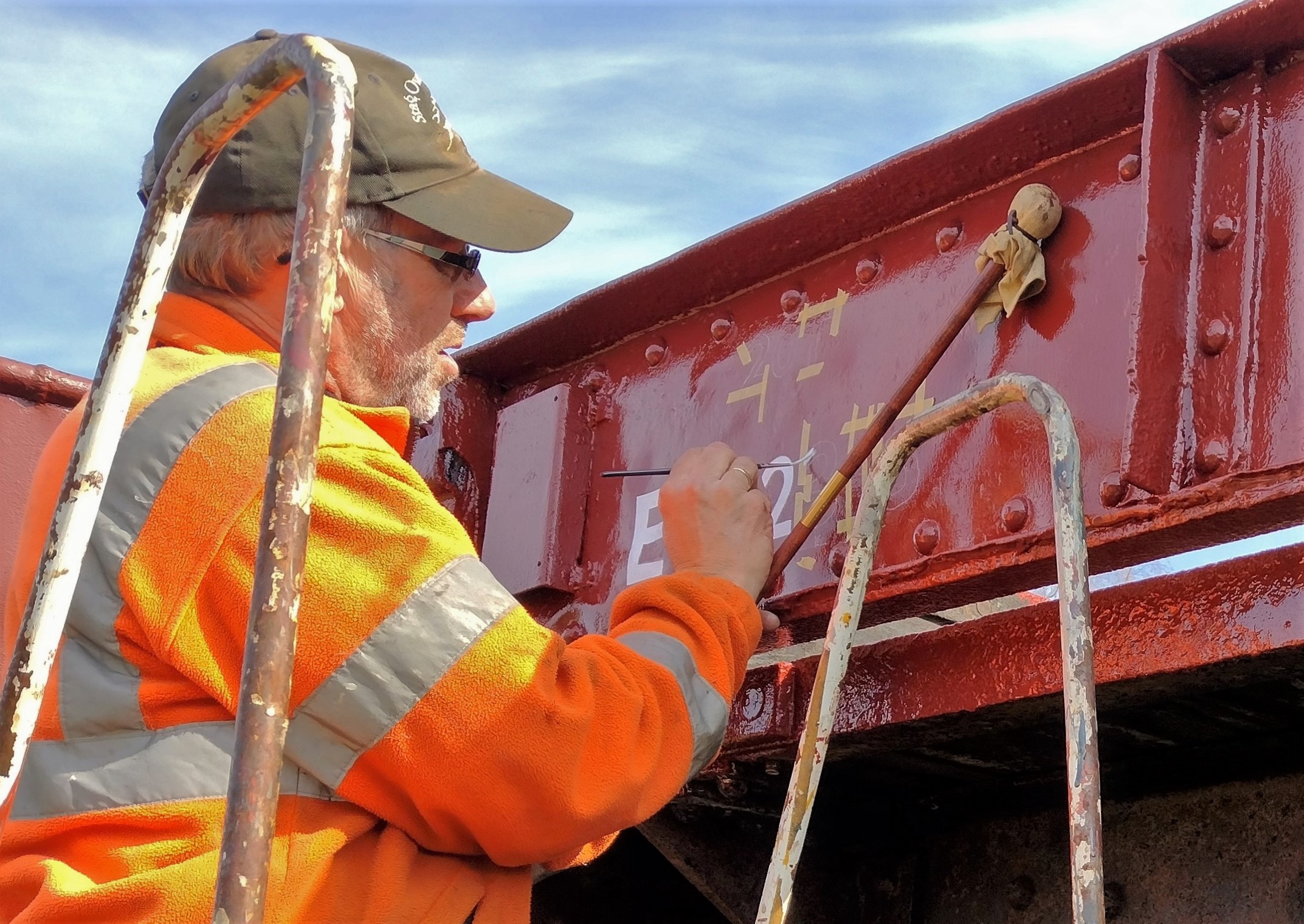
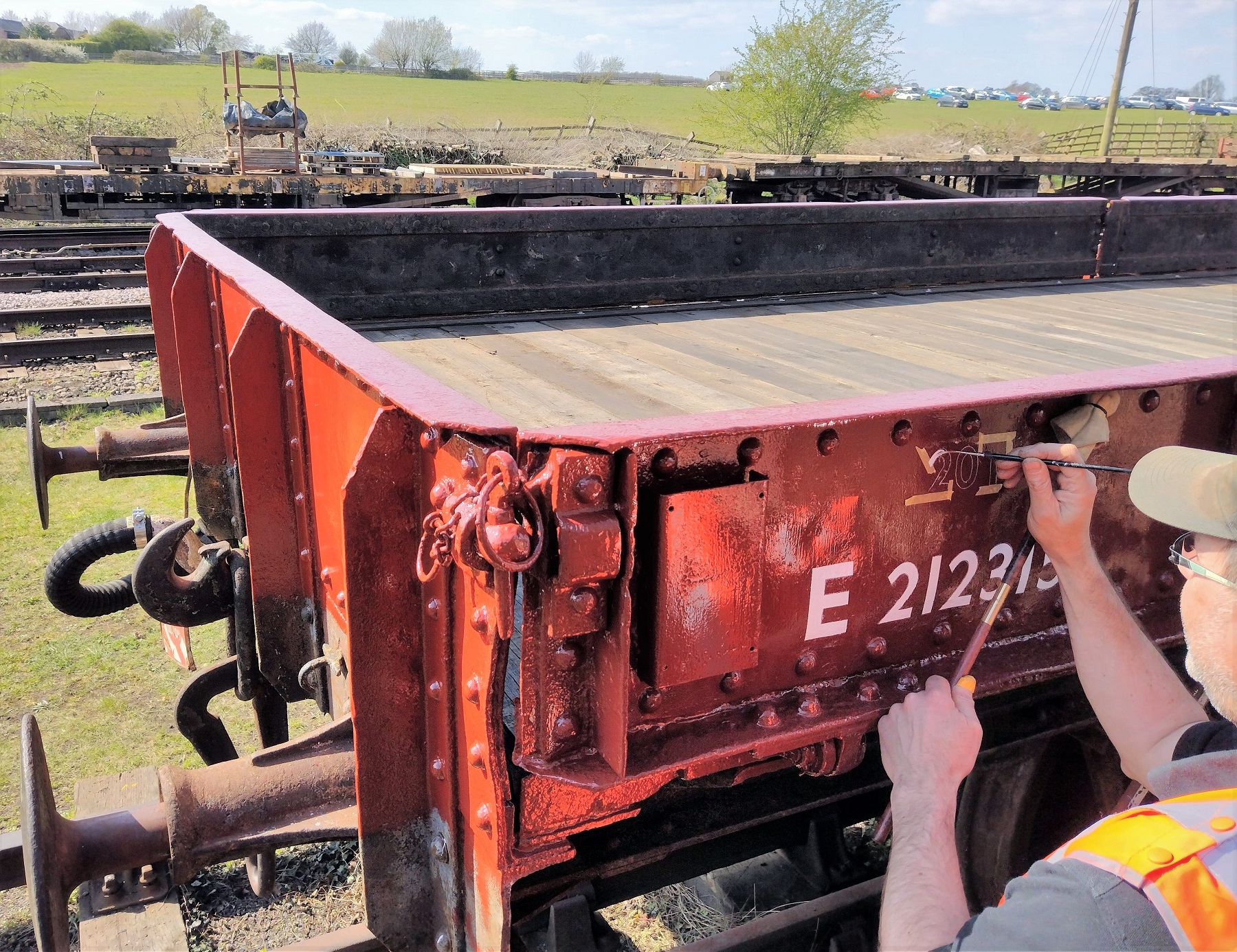
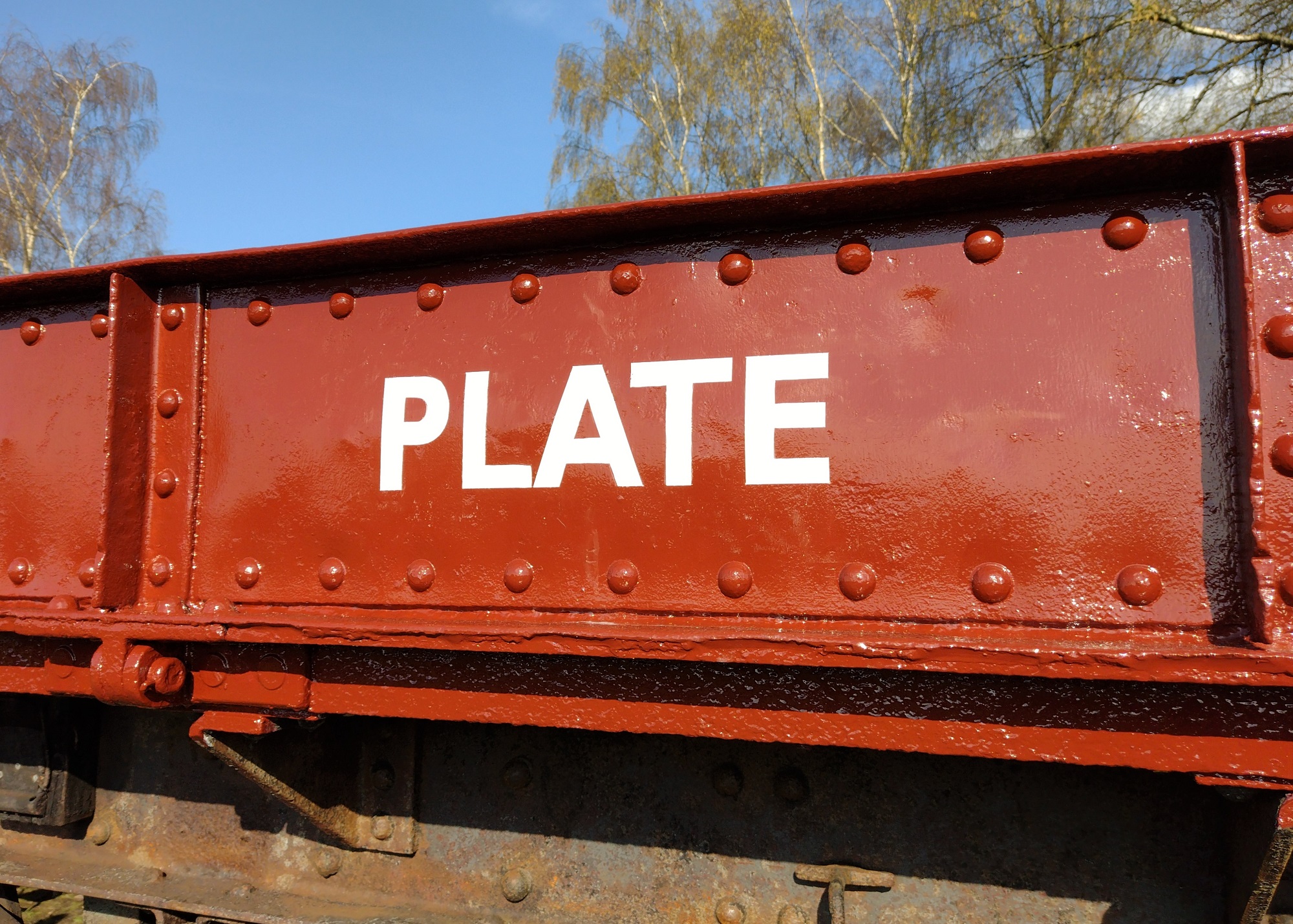
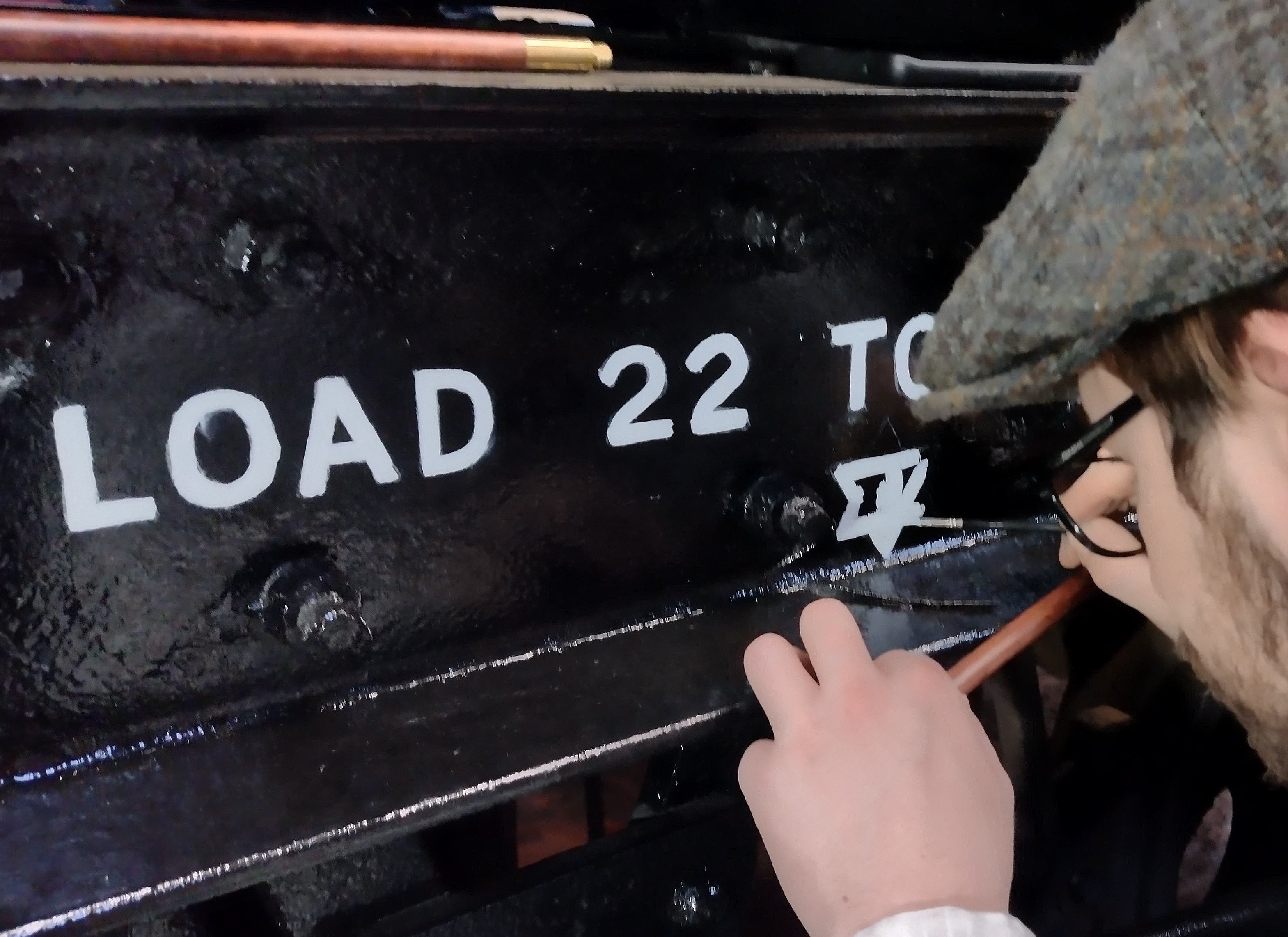
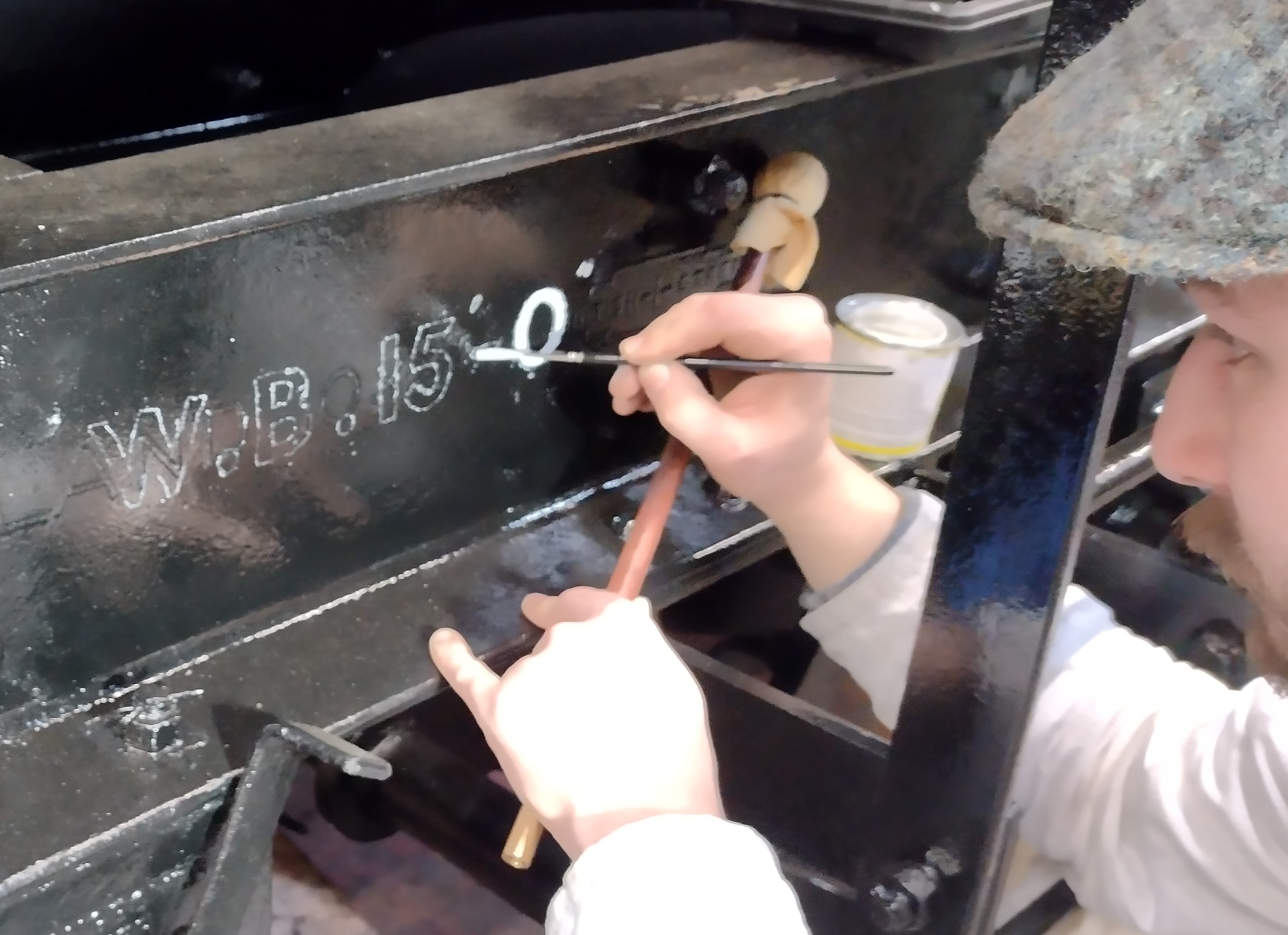
As the sun came out and things began to warm up, I made a start on giving the plate back its identity. The previously prepared templates were chalked and aligned on the wagon side doors; the numbering was then outlined to give a neat chalk template for signwriting.
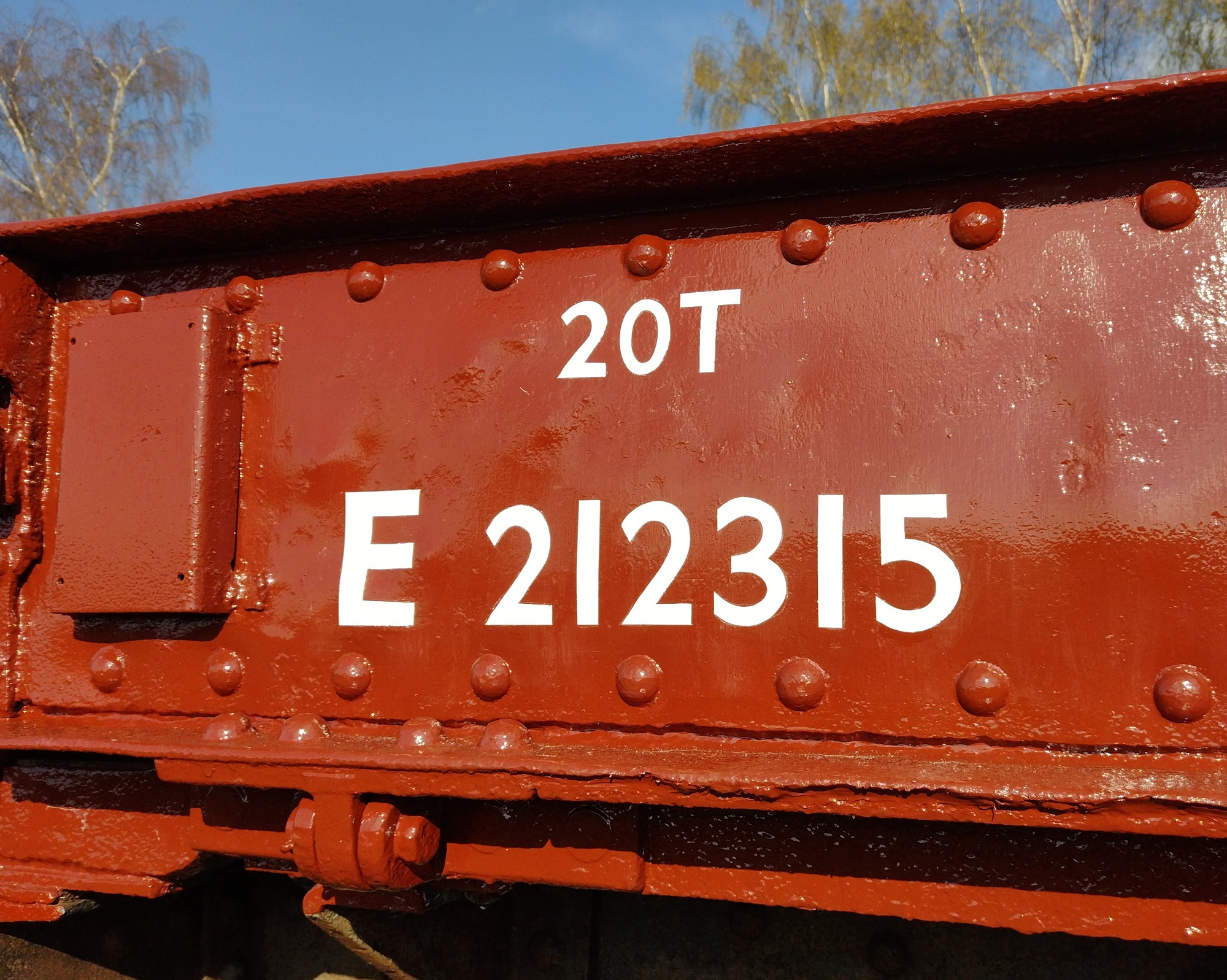
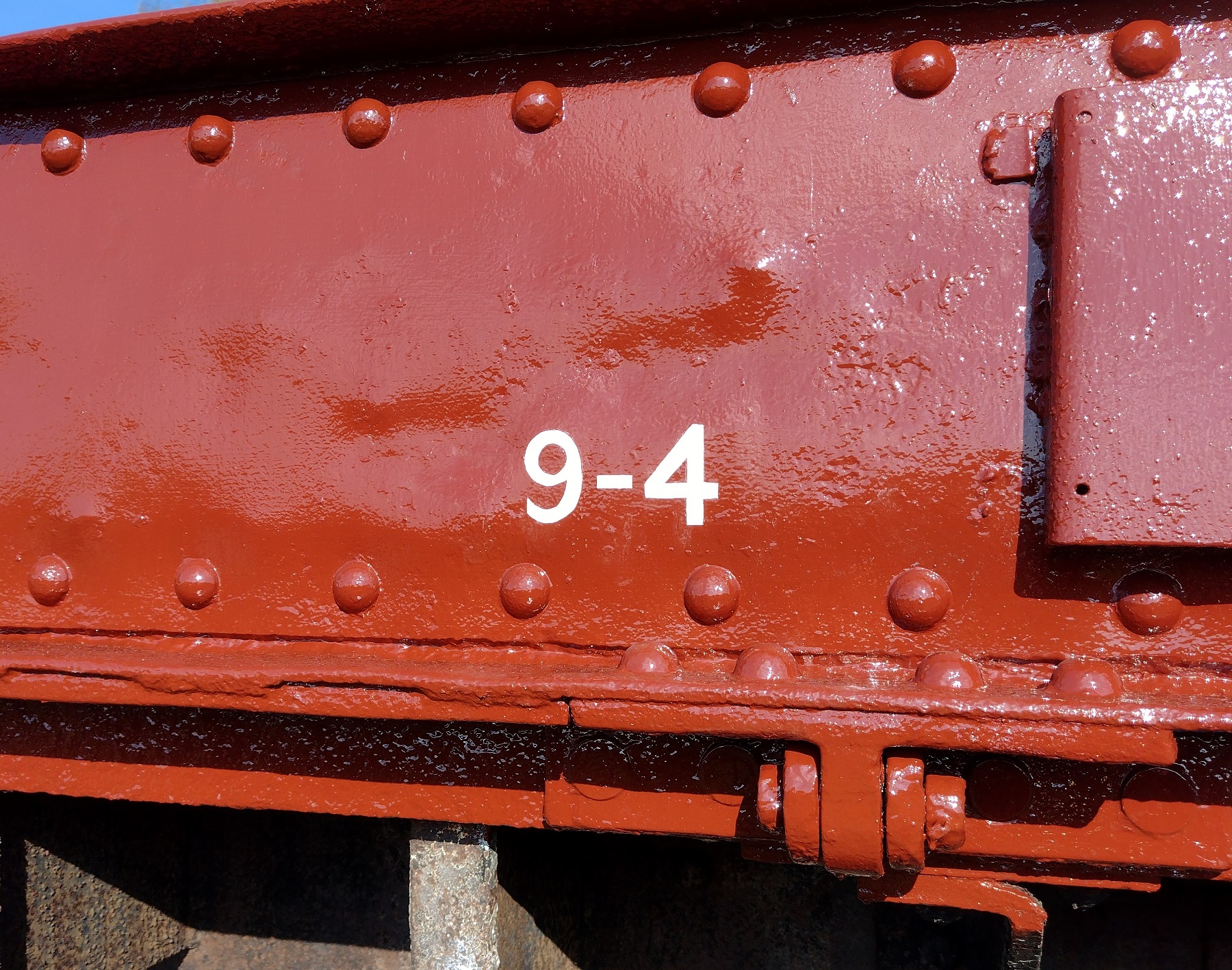
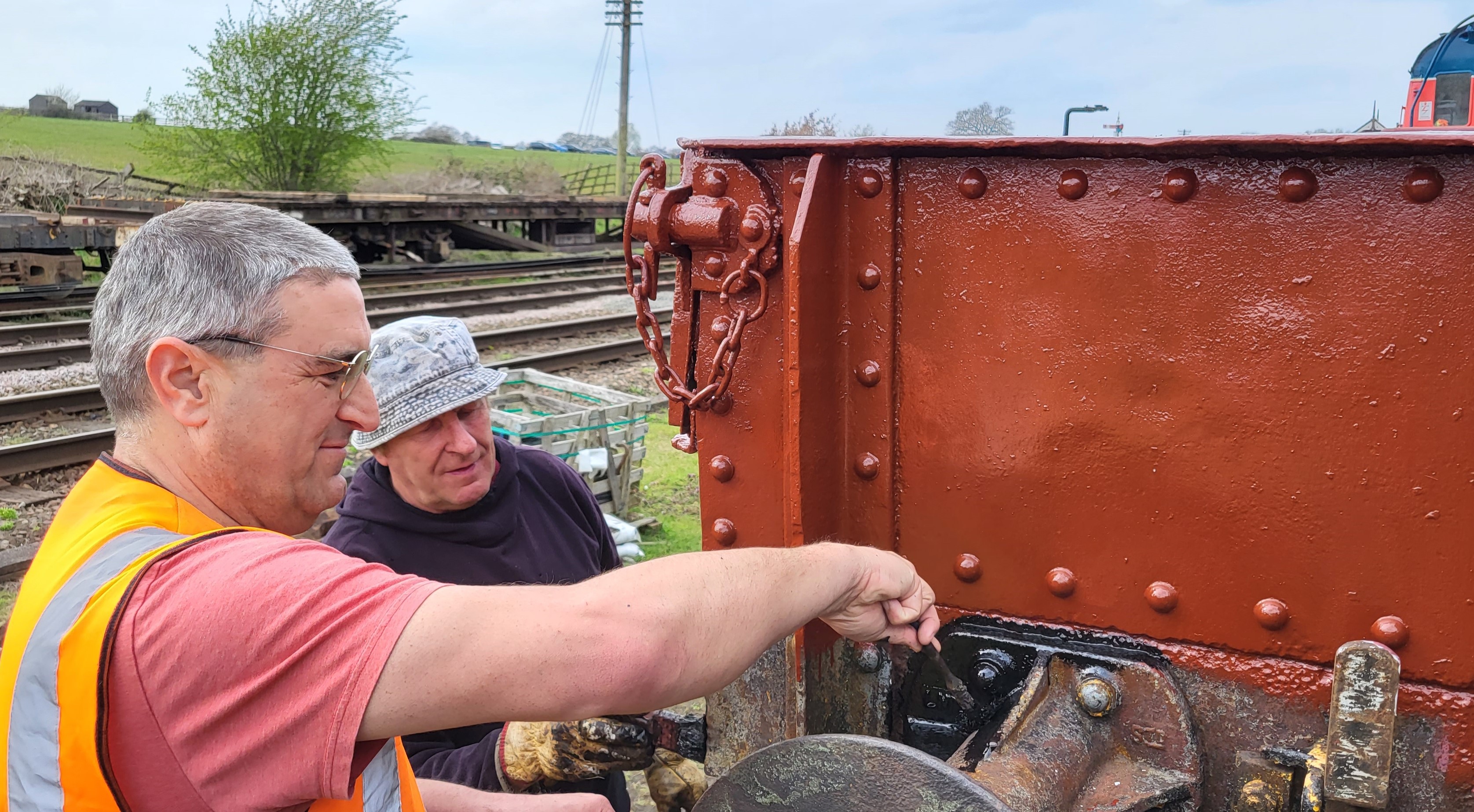
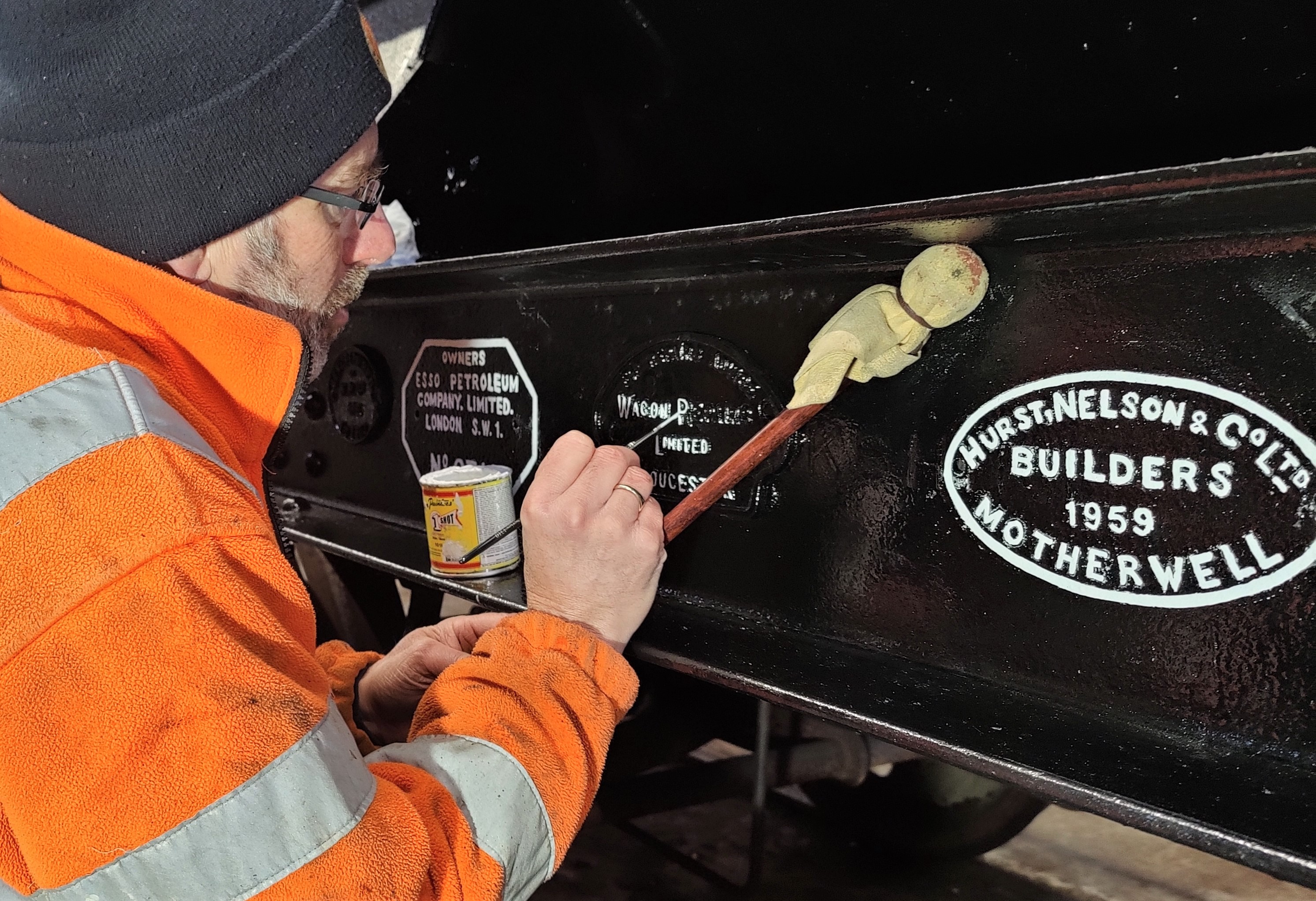
The running number, load capacity, tare weight and wagon name were then applied to both sides.
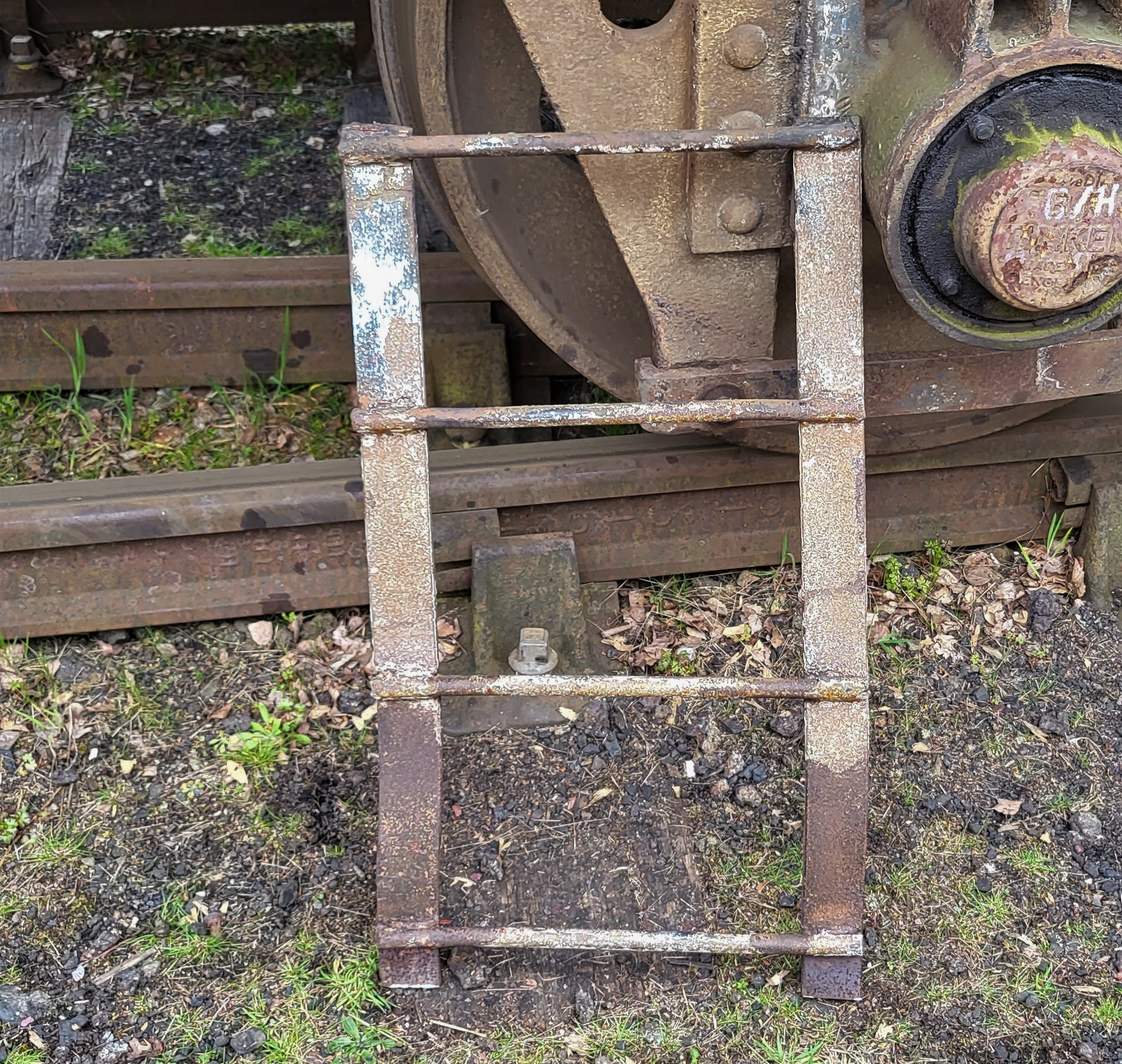
On Sunday Nick, Mark and Dan continued with work on the plate; the non-original steps on the west side that were added for its crane jib runner duties by BR, were removed. The east side ones having been removed prior to preservation. The east side label clip and block were replaced.
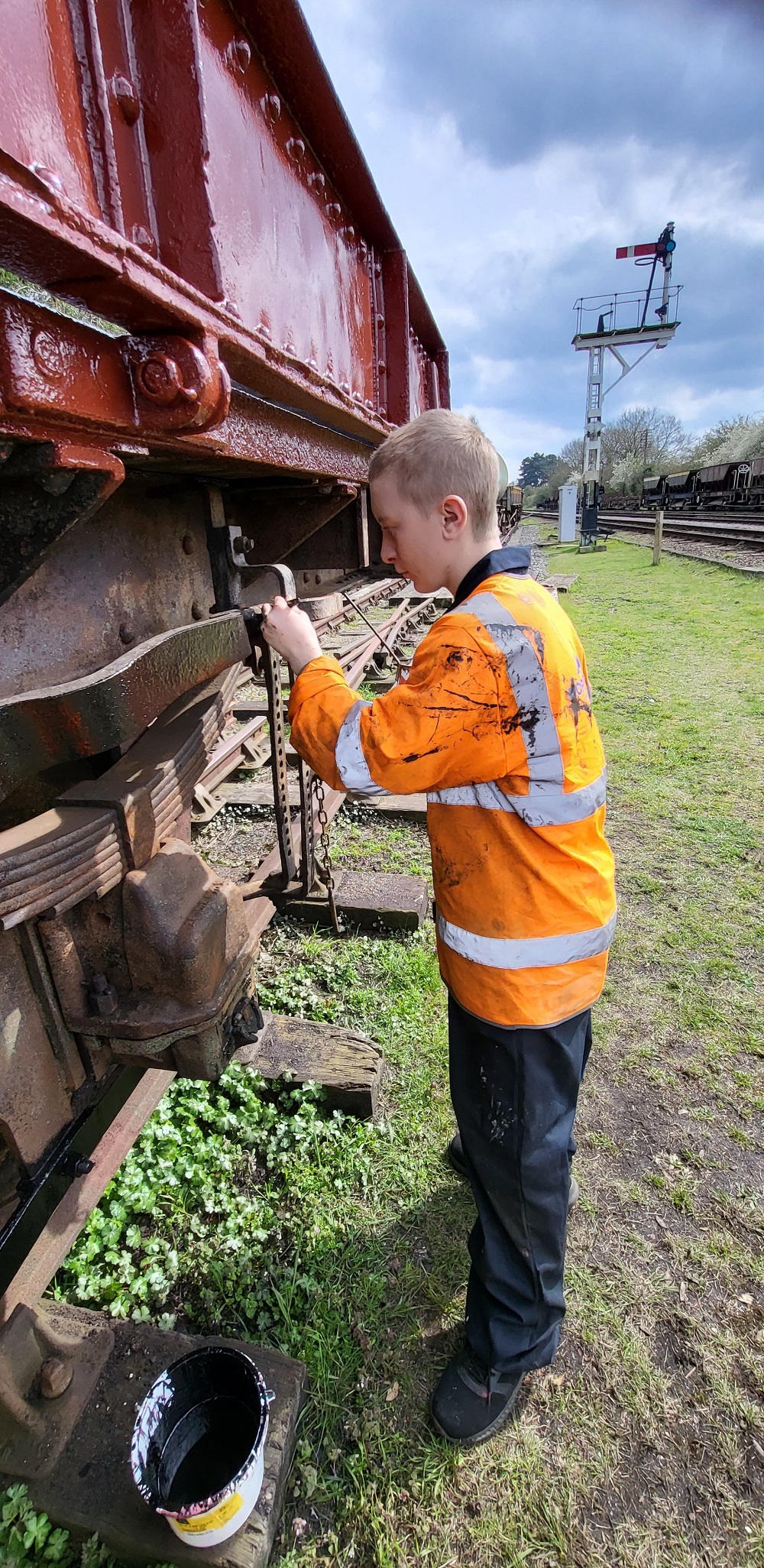
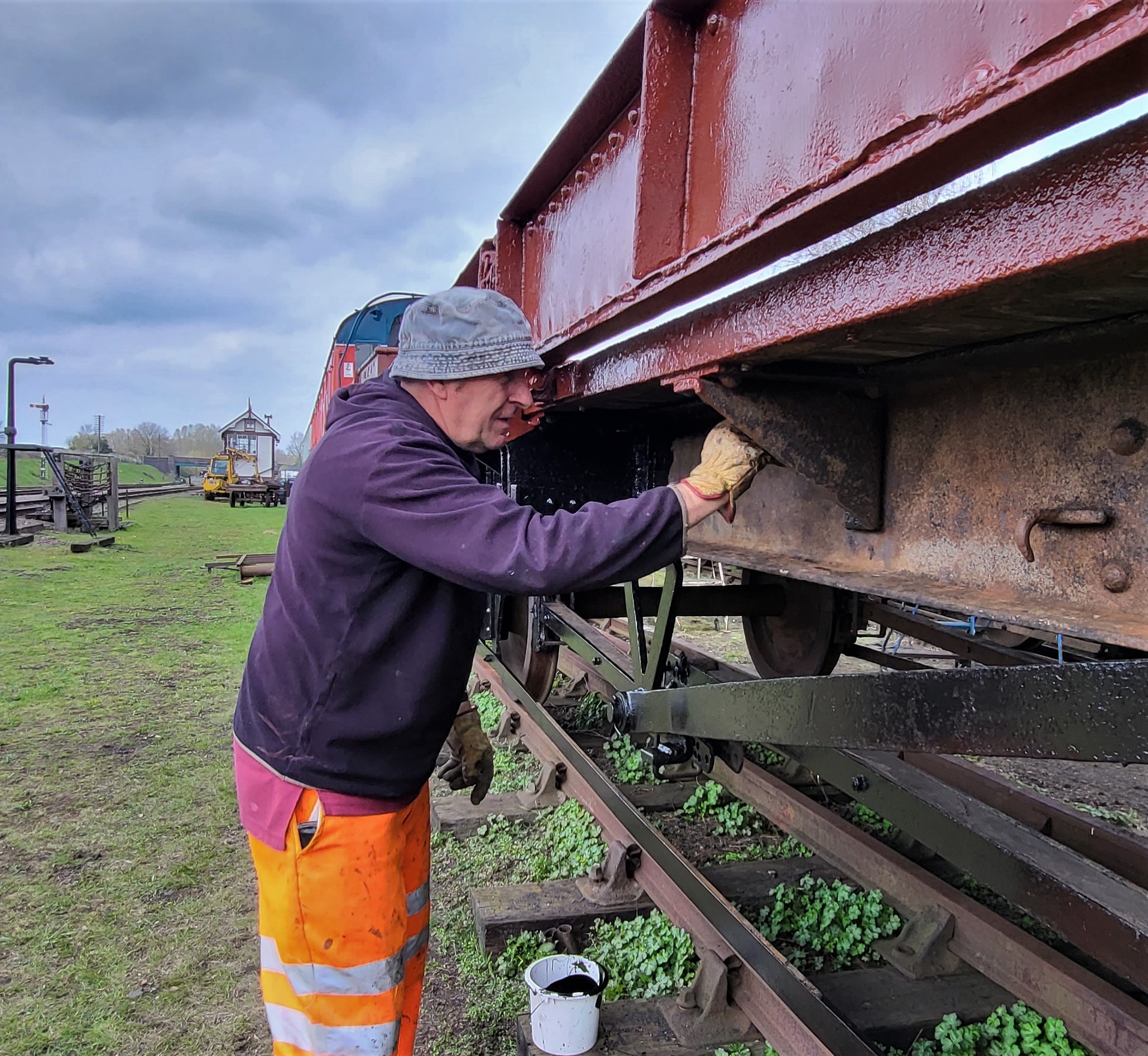
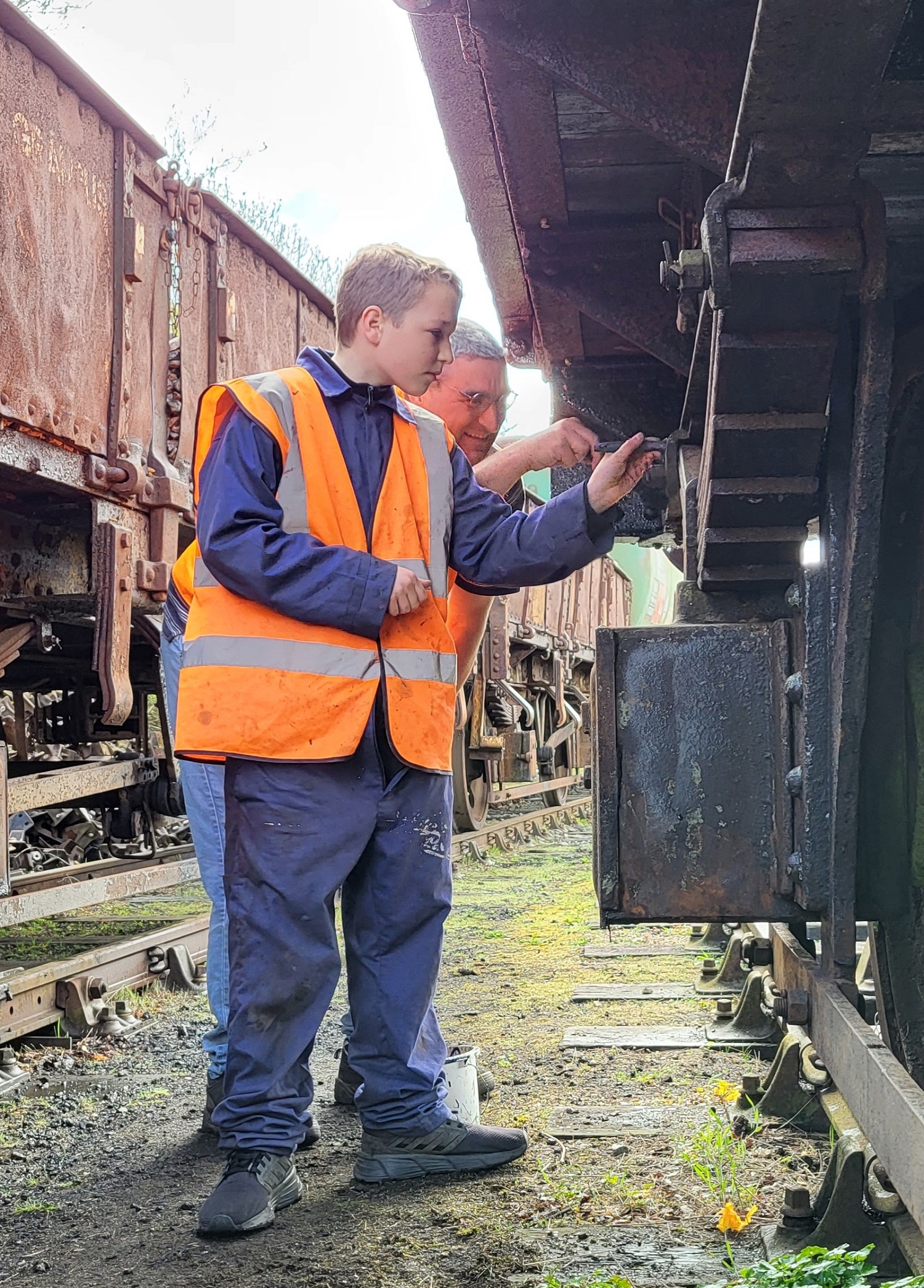
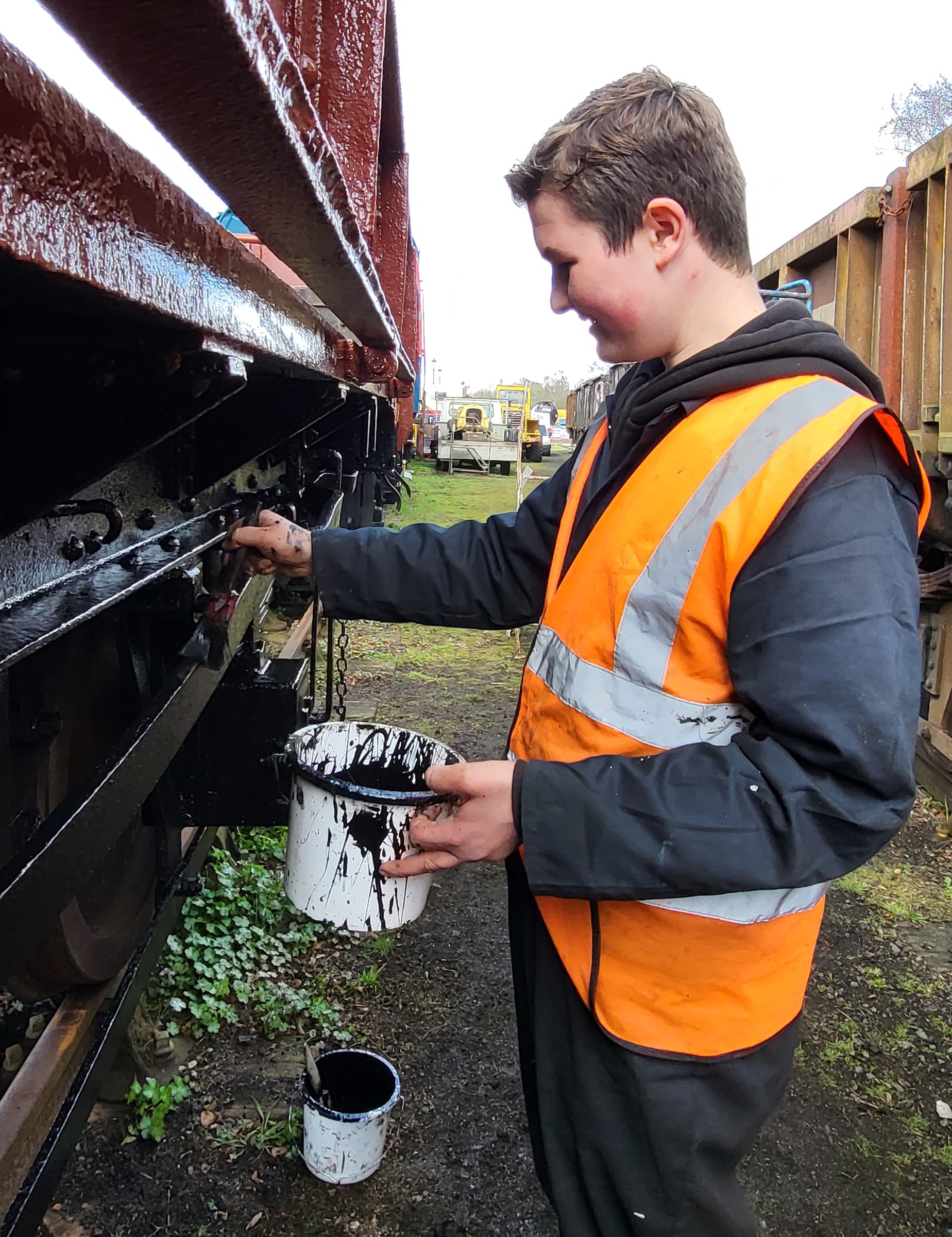
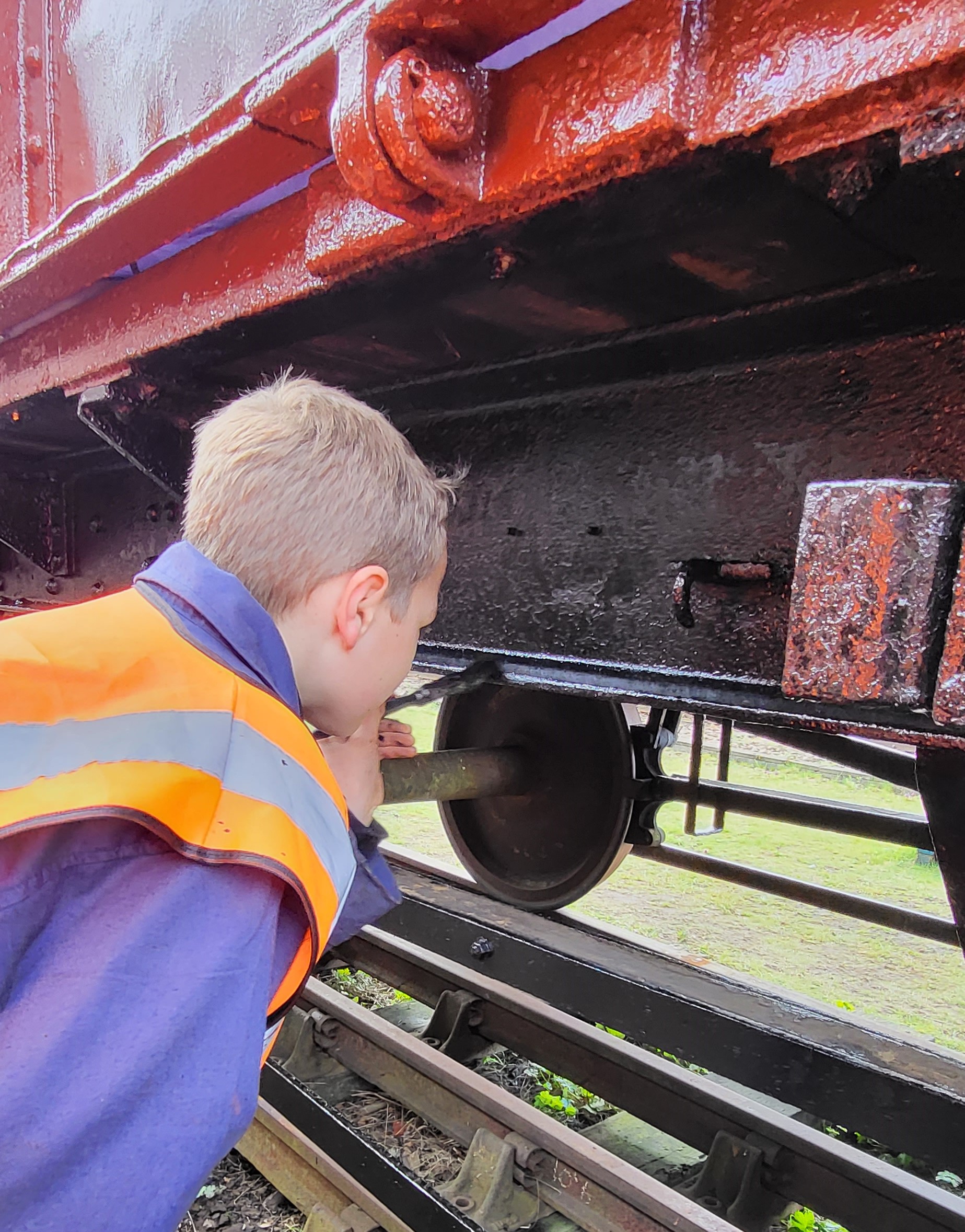
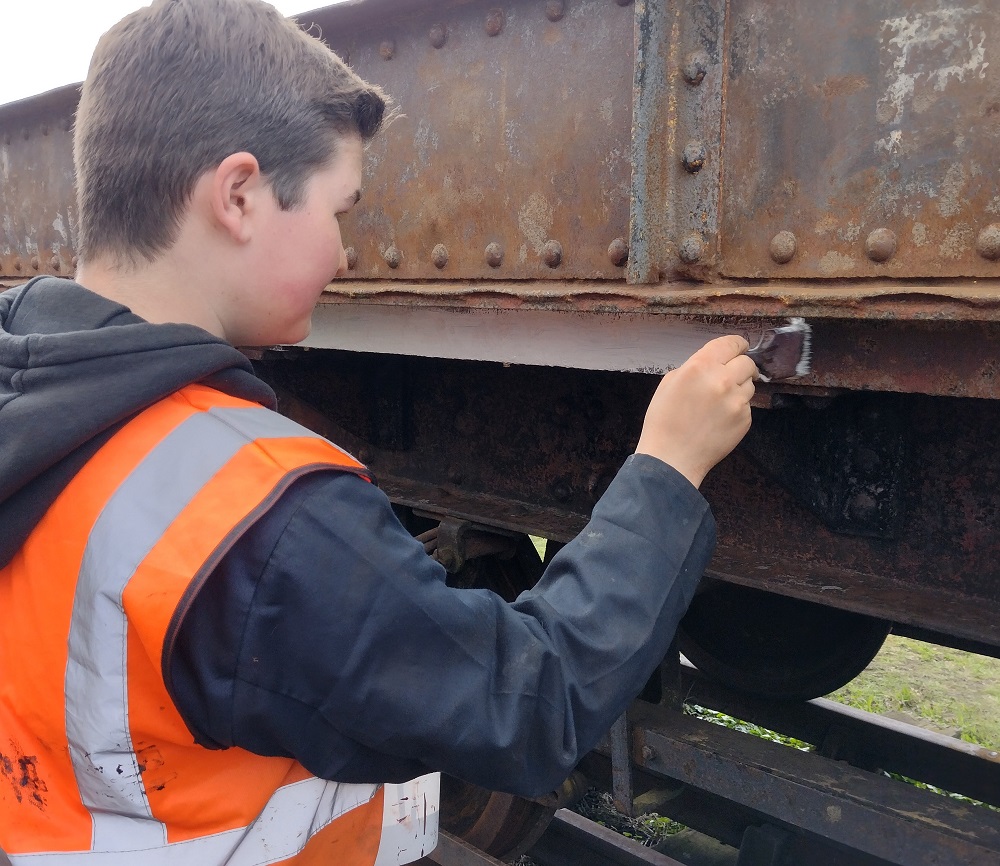
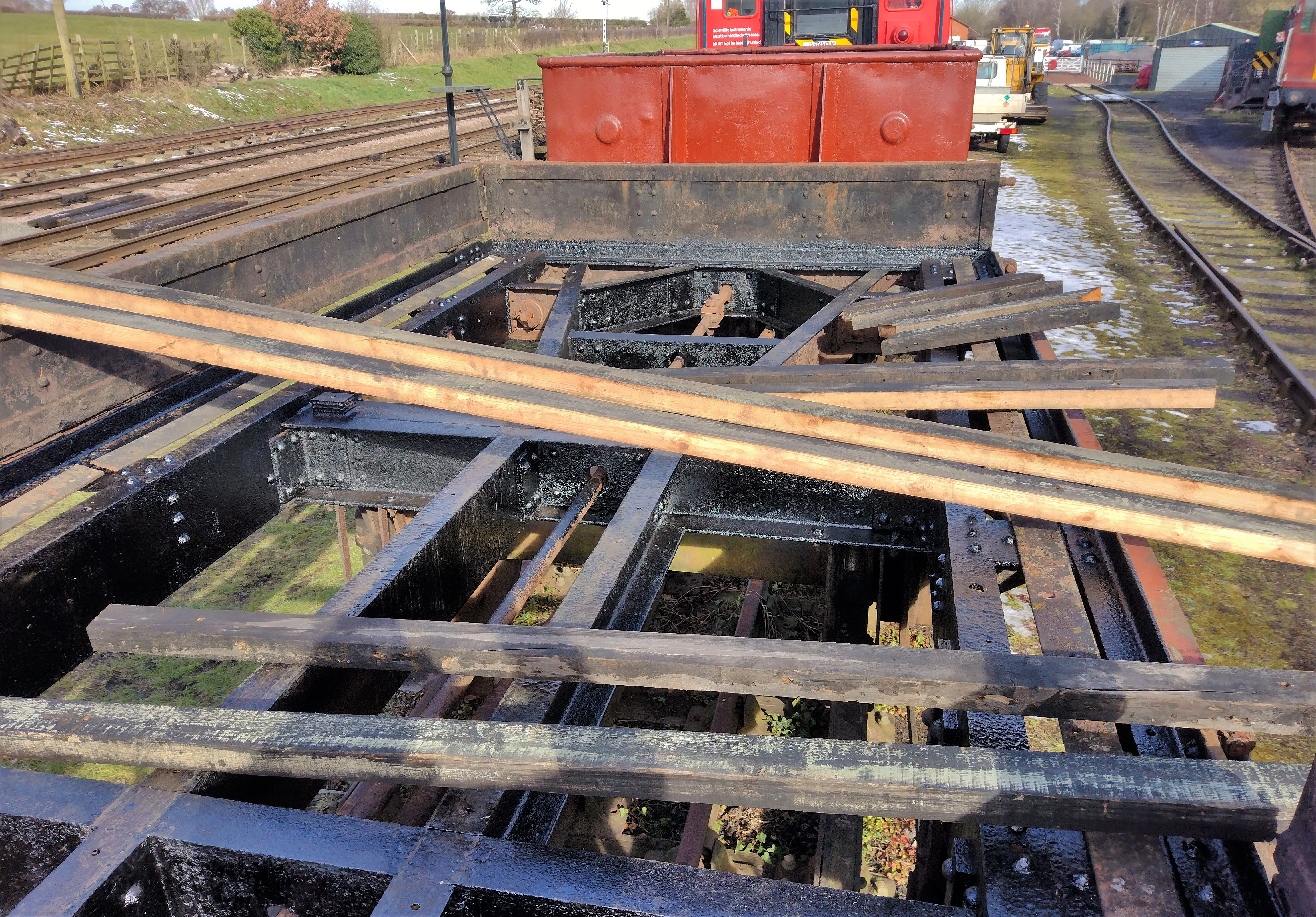
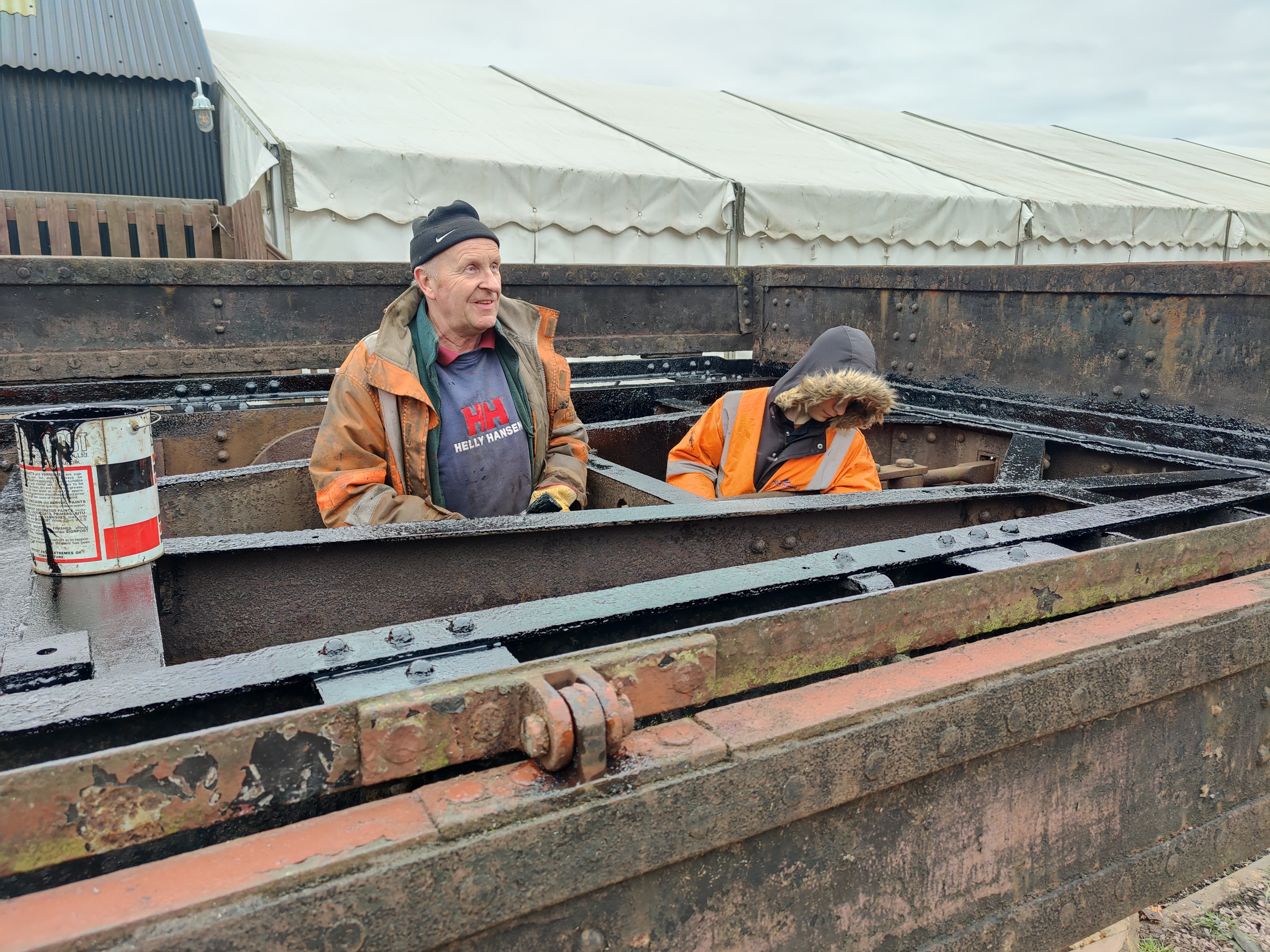
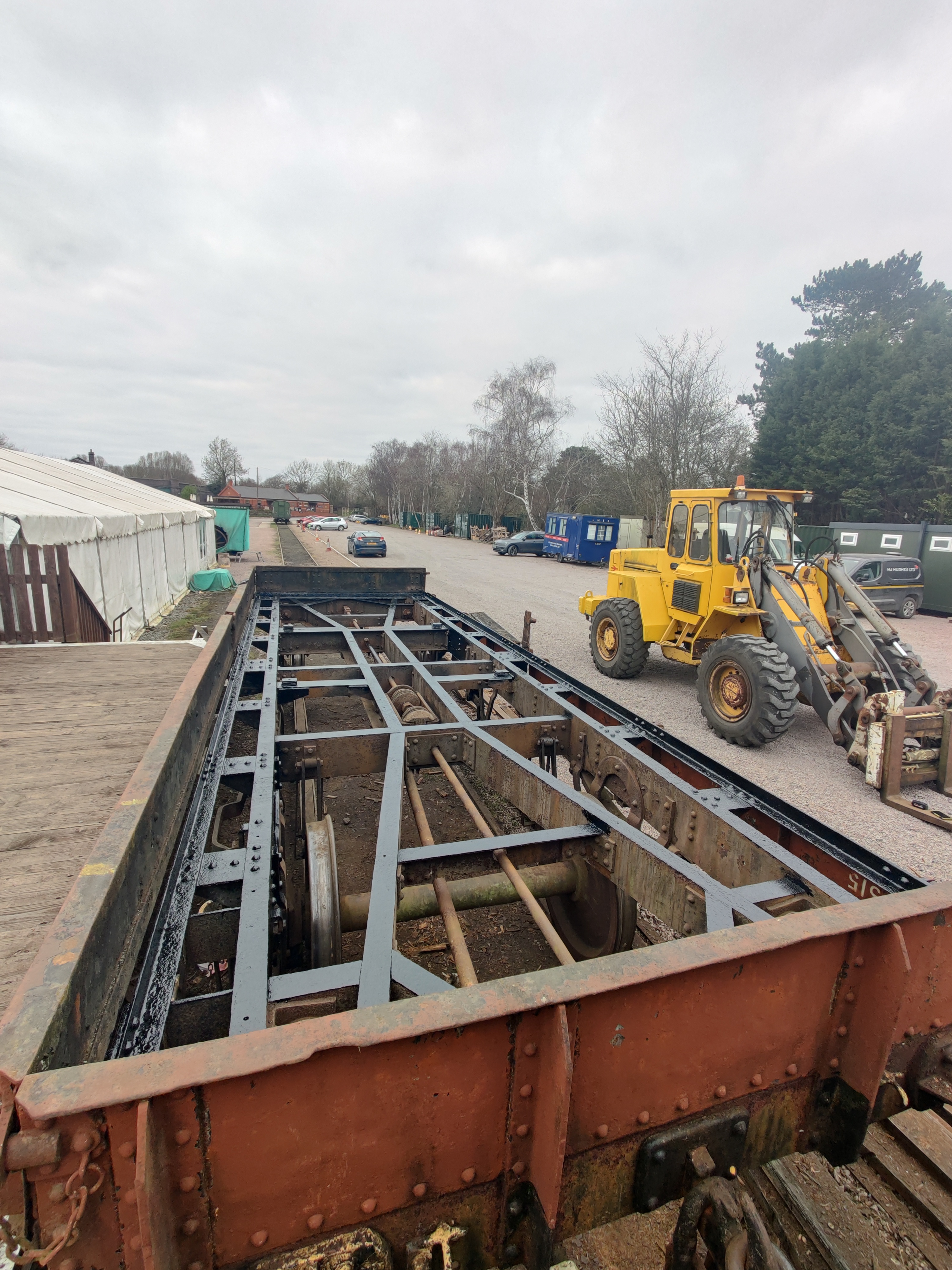
Next it was out with black container paint and brushes to tackle the west side of the underframe.
Both headstocks were also painted.
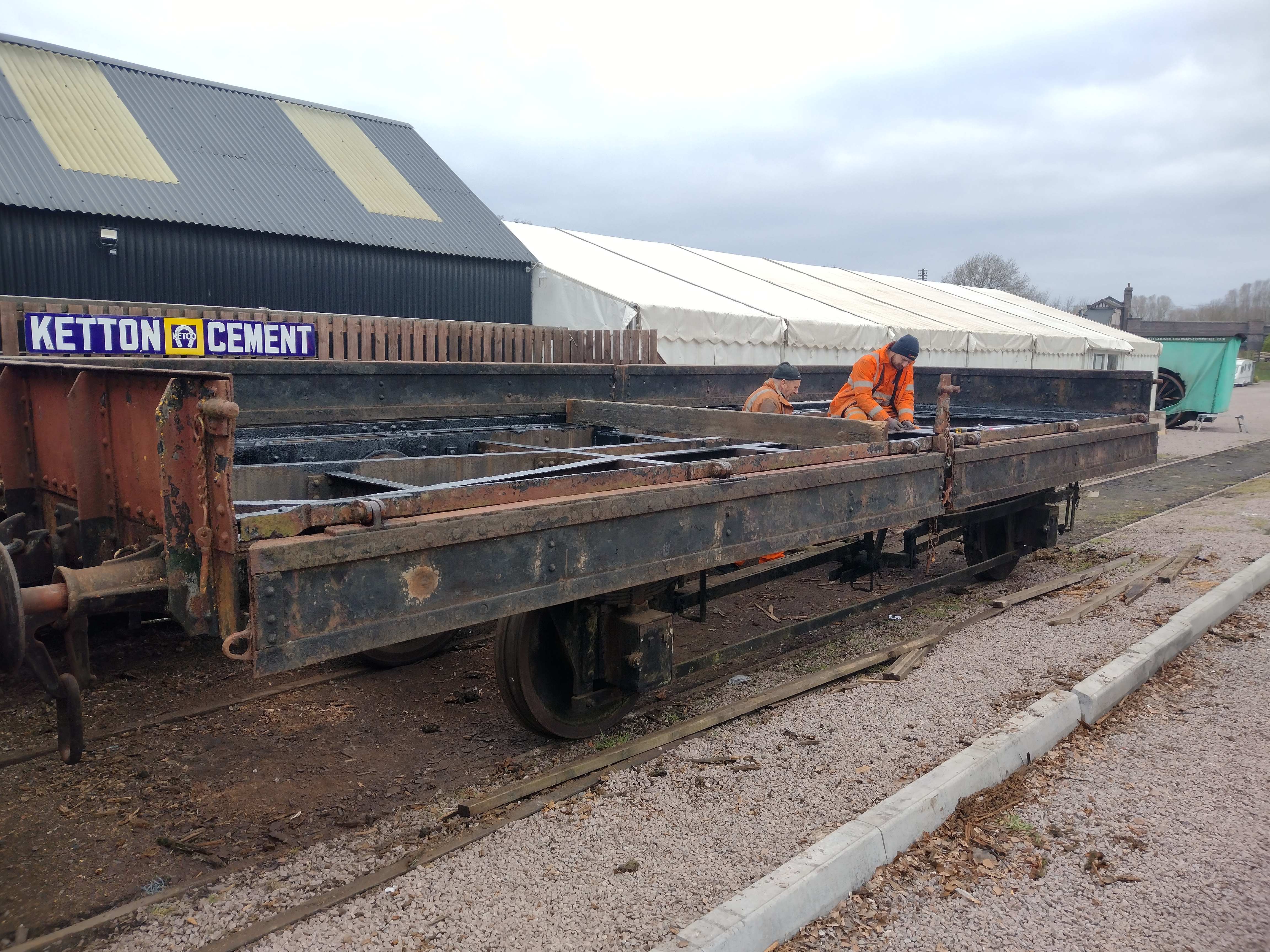
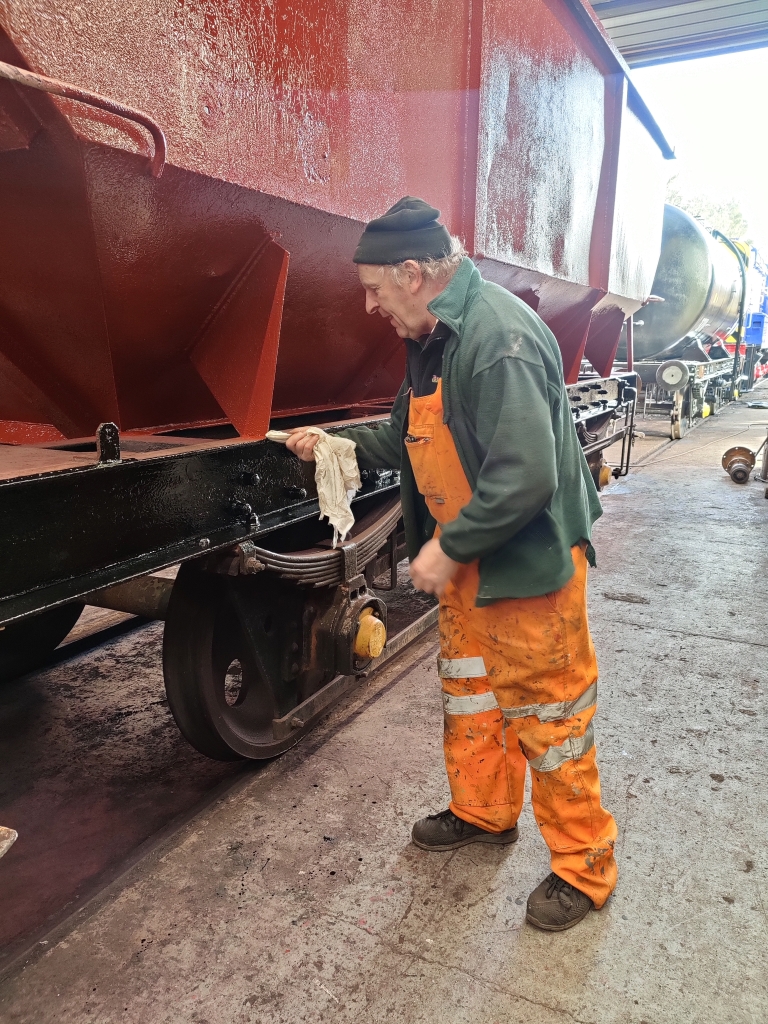
Despite the typically wet start to the bank holiday Monday weather Nick, Mark, Dan, Oliver and Tom managed to complete the painting of the east side underframe.
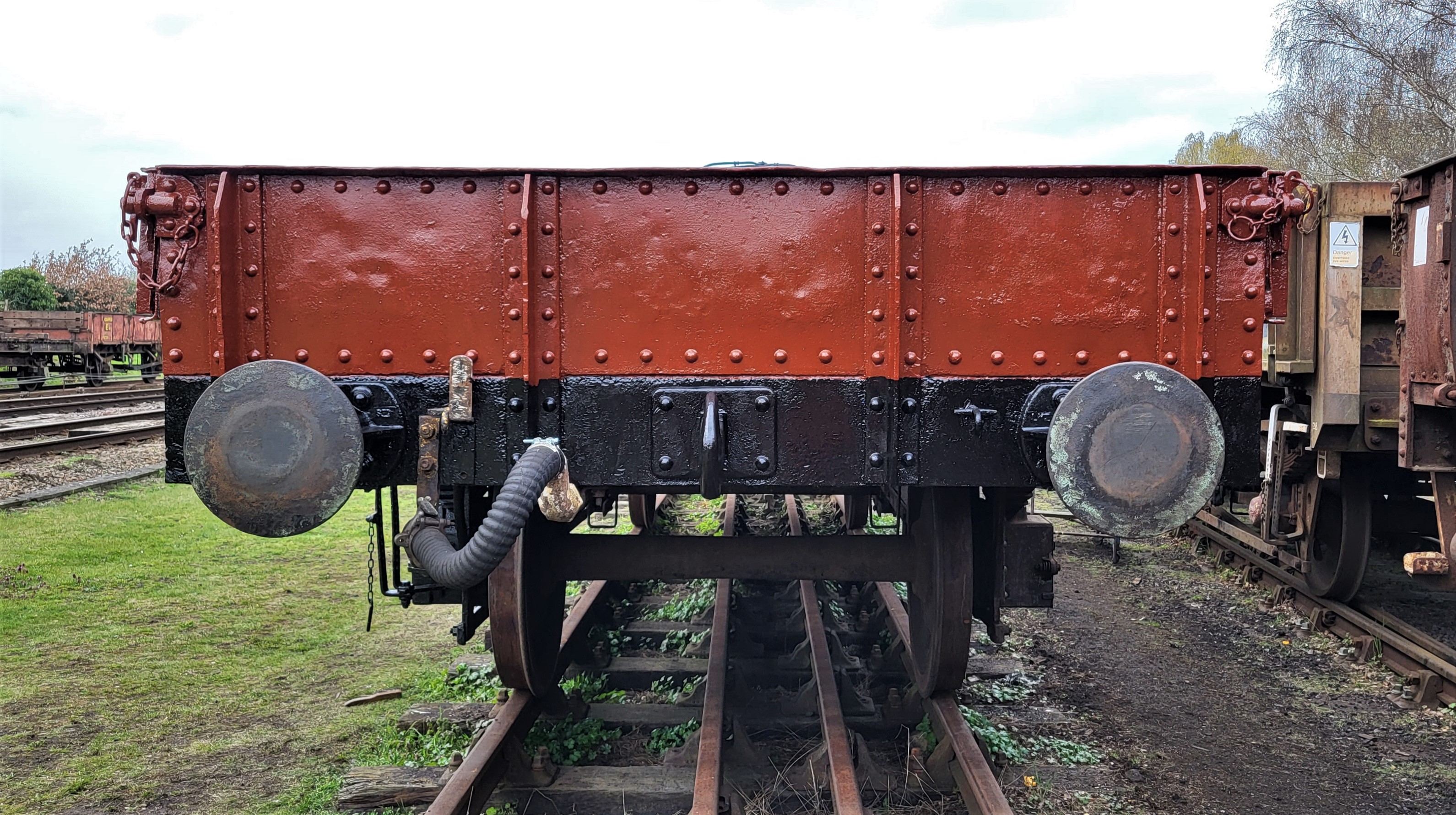
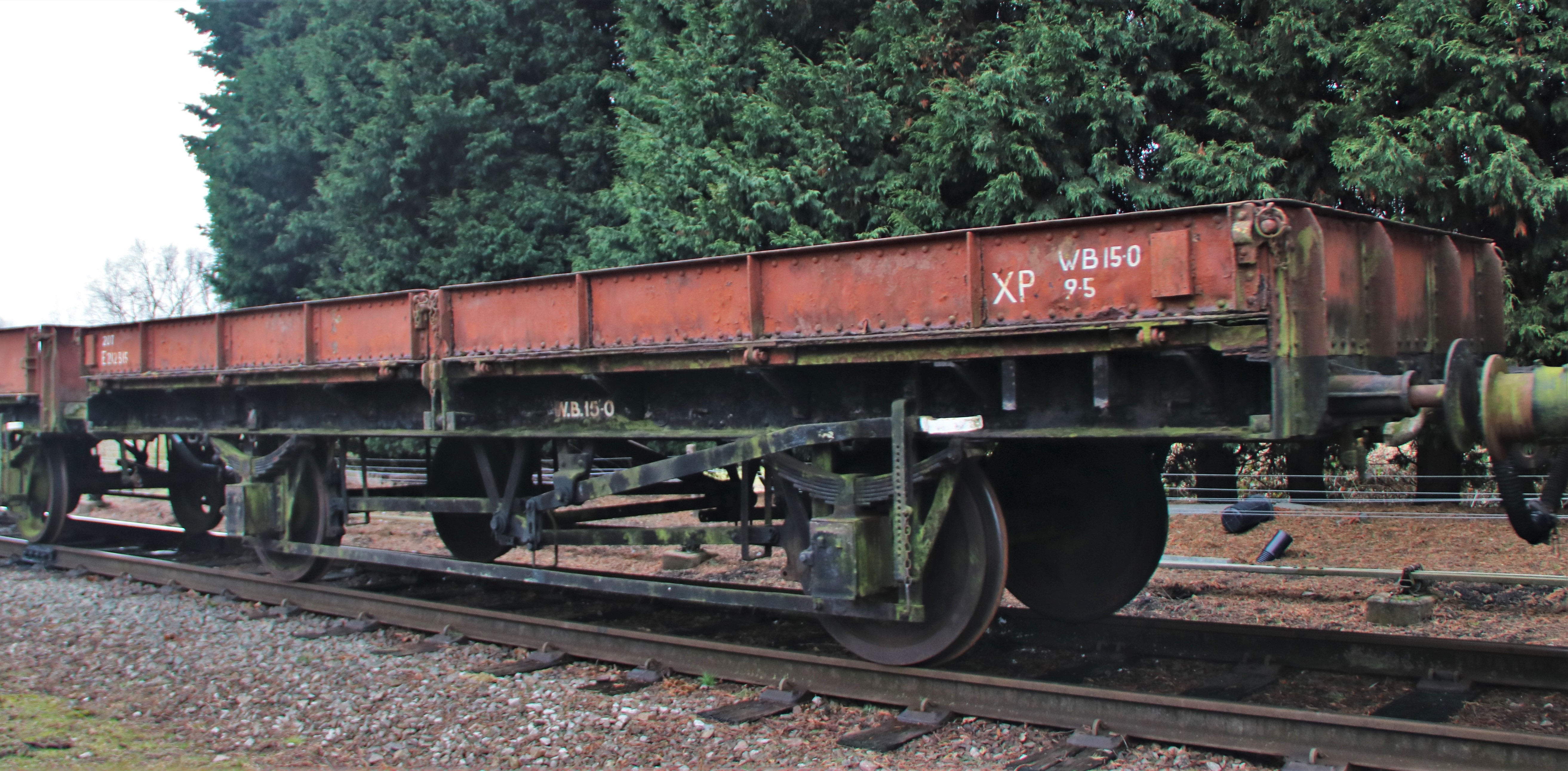
At the end of the Easter weekend we have a very respectable looking plate wagon E212315. The last few bits of signwriting on the underframe and detail painting are on the agenda for next weekend.
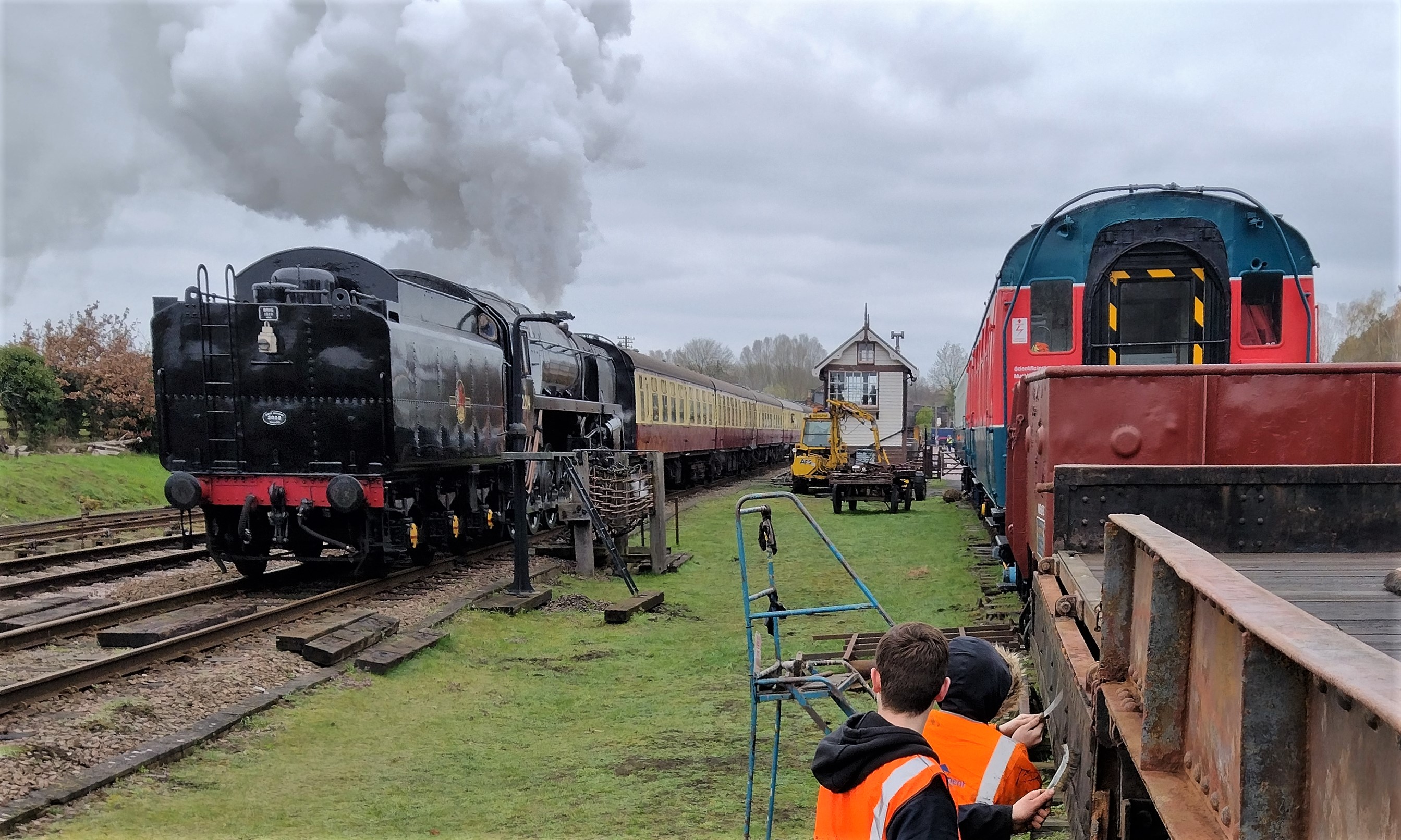
Welcome to April’s first update from Quorn. Time for a bit of a tidy-up, but we couldn’t resist continuing with work on the bare plate wagon E212315. It was also great to see trains running past us at Quorn again after completion of the bridge repairs.
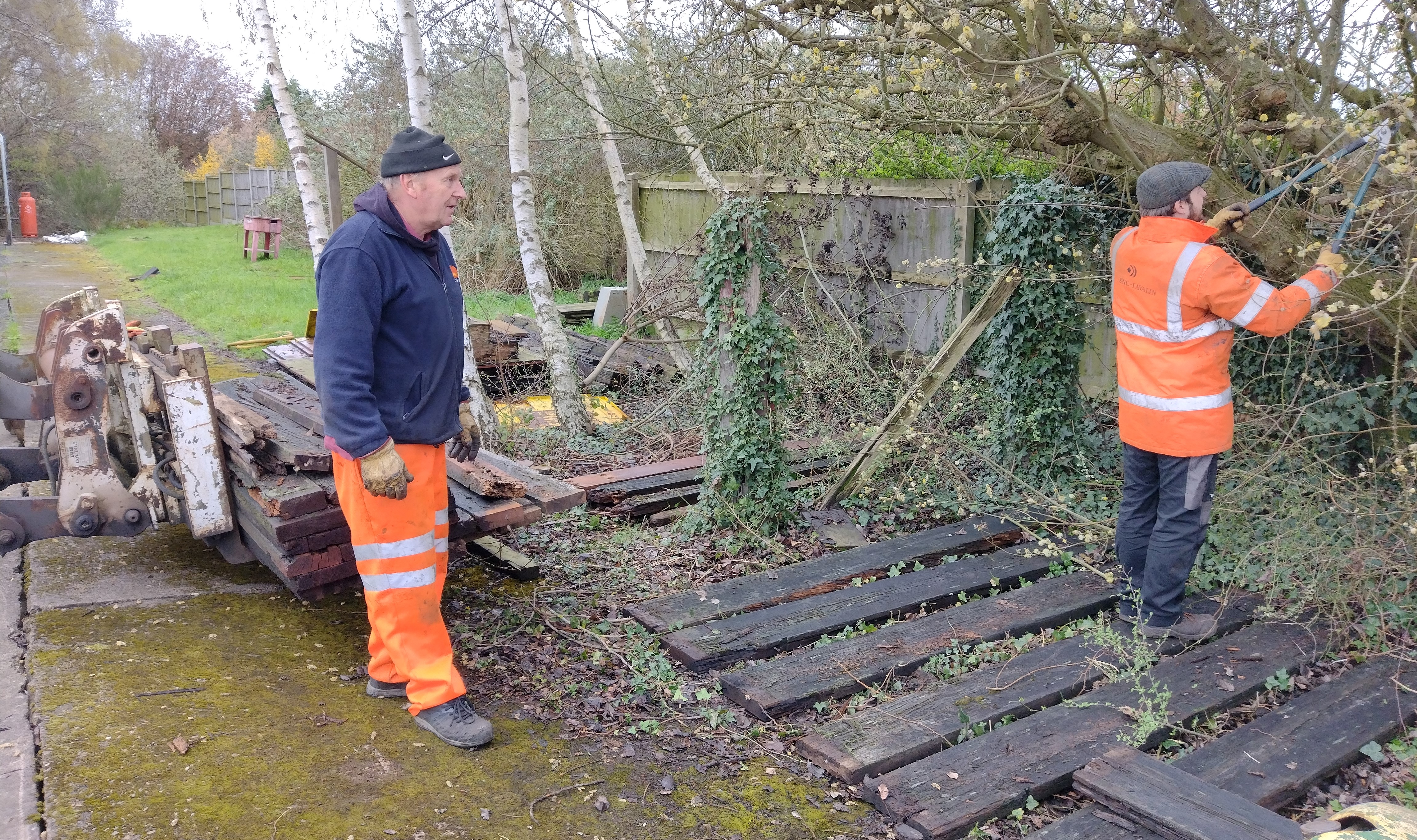
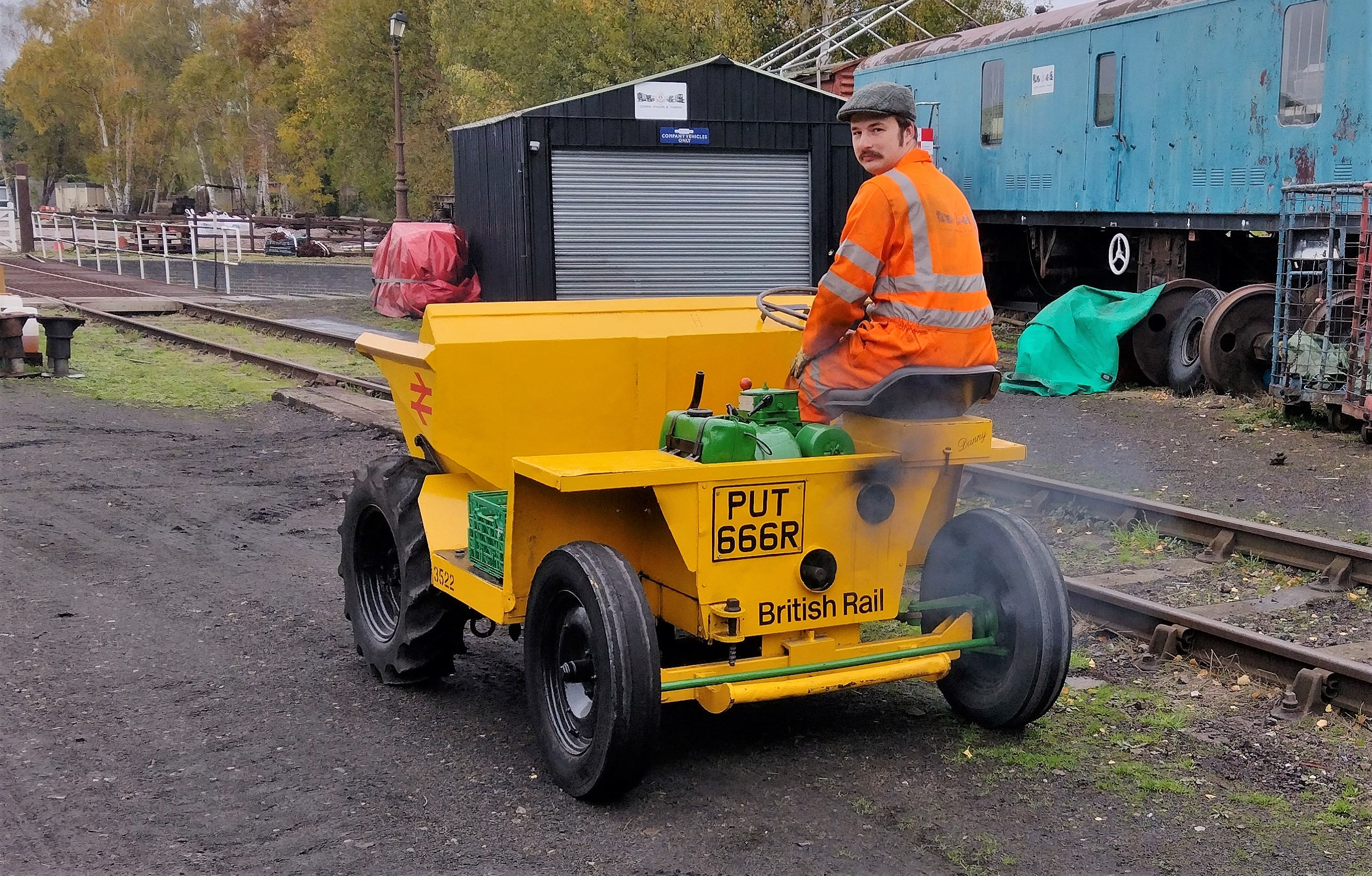
Danny was called upon to help with the tidying up trips to the skip.
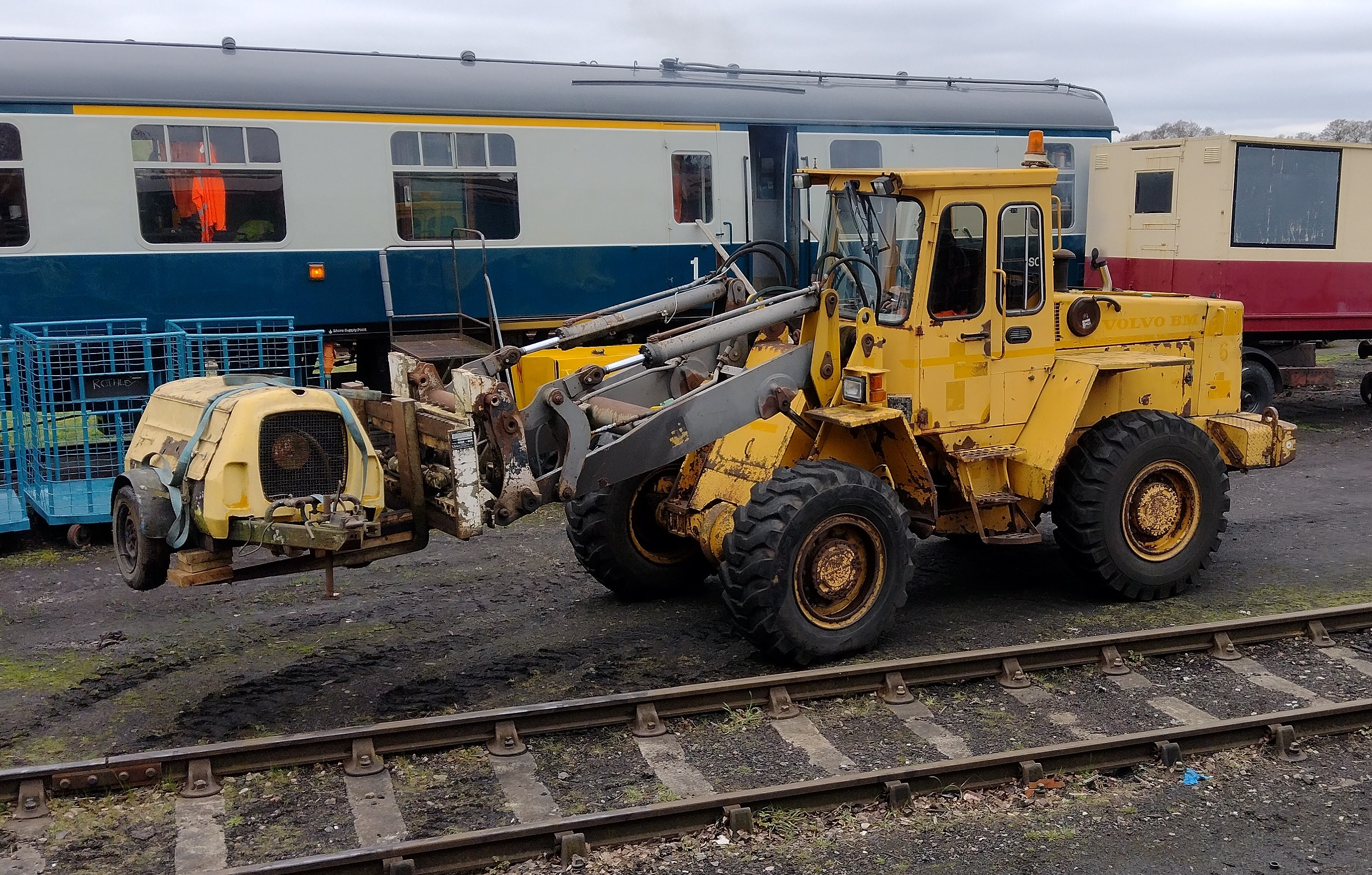
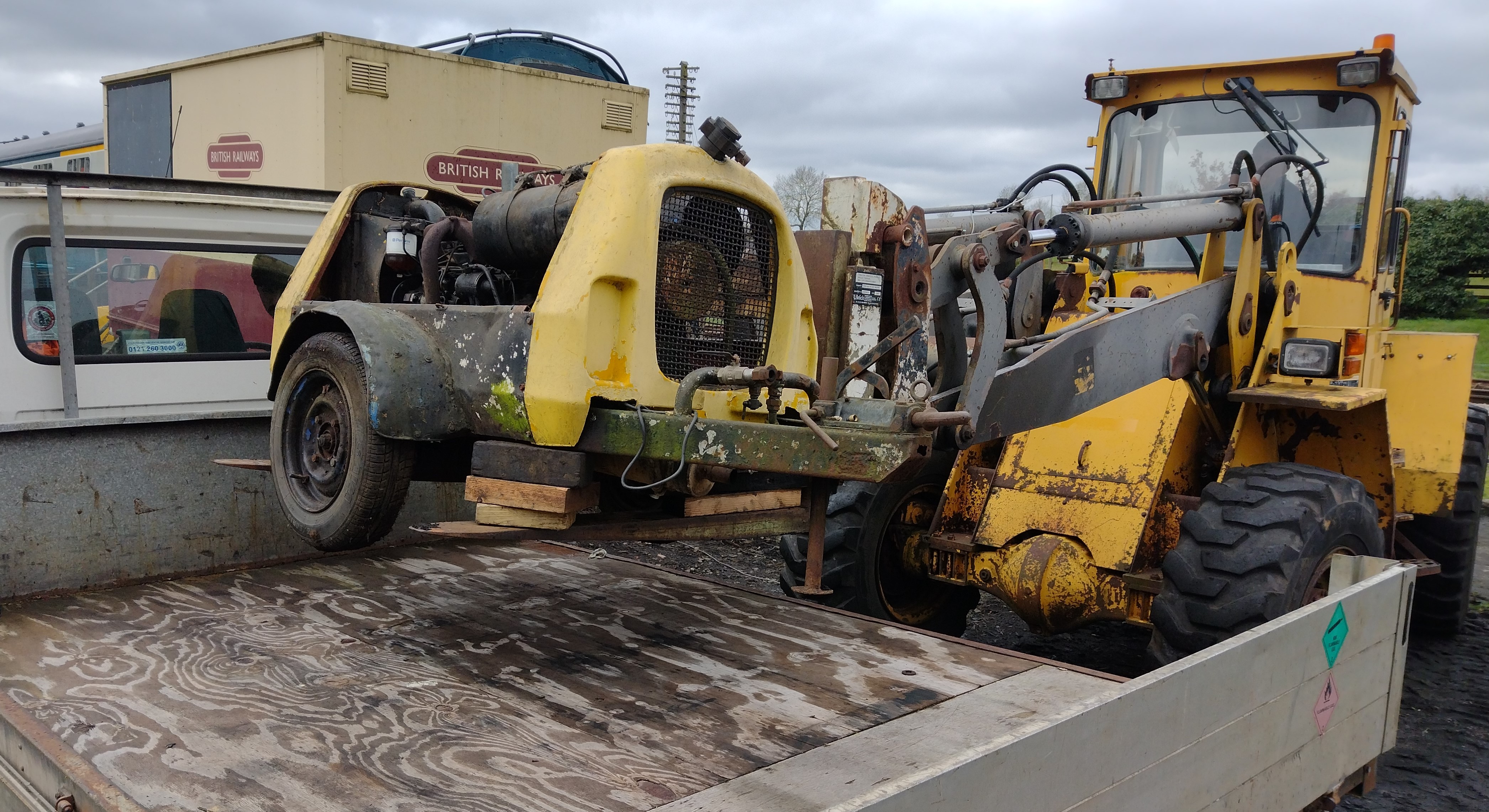
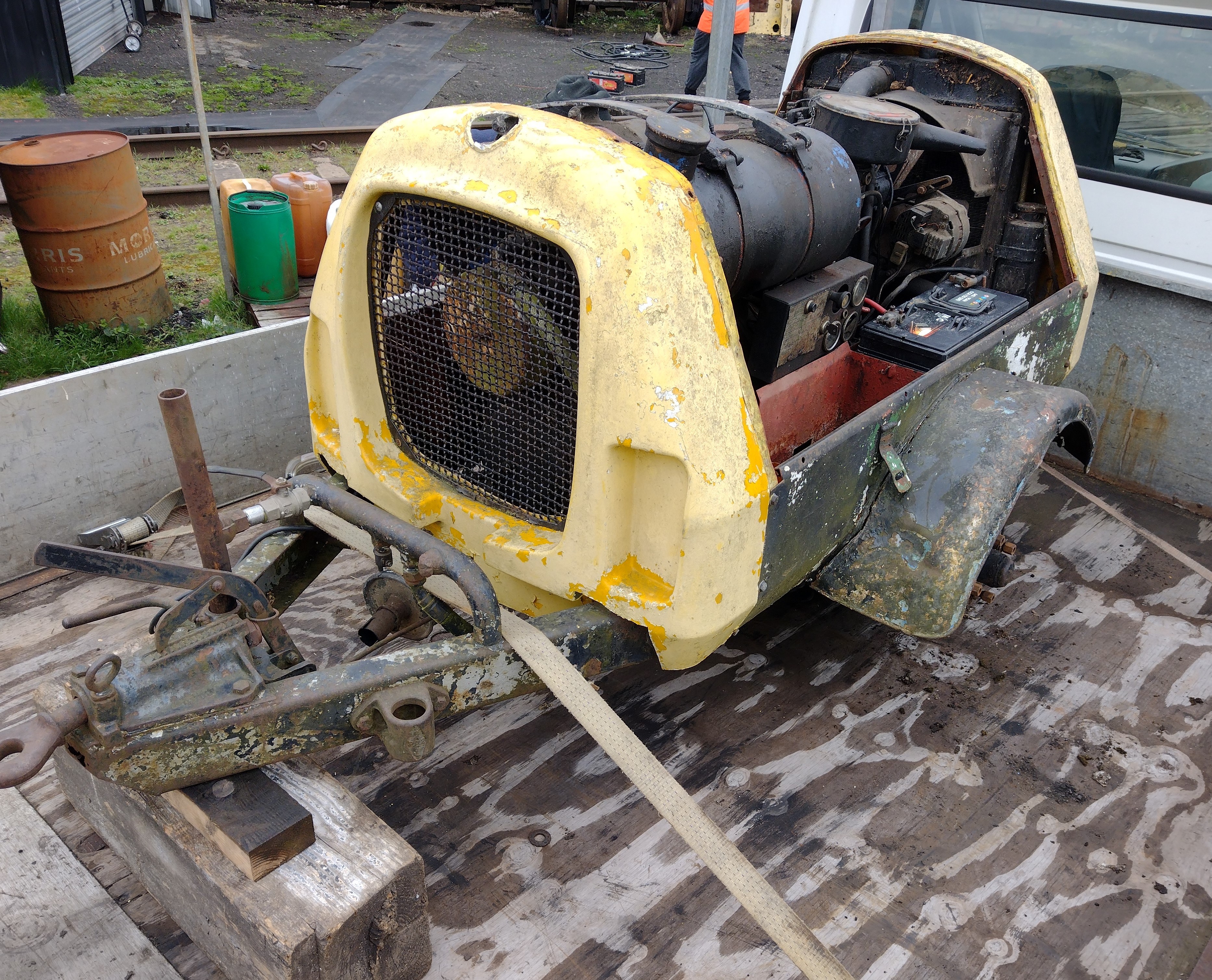
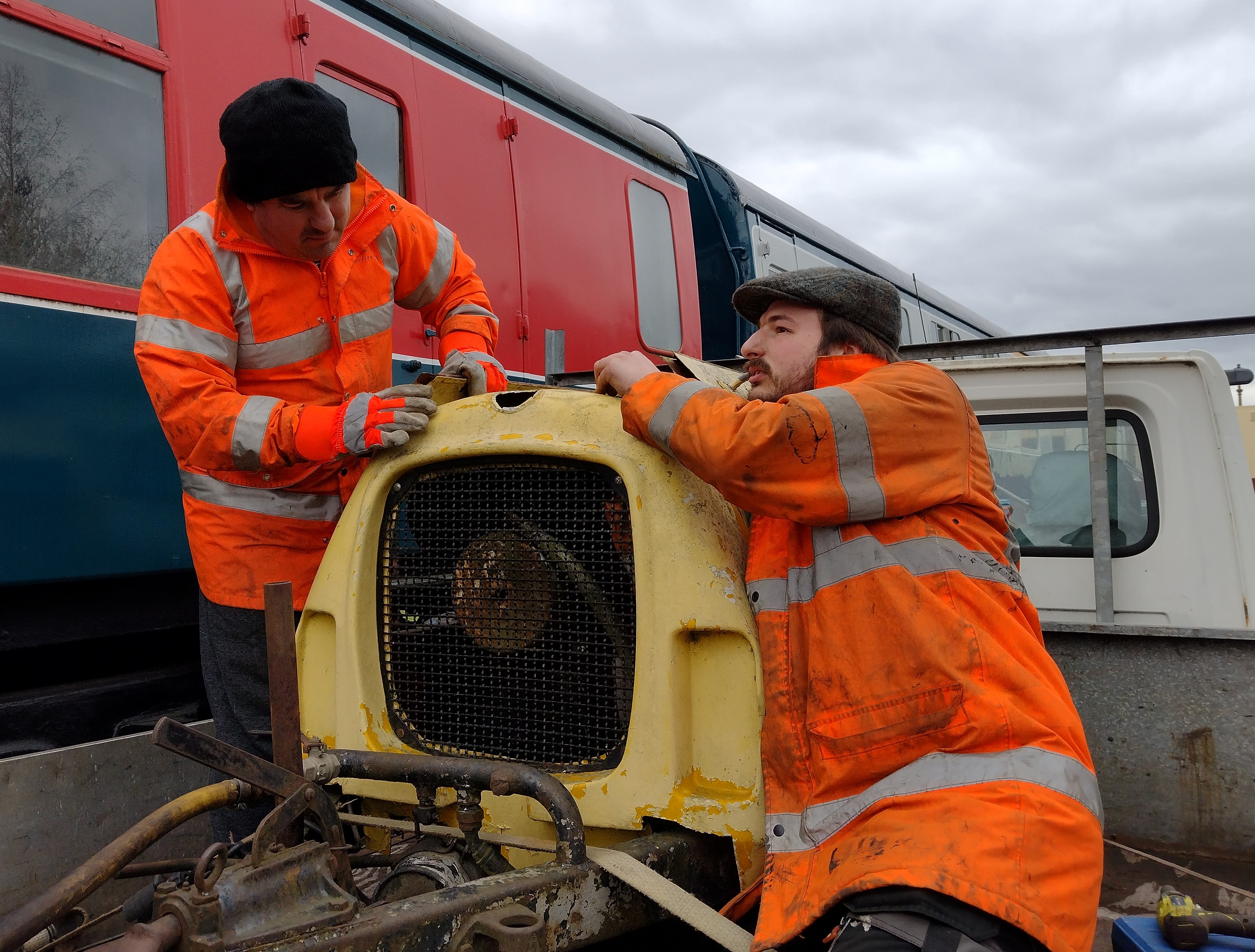
Seeing as the Hydrovane compressor trailer had been so useful last week, we decided to extract it from it’s long-time resting place on the dock to make it more accessible for use.
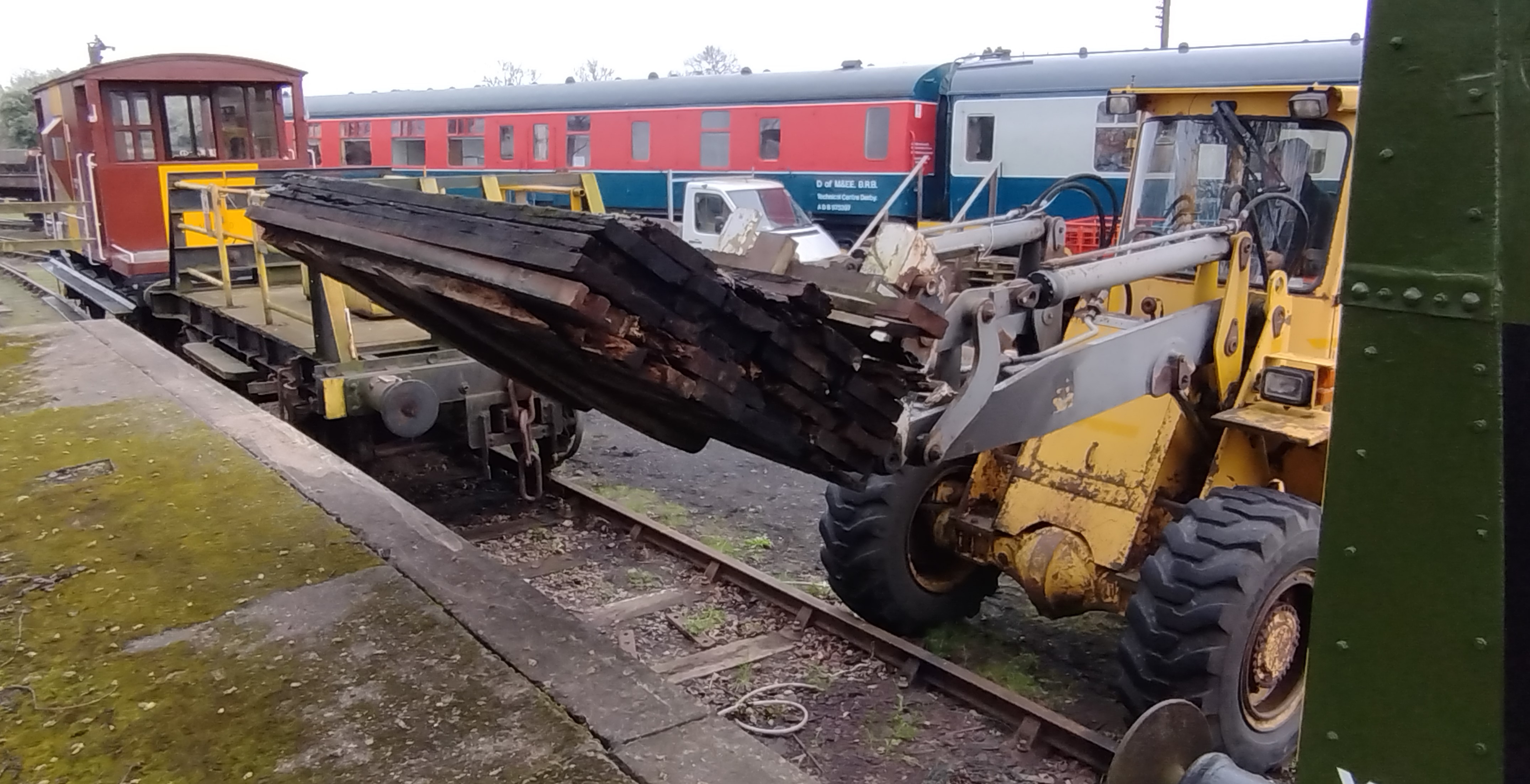
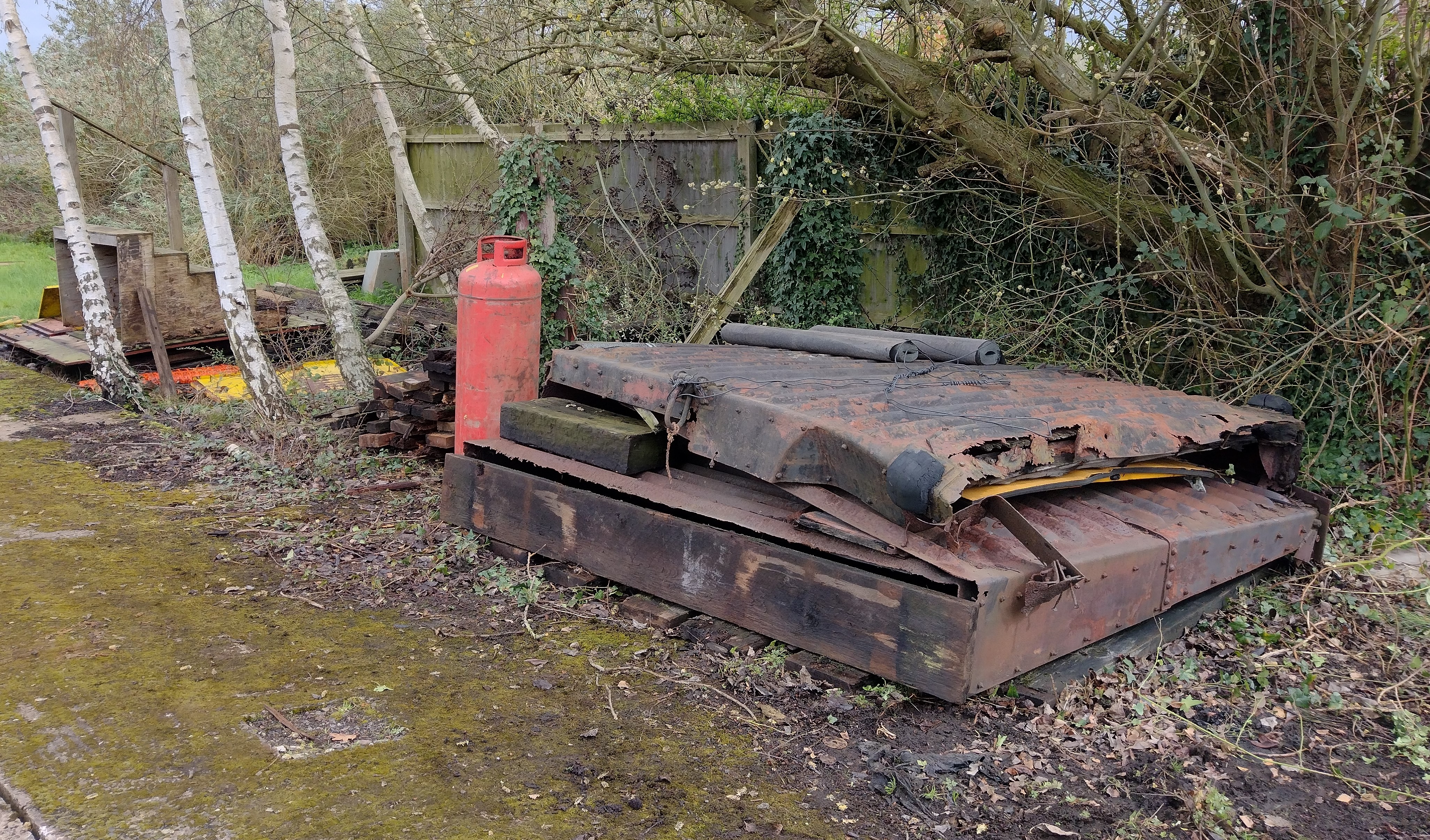
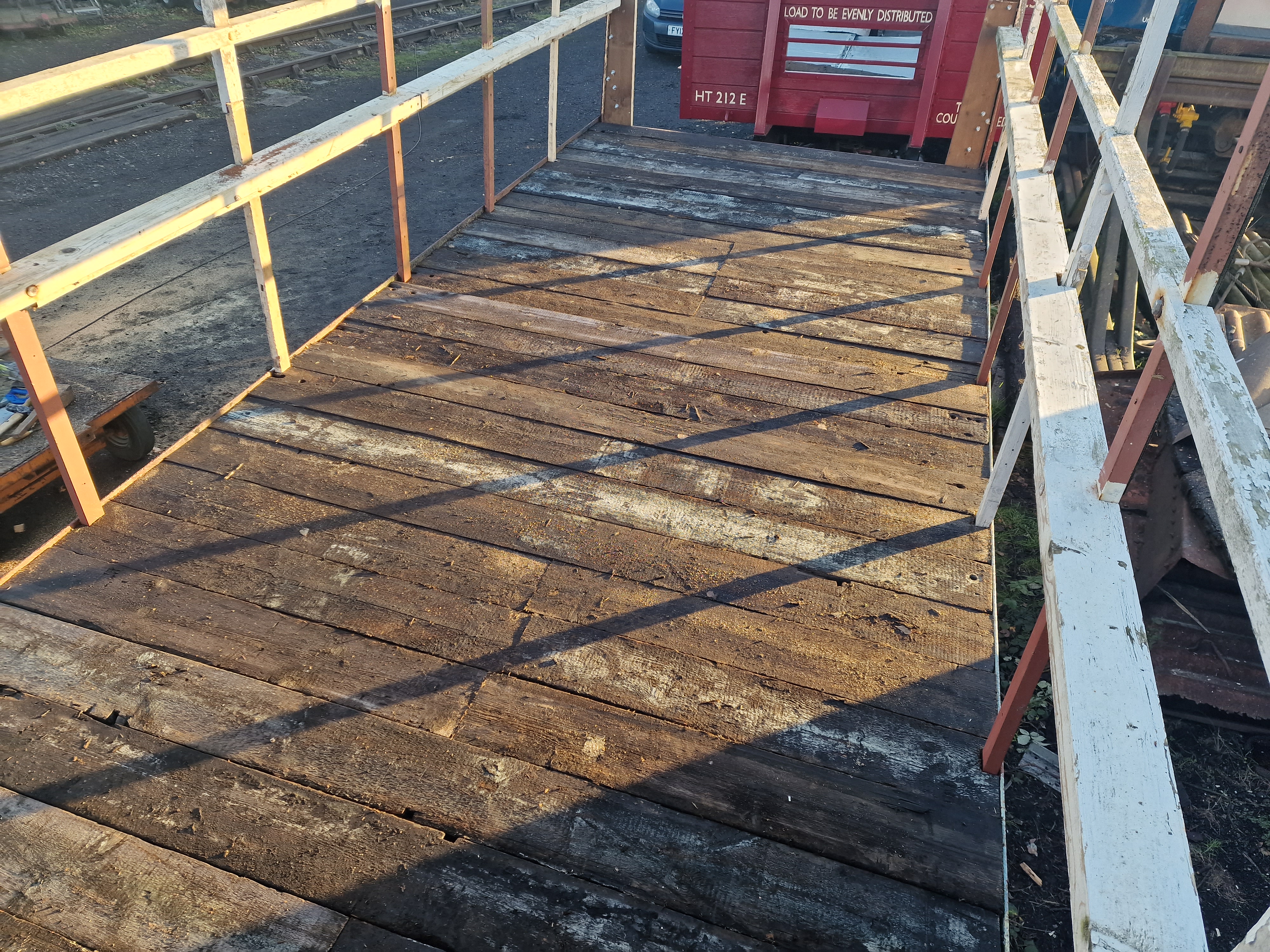
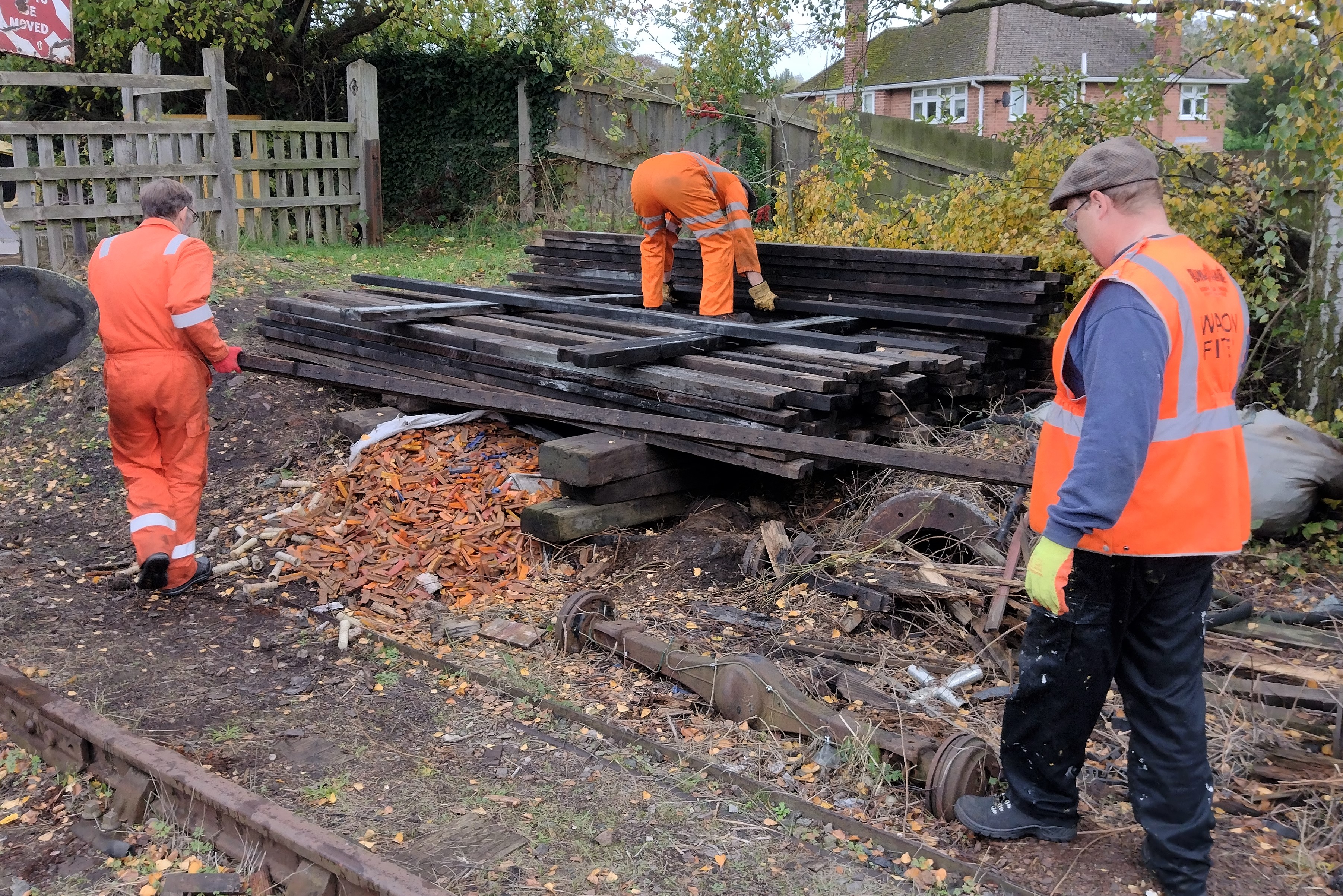
The dock space was cleared of some foliage and the old floor planks from the Plate wagon were used to make a bed to allow us to tidy up the spare van body sections.
The Hydrovane compressor has found a new mobile home being secured onto the back of the pick-up.
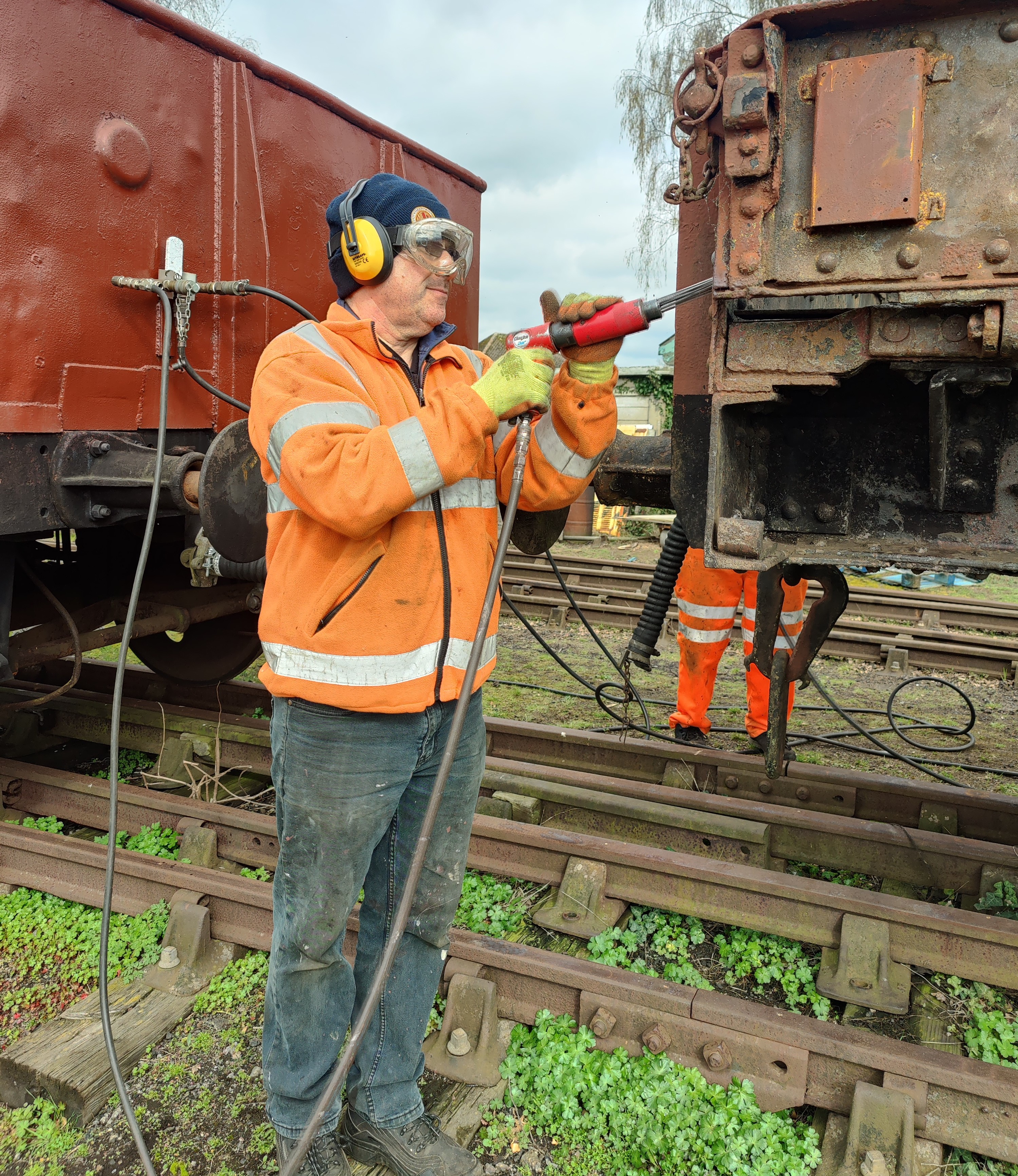
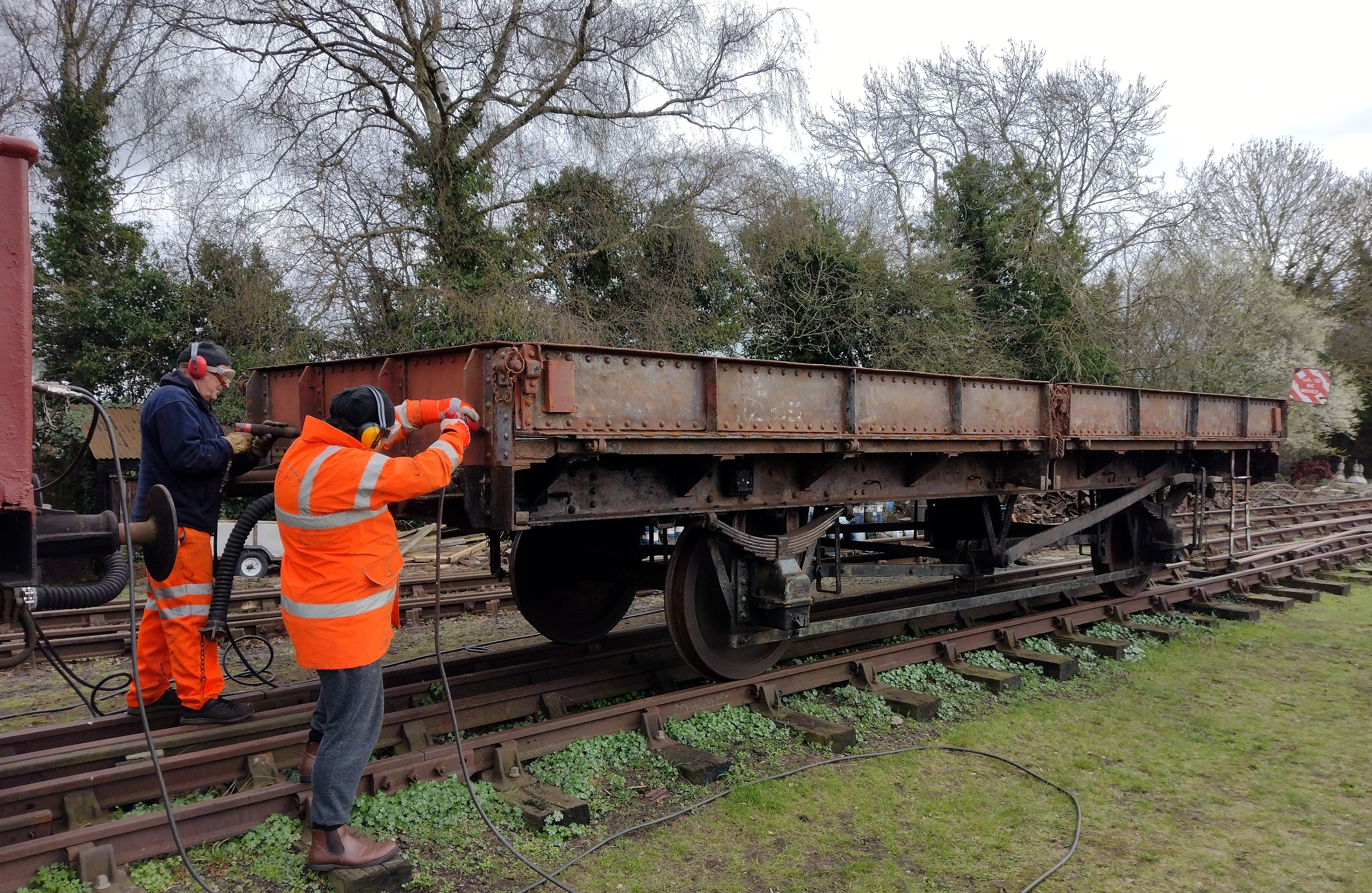
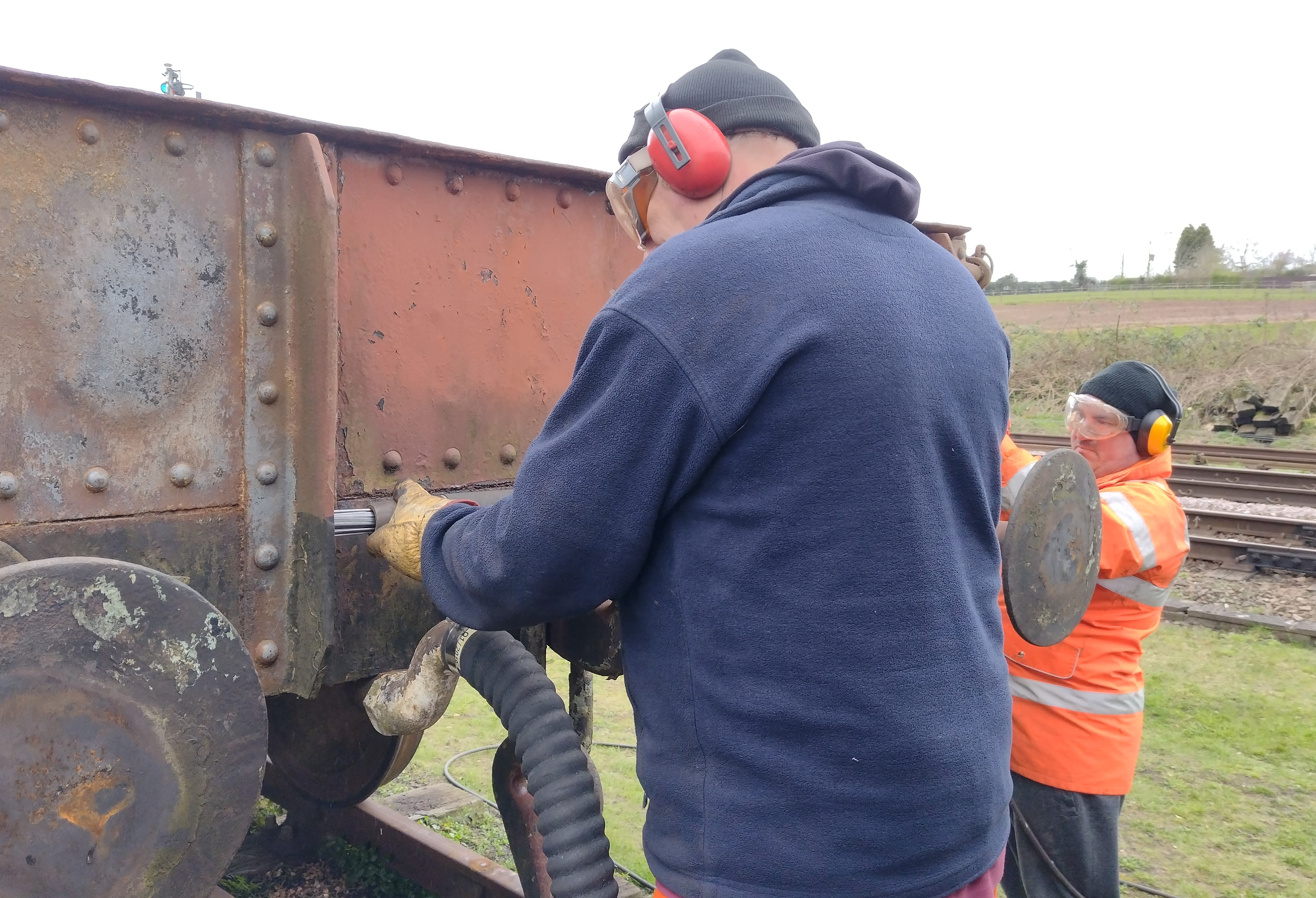
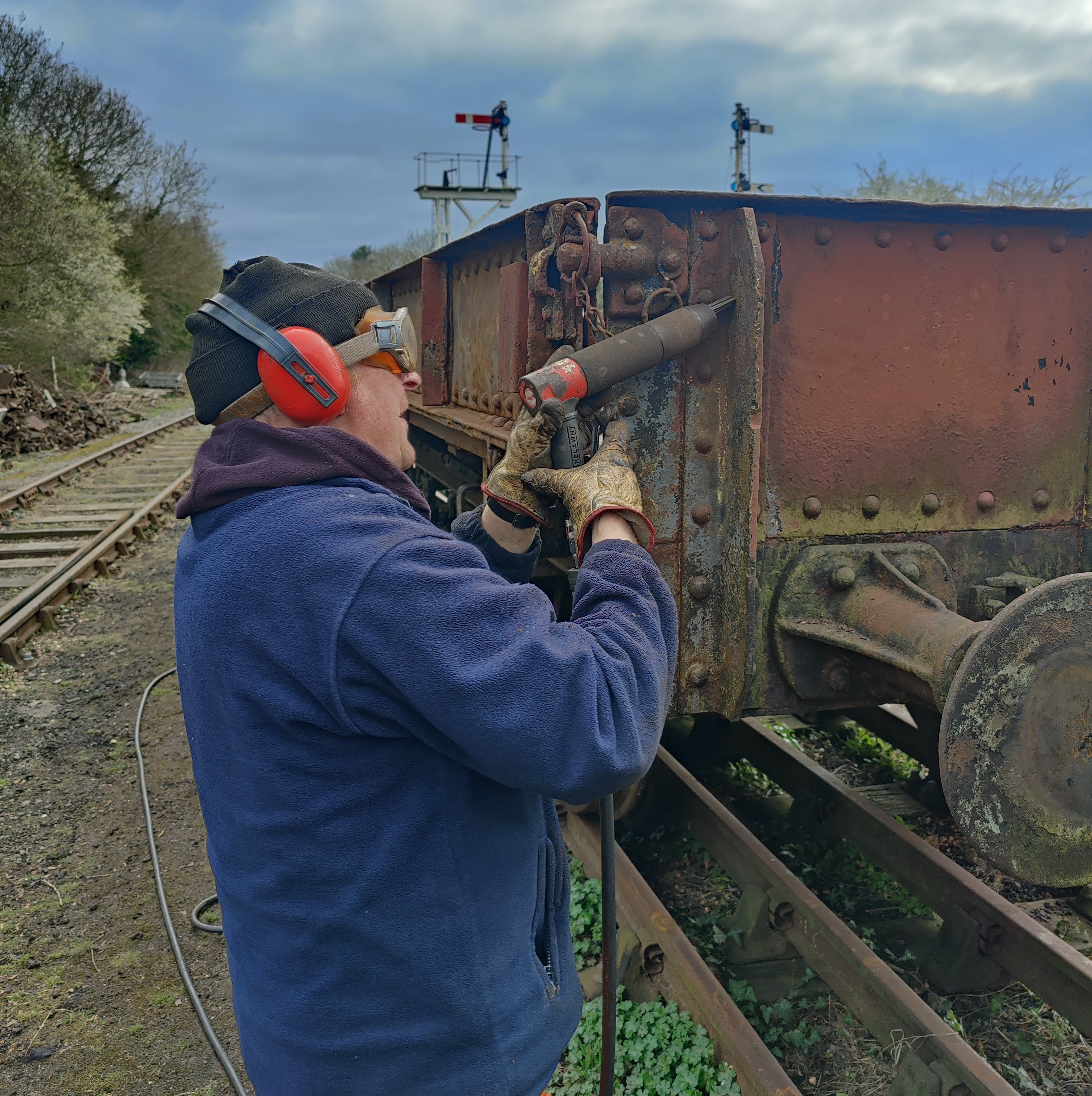
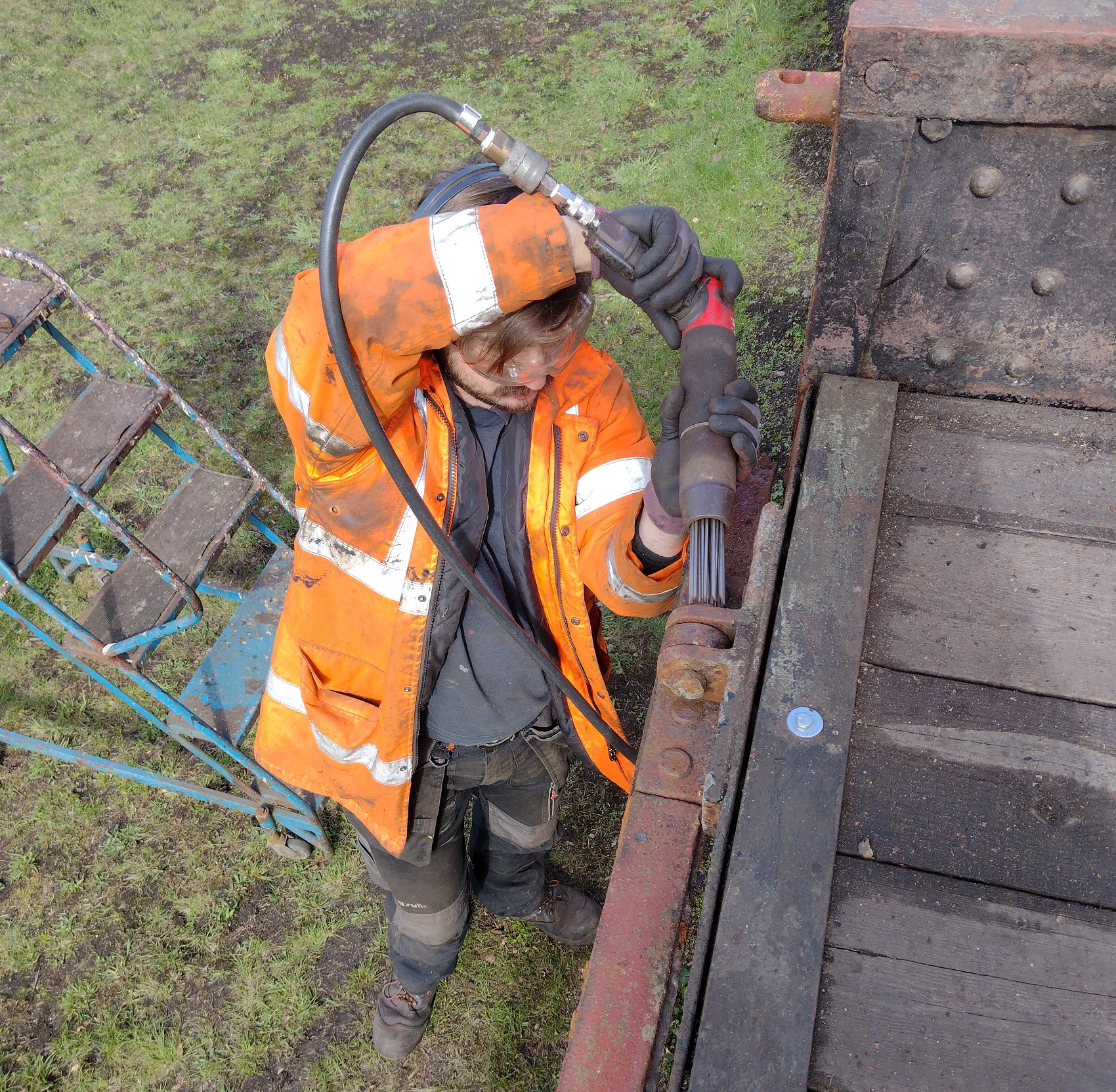
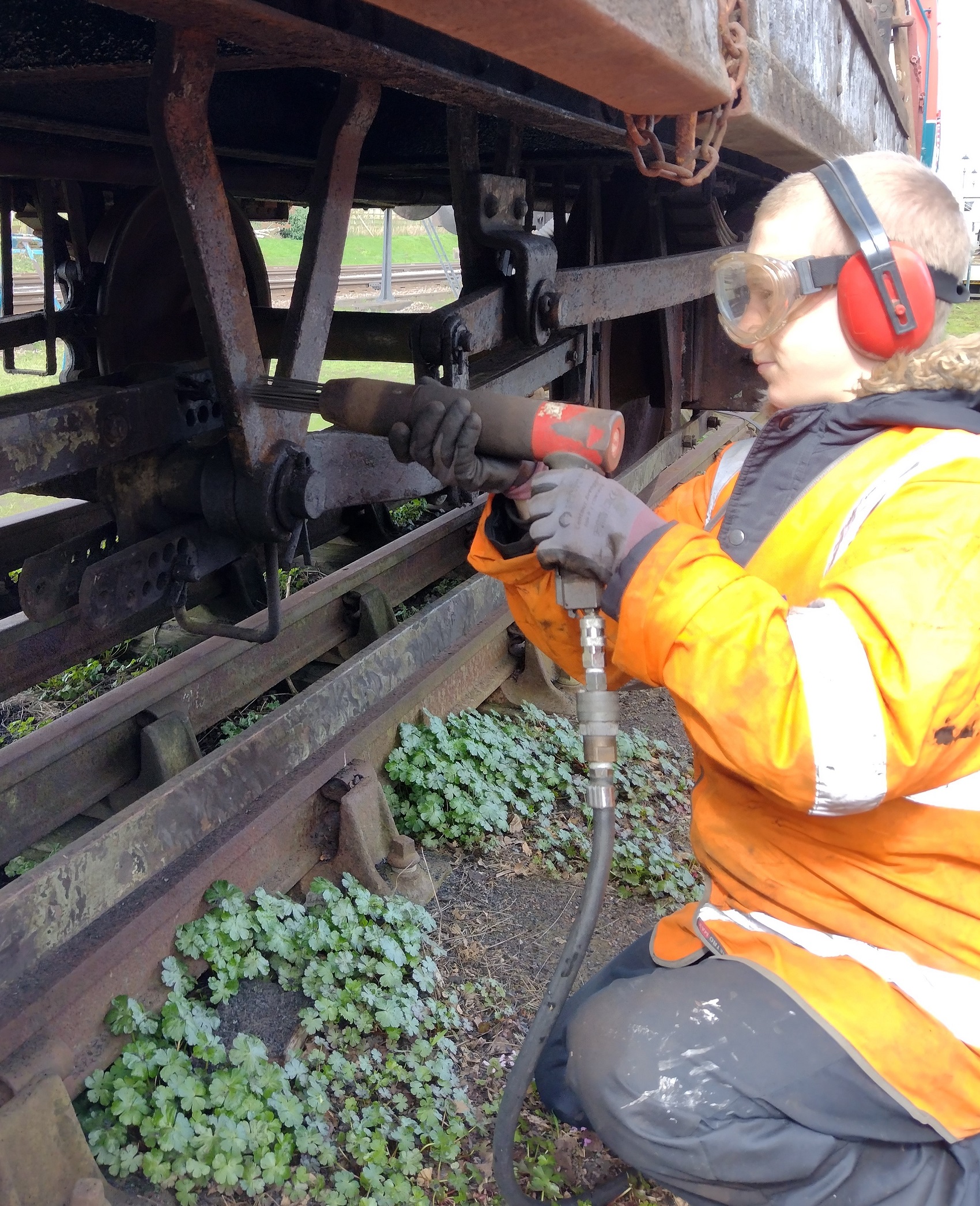
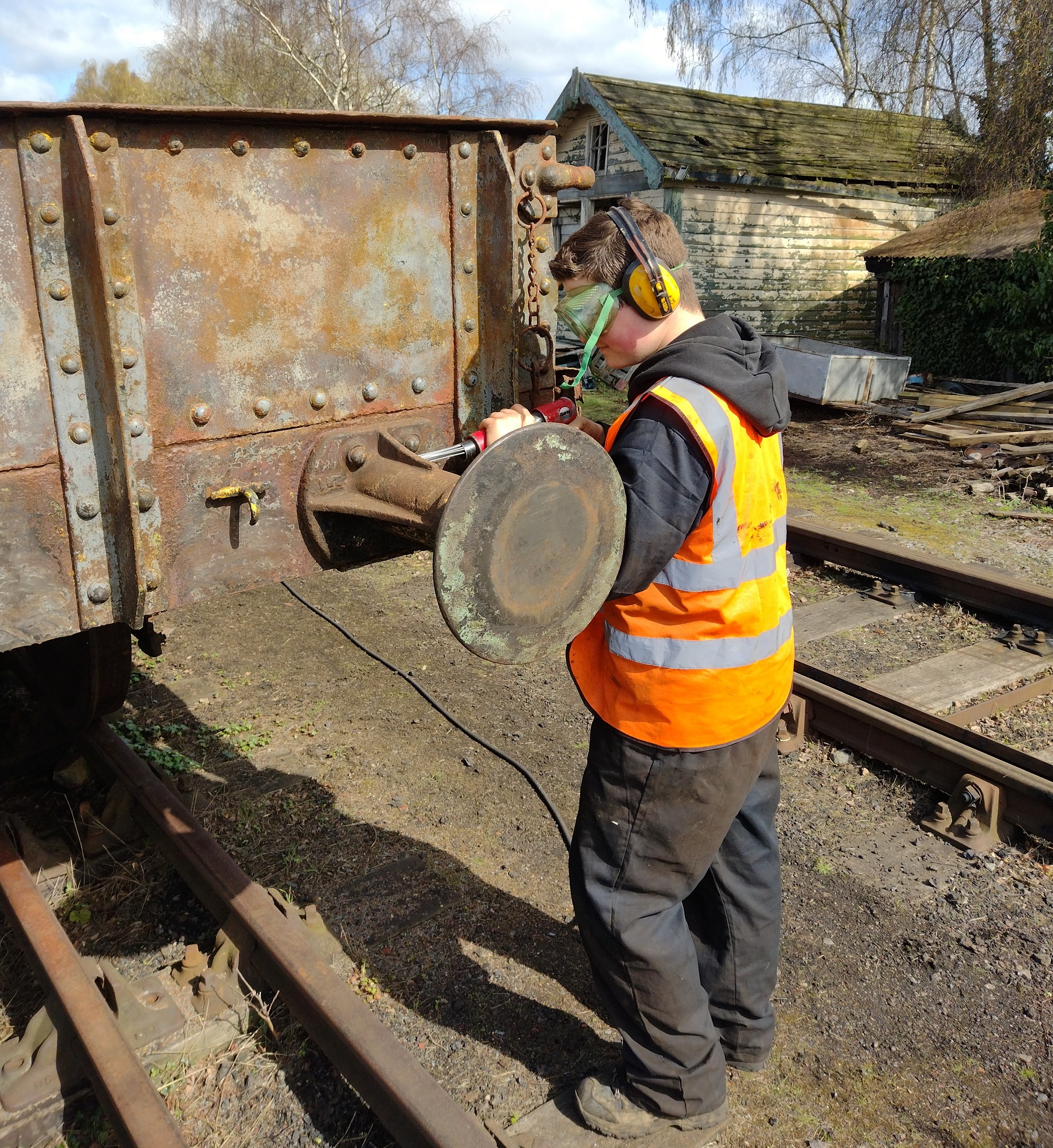
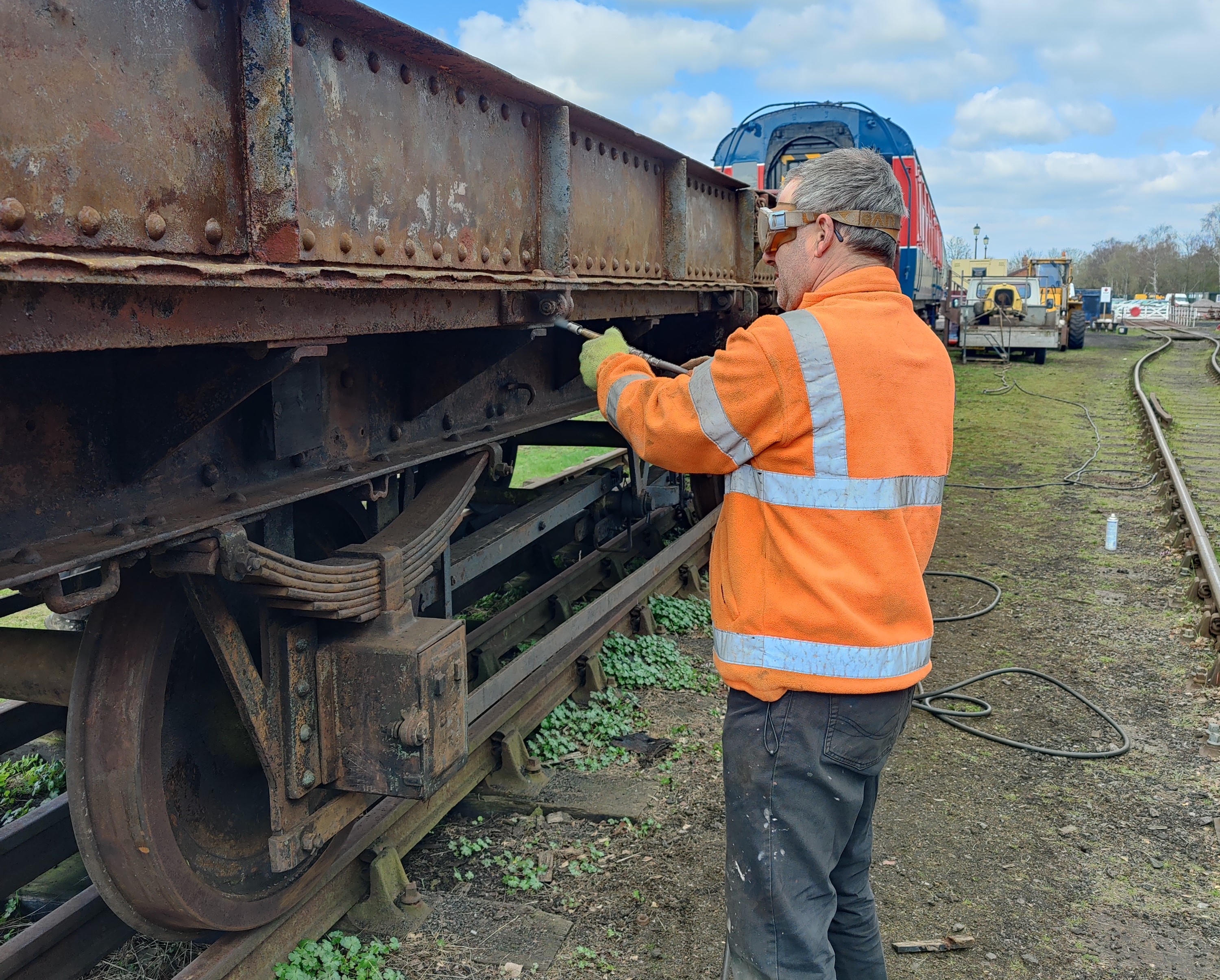
We then got stuck into needle gunning the remaining areas of the Plate E212315
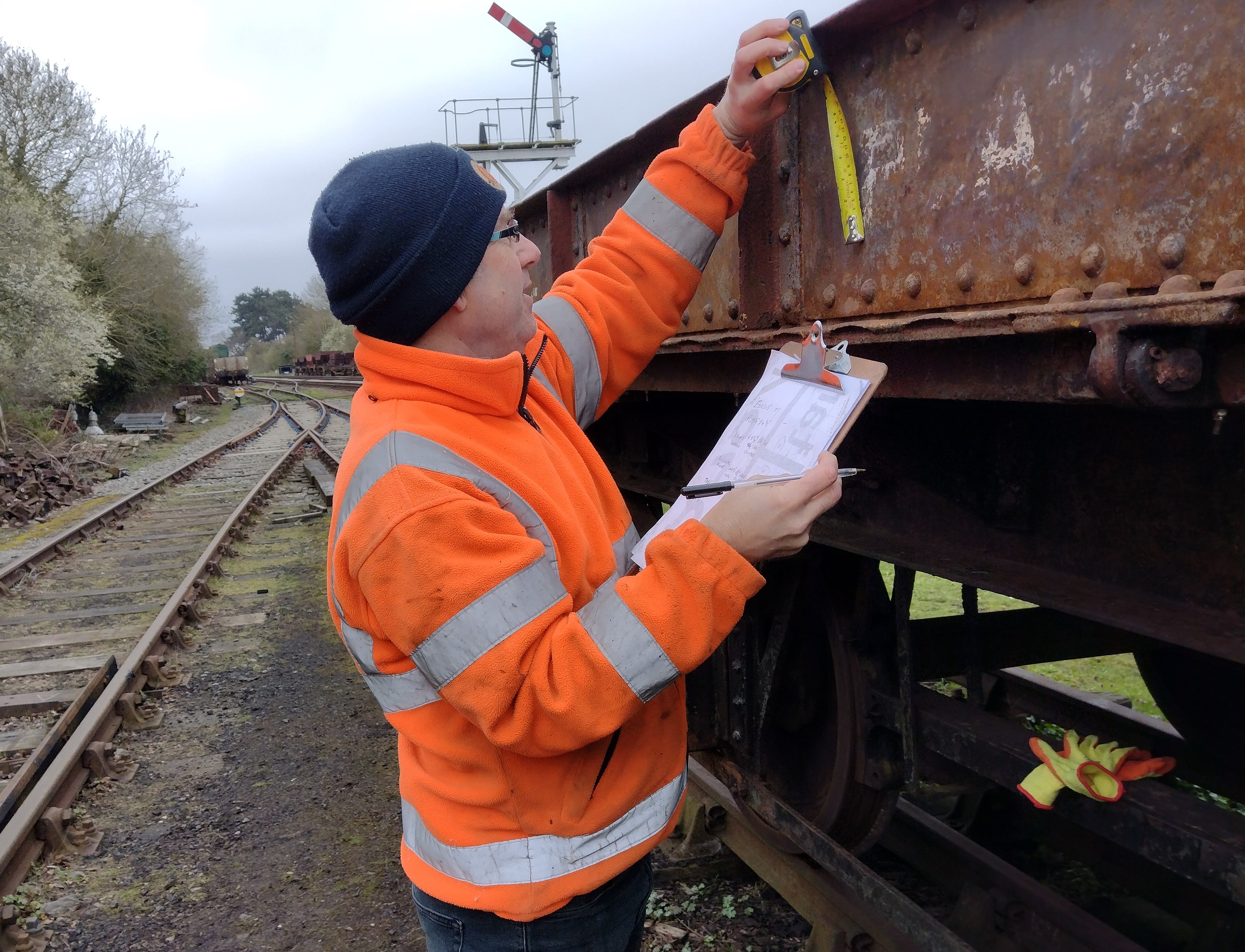
A start was made measuring up and working out what lettering and numbering templates will be required for the signwriting once the Plate is painted.
We continued on Sunday with the final preparations of the plate E212315 ready for painting. Door tops and bottoms had any paint removed.
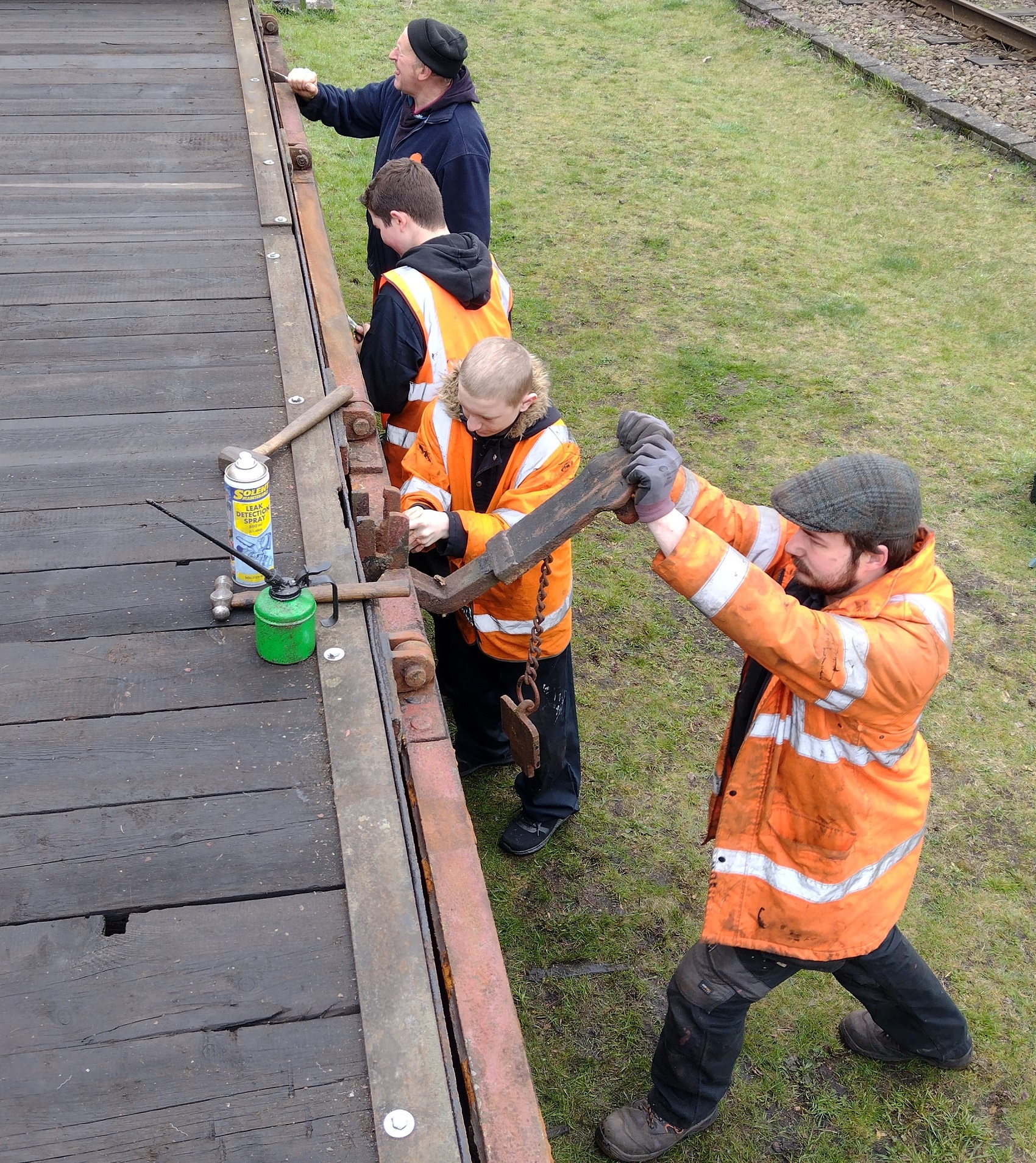
Door and body-end inside faces were scraped.
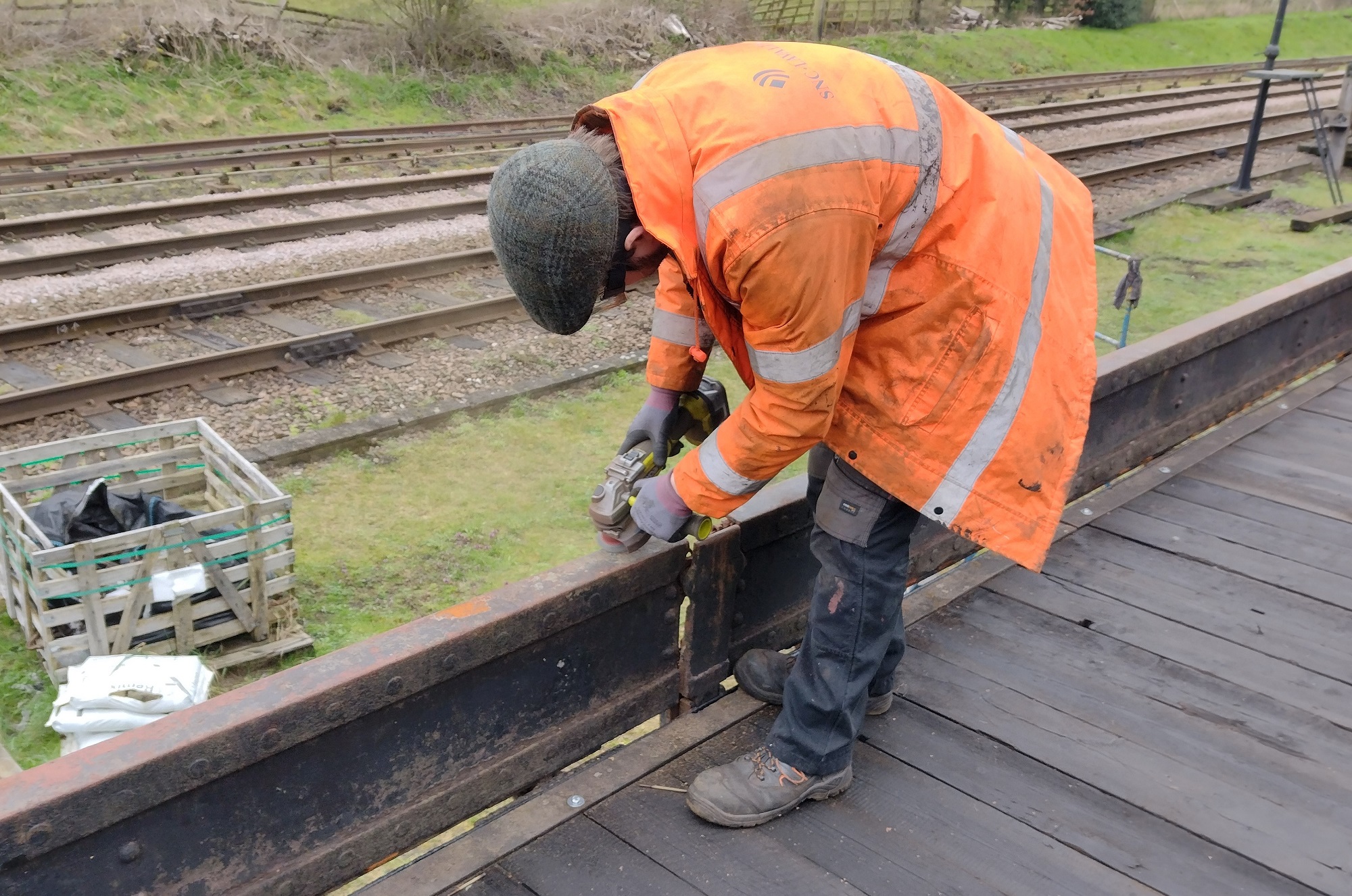
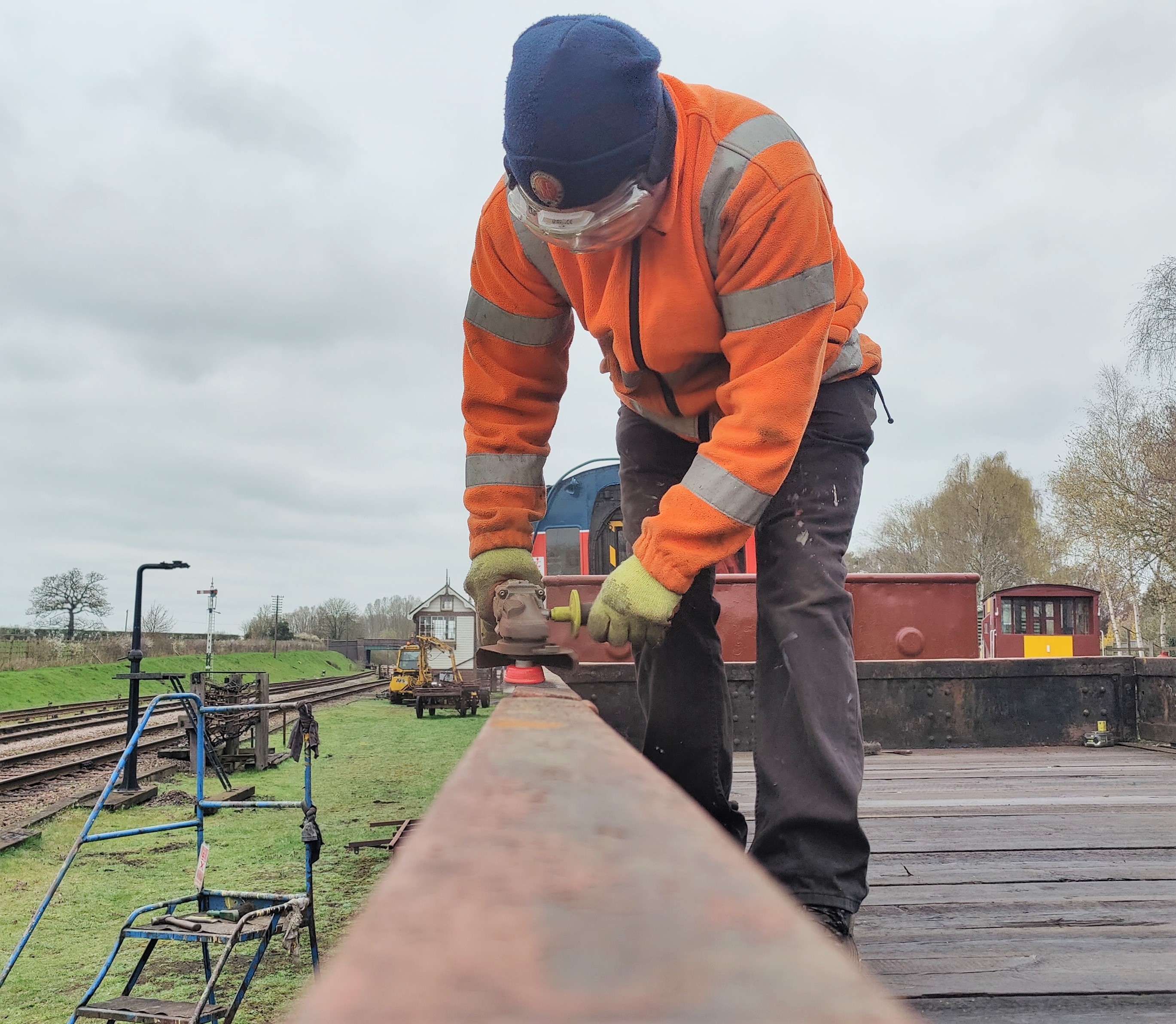
The needle guns were used to remove any last bits of stubborn paint around the door hinges and buffers.
One of the door centre stanchions was noted to be a little stiff so this was freed off.
The whole wagon was then swept and any remaining dust and paint debris blown off with compressed air.
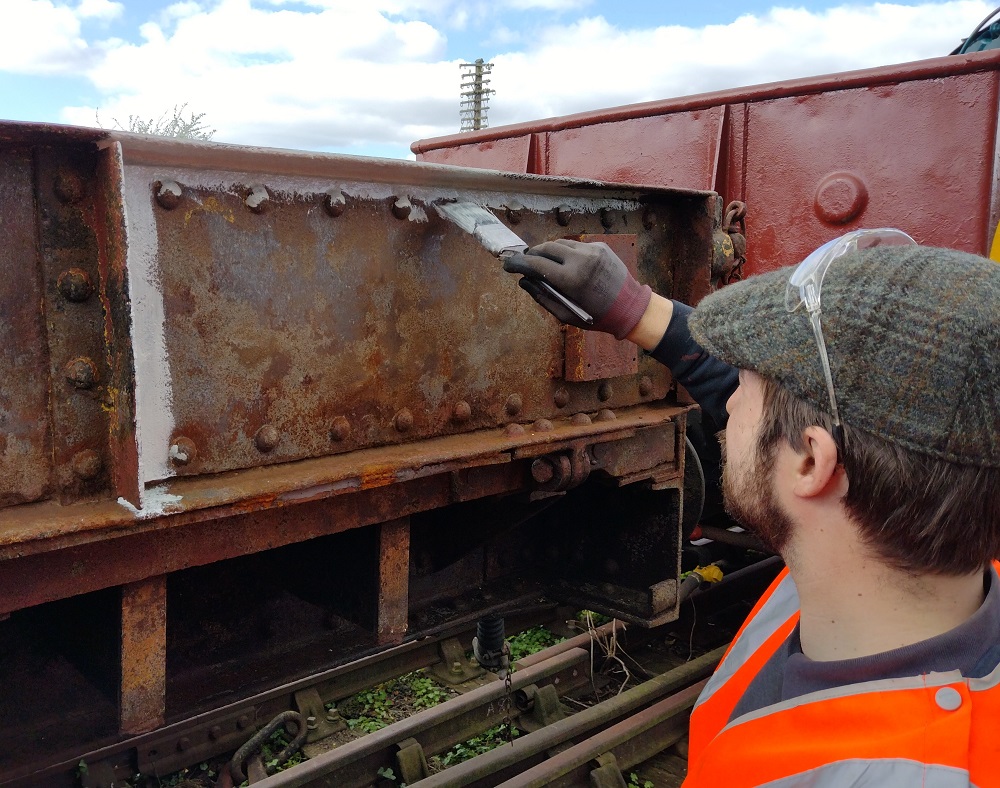
With paint brushes in-hand and paint kettles charged we set too with the Primer.
Well, we did say we would be painting a ‘plate’ today!
Back to the wagon and the painting continued.
By the end of the afternoon the doors, kerb rails and body ends were all in primer.
Thanks for reading, join us again on the 10th April for the Easter weekend update.
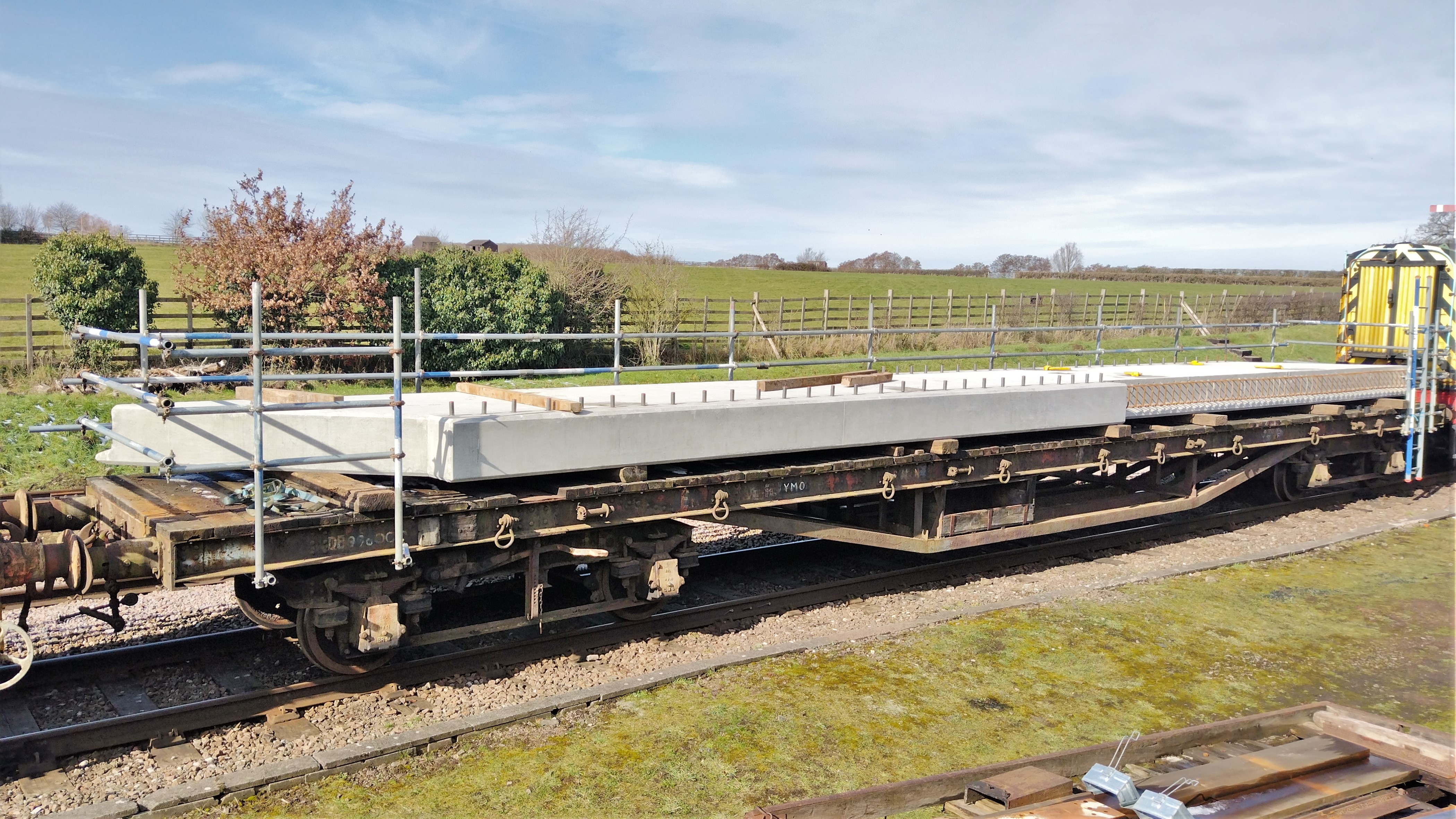
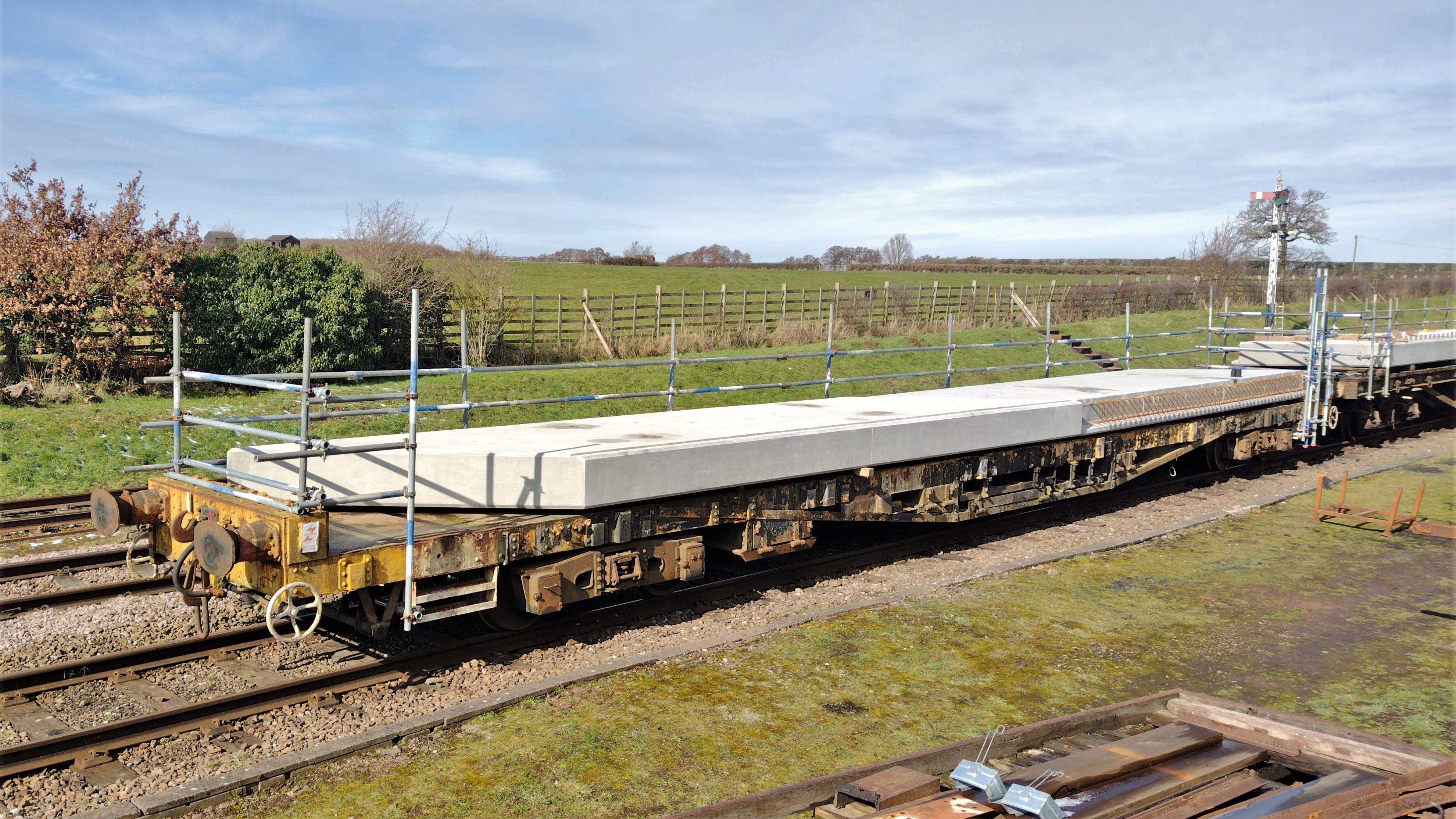
With the bridge works progressing we were pleased to see a two of our engineers wagons being put to good use to transport new bridge deck parts from Quorn Yard to the worksite. These being the 1949 built Salmon DB996000 and 1956 built Sturgeon A DB994240.
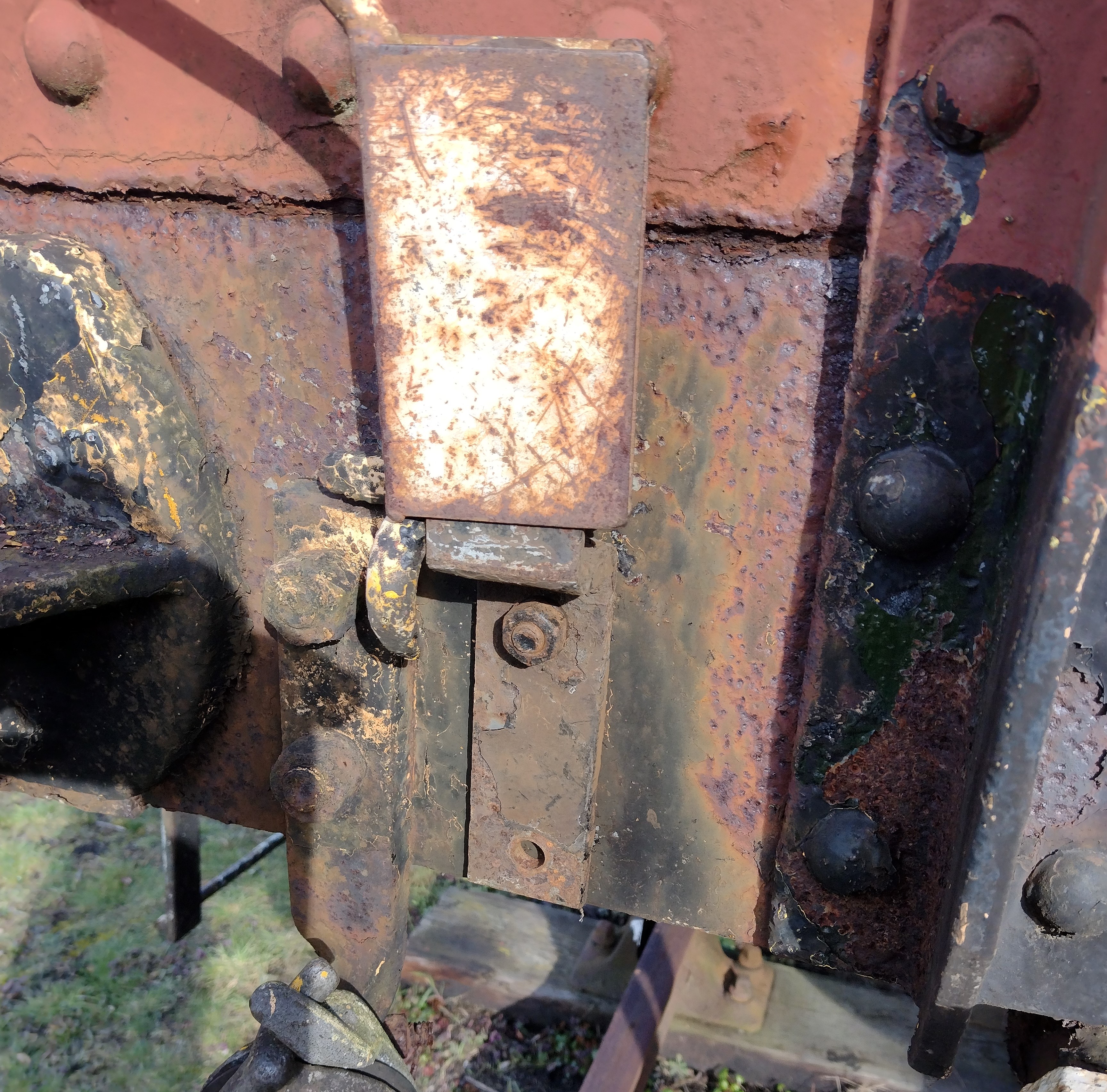
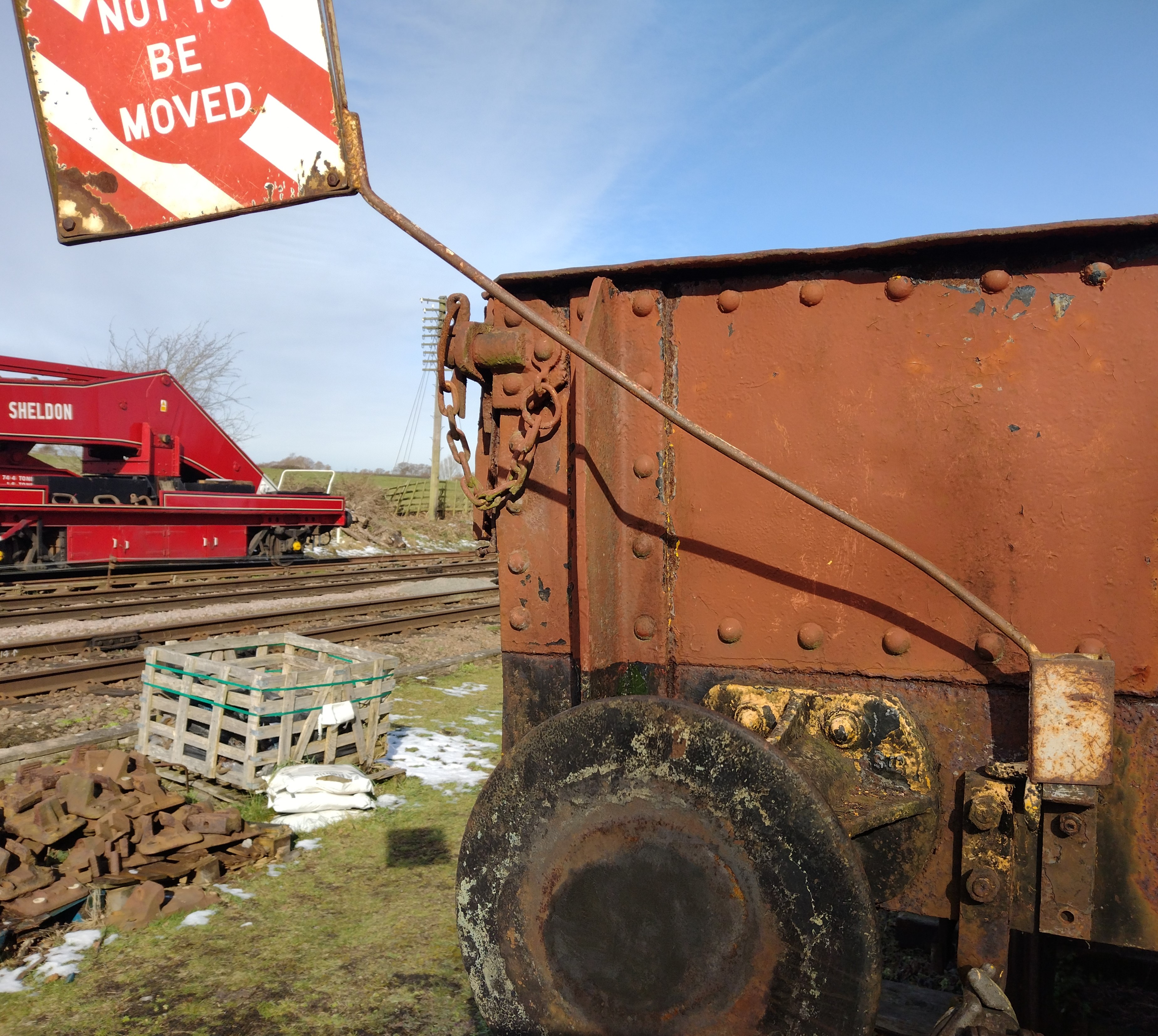
Work continues for us on the Plate wagon E212315. The wagon had been moved during the week to the south end of Quorn Yard closer to our mess coach. Before we started Nick fitted a temporary lamp bracket so we could fit a Not to be Moved board.
Nick and myself removed the temporarily fitted spacer timbers to allow them to dry-out for painting, then progressing some underframe scraping and removal of the east side rotten card clip timber.
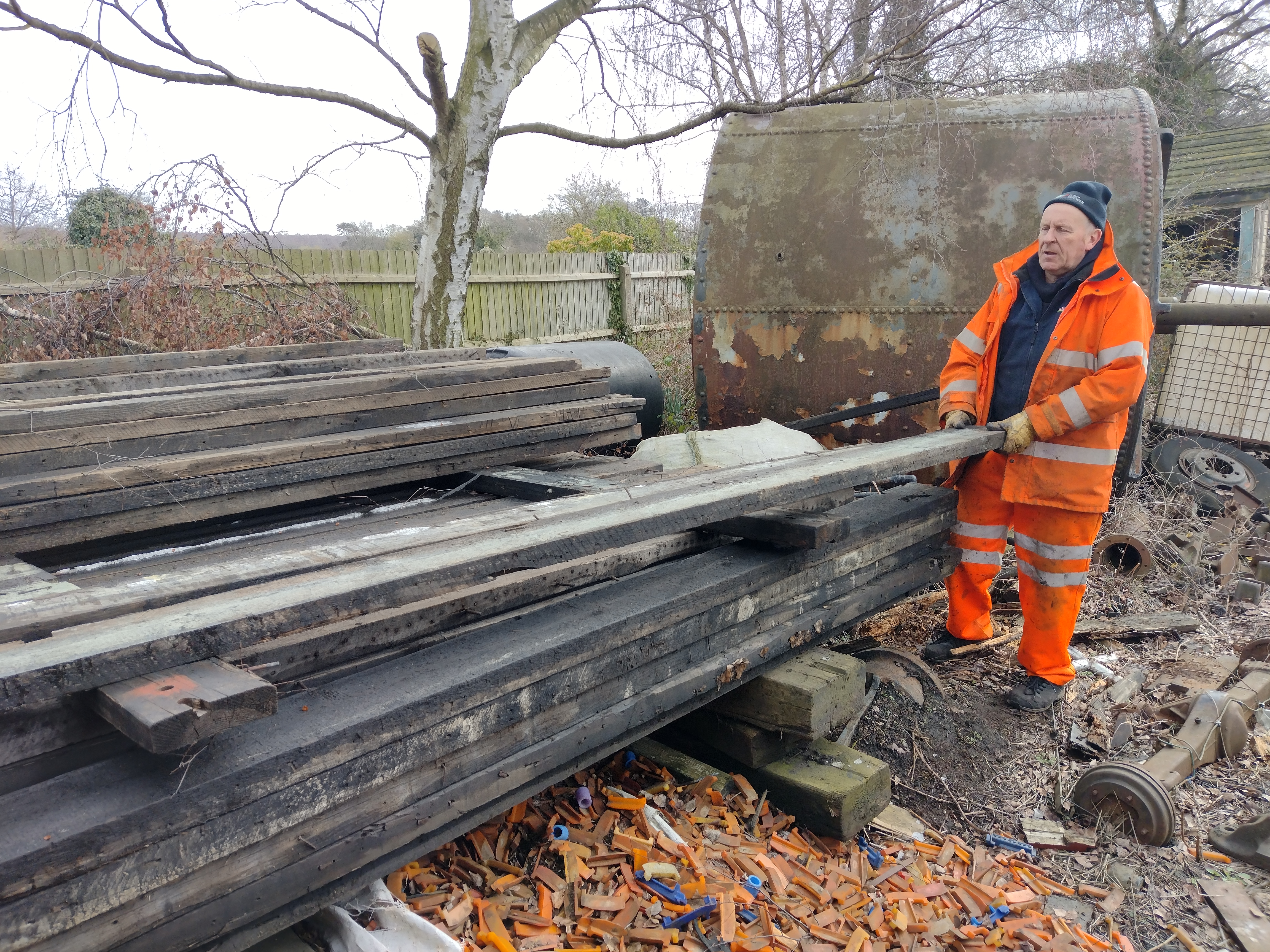
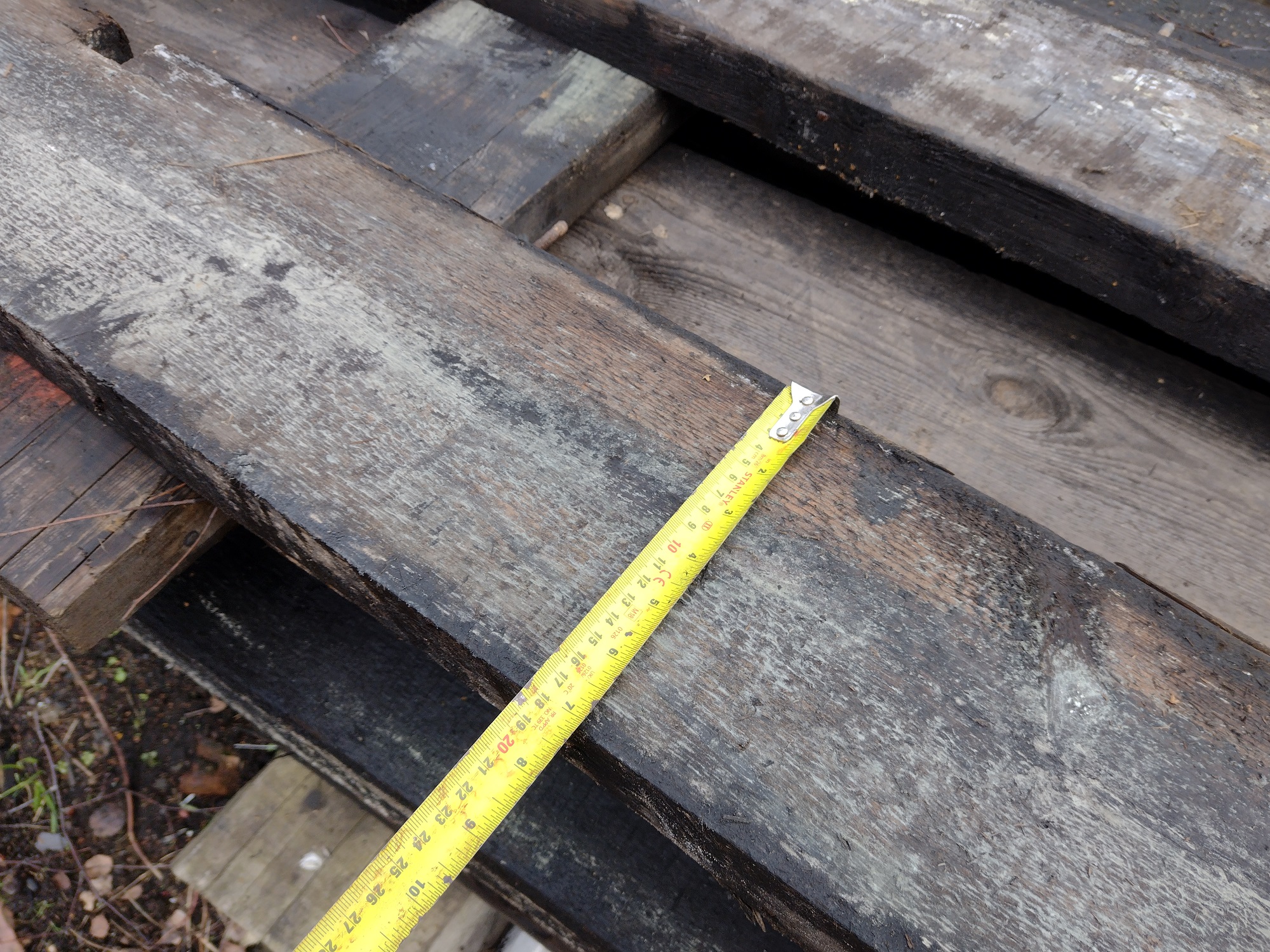
We measured up the internal dimensions of the Plate so we could assess how many floor planks would be required. Based on a nominal 7″ plank width this worked out at 46 planks.
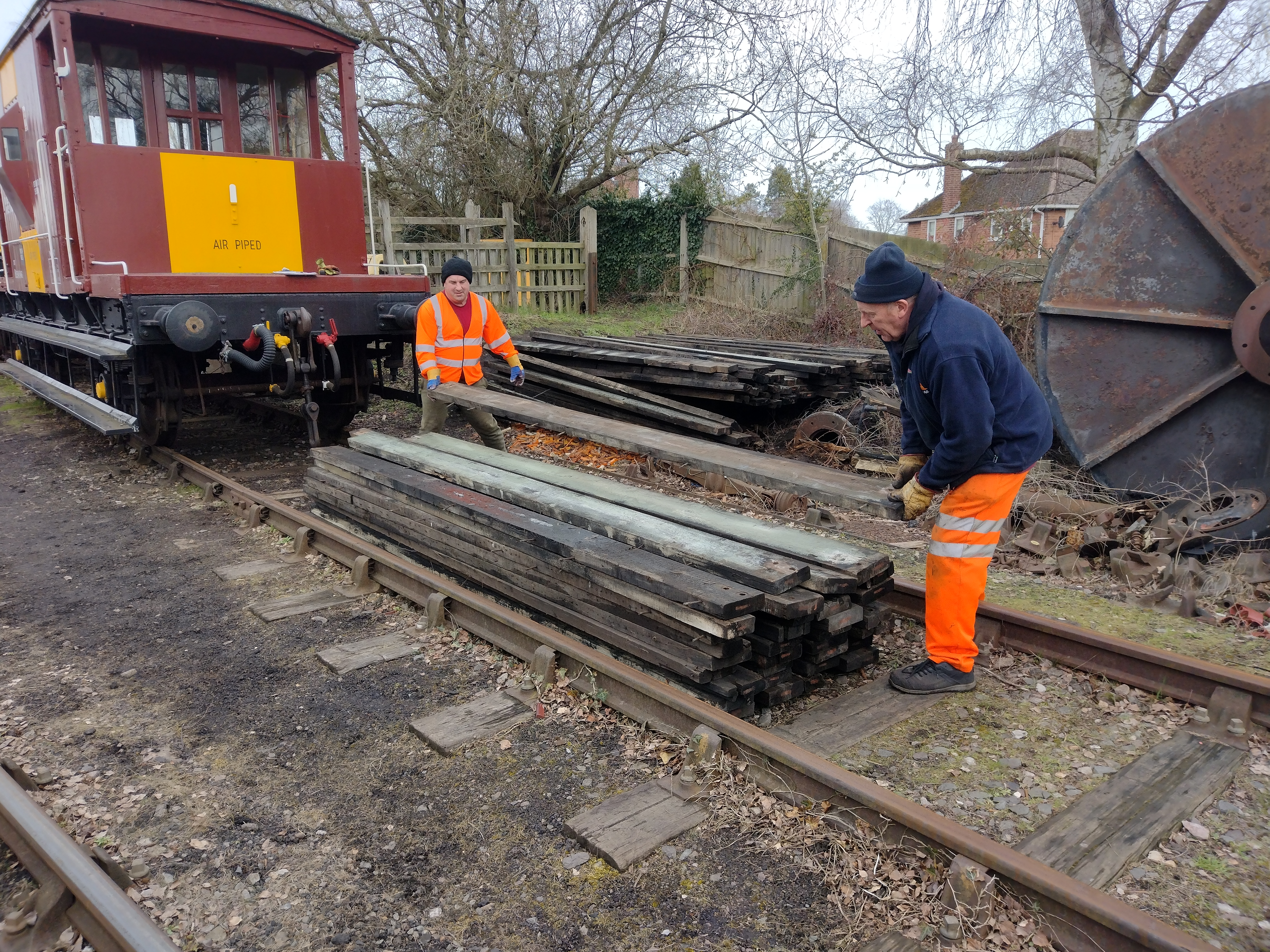
We were joined later on by David who has expressed a wish to help the group for a while. Together the 3 of us set about sorting and measuring up suitable candidates of floor planking from our stored pile.
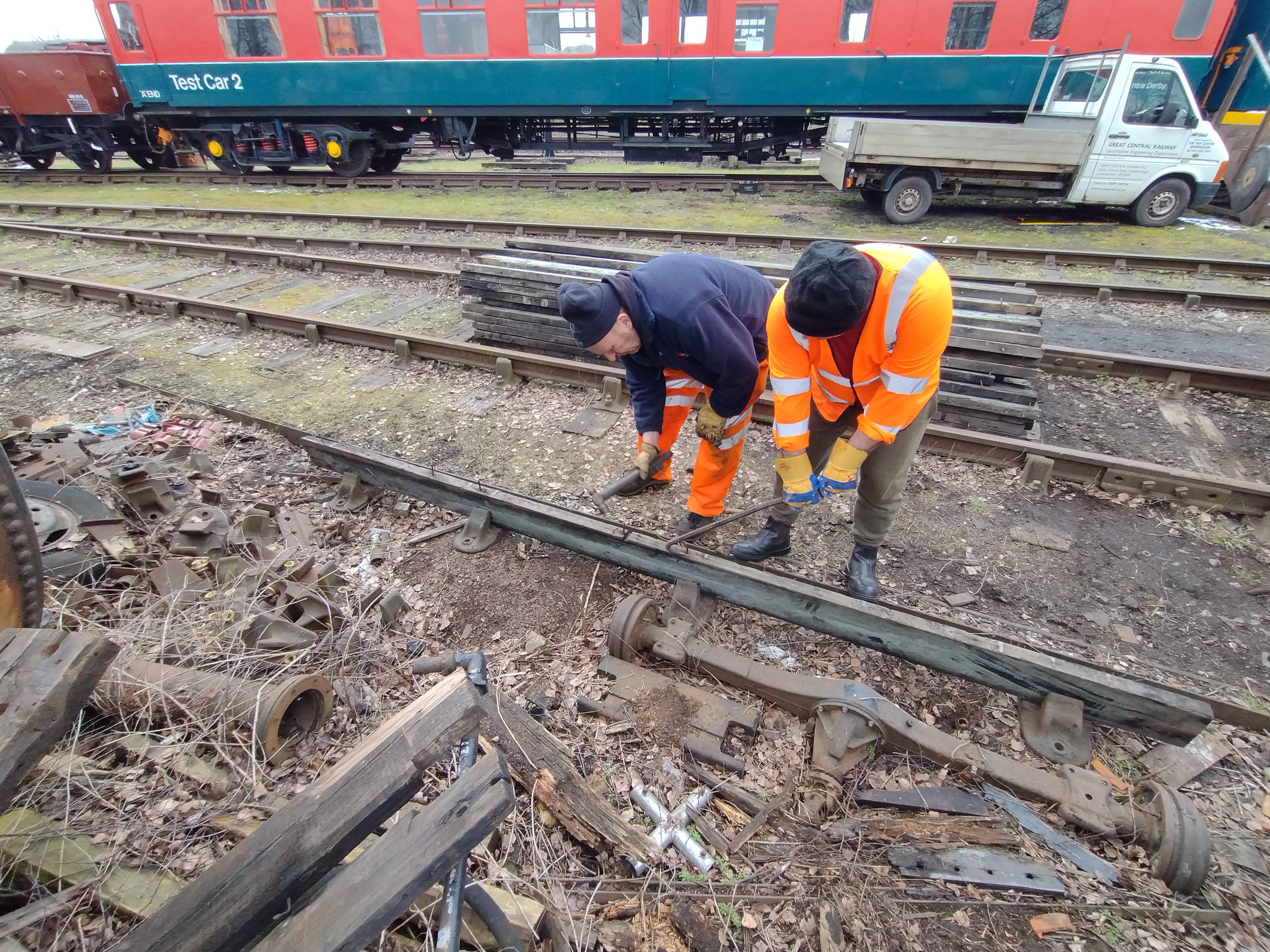
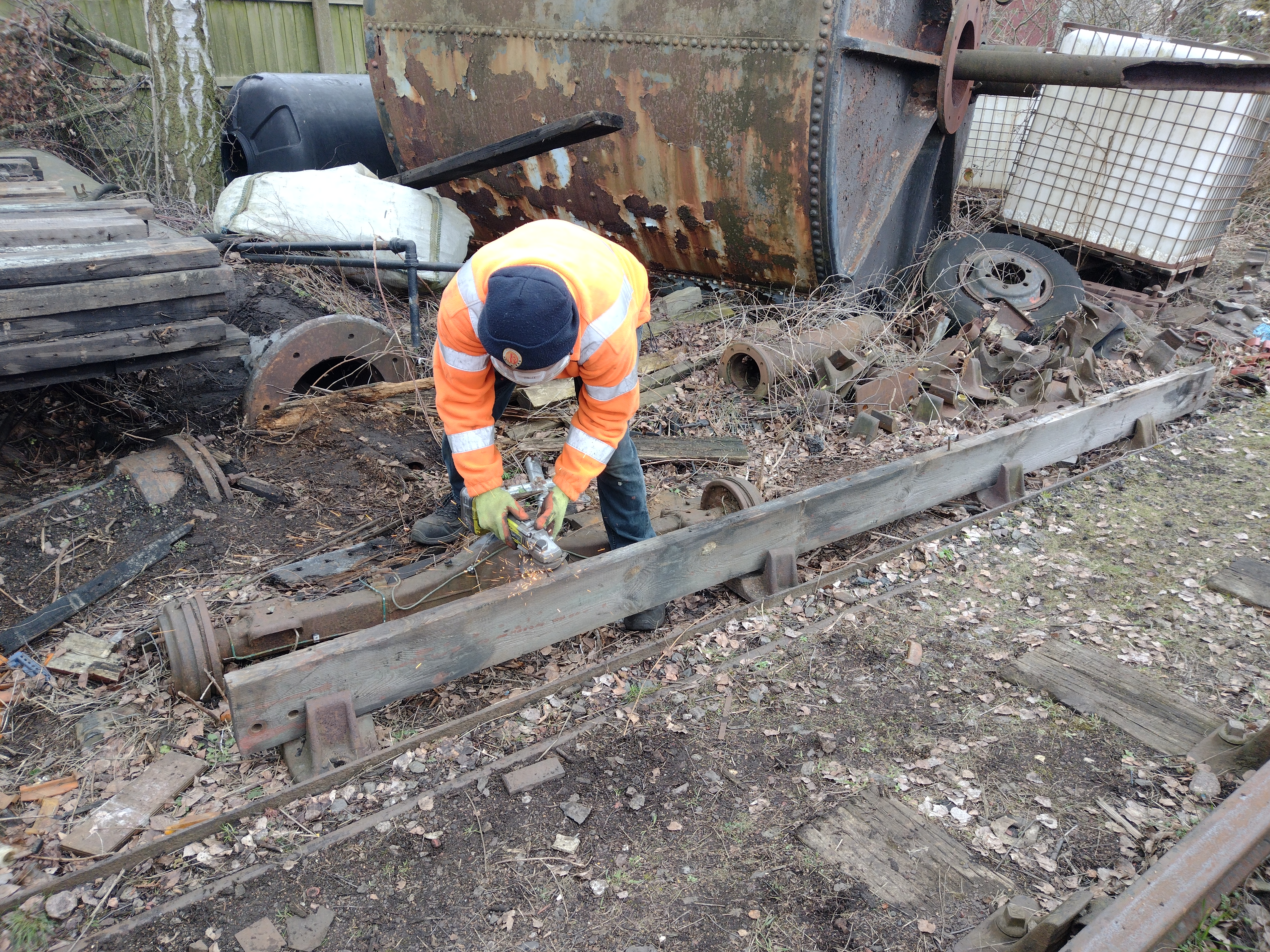
Thankfully we managed to find enough planks of the same thickness, however most of the planks still had quite a few nails in the sides from their previous use. We then set about removing the nails, or grinding off the stubborn ones.
By the end of the afternoon all 46 planks were de-nailed and ready for trimming to length.
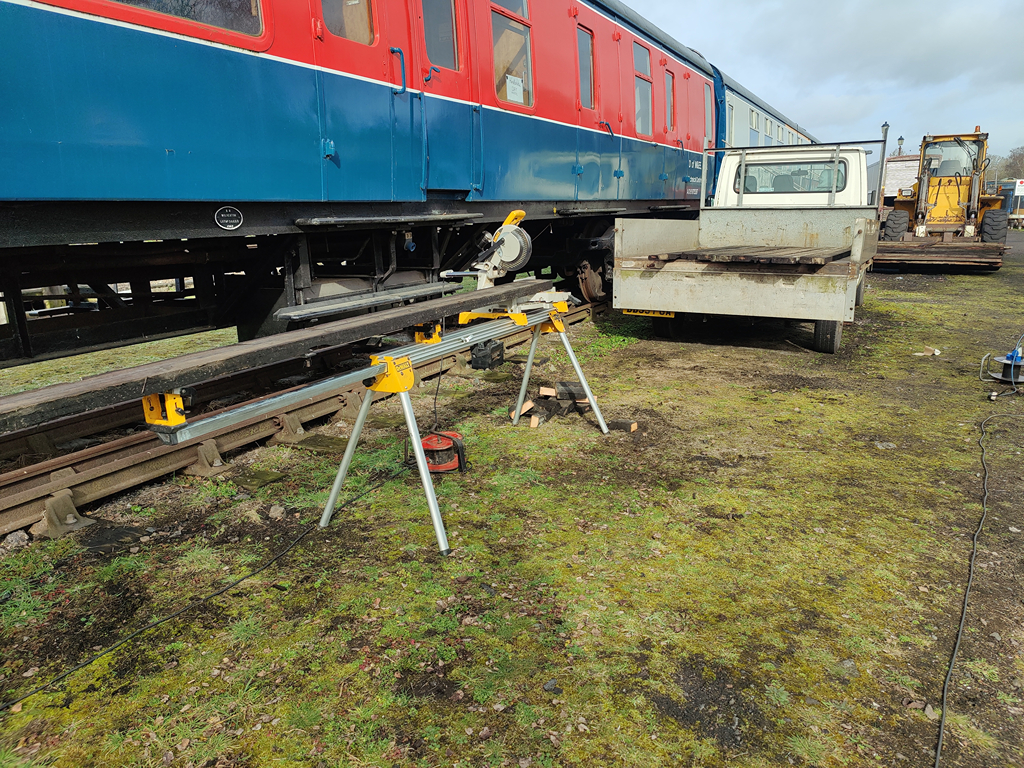
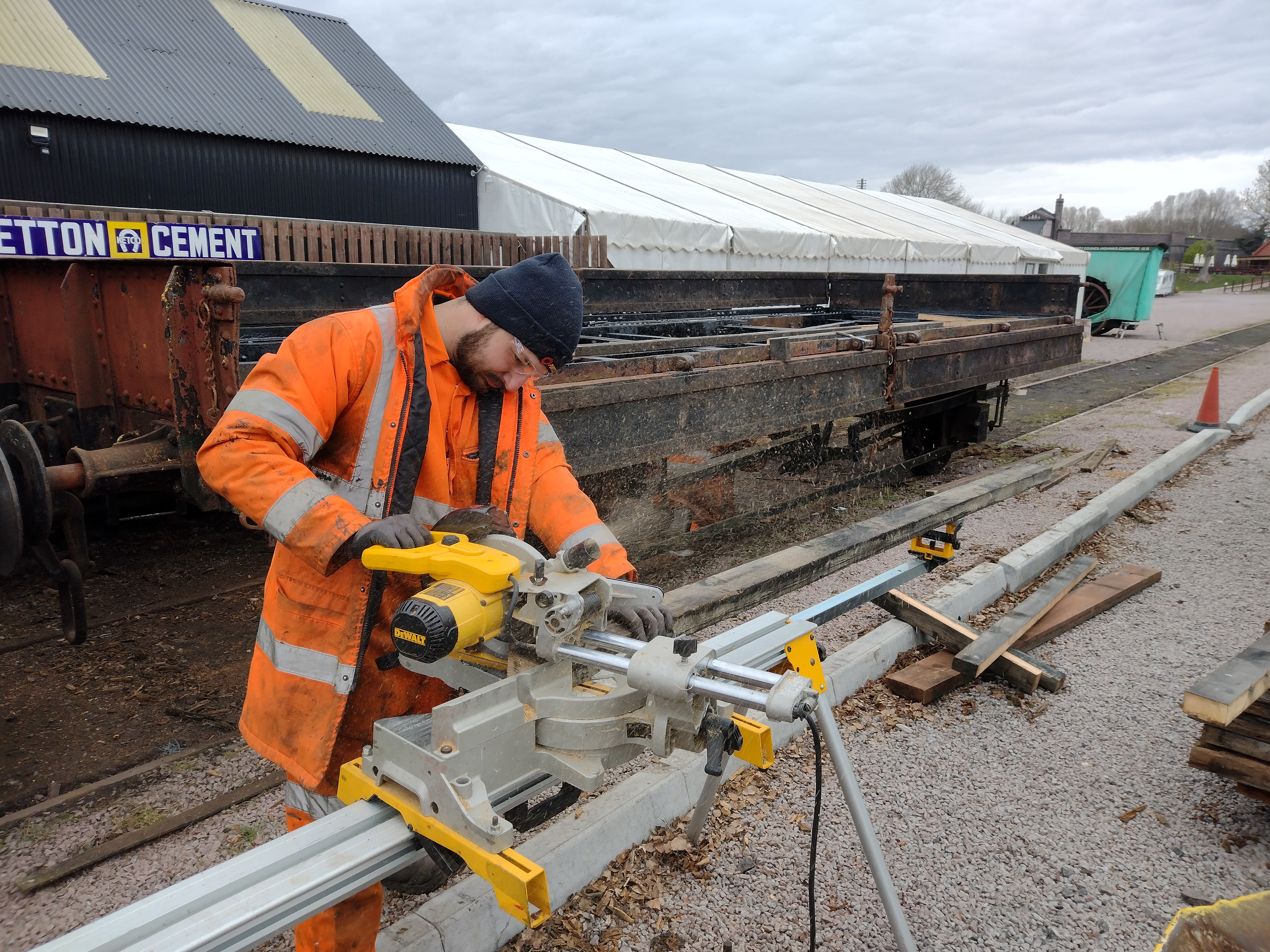
Nick and Ross were on site on Sunday, picking up where Saturday left off. The floor bearers that were removed from the wagon were treated to some cut end solution on the cut edges. They then set up the chop saw and started cuttinf one end of the planks sorted yesterday.
The other end got the same treatment, using an end stop on the chop saw stand.
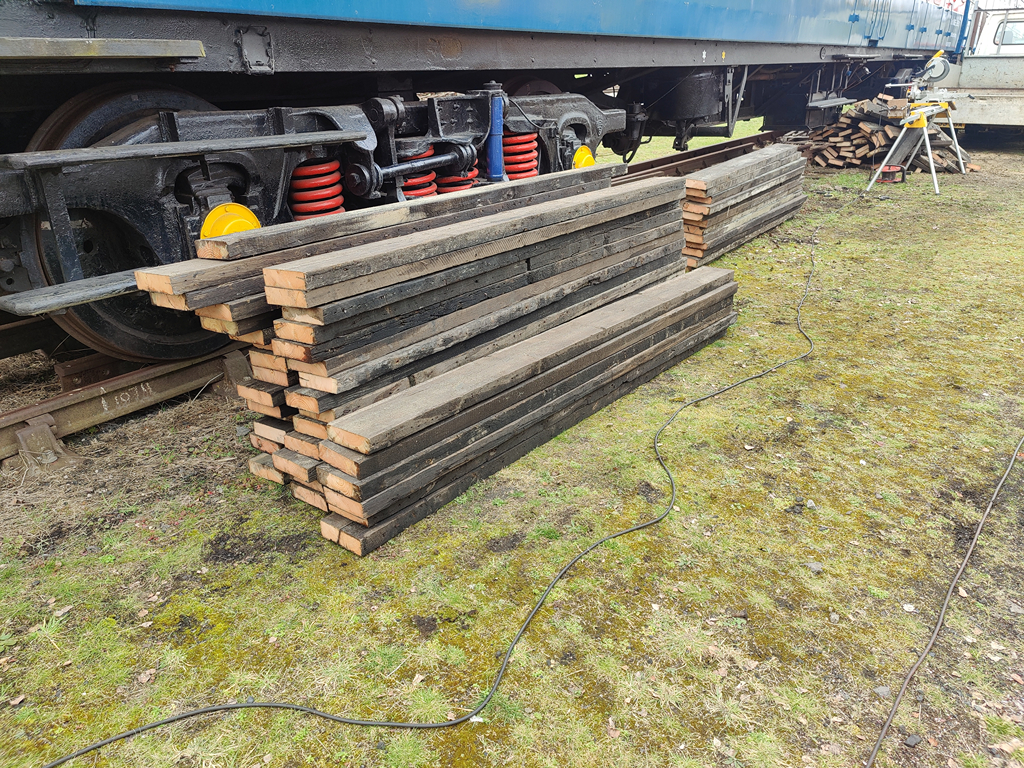
A pile of planks soon appeared all a consistent length, though some were cut shorter for around the door hinge rivets.
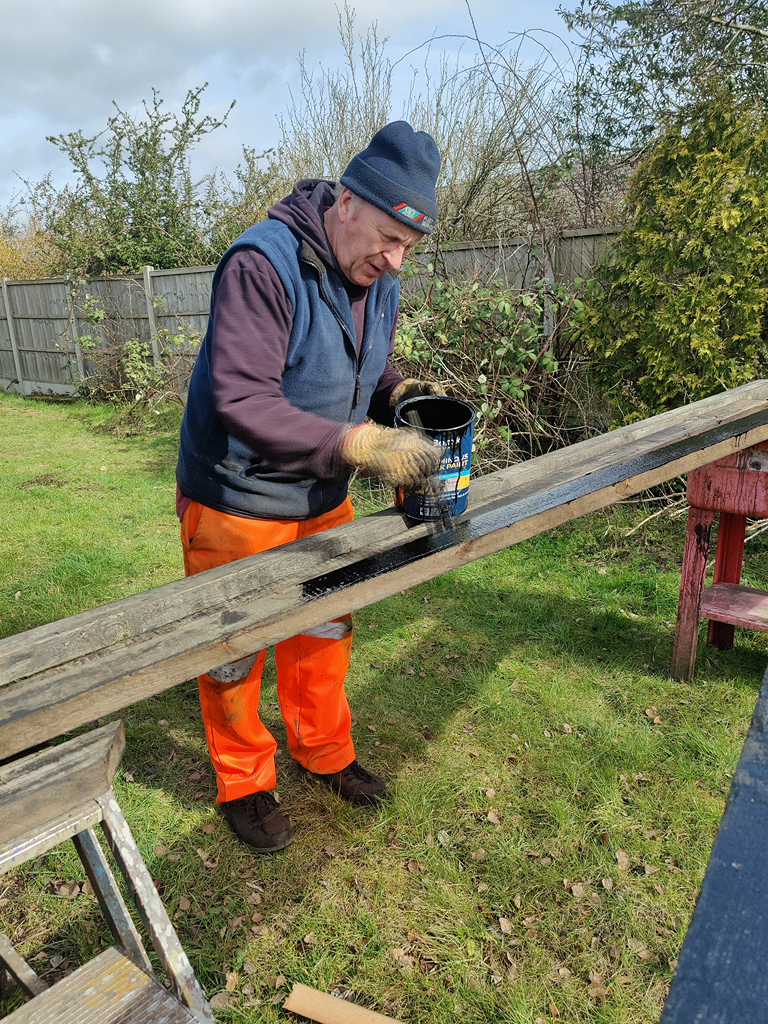
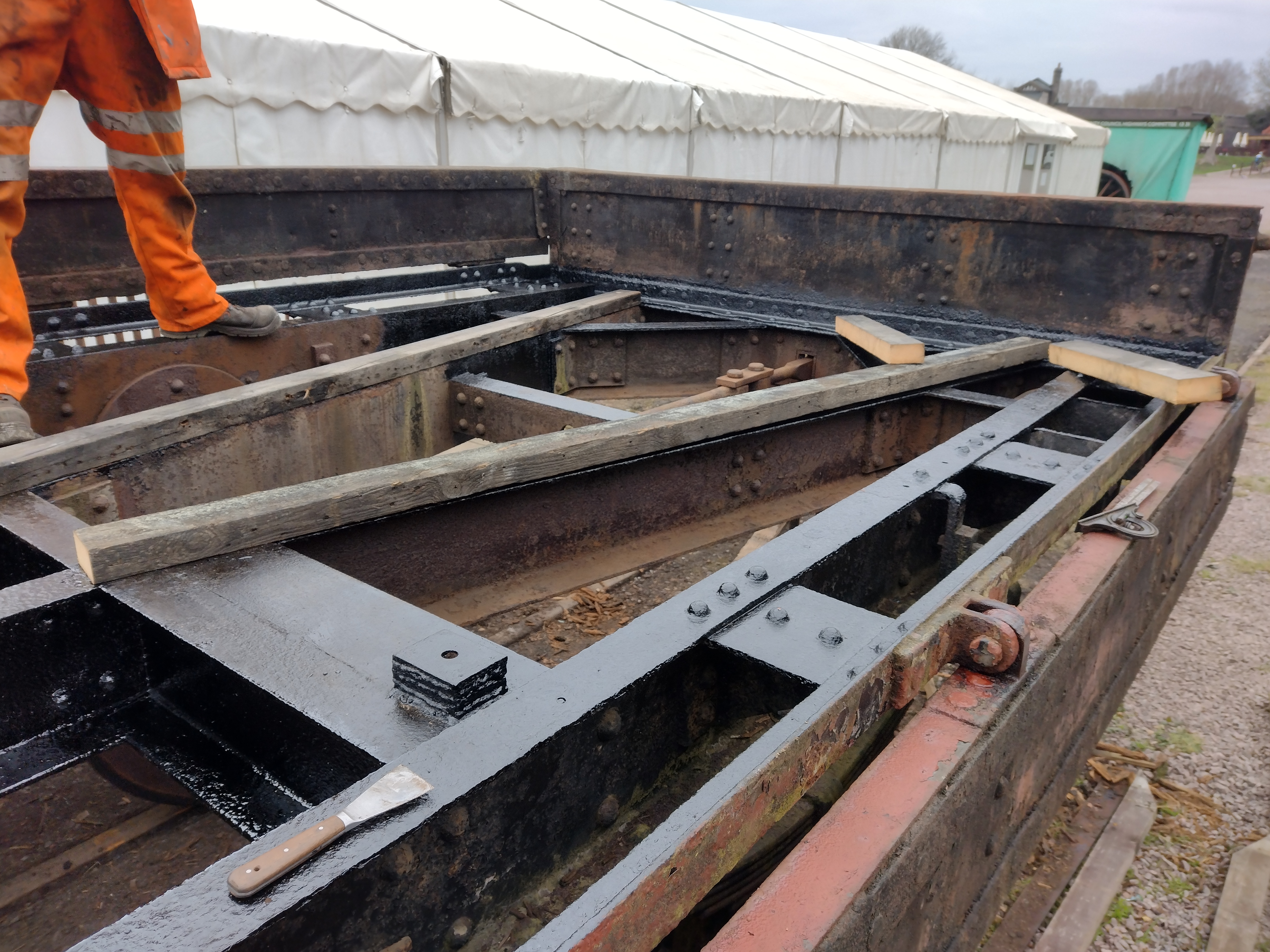
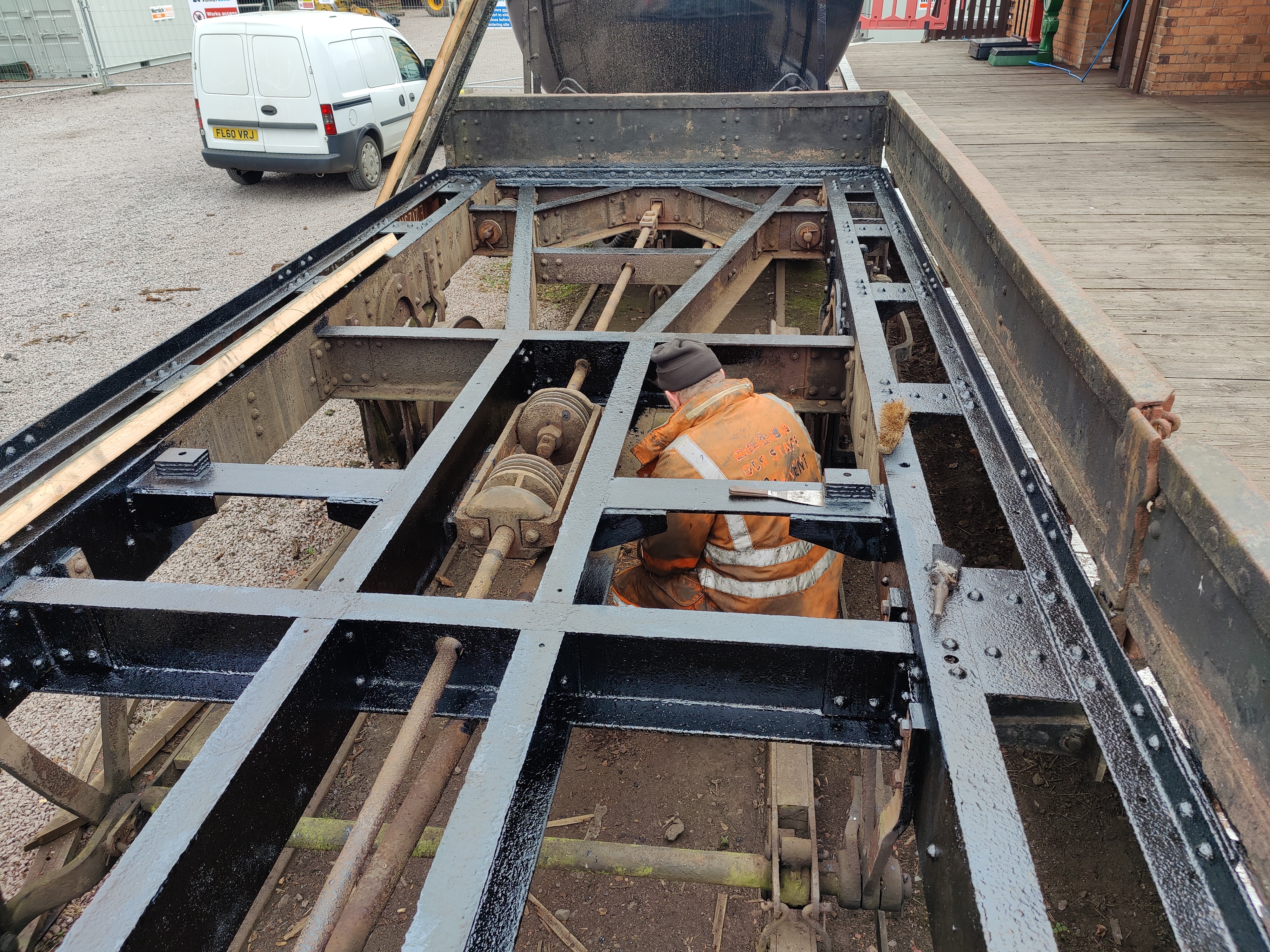
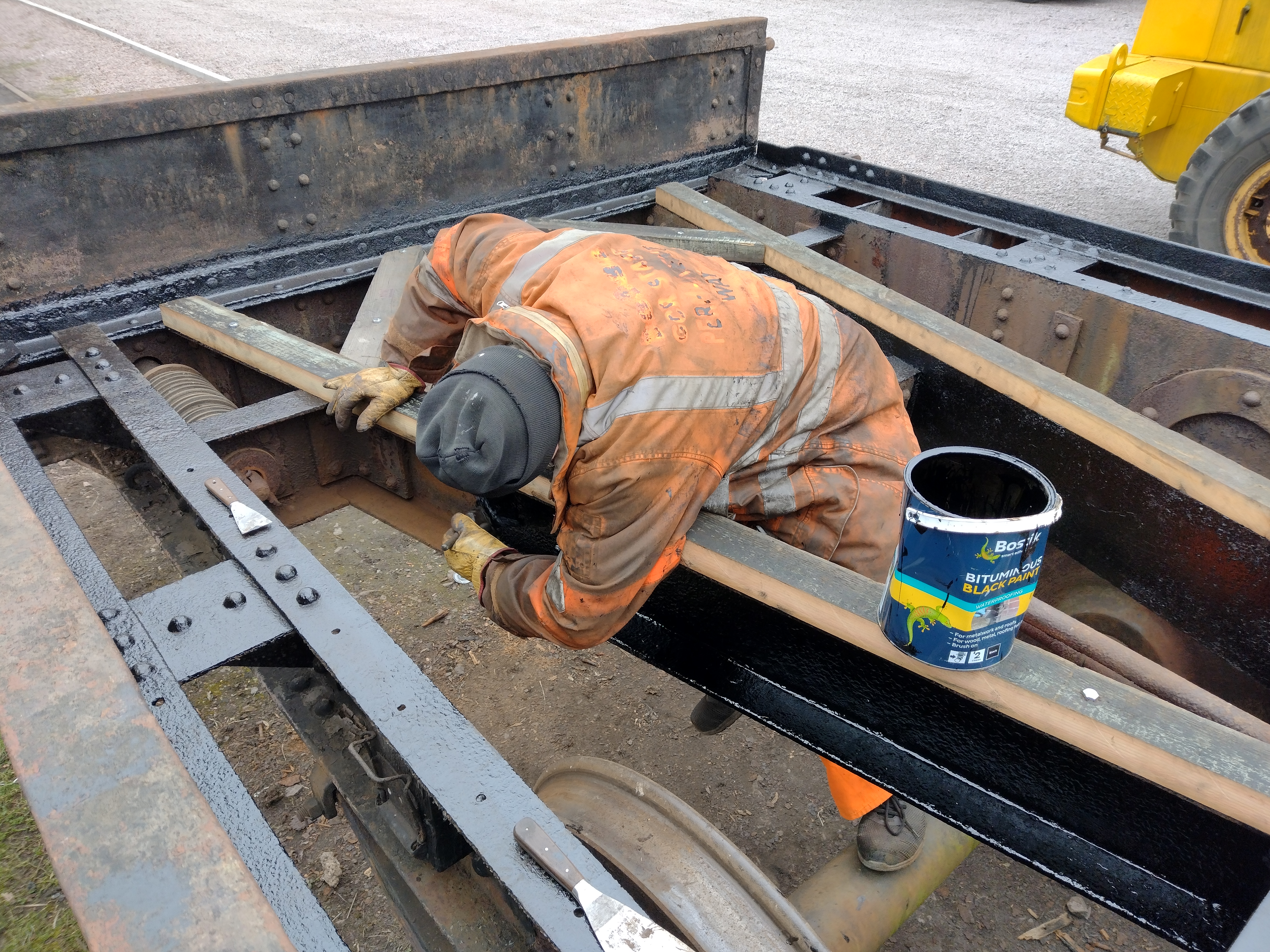
With the floor now cut, Nick painted the back of the floor bearers in bitumastic paint before these were fitted to the wagon. Ross then painted the top of the bearers in the same paint.
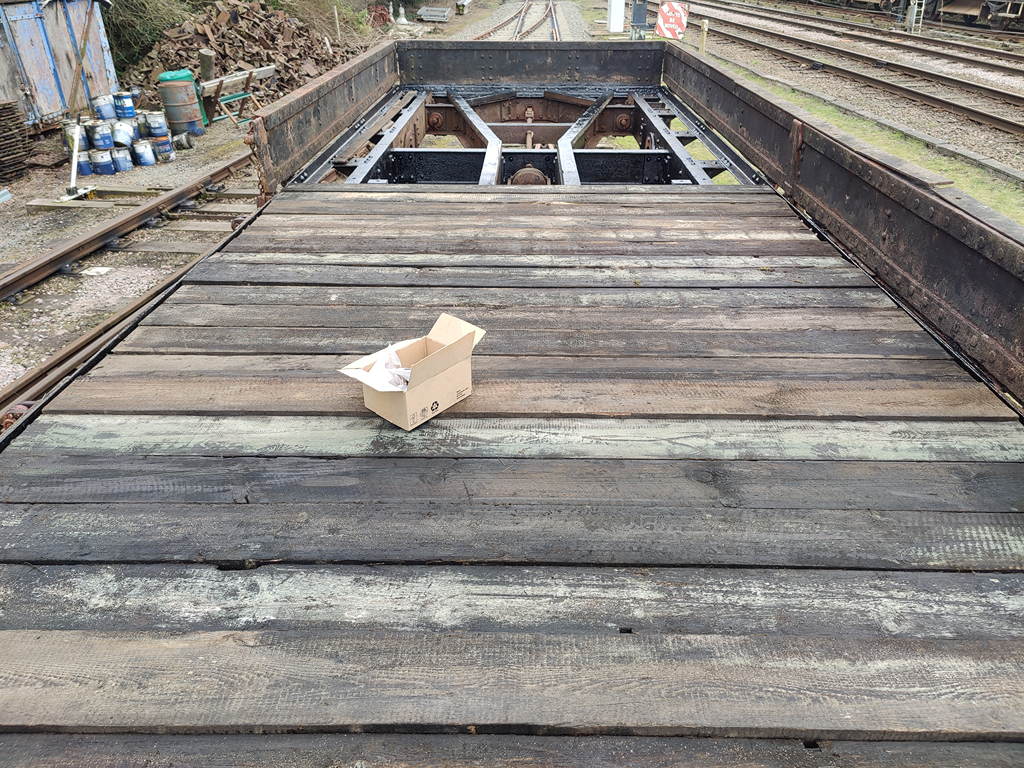
The floor then started to be laid in, starting from the north end.
The resultant gap at the south end ended up being 9.5 inches,which meant 2 boards had to be ripped down the length to fill the gap. Once these had been cut, Nick applied the cut end solution.
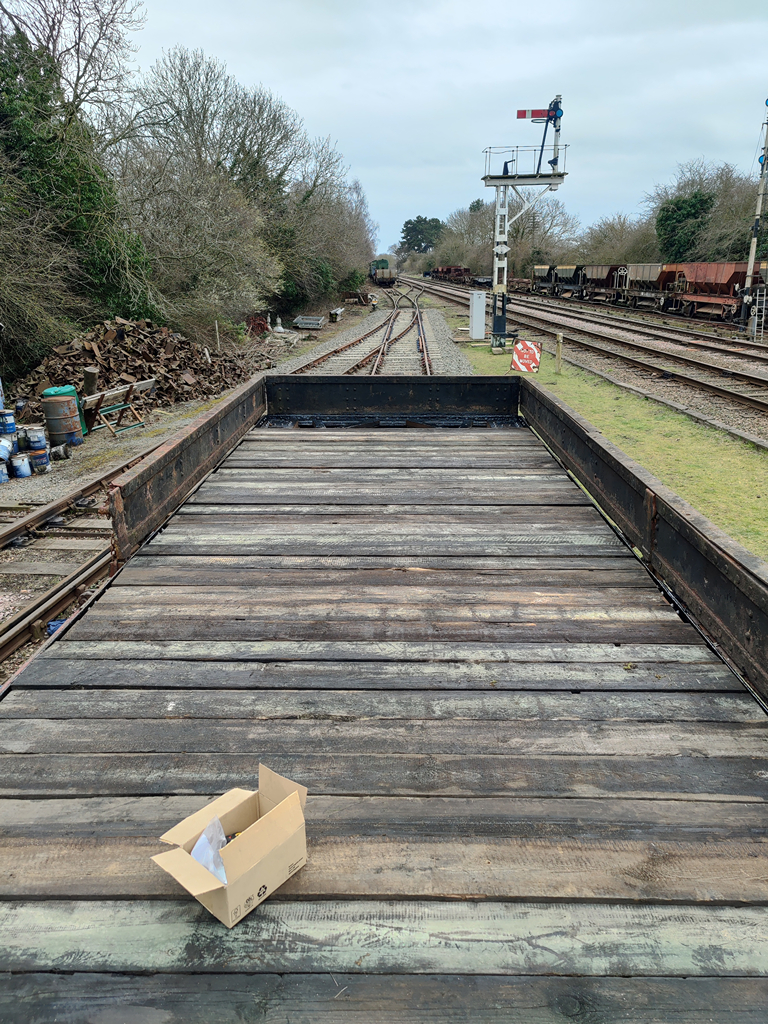
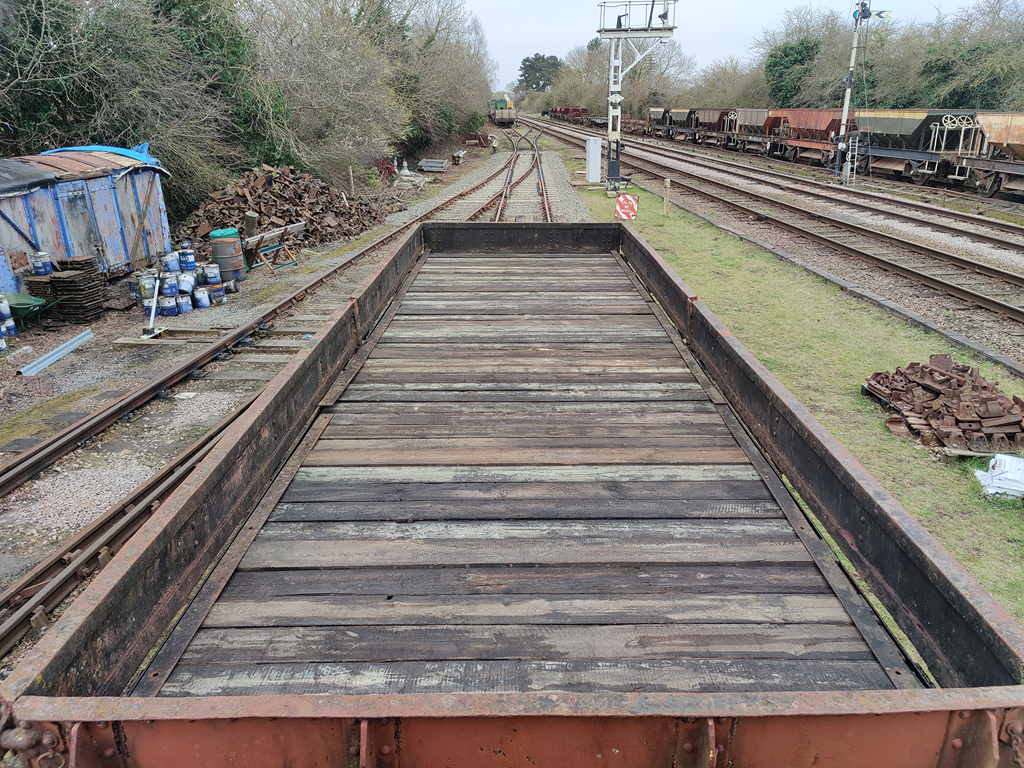
Nick and Ross finished the day with a complete floor laid in the wagon.
There’s still the job of getting the boards to sit down properly where there are the rivet heads from the underframe, but that is a job for another weekend. Thanks for reading!
Welcome to our Quorn Wagon & Wagon update from the first week of March 2023.
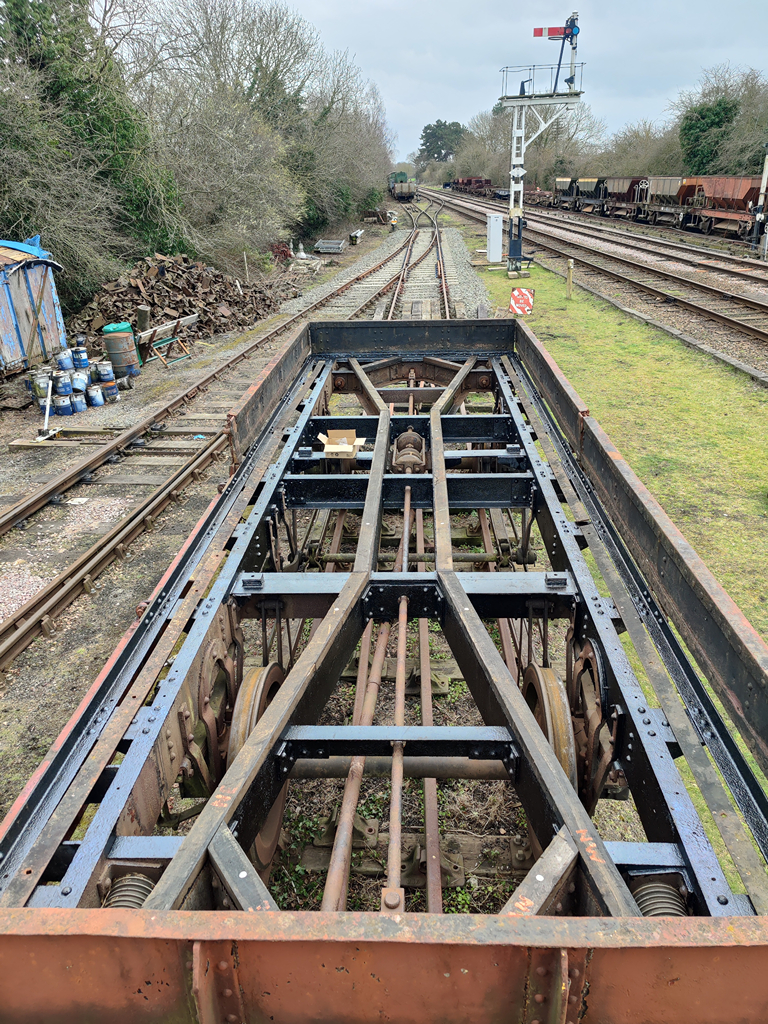
1937 built LNER Plate wagon E212315 arrived at the GCR way back in 1997, and has been seen over the years operating in many mixed freight formations; however we thought it was about time we made a start on some well overdue restoration work.
The first task was to remove the old rotten floor planks, which revealed quite a lot of loose underframe surface rust, however the framework itself was found to be in very good overall condition.
Mark, Tom, Daniel and Charlie all helped Nick & Ross scraping and cleaning the underframe.
Once the underframe was scraped, cleaned and swept, a start was made applying bitumen paint to the inner faces of the framework that will be covered up once the new flooring is fitted.
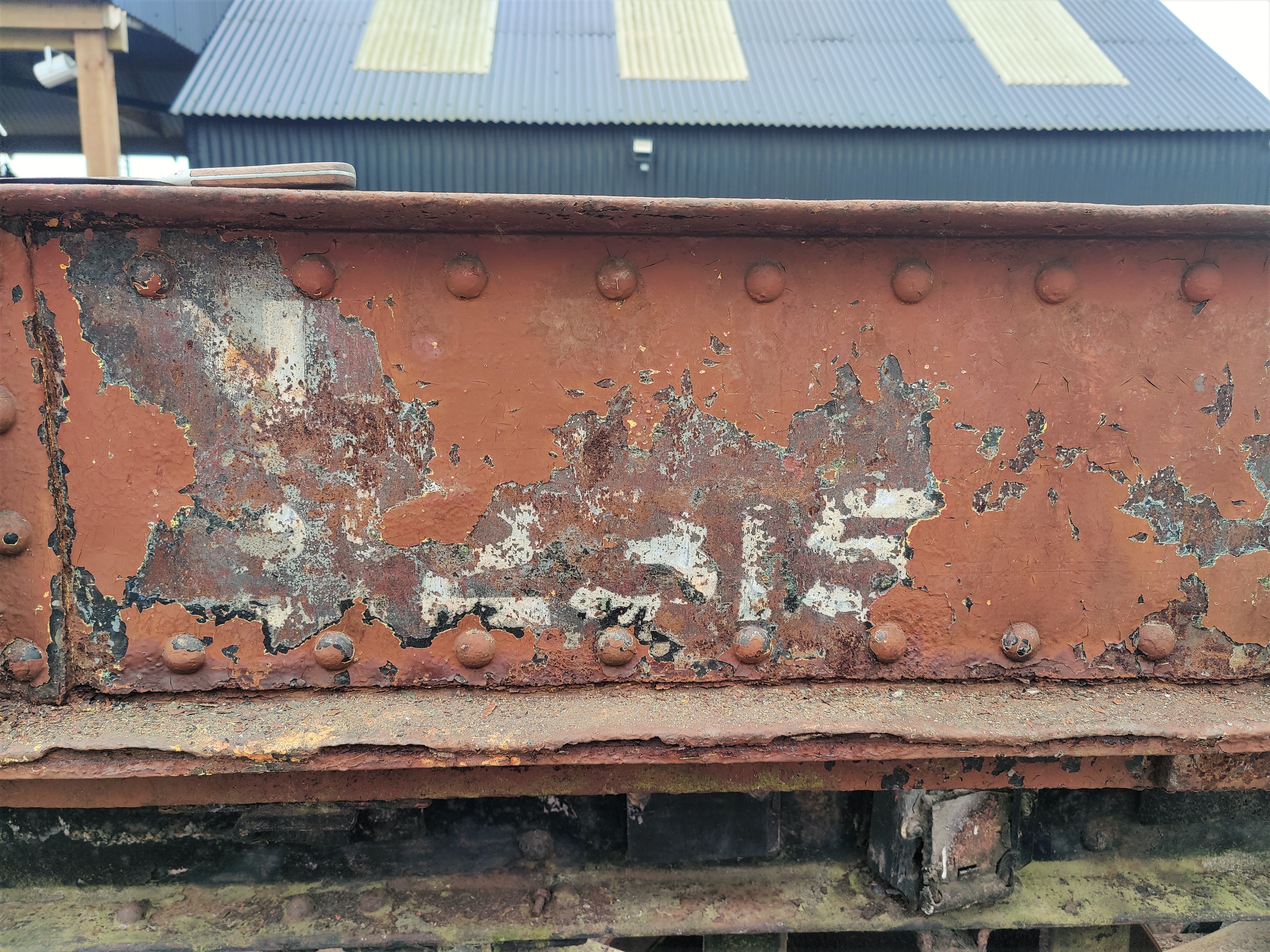
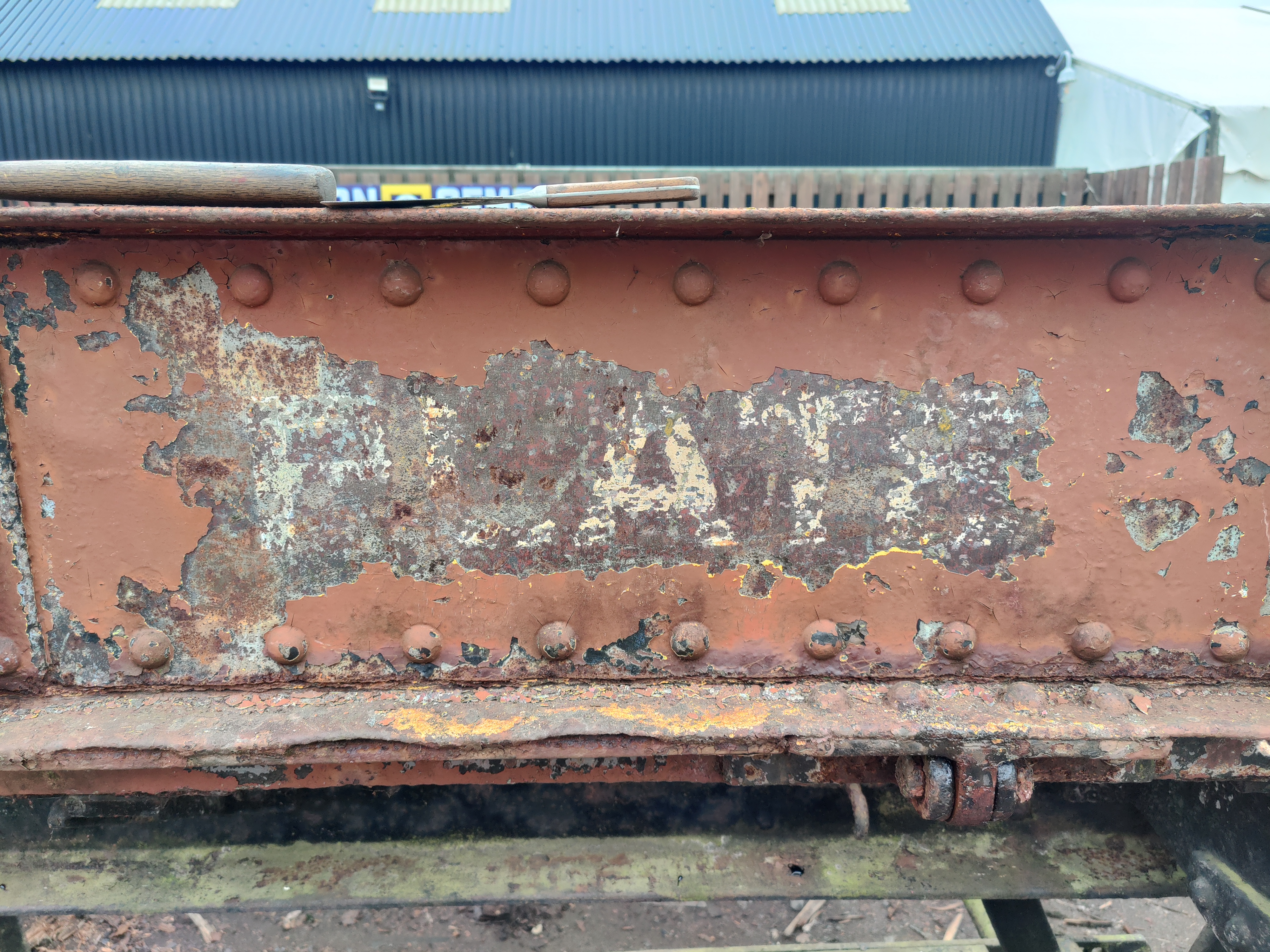
A start was also made on scraping the side doors which revealed some original paintwork, numbering and lettering.
On Sunday I joined Ross & Nick to continue with the Plate underframe work.
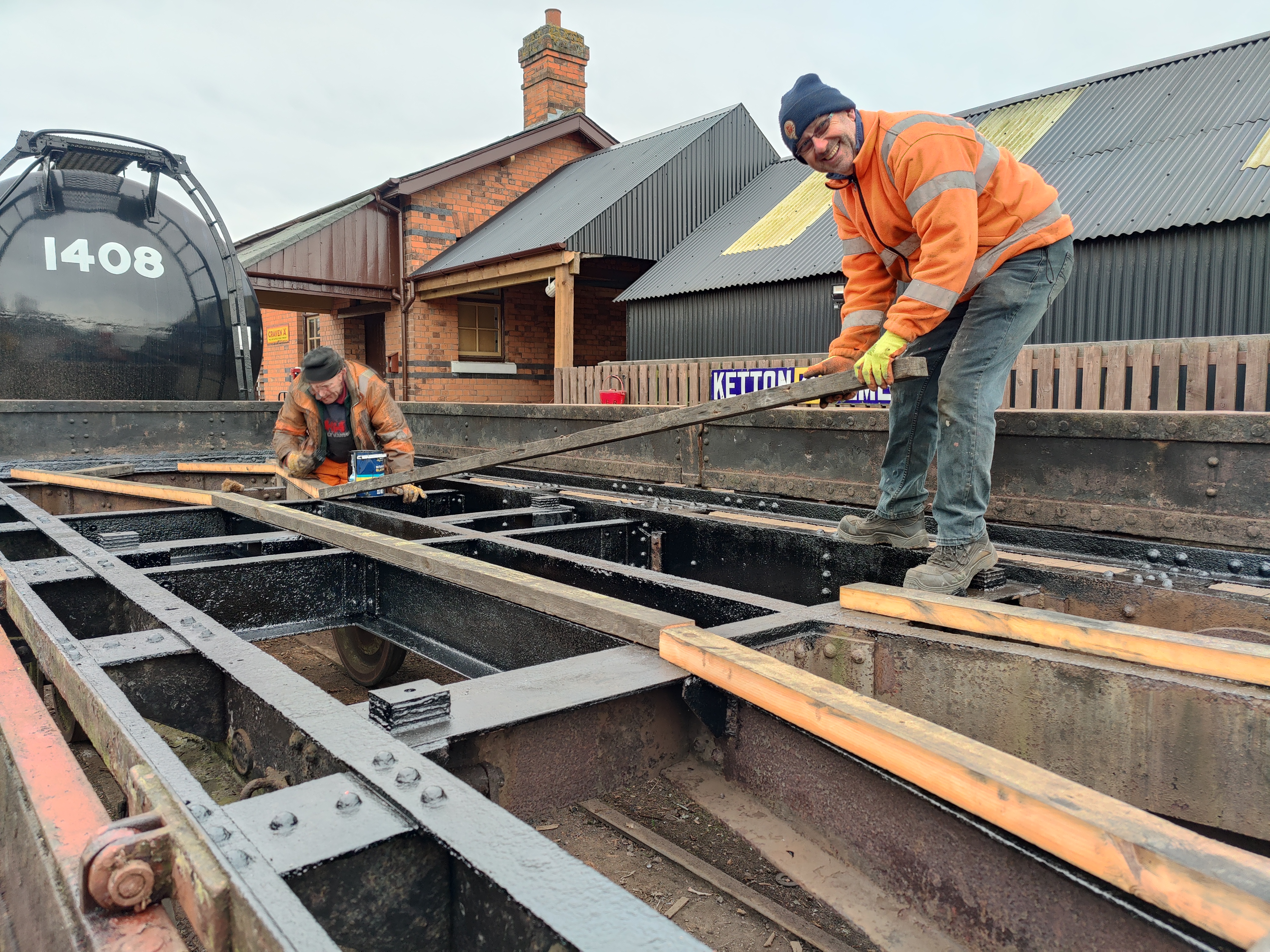
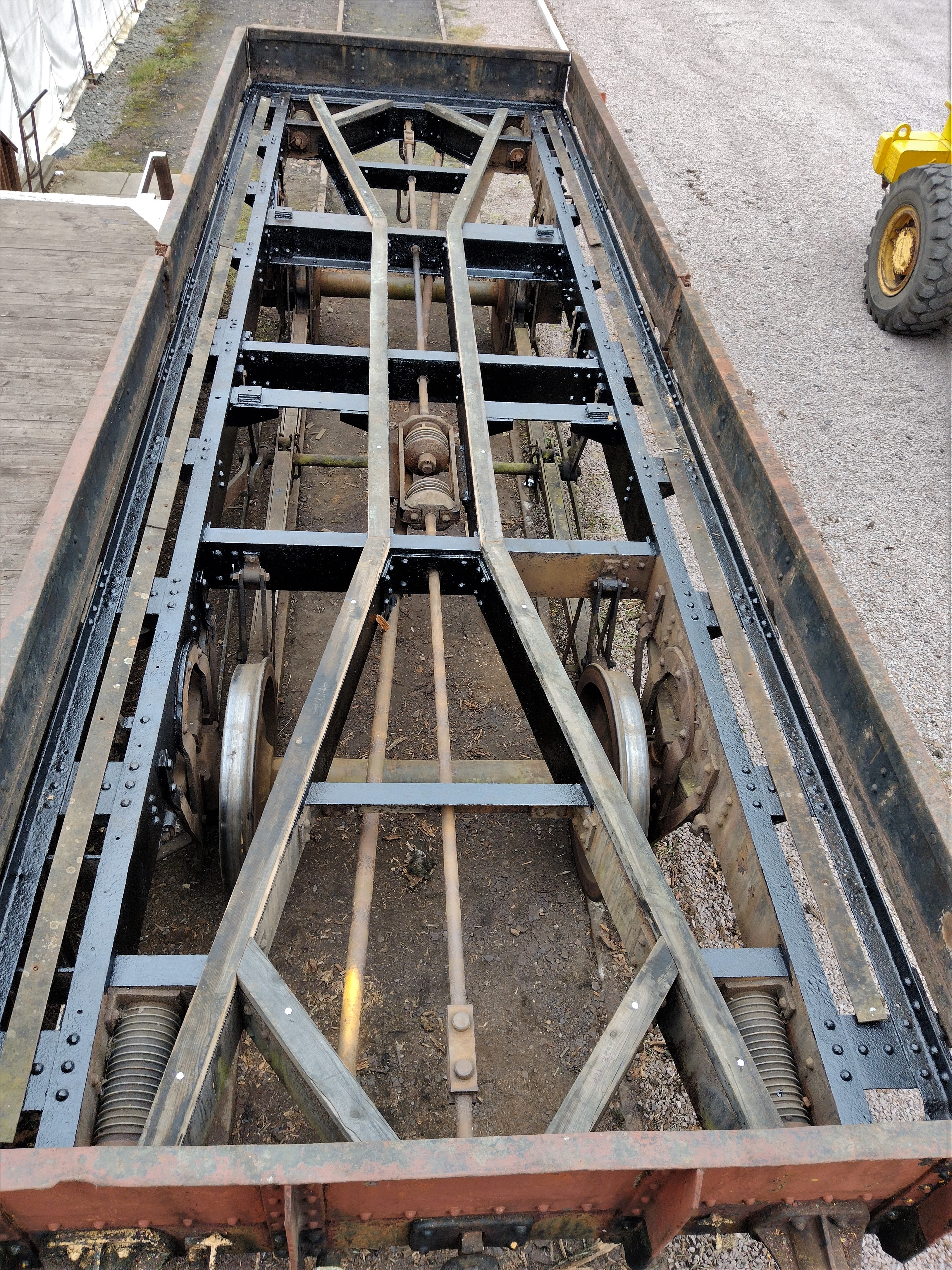
The framework along the middle section of this wagon is 2″ lower than the side frames, therefore wooden battens are fitted on top of the frame longitudes to support the flooring planks that are laid across the wagon. These battens were all found to be rotten when the floor was removed, therefore replacements are required.
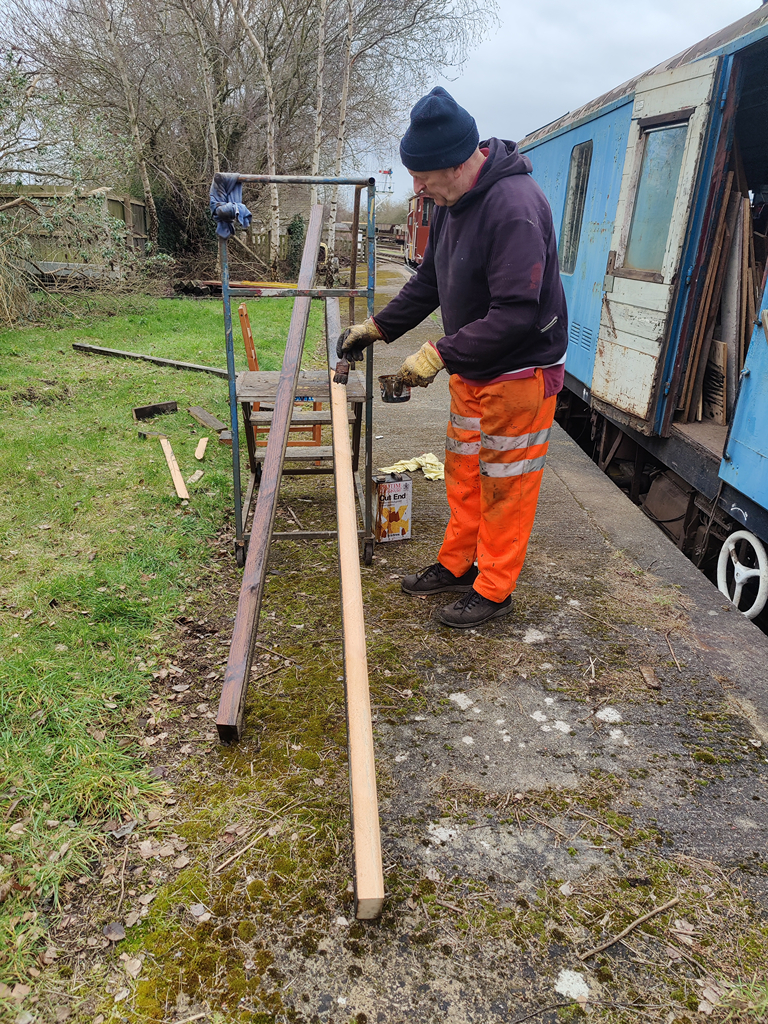
Ross and myself set about recovering some old floor planking, removing nails, measuring up and slicing to make the replacement battens.
Nick continued with the bitumen painting of the underframe inner surfaces.
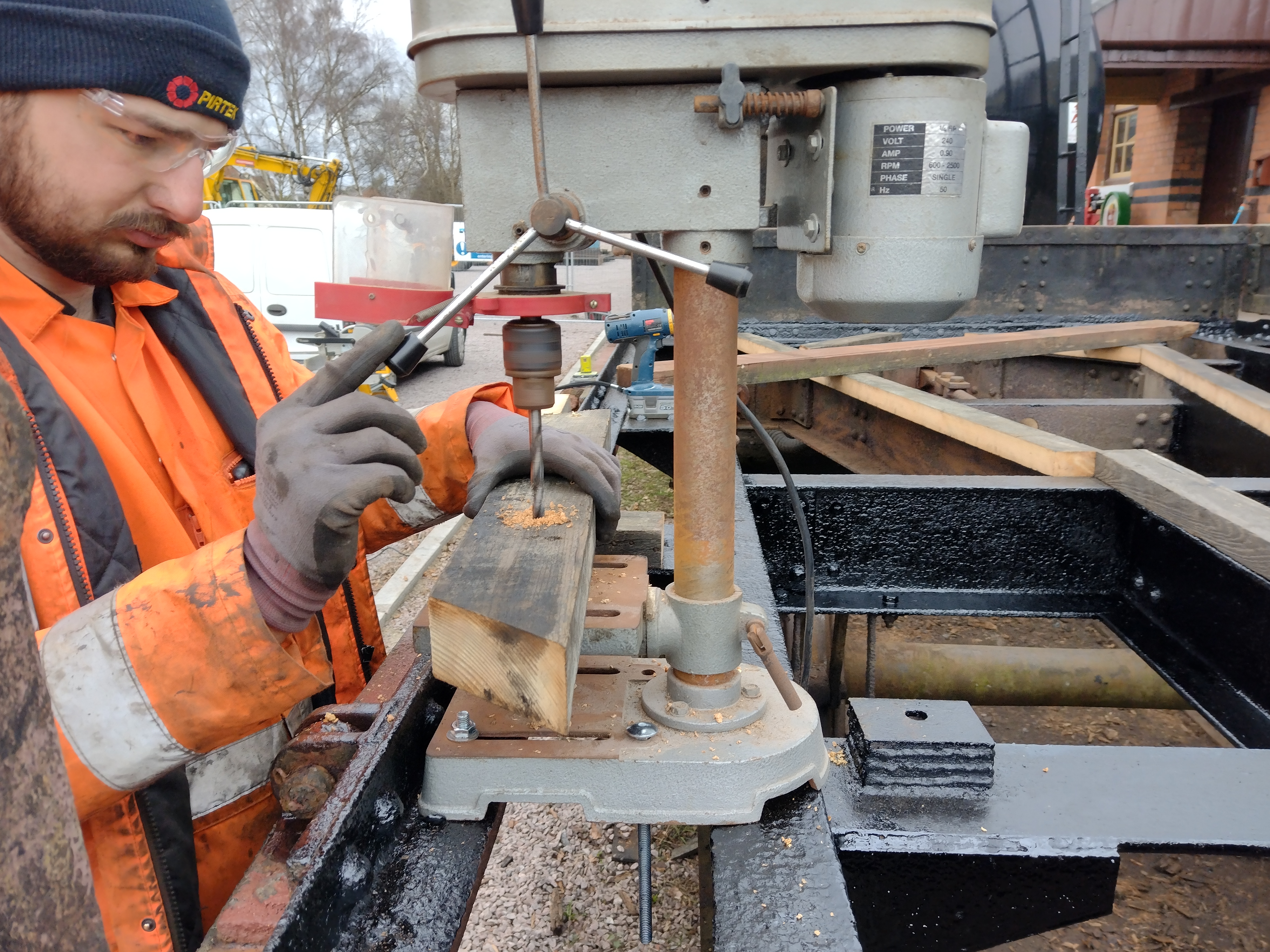
The new battens were trimmed to give neat joints between each other, then marked and drilled for the mounting bolts. Our small pillar drill was temporarily mounted to the wagon underframe to help the process.
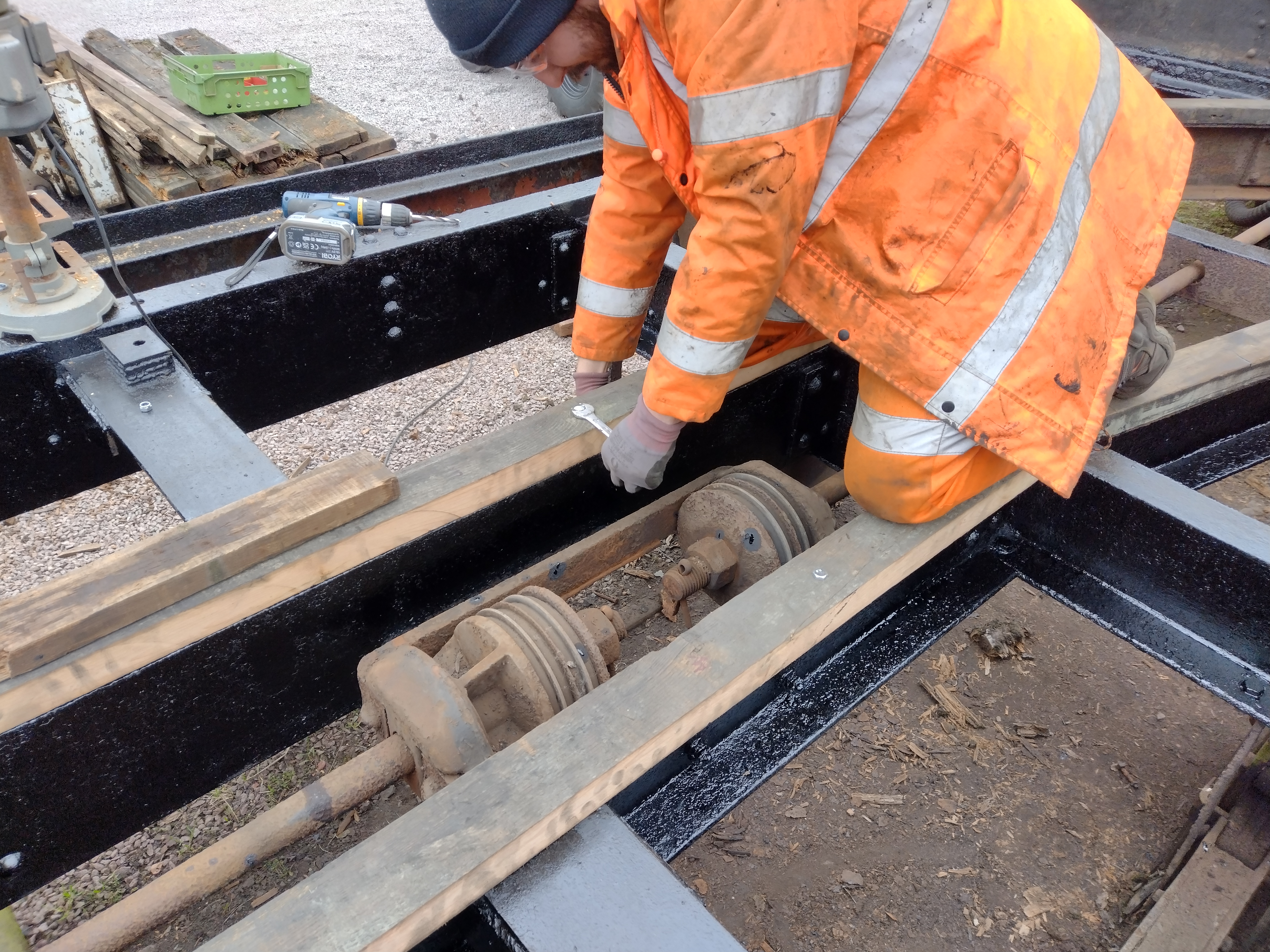
The replacement battens were all fitted in place with temporary bolts. They will be removed again next week for painting and final fitting once we have obtained some new coach bolts.
Join us again next week for some more Plate work, all the best, Dave
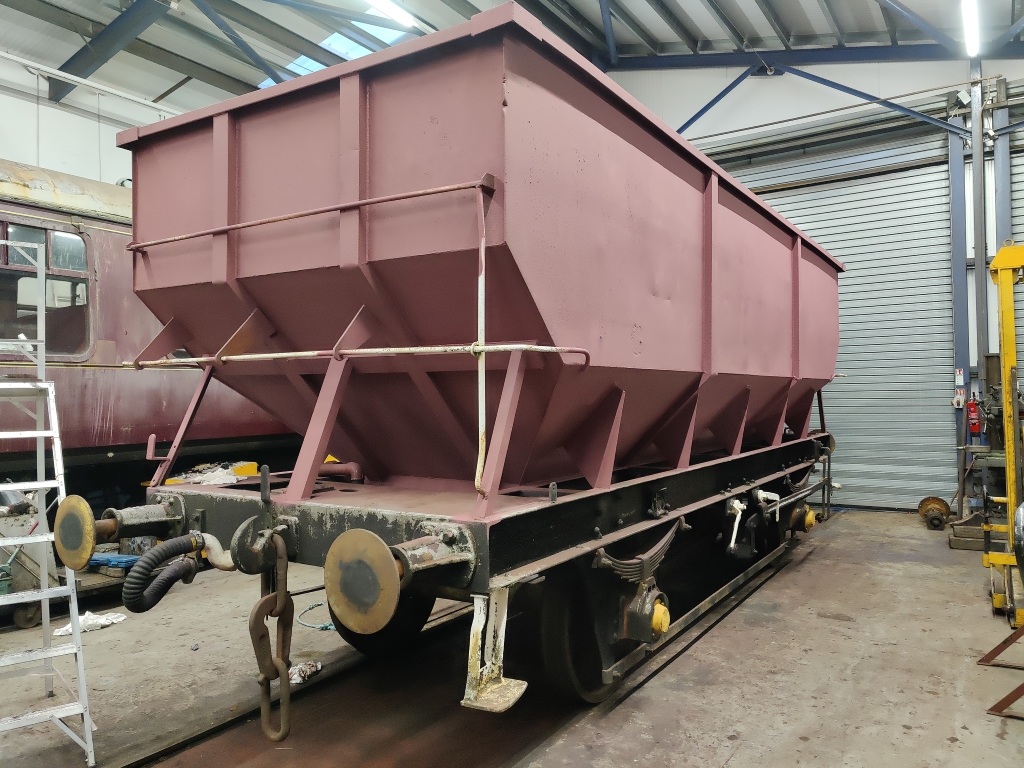
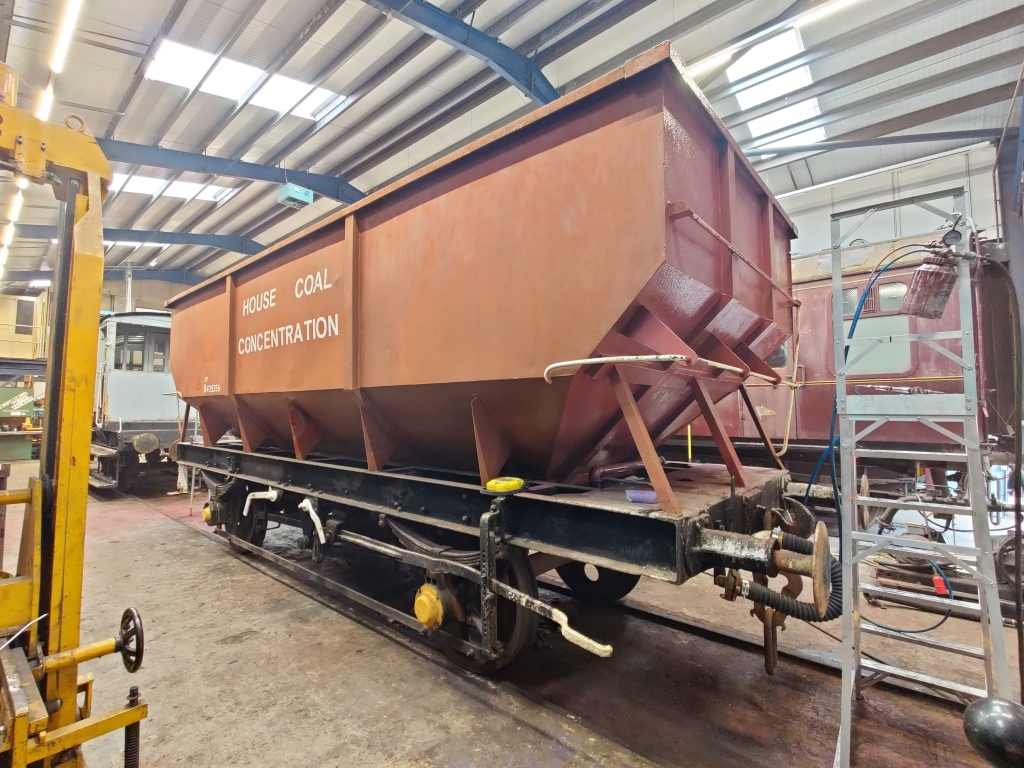
This week the team has been split, with Madge getting the attention at Quorn whilst the Coal Hopper saw progress at Rothley.
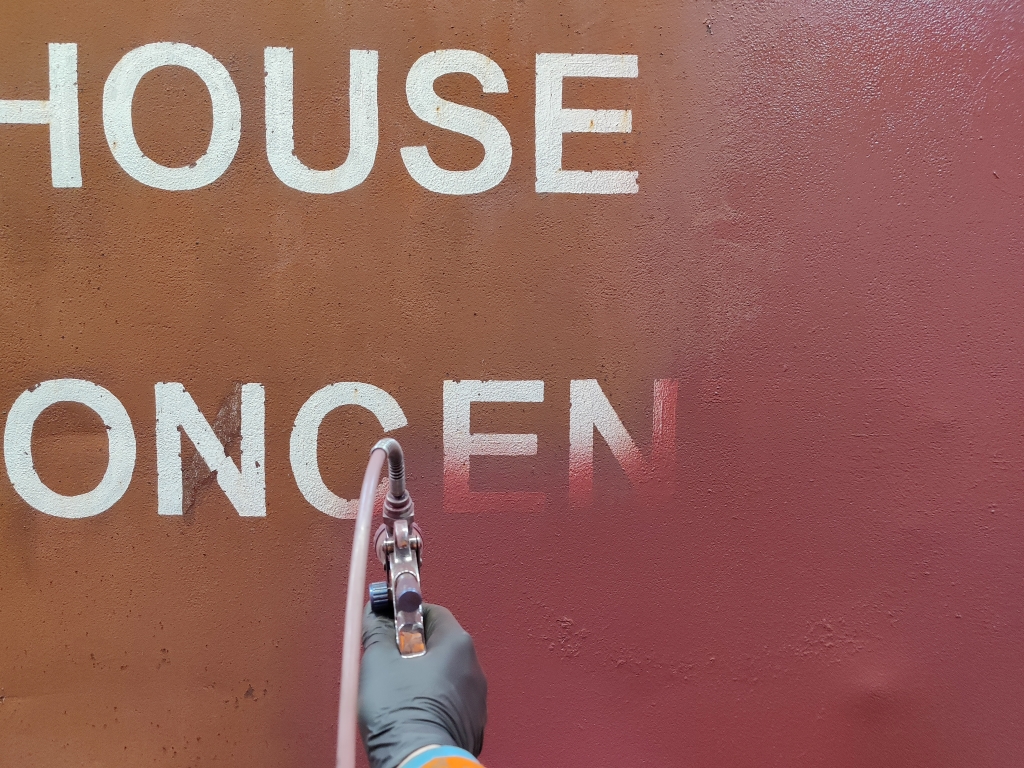
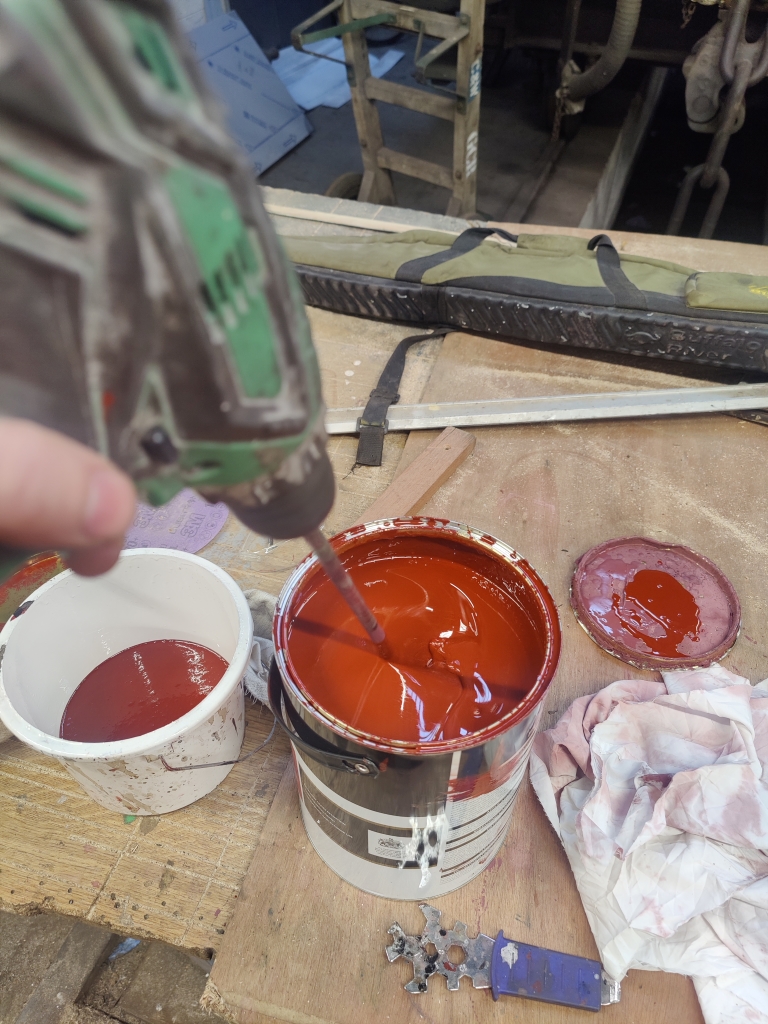
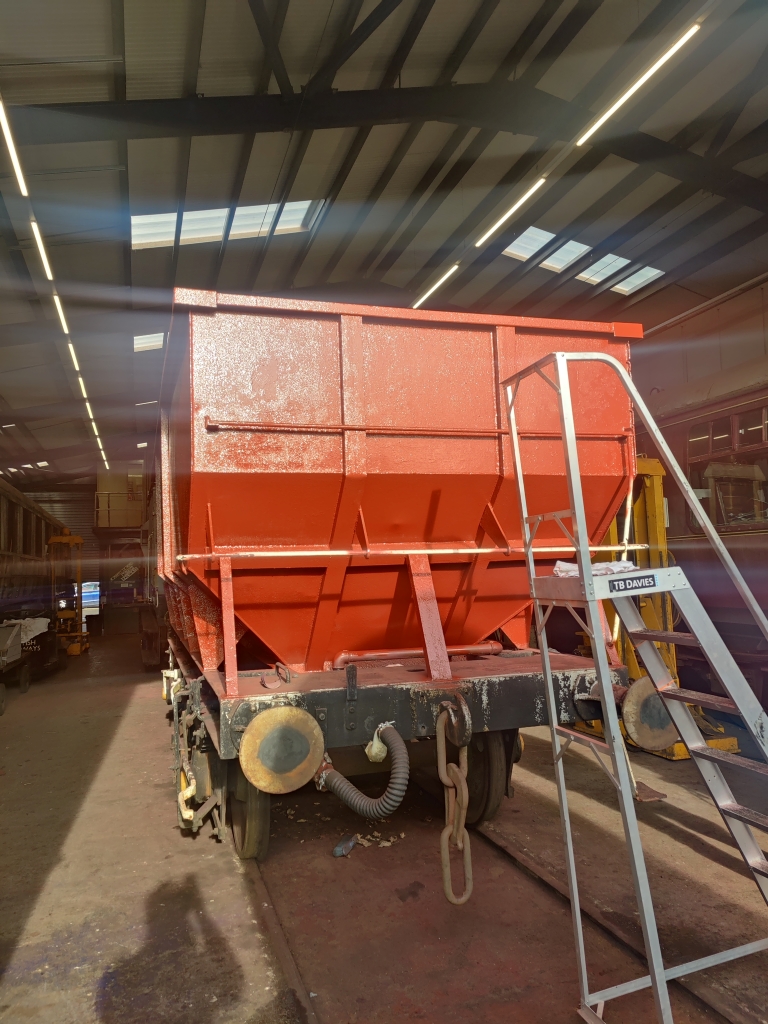
The Coal Hopper has been at Rothley for a while now and the decision was taken some time ago to get it painted before we move back to Quorn. A few weeks ago, Dan, Tom and Oliver scraped the wagon down. During this week, Thomas painted the inside of the hopper which then leaves us with the outside and the underframe. The underframe painting will come later, so Ross and Nick focused on the outside of the hopper. With Nick spotting, Ross made good time in spraying the hopper into the now familiar pink dark red undercoat.
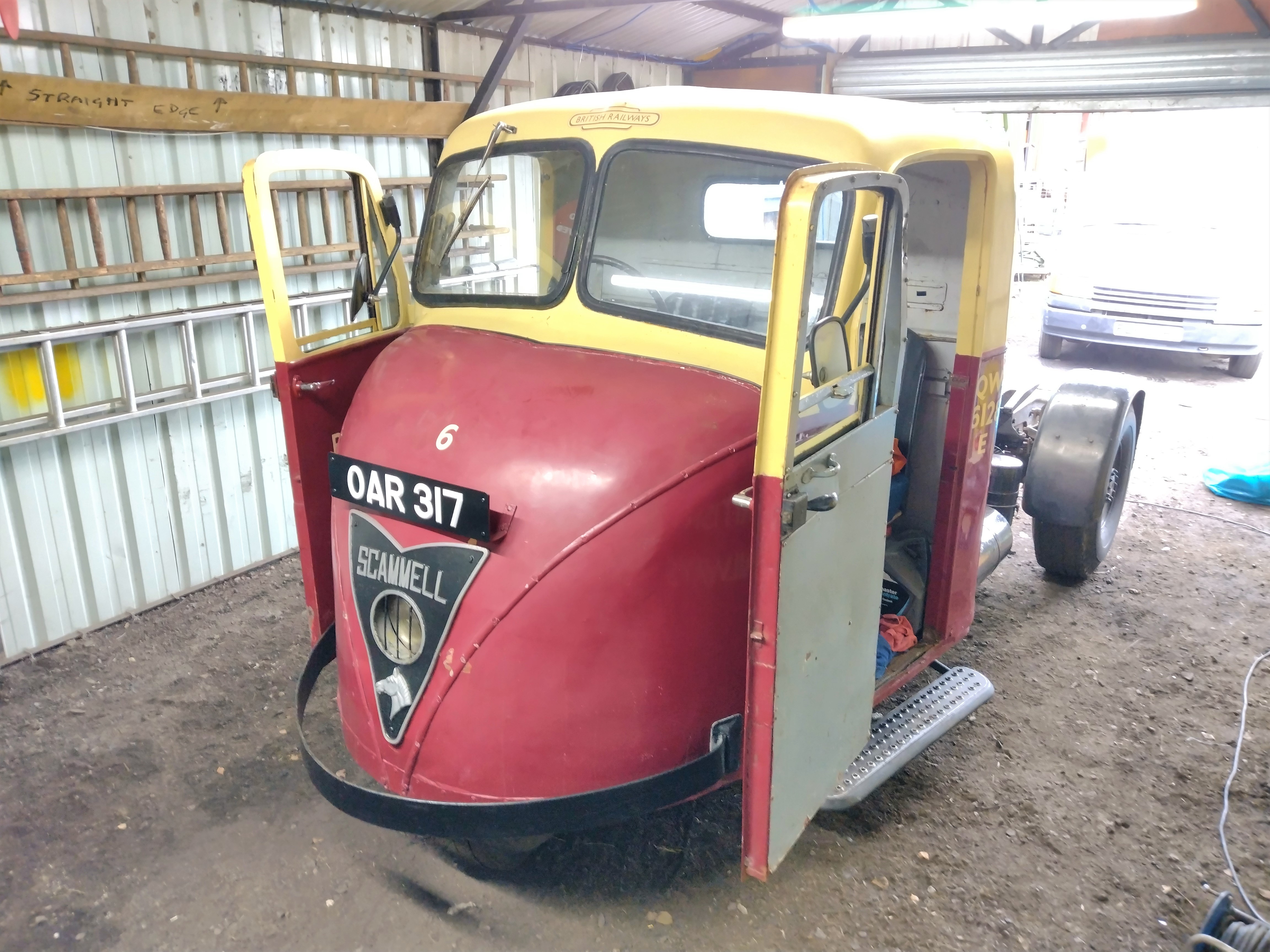
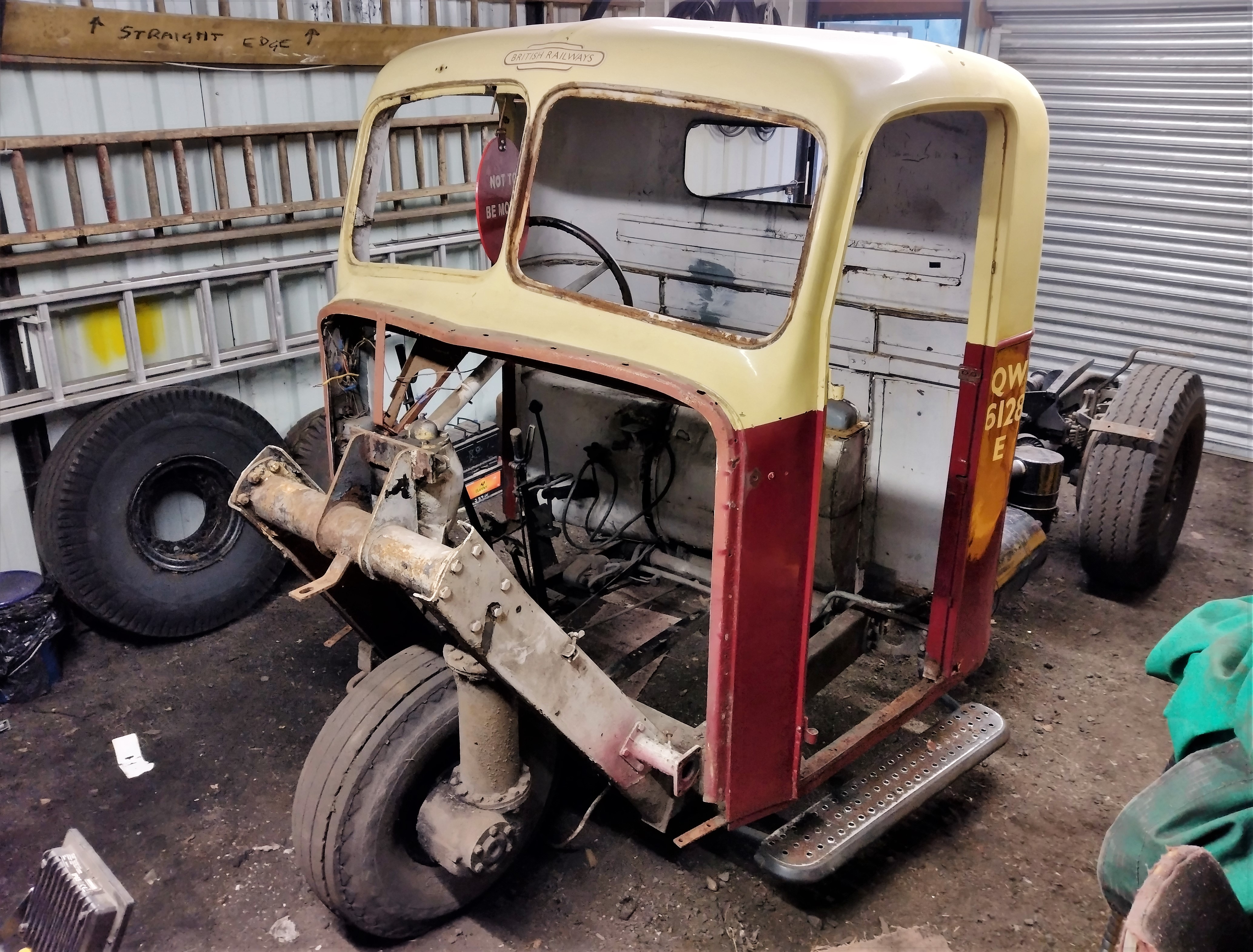
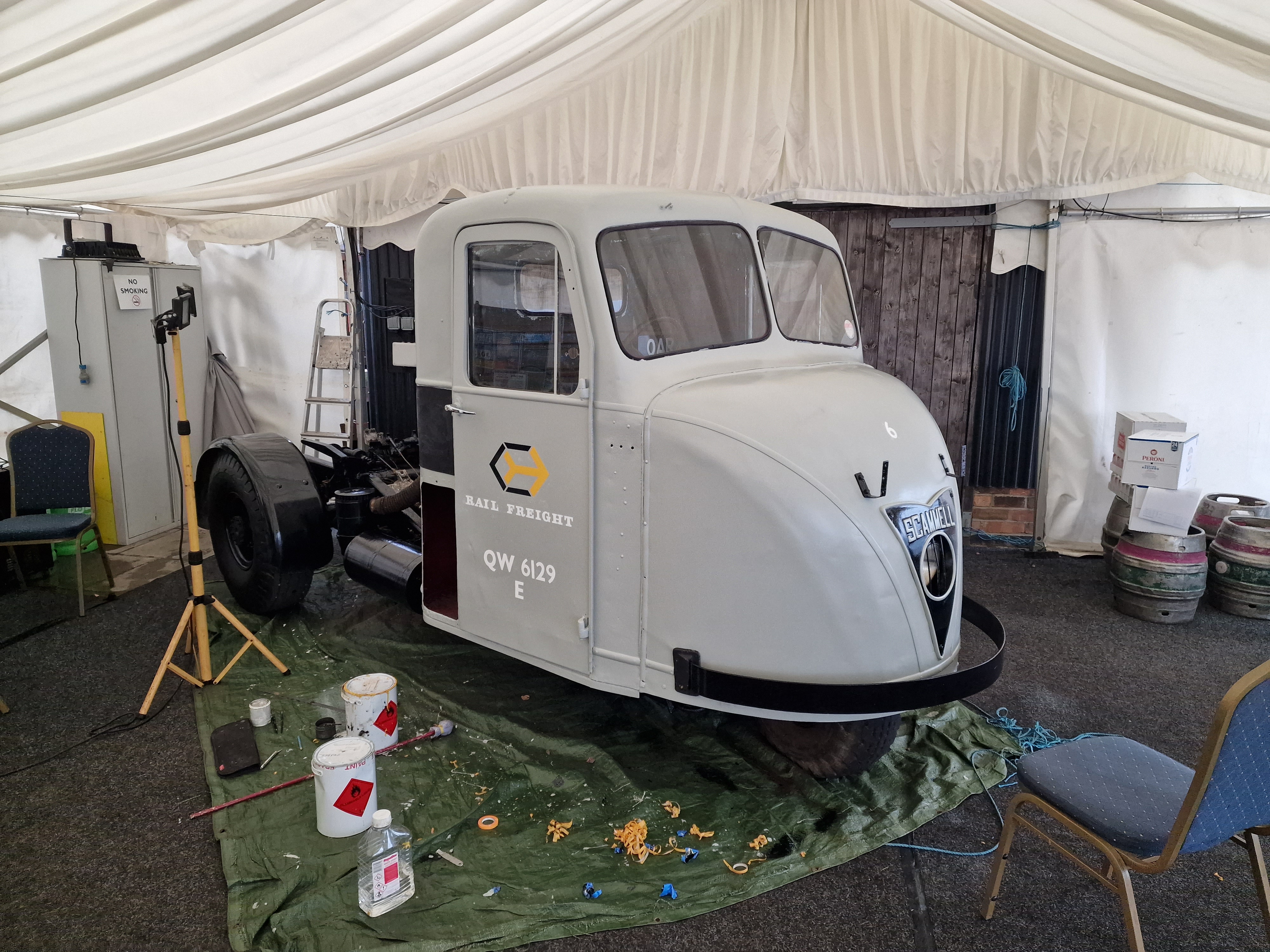
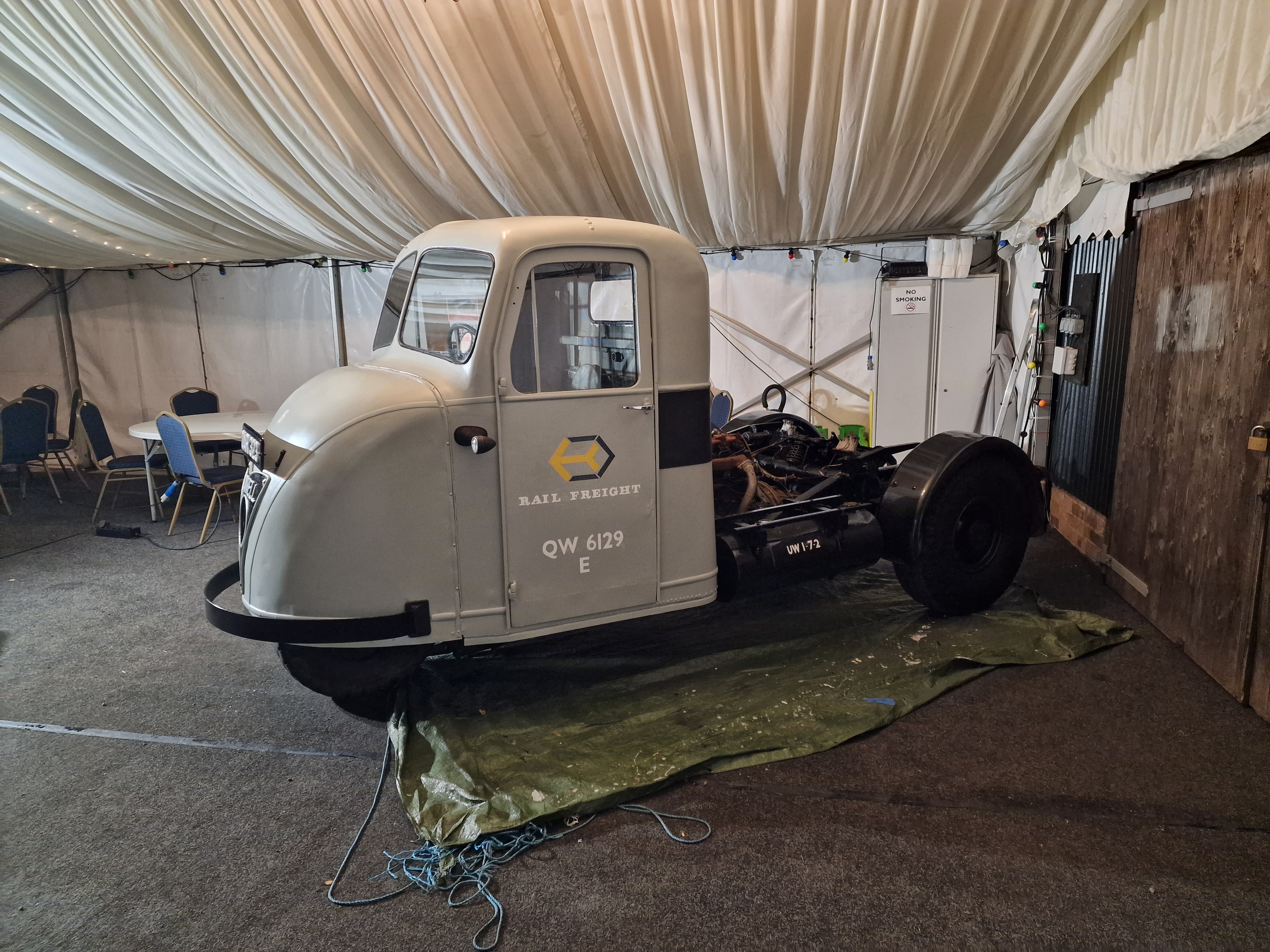
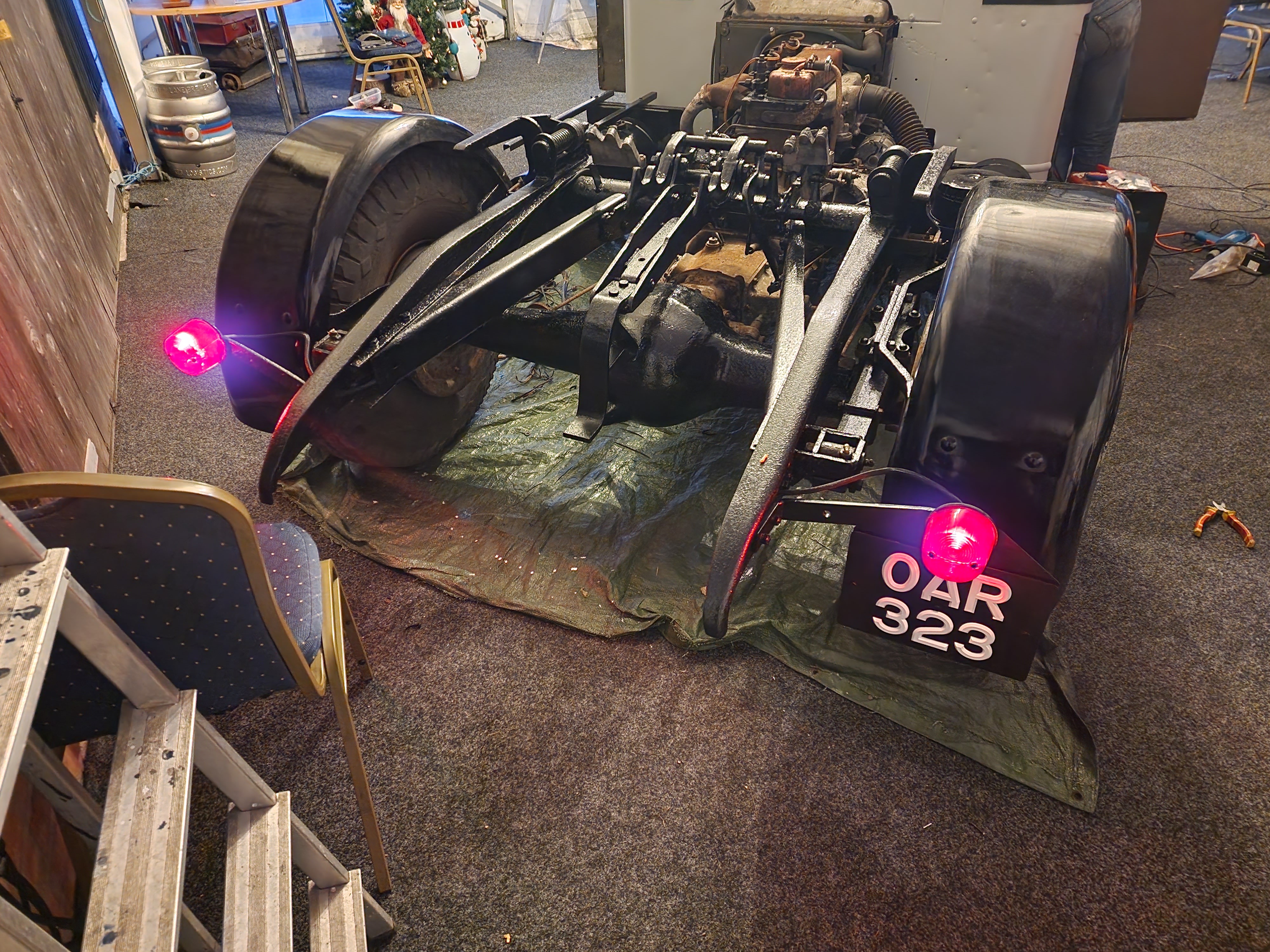
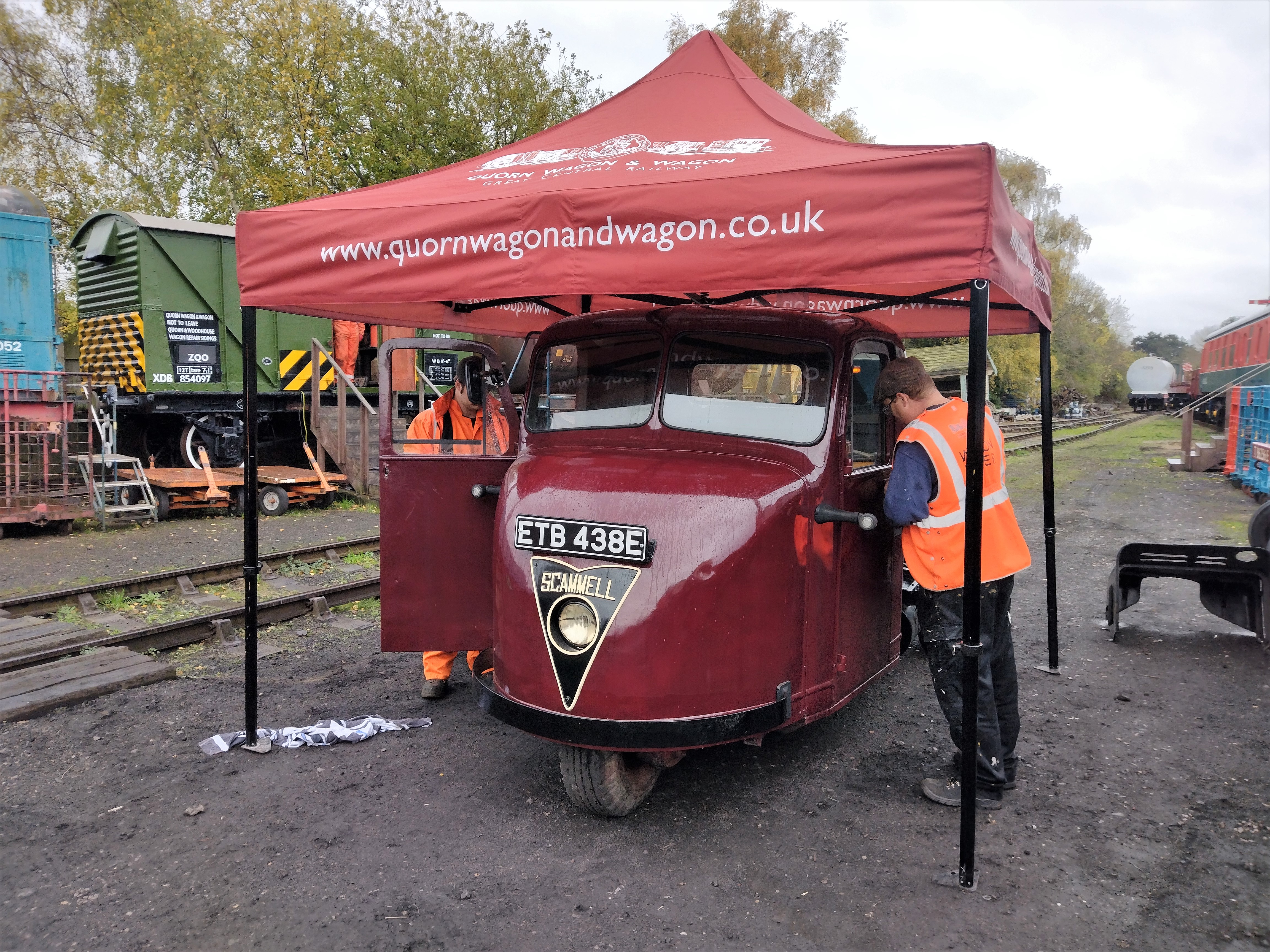
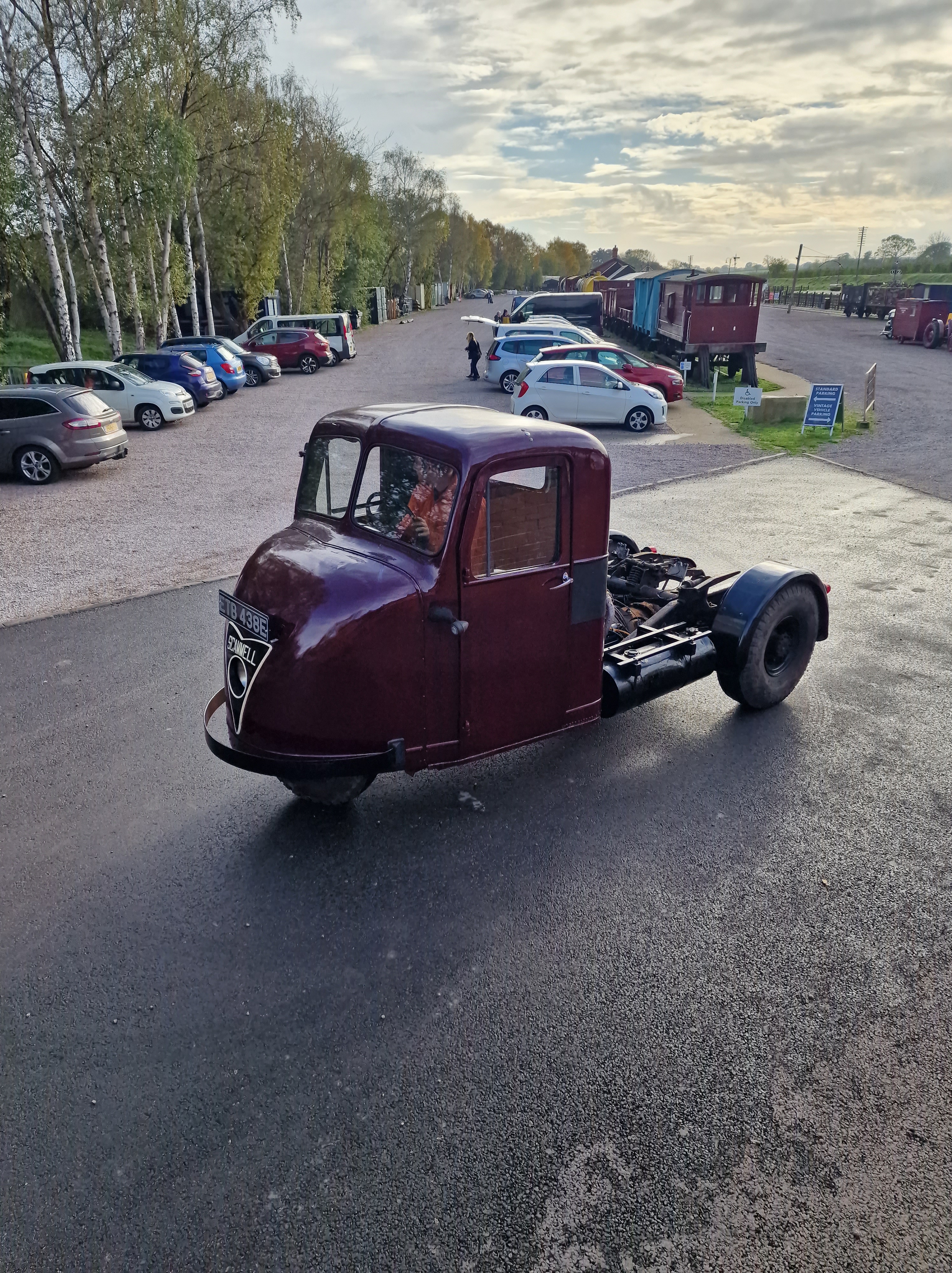
Matt and myself were joined by Jack to make a start on Madge’s restoration. The garage was tidied and our collection of Scarab spares sorted through to see what may or may not be useable.
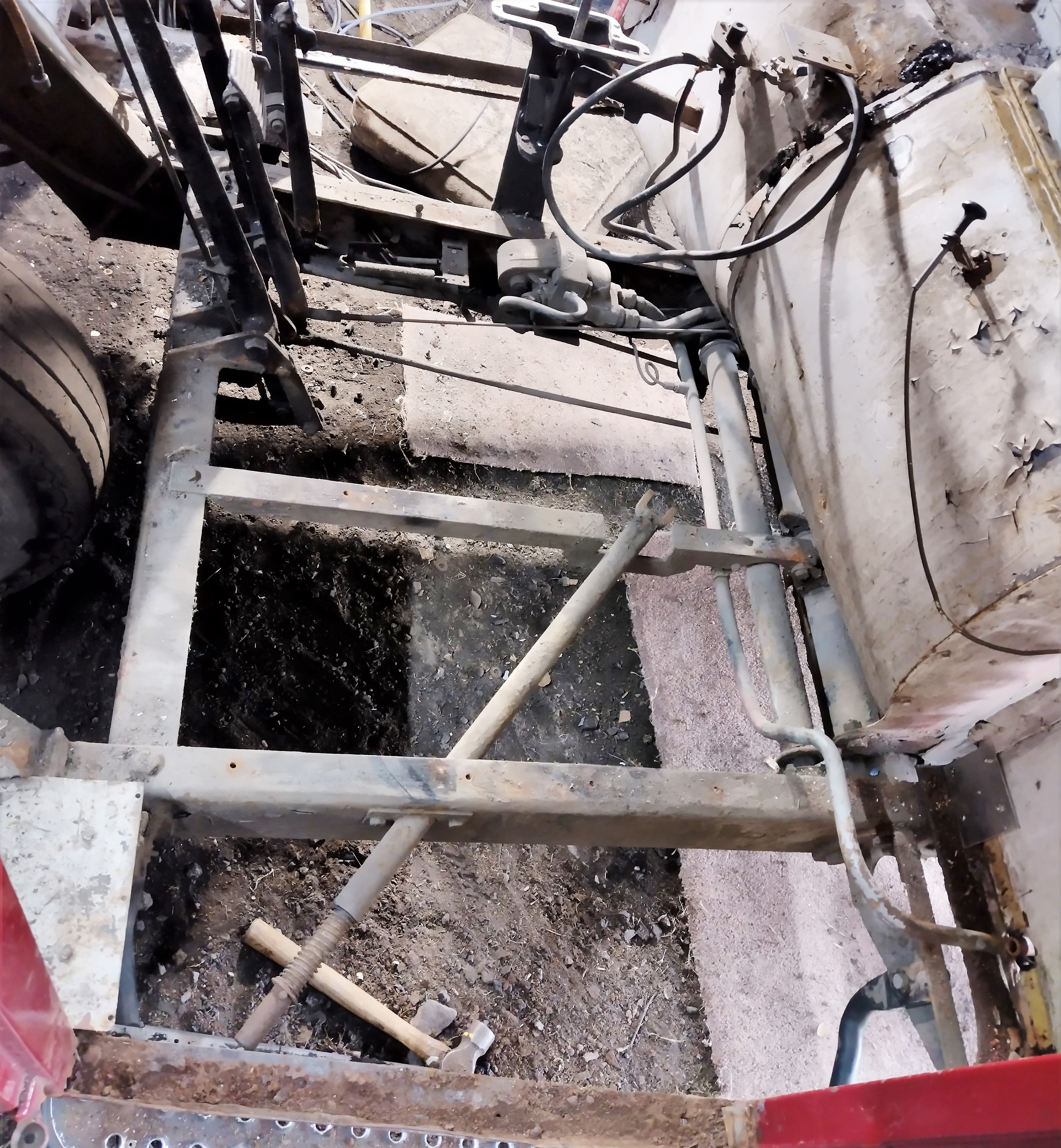
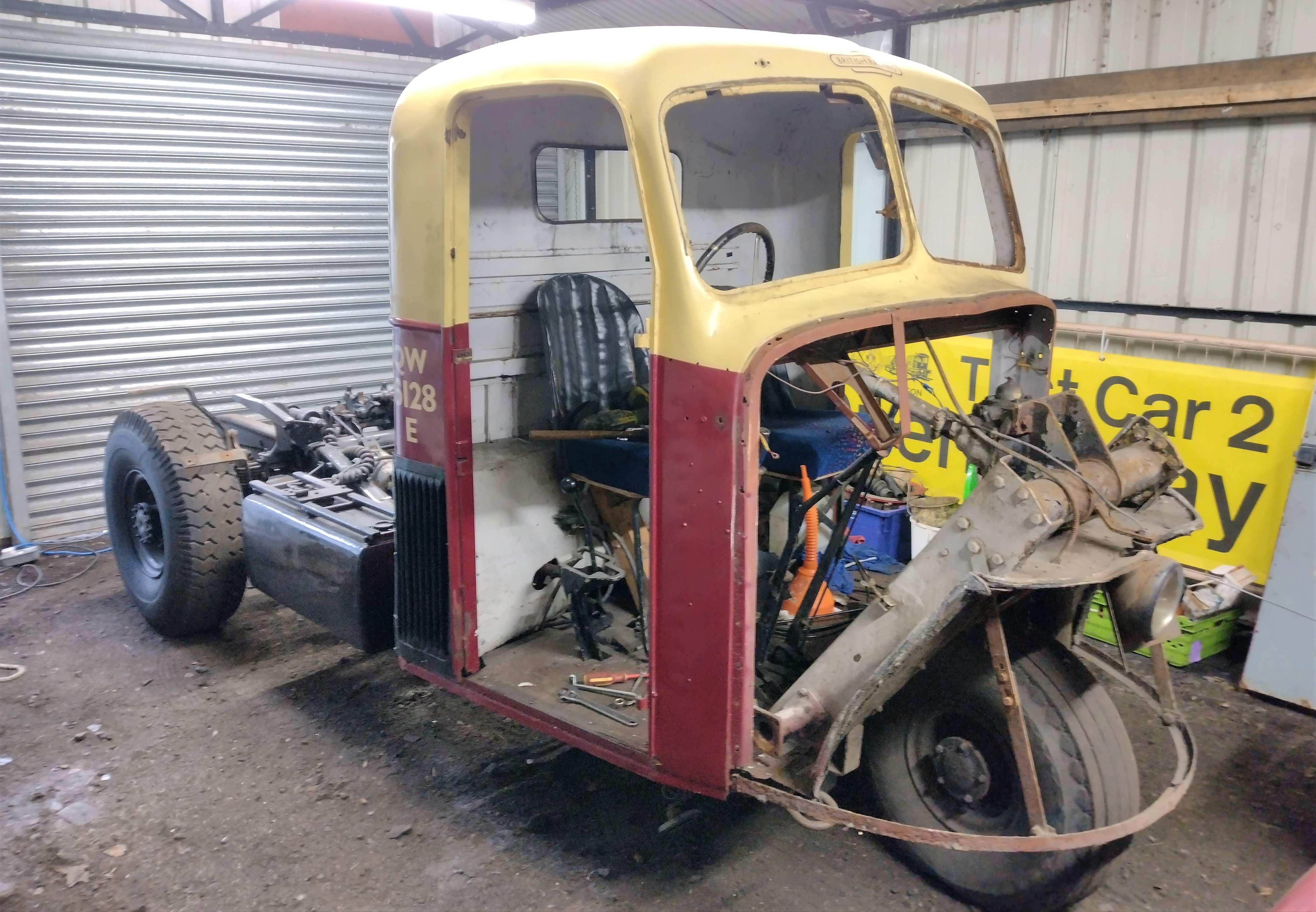
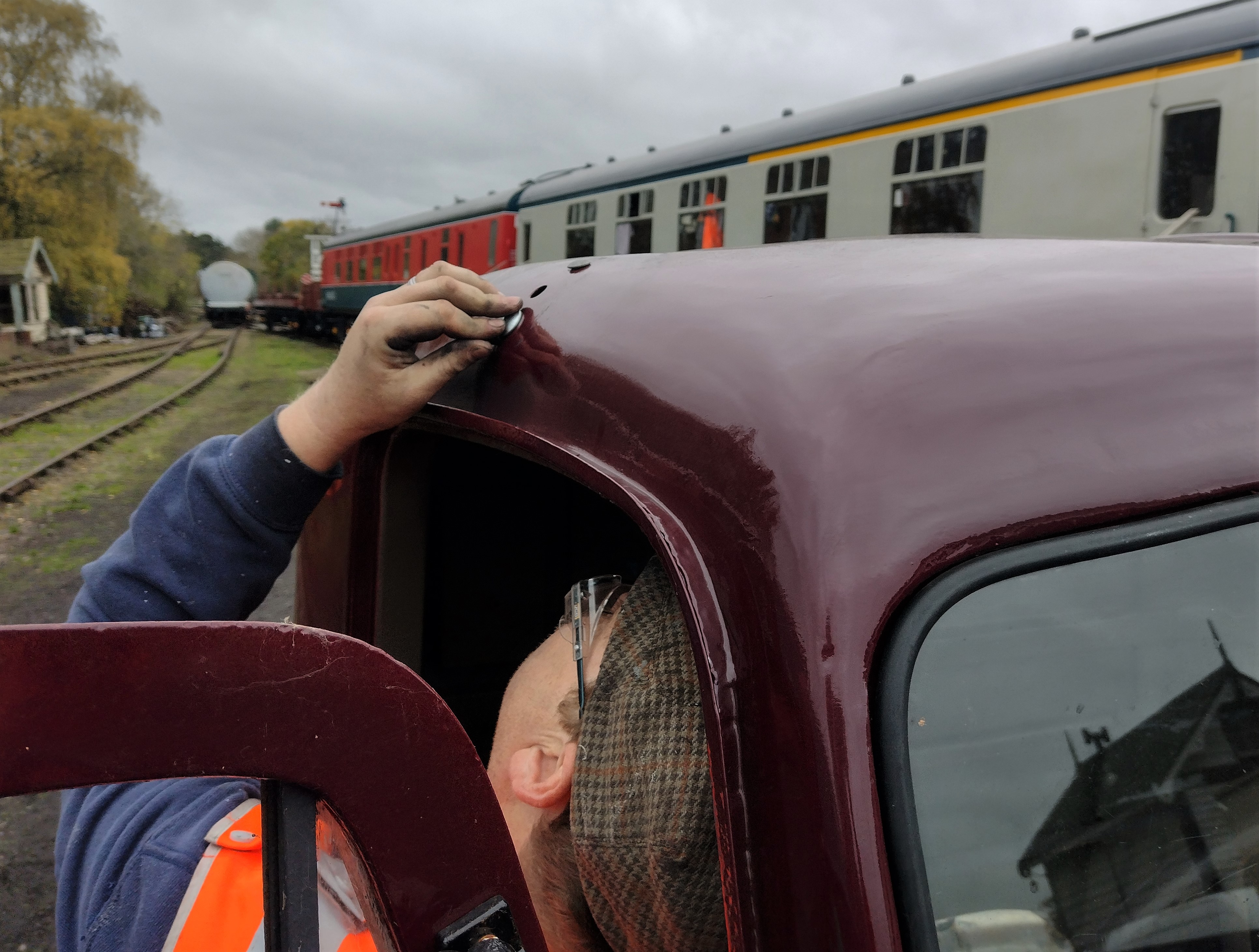
Once we had the garage workspace cleared we got stuck into the careful dismantling and labelling of parts from Madge. The first goal being to remove the cab so the terminal tin-worm that has taken hold in some of the panels can be attended to.
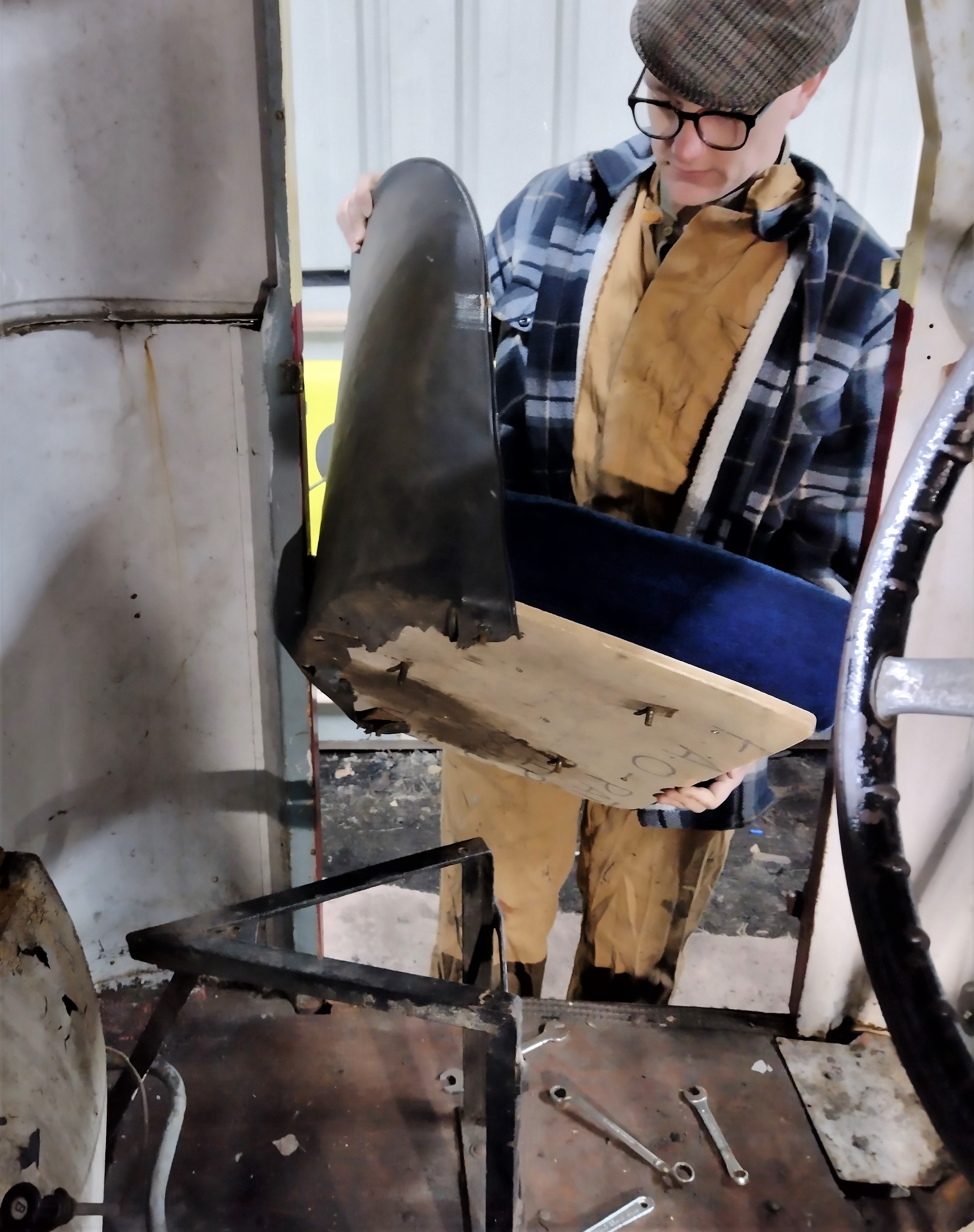
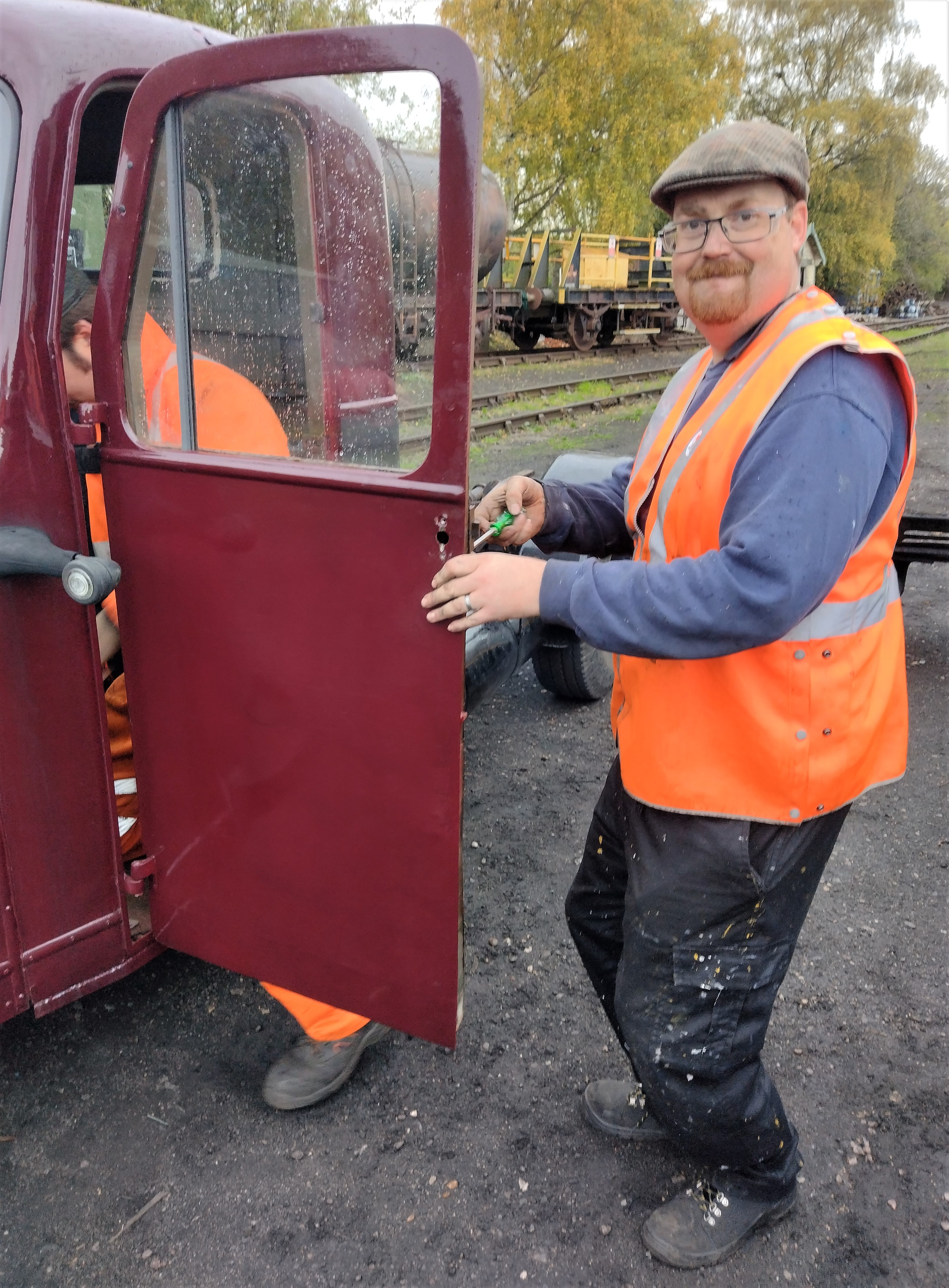
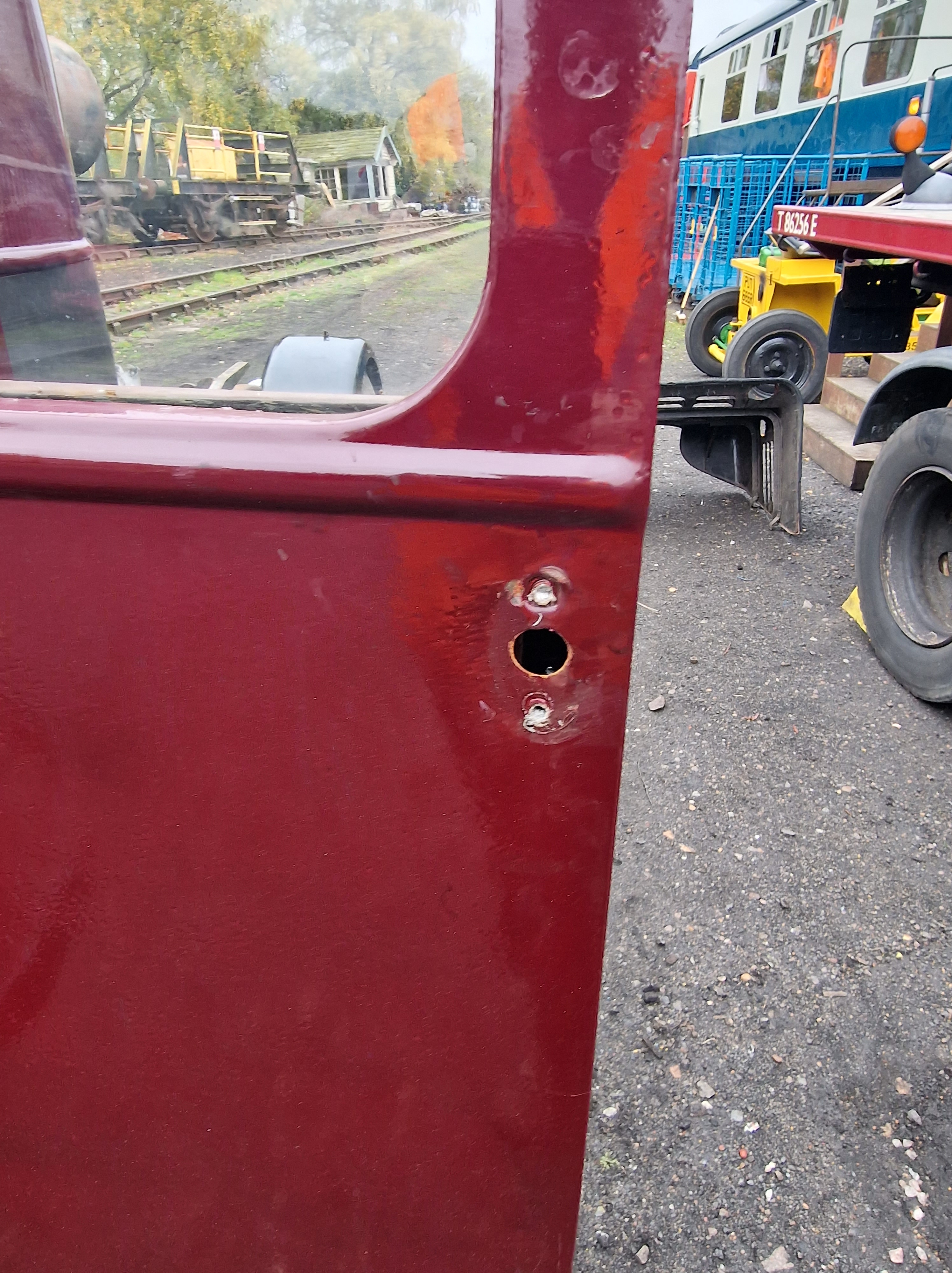
The cab doors were removed followed by the nose end, bumper, windows, seats, cab floor and nose end partition panels. She is now looking somewhat naked.
The next stage will be to unbolt the cab structure and remove so we can fully assess the panel work required, especially around the lower edges.
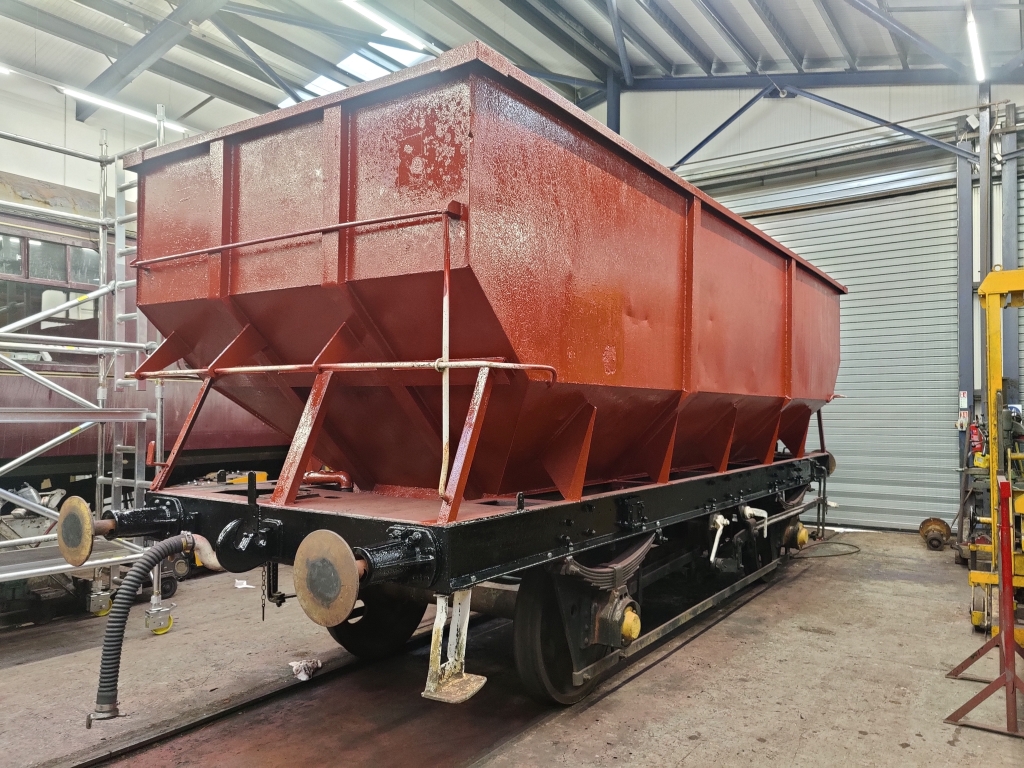
Back at Rothley Ross with Mark spotting, painted the hopper with 2 coats of Bauxite Gloss.
Nick with Dan and Tom took the wheelset swapped out of 3711 back to Quorn. When back at Rothley, Nick with Mark, Dan and Tom got the paint bruhses out, painting around the top of the hopper, and touching in some areas not easy to get with the spray gun. The team then moved onto black gloss on the underframe.
Ross took a look at the bearings on the ‘new’ wheelset fitted to 3711. A visual inspection and a grease purge is all that was required.
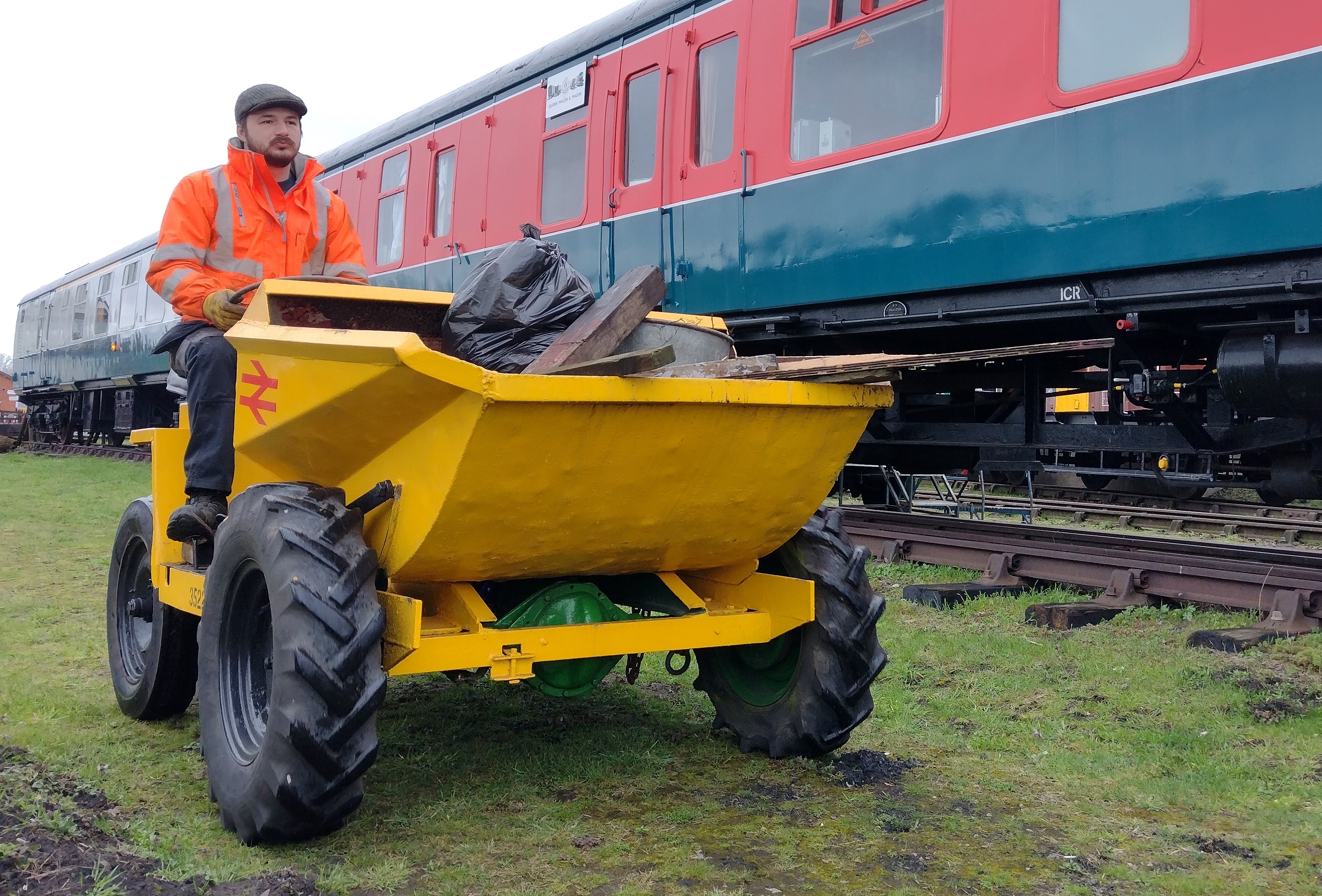
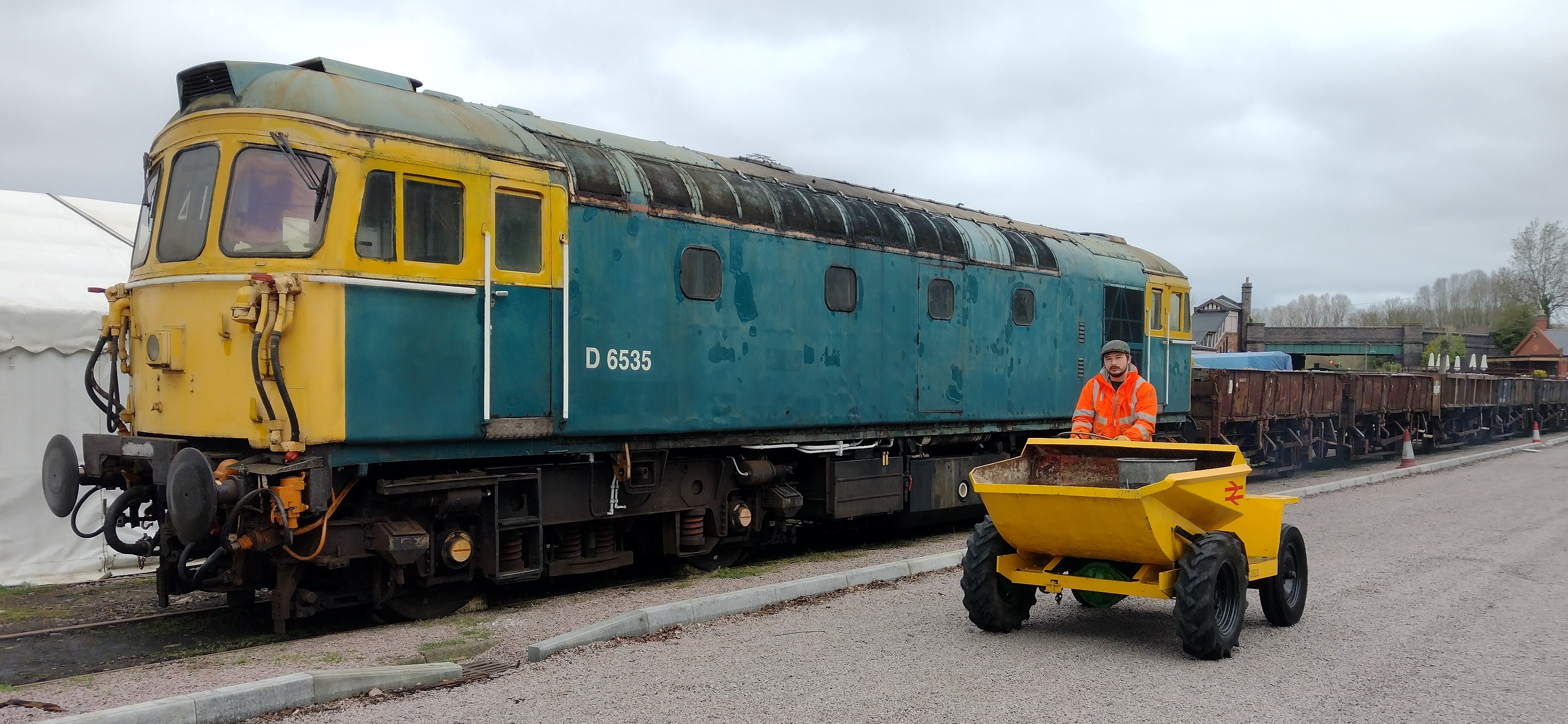
Lilibet helped out with some rubbish removal trips to the skip, showing off the new yellow British Railways livery on the shortened trailer that Matt has been working on.
Thanks for reading, join us again next week, all the best; Dave
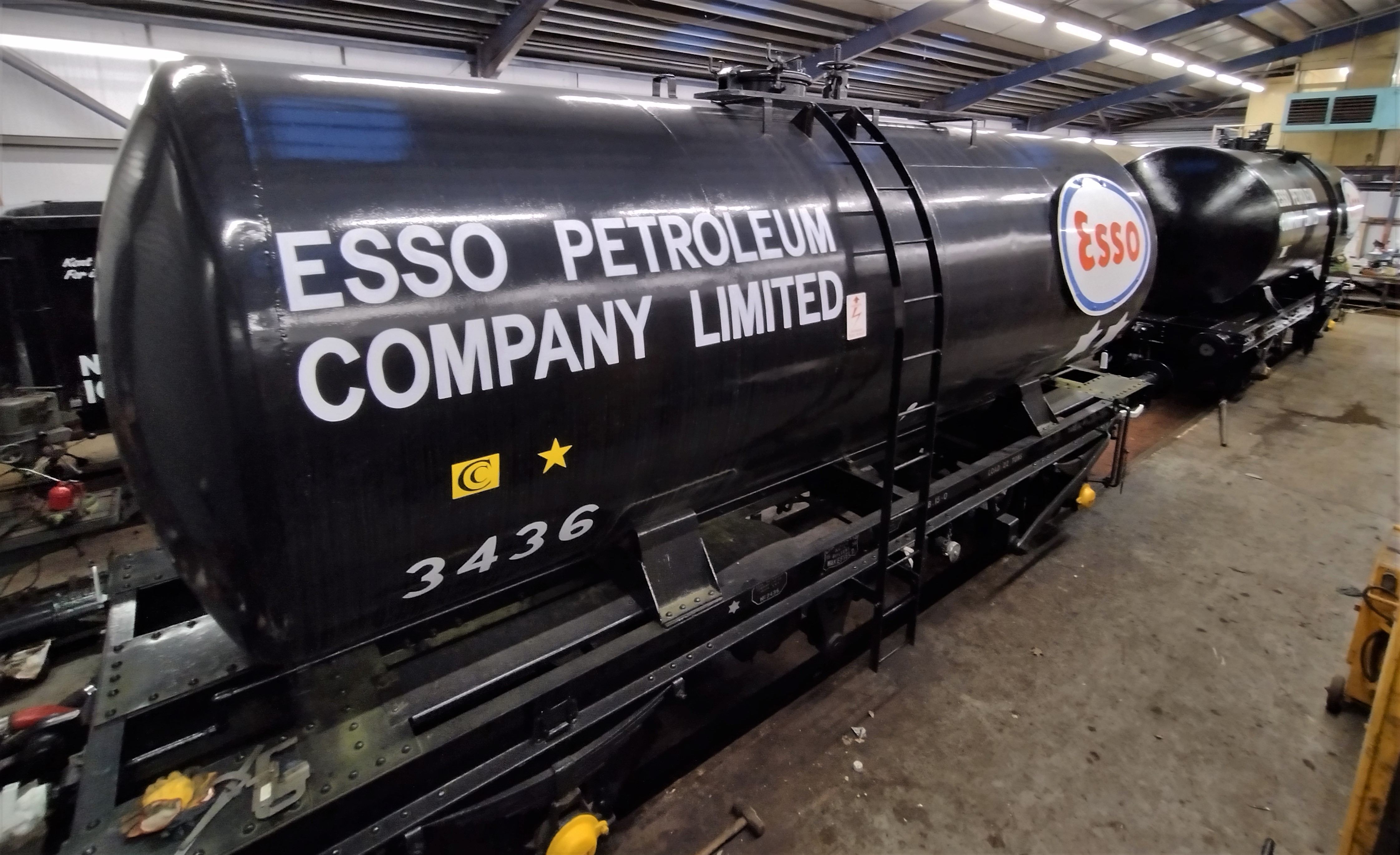
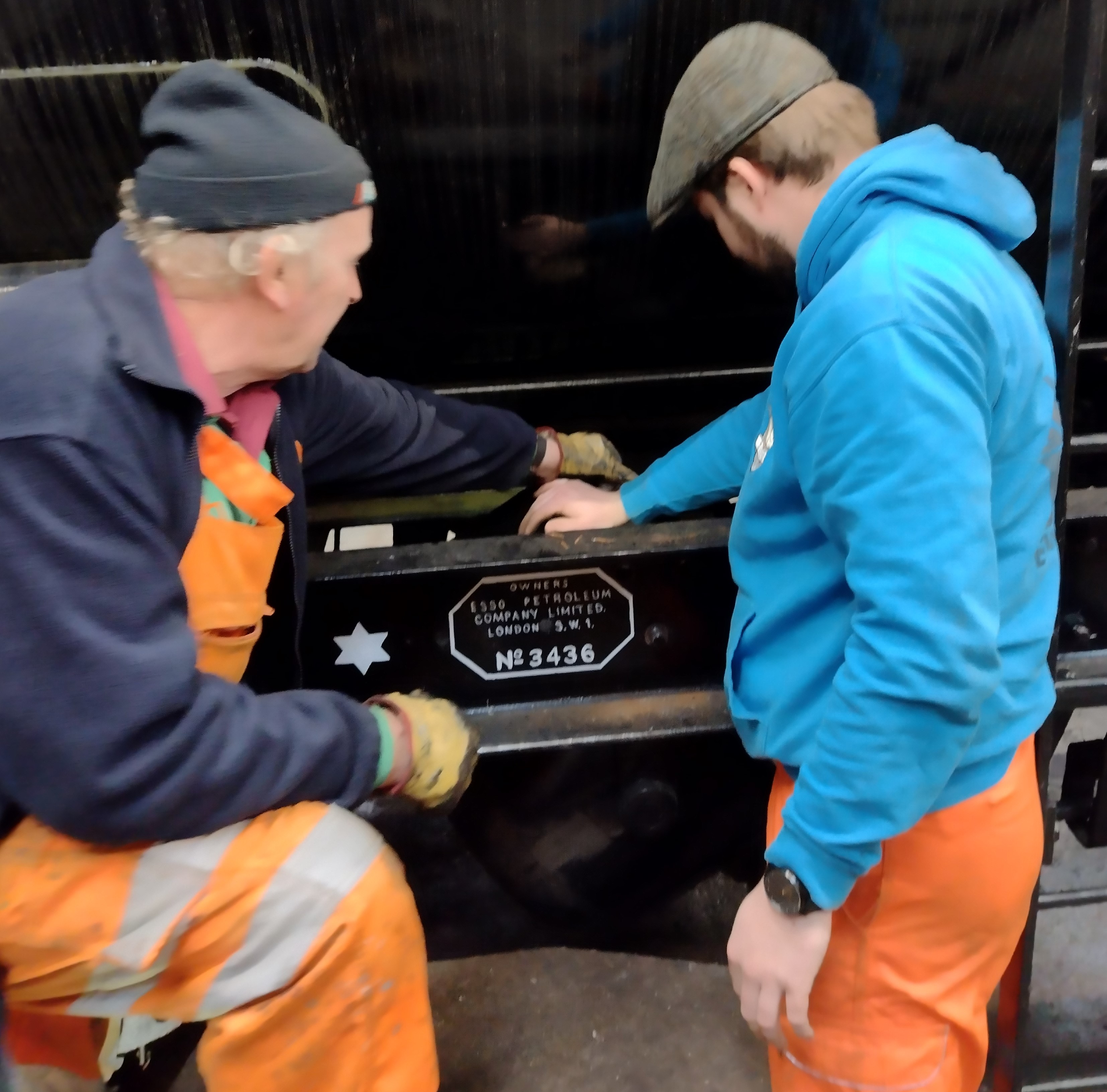
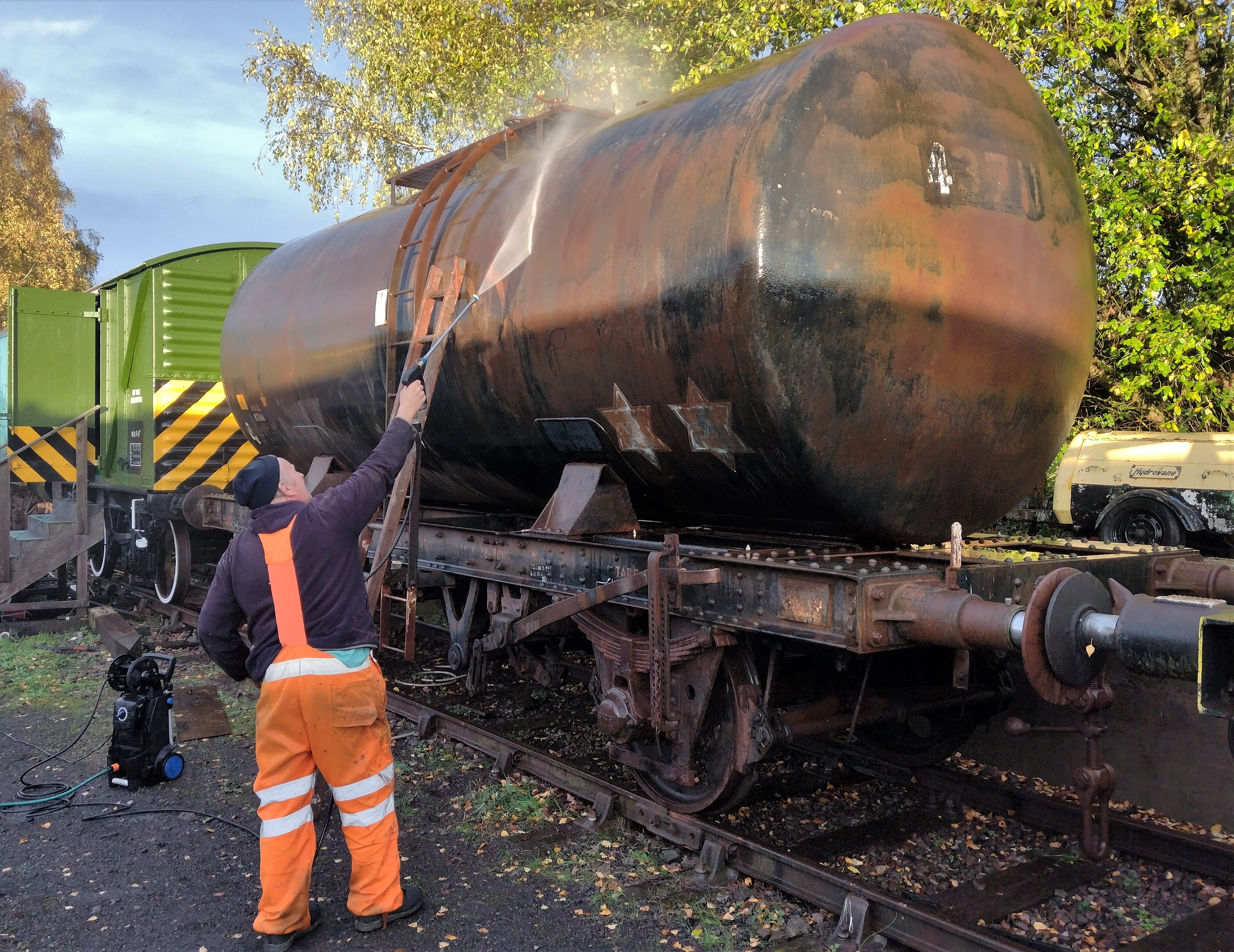
We’re thankful to be out of the elements in the workshop at Rothley again this weekend. This means we have been able to progress the paintwork on 3711 and also take a look at the brakes on sister tank 3436.
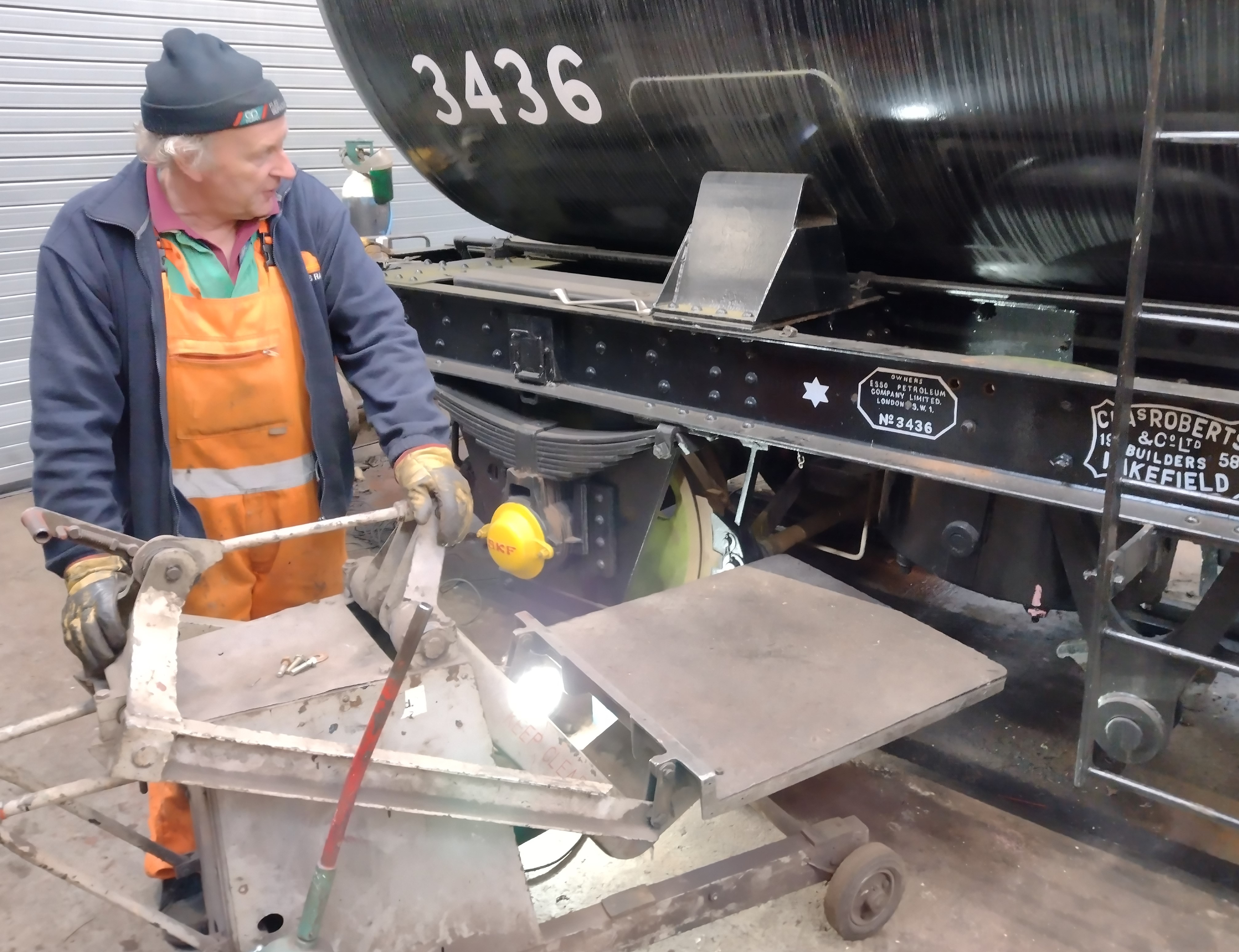
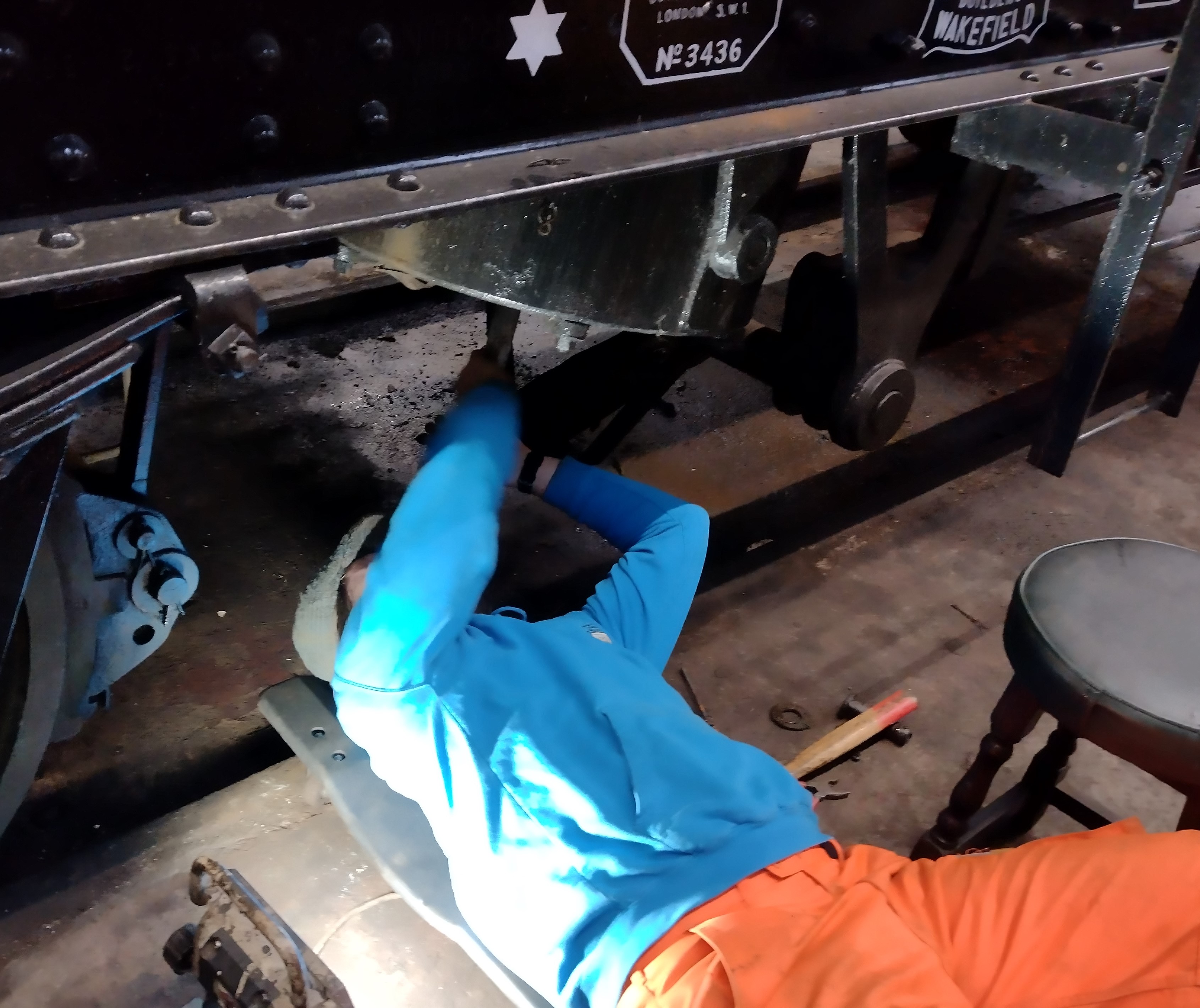
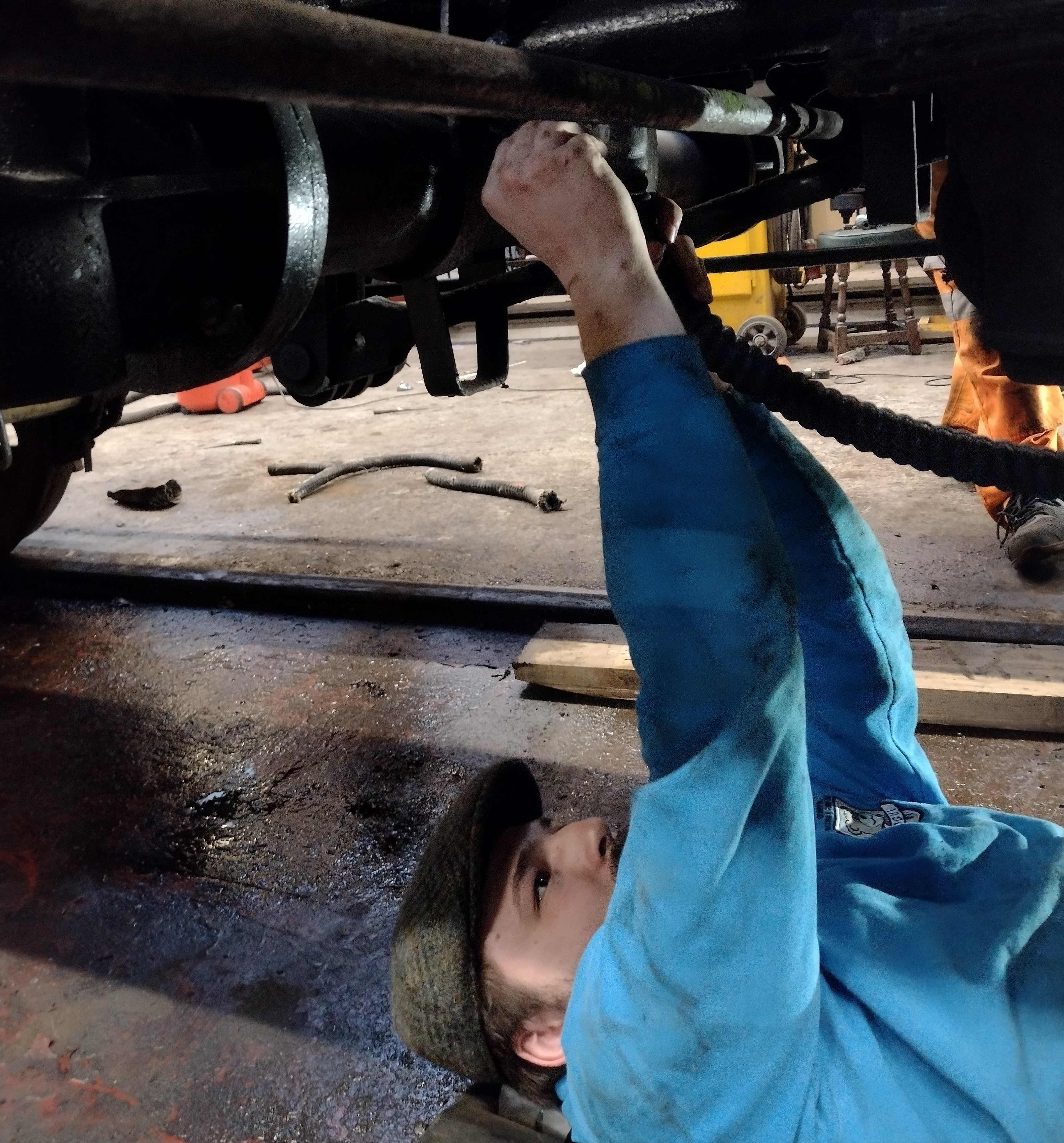
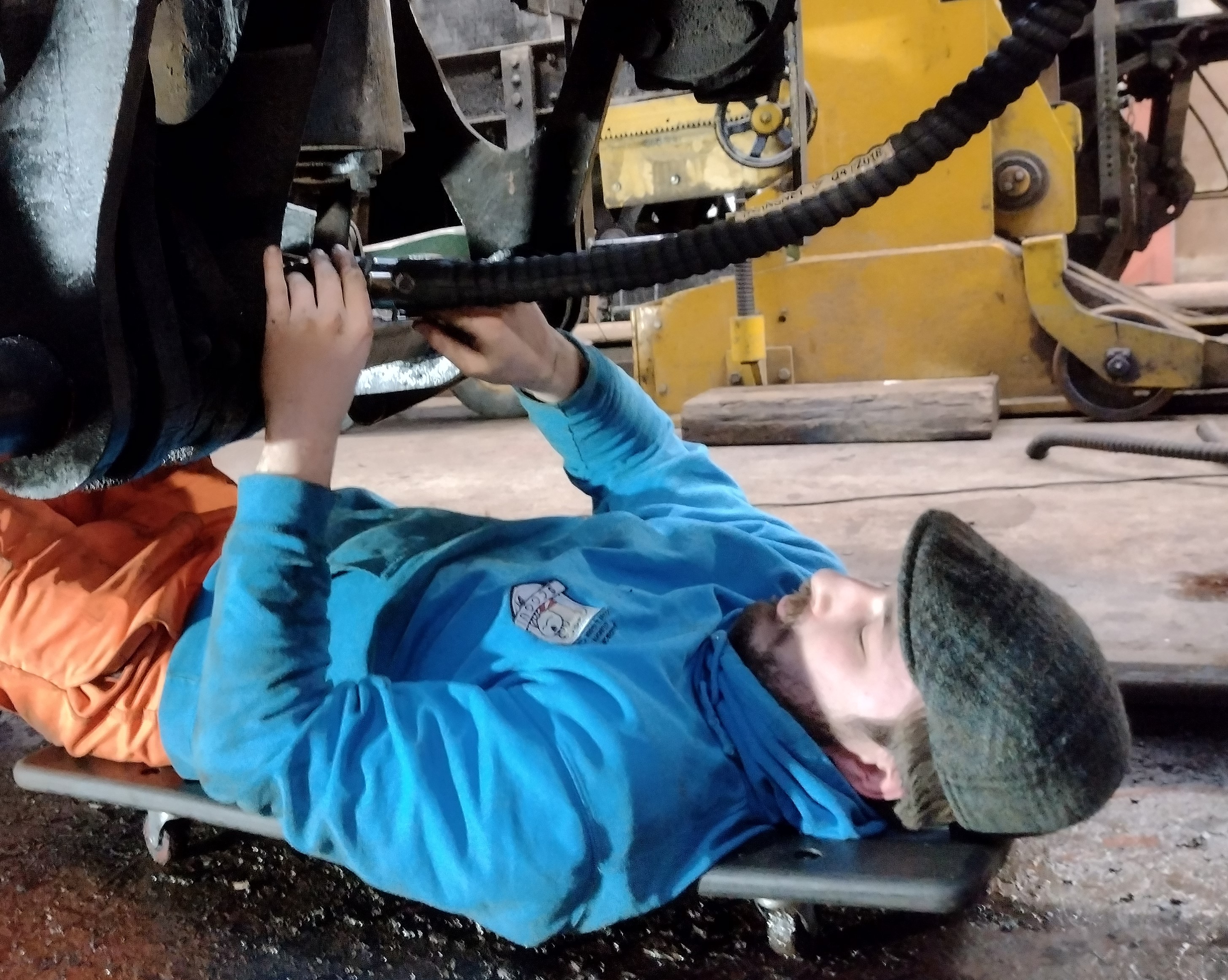
With the shed foreman keeping a close eye on things throughout the weekend, Ross & Nick got stuck into the removal of the vacuum cylinder from 3436.
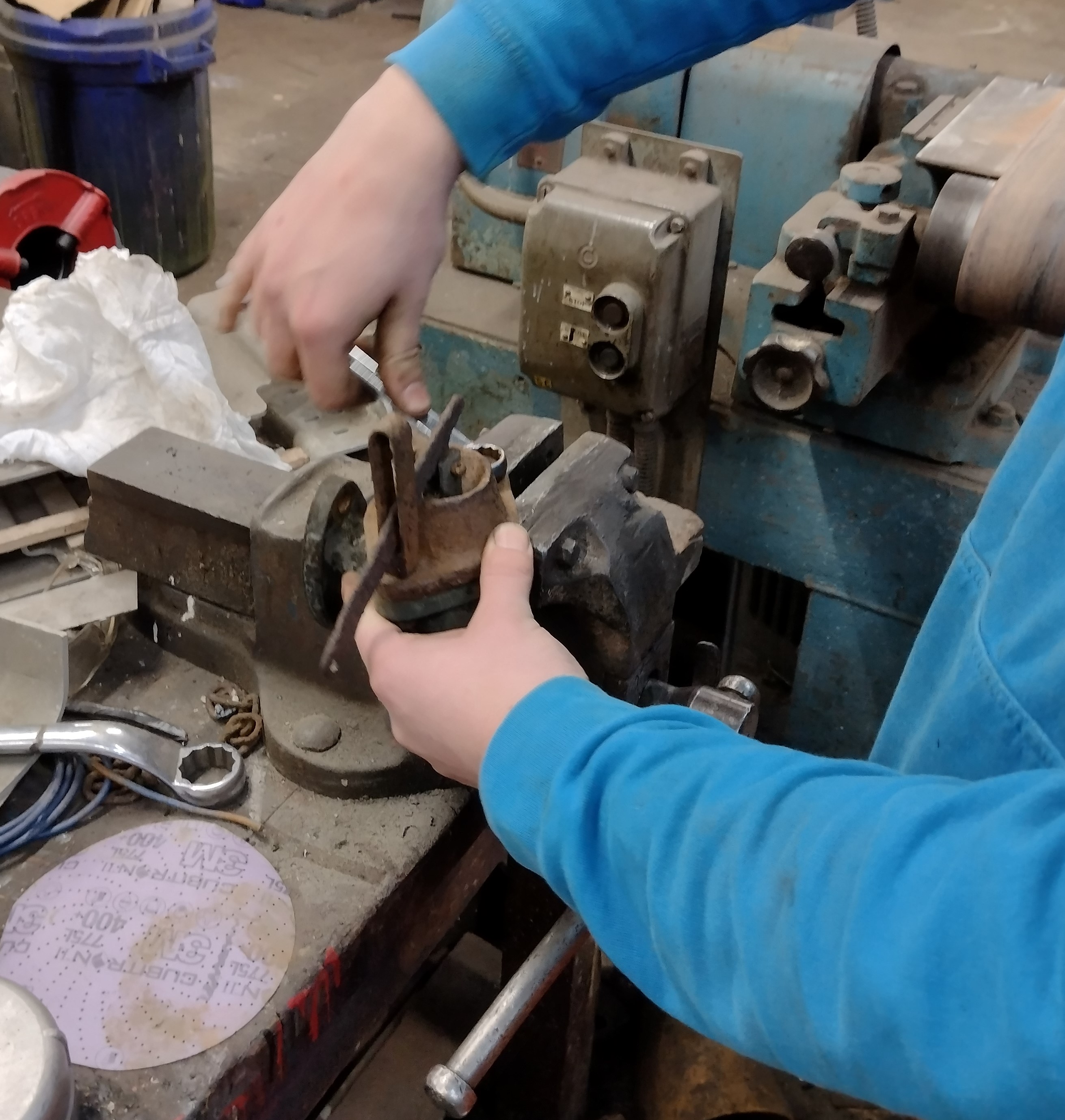
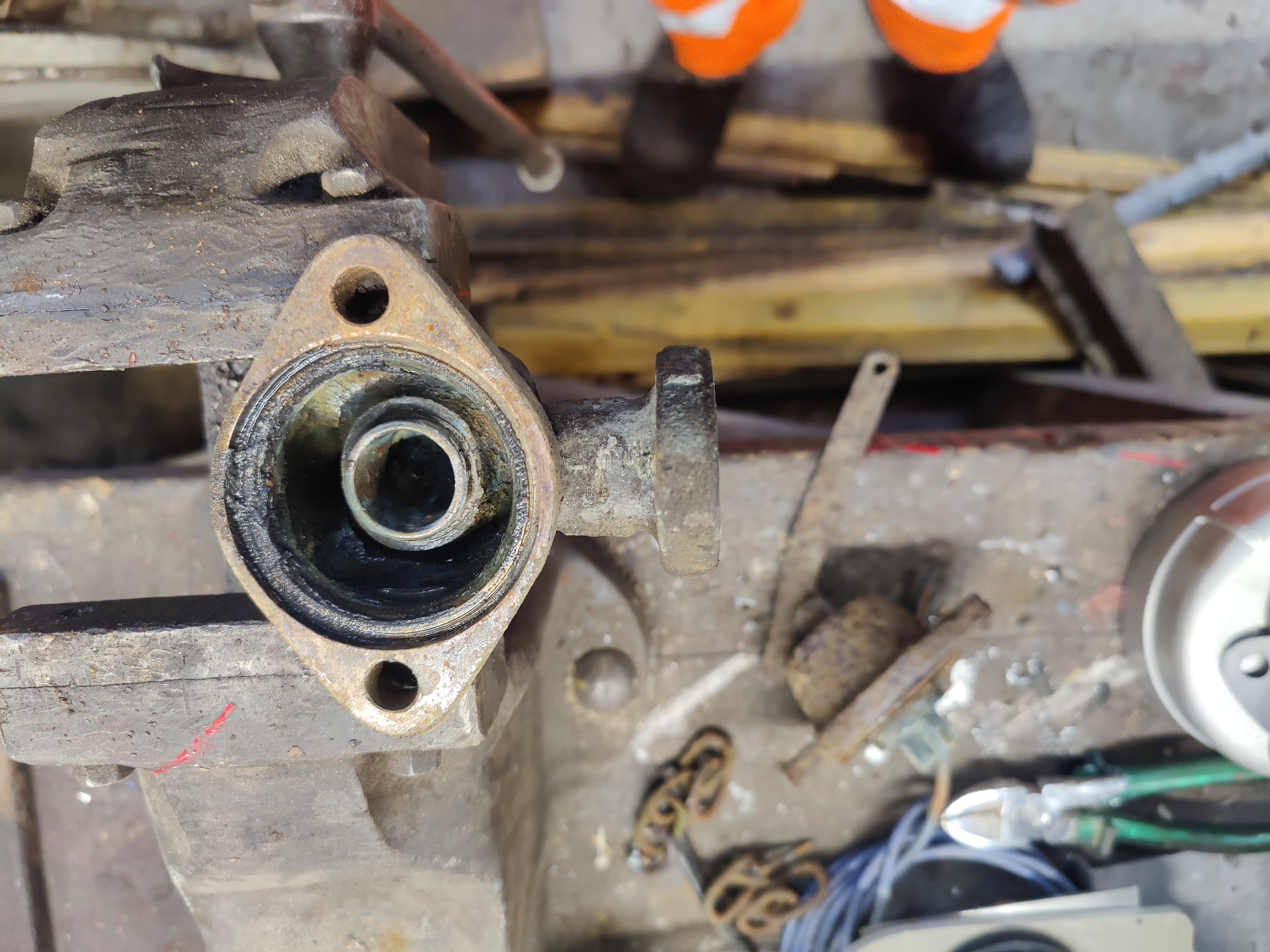
The vacuum release valve was removed and dismantled to find an amount of wet sludge inside, so Ross cleaned and rebuilt this with new seals.
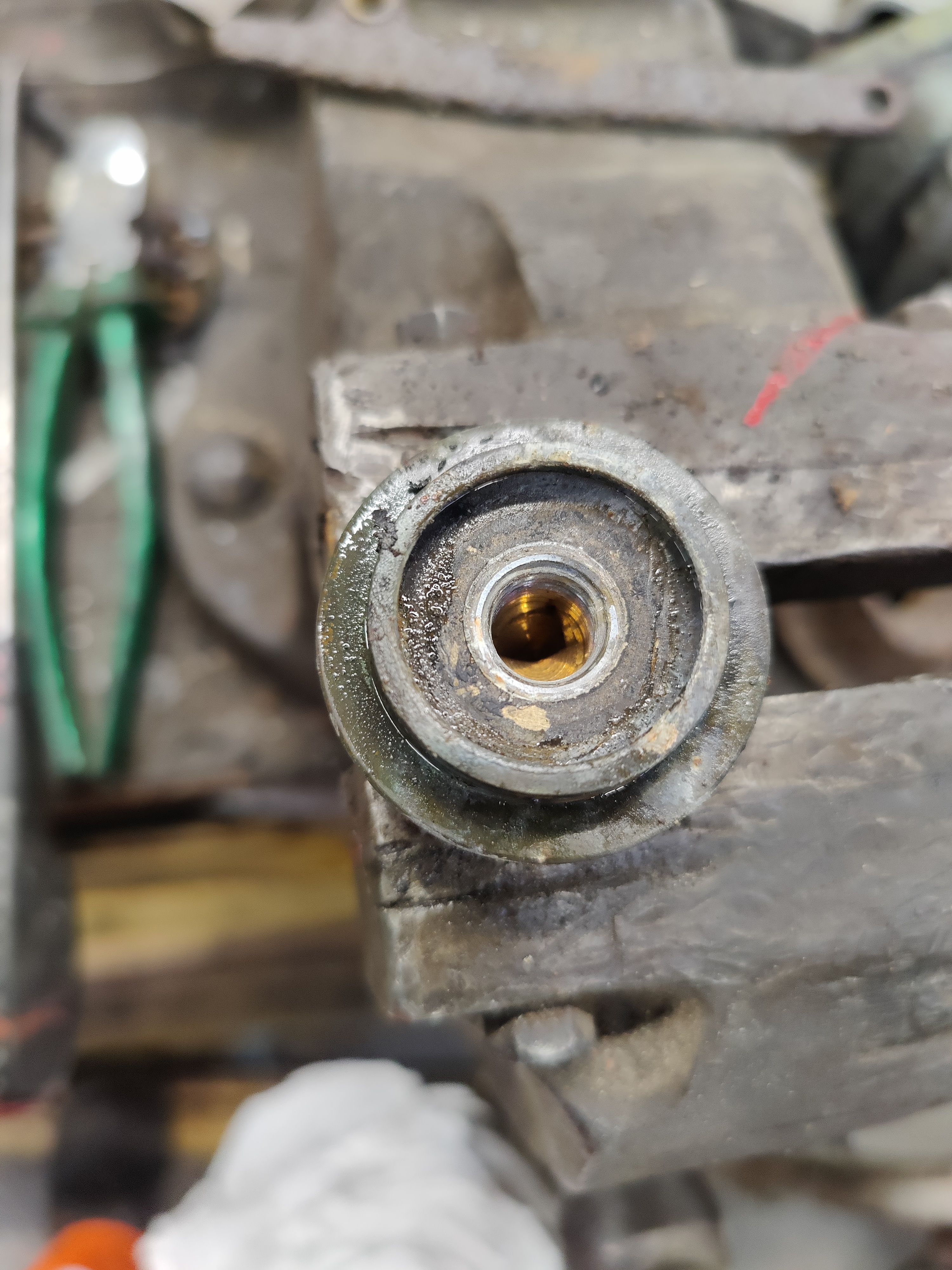
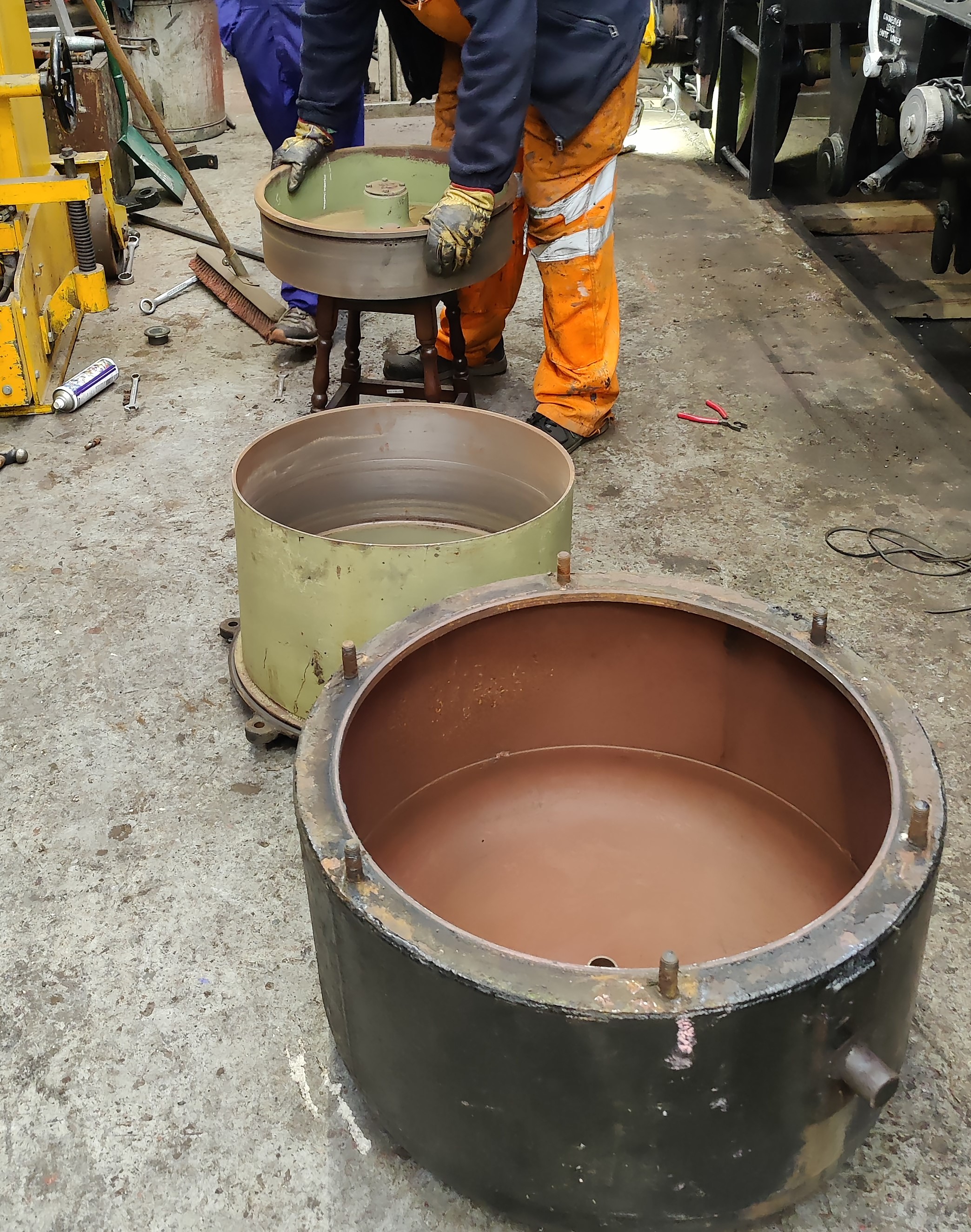
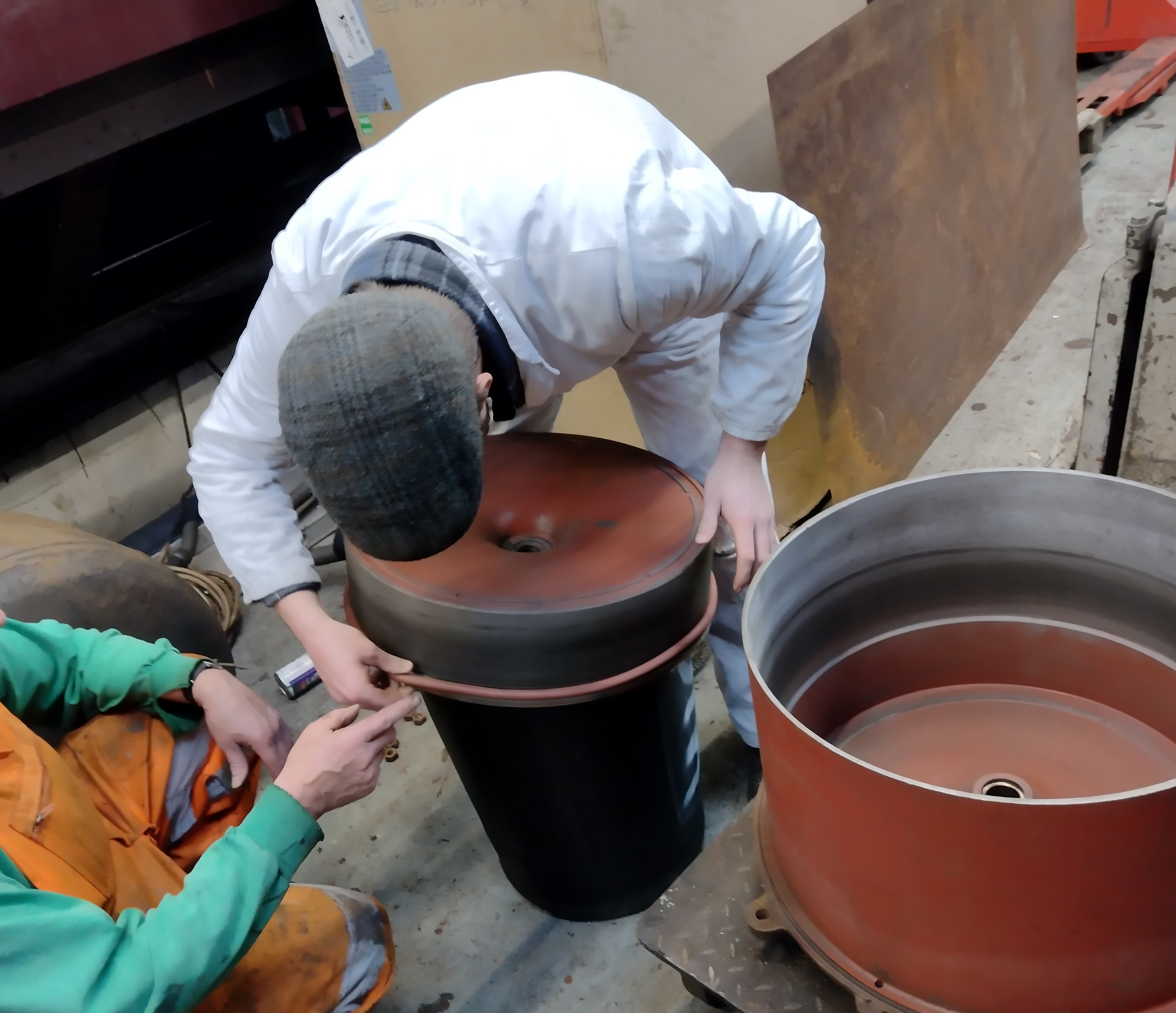
The vacuum brake cylinder was dismantled and apart from cleaning this only required a new rolling ring and dome seal.
The vacuum cylinder was re-fitted and the branch pipe re-connected.
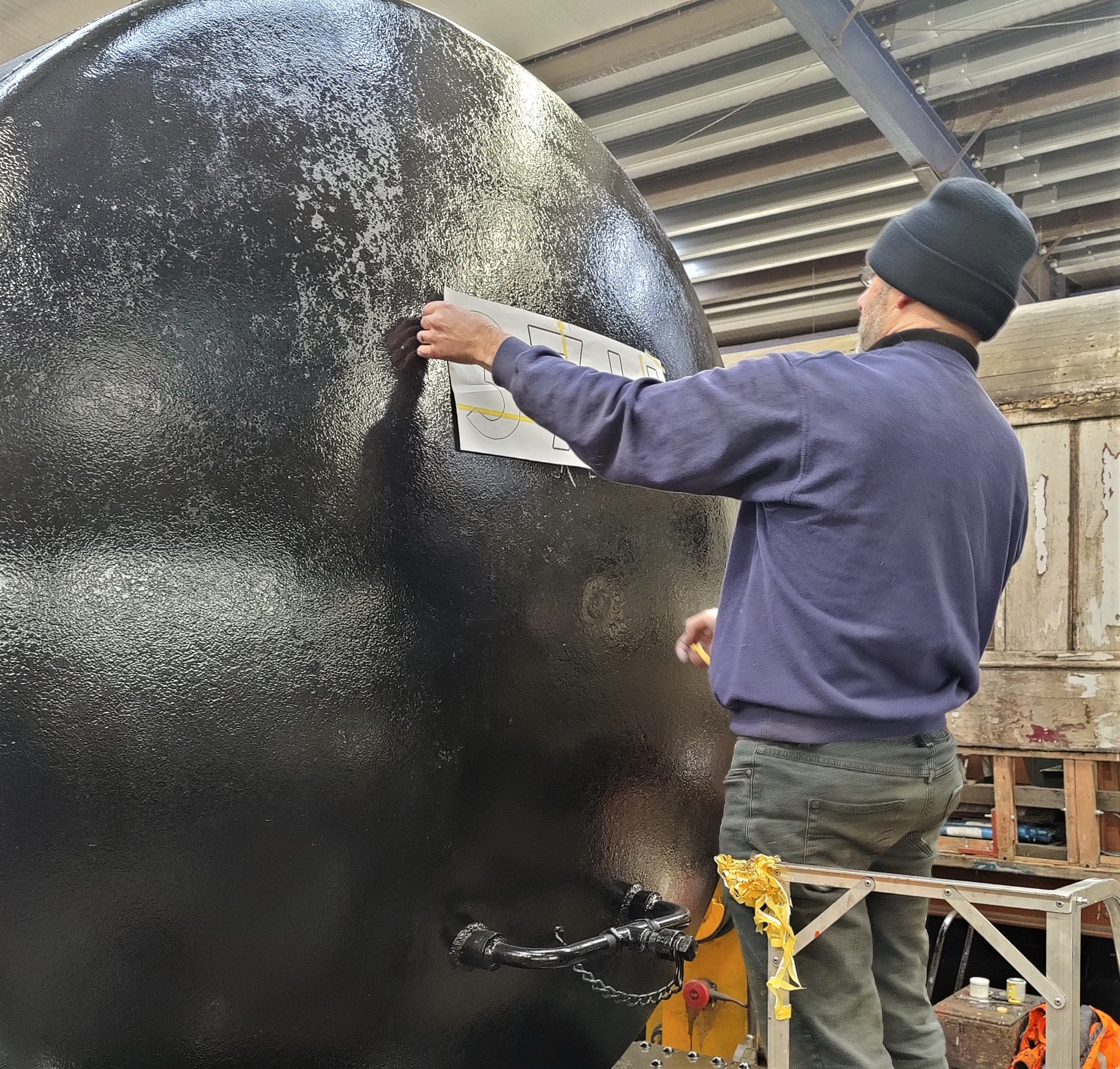
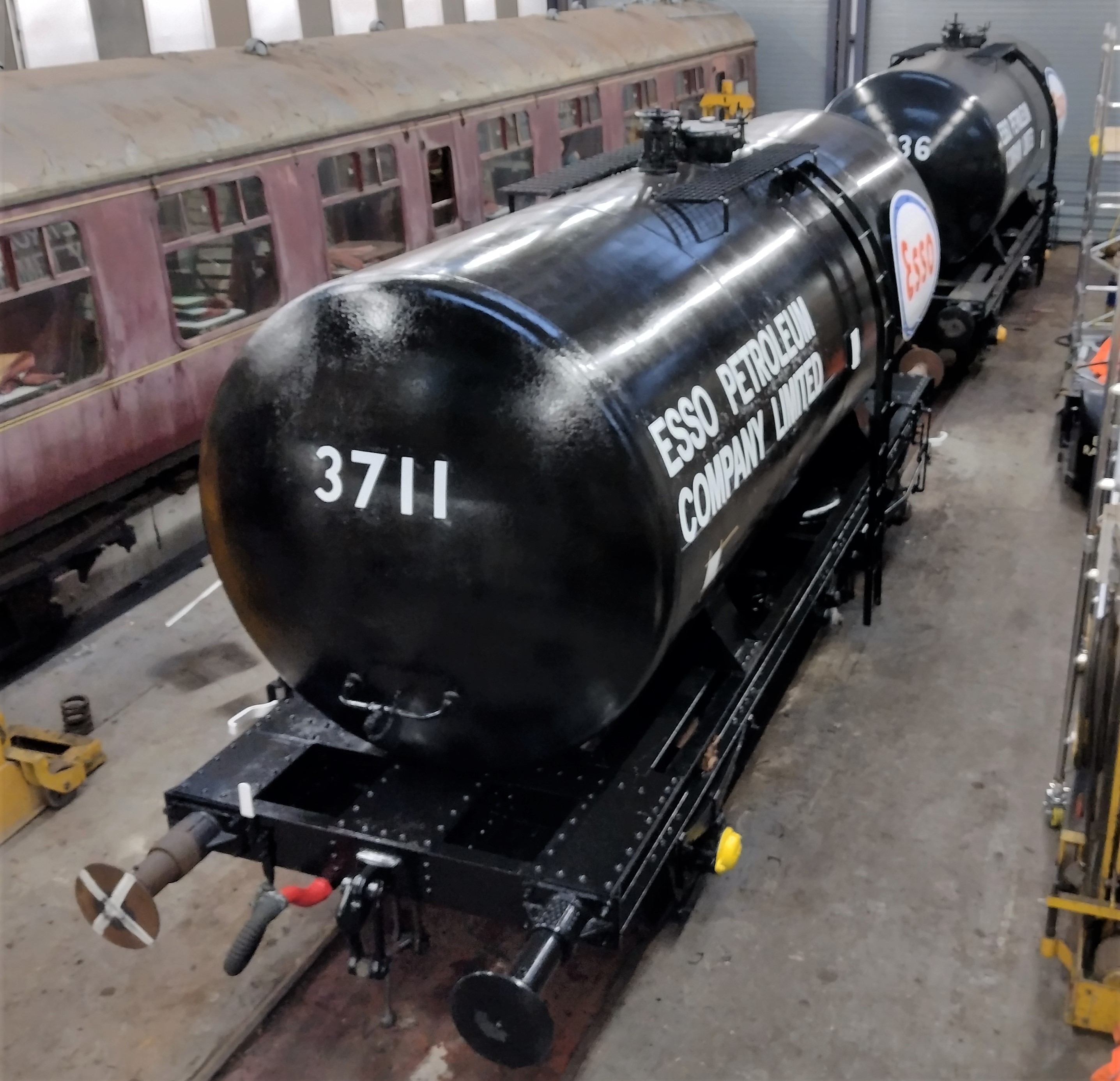
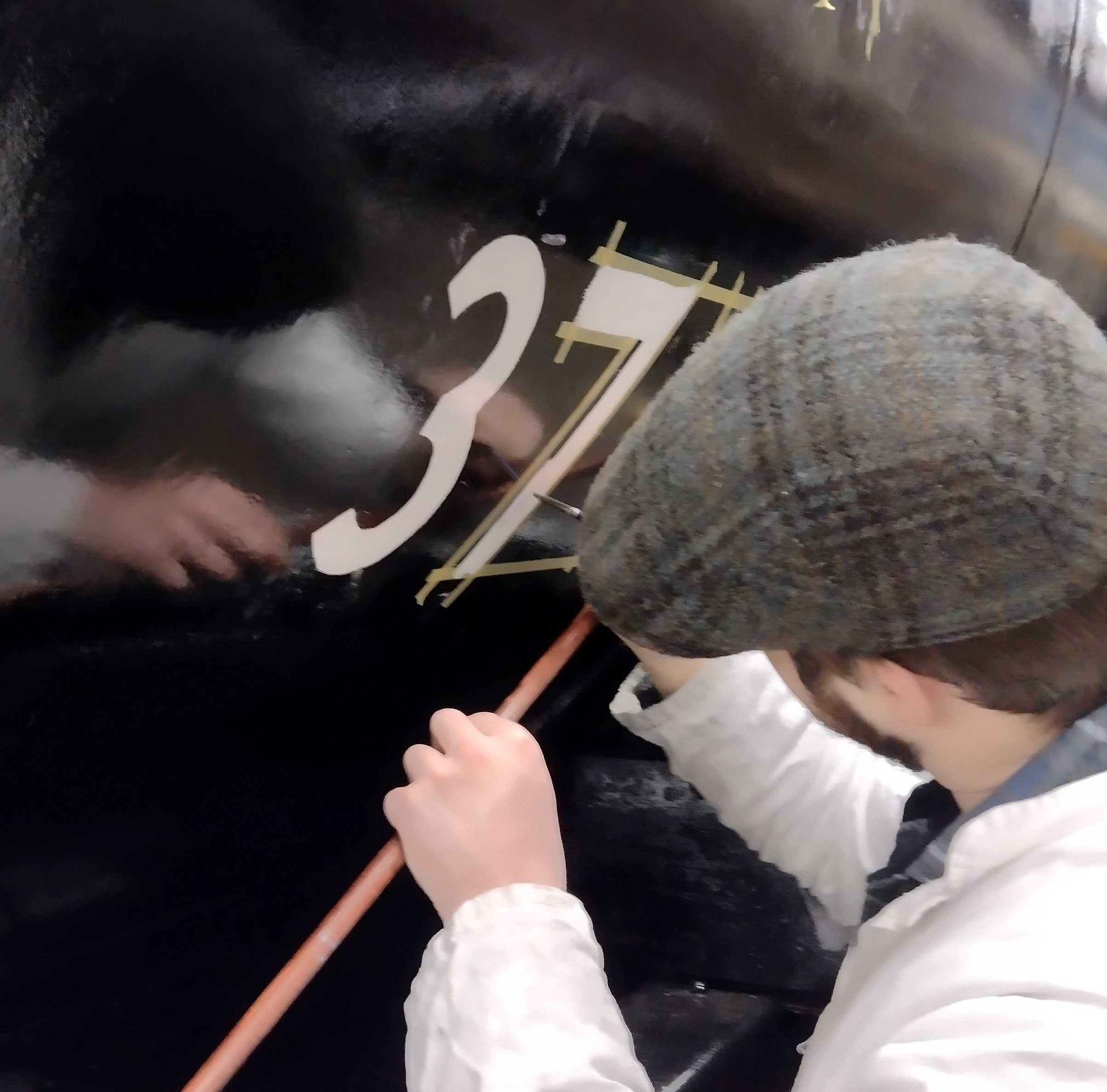
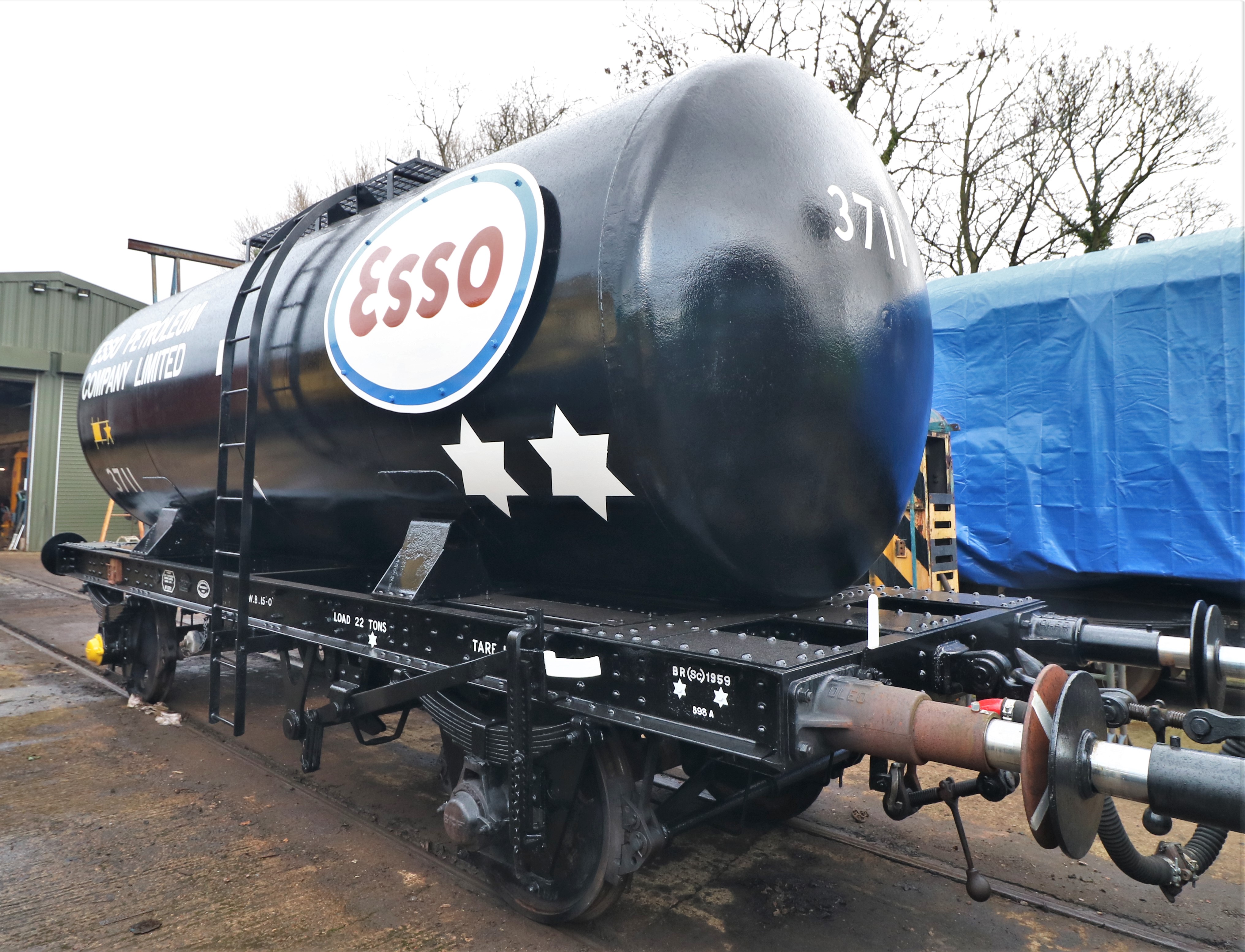
Whilst Ross and Nick were busy with 3436, I concentrated on the signwriting on the west side of 3711.
Then the tank-end numbers.
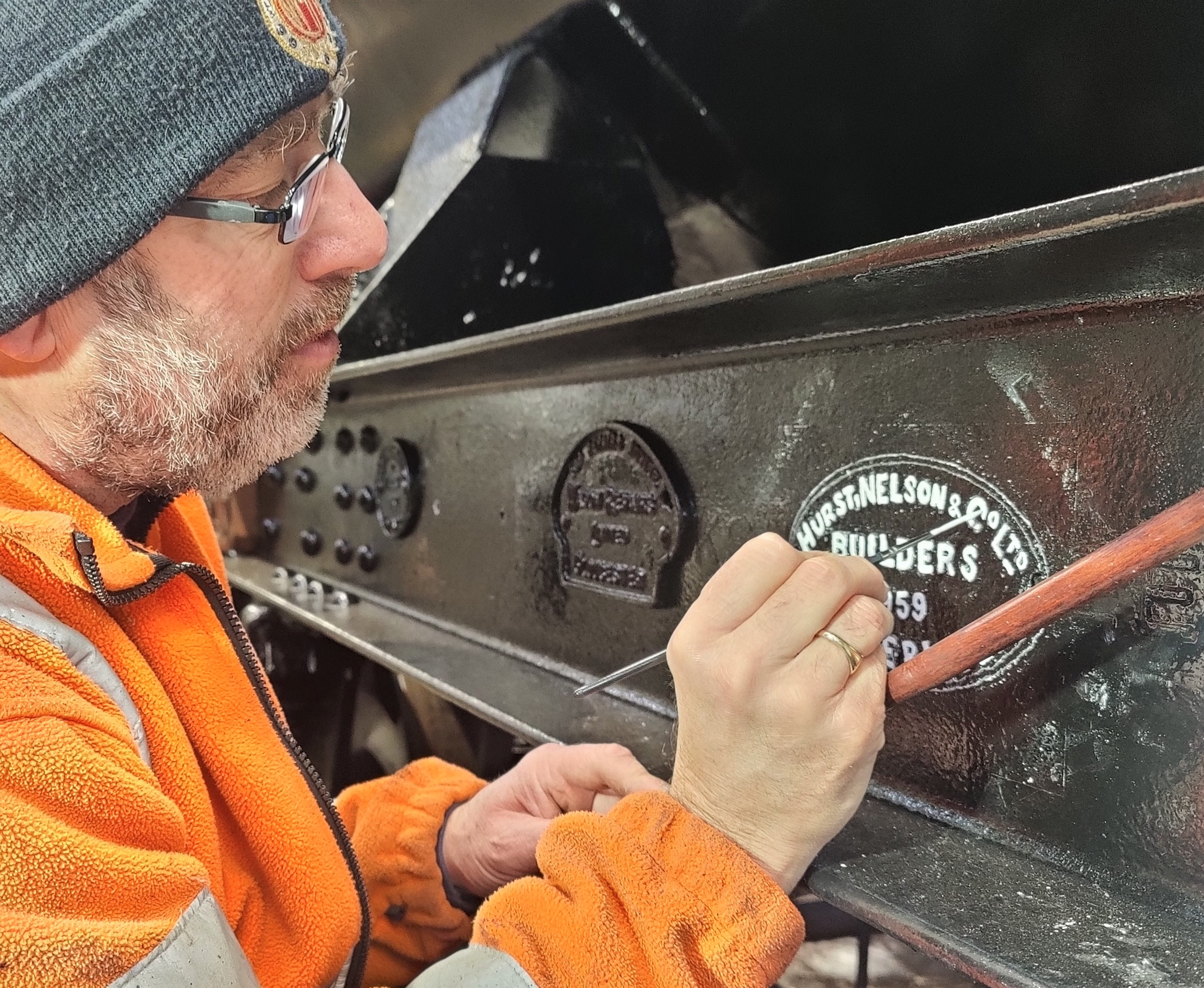
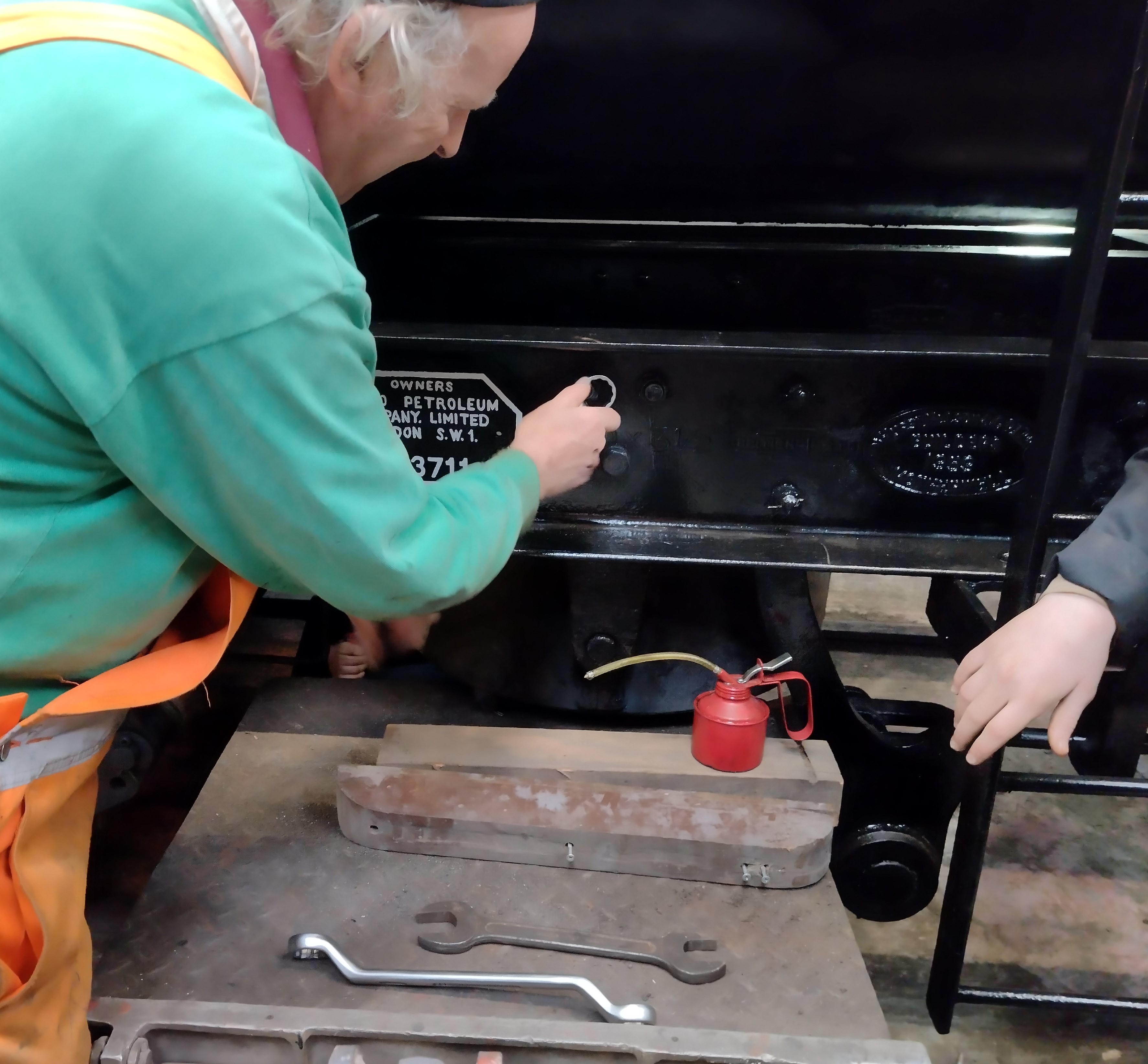
Sunday, and Ross joined me with some signwriting on 3711, finishing off the bodyside numbers and the solebar details.
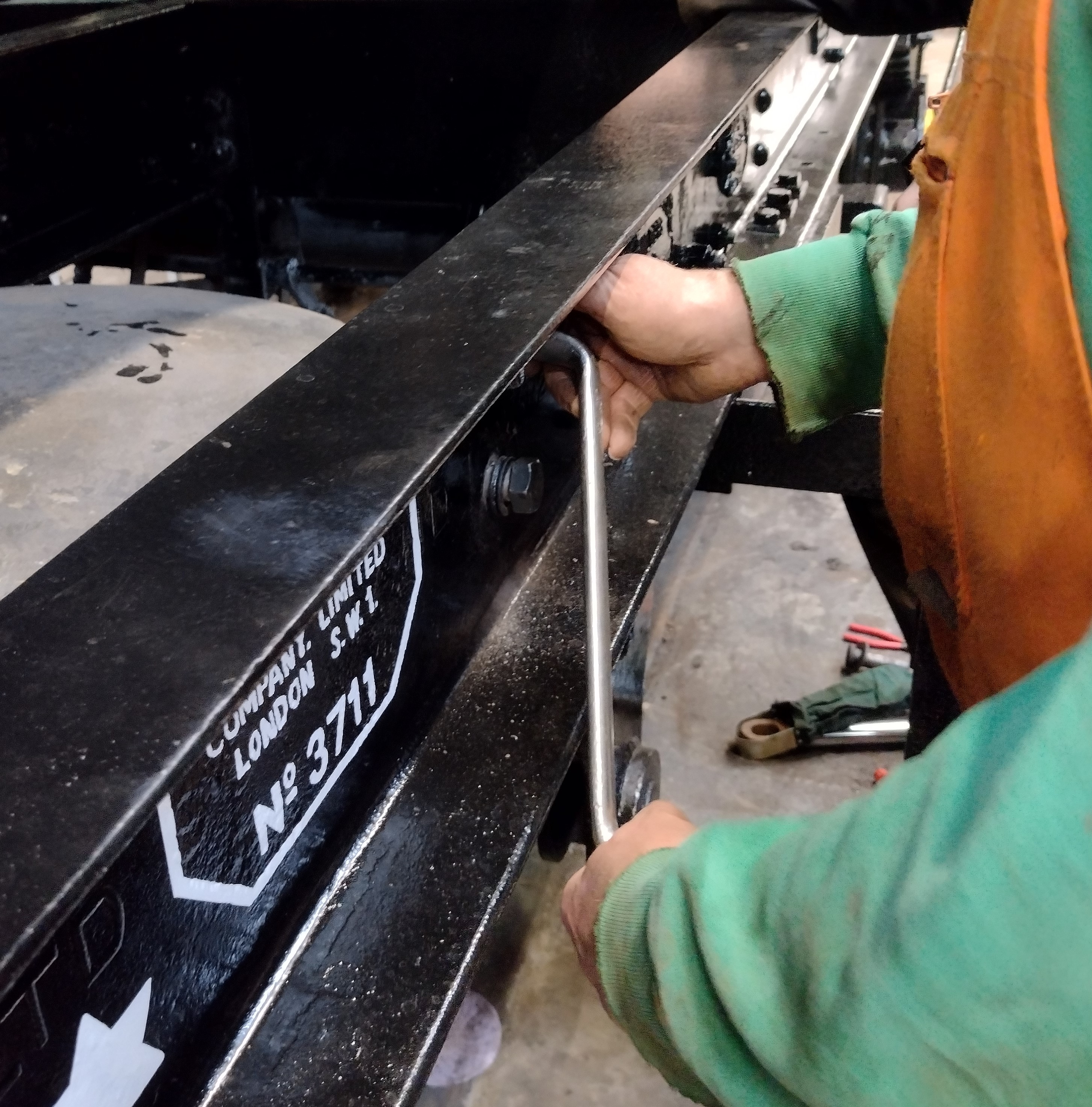
Tom also helped with some detail painting, whilst Dan and Mark helped Nick with the removal of the vacuum cylinder from 3711. Although we had overhauled this cylinder a few weeks ago, when tested we found a problem with the partial brake application suggesting that the rolling ring was leaking past, therefore it was likely to need an oversize ring. An appropriate rolling ring was fitted and the cylinder re-instated under the wagon.
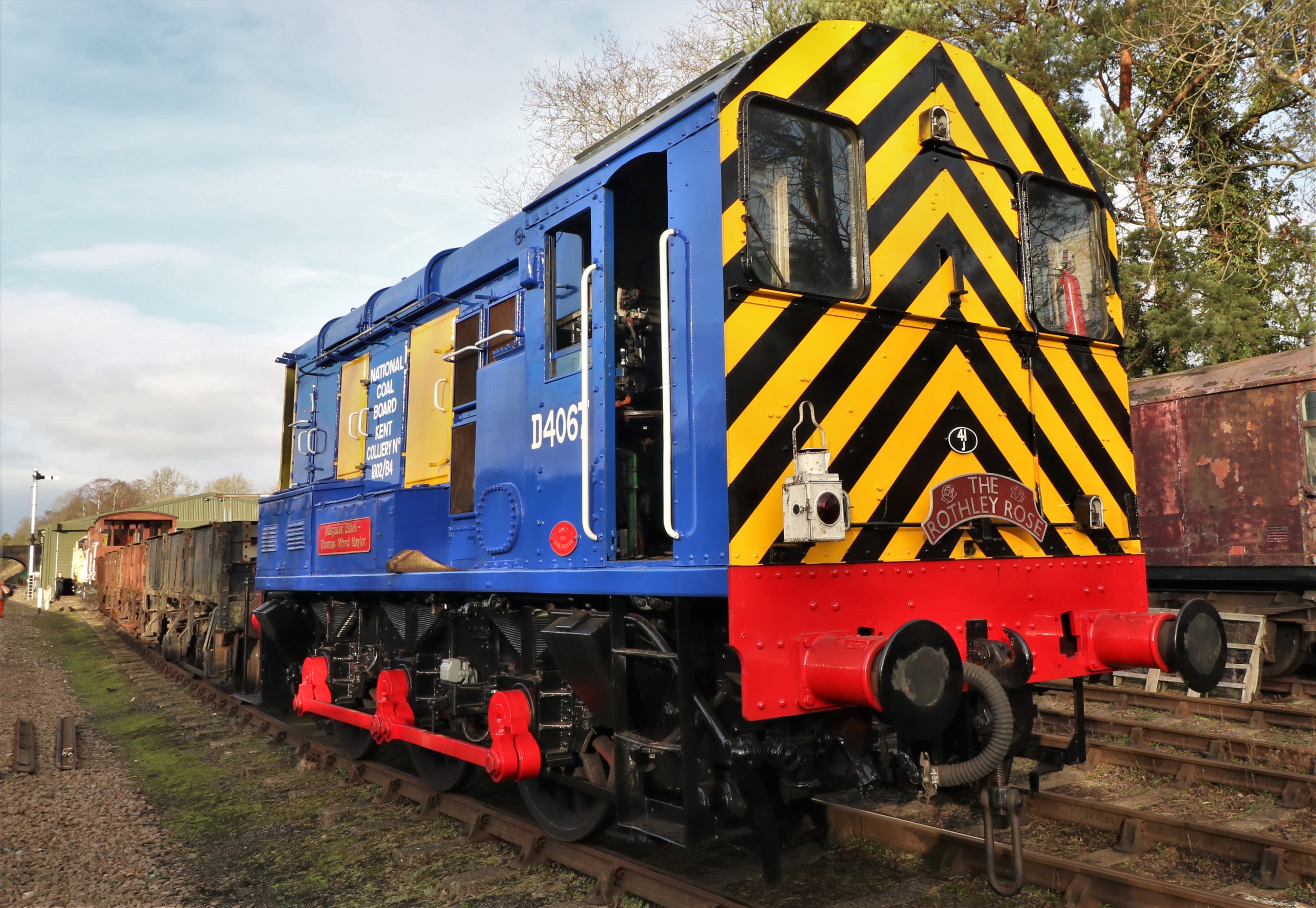
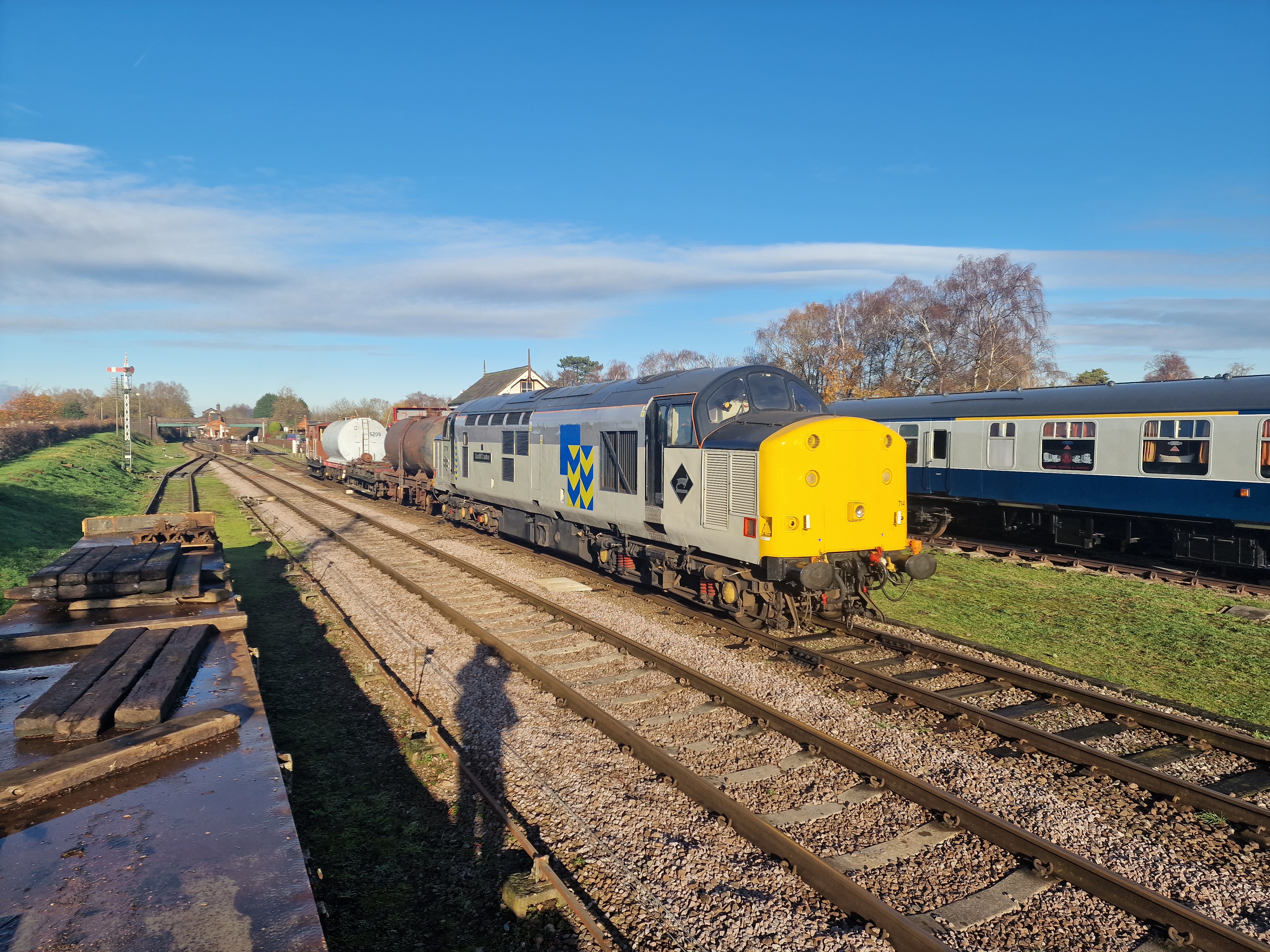
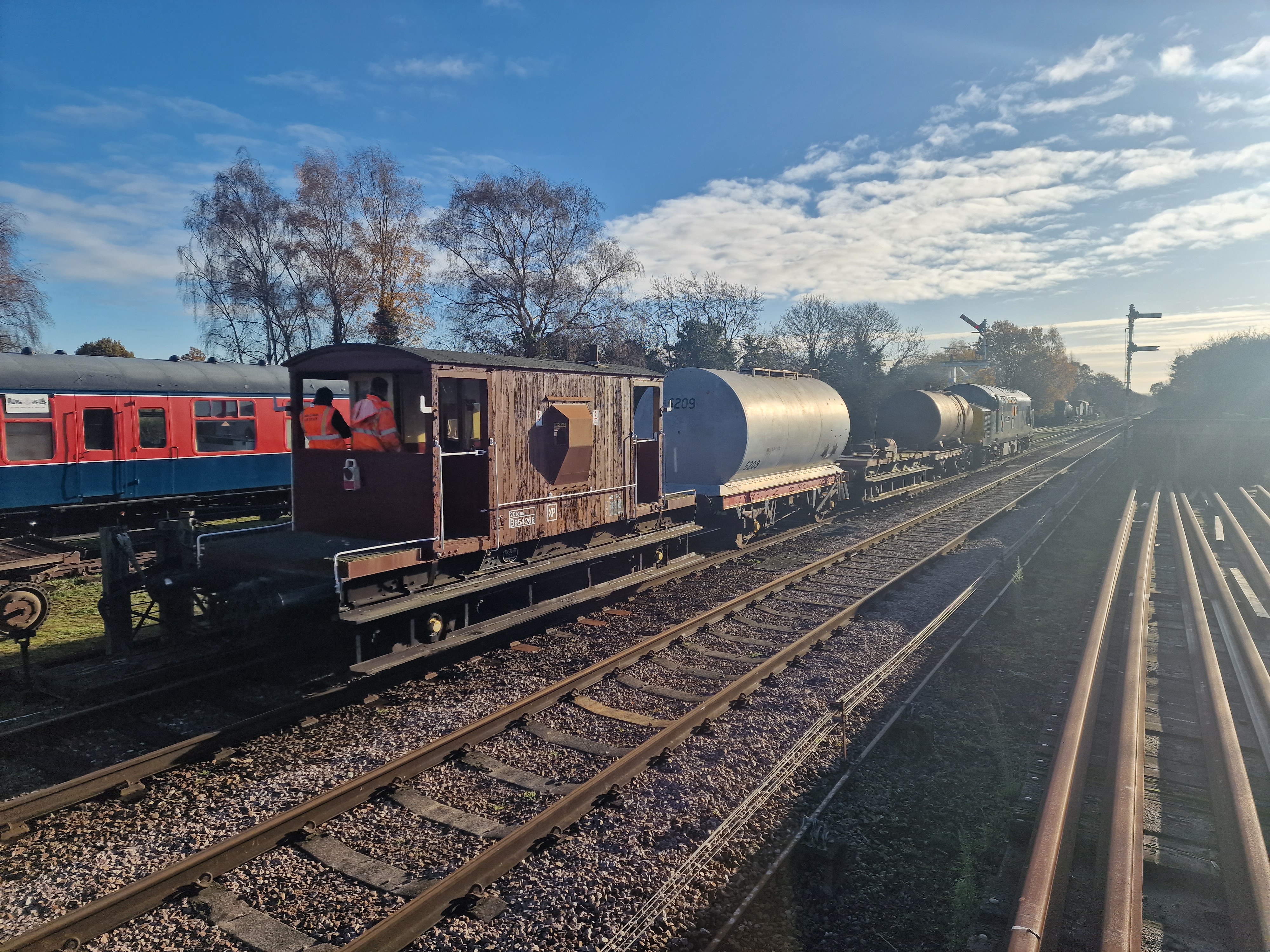
With the Class 10 shunting locomotive being operational today to move some grampus wagons to Swithland sidings, we took the opportunity when it returned to use its vacuum to carry out a brake test on the tank wagons.
Despite the showers the tanks were shunted out of the workshop.
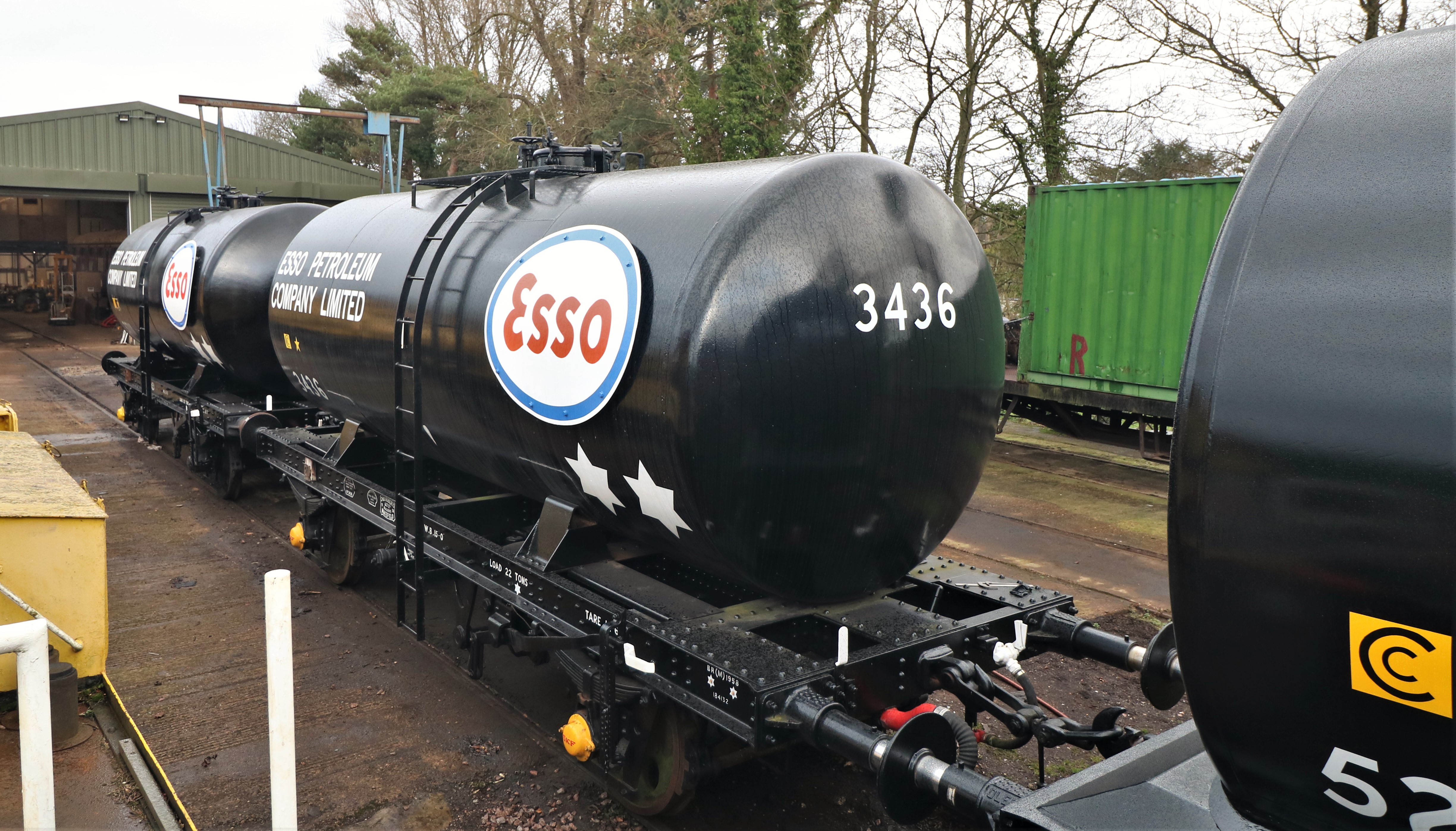
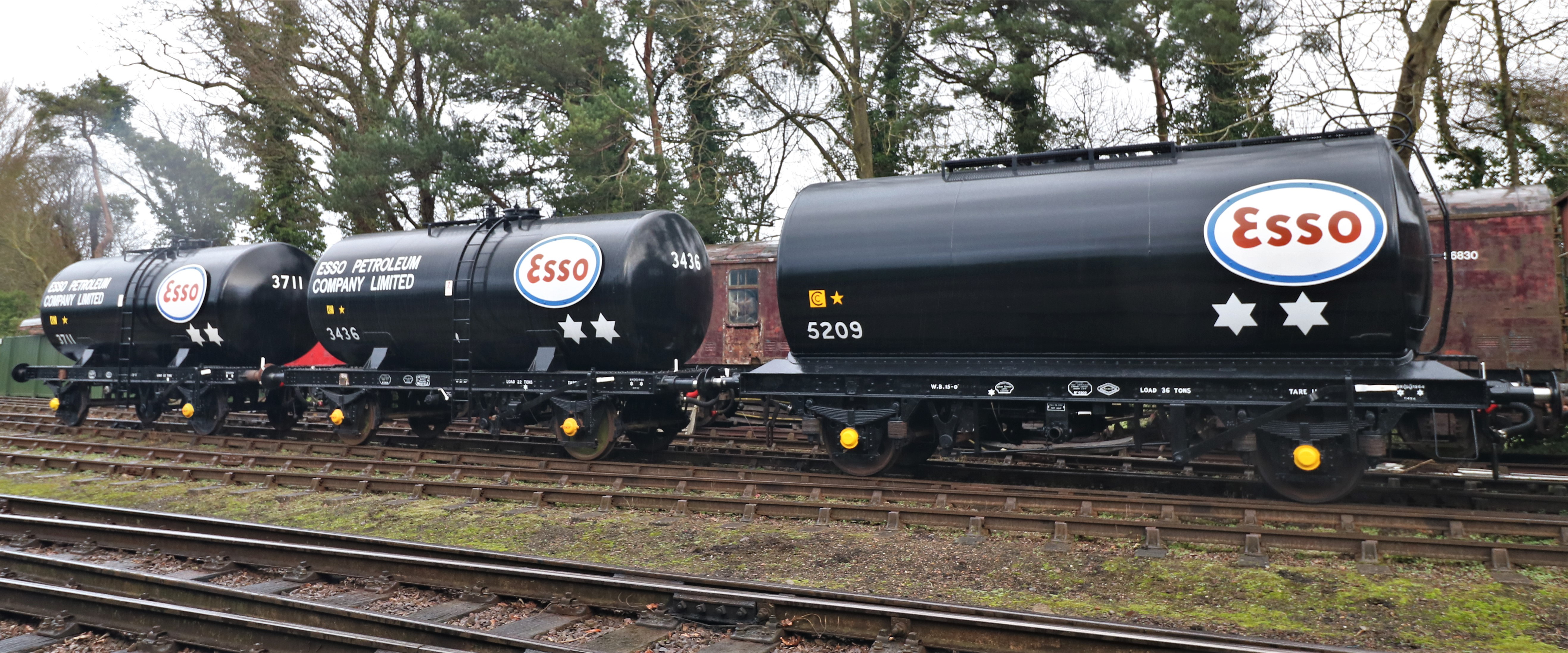
5209 was also still at Rothley, so was duly coupled to 3436 and 3711 making this the first sight of our ‘TRIO’ of Esso tank wagons together.
The vacuum brake tests then being carried out successfully on all three tank wagons.
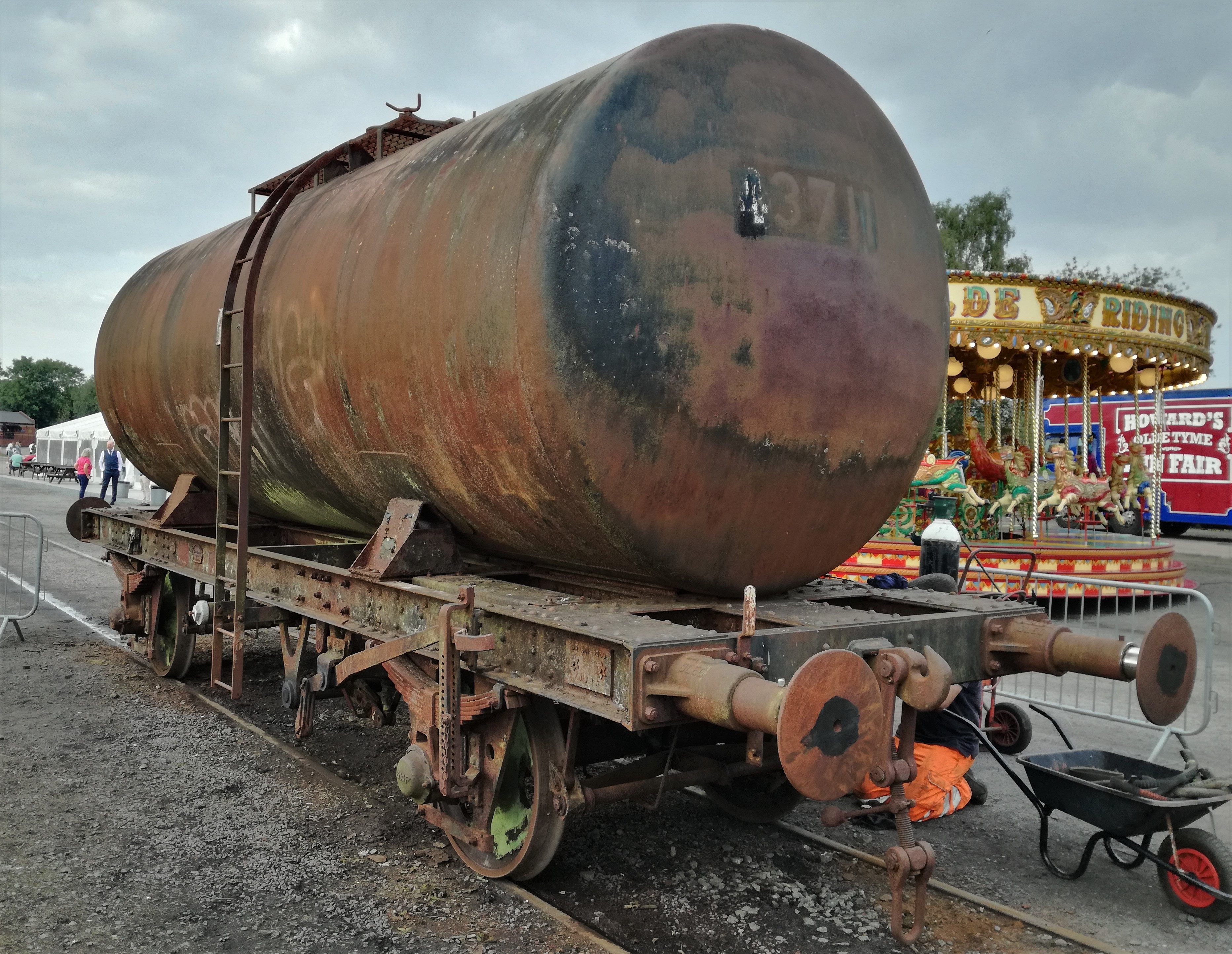
With a few small jobs still to do on 3711 before it can be released to traffic, but I think you’ll agree it does look a little different from when it arrived from Meldon Quarry in September 2021.
Join us again next week to see how we get on; all the best, Dave
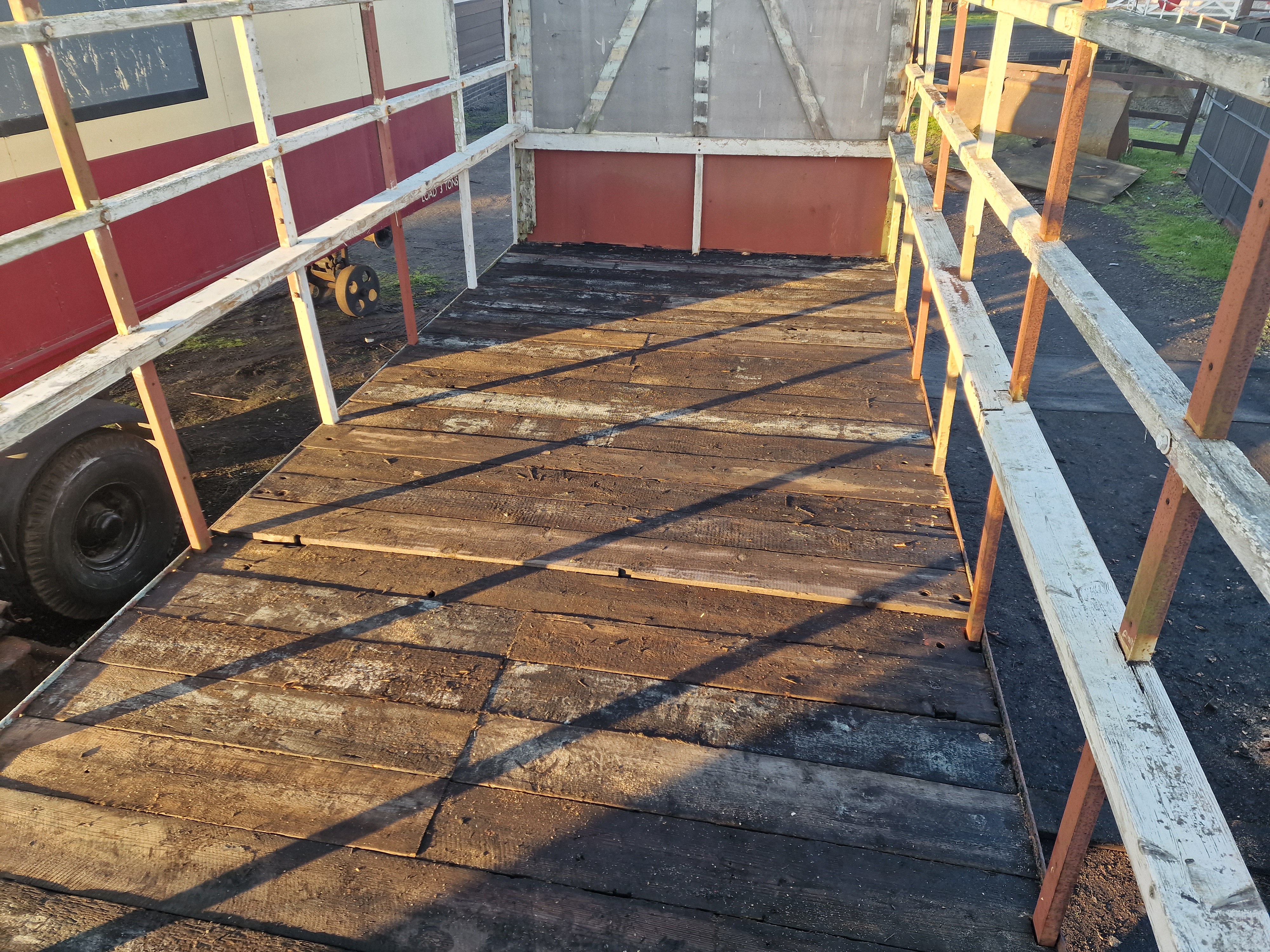
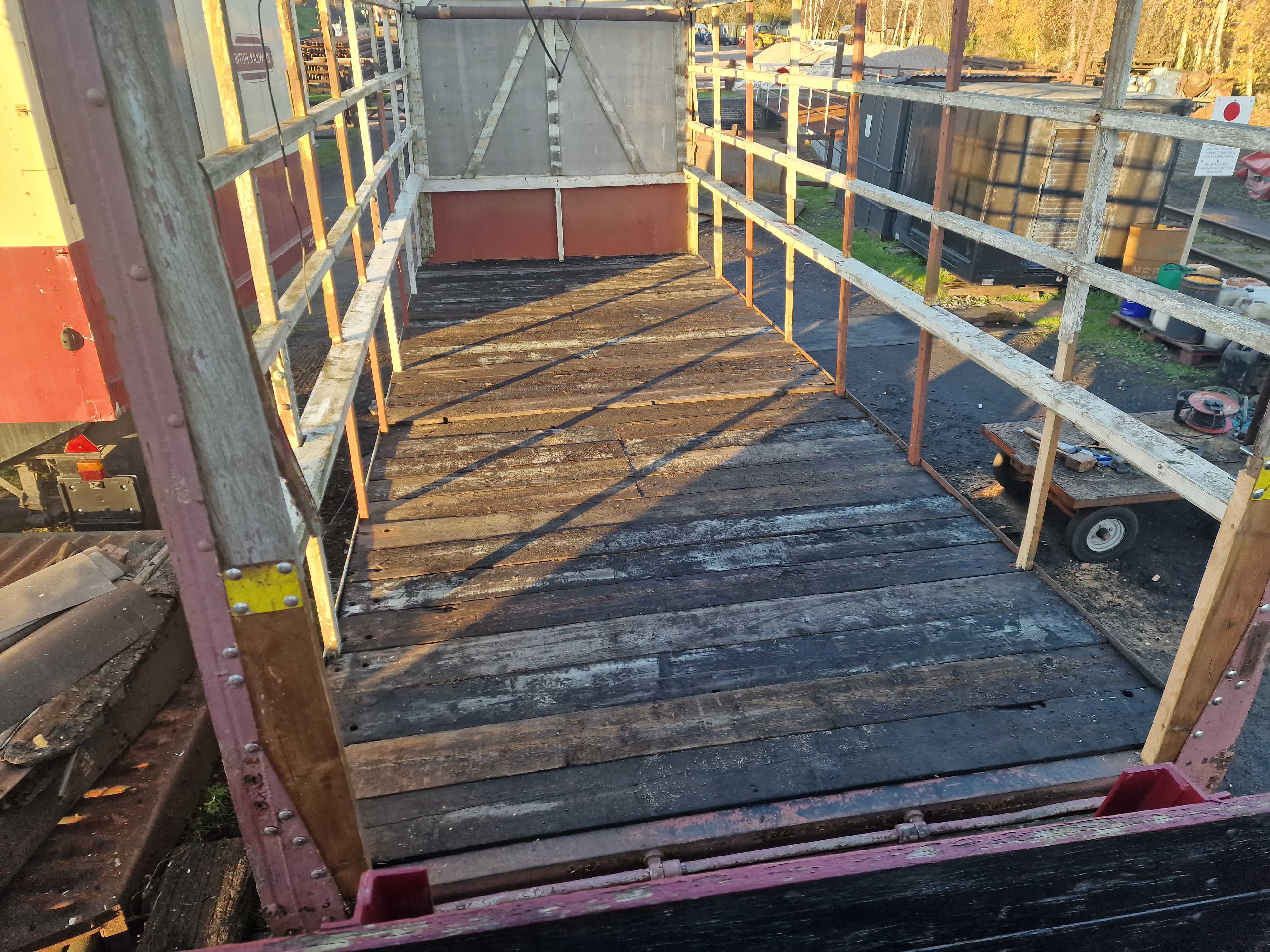
His main task was the fitment of a new floor, using some of the reclaimed wood from Loughborough loco shed. 20 planks used for 30 spaces, utilising off cuts to make up full planks.
The two tank wagons 3711 and 5209 headed off to Rothley along with brake van B954268 and the spare brake van chassis which is to donate its wheelsets to go under B954268 whilst its own are away for their long awaited repairs.
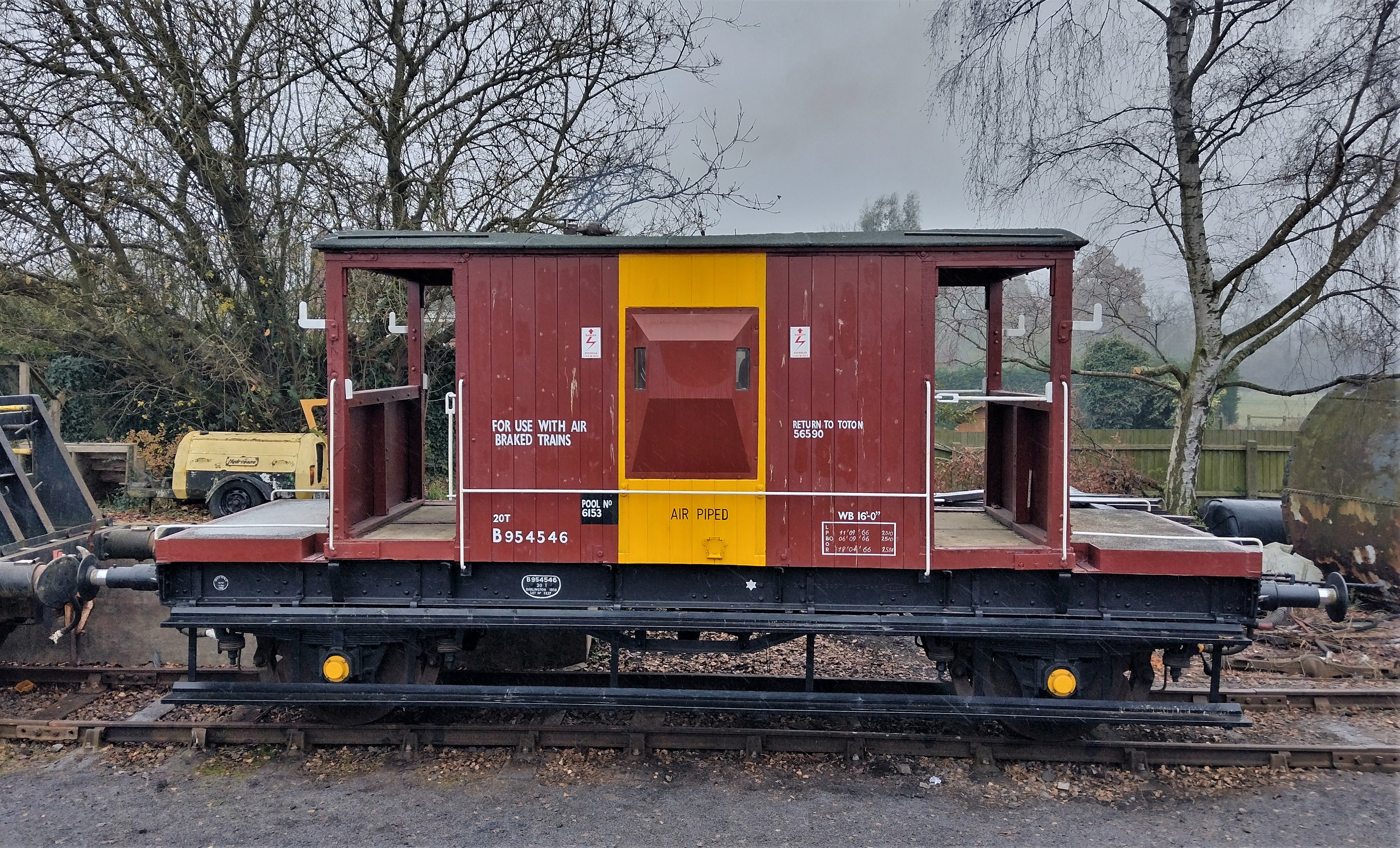
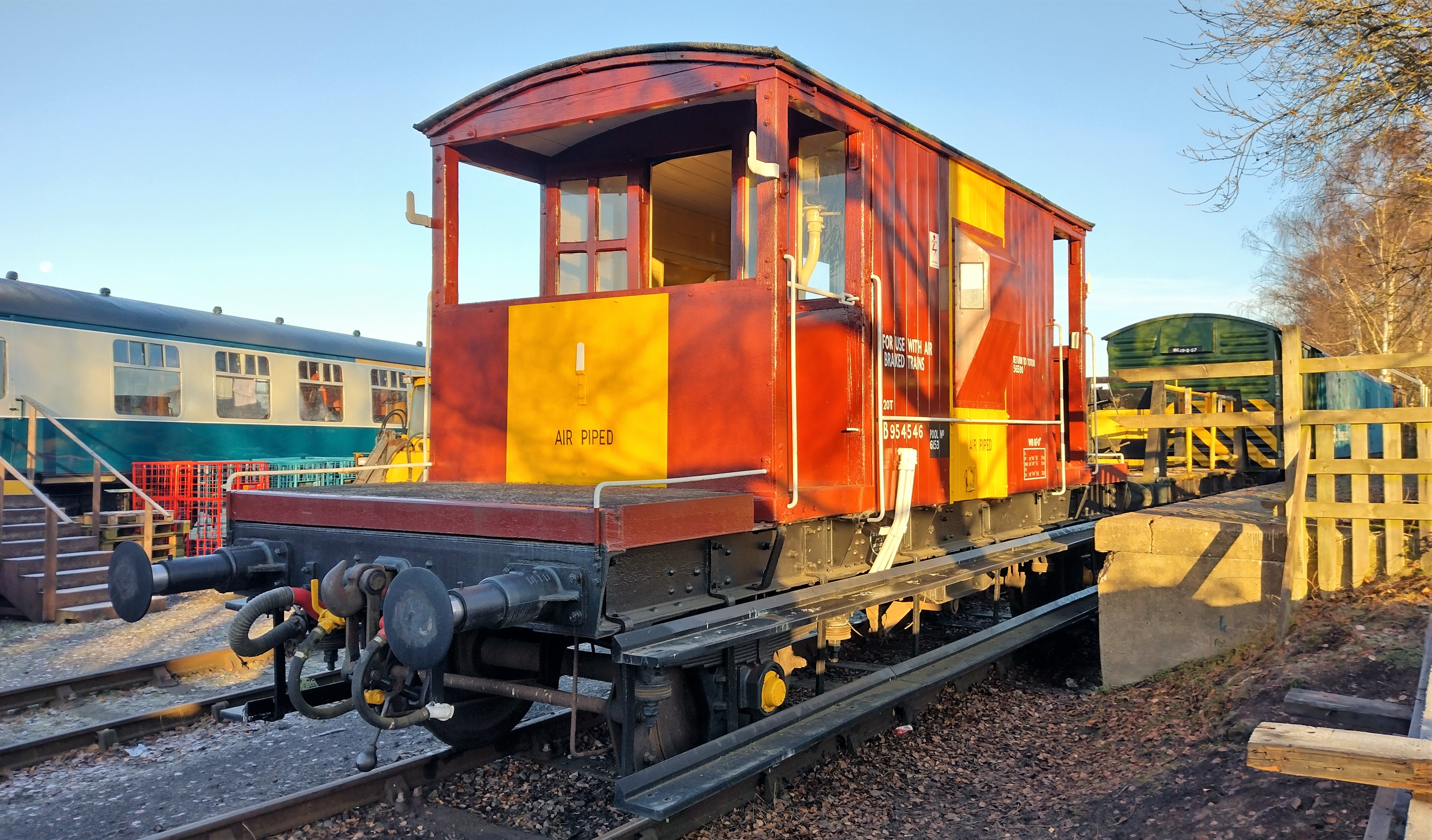
In return brake van B954546 was brought from Rothley to Quorn so we could attend to the final items of interior work and get it ready for release to traffic.
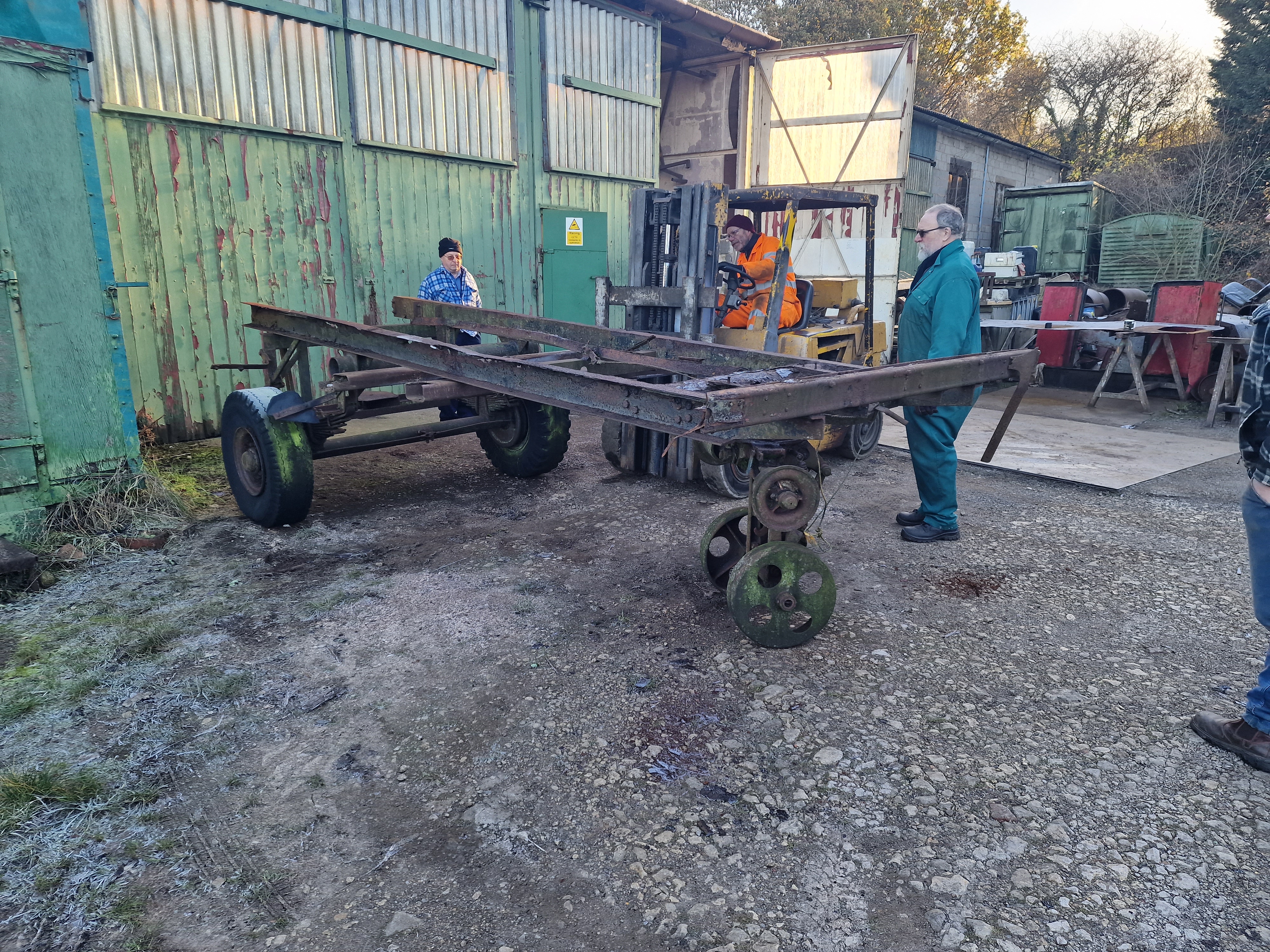
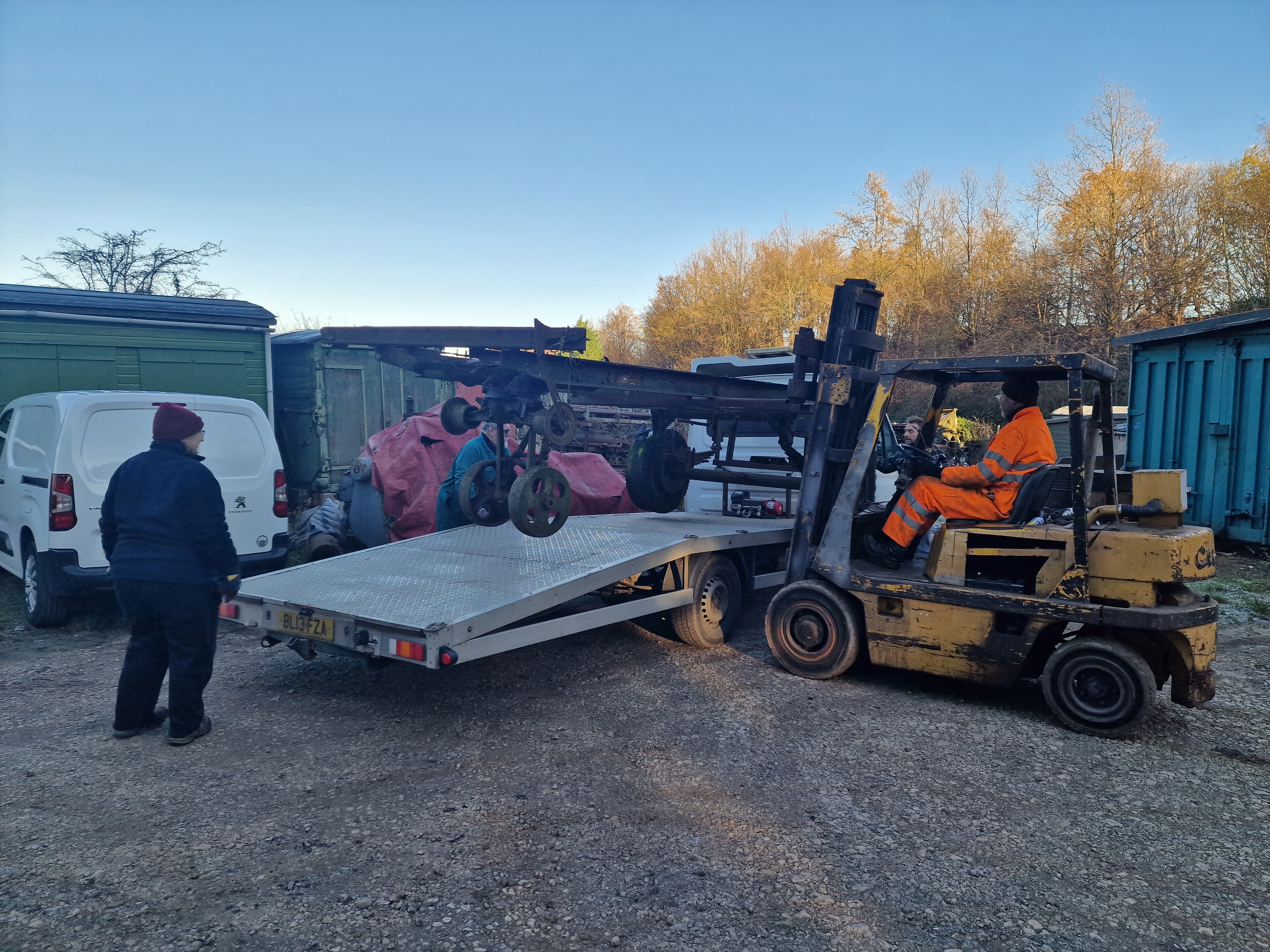
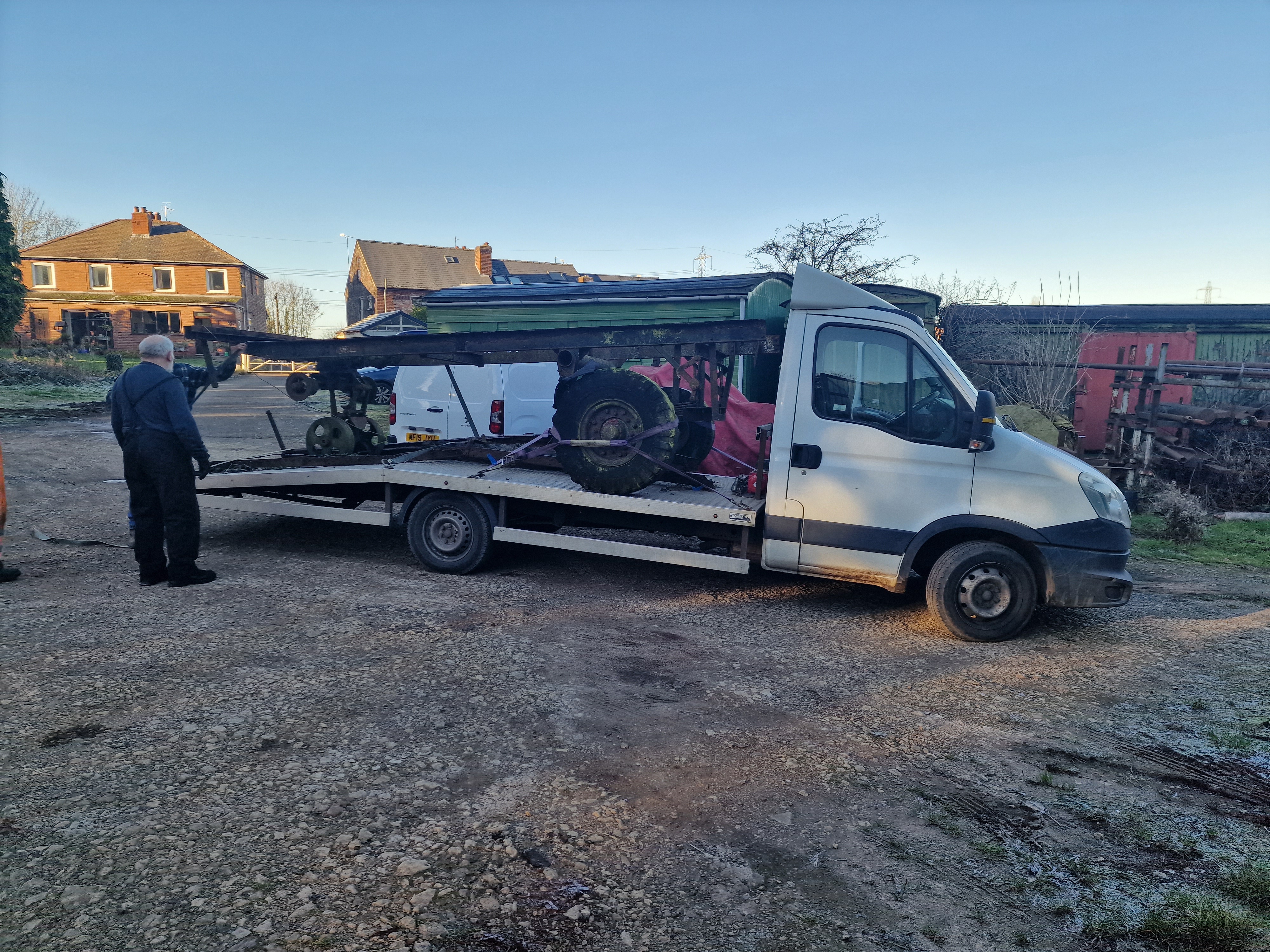
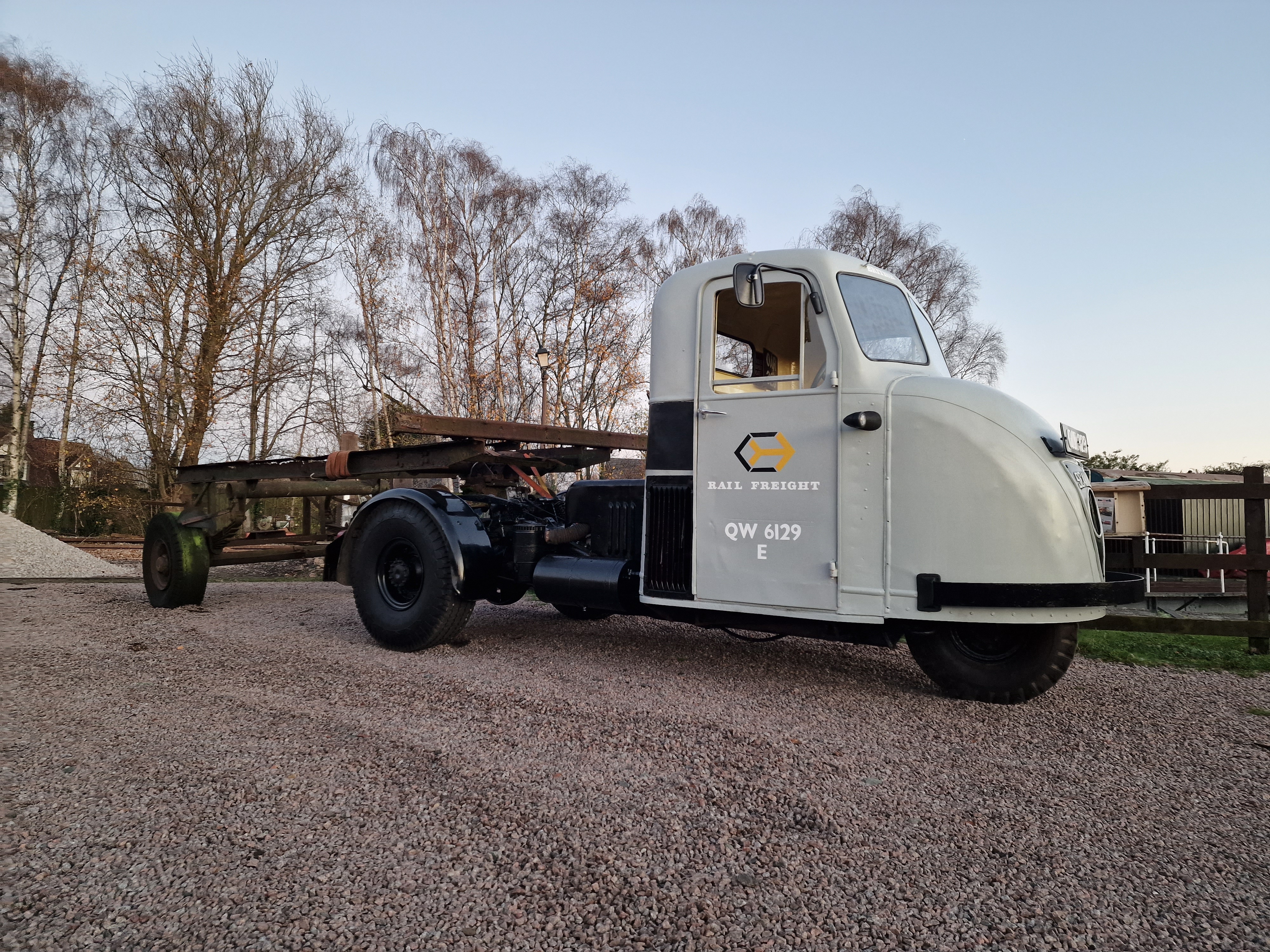
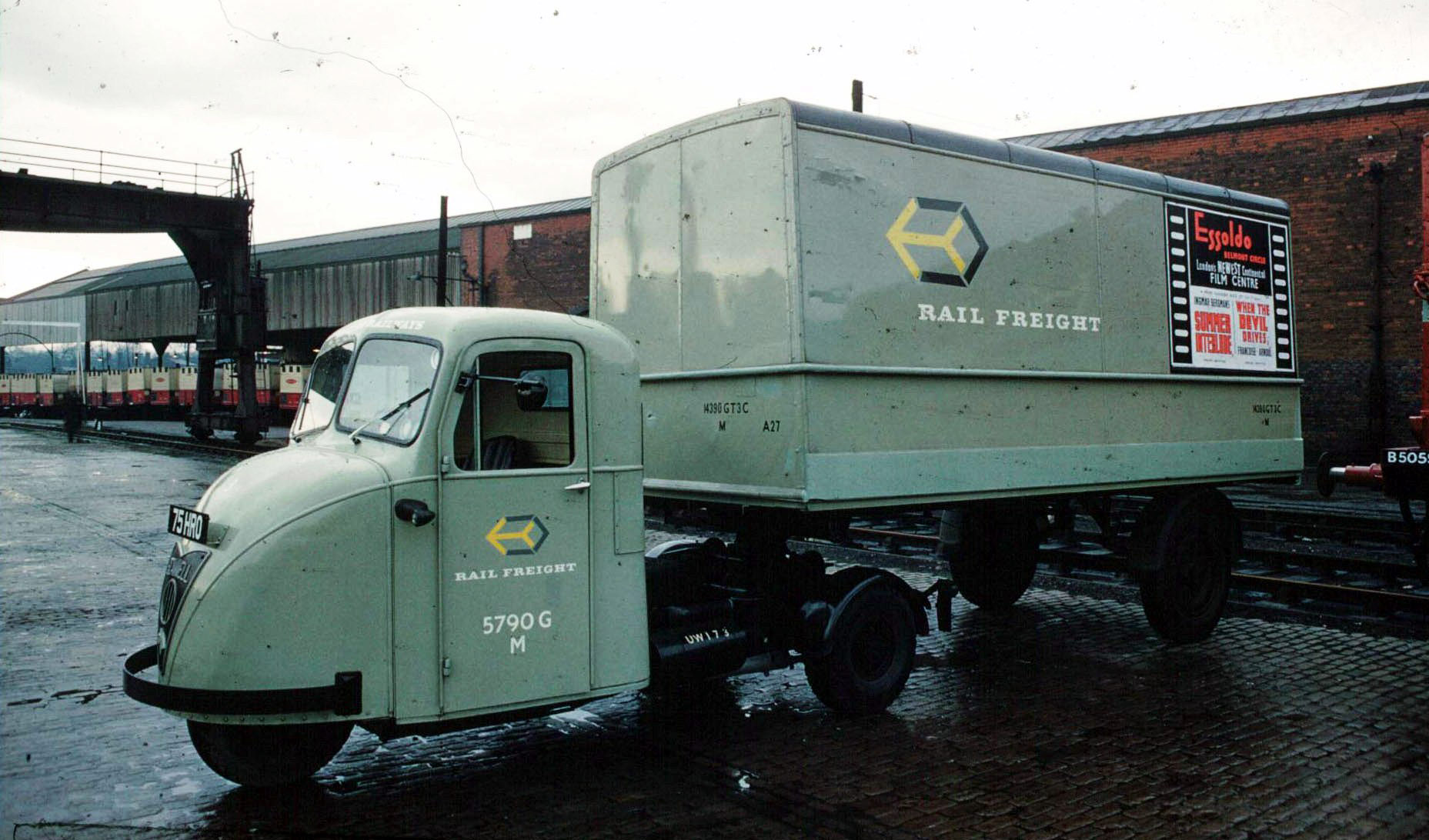
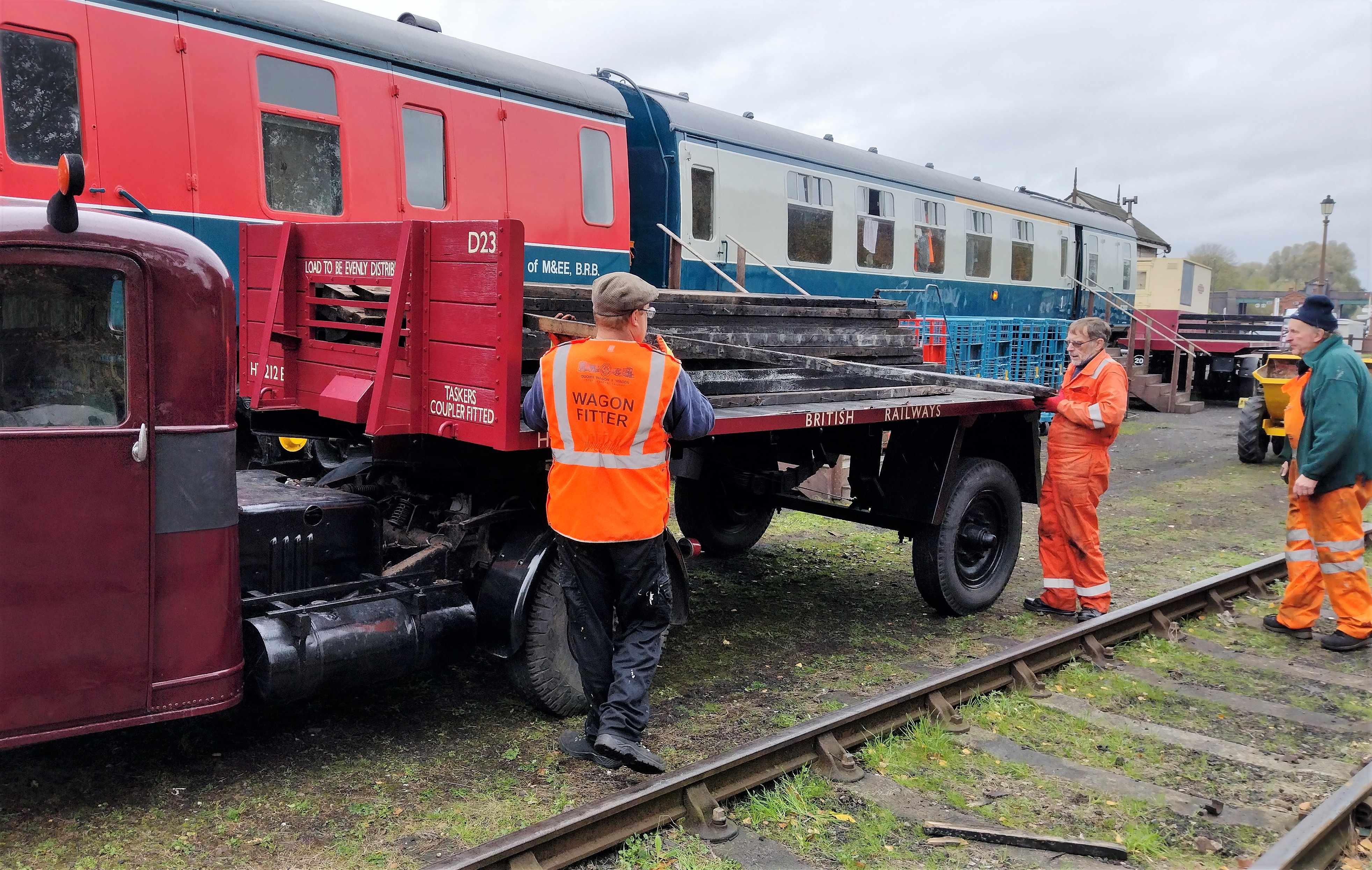
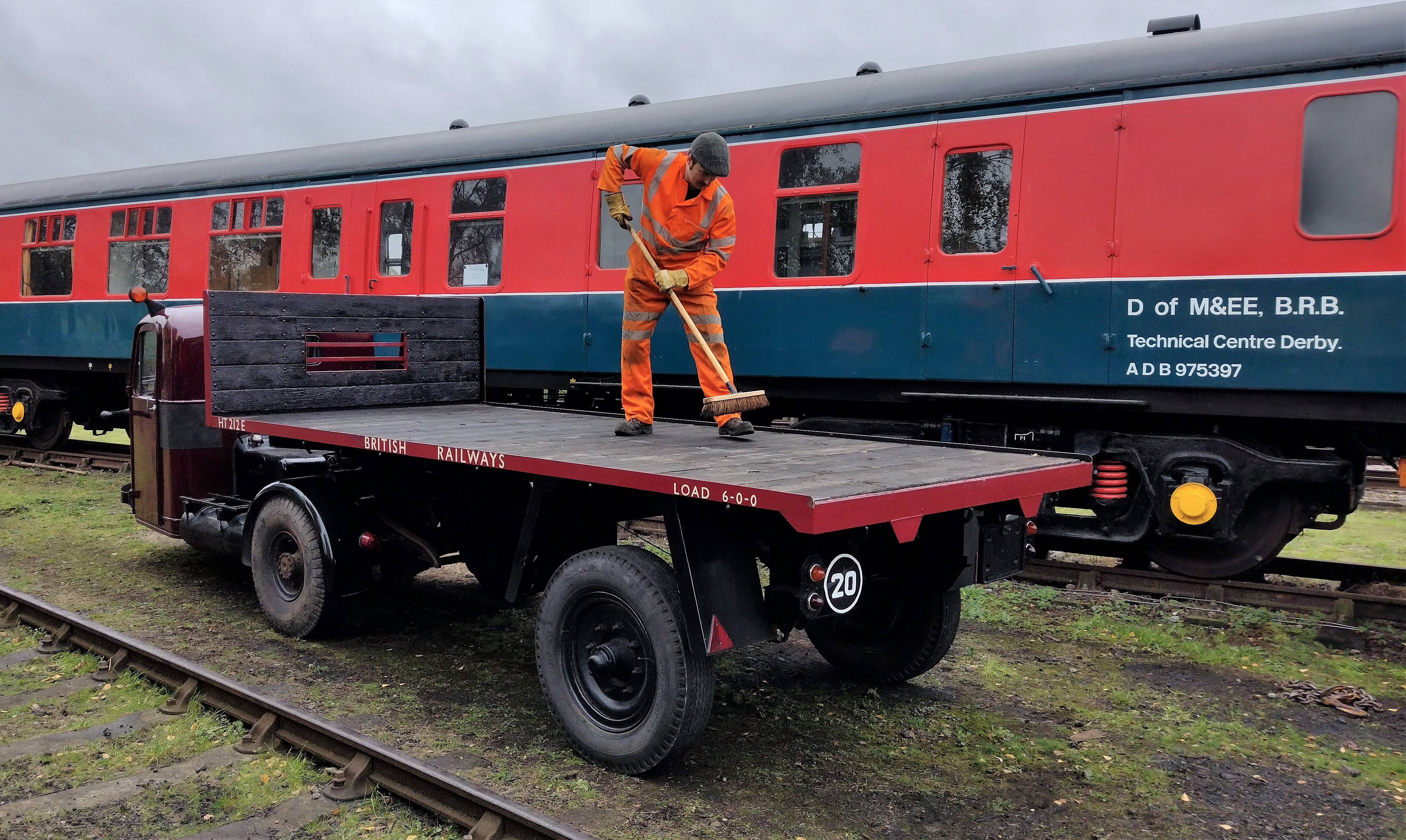
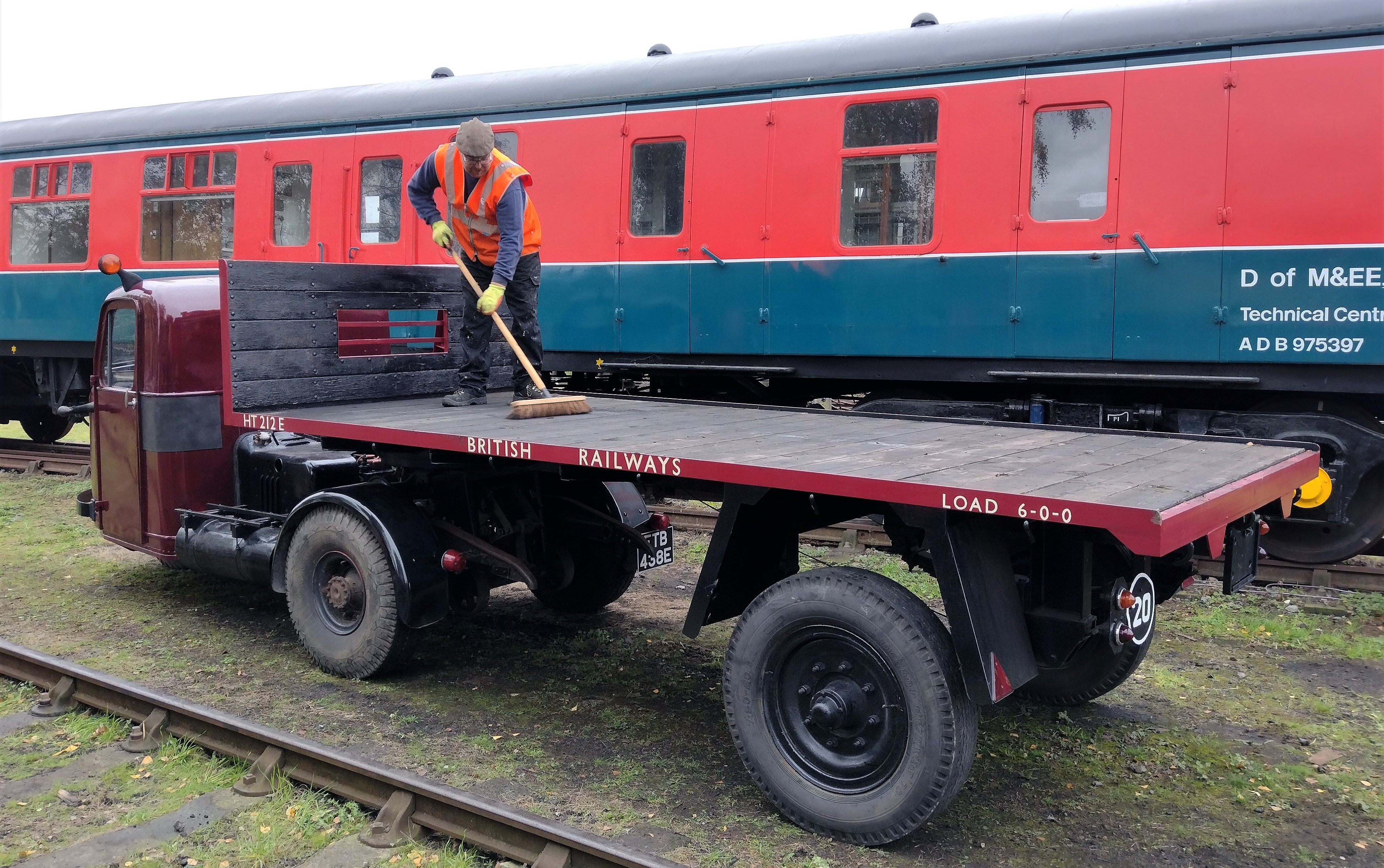
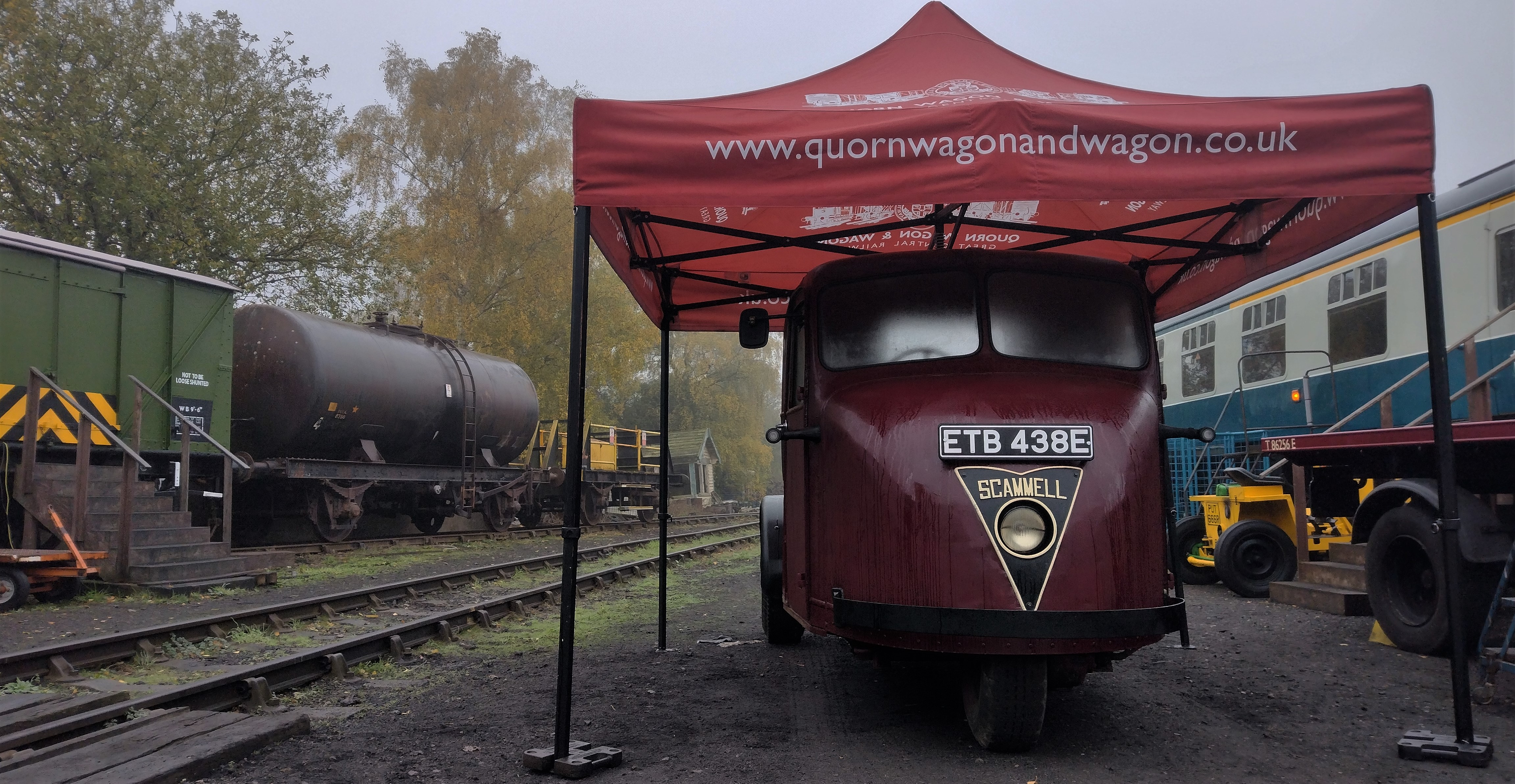
Next a little admin, with thanks to the Killamarsh loco works and James Littlewood, Matt took delivery of the remains of a 15ft Scammell trailer. Originally from the former Manchester, Sheffield & Lincolnshire Station of Killamarsh, later named Killamarsh Central by BR. A genuine GCR connection.
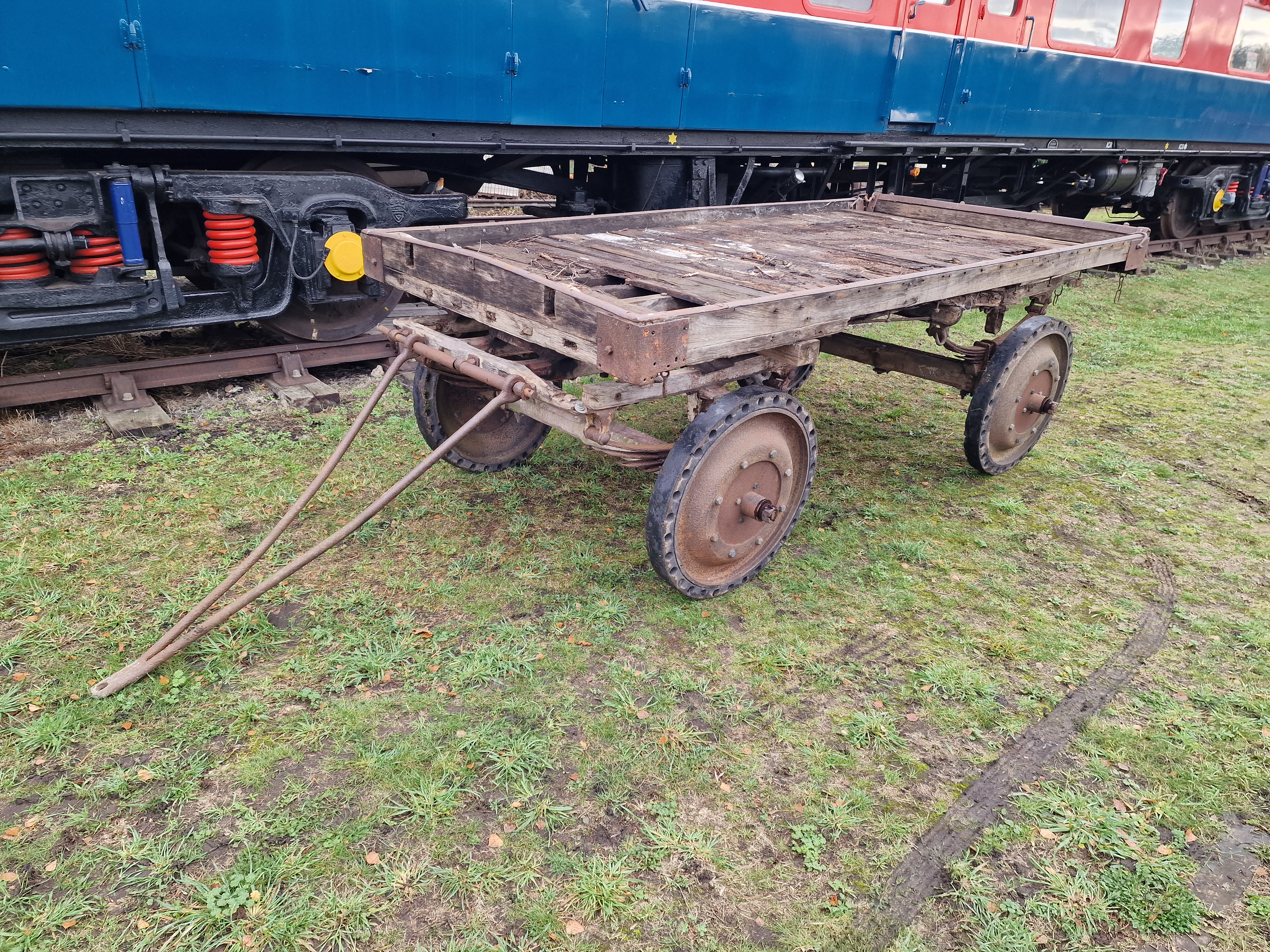
As well as the trailer a former Great Western Railway Dray has joined the fleet, BR number 2901 W originally allocated to Wolverhampton Lowlevel station part of a batch of 3.
The intention being once restored to be loaded on the Single Bolster and also be available for Railways at Work.
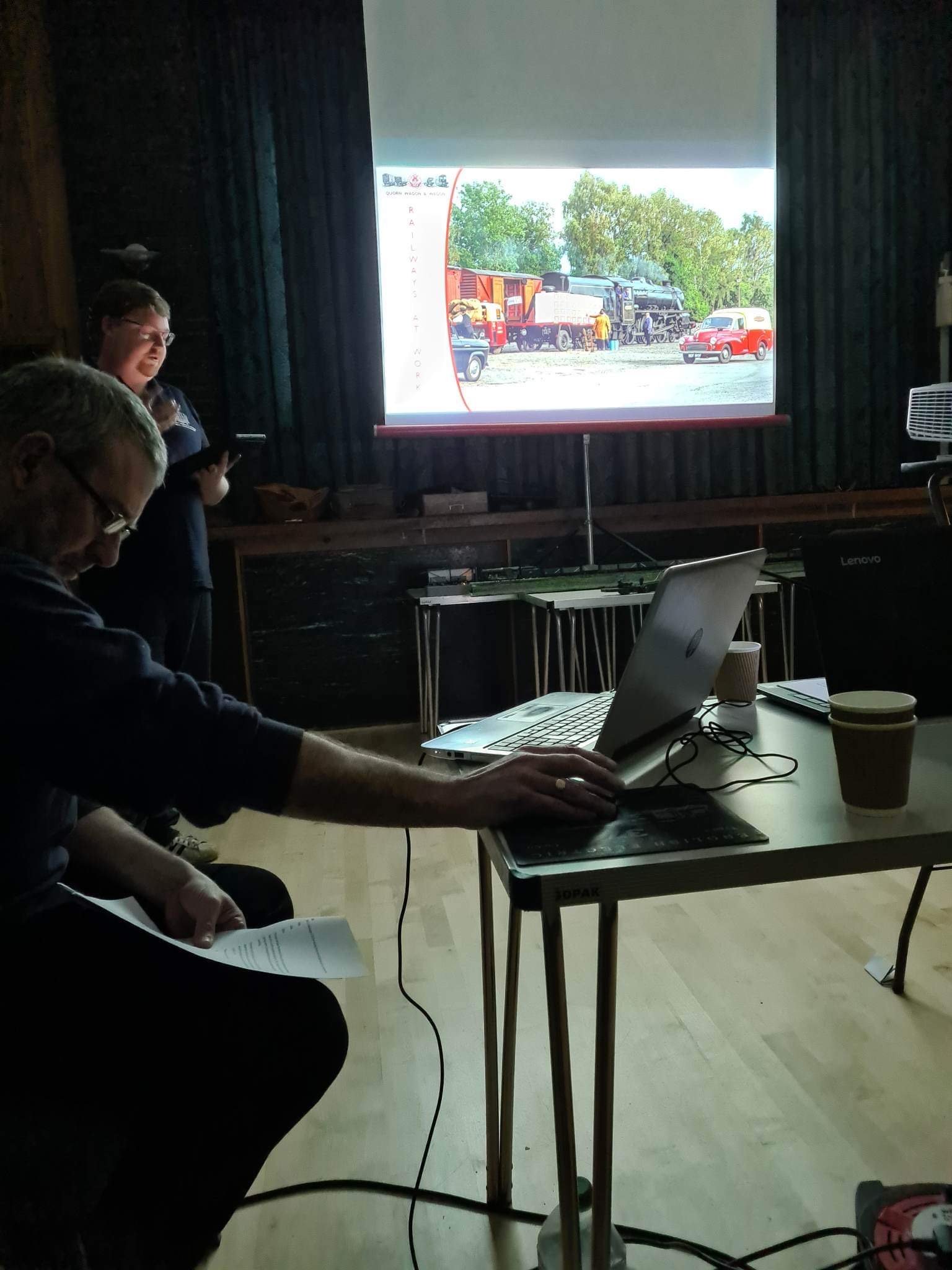
On Friday evening along with the Windcutter group, we were invited to go along to the Friends of the Great Central Main Line, Leicester Area group monthly meeting to talk to them about Quorn Wagon & Wagon. Matt and myself prepared a presentation and took it turns to share some of our history and achievements with the group. Thanks Colin, a very enjoyable evening.
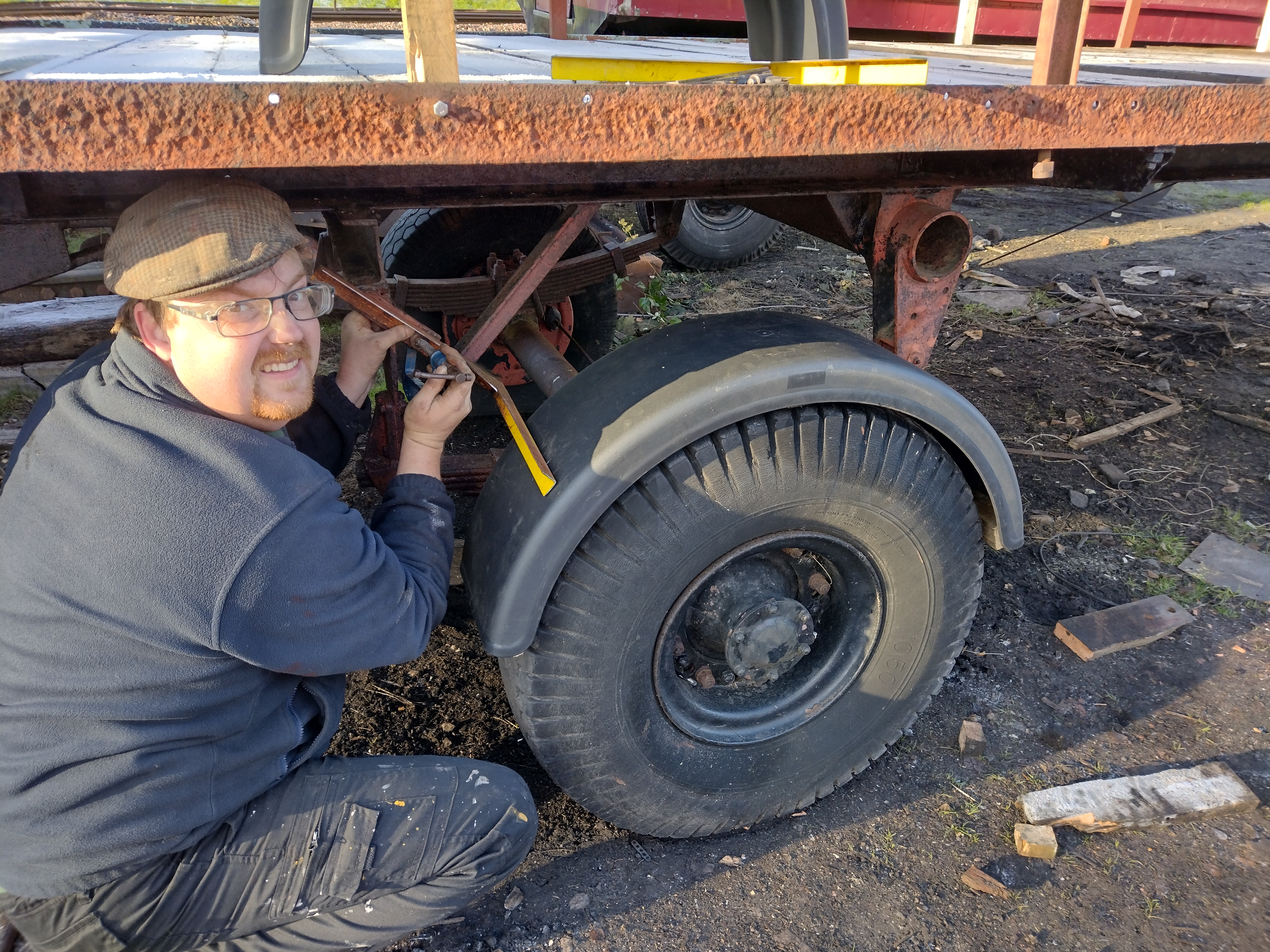
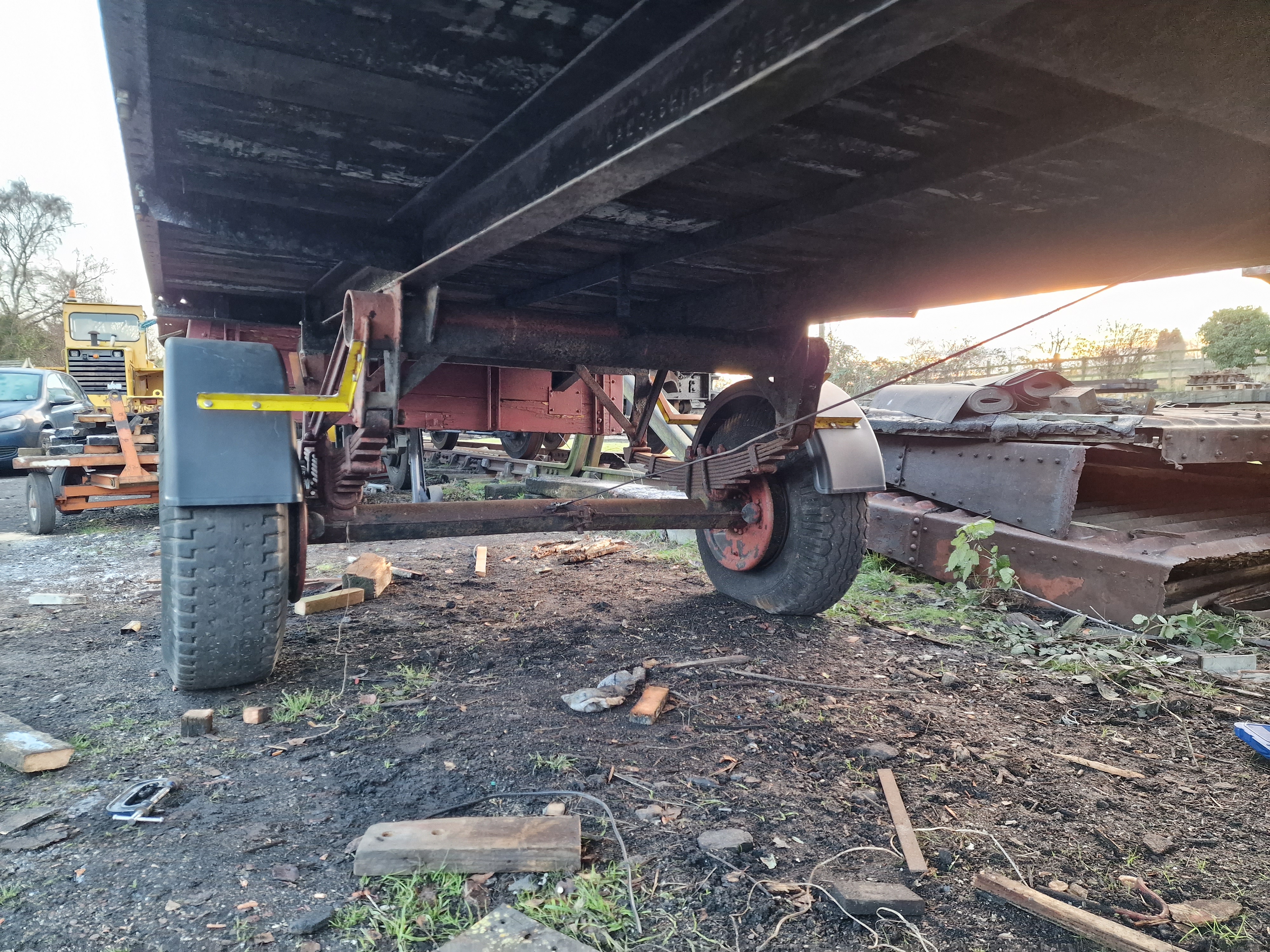
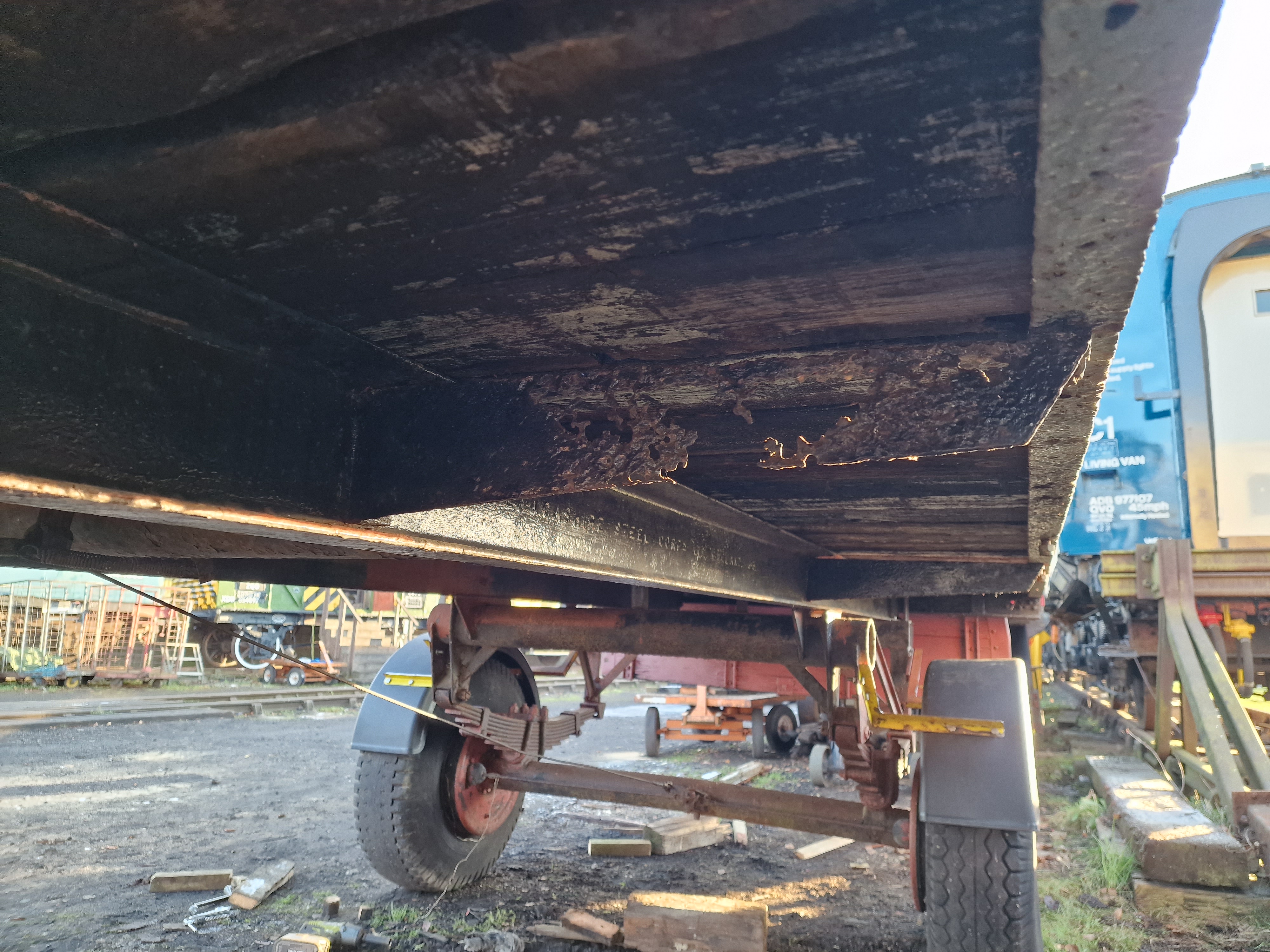
Saturday, and Matt made more progress fitting some new mudguards to the NVR trailer, followed by an assessment of the rear tailgate.
Then repaired one of the kerb rail supports that had a little oxidation
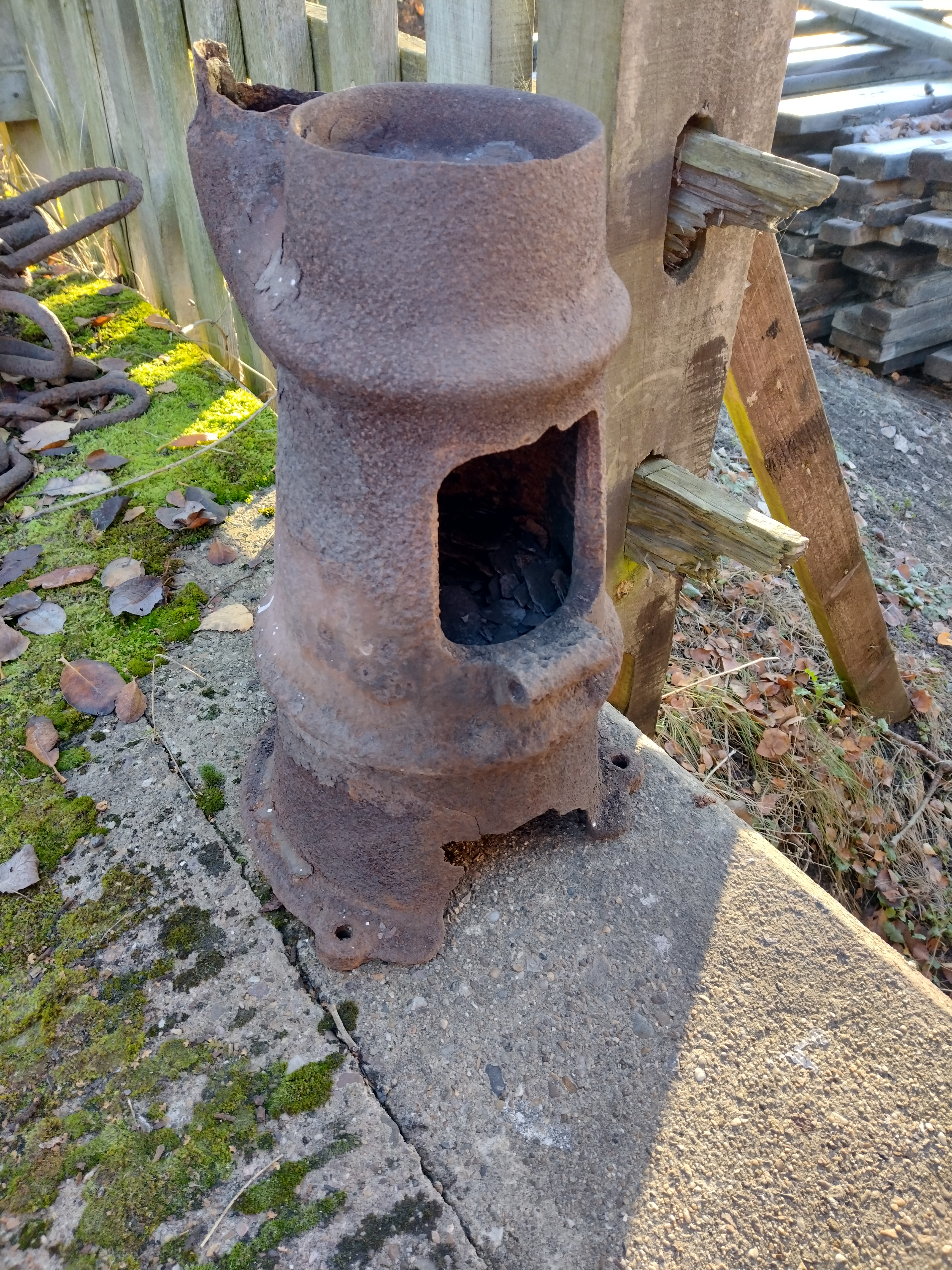
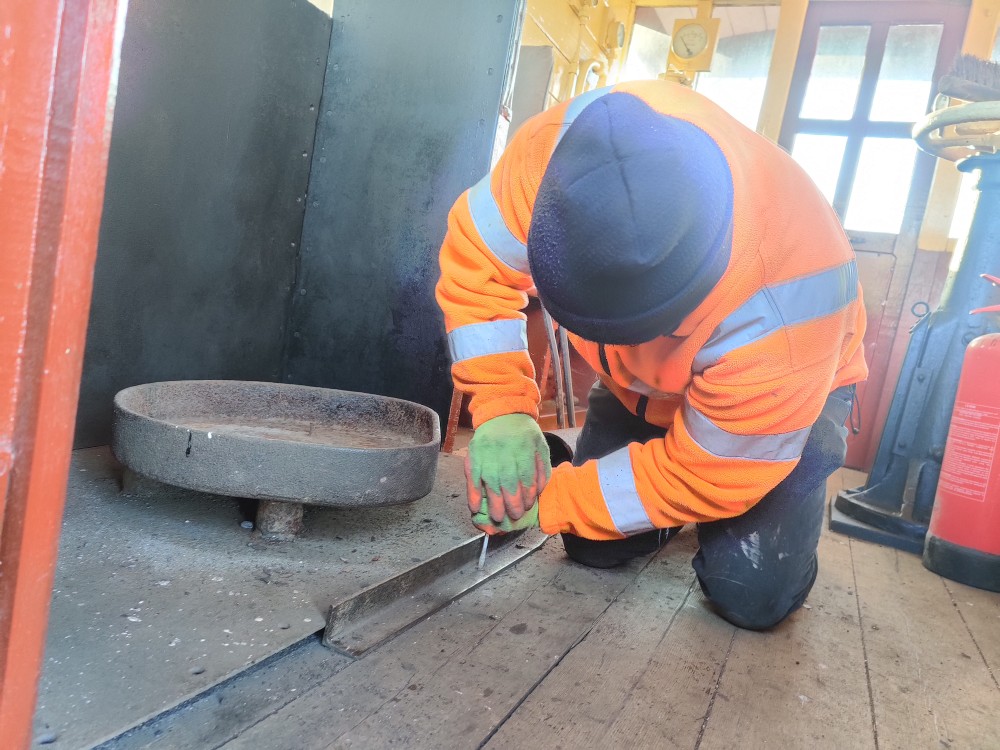
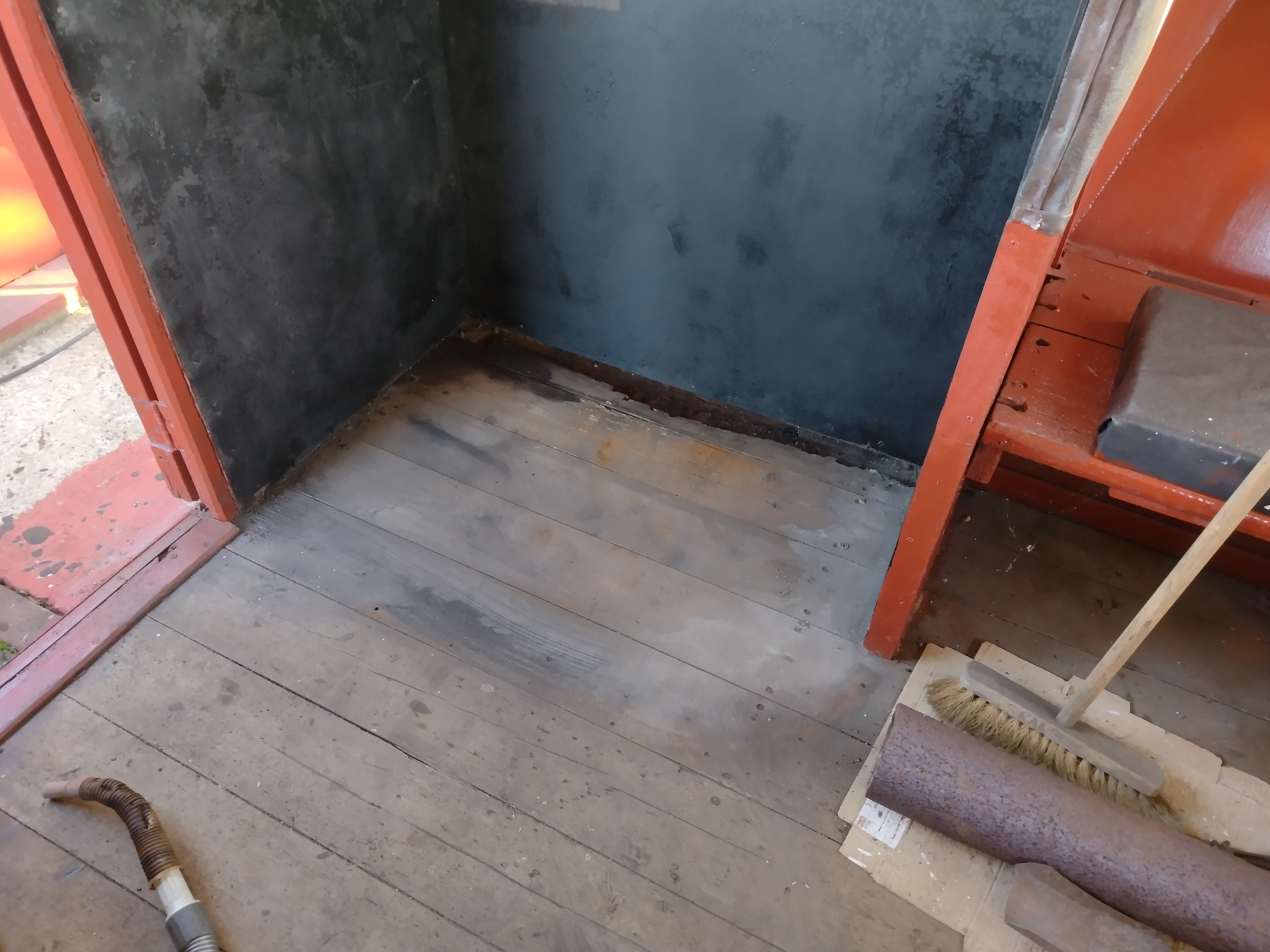
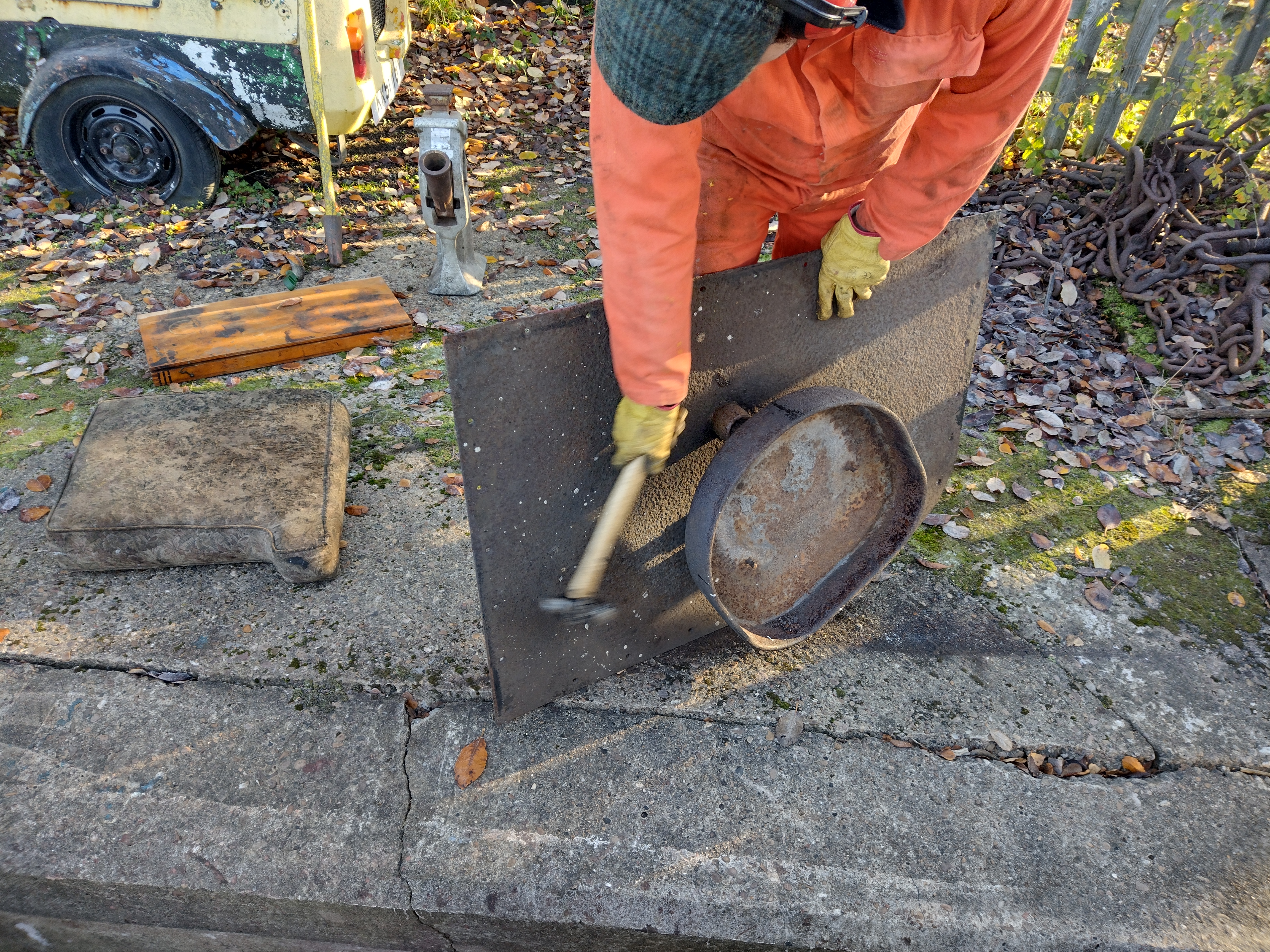
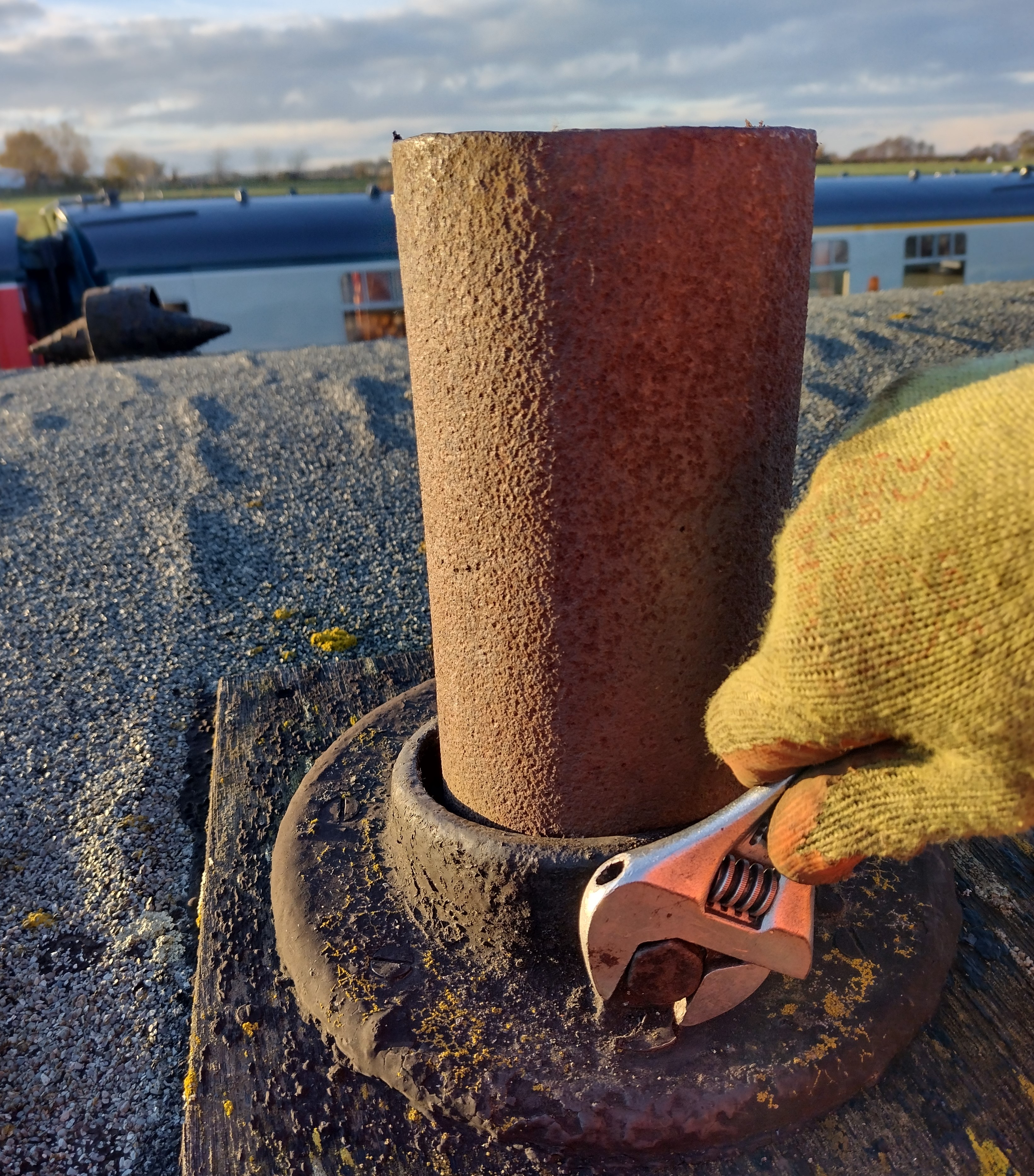
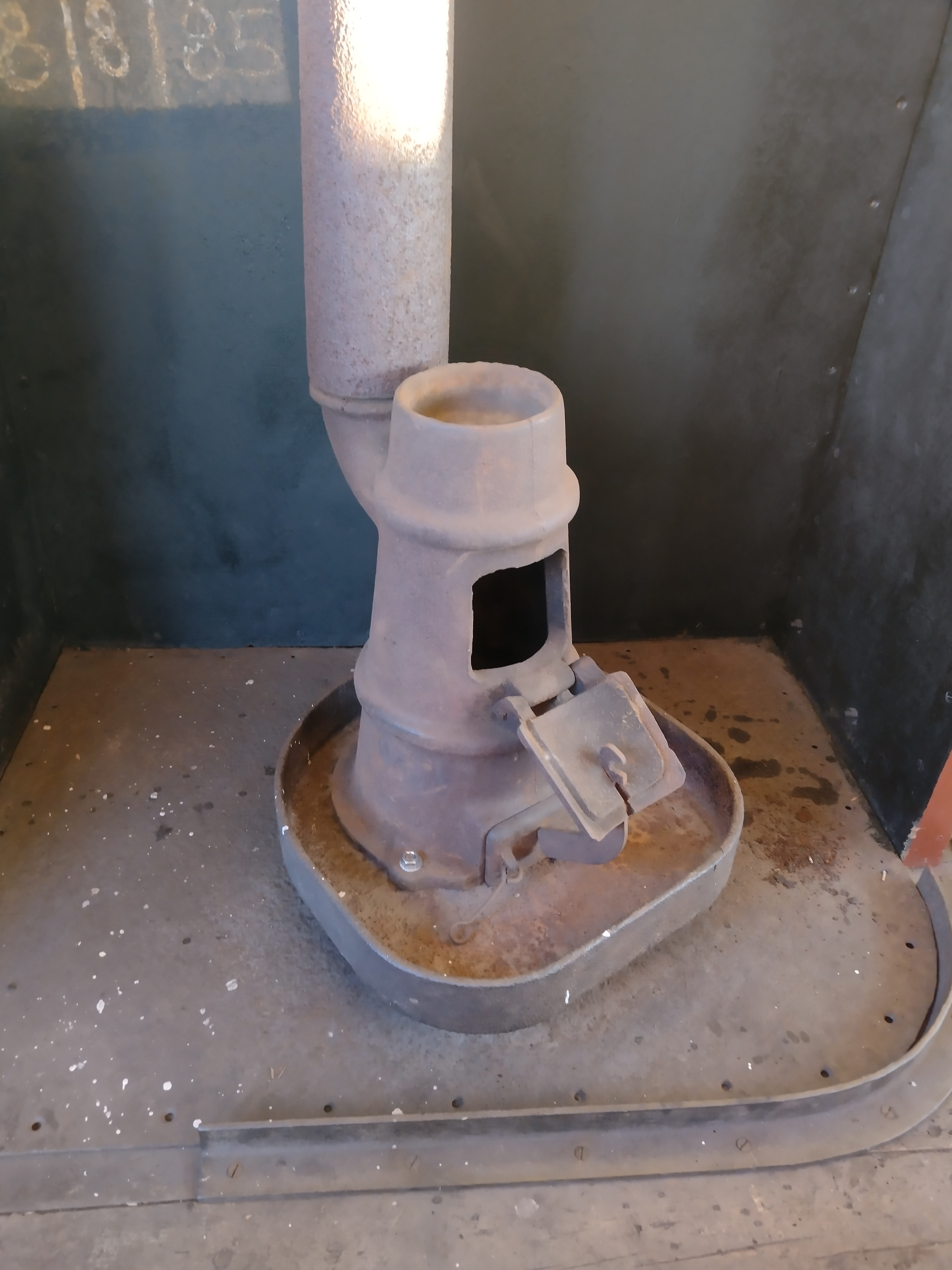
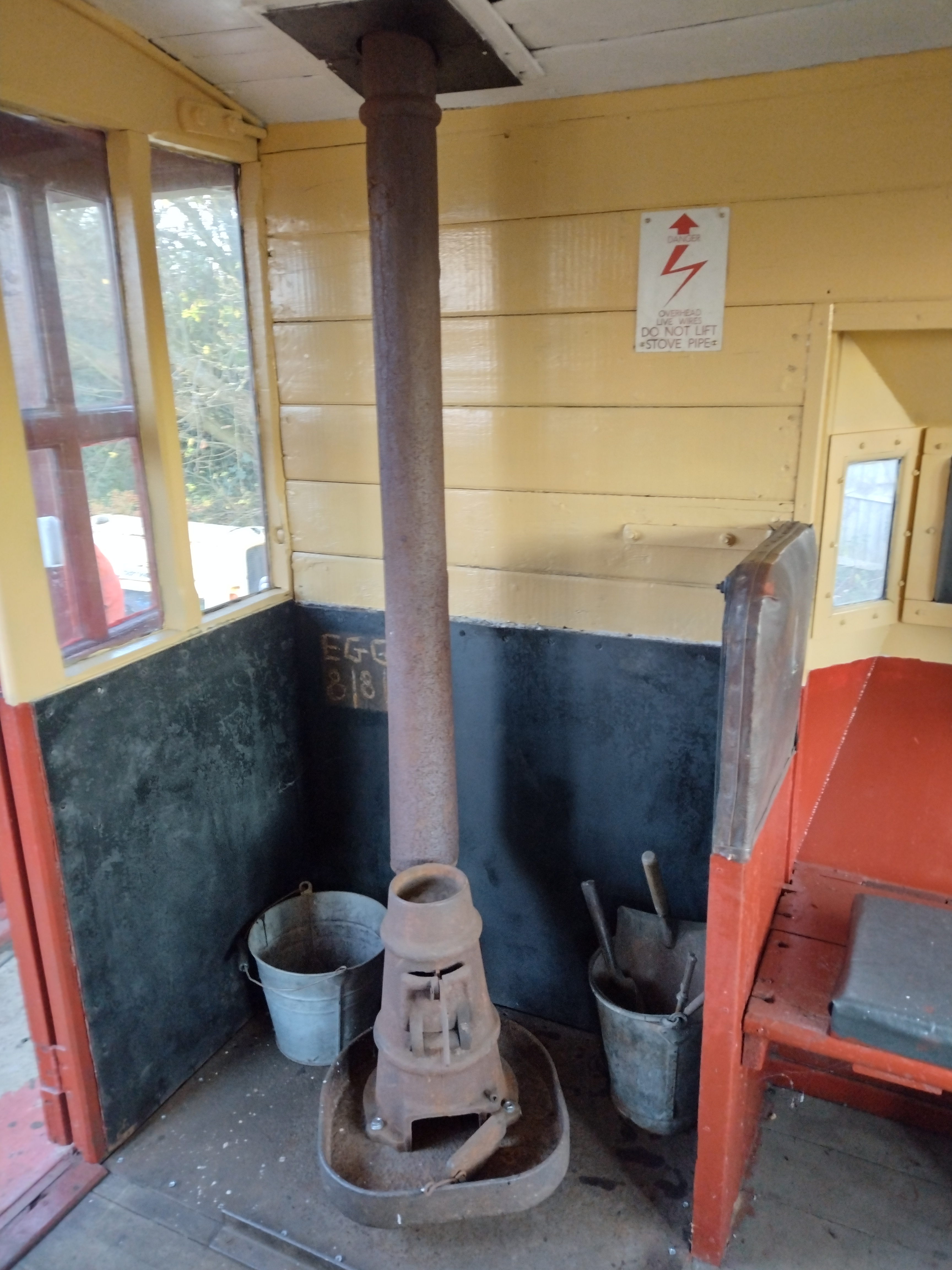
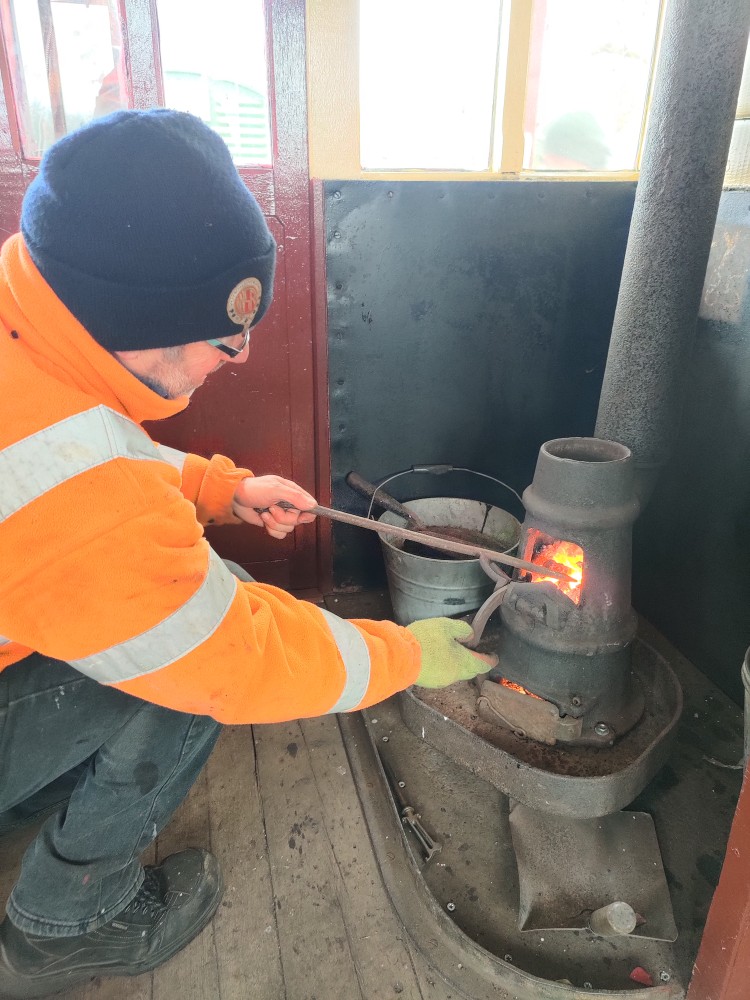
Myself and Ross turned our attention to brake van B954546, this vehicle was externally restored whilst at Rothley 2 years ago; however the interior had not been completed. We set about removing the very damaged stove, its stove base tray and baseplate; then cleaned the inside of the van.
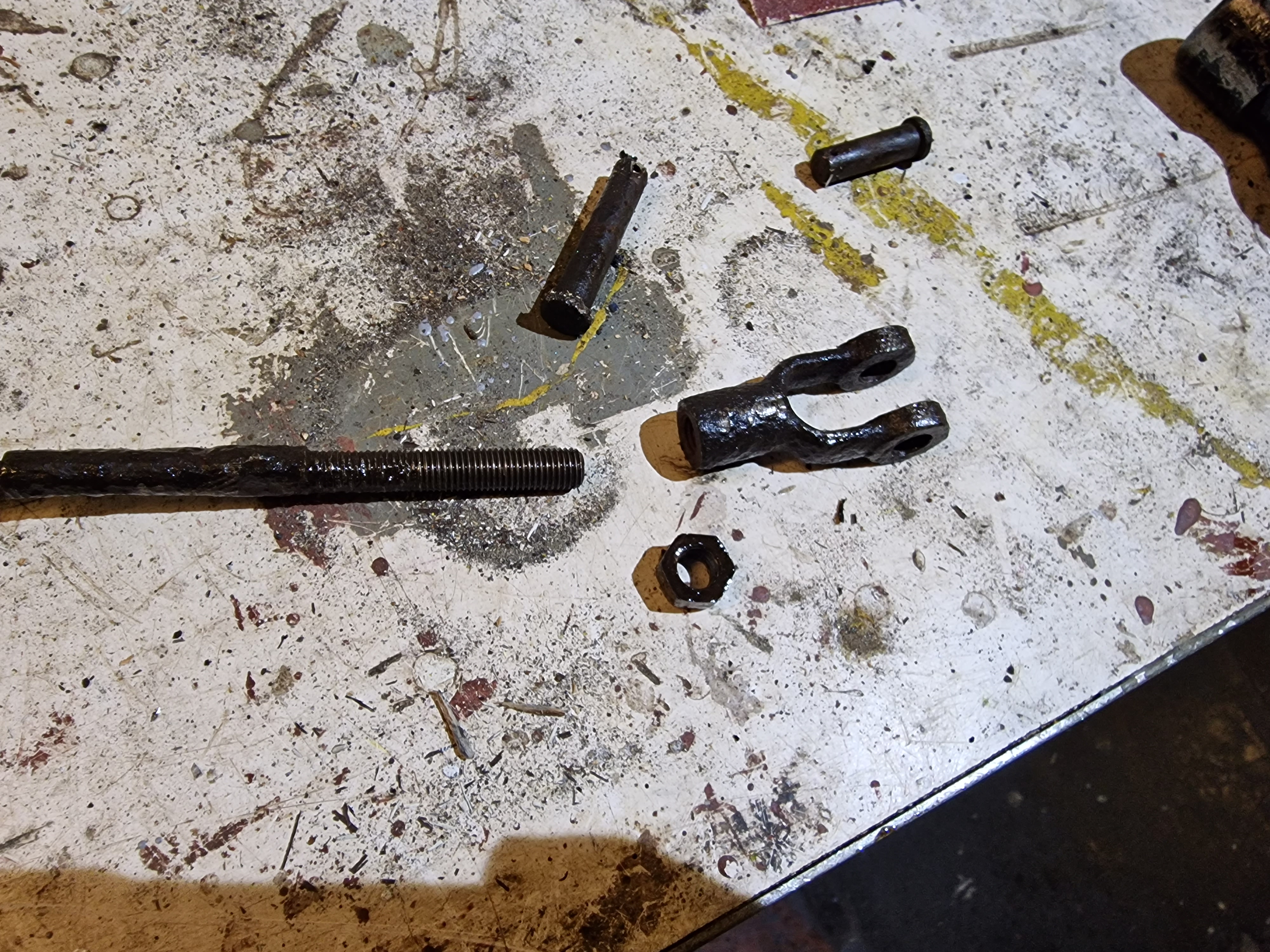
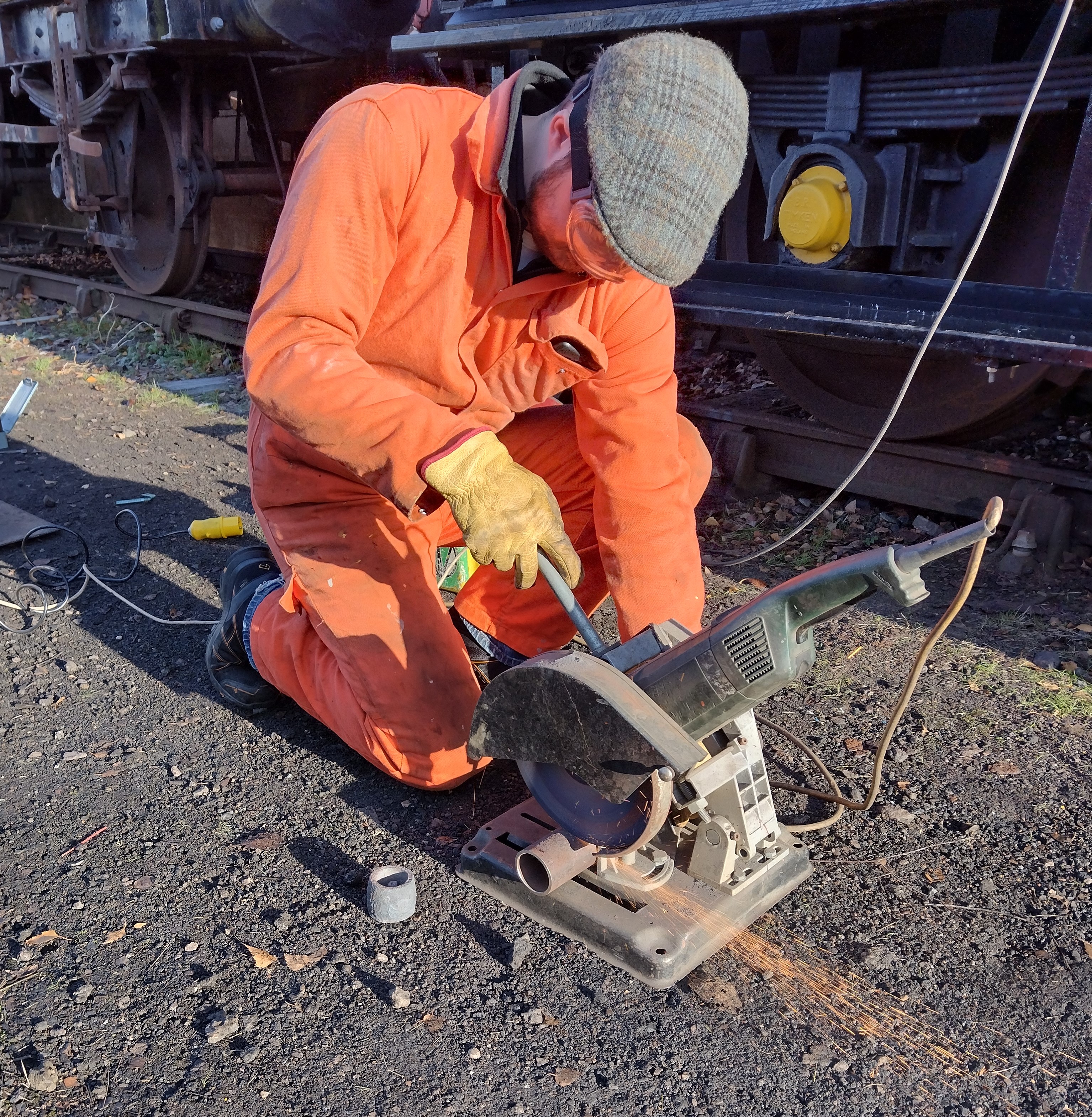
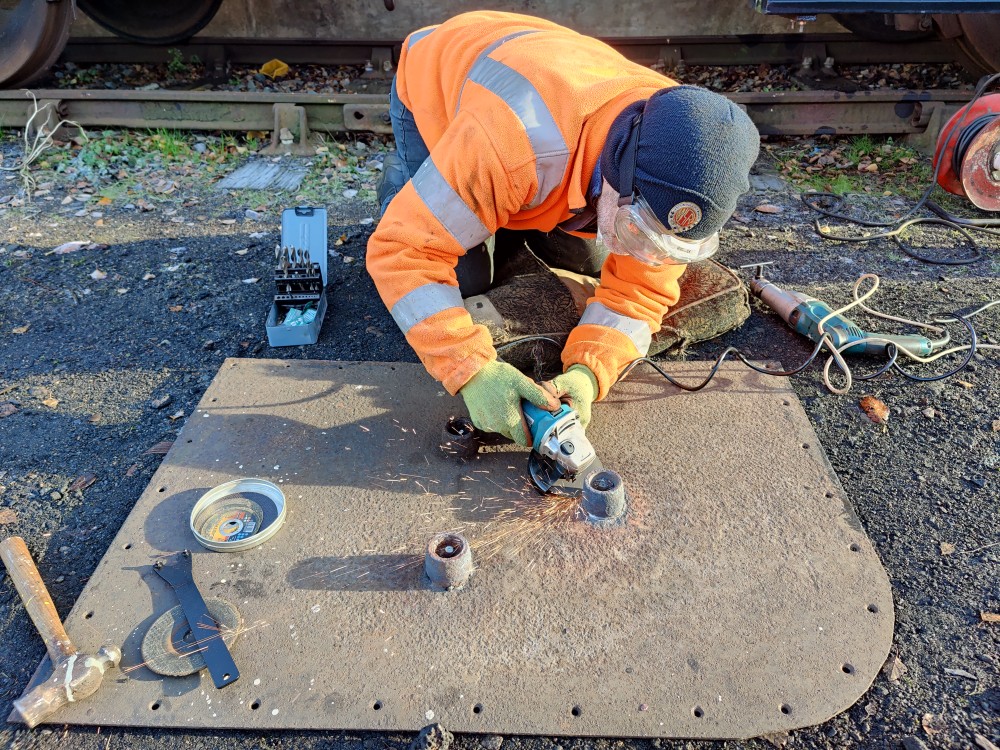
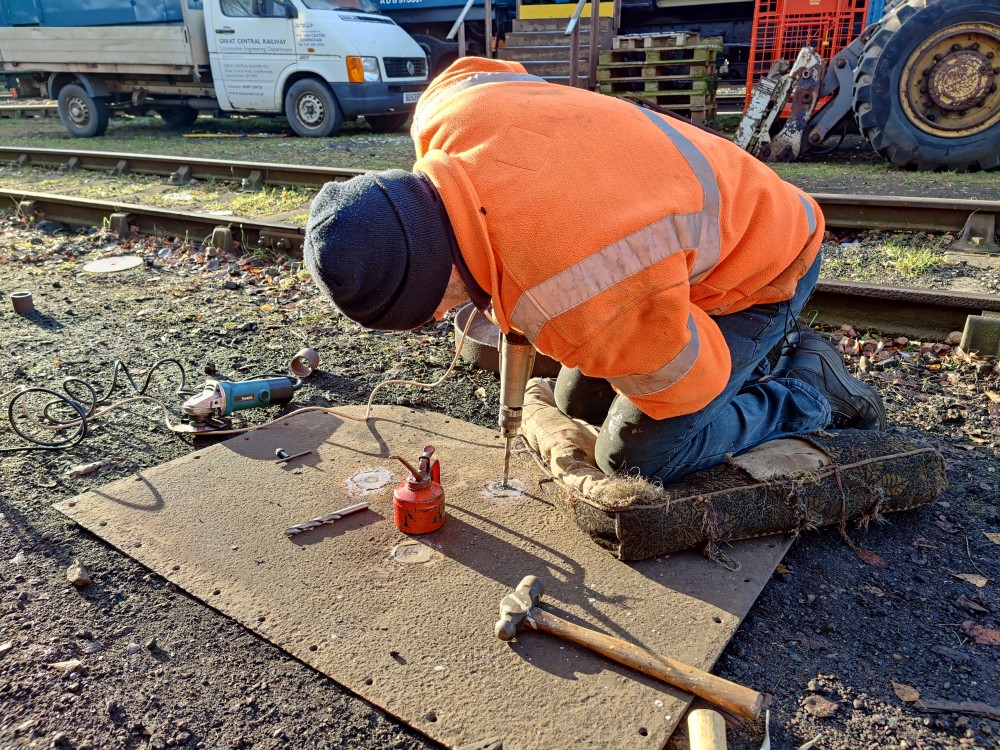
The stove mountings on the baseplate had wasted badly and needed replacing, which meant the stove base had to be separated from the main baseplate. Once free we tried to remove the remnants of the old bolts, unfortunately these all sheared and the mounts needed grinding off. New mounts were made from sections of 2″ pipe cut to length.
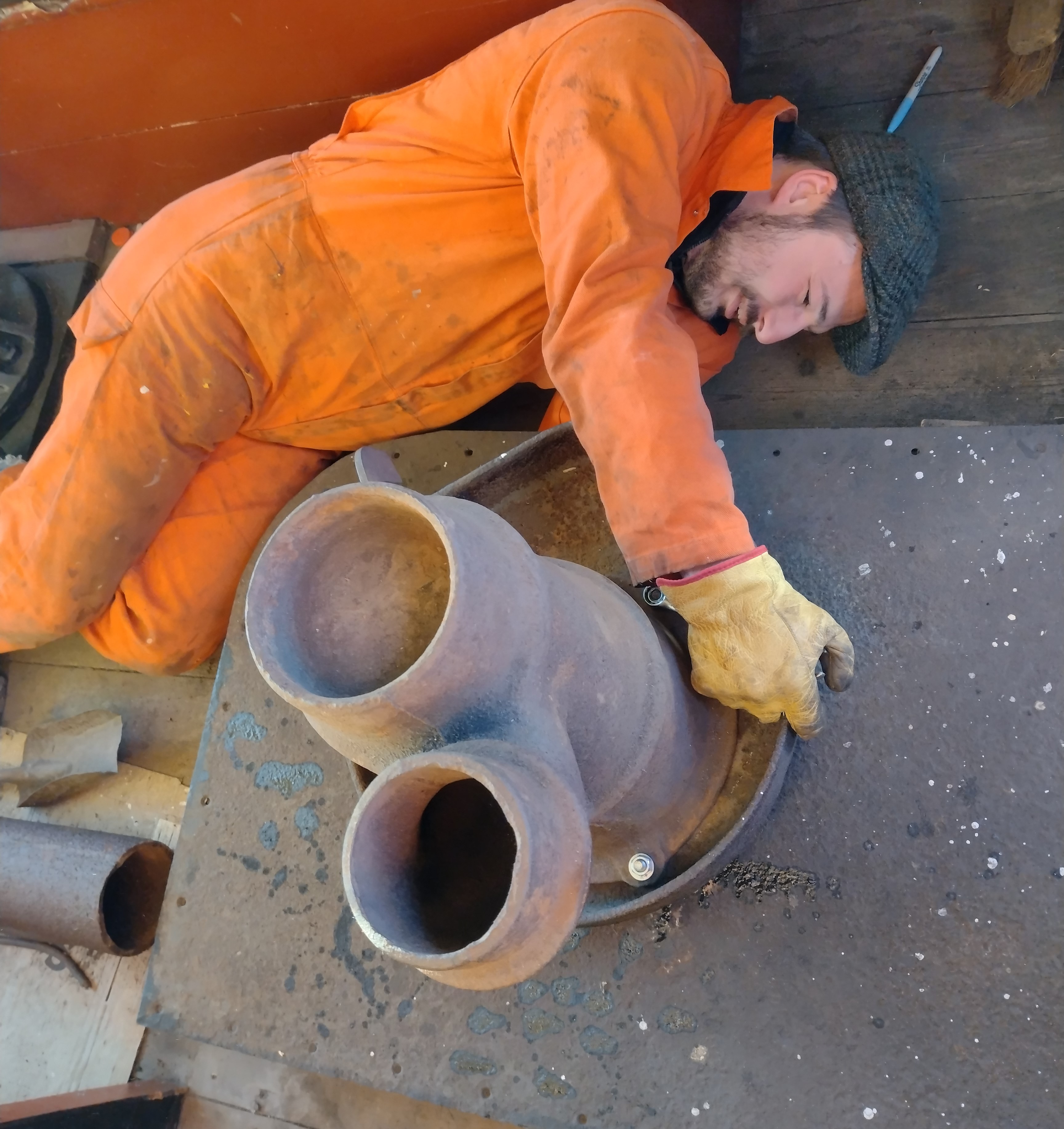
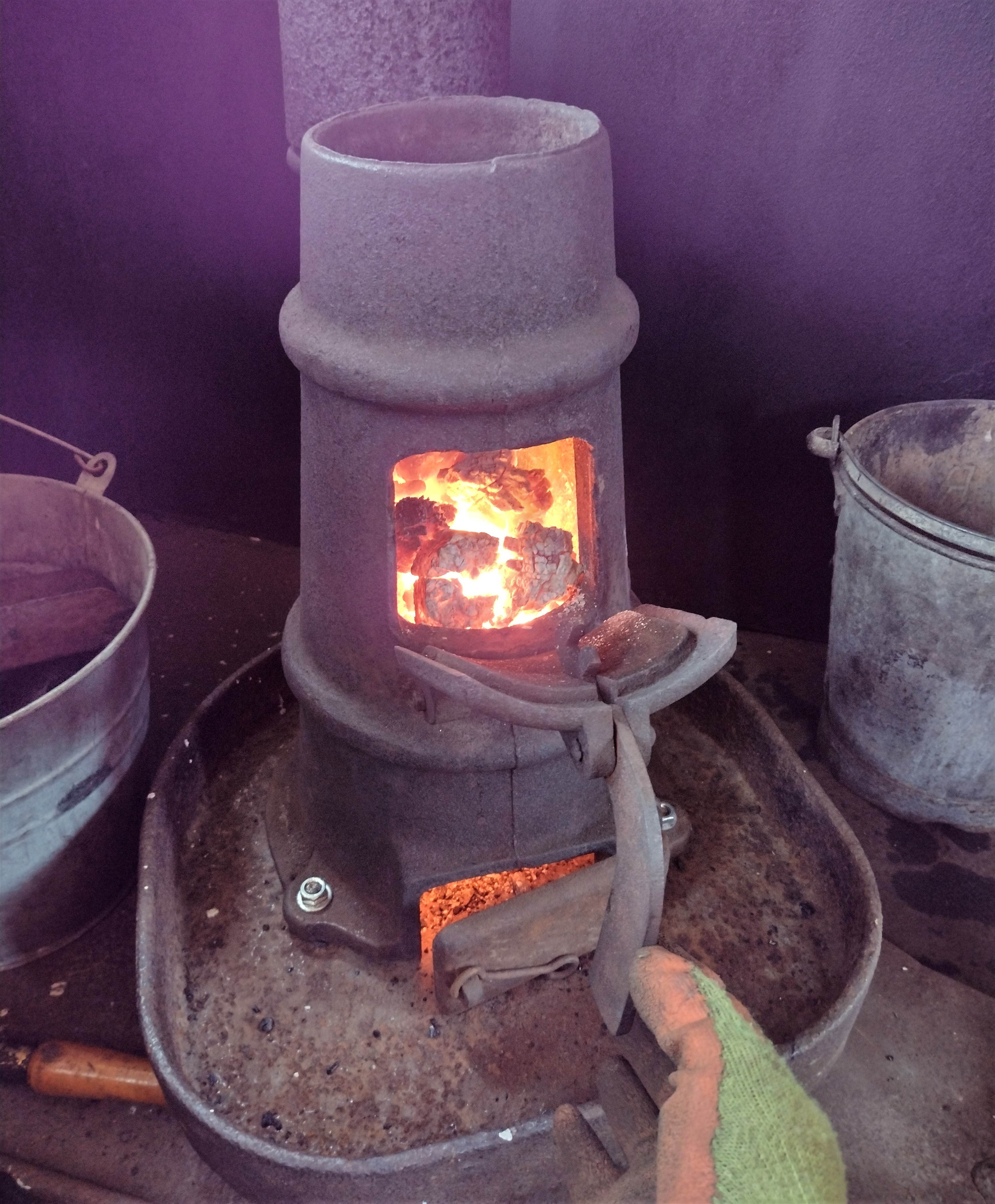
The baseplate and stove base were cleaned and re-assembled with a replacement stove from the spares stock. Once this was nurtured back into place the stove pipe was fitted and secured by the clamp bolt on the roof.
Grate plated were installed and the whole installation looking very presentable.
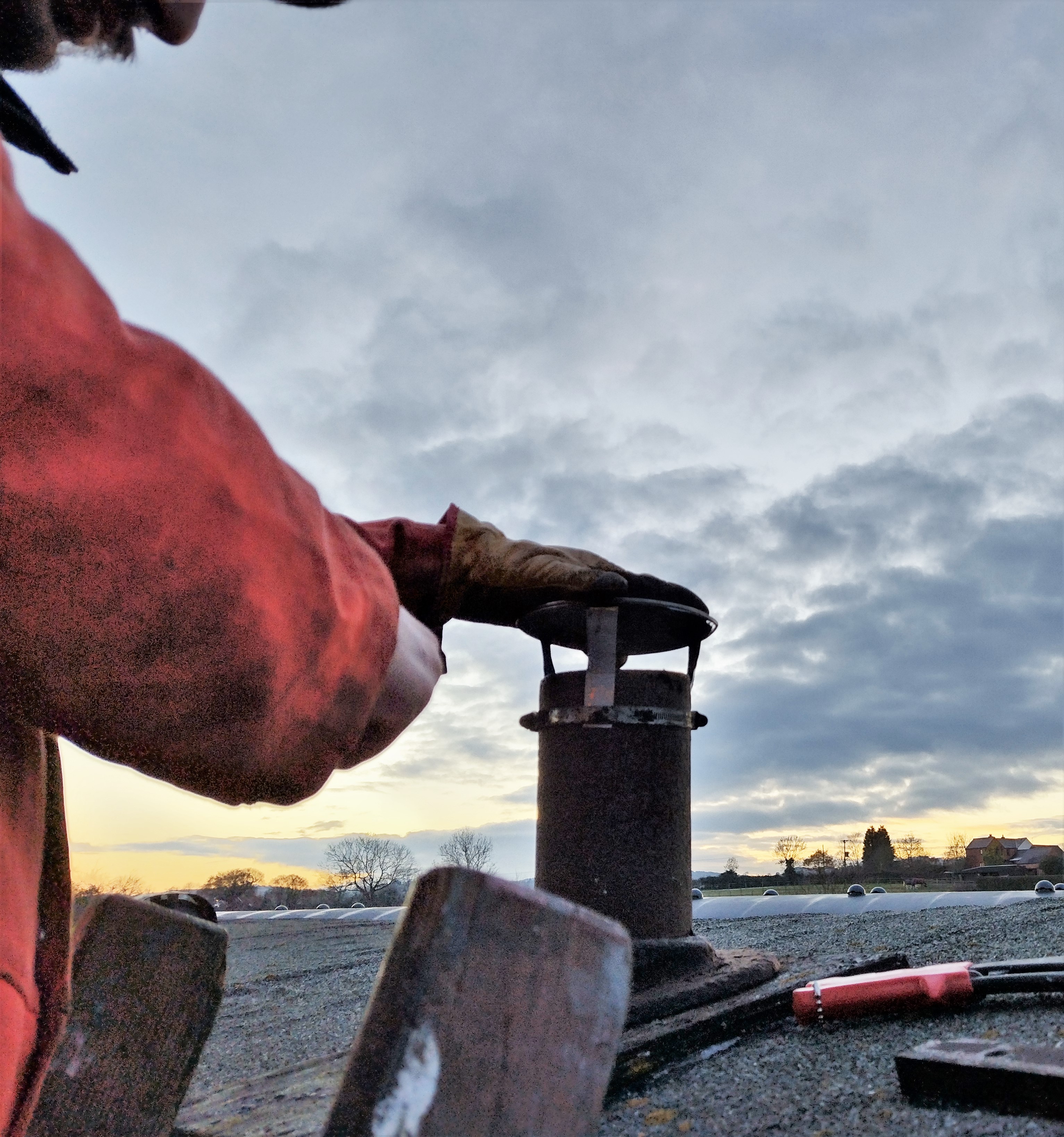
To protect the top of the stovepipe Ross fabricated a cowl cap which was secured in place as the light faded.
Sunday was a celebration day for Nick, 60 years young ! Many Happy Returns Nick.
Despite being full of cake we still cracked on with the brake van; the stove had to be tested. The fire was lit and soon warmed the brake van up nicely. An infra-red thermometer was used to check temperatures around the stove, stovepipe and mounting plate.
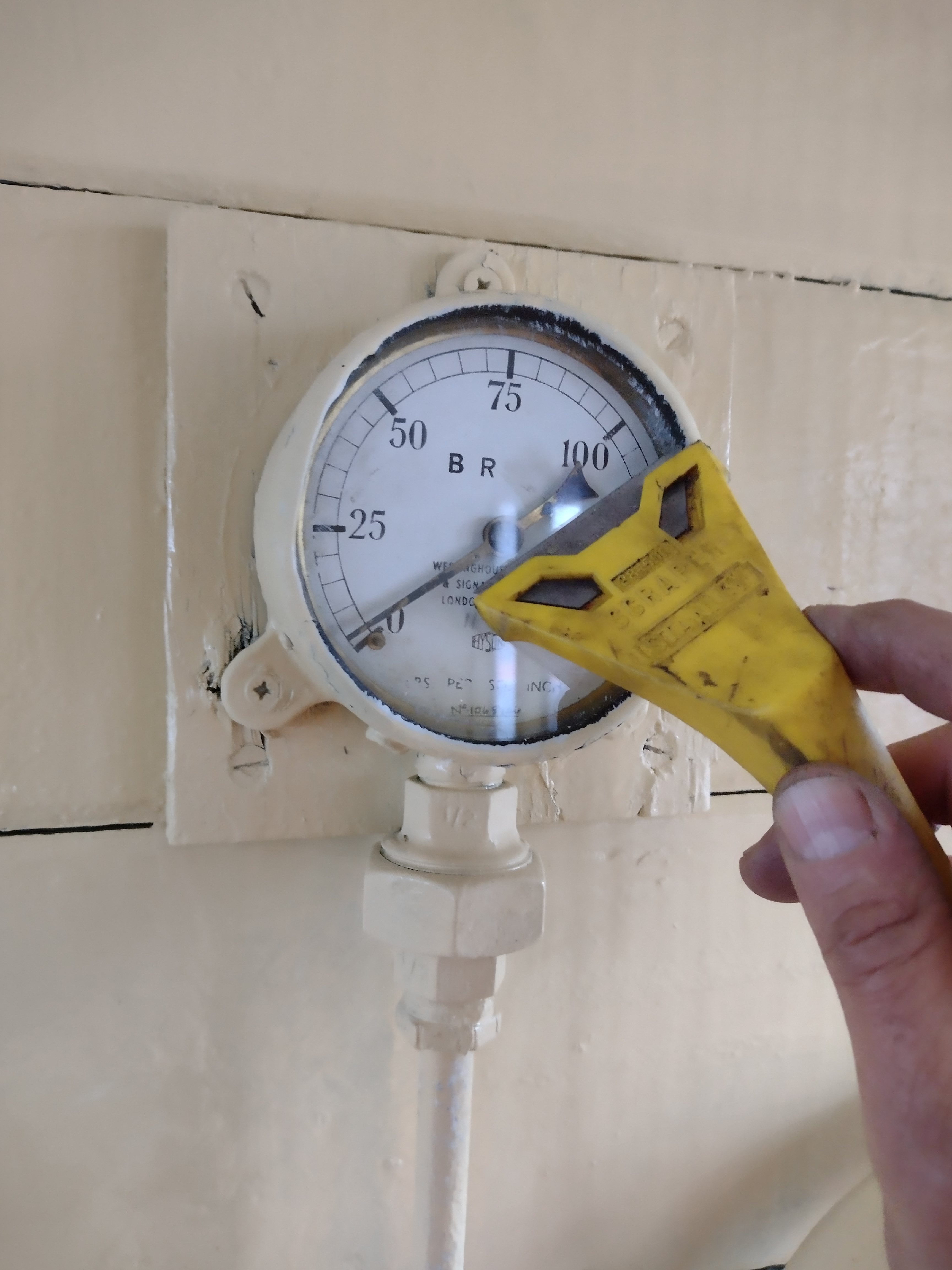
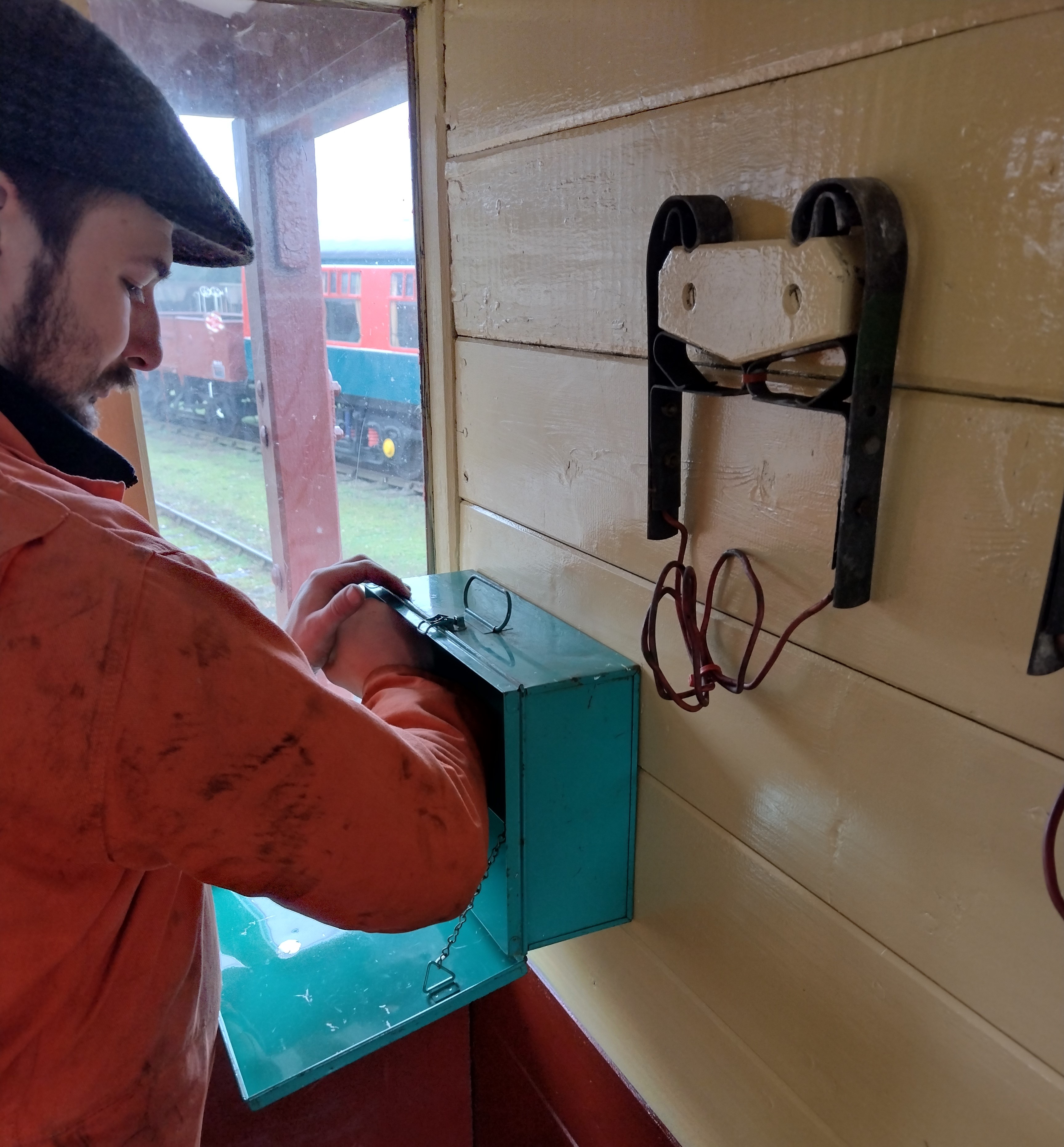
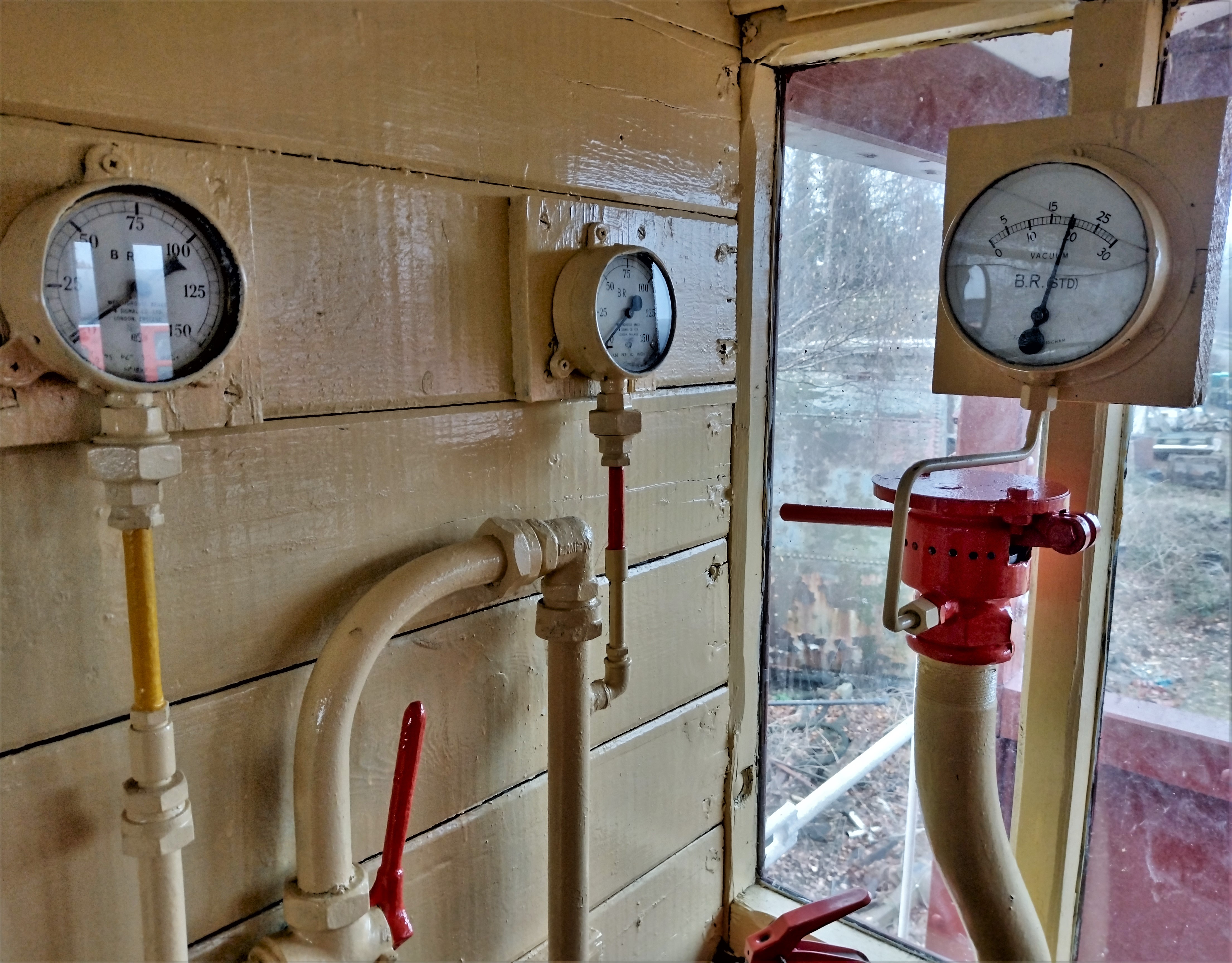
The brake gauges & windows were cleaned up, and the first aid box fitted along with the track circuit clips.
The air brake handle, main reservoir & brake pipes were painted along with the vacuum brake application valve.
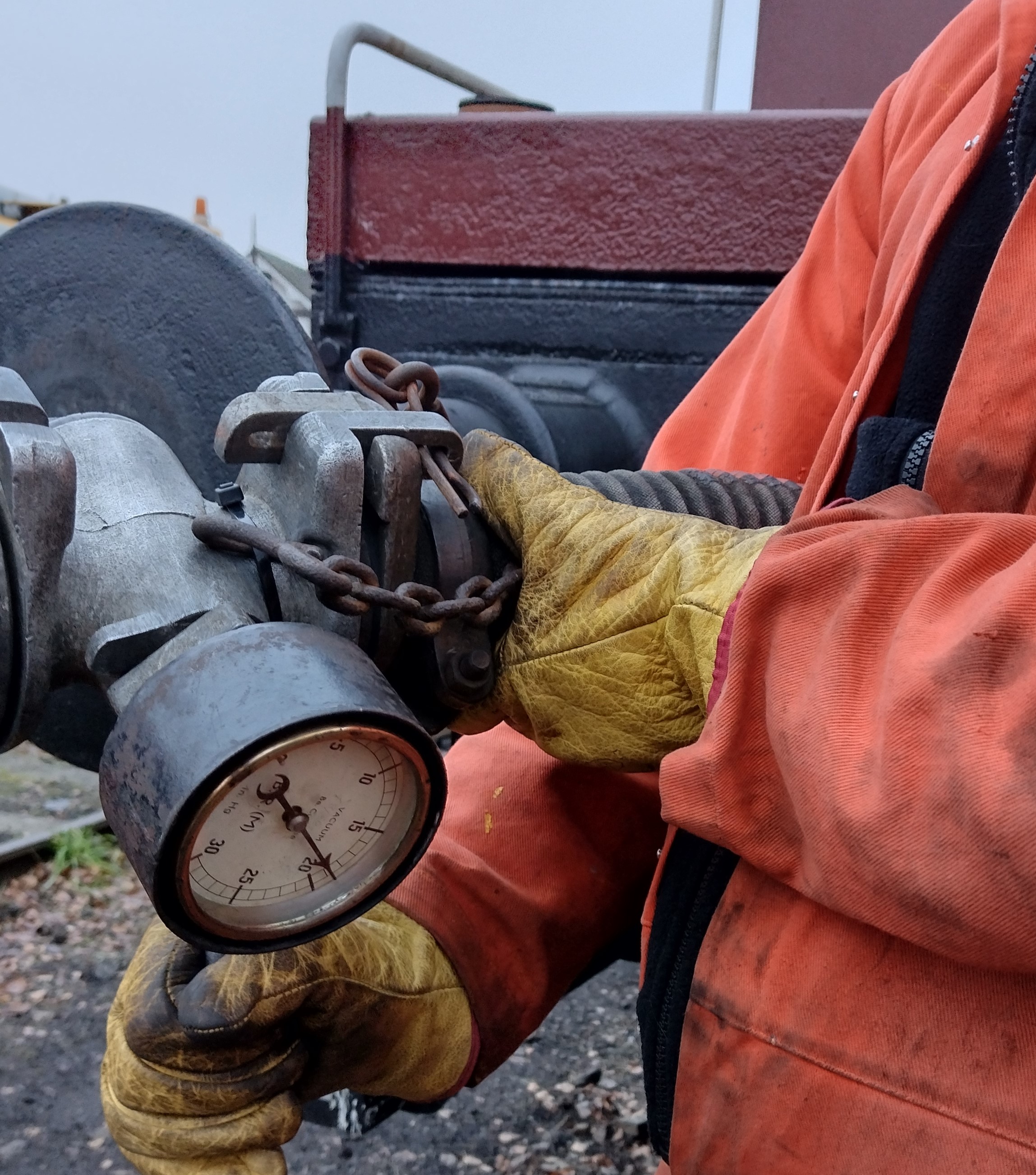
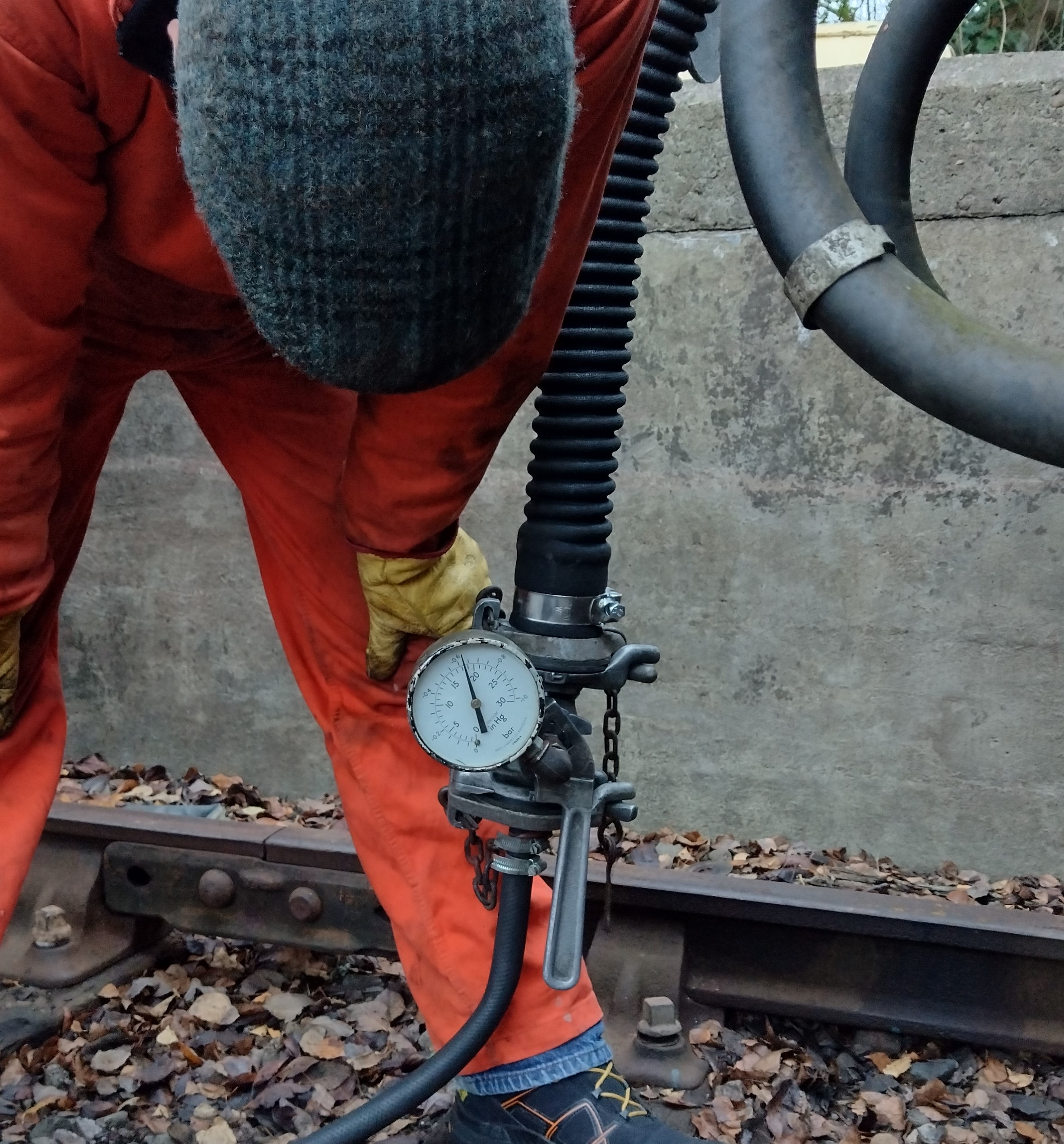
It was then time for a vacuum brake test; the test rig was coaxed into life however an initial leakage test highlighted a leak somewhere on the brake van that needed attention.
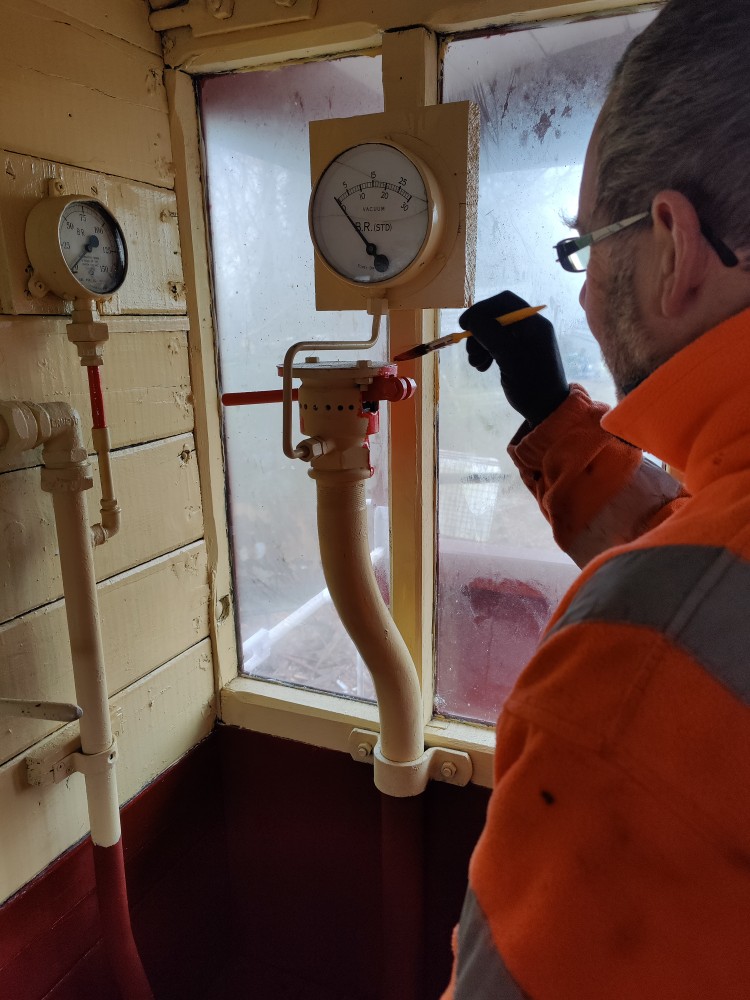
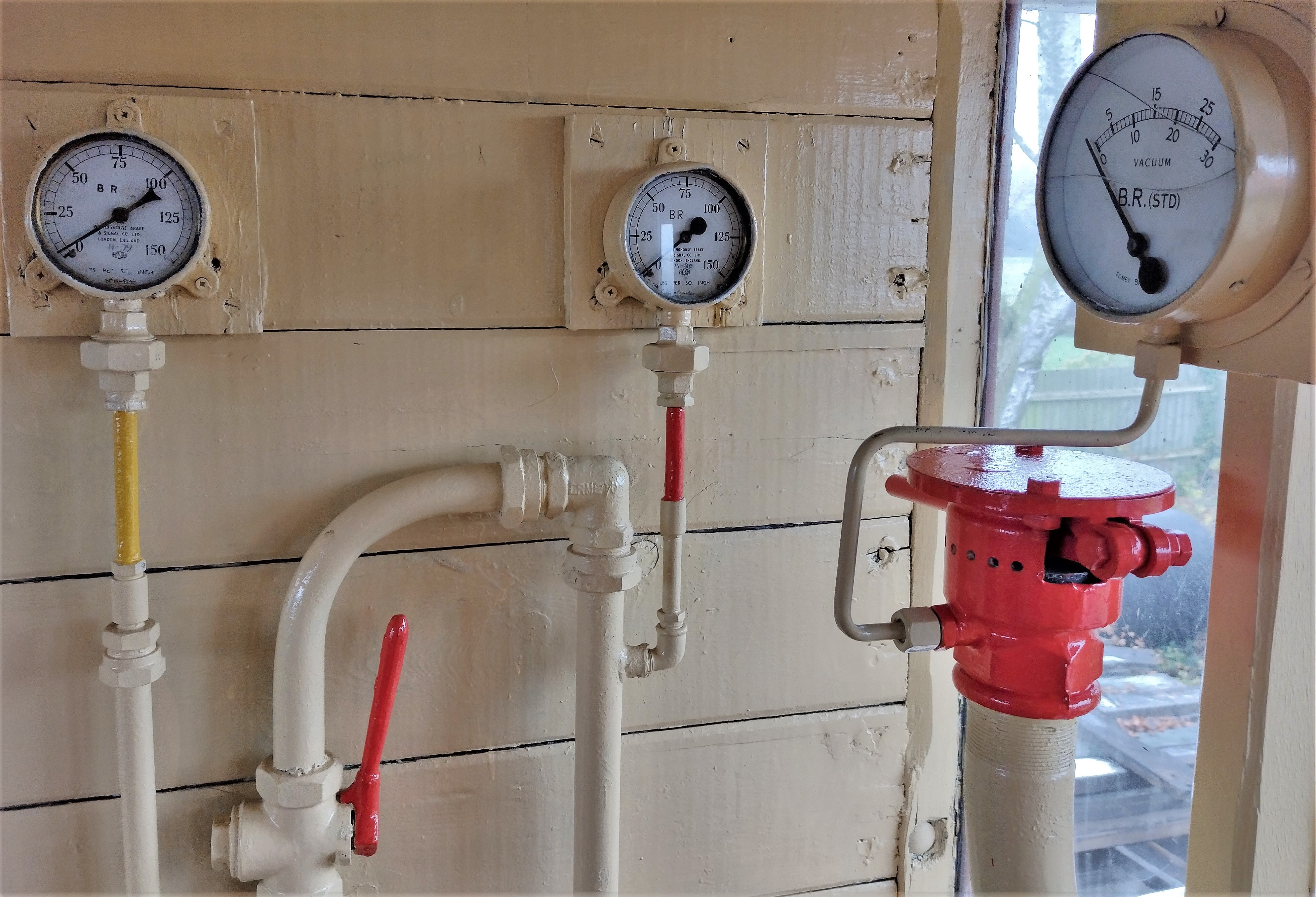
The vacuum brake application valve inside the brake van was found to be leaking slightly, so the valve was dismantled, cleaned and the worn seal replaced. After re-fitting the fresh red paint did need touching up .
Other leaks were found in the south end brake pipe and also at the vacuum branch pipe connection to the cylinder, both being replaced before retesting and obtaining an acceptable brake pipe leakage rate. The brake cylinder leakage was then checked, this was also acceptable; the brake still remaining fully applied 2 hours afterwards.
This completes the work on brake van B954546 which will now be available for operational use once signed off by the C&W department.
Welcome to this weeks’ Last Hurrah update, Lilibet and two tanks get some attention.
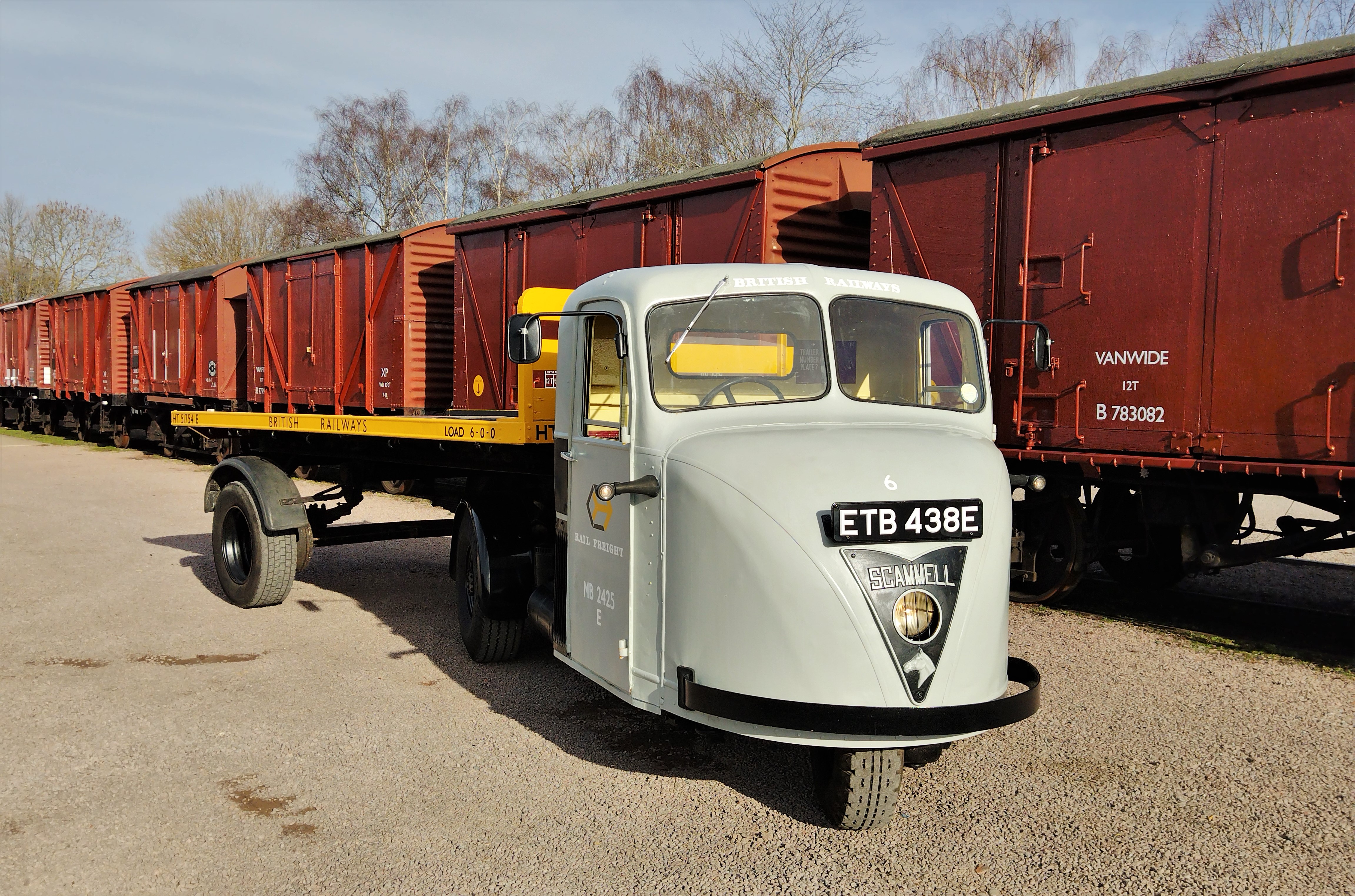
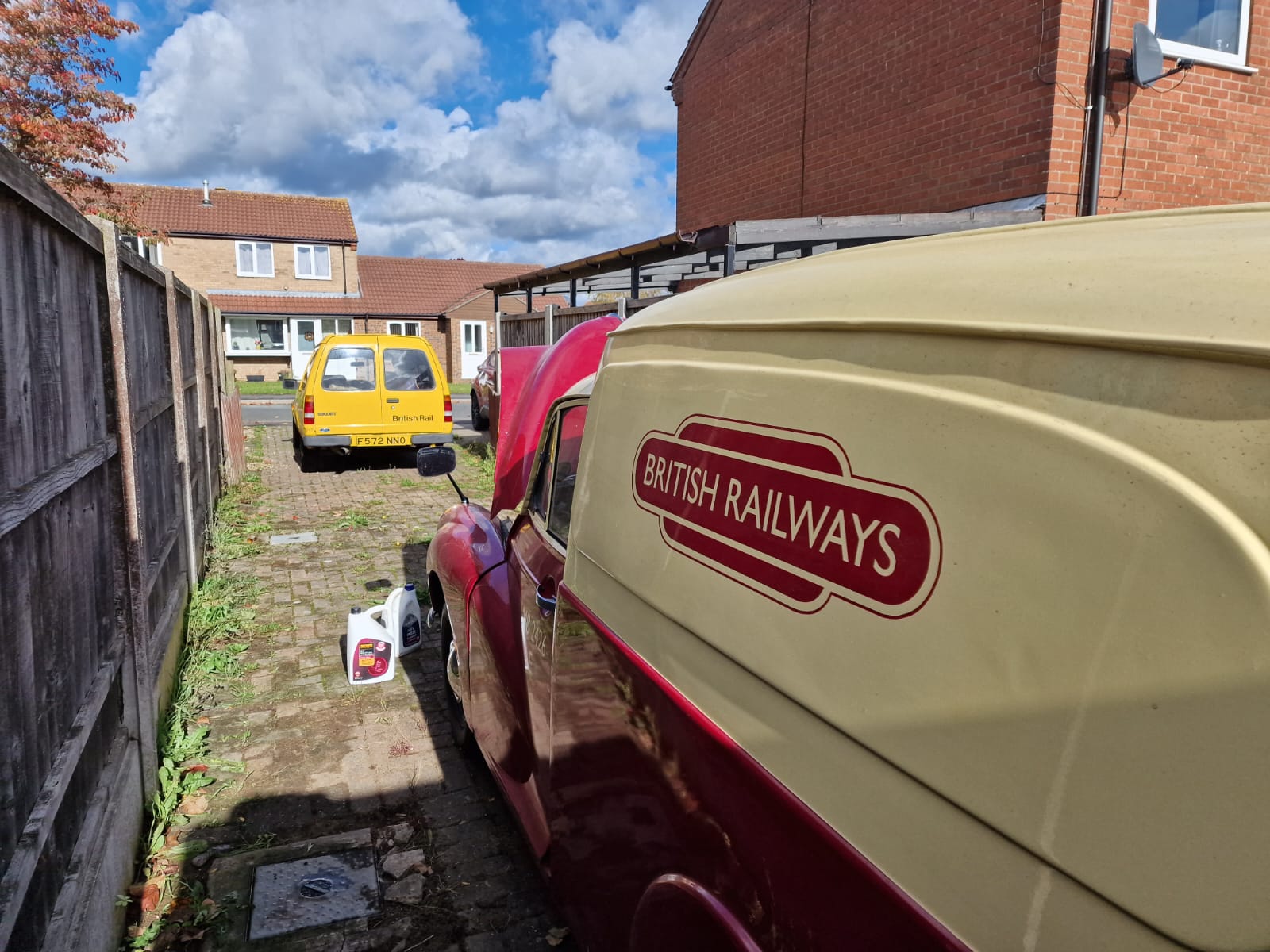
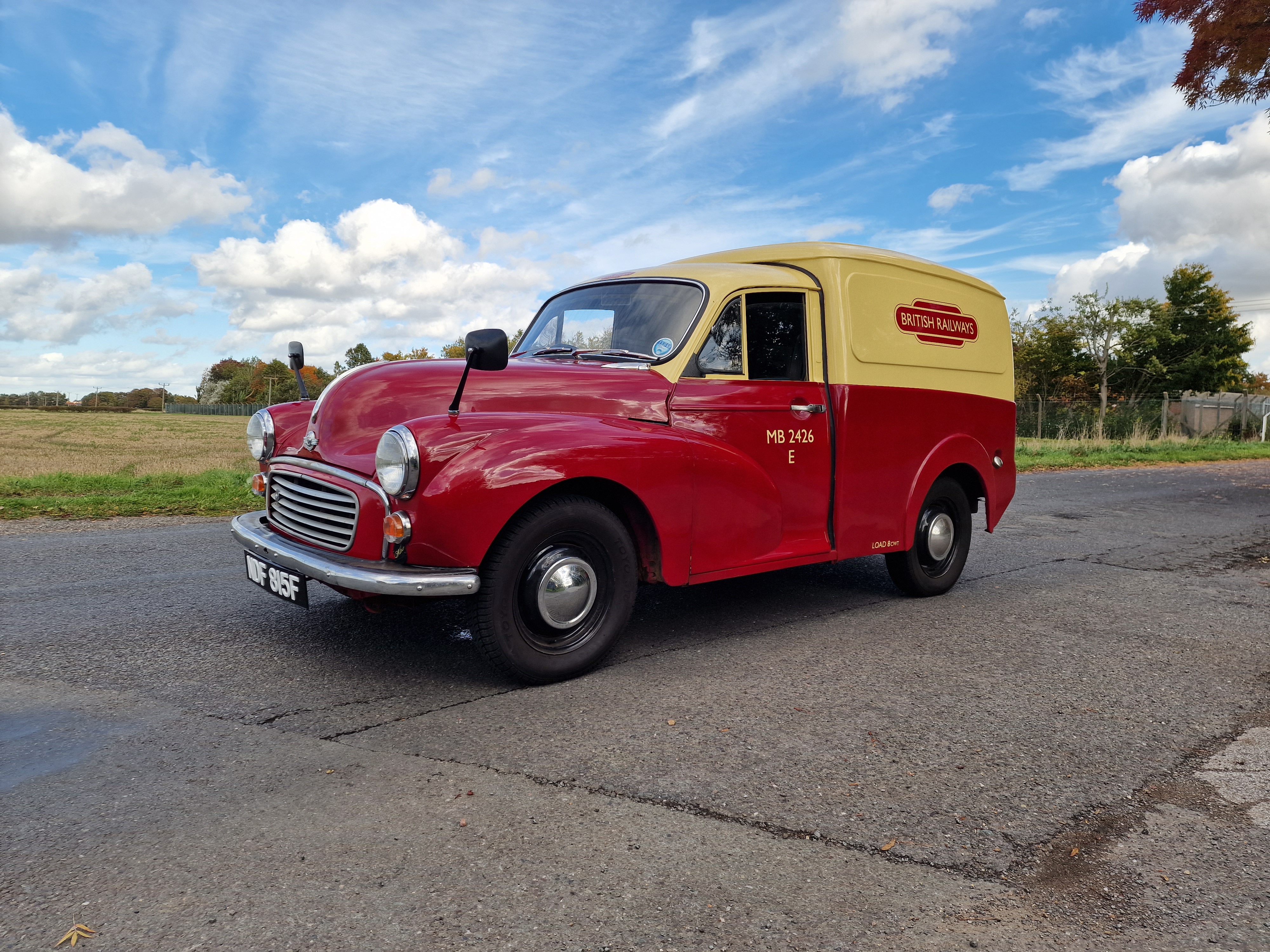
So who guessed Yellow? Matt would never be that predictable, for those who haven’t seen, Lilibet now carriers the 1963 Grey Railfreight livery trialed on a number of vehicles before the adoption of BR yellow.
Going back to Monday with Matt returning to Quorn once FedEx had paid him a visit. Two coats of BR Unfitted Grey were then applied. With assembly of the signwriting templates between coats.
Tuesday and on to the sign writing
Removed components were then refitted and bolt heads painted, as well as those on the rear number plate.
On to Wednesday and Matt joined by Ross removed the wiring loom.
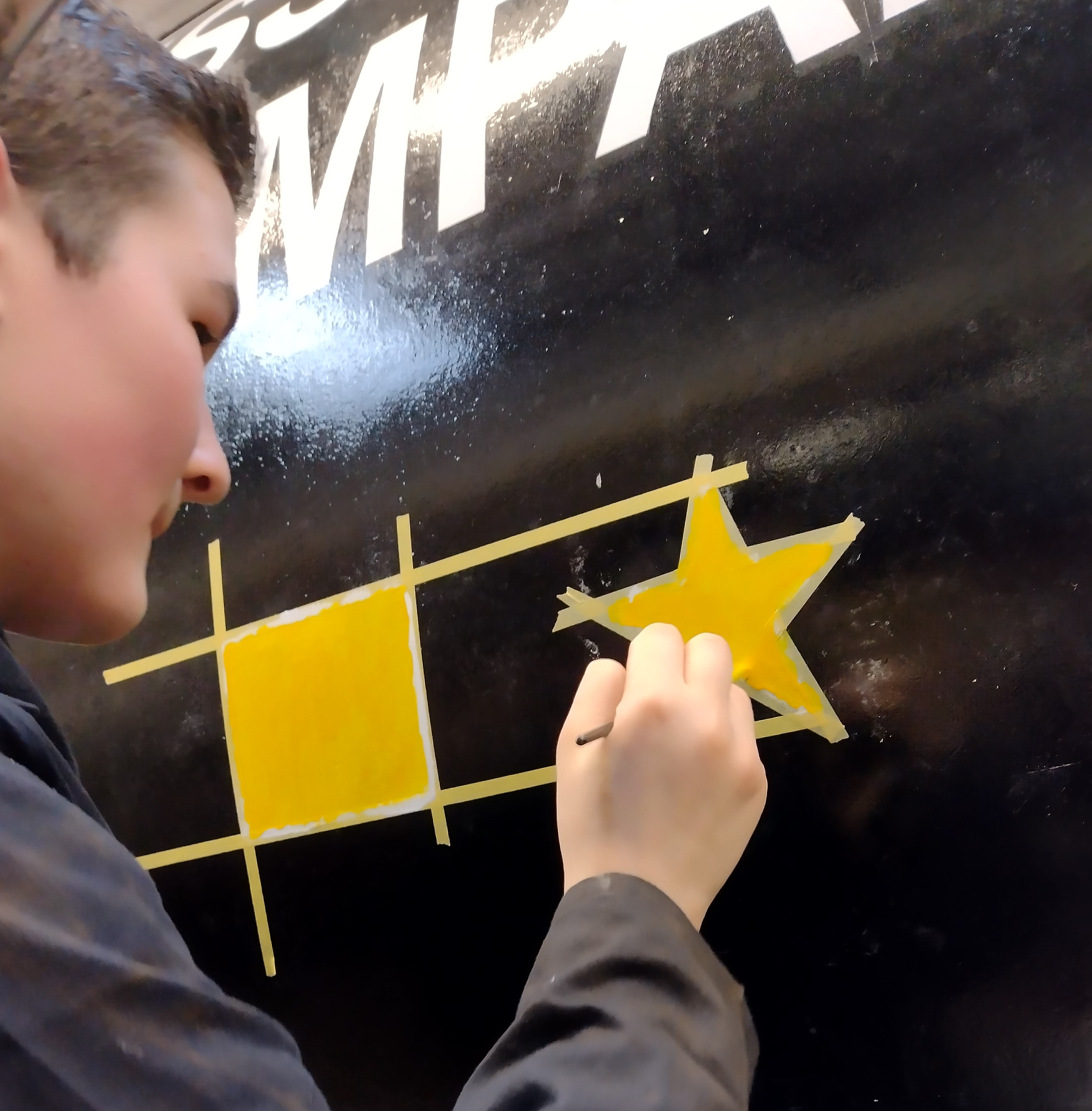
Matt applied some tape and painted the parts of the rear wheels which were red.
Ross had to disappear with other commitments, so Matt made his way to Rothley to assist C&W adding the final details to BSO E9316, applying first coat of Guard, ELP and a vacuum release star to the east side.
Also on Wednesday after a chance conversation and a little bit of archeology, Matt discovered Lilibet’s in-service livery, that of the Mersey Docks & Harbour Board, a simple rendering below;
Thursday, and for Ross the wiring of a new loom, using copies of the original manufacturer’s wiring diagram.
Whilst Matt, second coated the already applied lettering as well as the first coat for the British Railways branding.
To complete the day Matt went back to Rothley to continue signwriting the BSO, second coat of Guard and the load detail added to the east side, as well as ELP and vacuum stars to the west.
Friday followed a similar pattern to Thursday, however Ross installed the loom and started wiring components up.
Matt, applied a second coat of paint to the BR branding, then went and woke Madge up, moving a few trailers and replacing her number plates with the new re-enacting ones.
Items started to come to life on Lilibet, but a dirty fuse box started causing some issues, but she is getting there.
As he has been all week, Matt then went off to a Rothley for more work on the BSO, this time lining the lettering applied to the east side.
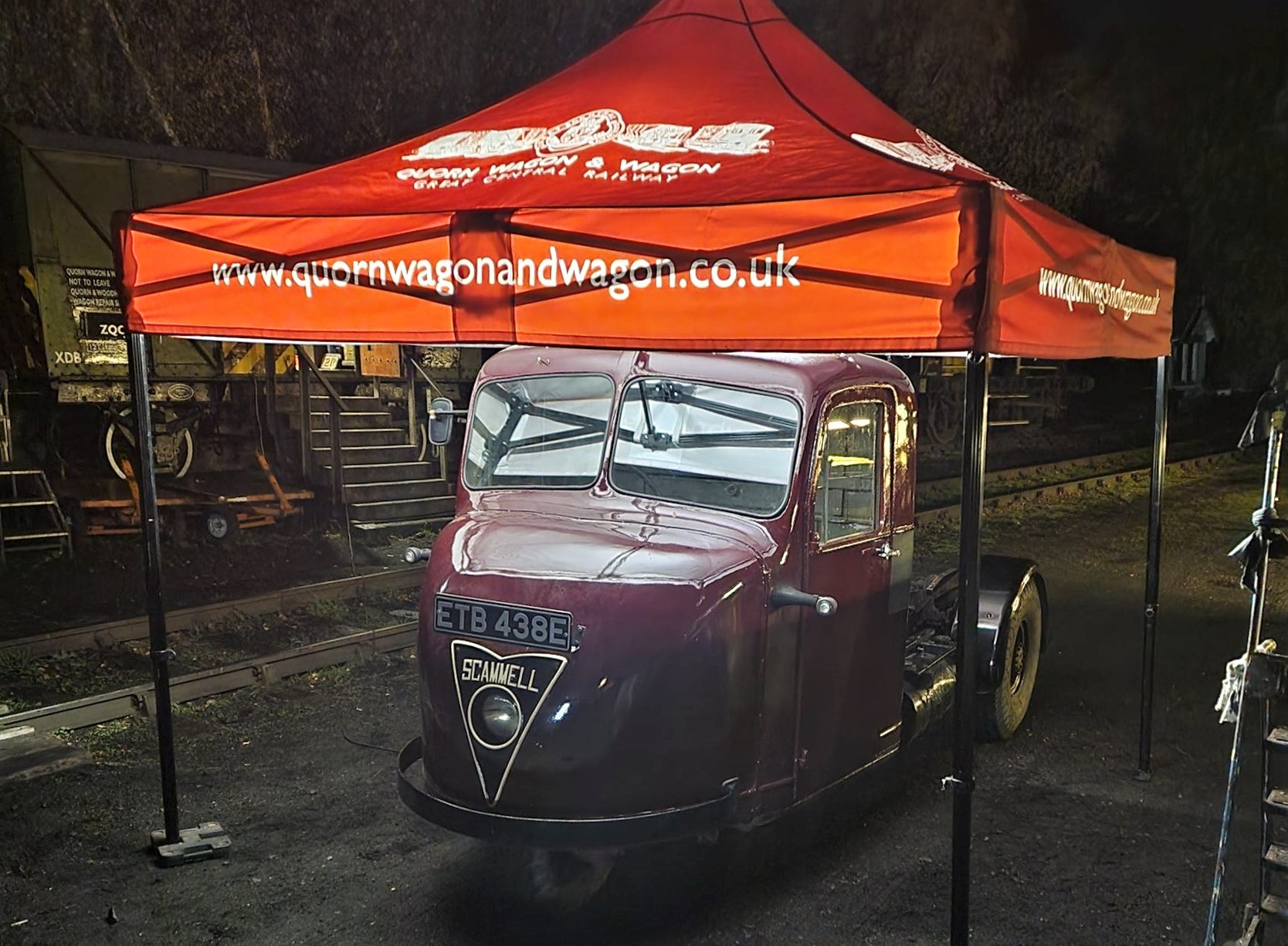
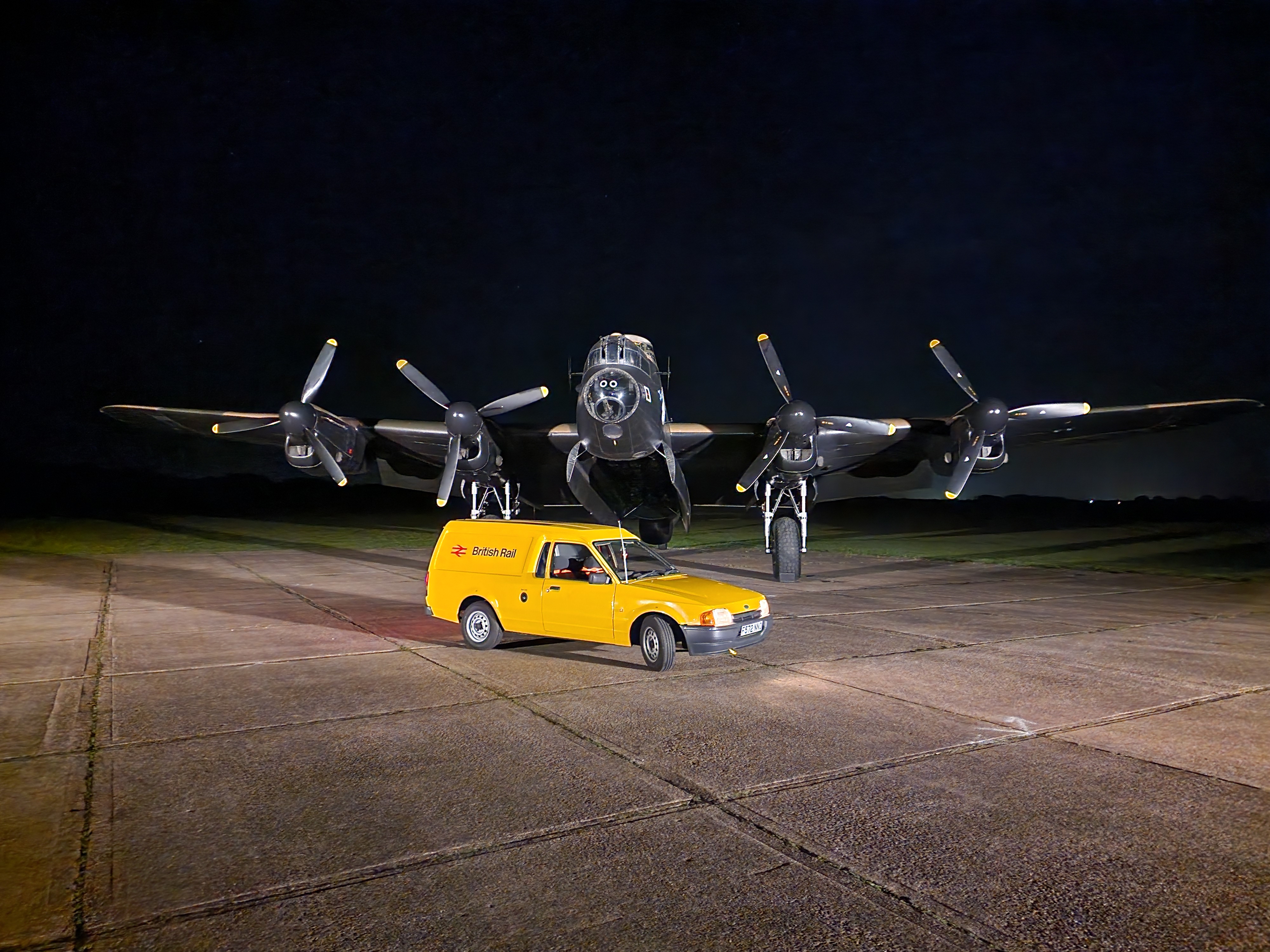
A further visit to Quorn saw Matt refit Lilibet’s engine cover, check the fluids and take a few night shots in the lights of Butler Henderson’s.
Saturday saw the first day of the Last Hurrah. and another first, our two now BR liveried Scarabs together, Lilibet joining Madge outside the good shed.
With most of the team on-site as well as new volunteers Mark, Tom and Dan we decided to tackle the refurbishment of the vacuum cylinder on TSV tank wagon 5209.
The wagon being stabled at the north end of Quorn yard meant we had to move the necessary tools with the help of Zsa-Zsa, Danny, Hector and the Volvo.
The branch pipe, piston rod and safety loop were disconnected, then the Volvo was used to support the cylinder whilst the trunnion plate was removed. The cylinder was then lowered out of the wagon and placed on the trolley for transportation back to the repair sidings.
Many hands make light work; with the release valve removed the cylinder was quickly dismantled. Our own design of piston removal tool making it much easier.
Once cleaned thoroughly by Dan and Tom, Nick inspected the work.
Now clean the new rolling ring seal was fitted then the piston lowered carefully into the cylinder using our tool again.
The dome sealing ring was fitted and the dome carefully lowered onto the cylinder, then bolts nipped-up. The outside was scraped, cleaned and the top given a coat of quick drying container black as it’s not easy to reach this once it’s back in the wagon.
The cylinder was taken back up the yard to the tank and refitted; being very much a reverse of the removal. A refurbished release valve from our stock was fitted along with a new piston rod gaiter and release chords.
Now complete Hector fetched the Vacuum Test Rig so we could check our work. The rig was connected to the tank and the brakes operated a number of times to ensure the slack adjuster was doing its job. Train pipe and cylinder leakage tests were then completed along with release valve operation. We did have one concern though, that the brakes appeared to be operating as if the wagon was loaded; so we needed to find out exactly how the empty load system should work.
Returning the test rig, Hector had a funny turn !
Madge & Lilibet completed the day entertaining visitors with a few tours of the yard as darkness fell.
Saturday evening and Sunday morning we all had a hand in some much needed tidying up in the GUV works vehicle, with Danny taking a rubbish load to the recycling skips. Some of the metal paint kettles also had their paint remnants removed by burning.
Dan helped Nick with some underframe scraping on tank 3711 and the seized screw couplings were freed off with the help of a little heat.
Over lunch we took a look at some reference material to confirm how the SAB empty/load system should operate on tank 5209. It was decided that to confirm if the problem lay with the mechanical load/weigh valve or the vacuum operated empty /load box, we should disconnect the vacuum supply to the empty /load box and re-check the brake operation. The test rig was again loaded onto a trolley and thanks to Hector made the trip up the yard to the tank.
The vacuum supply pipe was disconnected and temporarily plugged, then the brake operation checked. The brake applied as it should for an empty condition wagon, confirming that the SAB mechanical load/weigh valve was not operating correctly. As the wagon is currently only to operate in the empty condition, the empty/load vacuum valve was sealed and the feed blanked off to ensure the correct brake operation for that condition. At some point we will investigate the faulty SAB mechanical load/weigh valve.
Madge and Lilibet again got together outside the goods shed, posing for the cameras.
And watching the trains go by as the sun was setting.
Helping tidy away the trailers Lilibet was paired with Madge’sbox for the first time.
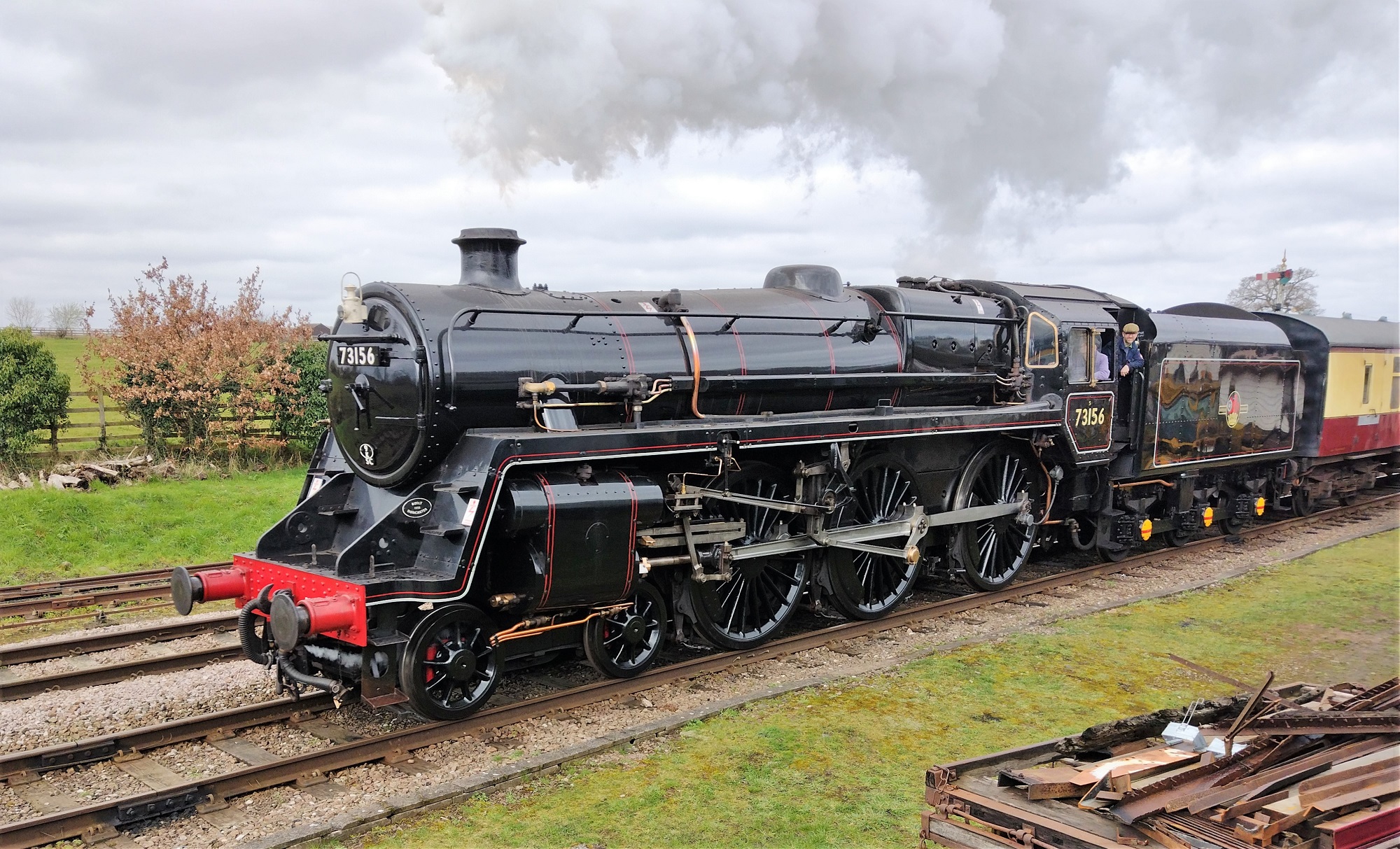
Thanks for reading that concludes a busy but enjoyable Last Hurrah weekend which saw BR Standard Class 2MT 78019 looking superb, operating its first event following restoration.
Join us again next week as we continue with work on the tanks.
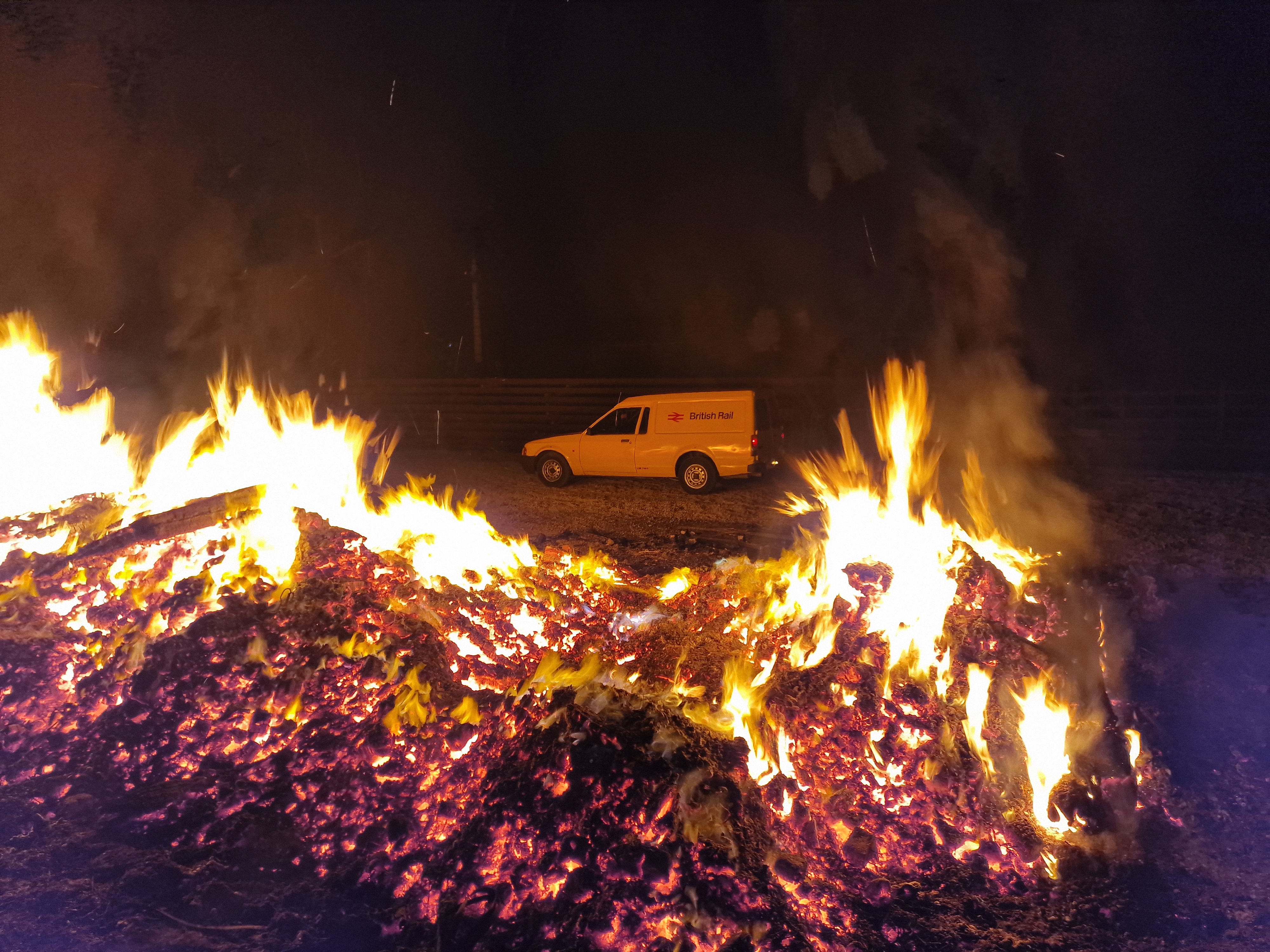
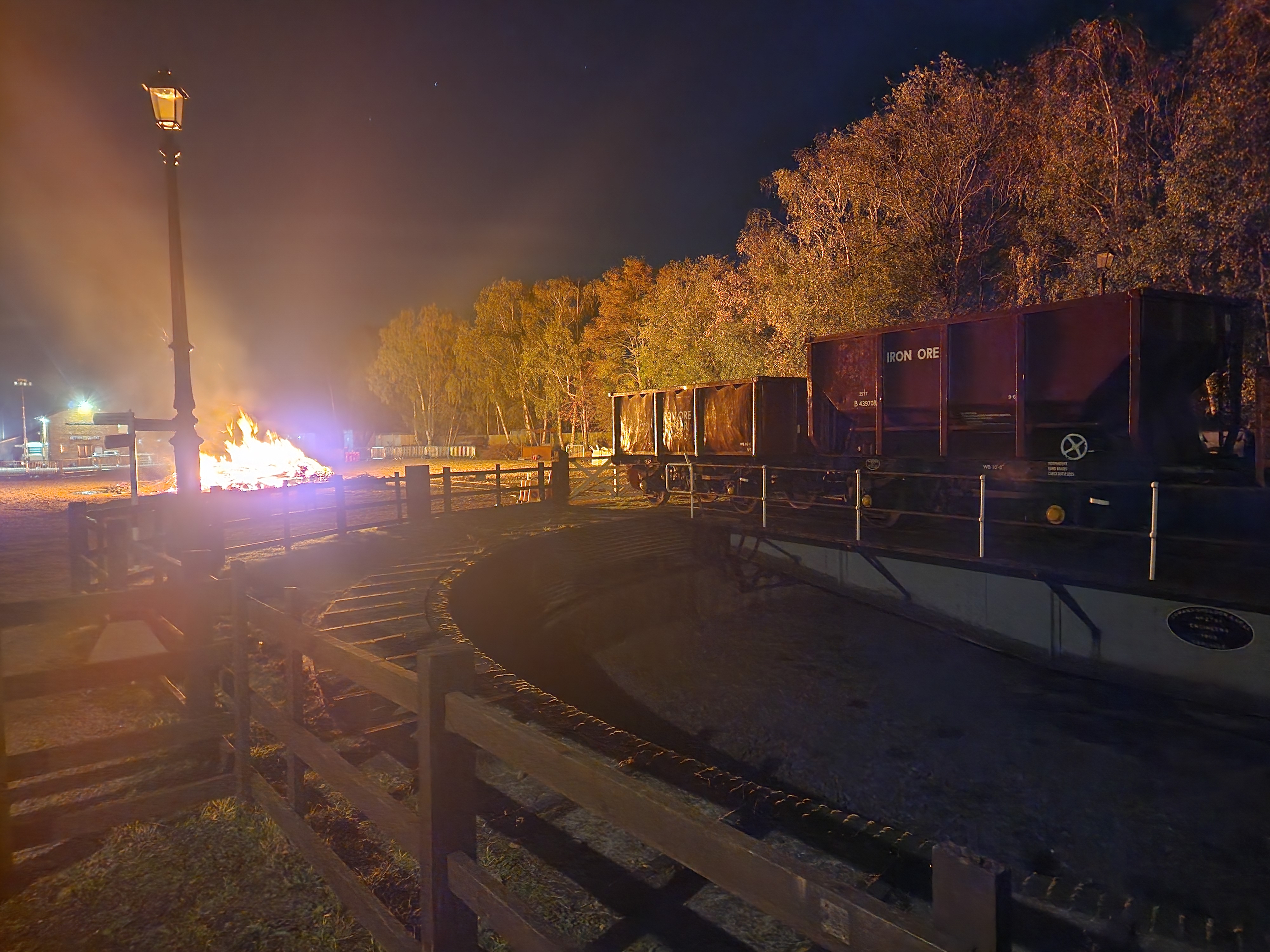
Bonfire night weekend at Quorn saw another well attended event on Friday evening with the customary bonfire.
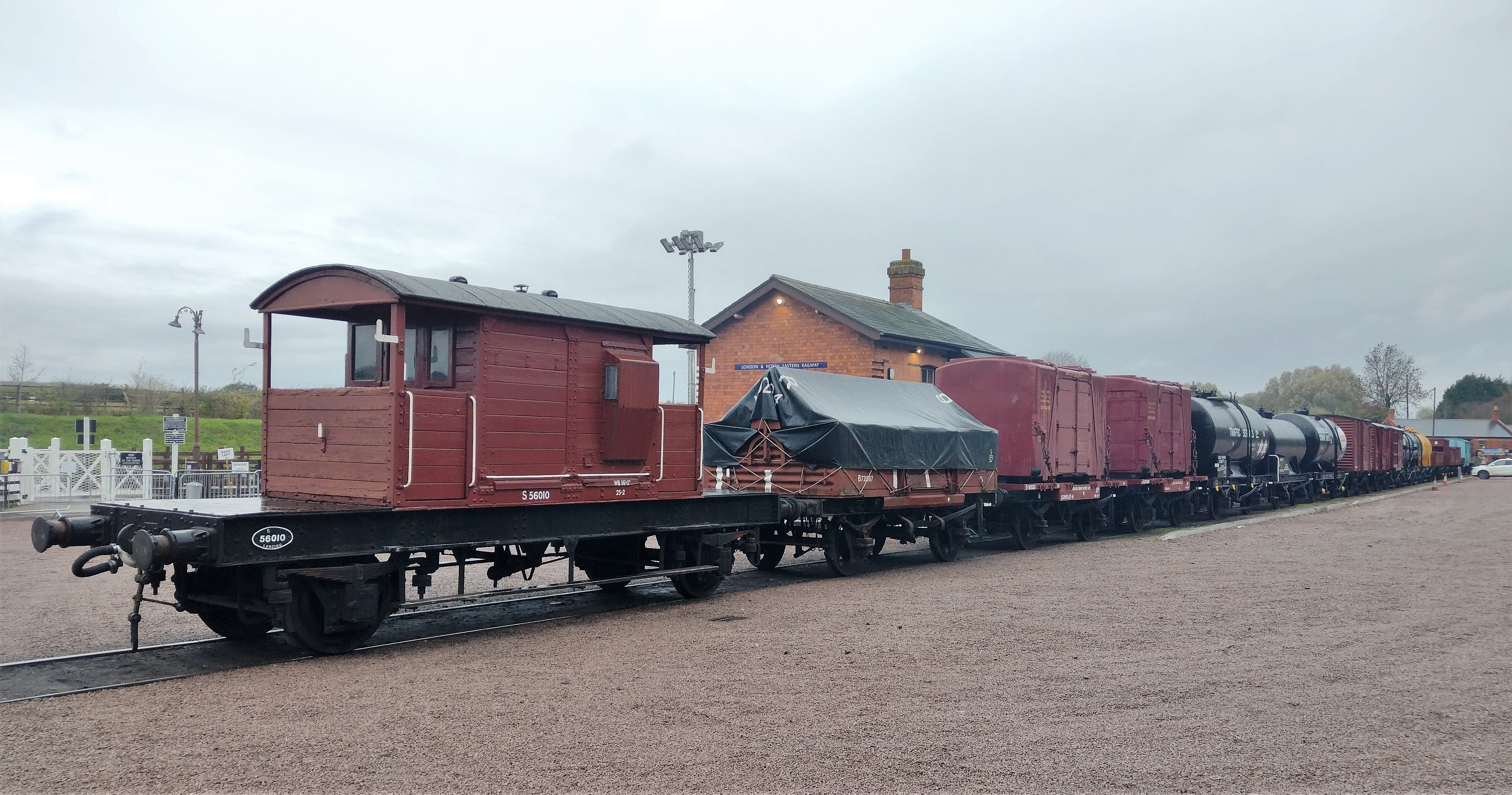
For our group this meant that Saturday morning we concentrated on checking over the mixed freight and tidying up before getting stuck into some work on Elizabeth and 22T tank wagon 3711.
Before we started there was time to watch some YouTube video footage taken during our Open Weekend by Ollie from Wardle Road. See below or alternatively click this link to watch:- “Quorn Wagon & Wagon Open Weekend”
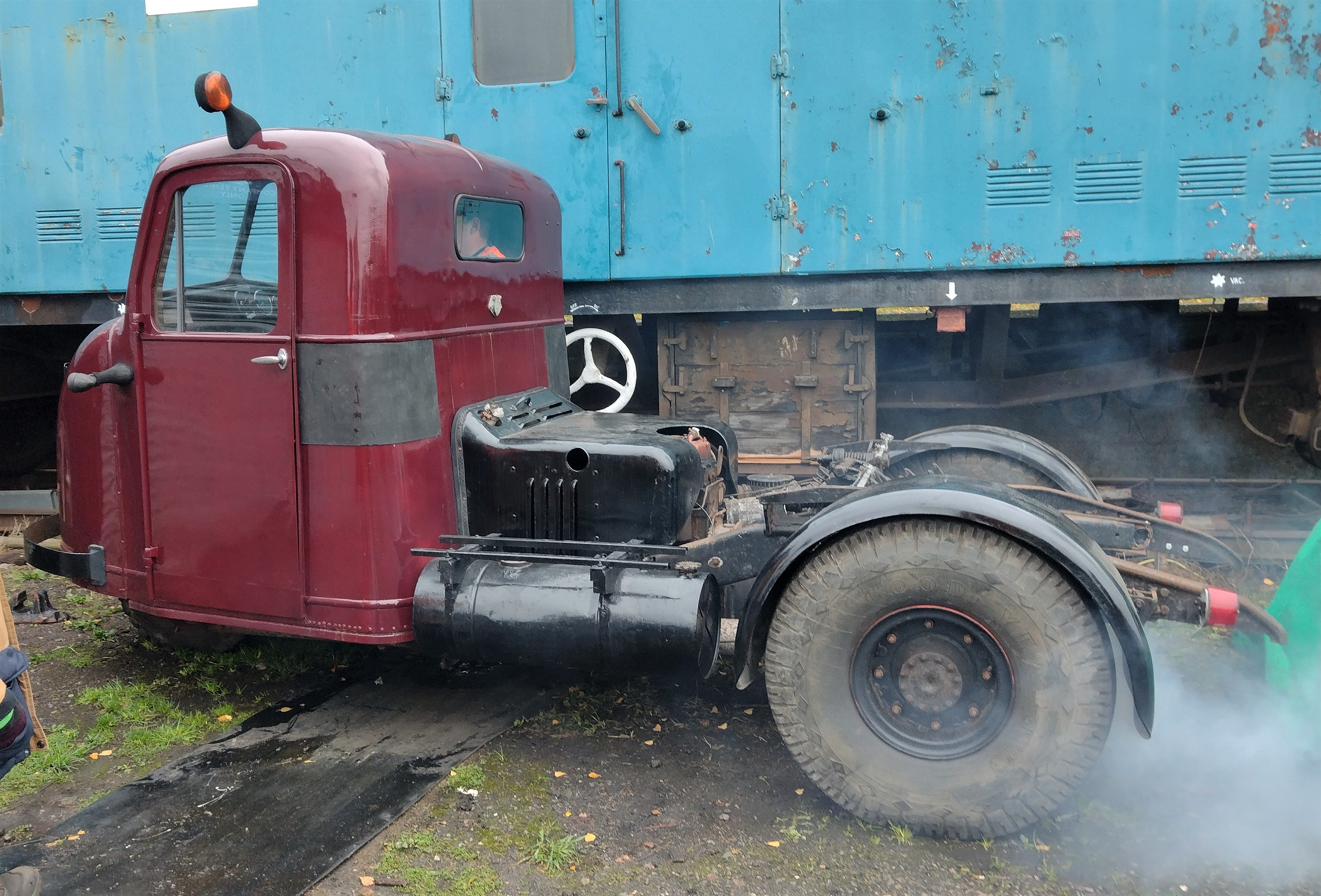
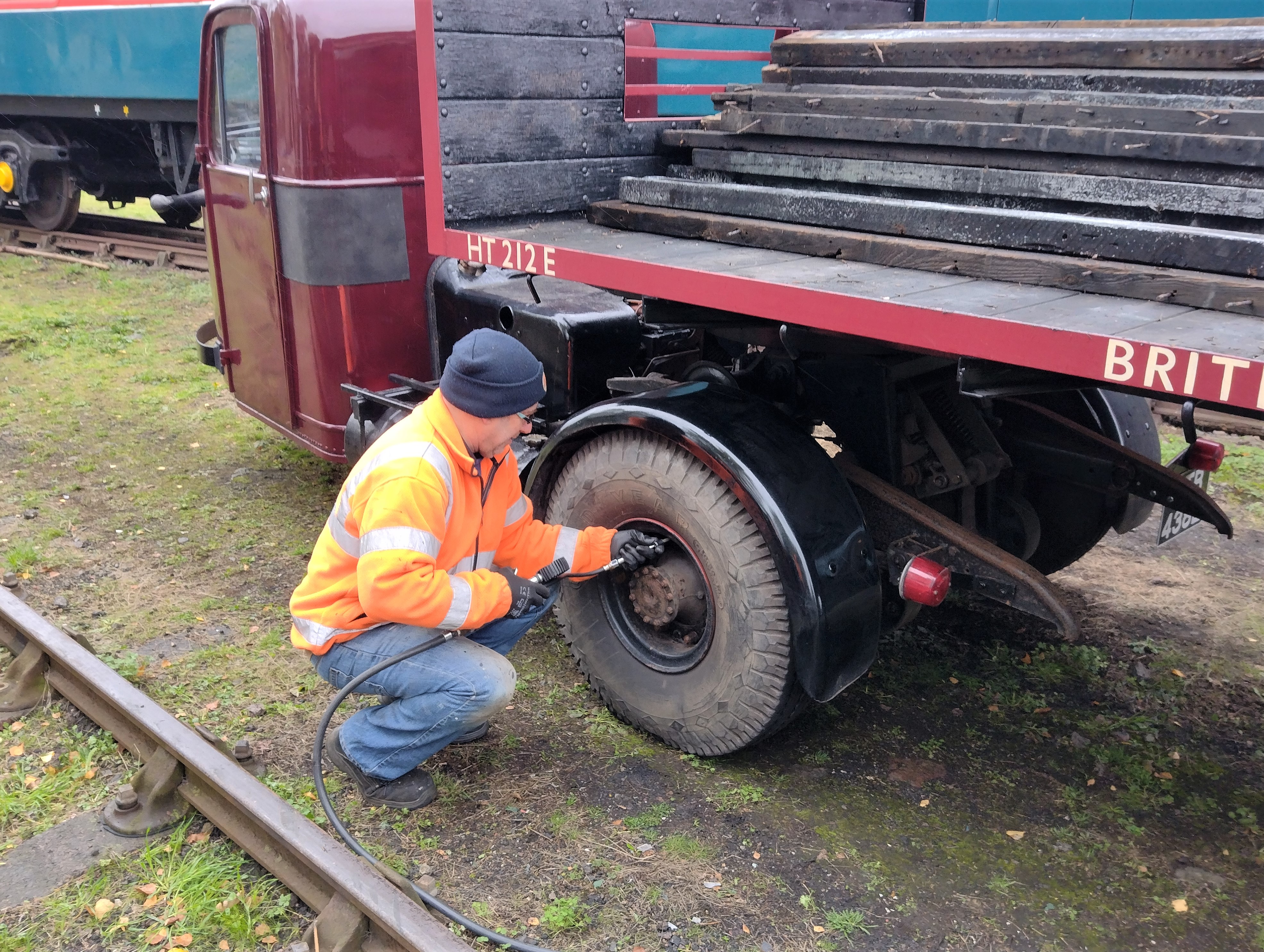
Elizabeth or ‘Lilibet’ as she is becoming known, was woken from her week long slumber. I treated her to some air in her tyres; she was then used to move the small trailer for unloading of another load of recovered wood planks that were added to the storage pile.
After the trailer was unloaded Ross swept it clean, or so he thought.
Well, owner Matt didn’t seem to think his trailer was clean enough so he swept it again.
Danny was also woken up, treated to some air in the tyres and used to move some rubbish to the skips.
Richard and Nick made a start scraping and removing corrosion from the underframe of the tank wagon 3711.
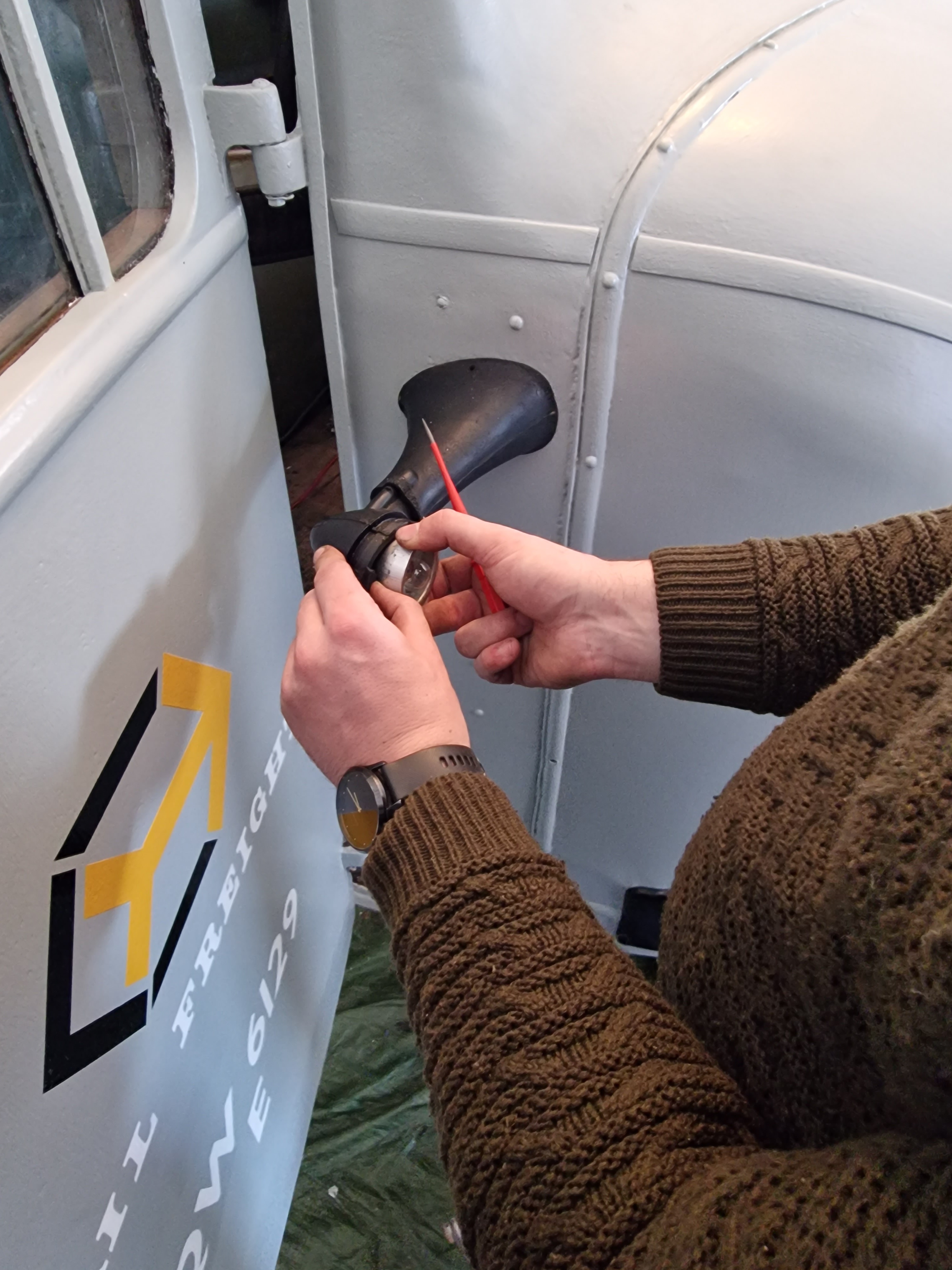
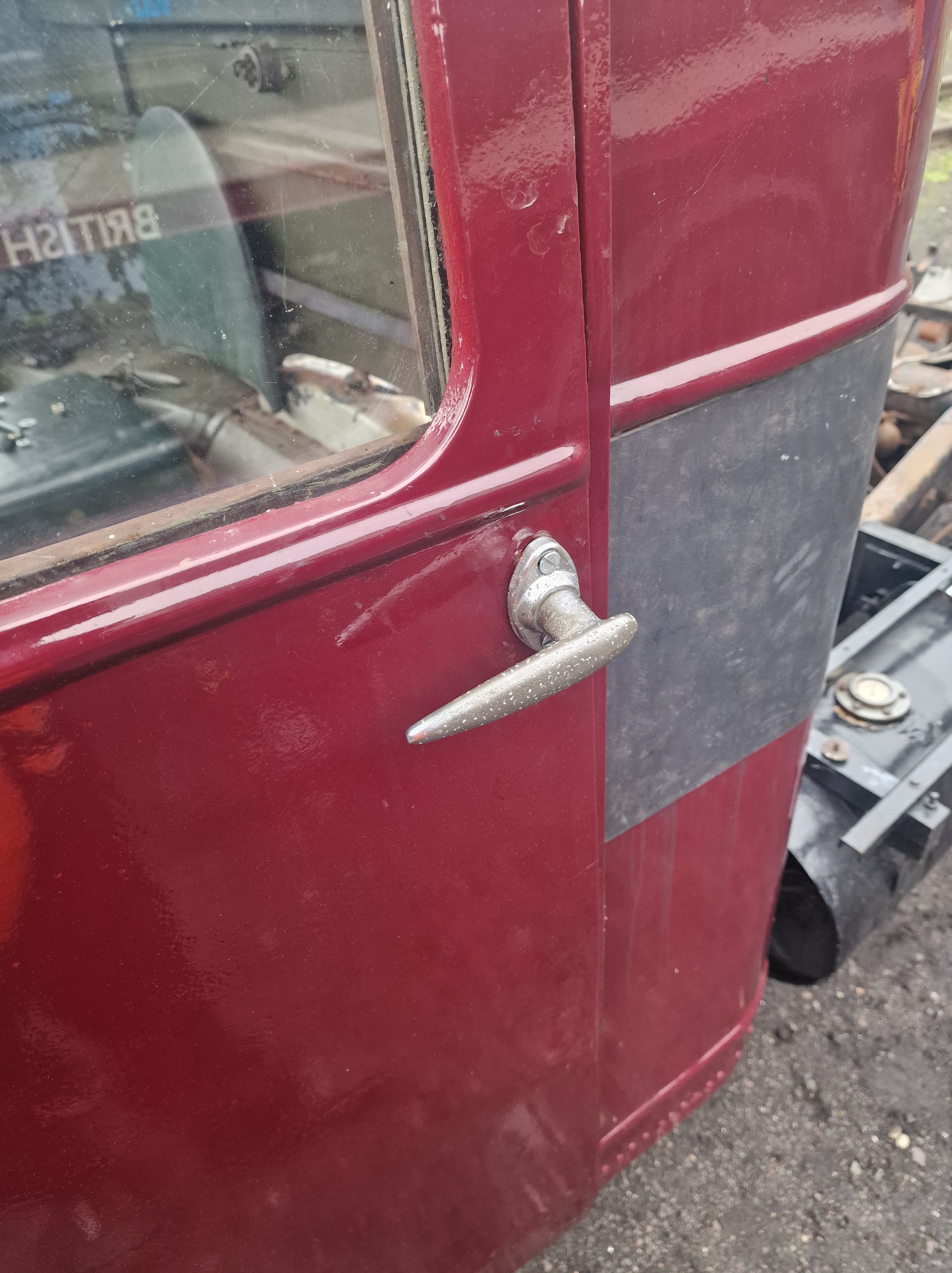
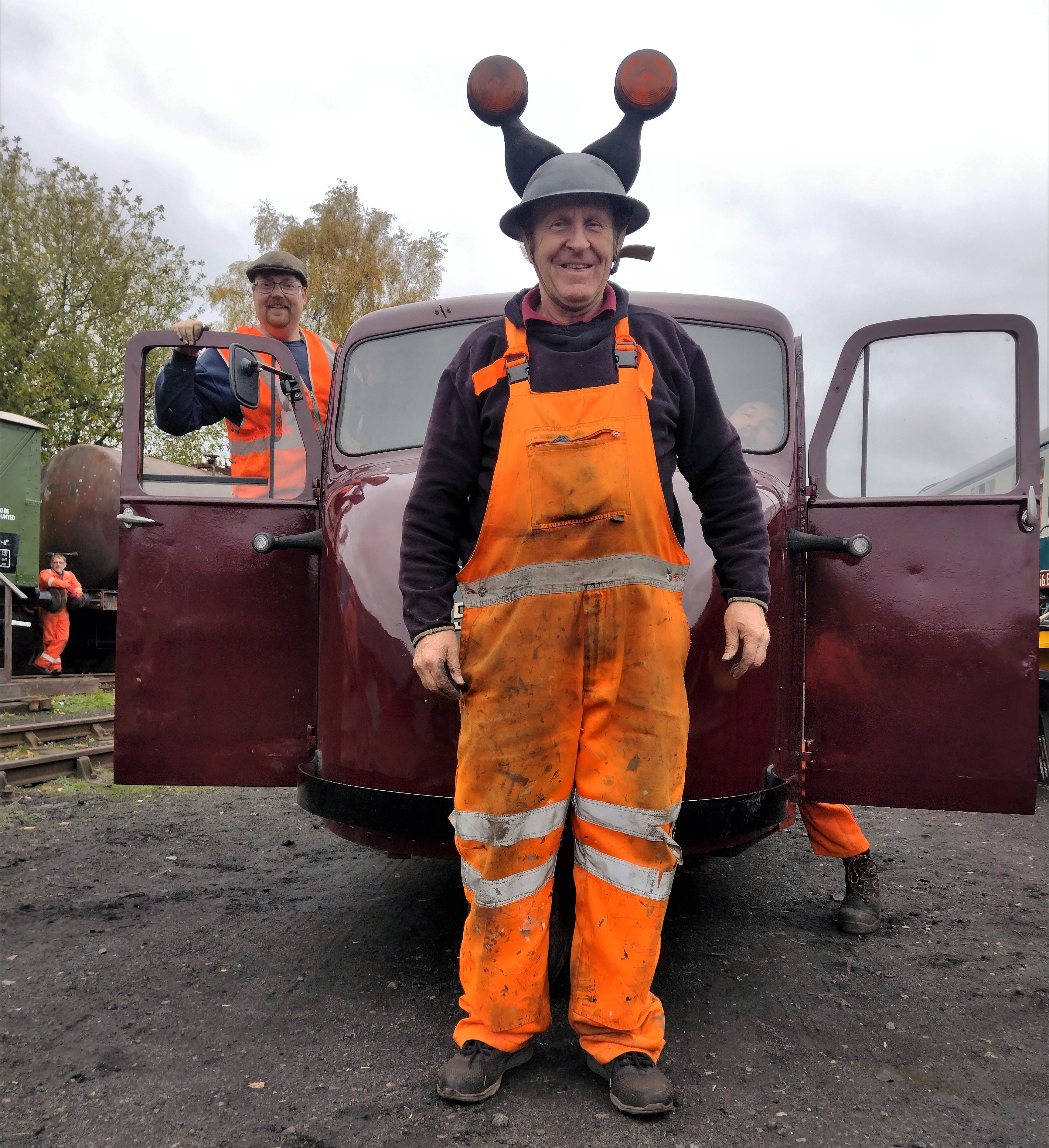
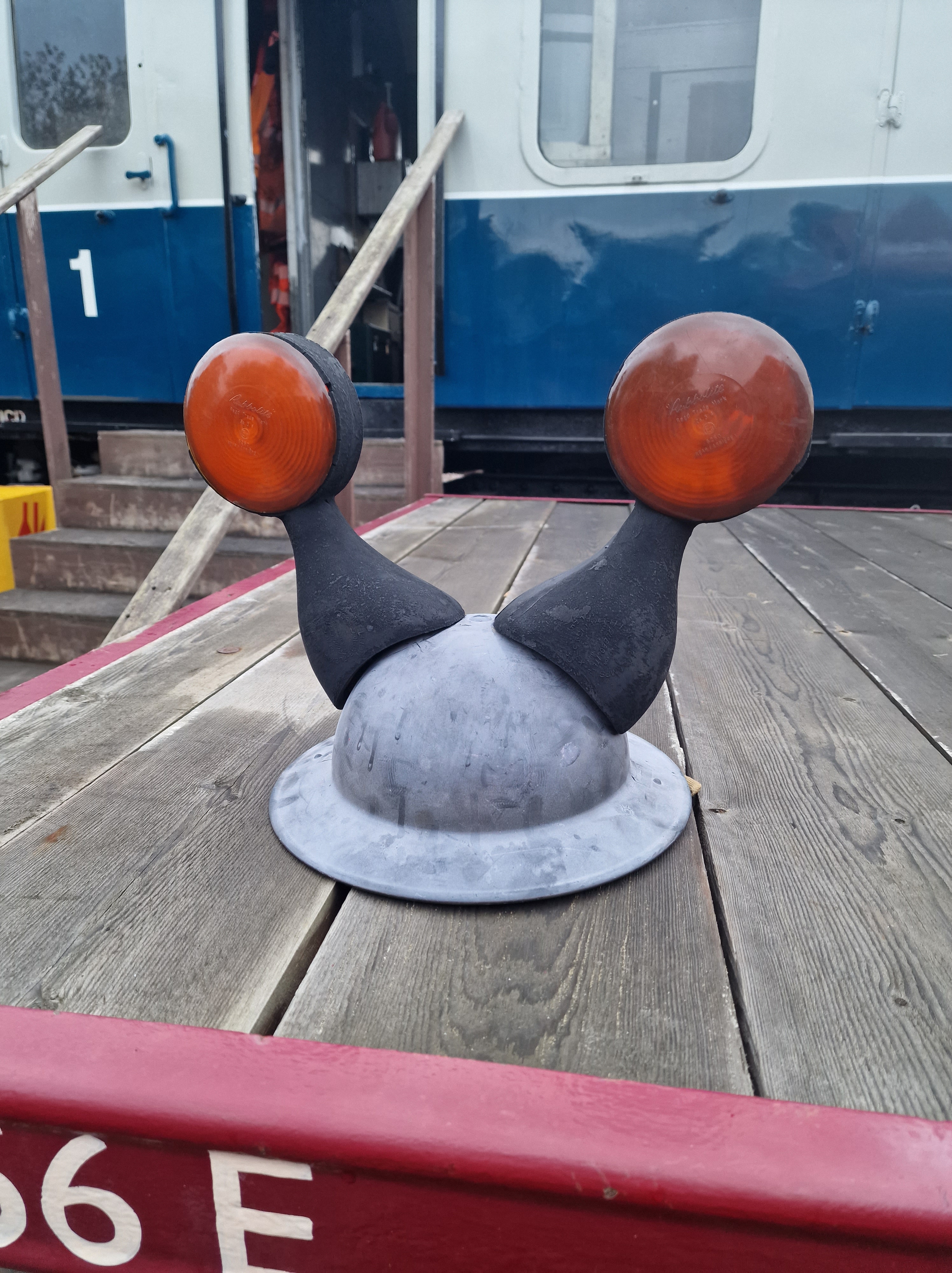
Matt, Ross and myself tackling a few jobs on Lilibet, starting with the temperamental door handle removal then her ‘ears’ (sorry, roof mounted indicators) were removed as we previously did with Madge. These indicators were not fitted as standard to Scarabs for British Railways use.
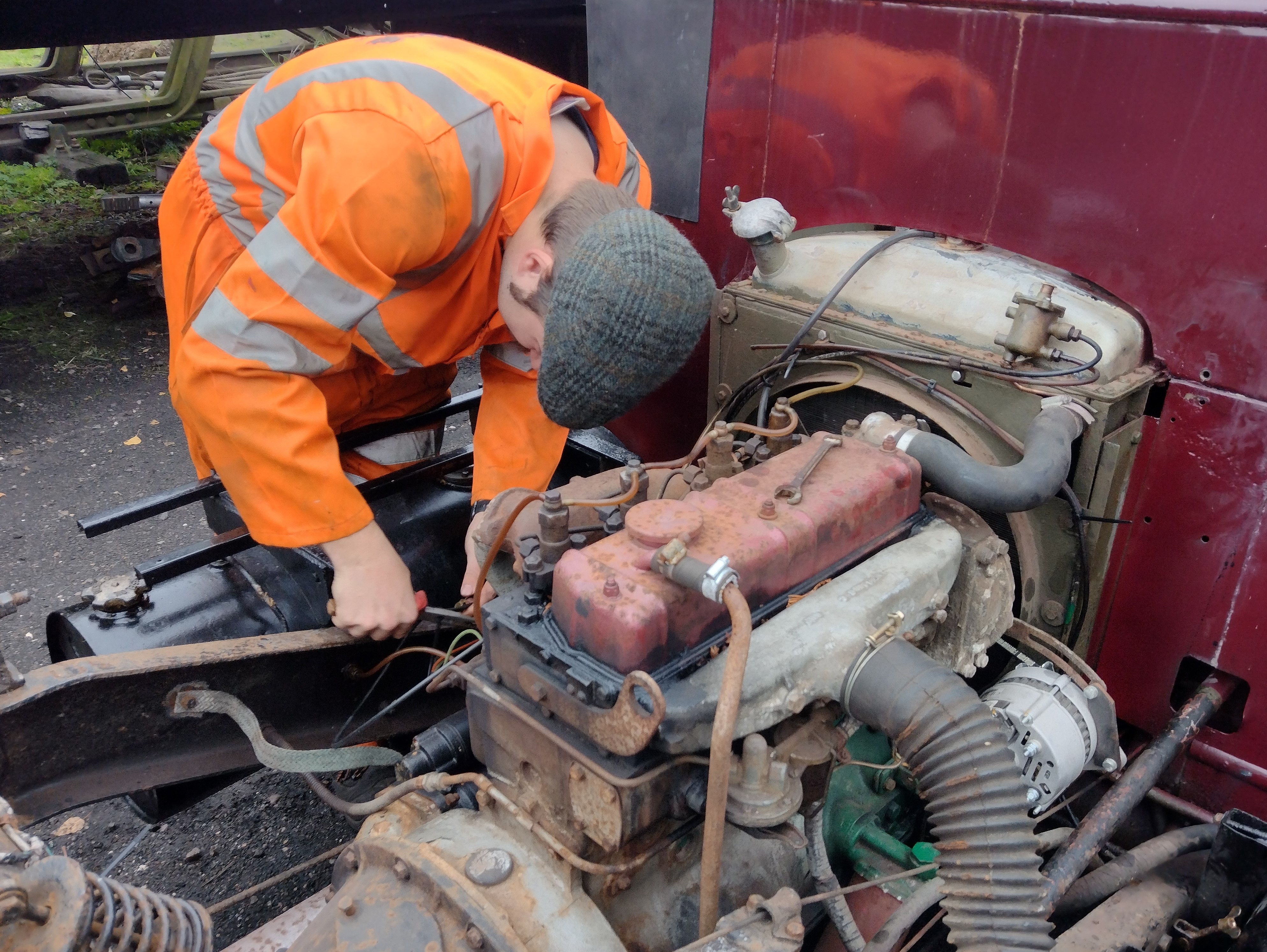
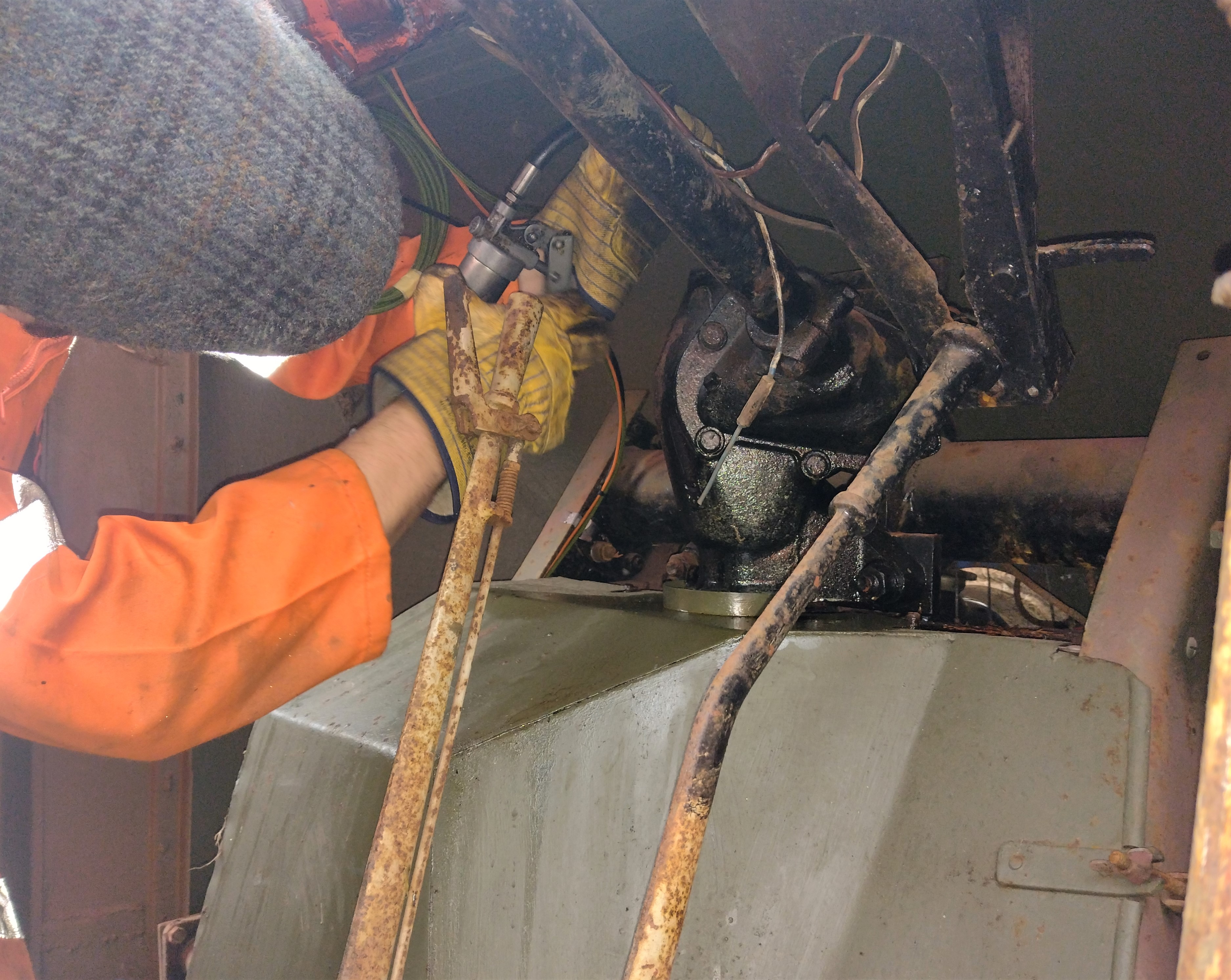
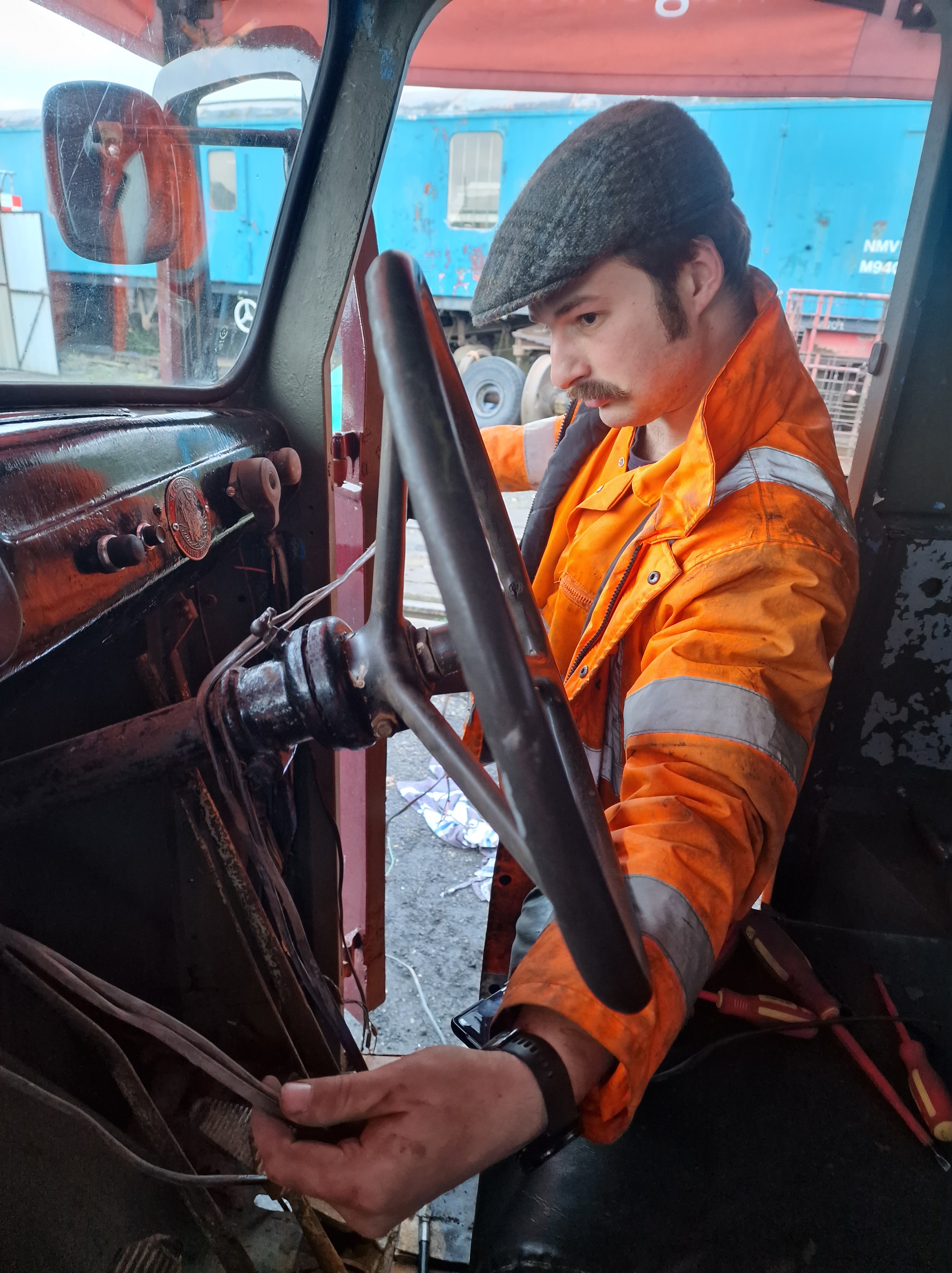
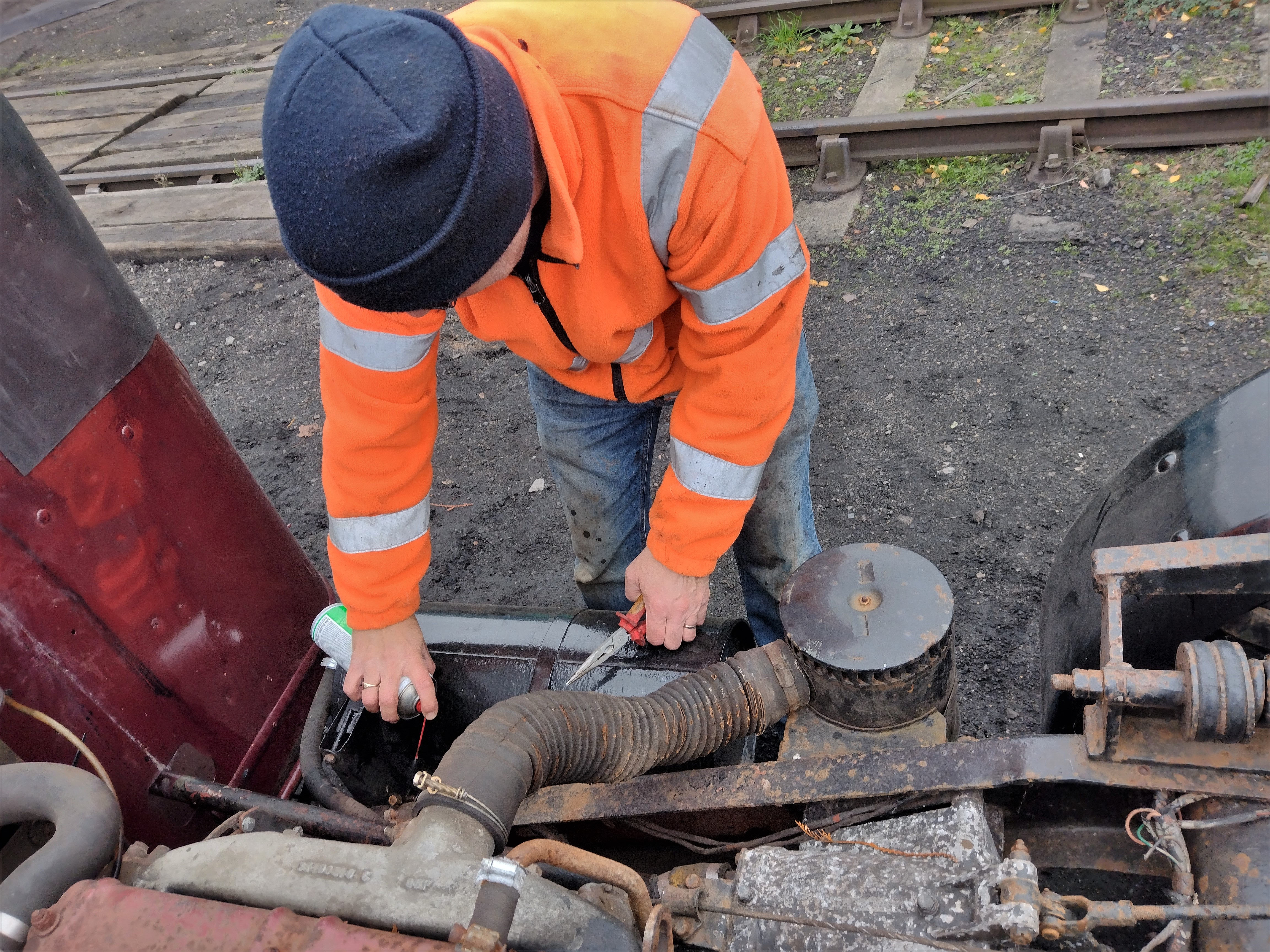
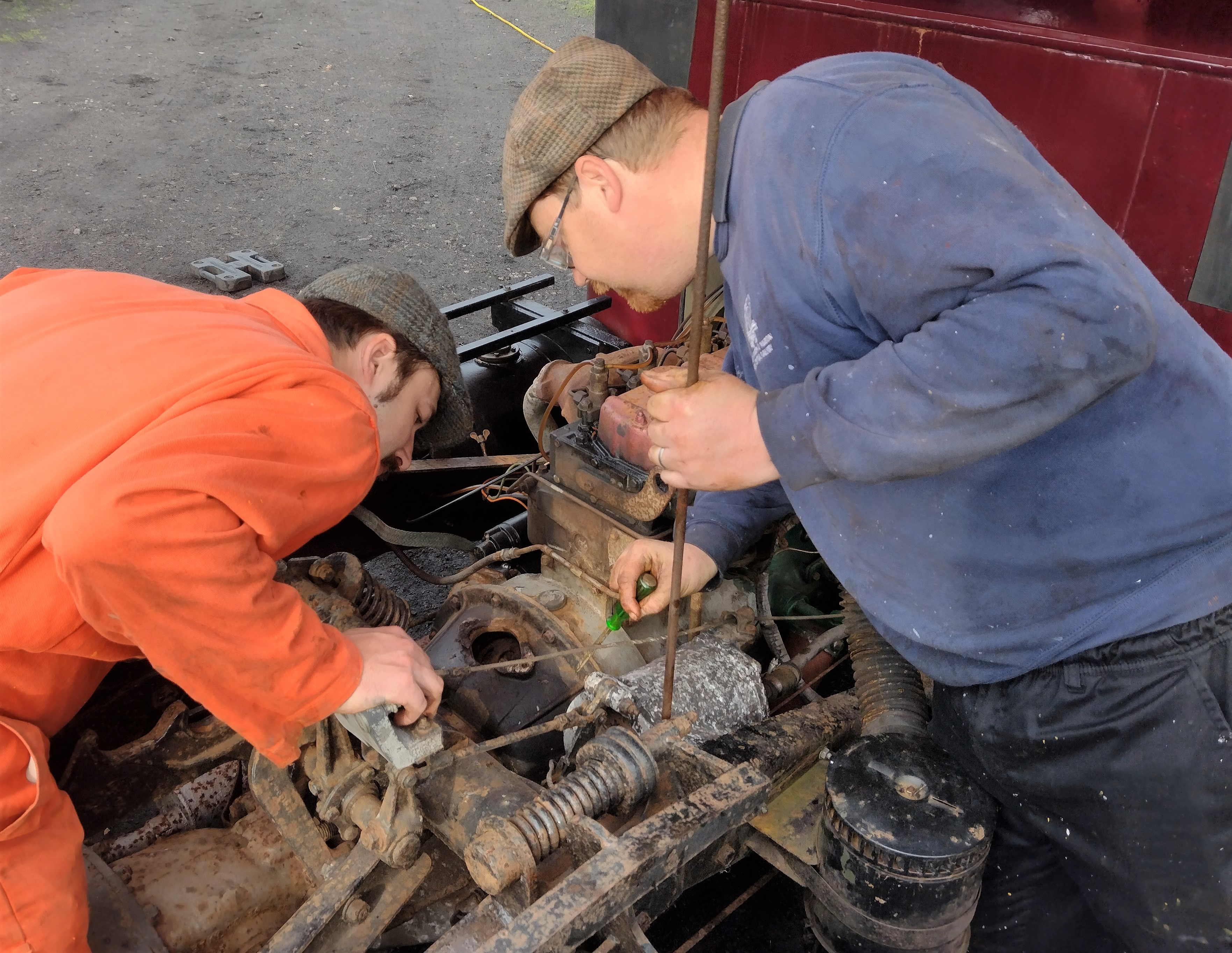
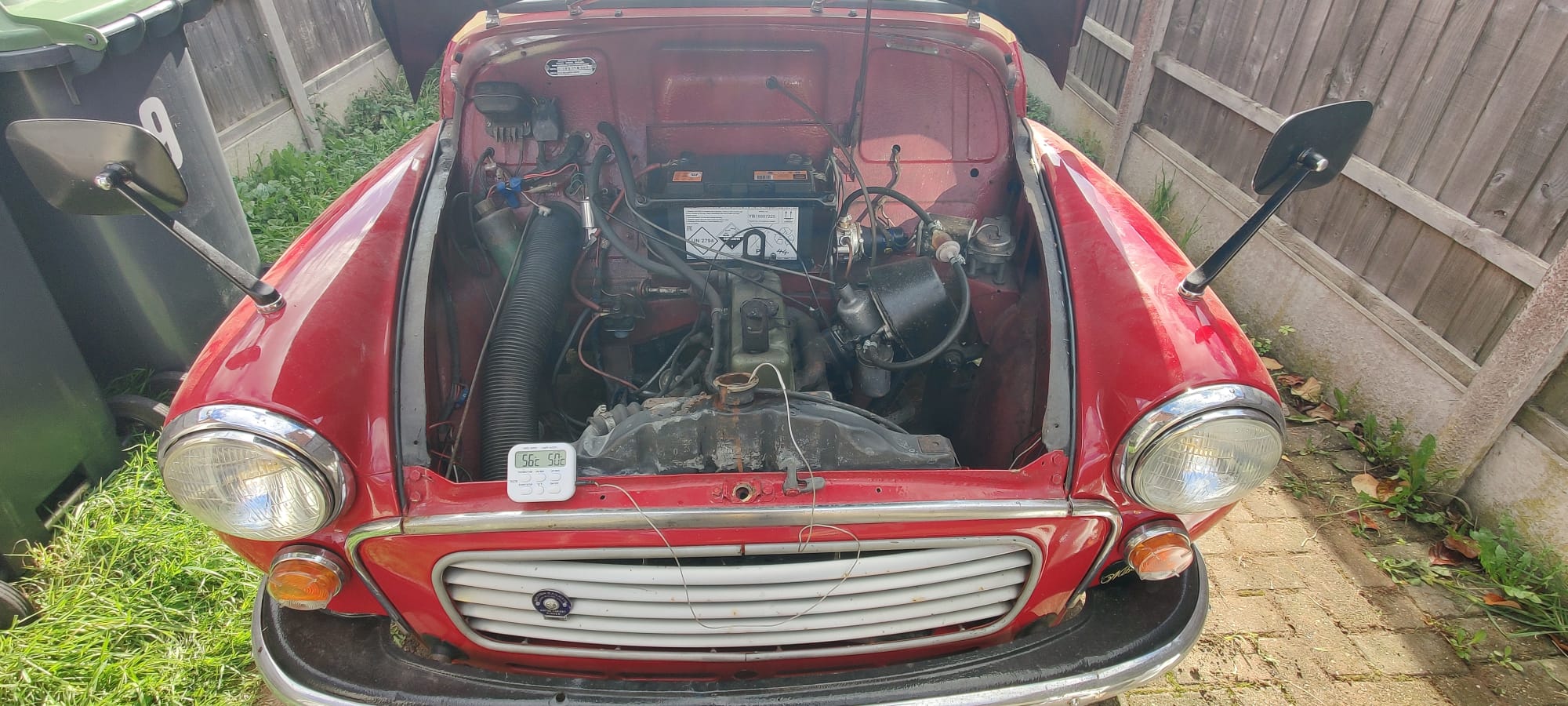
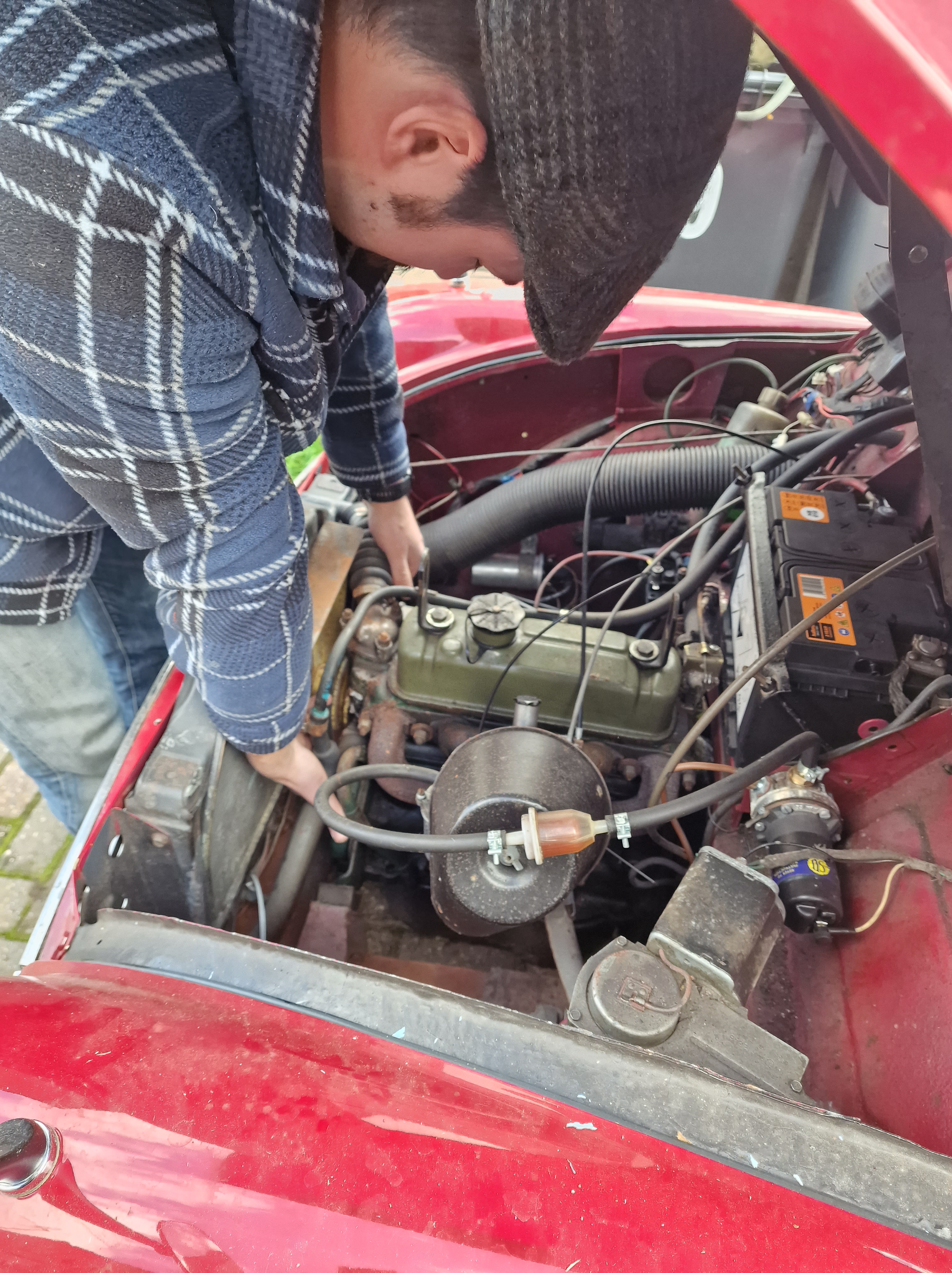
A diesel pipe leak was fixed; the accelerator pedal adjusted, all grease points attended to with the grease gun and various linkages freed off with penetrating oil. We took a good look at the wiring, and it’s clear that Lilibet will need a new wiring loom making at some point. For the time being however we have got the battery charging re-connected and tested, although a new slightly shorter alternator belt will also be required to allow it to be adjusted satisfactorily.
Not wanting to get rid of Lilibet’s ears, Matt found a use for them; and presented Nick with some new head protection equipment.
Work continued into the evening on Lilibet, with both new door handles and locks fitted and working.
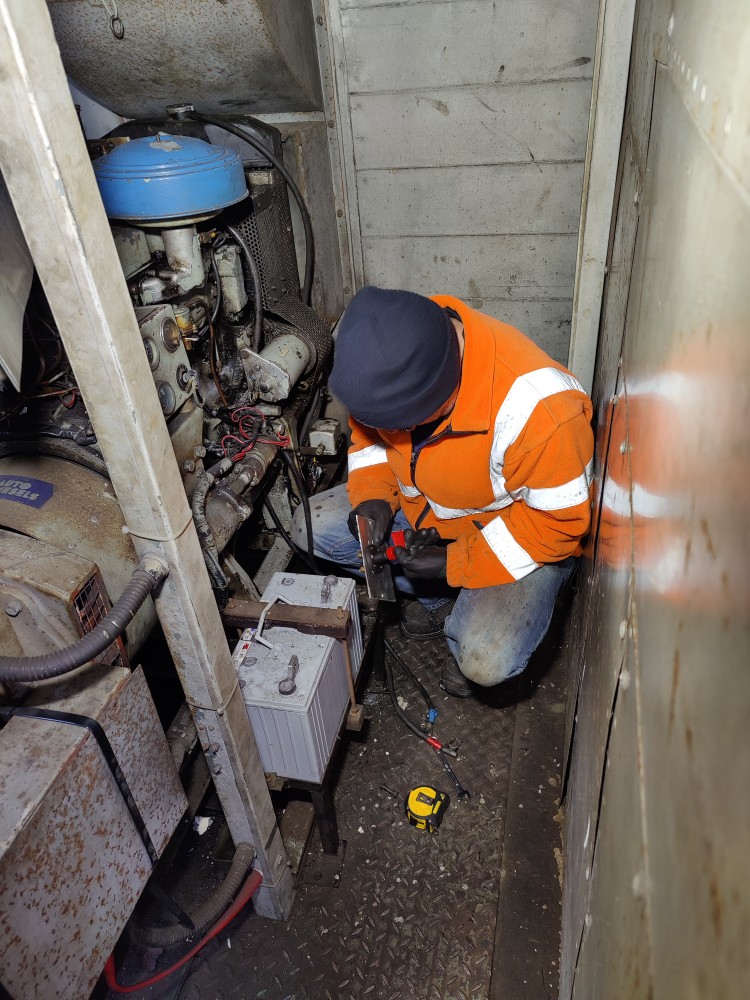
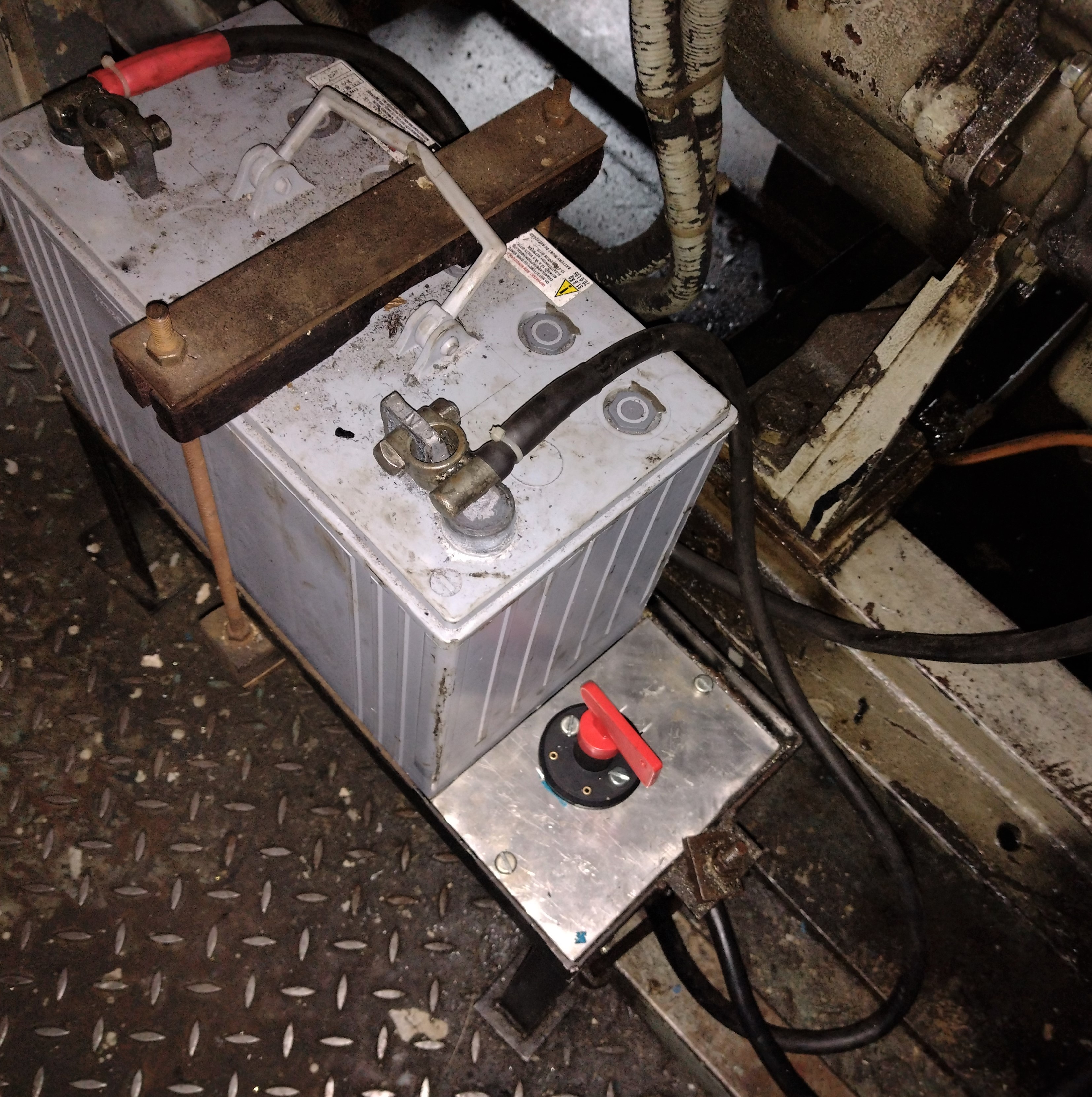
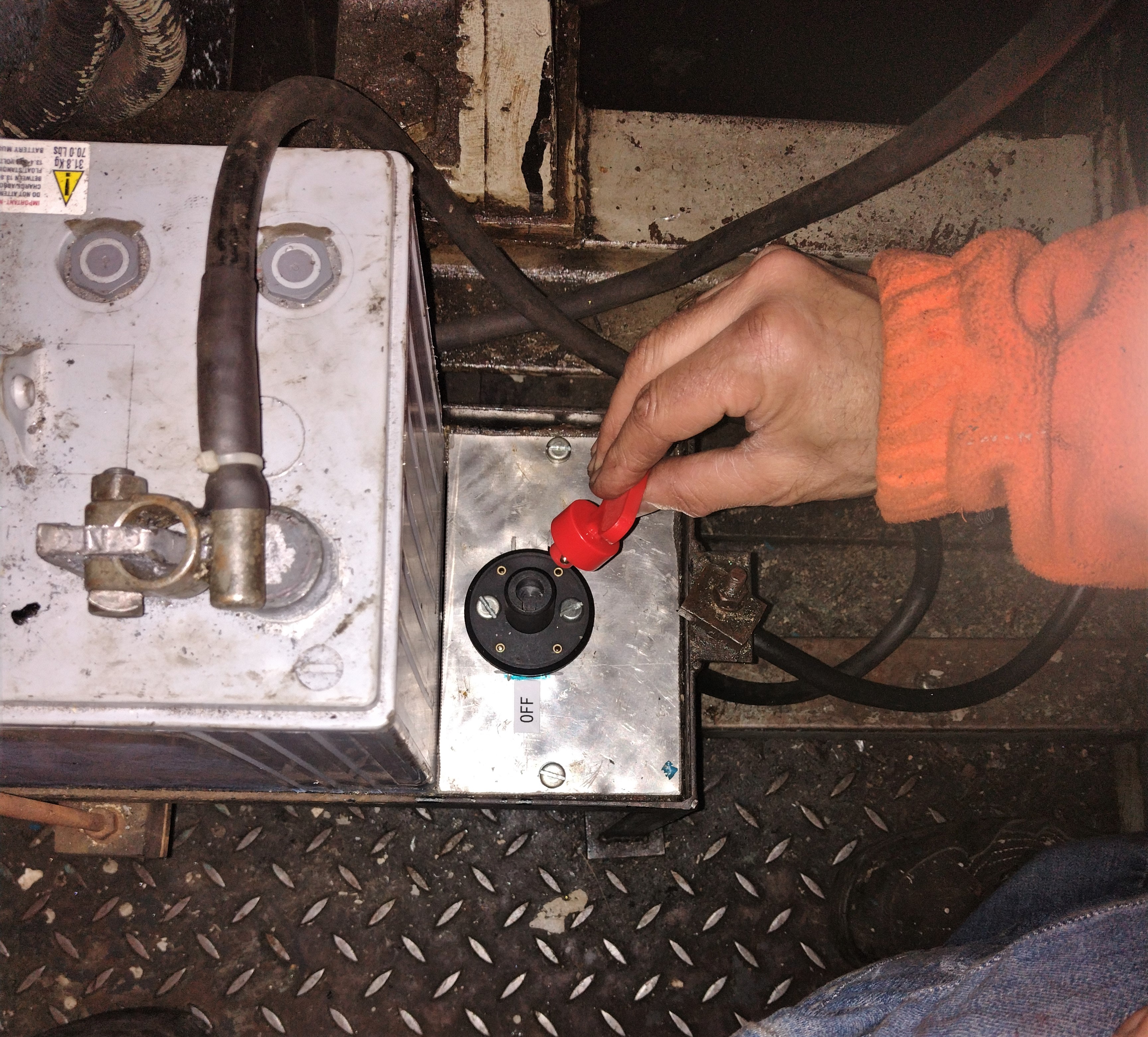
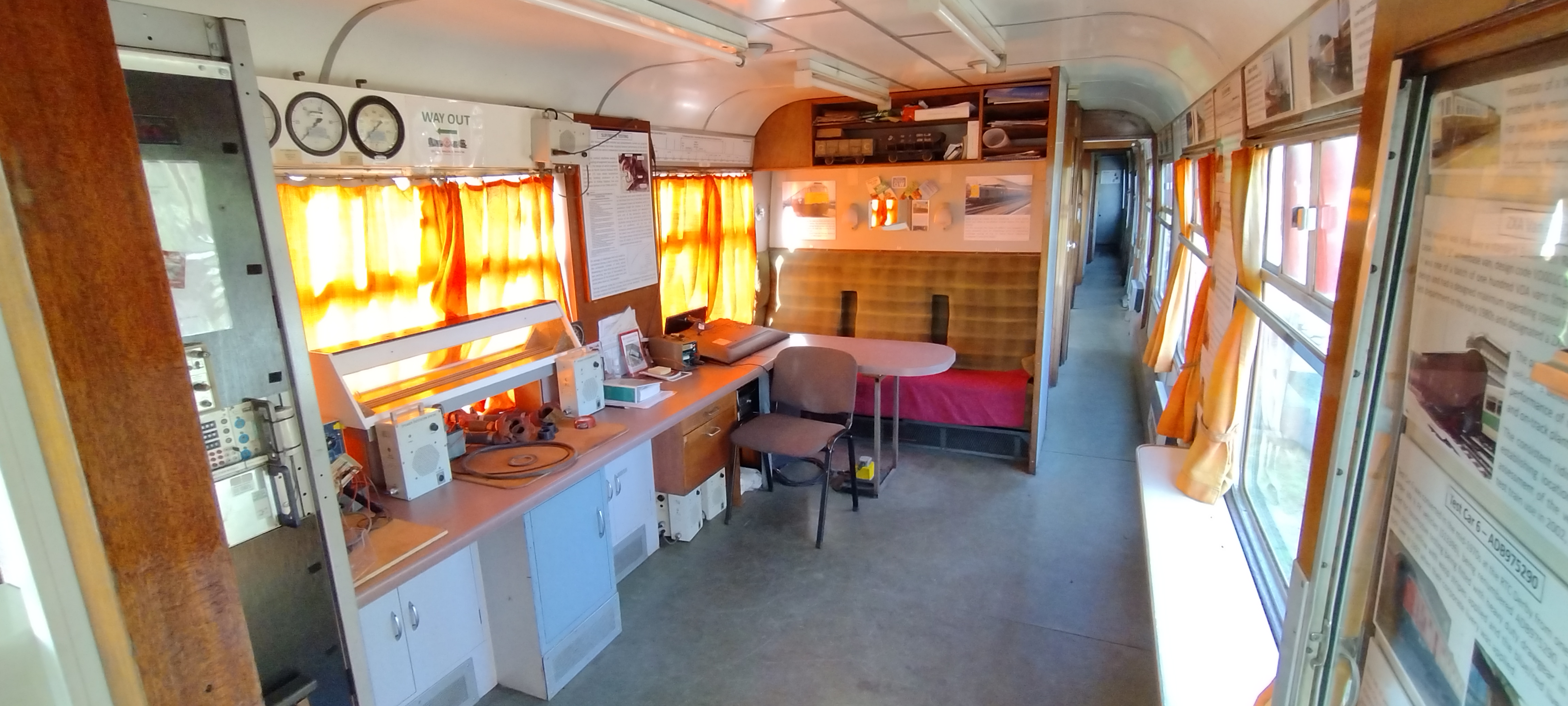
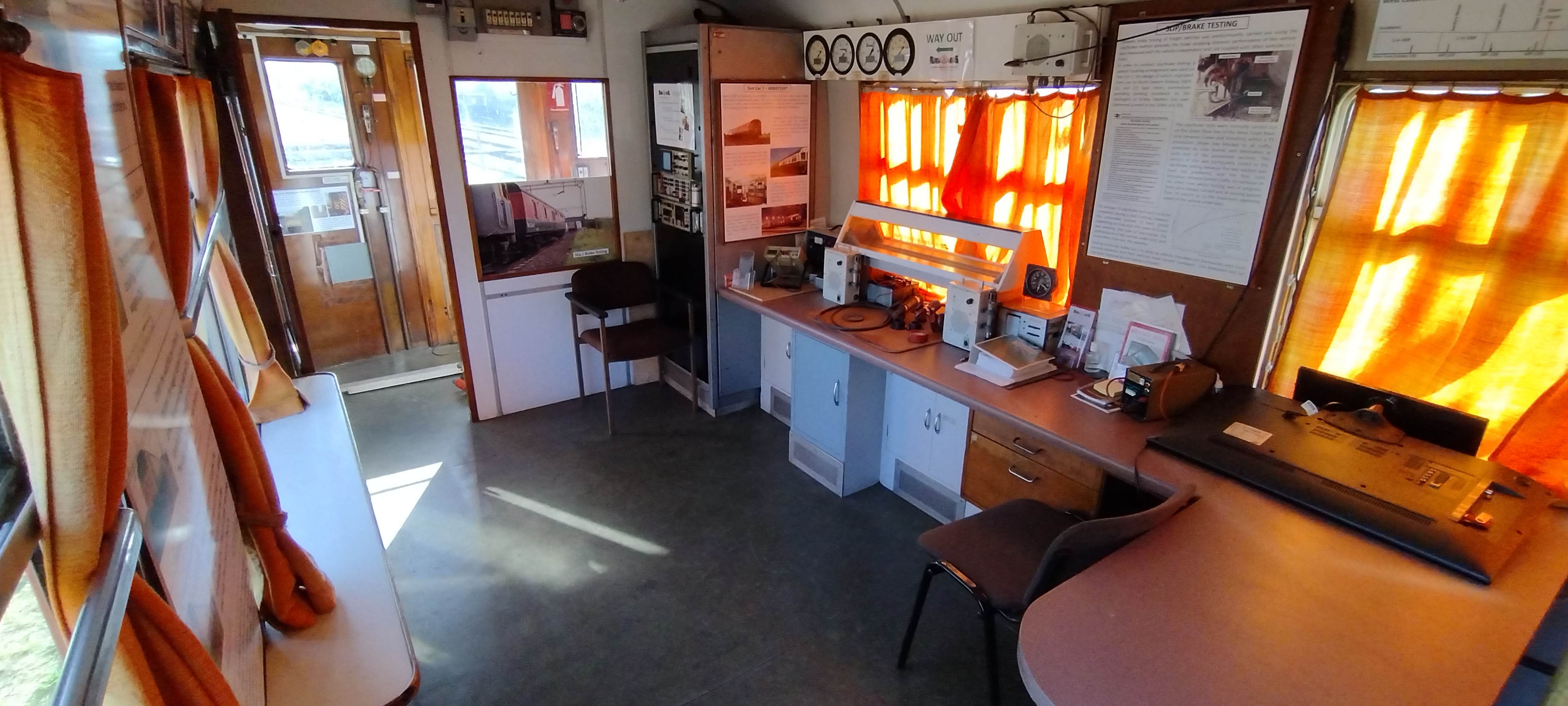
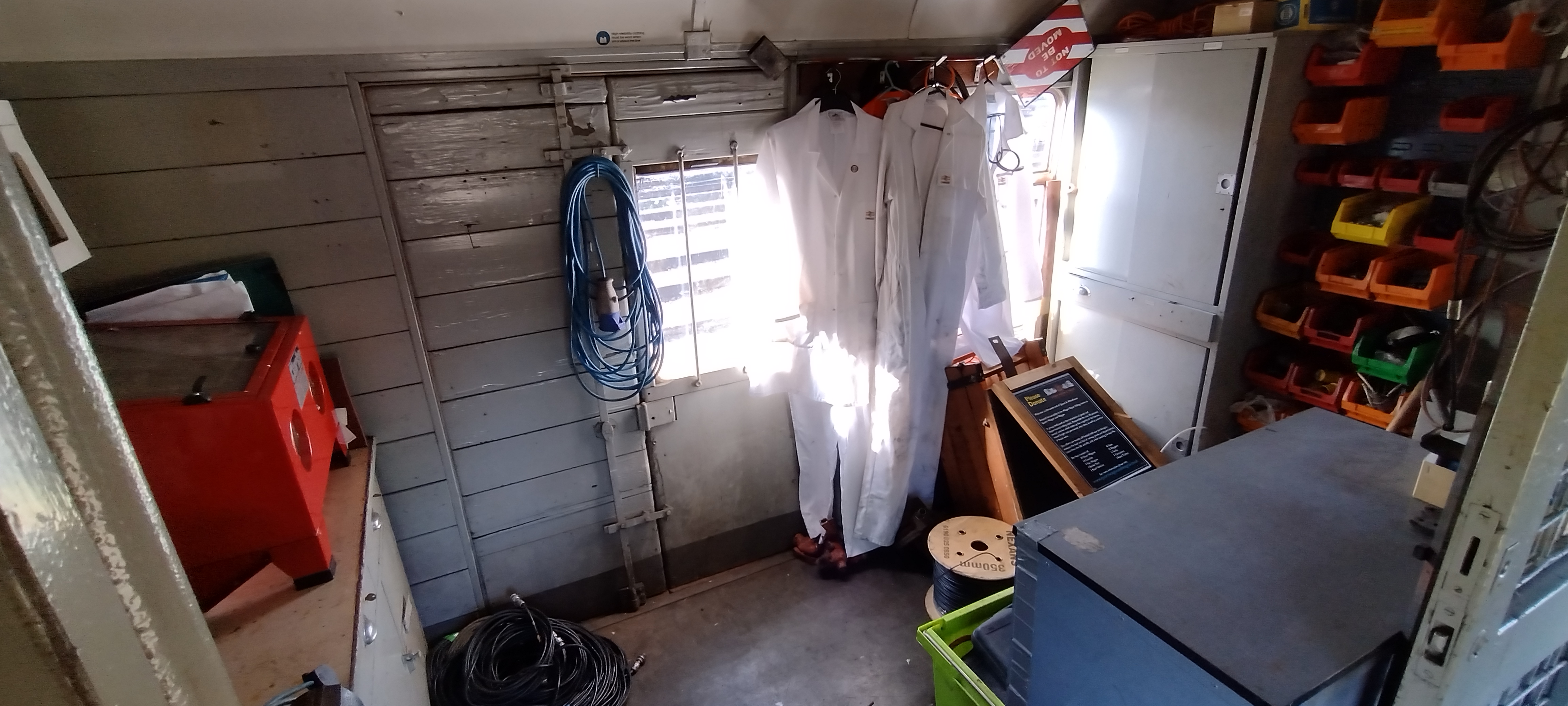
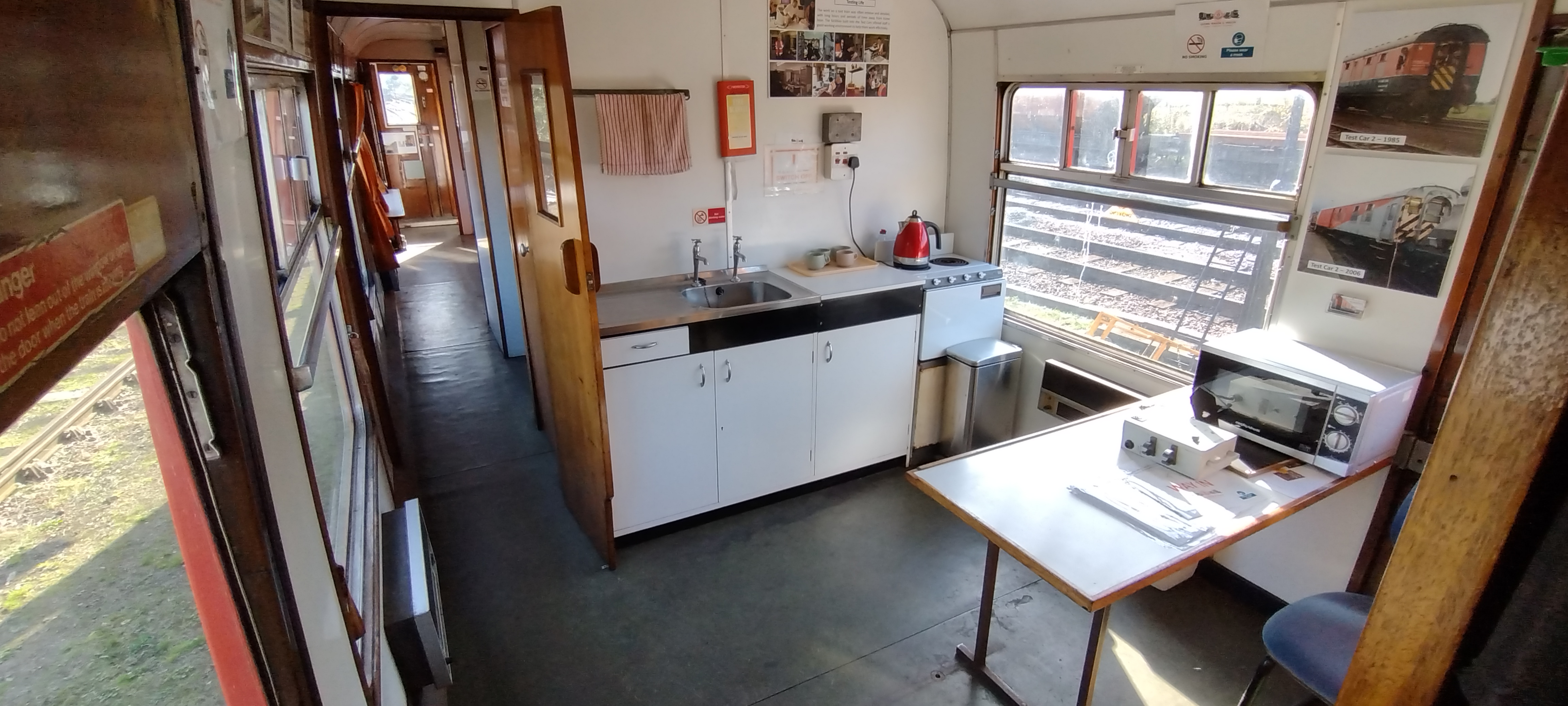
Sunday was a damp and overcast start to the day so I opted for some work inside Test Car 2, re-crimping and tidying the generator start battery cables and fitting a battery isolation switch.
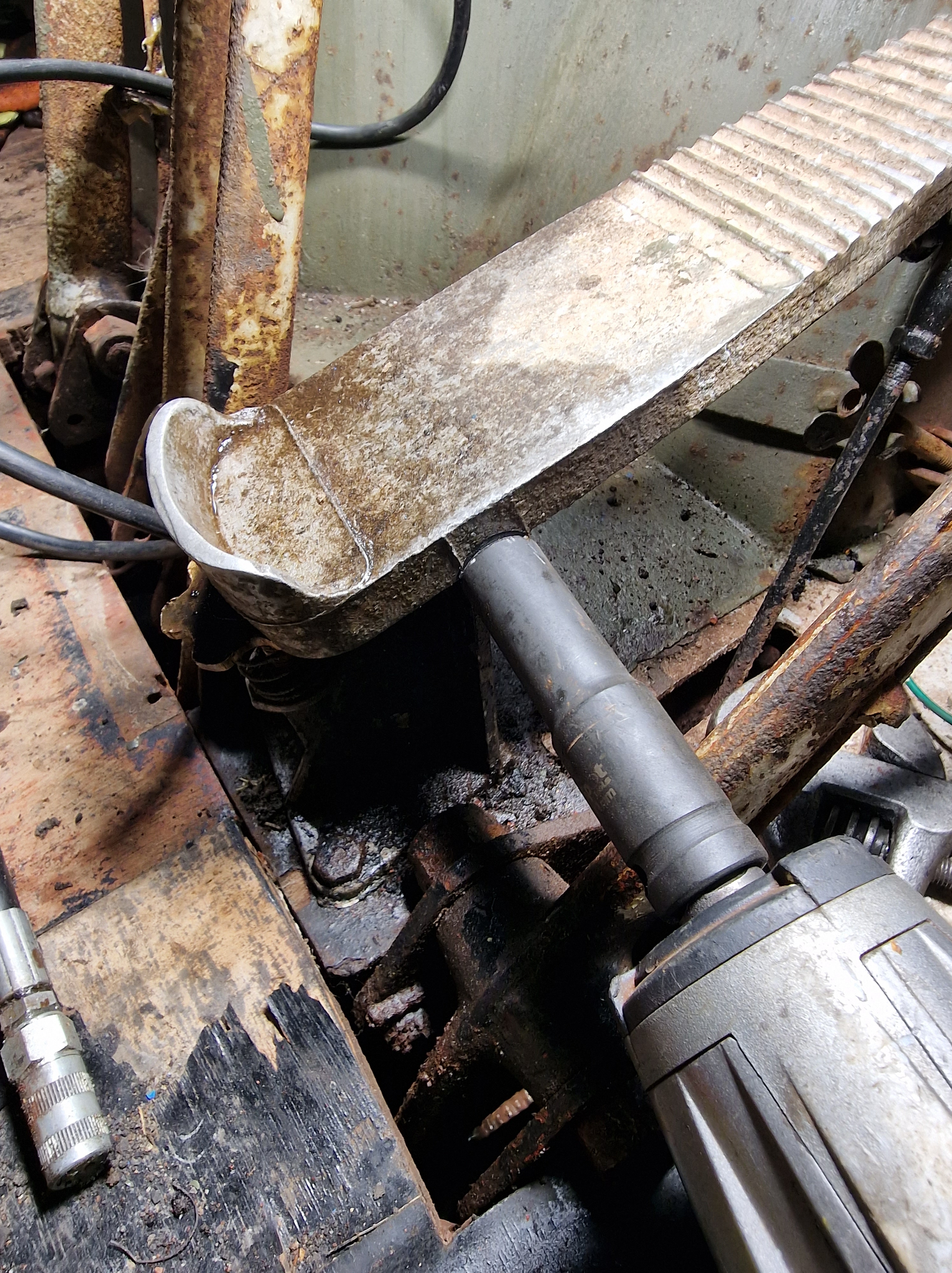
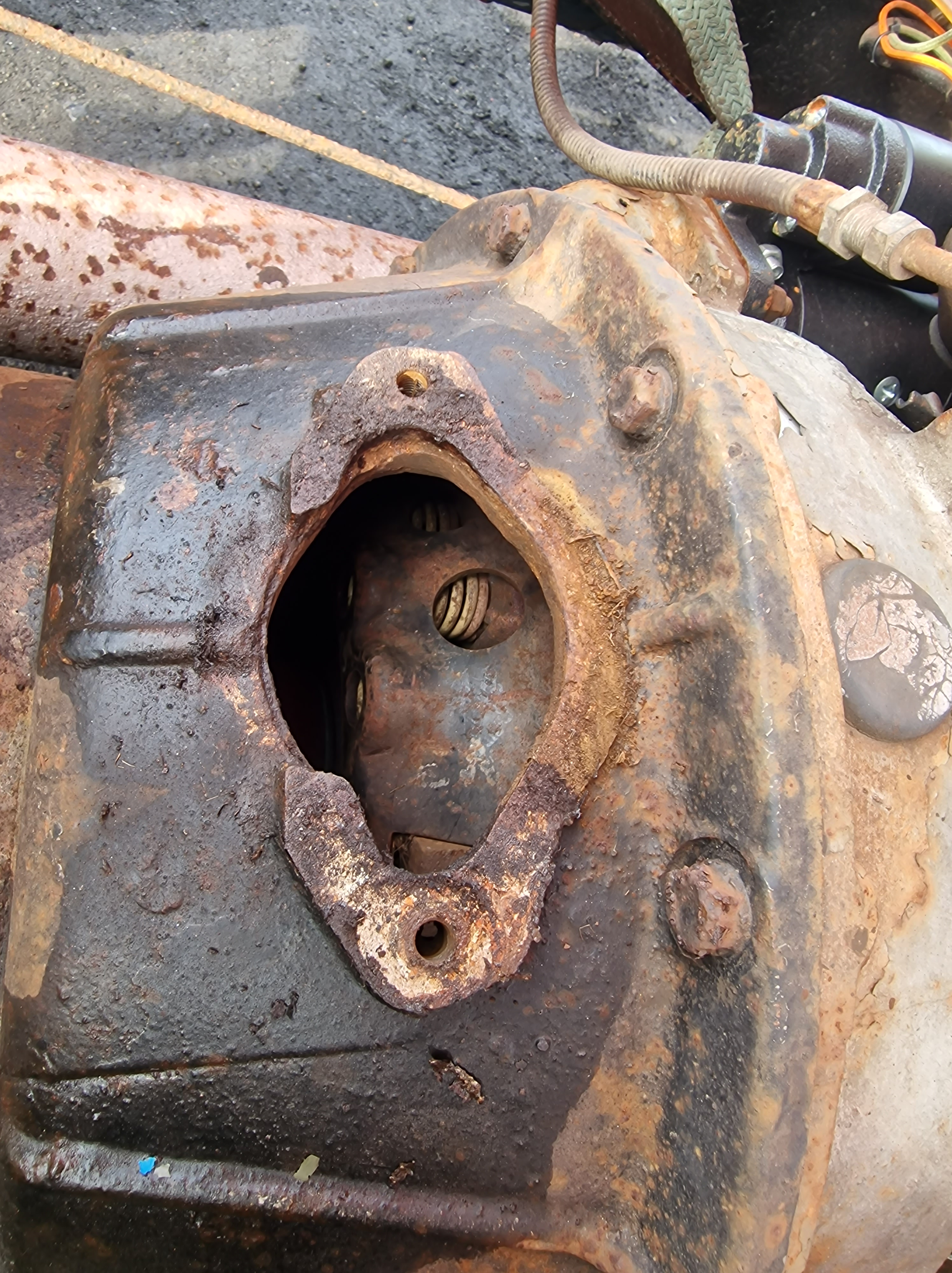
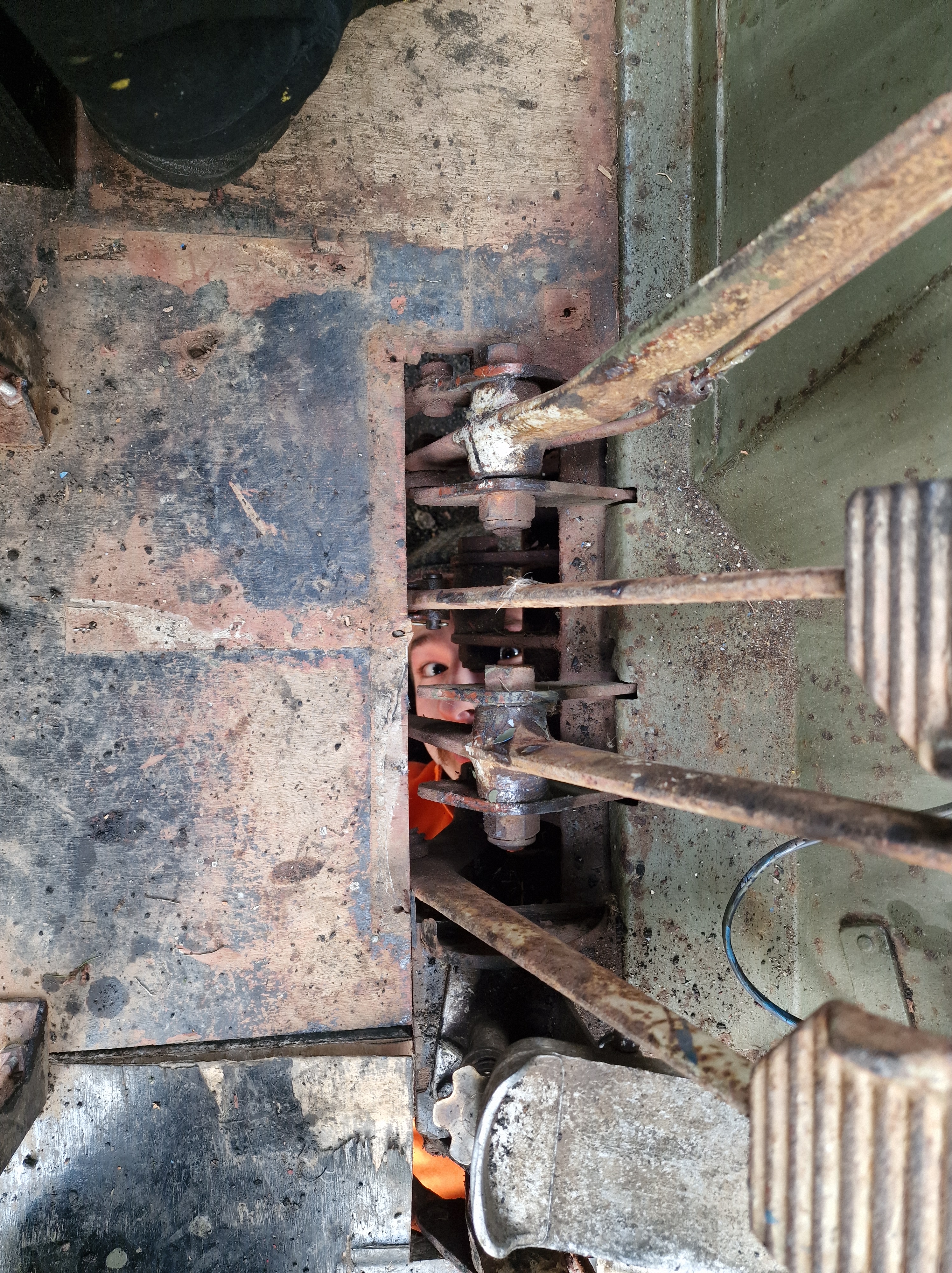
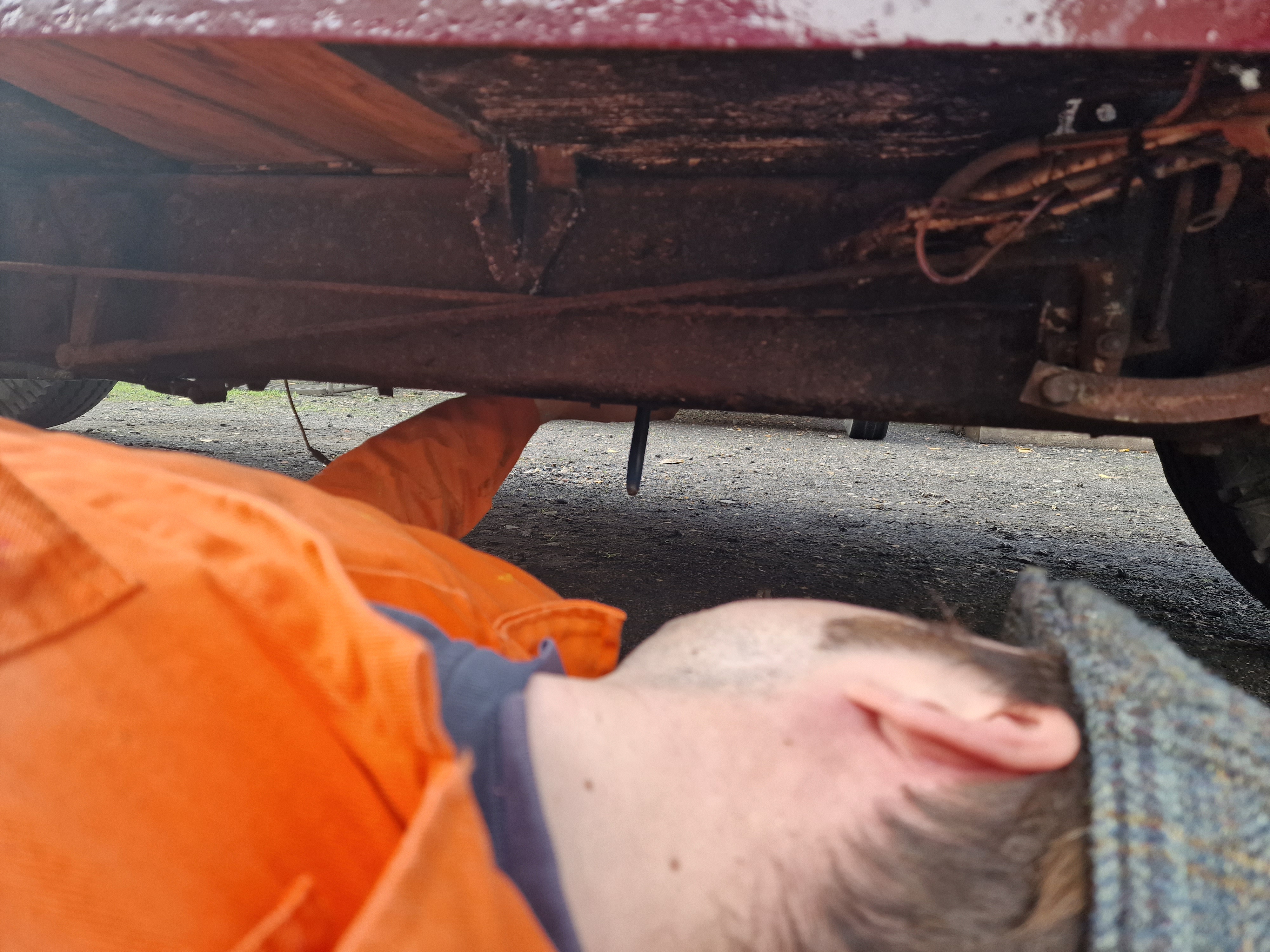
Matt and Ross investigated Lilibet’s clutch that was in need of a bit of adjustment; the operating rods were cleaned, re-fitted and then adjusted.
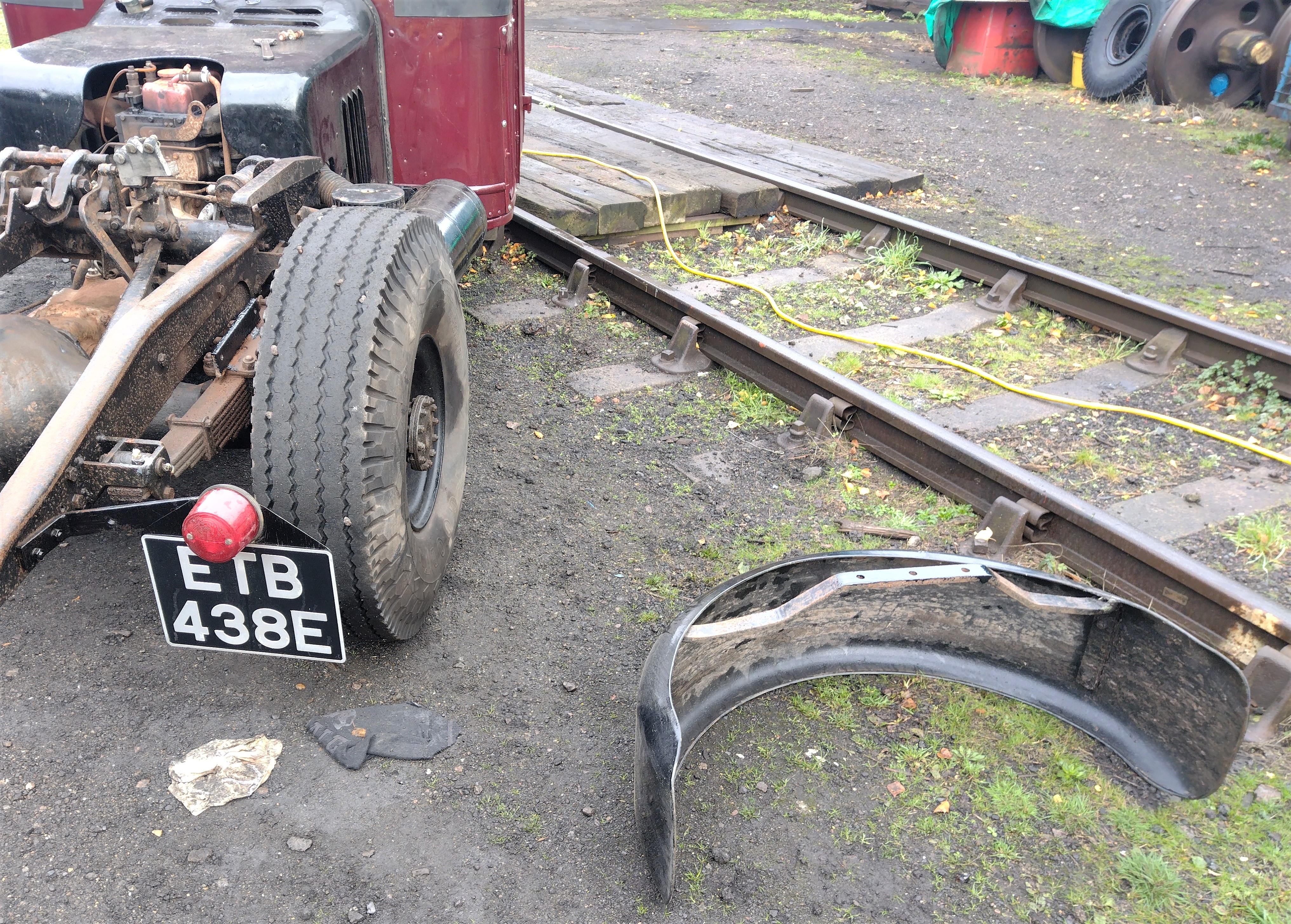
Lilibet’s offside rear mudguard had vibrated loose, so was removed and the brackets cleaned before re-fitting with new locking washers.
Nick, helped by Charlie continued with the scraping and cleaning of the tank wagon 3711
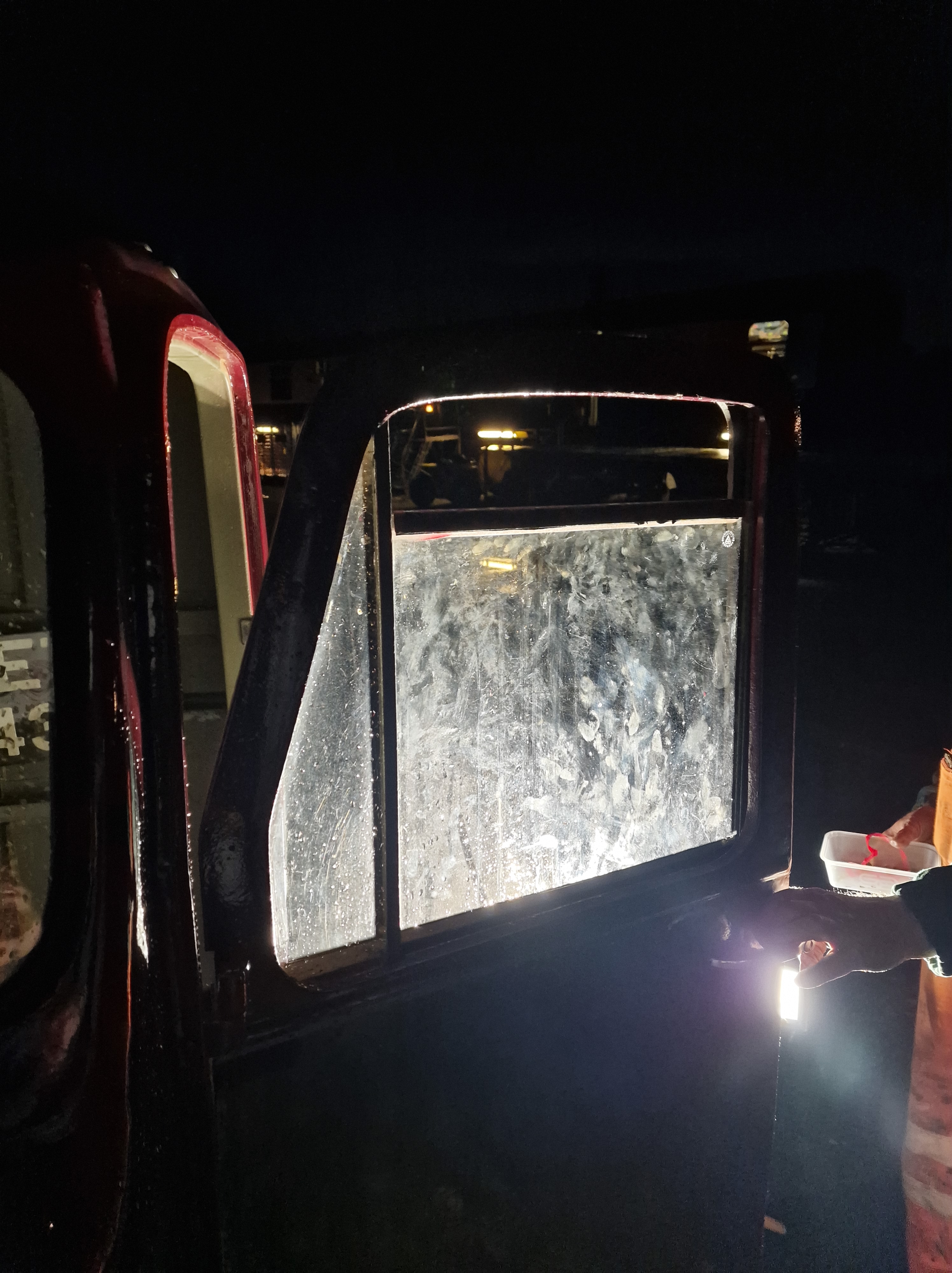
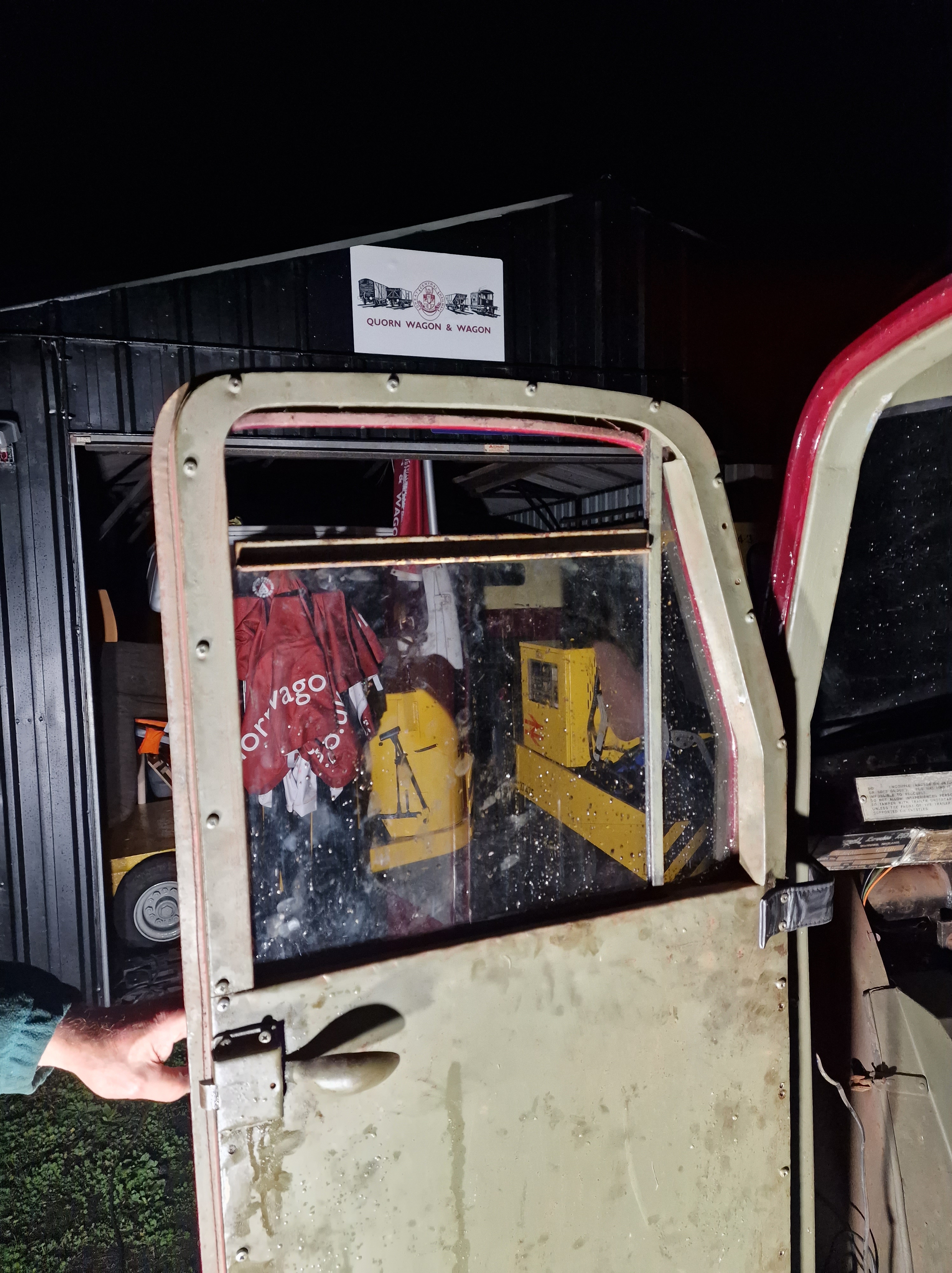
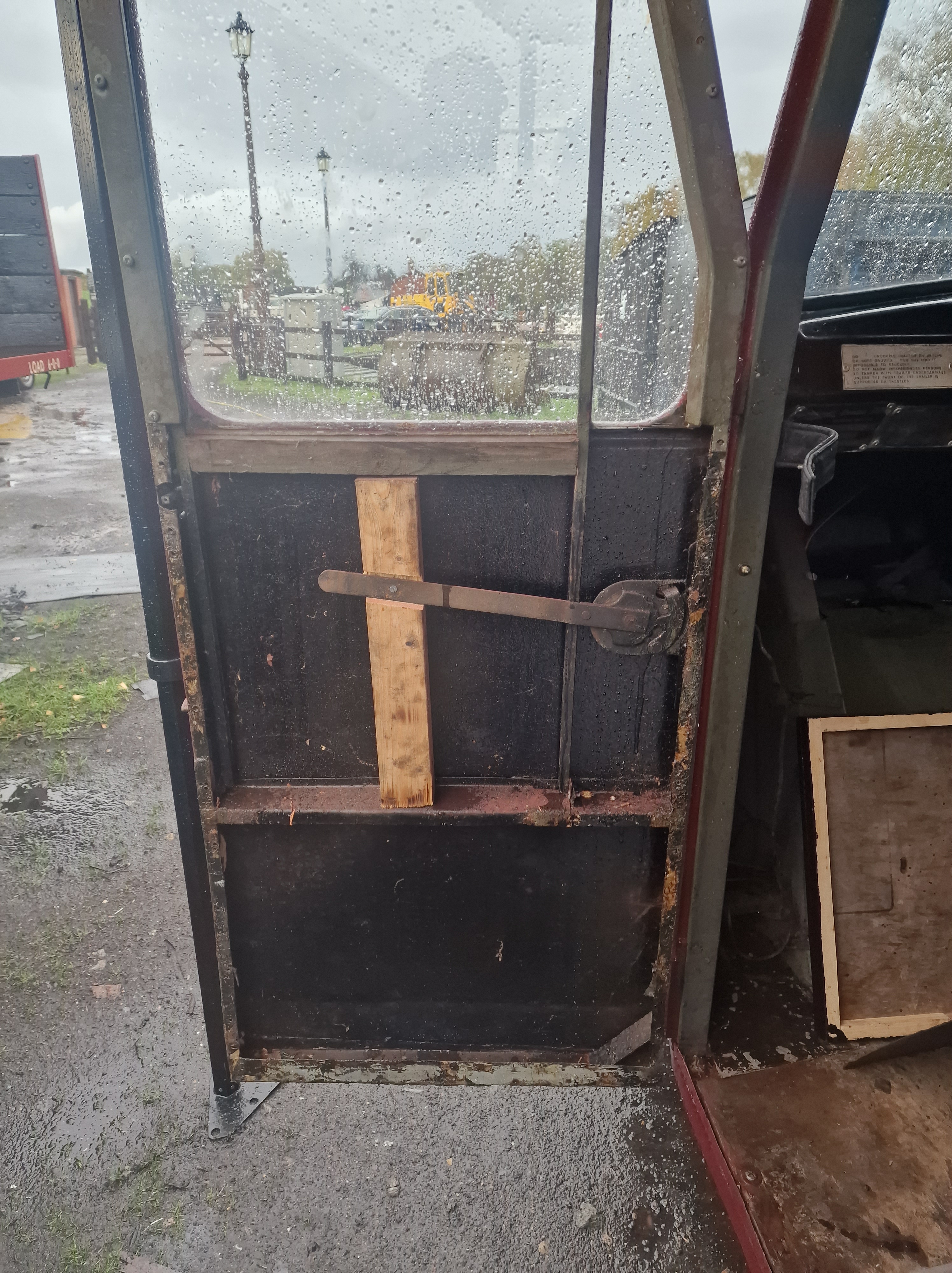
The last job for the weekend on Lilibet was investigating the nearside door droplight that would not open. Removal of the door panel revealed why, the mechanism had been disconnected and a suitable wood prop inserted.
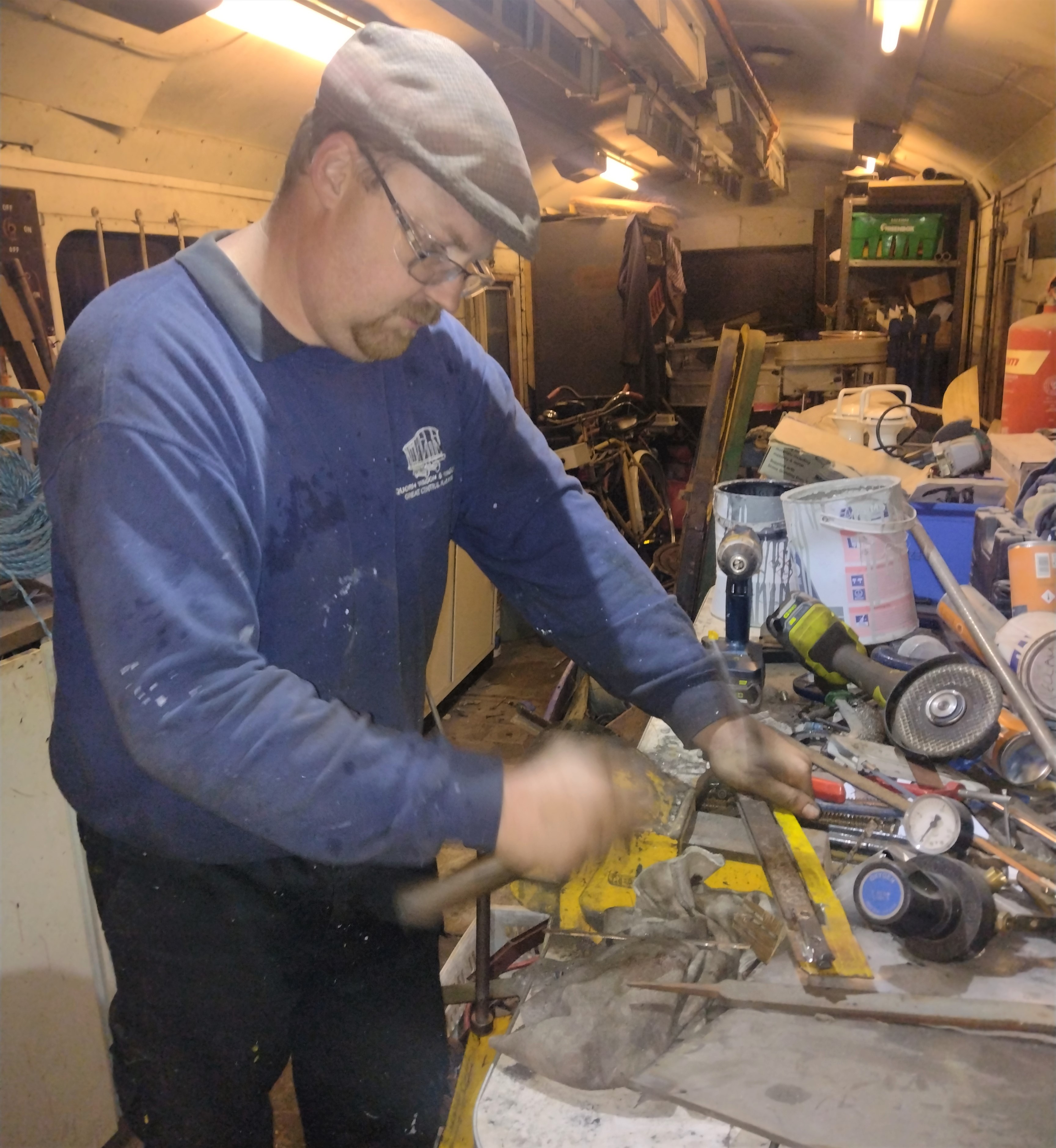
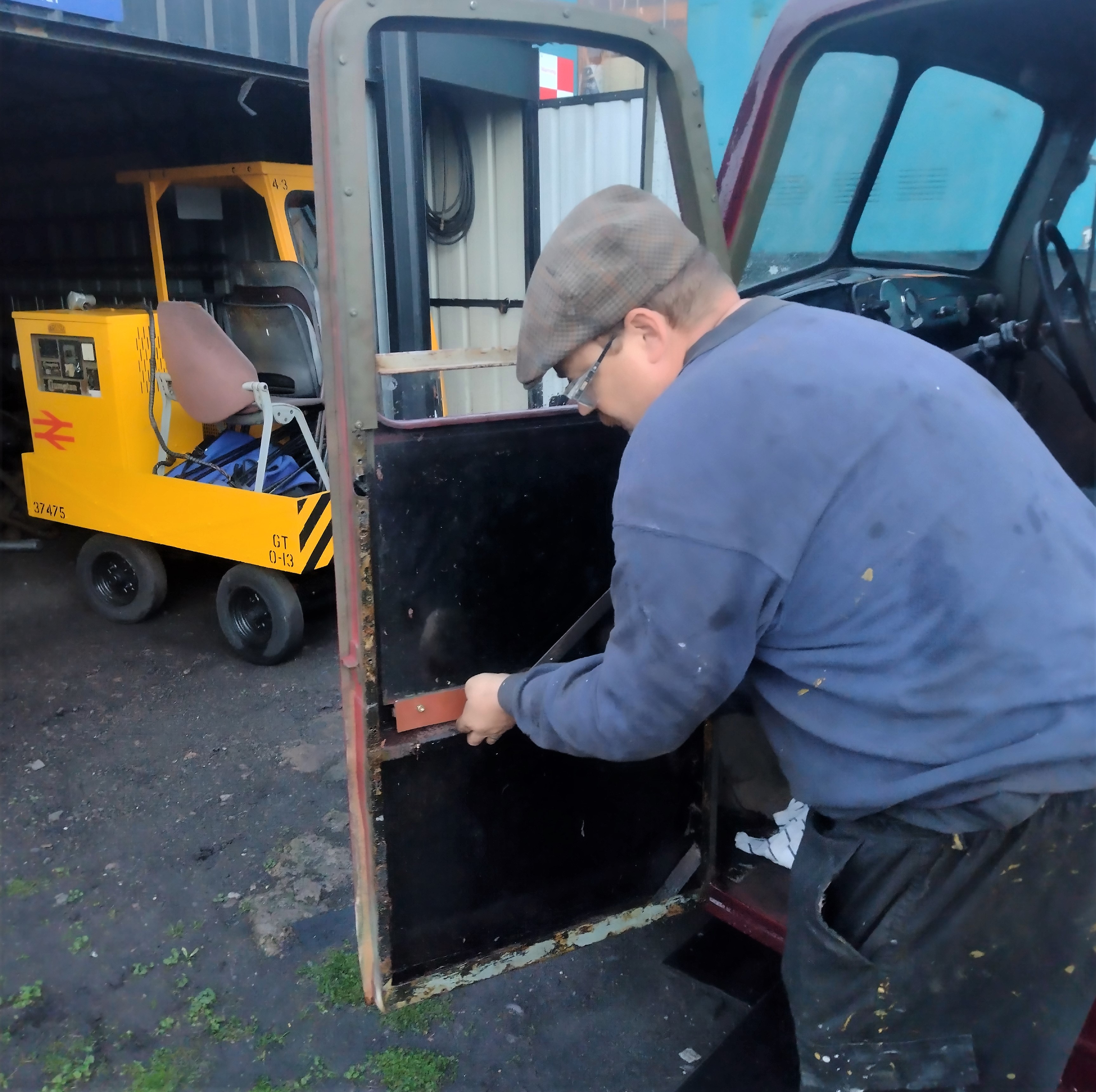
Matt fabricated a window attachment arm and operating mechanism slide using some spare scarab parts and a slice of drip-tray.
That’s all folks for this week, join us again next time to see how we get on with more work on Lilibet and the tank wagon.
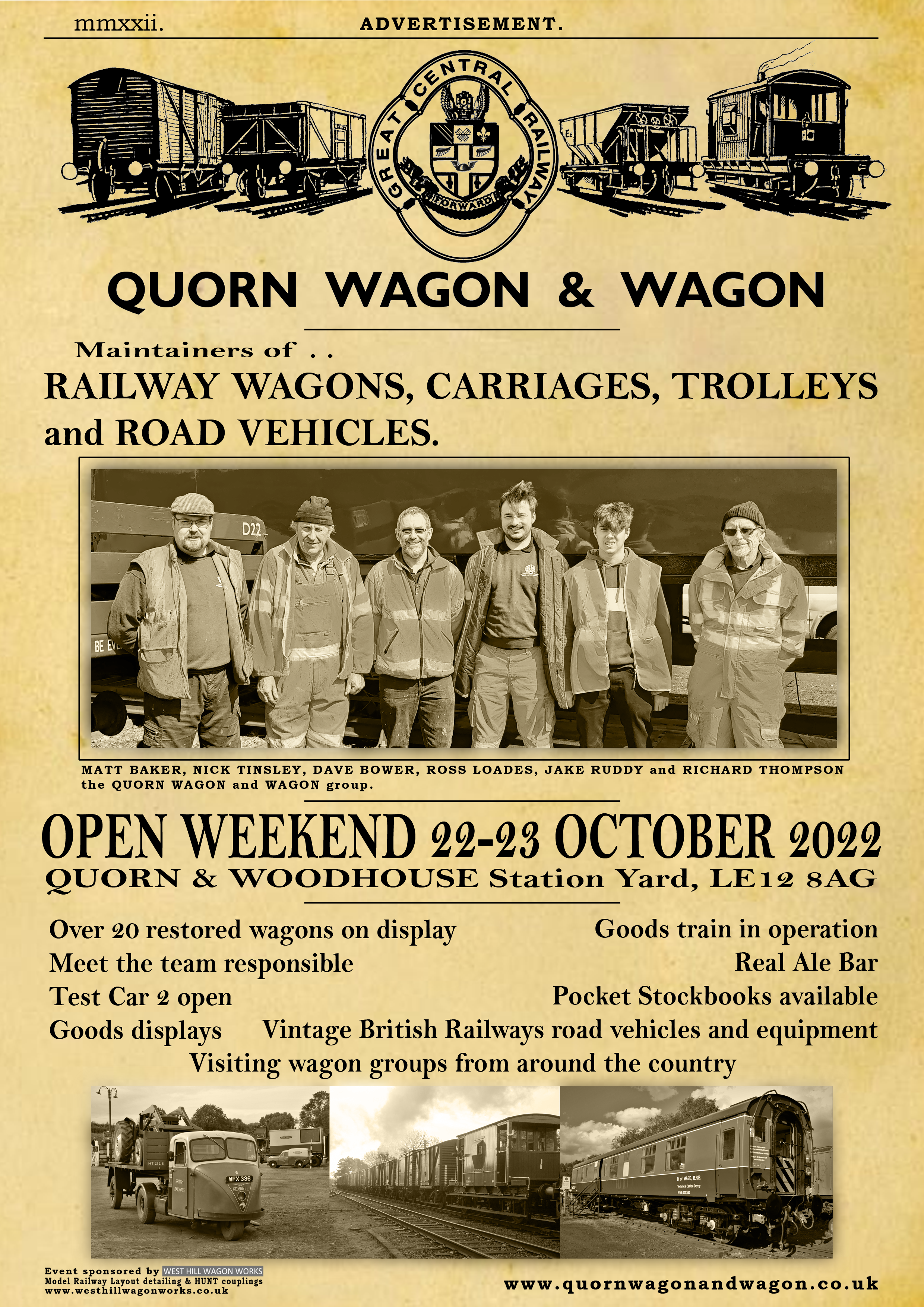
As we look forward to our Open Weekend next week, the team have been busy making preparations as well as an opportunity to relax a little before a full on week of further prep.
We started by re-arranging some of the theatrical van contents to ensure things were in the right place for our event, and make better use of space, with a 4th theatrical van now available.
Matt & Ross then headed to Lincoln to attend Wilbur, topping up the essentials and fitting a new fan belt followed by the customary test drive to free up any sticky or stiff items.
Myself and Richard concentrated on getting Test Car 2 ready, tidying, cleaning and ensuring things are all ready to receive visitors next weekend.
Ross and Matt then attended a Timeline events photo charter at East Kirkby, both suitably attired as RAF ground crew, however it would have been remiss to leave Jerry out. So Jerry got to meet Jane.
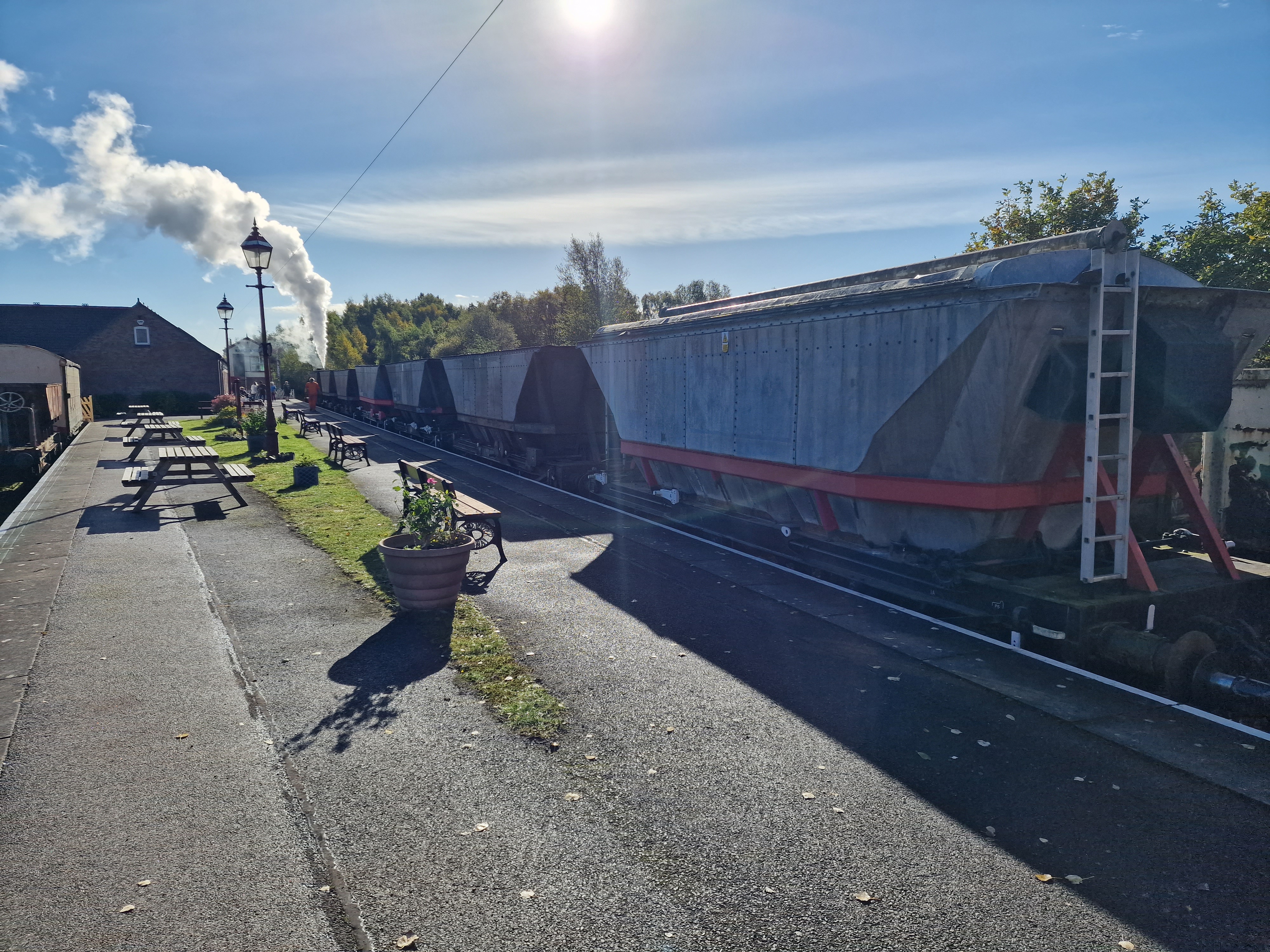
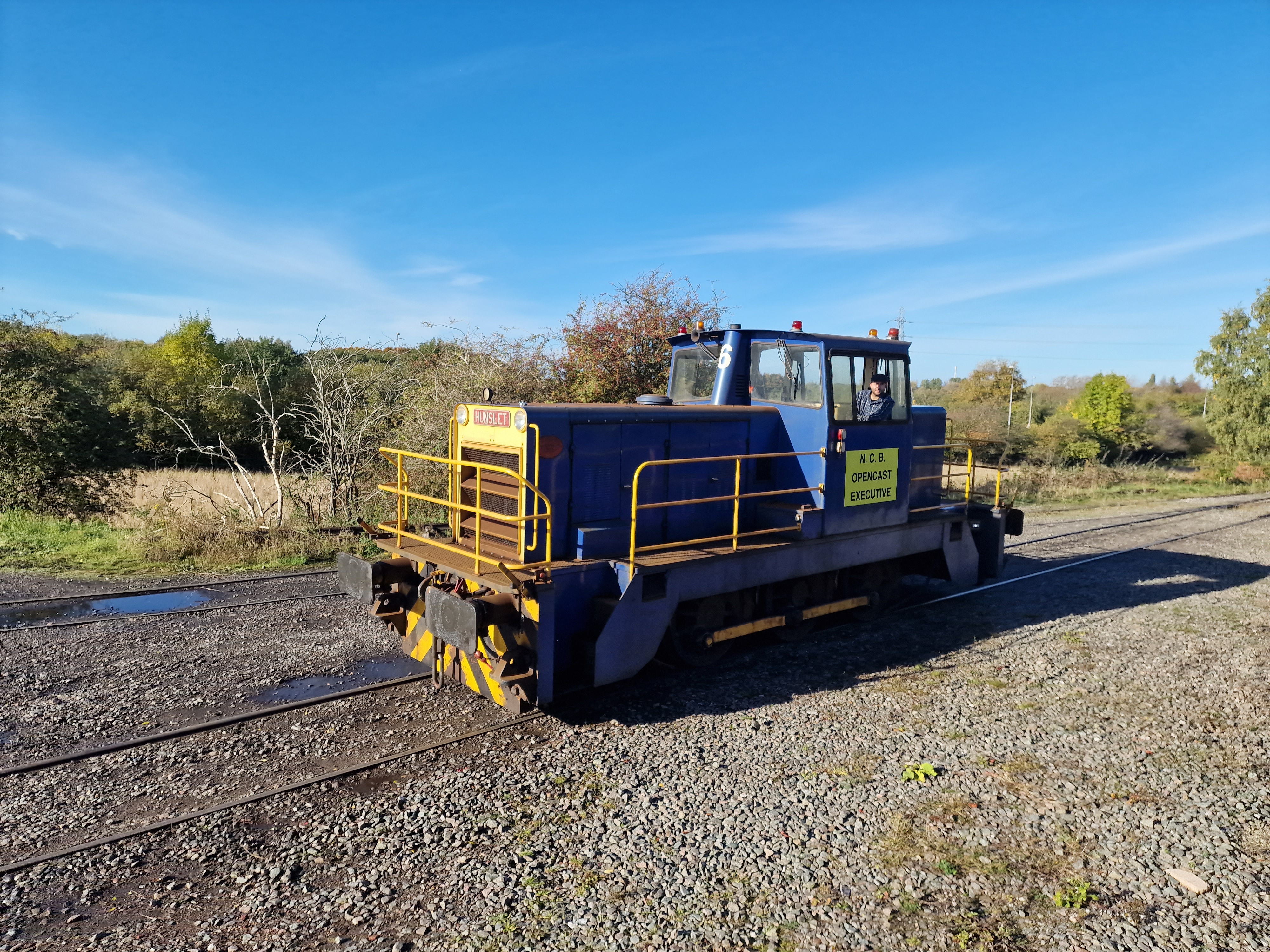
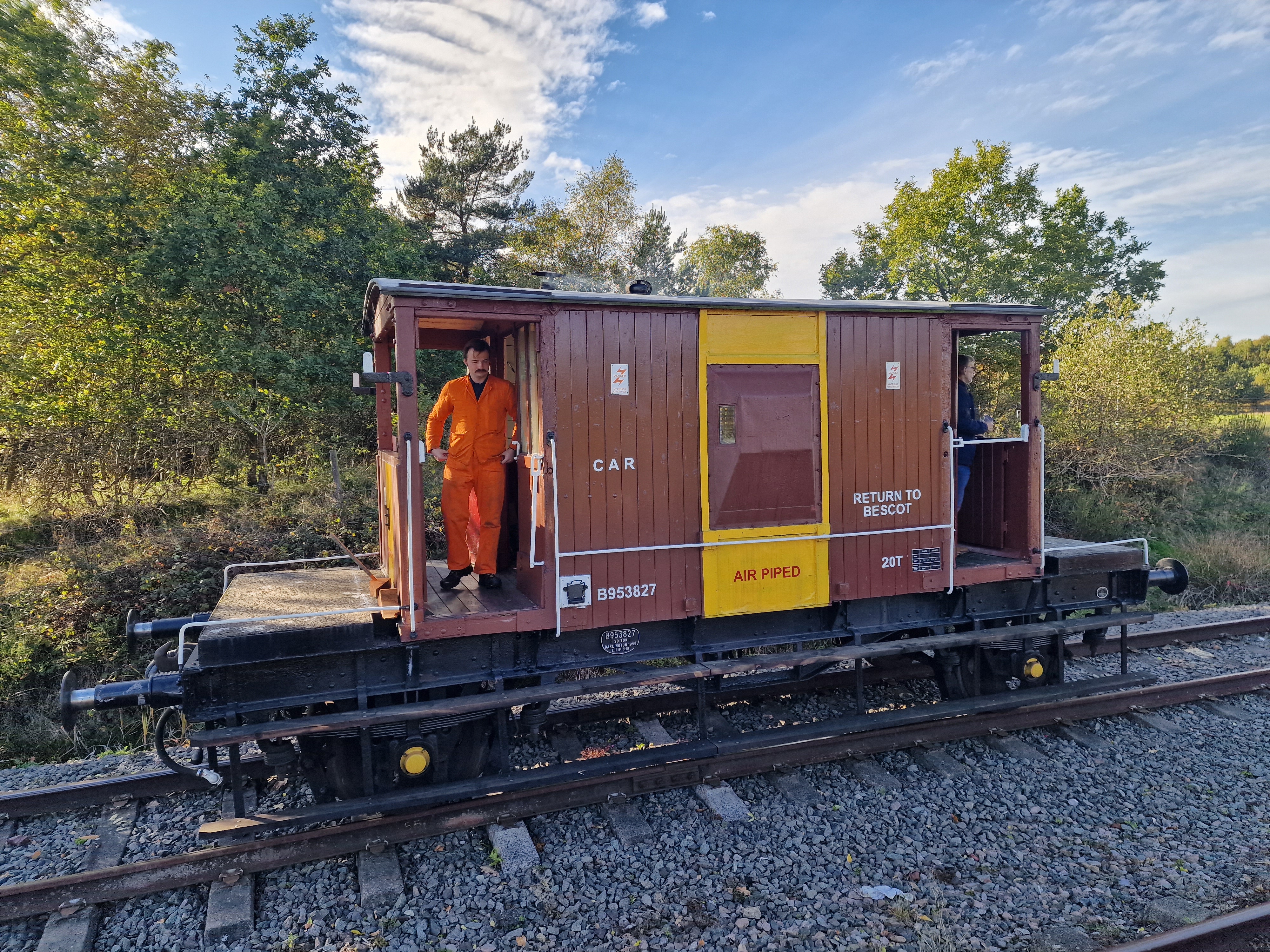
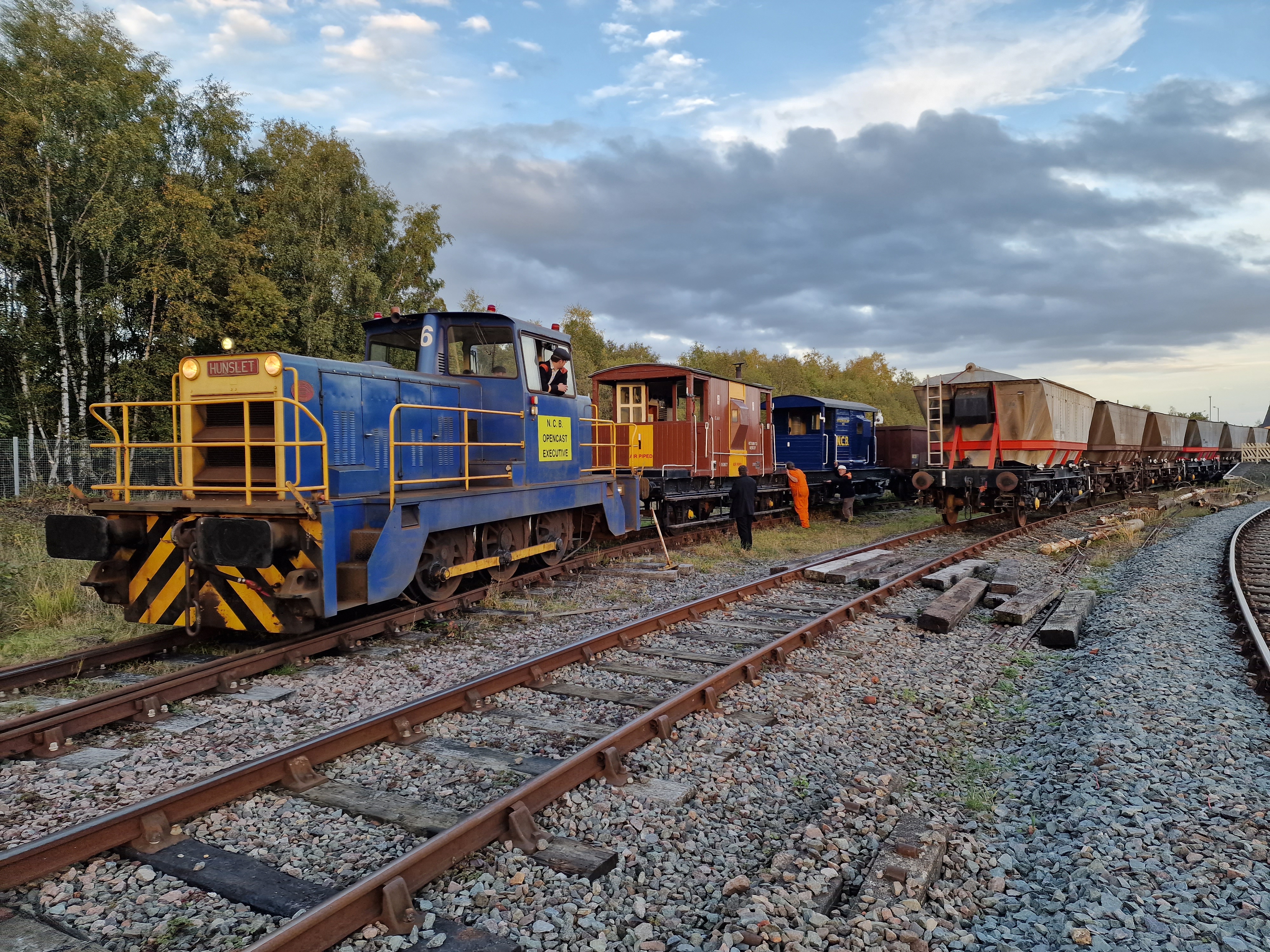
Sunday, Jerry visited the Chasewater Coal train day.
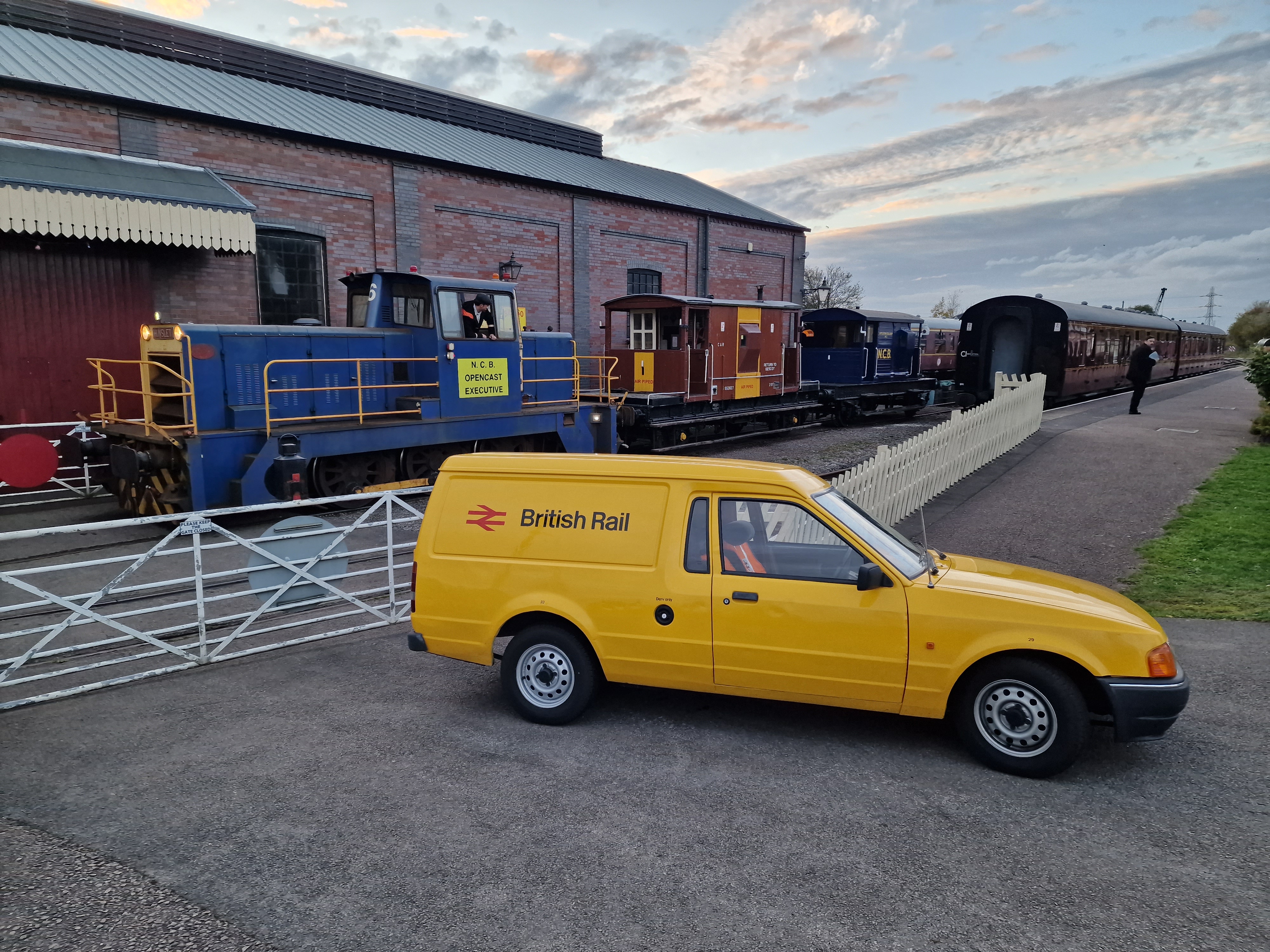
Richard, Ross and Matt enjoying the day behind a selection of industrial traction. The guys extend their thanks to all at Chasewater for making them feel welcome.
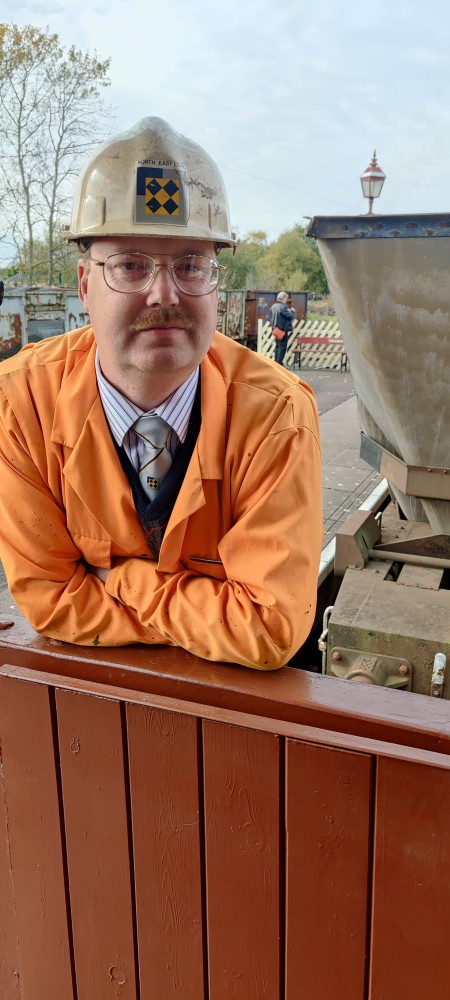
Jerry apologies for his pretend “Coal sector manager”
All that is left to be said is come and see us next week.
We have tanks, opens, vans, amongst others on display, as well as the Heavy Tractor Group and West Hill Wagon works supporting us. With a 1960s goods yard and 1980s freight test scene too see, Test Car 2 open. Our road vehicles as well as some others setting the atmosphere. With the real ale bar open, if you like wagons it may be of interest to you.